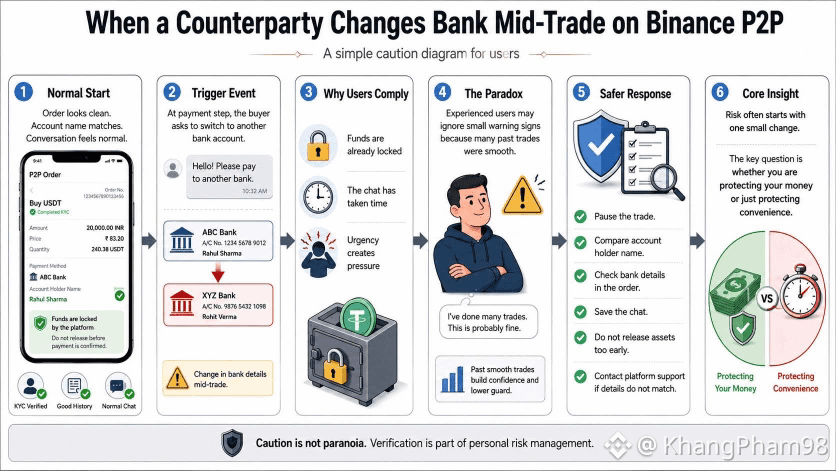
Ich hatte einmal eine kleine Bestellung bei Binance P2P, mit einem Betrag, der nur ungefähr der Größe einiger Wochenendausgaben entsprach. Der Käufer sprach ganz normal, und der Kontoname stimmte überein. Als es dann an der Zeit war zu bezahlen, sagten sie, die alte Bank habe ein Problem und baten darum, auf ein anderes Konto umzuschalten.
Ich stoppte. Nicht weil ich sicher war, dass sie schlecht sind, sondern weil sich der Rhythmus des Handels verschoben hatte.
Binance P2P bringt Nutzer oft dazu, auf die Abschlussquote zu schauen, auf die Anzahl der abgeschlossenen Bestellungen und auf die höfliche Art, wie jemand spricht. Diese Dinge haben einen Wert, aber sie ersetzen keine Prinzipien. Der Empfängername, die Bank und der Verwendungszweck der Überweisung müssen auf derselben geraden Linie bleiben.
Die Psychologie von Nutzern neigt dazu, sich in der Mitte einer Transaktion zu entschärfen. Die Vermögenswerte sind bereits gesperrt, das Gespräch zieht sich in die Länge, und die Gegenseite erzeugt ein Gefühl von Dringlichkeit. Wir fangen an, dass wir wollen, dass die Bestellung endlich endet, mehr als dass die Bestellung korrekt ist.
Das Paradox ist, dass es umso leichter wird, kleine Signale zu übersehen, je vertrauter jemand mit dem Handel ist. Sie haben viele saubere Bestellungen durchlaufen, also glauben sie, dass sie scharf genug sind, um die Person auf der anderen Seite zu lesen. Binance P2P macht aus Vertrautheit keine Rüstung, es gibt uns nur einen Prozess, an dem wir festhalten können.
Ich muss auch meine eigene Sicht herausfordern. Nicht jeder, der darum bittet, die Bank zu wechseln, hat böse Absichten, aber im Bereich der persönlichen Finanzen ist Wohlwollen nur dann sicher, wenn es durch Verifizierung abgesichert ist.
Ich entschied mich, langsamer zu werden, das Gespräch zu speichern, den Kontoinhabernamen zu vergleichen und die Vermögenswerte nicht freizugeben, nur weil eine Erklärung vernünftig klang. Je kleiner eine Binance-P2P-Bestellung ist, desto leichter werden wir sorglos, weil der mögliche Verlust sich nicht so anfühlt, als würde es sich lohnen, einen Aufstand zu machen.
Vielleicht liegt die Frage nicht darin, ob diese Gegenpartei einen Betrug begangen hat oder nicht. Sie liegt in unserem eigenen Reflex: Wenn eine Einzelheit mitten im Ablauf geändert wird—schützen wir dann unser Geld, oder schützen wir nur die Bequemlichkeit der letzten paar Minuten.
@Binance Vietnam #BinanceP2PAnToan $ACE $AKE
Ich stoppte. Nicht weil ich sicher war, dass sie schlecht sind, sondern weil sich der Rhythmus des Handels verschoben hatte.
Binance P2P bringt Nutzer oft dazu, auf die Abschlussquote zu schauen, auf die Anzahl der abgeschlossenen Bestellungen und auf die höfliche Art, wie jemand spricht. Diese Dinge haben einen Wert, aber sie ersetzen keine Prinzipien. Der Empfängername, die Bank und der Verwendungszweck der Überweisung müssen auf derselben geraden Linie bleiben.
Die Psychologie von Nutzern neigt dazu, sich in der Mitte einer Transaktion zu entschärfen. Die Vermögenswerte sind bereits gesperrt, das Gespräch zieht sich in die Länge, und die Gegenseite erzeugt ein Gefühl von Dringlichkeit. Wir fangen an, dass wir wollen, dass die Bestellung endlich endet, mehr als dass die Bestellung korrekt ist.
Das Paradox ist, dass es umso leichter wird, kleine Signale zu übersehen, je vertrauter jemand mit dem Handel ist. Sie haben viele saubere Bestellungen durchlaufen, also glauben sie, dass sie scharf genug sind, um die Person auf der anderen Seite zu lesen. Binance P2P macht aus Vertrautheit keine Rüstung, es gibt uns nur einen Prozess, an dem wir festhalten können.
Ich muss auch meine eigene Sicht herausfordern. Nicht jeder, der darum bittet, die Bank zu wechseln, hat böse Absichten, aber im Bereich der persönlichen Finanzen ist Wohlwollen nur dann sicher, wenn es durch Verifizierung abgesichert ist.
Ich entschied mich, langsamer zu werden, das Gespräch zu speichern, den Kontoinhabernamen zu vergleichen und die Vermögenswerte nicht freizugeben, nur weil eine Erklärung vernünftig klang. Je kleiner eine Binance-P2P-Bestellung ist, desto leichter werden wir sorglos, weil der mögliche Verlust sich nicht so anfühlt, als würde es sich lohnen, einen Aufstand zu machen.
Vielleicht liegt die Frage nicht darin, ob diese Gegenpartei einen Betrug begangen hat oder nicht. Sie liegt in unserem eigenen Reflex: Wenn eine Einzelheit mitten im Ablauf geändert wird—schützen wir dann unser Geld, oder schützen wir nur die Bequemlichkeit der letzten paar Minuten.
@Binance Vietnam #BinanceP2PAnToan $ACE $AKE