Die Mathematik von Liquiditäts-Slippage & Spread-Widening-Mechaniken
Die Bewertung der On-Chain-Liquidität bei Marktstress erfordert einen direkten Blick auf die Orderbuch-Tiefe. Wenn traditionelle Börsen Circuit Breaker auslösen, absorbieren tokenisierte Pools den Volumenanstieg. Ich modelliere die Slippage-Kurve, um den exakten Ausführungswiderstand zu berechnen.
Hier ist meine Mathematik für ein Liquidity Stress Event:
Das Mathe-Beispiel: $200.000 Mint/Redeem Order
- Normale Liquiditäts-Tiefe: $5.000.000 (Base Spread: 0,10%)
- Gestresste Liquiditäts-Tiefe: $1.250.000 (-75% Tiefen-Kontraktion)
- Order-Größe: $200.000
Die Berechnung:
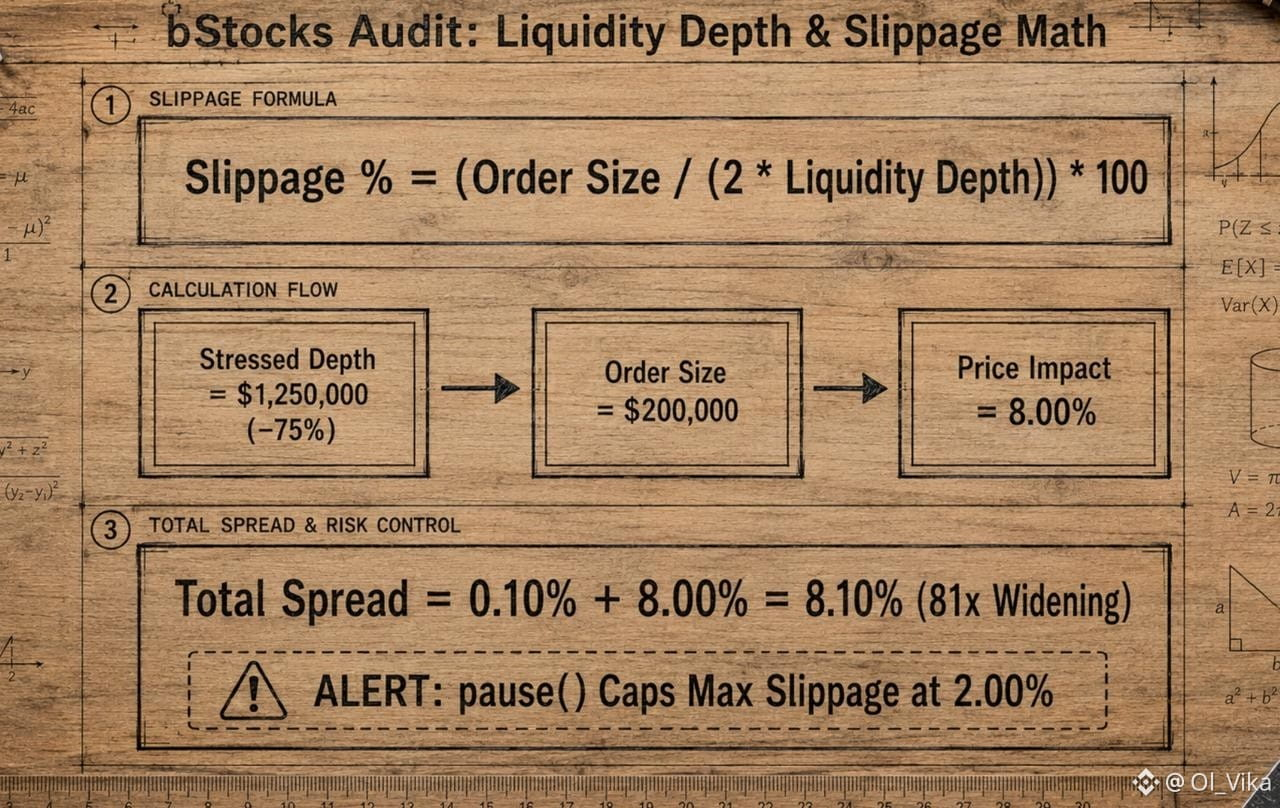
1. Slippage-Formel: (Order Size / (2 x Depth)) x 100
2. Price Impact: ($200.000 / (2 x $1.250.000)) x 100 = 8,00%.
3. Gesamt-gestresster Spread: 0,10% + 8,00% = 8,10% (81-fache Spread-Expansion).
Ein Spread von 8,10% erzeugt starken Arbitrage-Widerstand. Mathematisch ist das der Grund, warum smart contract pause()-Mechanismen existieren — um die Ausführungs-Slippage auf 2,00% zu begrenzen und die 1:1-Zertifikatsbindung unter den ADGM/FSRA-Regeln zu bewahren.
#bstockscis @BinanceCIS #defi
Die Bewertung der On-Chain-Liquidität bei Marktstress erfordert einen direkten Blick auf die Orderbuch-Tiefe. Wenn traditionelle Börsen Circuit Breaker auslösen, absorbieren tokenisierte Pools den Volumenanstieg. Ich modelliere die Slippage-Kurve, um den exakten Ausführungswiderstand zu berechnen.
Hier ist meine Mathematik für ein Liquidity Stress Event:
Das Mathe-Beispiel: $200.000 Mint/Redeem Order
- Normale Liquiditäts-Tiefe: $5.000.000 (Base Spread: 0,10%)
- Gestresste Liquiditäts-Tiefe: $1.250.000 (-75% Tiefen-Kontraktion)
- Order-Größe: $200.000
Die Berechnung:
1. Slippage-Formel: (Order Size / (2 x Depth)) x 100
2. Price Impact: ($200.000 / (2 x $1.250.000)) x 100 = 8,00%.
3. Gesamt-gestresster Spread: 0,10% + 8,00% = 8,10% (81-fache Spread-Expansion).
Ein Spread von 8,10% erzeugt starken Arbitrage-Widerstand. Mathematisch ist das der Grund, warum smart contract pause()-Mechanismen existieren — um die Ausführungs-Slippage auf 2,00% zu begrenzen und die 1:1-Zertifikatsbindung unter den ADGM/FSRA-Regeln zu bewahren.
#bstockscis @BinanceCIS #defi