Ich denke immer noch, dass Dusk zu eng betrachtet wird, wenn Leute es eine Privacy-Blockchain nennt.
Die spannendere Frage für mich ist: Wer sollte sehen dürfen, was?
( @Dusk $DUSK #dusk )
Das wurde mir klarer, als ich mir die Transaktionsmodelle von Dusk angesehen habe.
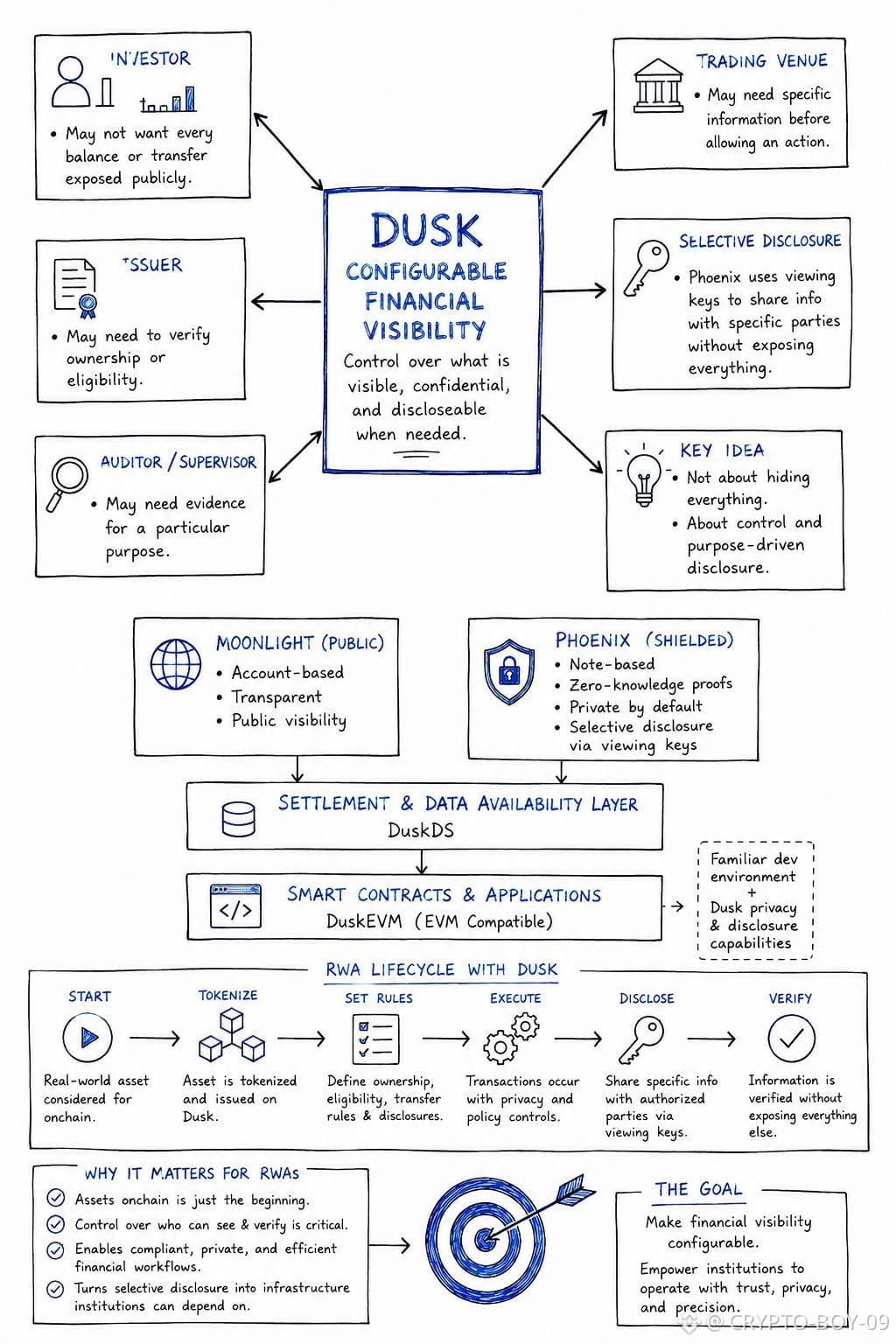
Moonlight ist öffentlich und kontenbasiert, während Phoenix abgeschirmt und notisbasiert ist und Zero-Knowledge-Proofs nutzt, um Transaktionsdetails zu schützen. Beide einigen sich auf DuskDS, geben Beobachtern jedoch sehr unterschiedliche Sichtbarkeitsgrade.
Und das ist entscheidend, wenn man über Finanzmärkte spricht.
Ein Investor möchte möglicherweise nicht jede Bilanz oder Übertragung öffentlich offengelegt haben. Ein Emittent muss möglicherweise Eigentum oder Berechtigung verifizieren, während ein Auditor oder ein Handelsplatz nur spezifische Informationen benötigt.
Phoenix’ Viewing Keys ermöglichen selektive Offenlegung – Informationen können mit einer bestimmten Partei geteilt werden, ohne dass die zugrunde liegende Aktivität für alle öffentlich wird.
Das lässt mich das Privacy-Modell von Dusk anders betrachten.
Es geht nicht wirklich darum, alles zu verstecken. Es geht darum, zu kontrollieren, was privat bleibt, was sichtbar wird und was bei Bedarf offengelegt werden kann.
Dann fügt DuskEVM noch eine weitere Ebene hinzu: Entwicklern wird eine vertraute EVM-Umgebung geboten, während DuskDS Abwicklung und Datenverfügbarkeit übernimmt.
Damit wird die RWA-Frage noch interessanter:
Wer kann das Asset besitzen?
Wer kann es übertragen?
Was bleibt privat?
Was muss verifiziert werden?
Die Technologie ist das eine. Der schwierigere Test ist, ob Institutionen tatsächlich Workflows darum herum aufbauen.
Kann Dusk selektive Offenlegung von einer kryptografischen Fähigkeit zu einer Infrastruktur machen, von der Finanzinstitutionen wirklich abhängig sind?
Die spannendere Frage für mich ist: Wer sollte sehen dürfen, was?
( @Dusk $DUSK #dusk )
Das wurde mir klarer, als ich mir die Transaktionsmodelle von Dusk angesehen habe.
Moonlight ist öffentlich und kontenbasiert, während Phoenix abgeschirmt und notisbasiert ist und Zero-Knowledge-Proofs nutzt, um Transaktionsdetails zu schützen. Beide einigen sich auf DuskDS, geben Beobachtern jedoch sehr unterschiedliche Sichtbarkeitsgrade.
Und das ist entscheidend, wenn man über Finanzmärkte spricht.
Ein Investor möchte möglicherweise nicht jede Bilanz oder Übertragung öffentlich offengelegt haben. Ein Emittent muss möglicherweise Eigentum oder Berechtigung verifizieren, während ein Auditor oder ein Handelsplatz nur spezifische Informationen benötigt.
Phoenix’ Viewing Keys ermöglichen selektive Offenlegung – Informationen können mit einer bestimmten Partei geteilt werden, ohne dass die zugrunde liegende Aktivität für alle öffentlich wird.
Das lässt mich das Privacy-Modell von Dusk anders betrachten.
Es geht nicht wirklich darum, alles zu verstecken. Es geht darum, zu kontrollieren, was privat bleibt, was sichtbar wird und was bei Bedarf offengelegt werden kann.
Dann fügt DuskEVM noch eine weitere Ebene hinzu: Entwicklern wird eine vertraute EVM-Umgebung geboten, während DuskDS Abwicklung und Datenverfügbarkeit übernimmt.
Damit wird die RWA-Frage noch interessanter:
Wer kann das Asset besitzen?
Wer kann es übertragen?
Was bleibt privat?
Was muss verifiziert werden?
Die Technologie ist das eine. Der schwierigere Test ist, ob Institutionen tatsächlich Workflows darum herum aufbauen.
Kann Dusk selektive Offenlegung von einer kryptografischen Fähigkeit zu einer Infrastruktur machen, von der Finanzinstitutionen wirklich abhängig sind?