Ich habe etwas Seltsames bemerkt, als ich die Bestätigungszeiten über eine Charge von DUSK-Transaktionen hinweg verglichen habe, die ich aus dem Explorer gezogen hatte. Ich ging davon aus, dass alle Überweisungen im Netzwerk über denselben Ausführungspfad abgewickelt werden, sodass jede zeitliche Abweichung nur auf eine Netzwerkkongestion zurückzuführen sein müsste. Diese Annahme hielt jedoch nicht stand, sobald ich die Daten sortiert hatte.
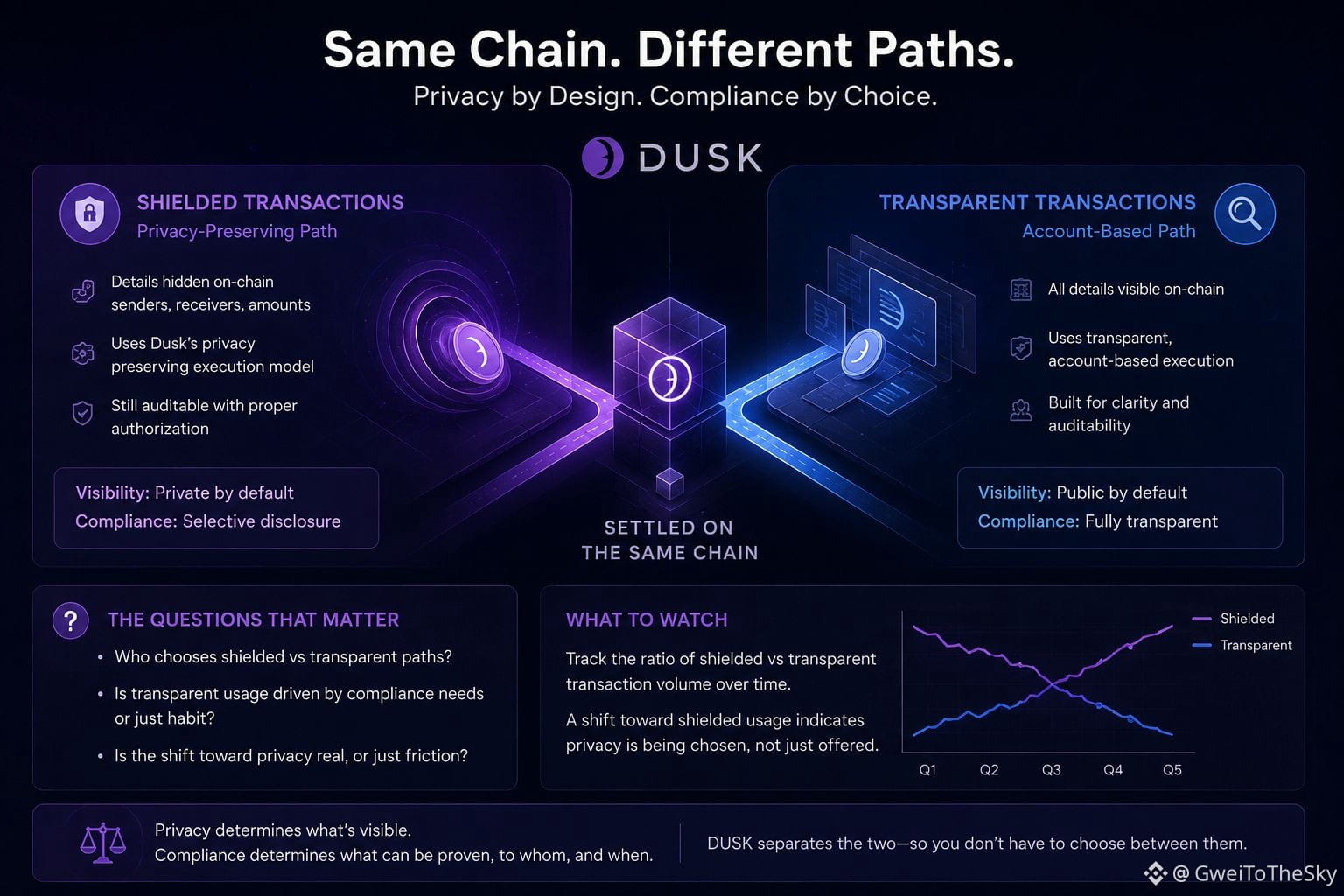
Beim weiteren Nachforschen zeigte sich, dass das Verzögerungsmuster nicht mit der Blockauslastung zusammenhing, sondern mit dem Transaktionstyp. Einige Überweisungen waren abgeschirmt und wurden über das geführt, was das Netzwerk als sein datenschutzfreundliches Ausführungsmodell bezeichnet, während andere vollständig transparente Überweisungen nutzten, die über einen separaten kontobasierten Pfad liefen. Beide werden auf derselben Kette ausgeführt, aber sie werden über unterschiedliche Logiken verarbeitet, was die Varianz erklärte, die ich sah.
Diese Unterscheidung hat meine Sicht auf das Netzwerk verändert. Ich hatte Datenschutz und Compliance in meinem Kopf als dieselbe Funktion betrachtet. Das sind sie nicht. Datenschutz bestimmt, was standardmäßig on-chain sichtbar ist. Compliance bestimmt, was später nachgewiesen werden kann, für wen, und unter welcher Autorisierung. Eine Transaktion kann privat und dennoch prüfbar (auditable) sein, wenn es den richtigen Offenlegungsmechanismus gibt. Das Vermischen beider Ebenen verdeckt diese zweite Ebene vollständig.
Was ich noch nicht auflösen kann, ist, wer in der Praxis tatsächlich den transparenten Pfad nutzt versus den abgeschirmten, und warum. Ist eine transparente Ausführung vor allem bei Operatoren und institutionellen Abläufen verbreitet, die eine saubere Audit-Trail wünschen, oder ist es einfach Gewohnheit von Nutzern, die mit der abgeschirmten Option nicht vertraut sind? Diese Aufteilung ist entscheidend, um die reale Nachfrage zu verstehen.
In der Zukunft möchte ich das Verhältnis zwischen abgeschirmtem und transparentem Transaktionsvolumen über die Zeit beobachten, nicht nur die reine Durchsatzrate. Eine Verschiebung hin zur abgeschirmten Nutzung würde mir zeigen, dass Datenschutz-Tools aktiv gewählt werden – nicht nur verfügbar sind.
Ich bin mir immer noch nicht sicher, ob dieses Verhältnis eine echte Präferenz widerspiegelt oder nur eine gewisse Trägheit, und ich glaube nicht, dass man das allein mit Volumendaten beantworten kann.
@Dusk
$DUSK #Dusk
Beim weiteren Nachforschen zeigte sich, dass das Verzögerungsmuster nicht mit der Blockauslastung zusammenhing, sondern mit dem Transaktionstyp. Einige Überweisungen waren abgeschirmt und wurden über das geführt, was das Netzwerk als sein datenschutzfreundliches Ausführungsmodell bezeichnet, während andere vollständig transparente Überweisungen nutzten, die über einen separaten kontobasierten Pfad liefen. Beide werden auf derselben Kette ausgeführt, aber sie werden über unterschiedliche Logiken verarbeitet, was die Varianz erklärte, die ich sah.
Diese Unterscheidung hat meine Sicht auf das Netzwerk verändert. Ich hatte Datenschutz und Compliance in meinem Kopf als dieselbe Funktion betrachtet. Das sind sie nicht. Datenschutz bestimmt, was standardmäßig on-chain sichtbar ist. Compliance bestimmt, was später nachgewiesen werden kann, für wen, und unter welcher Autorisierung. Eine Transaktion kann privat und dennoch prüfbar (auditable) sein, wenn es den richtigen Offenlegungsmechanismus gibt. Das Vermischen beider Ebenen verdeckt diese zweite Ebene vollständig.
Was ich noch nicht auflösen kann, ist, wer in der Praxis tatsächlich den transparenten Pfad nutzt versus den abgeschirmten, und warum. Ist eine transparente Ausführung vor allem bei Operatoren und institutionellen Abläufen verbreitet, die eine saubere Audit-Trail wünschen, oder ist es einfach Gewohnheit von Nutzern, die mit der abgeschirmten Option nicht vertraut sind? Diese Aufteilung ist entscheidend, um die reale Nachfrage zu verstehen.
In der Zukunft möchte ich das Verhältnis zwischen abgeschirmtem und transparentem Transaktionsvolumen über die Zeit beobachten, nicht nur die reine Durchsatzrate. Eine Verschiebung hin zur abgeschirmten Nutzung würde mir zeigen, dass Datenschutz-Tools aktiv gewählt werden – nicht nur verfügbar sind.
Ich bin mir immer noch nicht sicher, ob dieses Verhältnis eine echte Präferenz widerspiegelt oder nur eine gewisse Trägheit, und ich glaube nicht, dass man das allein mit Volumendaten beantworten kann.
@Dusk
$DUSK #Dusk