Ich habe einmal auf Binance P2P einen kleinen Betrag getauscht, um meine Miete am Monatsende zu bezahlen. Der Verkäufer hatte einen guten Preis und eine klare Beschreibung, aber seine Erfolgsquote war niedriger als die einiger nahegelegener Gegenparteien. Ich habe trotzdem geklickt, weil ich dachte, eine kleine Bestellung sei nichts, worüber man sich Sorgen machen müsse. Die Transaktion hat kein Geld verloren, sie blieb nur so lange im Status „ausstehend“, dass ich meinem Vermieter schreiben musste, er solle noch ein wenig warten.
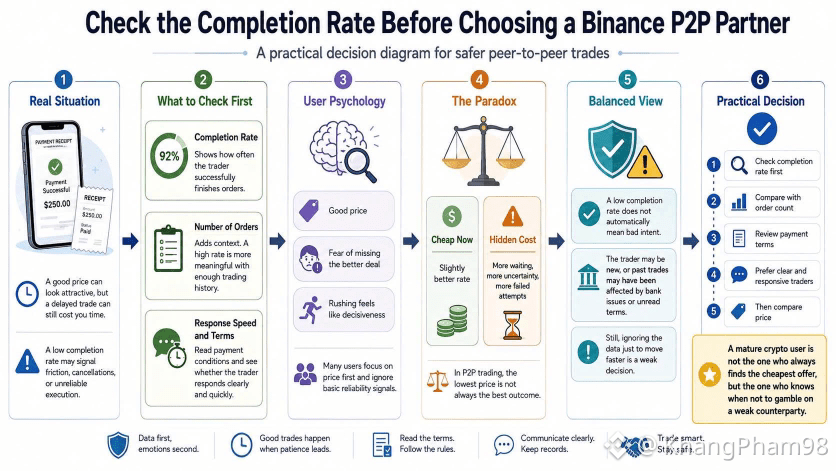
Seitdem sehe ich Binance P2P nicht mehr als reine Preisübersicht. Es ist eher ein Marktplatz, bei dem die Verhaltenshistorie in ein paar Zahlen verdichtet wird. Die Erfolgsquote ist kein Schutzschild, aber sie zeigt, wie viele Trades eine Gegenpartei durchgezogen hat im Vergleich zu den Fällen, in denen sie nicht fertig geworden ist. Zusammen mit der Anzahl der Bestellungen und der Reaktionsgeschwindigkeit beginnt diese Zahl Gewicht zu bekommen.
Die Psychologie der Nutzer ist recht vorhersehbar. Wenn Menschen einen guten Preis sehen, wollen sie schnell abschließen, und wenn sie eine Differenz von ein paar Tausend sehen, denken sie, sie hätten gerade eine kleine Runde gewonnen. In Krypto sprechen viele über Risikomanagement, aber wenn sie zu Binance P2P kommen, ignorieren sie ein grundlegendes Signal, weil sie Angst haben, einen guten Preis zu verpassen. Eile wird fälschlich für Entschlossenheit gehalten.
Das Paradox ist, dass Peer-to-Peer-Handel Vertrauen braucht, aber Vertrauen wird oft durch das Gefühl von „billig“ ersetzt. Jemand mit niedriger Erfolgsquote ist nicht unbedingt schlecht; er ist vielleicht neu im Trading, die Bank hatte möglicherweise Probleme, oder der vorherige Kunde hat die Bedingungen nicht gelesen. Ich habe auch schon zu schnell geurteilt. Aber Daten zu ignorieren, nur weil man schneller sein will, ist keine Flexibilität mehr.
Deshalb prüfe ich auf Binance P2P in der Regel zuerst die Erfolgsquote, dann schaue ich mir den Preis, die Anzahl der Bestellungen und die Zahlungsbedingungen an. Das garantiert nicht, dass die Transaktion reibungslos abläuft. Es zwingt mich lediglich, für ein paar Sekunden langsamer zu werden, genug, um mir zu merken, dass „günstiger“ nicht immer besser ist. In Fintech und Krypto ist ein „reifer“ Nutzer manchmal nicht jemand, der weiß, wie man mehr verdient, sondern jemand, der weiß, wie man eine Entscheidung ablehnt, die verlockend wirkt.
@Binance Vietnam #BinanceP2PAnToan
Seitdem sehe ich Binance P2P nicht mehr als reine Preisübersicht. Es ist eher ein Marktplatz, bei dem die Verhaltenshistorie in ein paar Zahlen verdichtet wird. Die Erfolgsquote ist kein Schutzschild, aber sie zeigt, wie viele Trades eine Gegenpartei durchgezogen hat im Vergleich zu den Fällen, in denen sie nicht fertig geworden ist. Zusammen mit der Anzahl der Bestellungen und der Reaktionsgeschwindigkeit beginnt diese Zahl Gewicht zu bekommen.
Die Psychologie der Nutzer ist recht vorhersehbar. Wenn Menschen einen guten Preis sehen, wollen sie schnell abschließen, und wenn sie eine Differenz von ein paar Tausend sehen, denken sie, sie hätten gerade eine kleine Runde gewonnen. In Krypto sprechen viele über Risikomanagement, aber wenn sie zu Binance P2P kommen, ignorieren sie ein grundlegendes Signal, weil sie Angst haben, einen guten Preis zu verpassen. Eile wird fälschlich für Entschlossenheit gehalten.
Das Paradox ist, dass Peer-to-Peer-Handel Vertrauen braucht, aber Vertrauen wird oft durch das Gefühl von „billig“ ersetzt. Jemand mit niedriger Erfolgsquote ist nicht unbedingt schlecht; er ist vielleicht neu im Trading, die Bank hatte möglicherweise Probleme, oder der vorherige Kunde hat die Bedingungen nicht gelesen. Ich habe auch schon zu schnell geurteilt. Aber Daten zu ignorieren, nur weil man schneller sein will, ist keine Flexibilität mehr.
Deshalb prüfe ich auf Binance P2P in der Regel zuerst die Erfolgsquote, dann schaue ich mir den Preis, die Anzahl der Bestellungen und die Zahlungsbedingungen an. Das garantiert nicht, dass die Transaktion reibungslos abläuft. Es zwingt mich lediglich, für ein paar Sekunden langsamer zu werden, genug, um mir zu merken, dass „günstiger“ nicht immer besser ist. In Fintech und Krypto ist ein „reifer“ Nutzer manchmal nicht jemand, der weiß, wie man mehr verdient, sondern jemand, der weiß, wie man eine Entscheidung ablehnt, die verlockend wirkt.
@Binance Vietnam #BinanceP2PAnToan