Scammers on Binance P2P tend to reuse the same handful of tricks, which makes them easier to spot once you know the pattern. After trading here for a while, I started keeping a mental list of red flags that now make me pause every time.
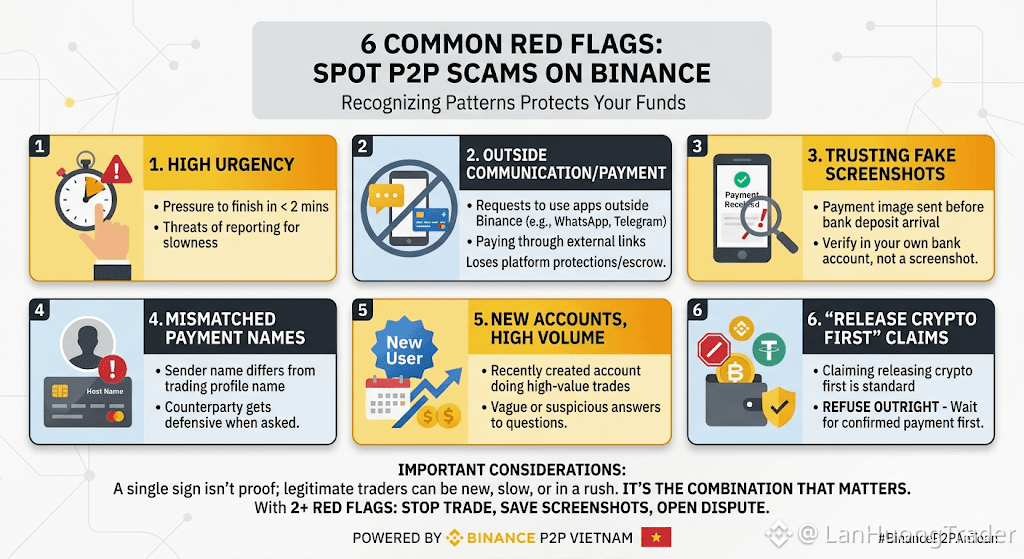
Urgency is the first one. A counterparty insisting a trade must finish in the next 2 minutes, or threatening to report you for being slow, is applying pressure rather than trading in good faith, and Binance P2P's own process never requires that kind of rush. Second, requests to communicate or pay outside the app are serious, since anything happening beyond the recorded order loses every protection built into the platform, including escrow and the ability to raise a dispute later. Third, a payment screenshot arriving before your bank actually shows the deposit deserves suspicion, since confirming payment means checking your own account directly, not trusting an image.
Fourth, watch for a payment name that does not match the trading profile, especially if the counterparty gets defensive when asked about it, since verifying who you are dealing with is a basic protection. Fifth, an account created recently that immediately starts high value trades, combined with vague answers, is worth extra scrutiny. Sixth, any claim that releasing crypto first is standard practice should be refused outright.
None of these signs alone proves bad intent, and I want to be fair about that. Plenty of legitimate traders are simply new, occasionally slow to respond, or genuinely in a rush for ordinary reasons. What matters is the combination, not any single detail in isolation.
When two or more of these appear together, I stop the trade, save my screenshots, and open a dispute or contact Binance support rather than continuing on trust alone.
#binancep2pantoan @Binance Vietnam $AKE
Urgency is the first one. A counterparty insisting a trade must finish in the next 2 minutes, or threatening to report you for being slow, is applying pressure rather than trading in good faith, and Binance P2P's own process never requires that kind of rush. Second, requests to communicate or pay outside the app are serious, since anything happening beyond the recorded order loses every protection built into the platform, including escrow and the ability to raise a dispute later. Third, a payment screenshot arriving before your bank actually shows the deposit deserves suspicion, since confirming payment means checking your own account directly, not trusting an image.
Fourth, watch for a payment name that does not match the trading profile, especially if the counterparty gets defensive when asked about it, since verifying who you are dealing with is a basic protection. Fifth, an account created recently that immediately starts high value trades, combined with vague answers, is worth extra scrutiny. Sixth, any claim that releasing crypto first is standard practice should be refused outright.
None of these signs alone proves bad intent, and I want to be fair about that. Plenty of legitimate traders are simply new, occasionally slow to respond, or genuinely in a rush for ordinary reasons. What matters is the combination, not any single detail in isolation.
When two or more of these appear together, I stop the trade, save my screenshots, and open a dispute or contact Binance support rather than continuing on trust alone.
#binancep2pantoan @Binance Vietnam $AKE