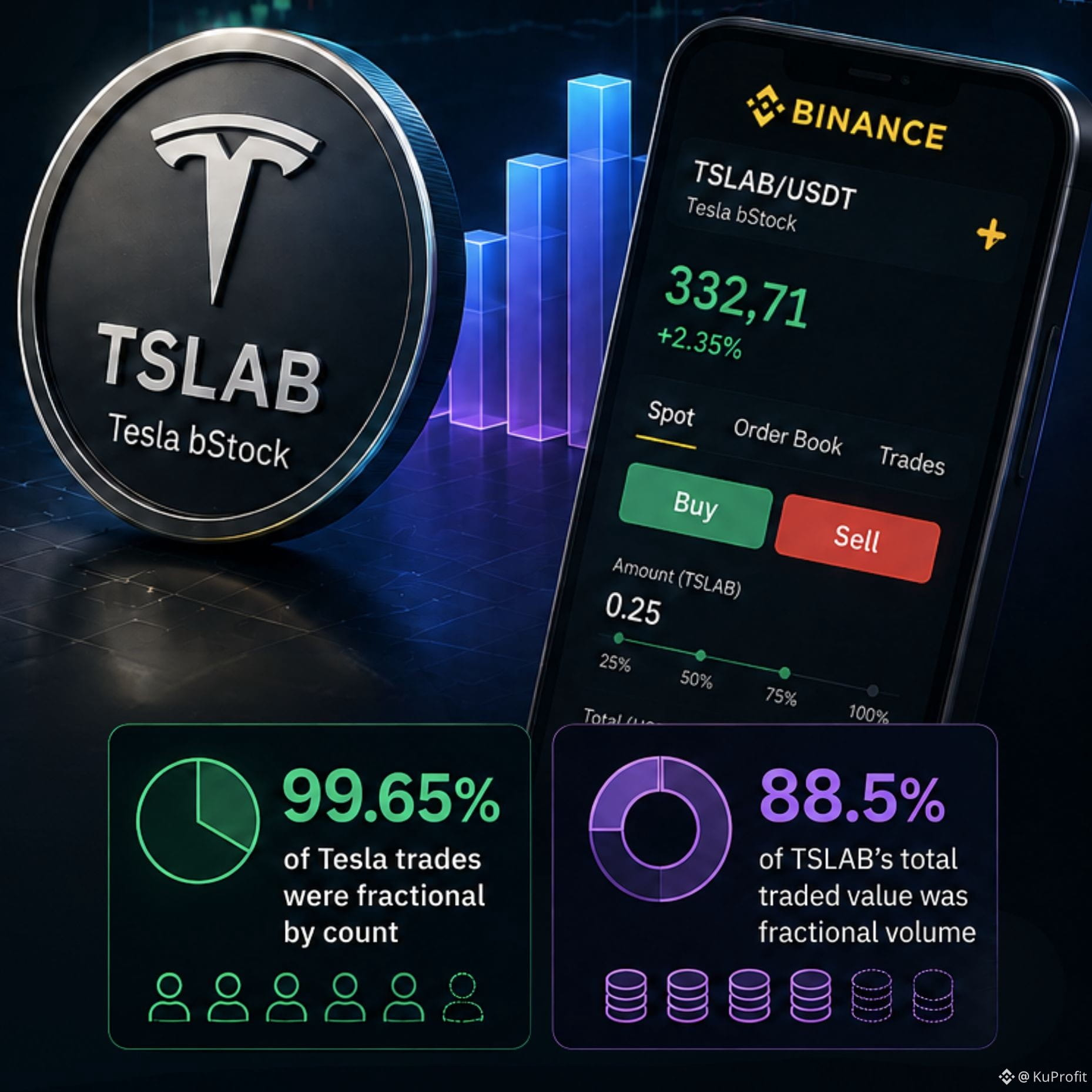
Wenn 99,65% der Tesla-Transaktionen nach Anzahl fraktioniert sind: Ist fraktioniertes Eigentum wirklich nur eine Zugangs- bzw. Zugänglichkeitsfunktion?
Als ich zum ersten Mal über fraktioniertes Eigentum nachgedacht habe, habe ich es vor allem als Barrierefreiheit bzw. Zugänglichkeitsfunktion gesehen.
Eine Möglichkeit, Zugang zu einer teuren Aktie zu bekommen, ohne genug Kapital für eine ganze Aktie zu haben.
Dann bin ich auf die frühen Daten für TSLAB gestoßen.
Ungefähr 99,65% der Tesla-Transaktionen waren nach Anzahl fraktioniert.
Und das fraktionierte Handelsvolumen machte 88,5% des gesamten gehandelten Werts von TSLAB aus.
Das ließ mich fraktioniertes Eigentum anders betrachten.
Wenn fraktionierte Transaktionen fast die gesamte Aktivität nach Transaktionsanzahl ausmachen und dennoch den Großteil des gehandelten Werts repräsentieren, sieht es eher nach mehr aus als nach einer Funktion, die nur für kleinere Anleger gedacht ist.
Das hat mich Folgendes fragen lassen:
Was, wenn fraktioniertes Eigentum nicht nur verändert, wer auf eine Aktie zugreifen kann, sondern auch, wie die Exponierung gegenüber dieser Aktie tatsächlich gehandelt wird?
Ein Modell mit ganzen Anteilen macht die Investitionseinheit relativ eindeutig.
Fraktioniertes Trading trennt die Größe der Position vom Preis für eine ganze Aktie.
Du kannst entscheiden, wie viel Exponierung du haben möchtest, ohne zuerst zu fragen, ob du dir erst eine komplette Aktie leisten kannst.
Und ich glaube, das ist der spannendere Teil.
Die Frage ist nicht einfach:
„Kann ich einen Bruchteil von Tesla kaufen?“
Sondern:
„Was passiert, wenn der Bruchteil zur normalen Einheit des Trades wird?“
Für mich ist das eine viel interessantere Frage zu fraktioniertem Eigentum, als es lediglich als Zugänglichkeitsfunktion zu bezeichnen.
#bstockscis @BinanceCIS
Als ich zum ersten Mal über fraktioniertes Eigentum nachgedacht habe, habe ich es vor allem als Barrierefreiheit bzw. Zugänglichkeitsfunktion gesehen.
Eine Möglichkeit, Zugang zu einer teuren Aktie zu bekommen, ohne genug Kapital für eine ganze Aktie zu haben.
Dann bin ich auf die frühen Daten für TSLAB gestoßen.
Ungefähr 99,65% der Tesla-Transaktionen waren nach Anzahl fraktioniert.
Und das fraktionierte Handelsvolumen machte 88,5% des gesamten gehandelten Werts von TSLAB aus.
Das ließ mich fraktioniertes Eigentum anders betrachten.
Wenn fraktionierte Transaktionen fast die gesamte Aktivität nach Transaktionsanzahl ausmachen und dennoch den Großteil des gehandelten Werts repräsentieren, sieht es eher nach mehr aus als nach einer Funktion, die nur für kleinere Anleger gedacht ist.
Das hat mich Folgendes fragen lassen:
Was, wenn fraktioniertes Eigentum nicht nur verändert, wer auf eine Aktie zugreifen kann, sondern auch, wie die Exponierung gegenüber dieser Aktie tatsächlich gehandelt wird?
Ein Modell mit ganzen Anteilen macht die Investitionseinheit relativ eindeutig.
Fraktioniertes Trading trennt die Größe der Position vom Preis für eine ganze Aktie.
Du kannst entscheiden, wie viel Exponierung du haben möchtest, ohne zuerst zu fragen, ob du dir erst eine komplette Aktie leisten kannst.
Und ich glaube, das ist der spannendere Teil.
Die Frage ist nicht einfach:
„Kann ich einen Bruchteil von Tesla kaufen?“
Sondern:
„Was passiert, wenn der Bruchteil zur normalen Einheit des Trades wird?“
Für mich ist das eine viel interessantere Frage zu fraktioniertem Eigentum, als es lediglich als Zugänglichkeitsfunktion zu bezeichnen.
#bstockscis @BinanceCIS