


Mit Einblicken von AIOZ Network & YOM
2026 hat endlich das Hauptproblem der KI-Industrie offengelegt: Es liegt nicht an der Hardware. Die Nachfrage nach Rechenleistung für das Training und die Inferenz von Modellen wächst schneller, als die Branche Rechenzentren aufbauen kann.
GPU-Warteschlangen bei großen Cloud-Anbietern ziehen sich über Monate hin, und die Mietpreise für Rechenleistung bleiben für kleine Teams und unabhängige Entwickler unerschwinglich.
Deadlock in der KI-Infrastruktur
Praktisch der gesamte Markt für KI-Infrastruktur ist heute in den Händen weniger Akteure konzentriert: AWS, Google Cloud, Microsoft Azure und Chip-Hersteller wie Nvidia.
Das erzeugt ein klassisches Bottleneck-Szenario: Der Zugriff auf Computer wird zu einem Privileg, und Startups müssen zusätzlich zu allem anderen für den „Kampf“ um einen Platz in der GPU-Mietwarteschlange ein Budget einplanen.
Zentralisierung bringt systemische Risiken mit sich: ein einzelner Ausfallpunkt, Abhängigkeit von der Policy eines bestimmten Anbieters sowie regionale oder Zugriffsrestriktionen.
Für eine Branche, die sich als Fundament der zukünftigen Ökonomie positioniert, wirkt eine solche Abhängigkeit wie ein Widerspruch zu ihren eigenen Prinzipien von Offenheit und Dezentralisierung.
Der nächste Schritt in der Evolution von Netzwerken
Die Branche ist diesen Weg bereits einmal gegangen. Zentrale File-Sharing-Server wichen früher Peer-to-Peer-Netzwerken und später verteilten CDNs. Diese konnten Inhalte genau deshalb schneller und günstiger ausliefern, weil sie viele verstreute Nodes statt eines einzelnen Rechenzentrums nutzen.
Dieses Prinzip wird nun auch auf Compute angewendet: DePIN schlägt vor, Rechenleistung von tausenden unabhängigen Geräten weltweit zu bündeln.
Die Logik von DePIN ist im Grunde simpel und auf ihre Art elegant. Millionen Menschen haben ungenutzte Rechenressourcen herumliegen: freier Festplattenspeicher, ungenutzte Bandbreite, Leerlauf-Zyklen von GPU und CPU. Ein DePIN-Netzwerk kombiniert diese verstreuten Ressourcen zu einer einzigen Infrastruktur und belohnt Teilnehmer mit Tokens für die Menge an Speicher, ausgeliefertem Traffic oder Compute, die sie bereitstellen.
Anstatt ein Rechenzentrum aufzubauen und Kapitalkosten für Equipment und Strom wieder einzuspielen, stützt sich ein DePIN-Protokoll auf Hardware, die bereits existiert – verteilt über die ganze Welt.
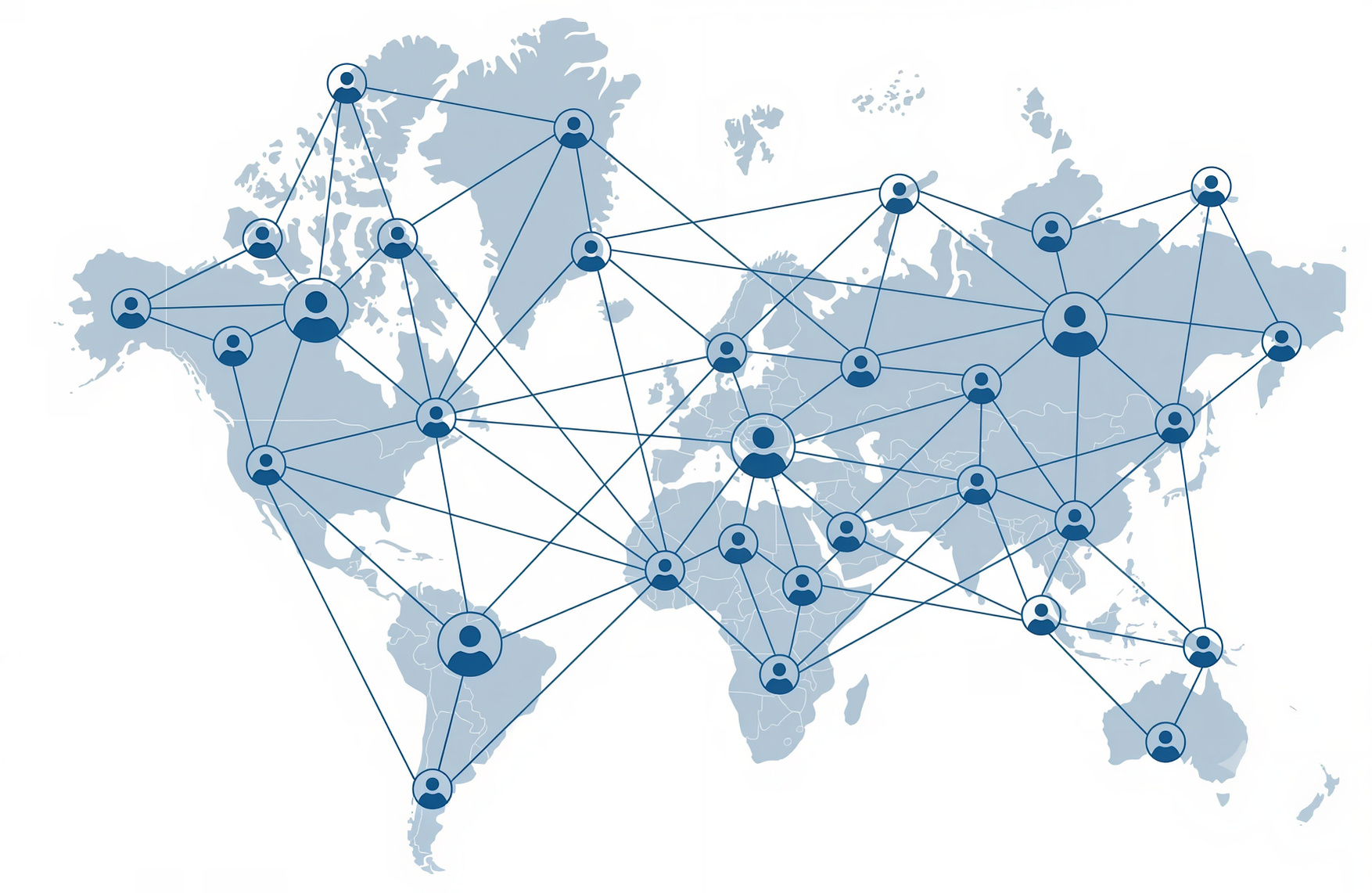
Das senkt die Einstiegshürde für Node-Operatoren – und für Endverbraucher von Compute potenziell auch die Kosten für den Zugang, dank Wettbewerb zwischen vielen unabhängigen Strom-/Power-Anbietern innerhalb eines einzelnen Netzwerks.
Die Schlüsselfrage für jedes DePIN-Netzwerk ist, ob es in eine funktionierende Ökonomie verwandelt werden kann: Gibt es genug Nodes? Ist die Nachfrage nach ihrer Kapazität stabil? Und kann die Infrastruktur die Last echter – nicht nur Test- – Nutzungsszenarien bewältigen?
Wenn Millisekunden zählen
Ein weiterer Trend aus 2026 bestärkt die Logik von DePIN: der Wandel von Chatbots zu autonomen KI-Agenten, die in Echtzeit handeln – sehen, hören und per Sprache reagieren, auf Video-Streams reagieren. In solchen Szenarien hört Latenz auf, ein Nebenkriterium zu sein, und wird zu einer entscheidenden Produkteigenschaft.
Der Unterschied zwischen einem Agenten, mit dem man gern spricht, und einem, dessen Pausen nerven, wird in Hunderten von Millisekunden gemessen.
Die klassische Architektur spielt hier gegen den Nutzer. Eine Anfrage reist vom Gerät in ein Rechenzentrum, oft auf einem anderen Kontinent, wird verarbeitet und kommt wieder zurück. Jede solche Hin-und-her-Runde erhöht die Latenz, die sich während des Audio- und Video-Streamings aufsummiert. Zentralisierte Rechenzentren lassen sich physisch nicht gleichzeitig „neben“ jeden Nutzer auf dem Planeten platzieren.
Ein verteiltes Netzwerk aus Nodes erledigt diese Aufgabe am besten. Statt eines einzigen starken, aber weit entfernten Zentrums gibt es viele Presence-Punkte – geografisch verteilt genau dort, wo sich die Nutzer befinden. Eine Anfrage wird vom nächstverfügbaren Node verarbeitet, nicht vom entferntesten freien Server.
Genau an der Schnittstelle aus Mangel an zentralem KI-Compute und dem wachsenden Bedarf an KI-Infrastruktur mit niedriger Latenz ganz am Rand des Netzwerks bekommen DePIN-Protokolle die Chance, eine Nische einzunehmen, die Hyperscaler strukturell nicht aus eigener Kraft schließen können.
AIOZ: Von Storage bis zum AI-Compute-Netzwerk
AIOZ Network ist eines von wenigen DePIN-Projekten, das den Weg von einem engen Use Case zu einer vollständigen, Multi-Layer-Infrastruktur gegangen ist.
Das Netzwerk begann mit der Aufgabe der dezentralen Auslieferung und Speicherung von Medieninhalten (StreamP2P und S3-kompatibles Storage) und weitete sich dann zu einer vollständigen AI-Compute-Ökonomie aus – einem Marktplatz für Rechenleistung und KI-Modelle, aufgebaut auf einem verteilten Netzwerk aus Nodes.
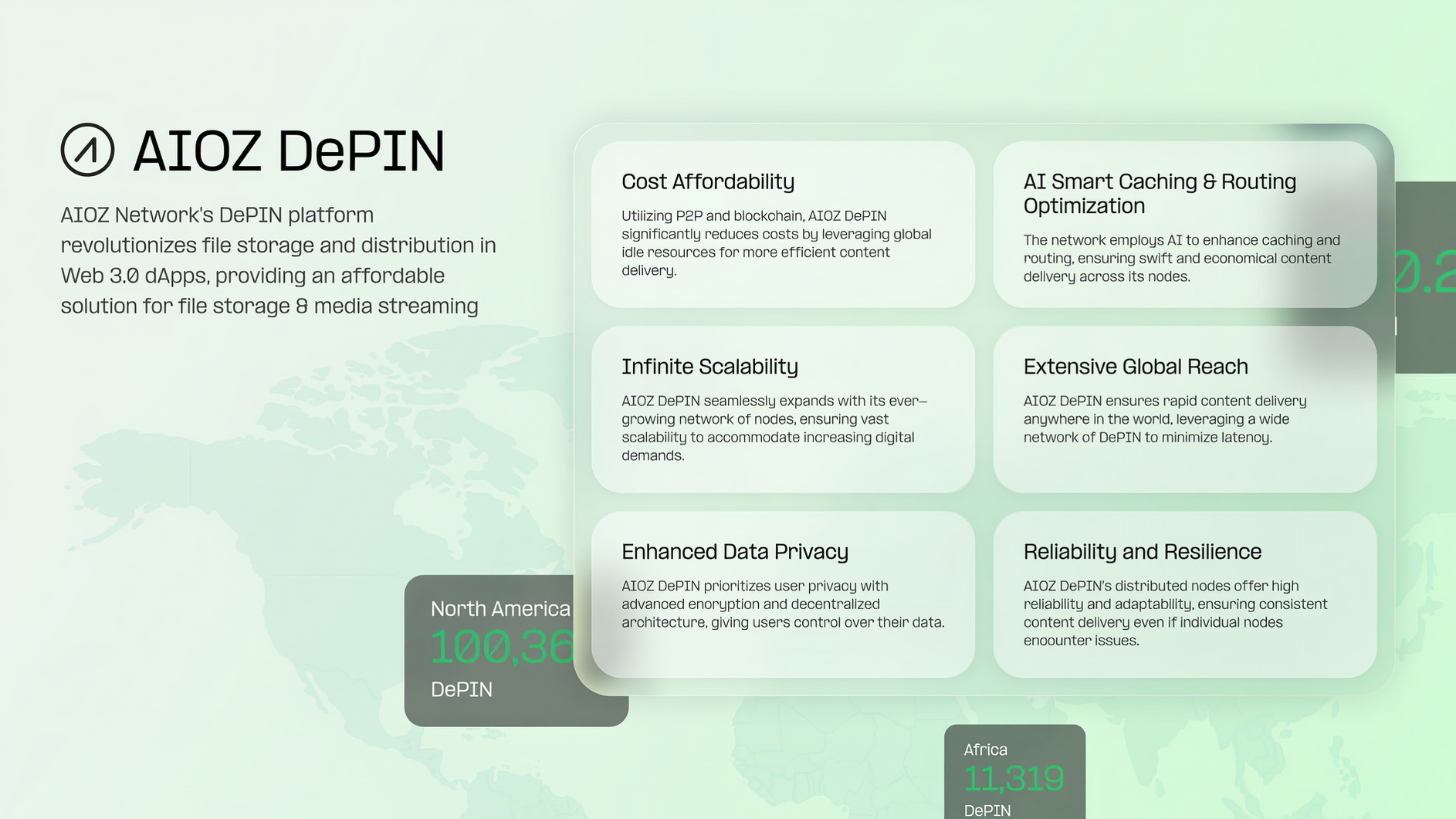
Das Fundament des Netzwerks sind seine DePIN-Nodes, betrieben von tausenden Teilnehmern auf der ganzen Welt – mit den Leerlaufressourcen gewöhnlicher Computer: Festplatten für Storage, Bandbreite für die Datenbereitstellung sowie GPU/CPU für Medien-Transcoding und AI-Compute.
Laut den Daten des Netzwerks sind derzeit mehr als 327.000 DePIN-Nodes registriert, und das gesamte Volumen der gelieferten Daten übersteigt 26.000 TB. Teilnehmer werden in $AIOZ-Token belohnt – entsprechend ihrem tatsächlichen Beitrag.
Bis 2026 hatte das AIOZ-Netzwerk mehrere miteinander verbundene Produktlinien auf Basis desselben DePIN-Node-Unterbaus aufgebaut:
AICompute Economy: ein Marktplatz für Rechenleistung und KI-Modelle, die über das verteilte Netzwerk aus Nodes ausgeführt werden können;
StreamP2P: ein dezentrales Content-Delivery-Netzwerk (CDN), eine Alternative zu zentralisierten Streaming-Anbietern;
Storage: S3-kompatible verteilte Datenspeicherung;
Pin: ein IPFS-Pinning-Dienst, der sicherstellt, dass Daten dauerhaft in dezentralem Storage verfügbar bleiben.
Praktischer Beleg, dass AIOZs KI-Richtung eine funktionierende Infrastruktur ist: die Bereitstellung des Qwen2.5-Omni-Modells auf der AIOZ-AI-Plattform.
Es ist ein multimodales Modell mit einer Thinker-Talker-Architektur: Es kann Text, Bilder, Audio und Video in Echtzeit verarbeiten und sowohl mit Text als auch mit synthetisierter Sprache antworten.
Modelle wie dieses sind anspruchsvoll in Bezug auf Compute-Ressourcen, und die Tatsache, dass sie sich über das verteilte AIOZ-Netzwerk ausführen lassen, ist ein konkretes Beispiel dafür, wie DePIN-Infrastruktur die Lücke zwischen unabhängigen Entwicklern und großen KI-Modellen schließt.
Für das Netzwerk bedeutet das: AIOZ fügt sich in die breitere Erzählung der Dezentralisierung von KI-Infrastruktur ein – Nutzer und Entwickler erhalten Zugang zu Compute und Modellen über ein verteiltes Netzwerk aus Nodes.
Einblicke aus AIOZ Network
Wir haben mit dem AIOZ-Team über einen der anspruchsvollsten realen Tests ihrer DePIN-Infrastruktur gesprochen. So haben sie uns erklärt, wie man ein solches Modell an ein dezentralisiertes Netzwerk anpasst.
F: Was waren die größten Engineering-Herausforderungen dabei, Qwen2.5 Omni effizient auf der dezentralen DePIN-Infrastruktur von AIOZ laufen zu lassen, und welche Erkenntnisse hat euer Team daraus gewonnen?
Die größte Herausforderung bestand darin, die Skalierung und Vielfalt von AIOZ DePIN in eine verlässliche Umgebung für Echtzeit-Multimodal-Inferenz zu verwandeln.
Qwen2.5 Omni benötigt mehr als rohe GPU-Leistung. Seine Latenz hängt von der Medienverarbeitung, vom Laden des Modells, von der Warteschlangenbildung, von der Inferenz und von der gestreamten Ausgabe ab. AIOZ DePIN stellt zwar einen großen Pool verteilter Compute-, Storage- und Bandbreitenressourcen bereit, doch diese Ressourcen unterscheiden sich in Hardware-Profil, Standort, Netzwerkqualität und aktueller Verfügbarkeit. Die wichtigste Engineering-Aufgabe war daher, jede Anfrage mit den richtigen Ressourcen zusammenzubringen und gleichzeitig die Latenz vorhersagbar zu halten.
Dafür war hardwarebewusstes Scheduling über qualifizierte Compute-Pools hinweg nötig, intelligentes Routing basierend auf Standort und Netzwerkbedingungen, warmes Modell-Caching zur Reduzierung der Startzeit sowie Sitzungsaffinität, um den multimodalen Kontext während des Streamings zu bewahren. Die verteilte Architektur von AIOZ DePIN bietet außerdem Flexibilität, verschiedene Sitzungen über die verfügbaren Maschinen zu verteilen, die Kapazität bei wachsender Nachfrage auszubauen und die Abhängigkeit von einem einzelnen Rechenzentrum zu verringern.
Die wichtigste Erkenntnis: Die Stärke von AIOZ DePIN liegt nicht nur in der Menge verfügbarer Rechenleistung. Sie liegt darin, Compute, Storage und Bandbreite als eine gemeinsame Infrastruktur-Schicht zu koordinieren. Für Echtzeit-KI muss diese Koordination vor allem die Modellbereitschaft, Standortnähe, stabile Verbindungen und die Tail-Latenz priorisieren – nicht allein den Durchsatz.
Letztlich ist das Ziel, die Komplexität des zugrunde liegenden DePIN unsichtbar zu machen. Nutzer sollen einen einzigen, reaktionsschnellen multimodalen Dienst erleben – gestützt durch die verteilte Kapazität von AIOZ DePIN, durch intelligente Ressourcenallokation und die Fähigkeit, Workloads im Netzwerk skaliert laufen zu lassen.
Wie das AIOZ-Team betont, erfordert das Ausführen eines Modells wie Qwen2.5-Omni das koordinierte Zusammenführen von Compute, Storage und Bandbreite als eine einzige Schicht – dort, wo Latenz wichtiger ist als Durchsatz.
Einblicke aus YOM
Wir haben außerdem dem YOM-Team eine Frage gestellt – dem dezentralen Edge-GPU-Netzwerk, das vor allem dafür bekannt ist, AAA-Spiele direkt an den Browser zu streamen. Da YOMs Roadmap auf Echtzeit-KI hindeutet, wollten wir wissen, wie Gaming- und KI-Workloads tatsächlich dieselbe Infrastruktur nutzen würden.
F: Da Gaming und KI in Zukunft um dieselben GPU-Nodes konkurrieren – wie wird YOM Workloads im Netzwerk priorisieren?
Die Rahmung geht davon aus, dass Workloads um Nodes kämpfen. Unsere Architektur ist so gebaut, dass sie das nicht tun. Unser patentiertes Vulkan-Kernel-Design partitioniert eine einzelne Consumer-GPU in bis zu 7 isolierte Slots, jeweils mit eigenem VRAM-Budget – so treten Sitzungen nie in Konflikt miteinander.
Unser HyperOrch-AI-Scheduler setzt dann jede Sitzung genau nach dem, was sie wirklich braucht: Eine Cloud-Gaming-Sitzung braucht einen Node innerhalb von etwa 50 km, um Latenzen unter 10 ms zu erreichen, während viele AI-Inferenzjobs eher auf Durchsatz als auf Distanz achten. Platzierung nach Bedarf, nicht nach Warteschlange.
Auch das Angebot bei YOM folgt der Nachfrage statt sie zu deckeln. Node-Lizenzen werden in Paketen freigeschaltet, sobald die Auslastung bestimmte Schwellen überschreitet. Dadurch steigt bei anhaltender Nachfrage die Ausbeute der Operatoren, und neue Nodes fließen in die Regionen, in denen gerade die Arbeit stattfindet.
Wenn die Community-Abdeckung noch nicht überall angekommen ist, federn telco-gehostete GPUs und Burst-Kapazität von Hyperscalern das Netzwerk ab. Nichts wird verhungern gelassen, und das Protokoll verdient in jedem Fall eine Gebühr pro Sitzung. Mehr Klassen von Workloads machen das Netzwerk stärker – nicht stärker überlastet.
F: Läuft Echtzeit-KI auf derselben Infrastruktur wie Gaming – oder braucht sie eine separate technische Ebene?
Selbe Infrastruktur, per Design. Wir haben mit Gaming angefangen, weil es die härteste Echtzeit-Workload ist: eine mediane Latenz unter 10 ms, AAA-Qualität, tausende gleichzeitige zustandsbehaftete Sitzungen. Ein Netzwerk, das Unreal Engine 5 in den Browser streamt, kann jede Workload mit denselben Latenz- und Sitzungszustands-Einschränkungen bedienen – und Echtzeit-KI ist genau diese Klasse.
Die Bausteine übertragen sich Eins-zu-Eins. Der gleiche Scheduler, der eine Gamesitzung platziert, platziert auch eine Inferenzsitzung. Die gleiche Vulkan-VRAM-Partitionierung gibt einer KI-Workload einen isolierten Slot auf einer Consumer-GPU. Die gleiche Abrechnungsschicht zahlt dem Operator, und das Protokoll nimmt seine Gebühr – unabhängig davon, was läuft. Was sich ändert, ist die Laufzeit im Container: ein Model-Server statt einer Game-Build. Das ist eine dünne Schicht darüber, keine zweite Netzwerkebene.
DeepSeeks veröffentlichte Arbeit zu DualPipe und DeepEP hat bewiesen, dass die interconnect-„Moat“ von Hyperscalern mit Algorithmen, nicht mit Hardware, gebrochen werden kann. Unser Vulkan-Kernel ist das Äquivalent für Retail-GPUs: Er ermöglicht, dass Consumer-GPUs Workloads übernehmen, die früher unter enterprise-tauglicher Isolation liefen. Gaming beweist die Physik. KI erbt das Netzwerk.
Was hier durchkommt: YOM schaltet nicht einfach KI auf sein Gaming-Netzwerk oben drauf. Die gleiche Infrastruktur, die für die schlimmste Latenz-Situation im Gaming gebaut wurde, macht es auch für Echtzeit-KI bereit.
Notiz von Cicada-CEO Maxim Moris
Wir haben den Kreislauf geschlossen, indem wir Cicadas CEO und Mitgründer Maxim Moris gefragt haben, warum ein Market Maker ein Auge auf DePIN hat – und was tatsächlich bepreist wird, wenn man frühe Projekte unterstützt.
F: Was bringt DePIN im großen Bild auf Cicadas Radar?
Zwei Fakten, nicht eine Erzählung. Der GPU-Markt hat sich gespalten: Spot-H100-Stunden fielen von $8–10 im Jahr 2024 auf unter $3,50, während reservierte Kapazität für ein Jahr etwa 40% von ihrem Tief Ende 2025 zurückkletterte. Günstig bei Bedarf, teuer, wenn du es garantiert brauchst – genau diese Lücke erhält verteilte Kapazität als Chance.
DePIN hat endlich Einnahmen: ungefähr 150 Mio. USD on-chain im Januar 2026. Klein, aber es heißt: Tokens mit einem Cashflow, den man modellieren kann – statt einer Story, die man pushen kann. Wir folgen der Nachfrage nach Liquidität, und Liquidität folgt den Einnahmen.
F: Wird DePIN den KI-Hype überdauern – oder mit ihm verblassen?
Momentan liegt die ganze Aufmerksamkeit auf KI, Automatisierung und Agenten. Aber dieser Hype kann schnell verblassen, denn die meisten dieser Richtungen brauchen schlicht keine Blockchain. Der Großteil der Projekte handelt heute mit AI-Agenten.
F: Was ist anders an der Market-Making-Arbeit für DePIN-Token?
Was sich in DePIN unterscheidet, ist die Angebotsseite. Node-Operatoren werden mit dem Token bezahlt und – nach dem Design des Systems – verkaufen sie jeden Tag. Es ist ein permanenter Fluss, gegen den man die Order-Book aufbauen muss.
Maxims Antworten zeigen auf dasselbe – von einem anderen Sitzplatz aus: DePIN ist interessant, weil es jetzt Einnahmen gibt und auf der Sell-Side ein planbarer Abnehmer für das Modell.
Fazit
DePIN-Infrastruktur wird sehr wahrscheinlich nicht über Nacht Hyperscale-Rechenzentren ersetzen. Das Training der größten Modelle erfordert weiterhin konzentrierte Compute-Cluster.
Doch für eine breite Palette von Aufgaben wirkt ein Modell, bei dem Compute und Storage von tausenden unabhängigen Netzwerkteilnehmern bereitgestellt werden, wie eine funktionierende Alternative zum einzelnen Ausfallpunkt, der durch eine zentralisierte Cloud dargestellt wird.
Projekte wie das AIOZ Network zeigen, dass DePINs Übergang von der Idee in die Produktion bereits im Gange ist: Infrastruktur für Datenspeicherung und -bereitstellung, über Jahre aufgebaut, ist zur Grundlage für die nächste Stufe verteilter AI-Compute geworden.
Hier wird die Dezentralisierungs-Erzählung durch Netzwerkmetriken und konkrete, funktionierende Integrationen untermauert.
Mehr erfahren: DePIN: Cloud-Lücken füllen