Der Blogbeitrag von Babylon über den Aegis-Deal tauchte heute Abend immer wieder in meinem Feed auf, Wochen nachdem er eigentlich schon angekündigt worden war.
Bin zurückgegangen und habe ihn tatsächlich gelesen, statt wieder wegzuscrollen.
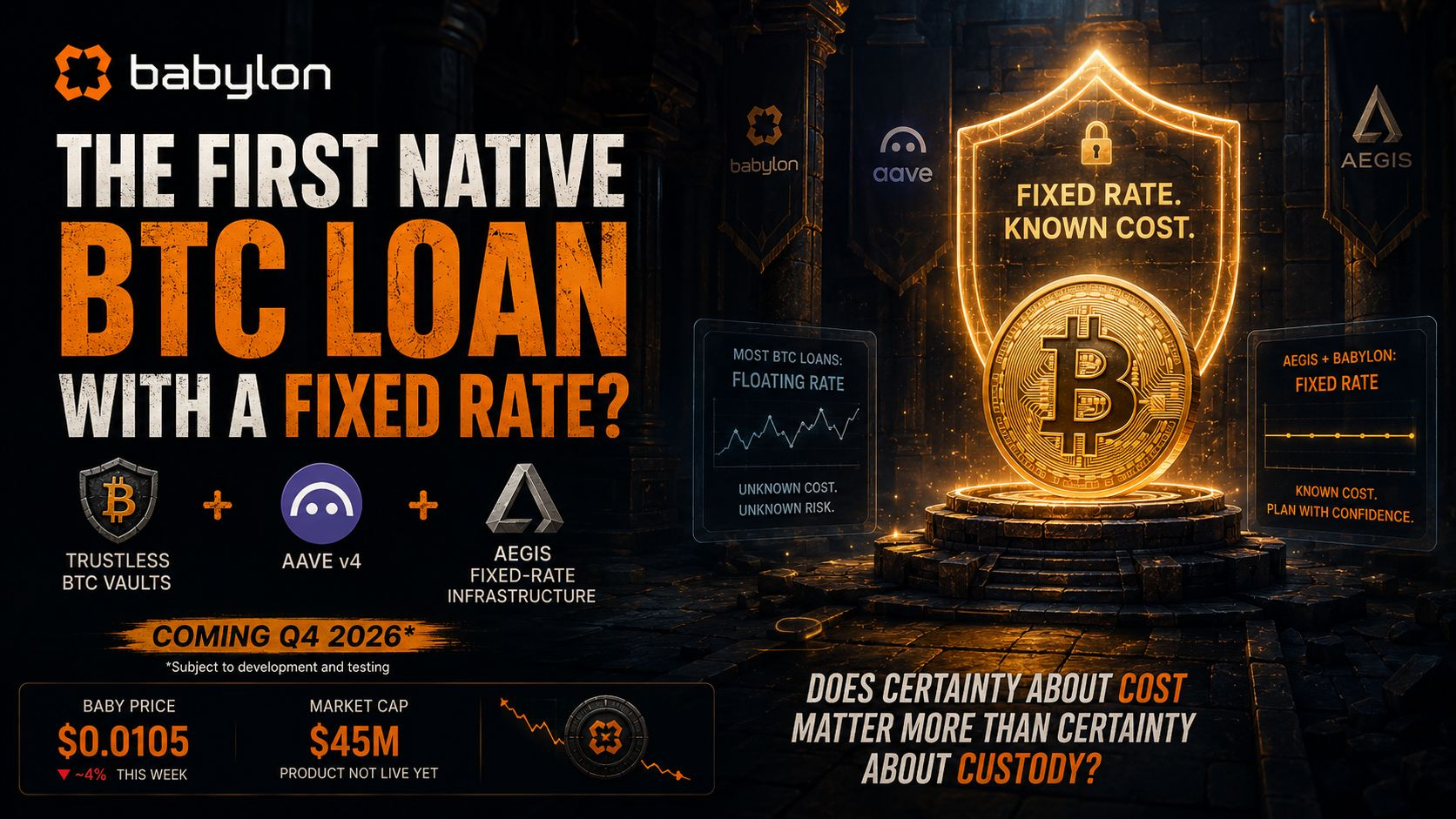
25. Juni. Babylon Trustless Bitcoin Vaults, Aave v4 und Aegis’ festverzinsliche Infrastruktur wurden zu einem einzigen Kreditprodukt gebündelt. Ausgerichtet auf Treasuries, Fonds und Market Maker. Erwartet für Q4 2026, noch abhängig von Entwicklung und Tests.
Beim ersten Lesen dachte ich: Okay, noch eine weitere Lending-Integration.
Ist es nicht.
Jeder native BTC-besicherte Kredit, auf den ich bisher gestoßen bin, schwebt. Der Zinssatz bewegt sich mit dem Markt, der Kreditnehmer trägt, was das bedeutet, für seine Kosten in diesem Monat.
Eine Treasury kann so eine Position nicht underwriting. Nicht, weil der Zinssatz vielleicht schlecht ist — sondern weil der Zinssatz unbekannt ist, bis er es nicht mehr ist.
Festzins macht Bitcoin nicht weniger volatil. BTC schwankt weiterhin, wie es eben schwankt.
Was es behebt, ist nicht der Preis. Es ist die eine Zahl, die eine Treasury wirklich fest kalkuliert brauchen muss: welche Kreditkosten feststehen, im Voraus.
Ich hatte angenommen, dass jeder native BTC-besicherte Kredit so funktioniert — Zinssatz schwebt, der Kreditnehmer trägt ihn. Dieser hier nicht.
Das ist eine andere Art von nativer BTC, als ich sie bisher wirklich kennengelernt habe.
BABY wird immer noch um etwa 0,0105 $ gehandelt, ist diese Woche um fast 4 % gefallen, mit einer Marktkapitalisierung nahe 45 Mio. $ — während das Produkt selbst noch nicht gestartet ist. Vielleicht sollte genau das passieren, bevor überhaupt irgendetwas live geht.
Ich weiß nicht, ob ein fester Zinssatz tatsächlich das ist, worauf Institutionen gewartet haben, oder ob es einfach das erste ist, was ihnen jemand angeboten hat und das sich vertraut anfühlt.
Spielt Sicherheit bei den Kosten für eine Treasury mehr eine Rolle als Sicherheit bei der Verwahrung — oder ist dieser Vergleich gar die falsche Tradeoff, den man gegenüberstellen sollte?
@BabylonLabs_io #baby $BABY
Bin zurückgegangen und habe ihn tatsächlich gelesen, statt wieder wegzuscrollen.
25. Juni. Babylon Trustless Bitcoin Vaults, Aave v4 und Aegis’ festverzinsliche Infrastruktur wurden zu einem einzigen Kreditprodukt gebündelt. Ausgerichtet auf Treasuries, Fonds und Market Maker. Erwartet für Q4 2026, noch abhängig von Entwicklung und Tests.
Beim ersten Lesen dachte ich: Okay, noch eine weitere Lending-Integration.
Ist es nicht.
Jeder native BTC-besicherte Kredit, auf den ich bisher gestoßen bin, schwebt. Der Zinssatz bewegt sich mit dem Markt, der Kreditnehmer trägt, was das bedeutet, für seine Kosten in diesem Monat.
Eine Treasury kann so eine Position nicht underwriting. Nicht, weil der Zinssatz vielleicht schlecht ist — sondern weil der Zinssatz unbekannt ist, bis er es nicht mehr ist.
Festzins macht Bitcoin nicht weniger volatil. BTC schwankt weiterhin, wie es eben schwankt.
Was es behebt, ist nicht der Preis. Es ist die eine Zahl, die eine Treasury wirklich fest kalkuliert brauchen muss: welche Kreditkosten feststehen, im Voraus.
Ich hatte angenommen, dass jeder native BTC-besicherte Kredit so funktioniert — Zinssatz schwebt, der Kreditnehmer trägt ihn. Dieser hier nicht.
Das ist eine andere Art von nativer BTC, als ich sie bisher wirklich kennengelernt habe.
BABY wird immer noch um etwa 0,0105 $ gehandelt, ist diese Woche um fast 4 % gefallen, mit einer Marktkapitalisierung nahe 45 Mio. $ — während das Produkt selbst noch nicht gestartet ist. Vielleicht sollte genau das passieren, bevor überhaupt irgendetwas live geht.
Ich weiß nicht, ob ein fester Zinssatz tatsächlich das ist, worauf Institutionen gewartet haben, oder ob es einfach das erste ist, was ihnen jemand angeboten hat und das sich vertraut anfühlt.
Spielt Sicherheit bei den Kosten für eine Treasury mehr eine Rolle als Sicherheit bei der Verwahrung — oder ist dieser Vergleich gar die falsche Tradeoff, den man gegenüberstellen sollte?
@BabylonLabs_io #baby $BABY