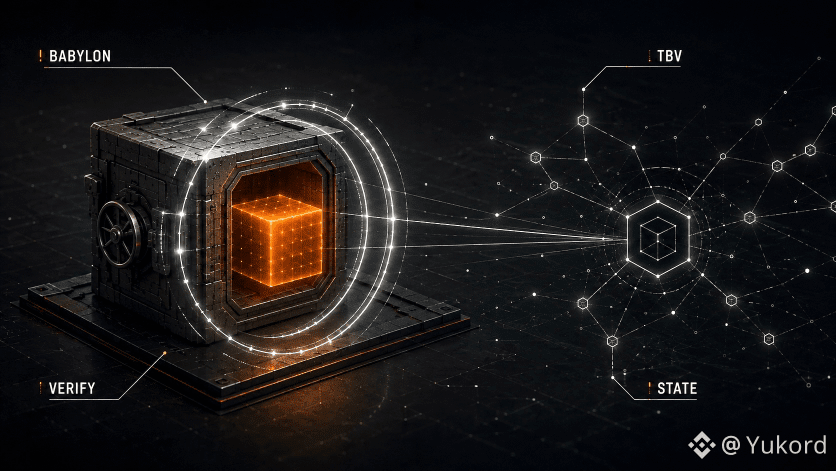
The more I compared lending designs, the less I thought collateral itself was the difficult problem. I kept coming back to why proving its state seemed more important than moving it at all. That part stuck with me. It made me look at Trustless Bitcoin Vaults (TBV) differently. I realized I had been assuming trustless lending required some form of control over collateral, while TBV kept pulling the problem back to verification instead, because lending only really needs confidence that the same constraints continue to hold over time. Only then did the design choices start fitting together. The technical design supports that idea by keeping BTC inside its original Bitcoin spending rules while another chain reasons about the vault instead of taking custody of the coins. Still, I found myself thinking less about that mechanism and more about the pressure that made it necessary. Maybe that's the more interesting question. Once verification becomes the scarce resource, designing on Bitcoin starts to look less like moving assets and more like preserving the conditions that make those assets worth trusting in the first place. @BabylonLabs_io #baby $BABY

Veröffentlichen

--
Haftungsausschluss: Enthält Meinungen von Drittanbietern. Keine Beratung. Binance AI wird ohne Gewähr bereitgestellt. Siehe AGB.