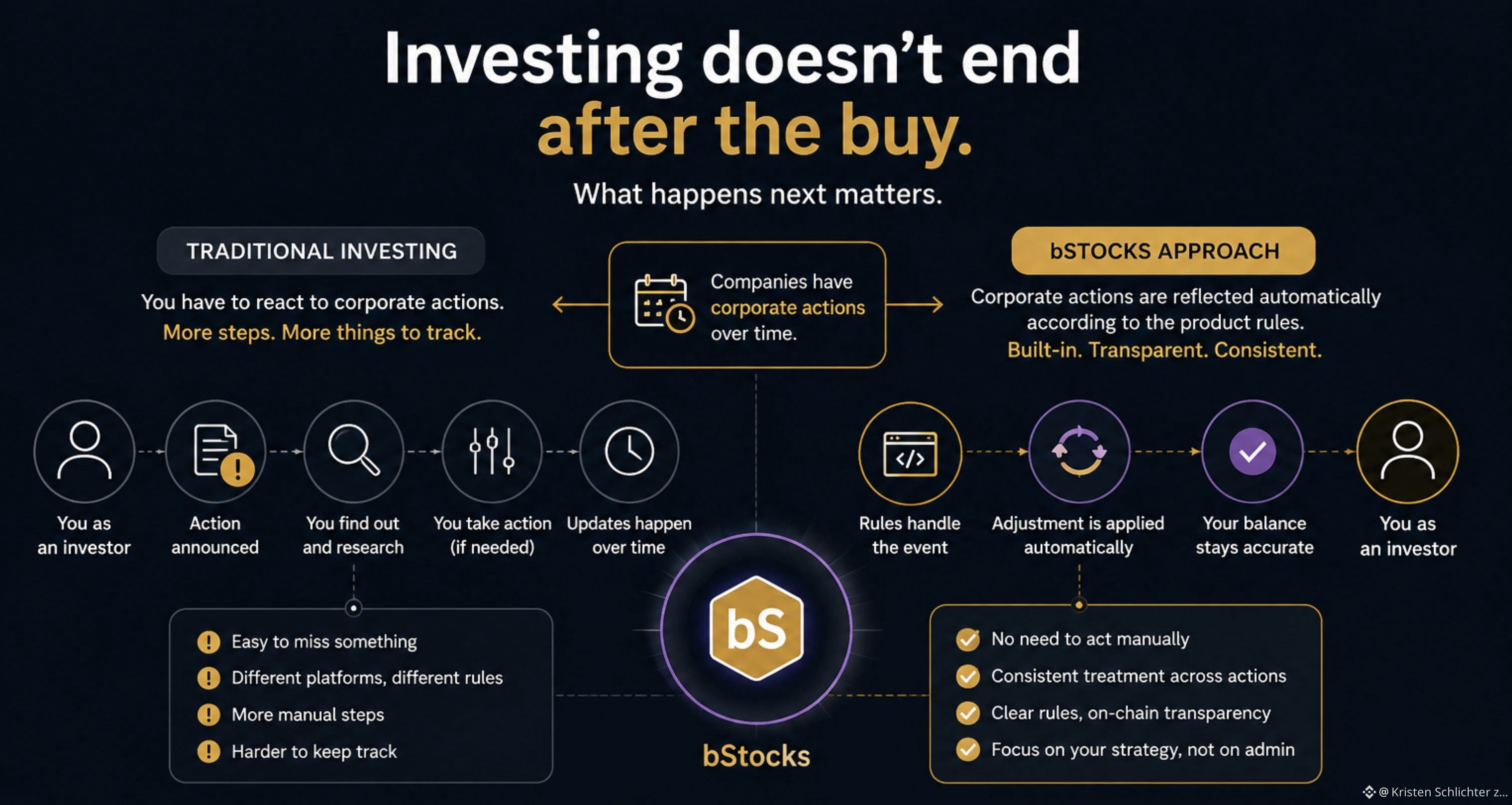
Der Abschnitt der bStocks-Dokumentation, der mich überrascht hat, ging nicht ums Kaufen. Es ging darum, was danach passiert.
Davor habe ich nie viel Aufmerksamkeit auf Corporate Actions gelegt. Bei Aktiensplits, Reverse-Splits, Dividendenausgleichen … klang das immer wie nebensächliche Hintergrunddetails.
Durch das Lesen über bStocks wurde mir klar, dass diese Ereignisse tatsächlich Teil des Produktsdesigns sind – nicht nur etwas, das einfach auf dem Markt passiert. Anstatt davon auszugehen, dass Nutzer manuell auf jede Corporate Action reagieren müssen, ist der Mechanismus so ausgelegt, dass er diese Änderungen automatisch widerspiegelt – gemäß den Regeln des Produkts.
Das hat die Art verändert, wie ich über Finanzprodukte nachdenke. Der Kaufprozess ist nur der Anfang. Was wirklich zählt, ist, ob ein Produkt für alles, was danach geschieht, klare Regeln hat.
Wahrscheinlich hätte ich das vor einem Jahr nicht bemerkt. Heute ist es eines der ersten Dinge, nach denen ich suche, wenn ich etwas Neues lerne.
Welchen Teil eines Finanzprodukts übersiehst du normalerweise, bis du die Dokumentation liest?
@BinanceCIS #bStocksCIS $SPCXB
Davor habe ich nie viel Aufmerksamkeit auf Corporate Actions gelegt. Bei Aktiensplits, Reverse-Splits, Dividendenausgleichen … klang das immer wie nebensächliche Hintergrunddetails.
Durch das Lesen über bStocks wurde mir klar, dass diese Ereignisse tatsächlich Teil des Produktsdesigns sind – nicht nur etwas, das einfach auf dem Markt passiert. Anstatt davon auszugehen, dass Nutzer manuell auf jede Corporate Action reagieren müssen, ist der Mechanismus so ausgelegt, dass er diese Änderungen automatisch widerspiegelt – gemäß den Regeln des Produkts.
Das hat die Art verändert, wie ich über Finanzprodukte nachdenke. Der Kaufprozess ist nur der Anfang. Was wirklich zählt, ist, ob ein Produkt für alles, was danach geschieht, klare Regeln hat.
Wahrscheinlich hätte ich das vor einem Jahr nicht bemerkt. Heute ist es eines der ersten Dinge, nach denen ich suche, wenn ich etwas Neues lerne.
Welchen Teil eines Finanzprodukts übersiehst du normalerweise, bis du die Dokumentation liest?
@BinanceCIS #bStocksCIS $SPCXB