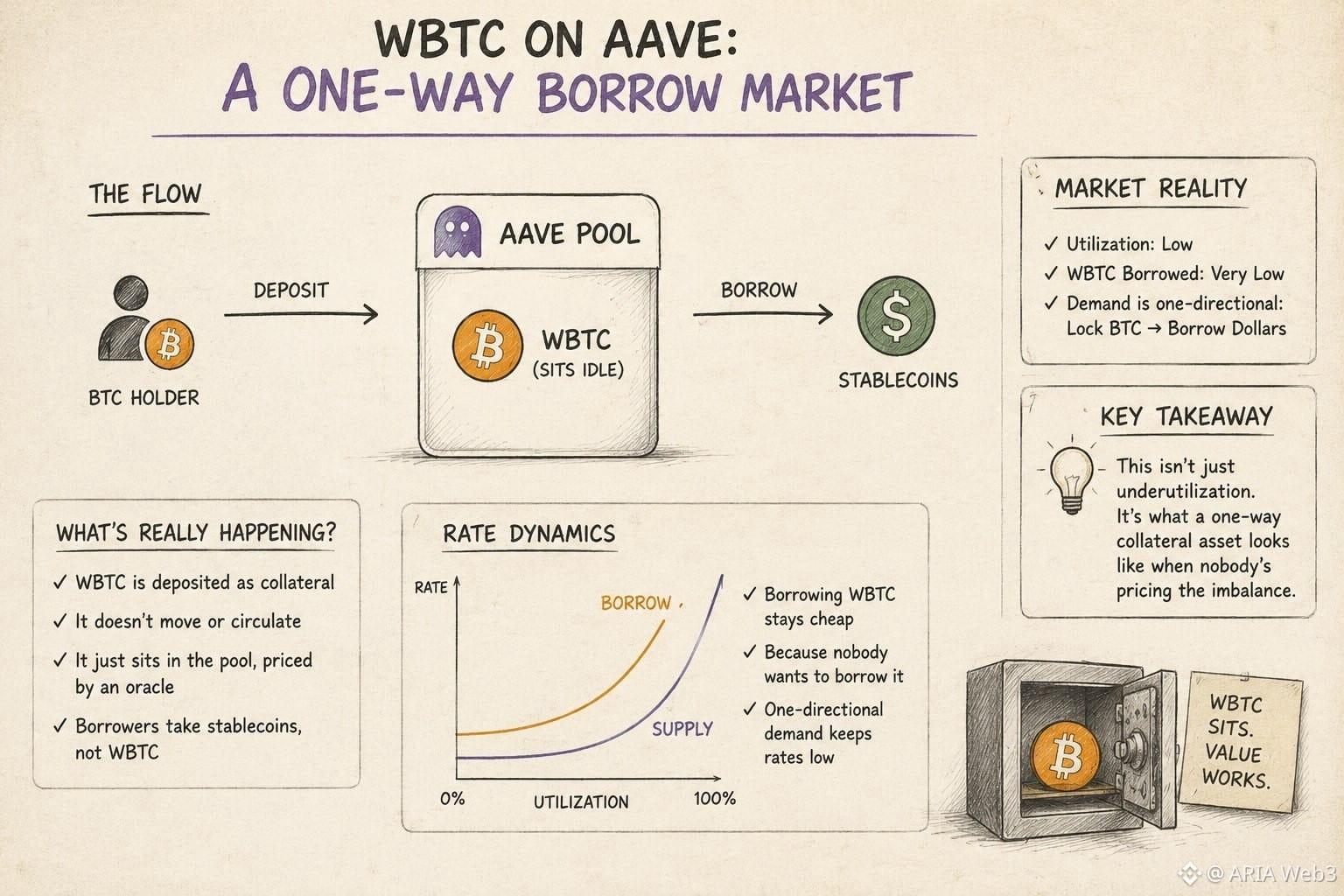
I assumed borrowing against WBTC on Aave meant Bitcoin was doing double duty — sitting as collateral while its value backed a loan elsewhere.
It's simpler than that, and stranger.
WBTC in the pool isn't circulating. It just sits, priced by an oracle, while someone else's stablecoins get borrowed against it.
I checked Aave's rate history and Aavescan's live WBTC markets to confirm this. Utilization stays low. Almost nobody borrows WBTC itself.
What stood out: the demand is one-directional. People lock BTC to borrow dollars, not the other way around.
That shapes the rate curve. Aave's model prices whichever side is scarce — and since BTC holders rarely want to lend BTC out, borrowing it stays cheap by design, not by accident.
It's a market where the "borrow" side of a borrow market barely gets used.
Makes me wonder if that's really underutilization, or just what a one-way collateral asset looks like when nobody's pricing the imbalance.
#baby $BABY @BabylonLabs_io