## What happened?
On Wednesday, July 22, 2026, US President Donald Trump issued a major warning: from now on, any time Iran attacks a ship in the Strait of Hormuz, the United States will destroy one Iranian bridge or power plant in retaliation for each attack. Trump made clear this policy would also apply to bridges and power plants in and around Tehran.
This warning marks a new and serious escalation in the US-Iran conflict that has been ongoing since March 2026. The US has already struck more than 80 Iranian military targets, and Iran has responded with missile and drone attacks on Jordan, Kuwait, and other areas in the region. An Iranian official has warned that Tehran could retaliate by striking bridges and infrastructure across the region.
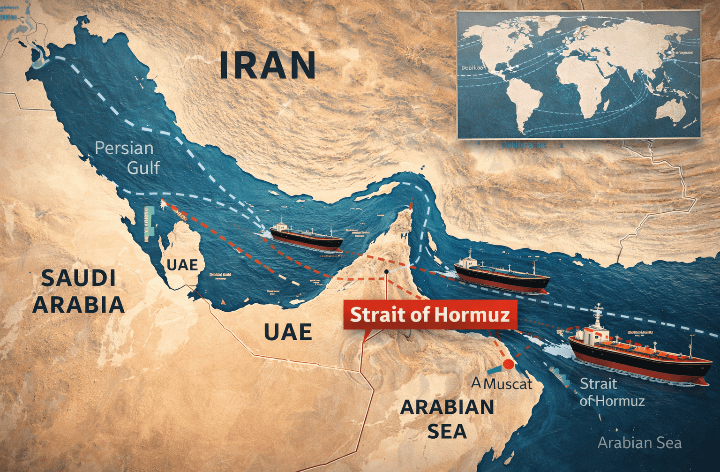
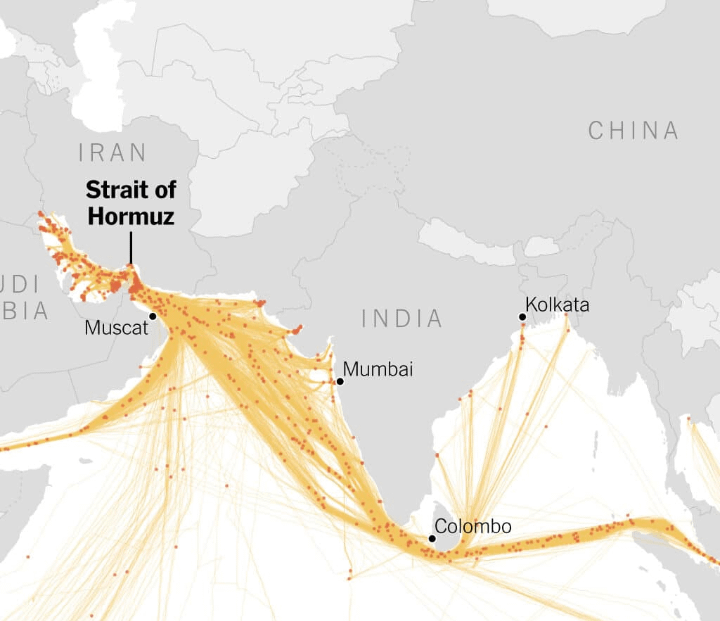
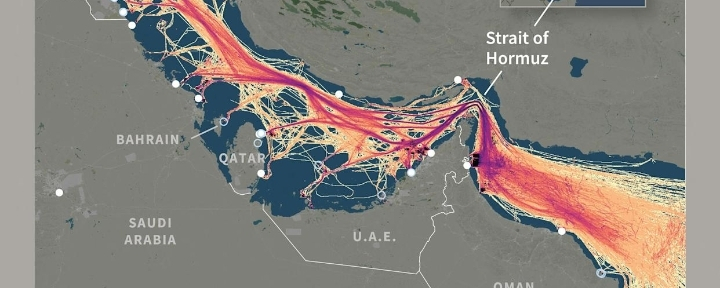
The Strait of Hormuz is the world's most critical oil shipping chokepoint — roughly 20% of the world's crude oil and large volumes of LNG pass through it. Any disruption there has an outsized effect on global oil supply and prices.
## Impact on Bitcoin and crypto markets: the pattern over the past month and a half
Since this war began, the crypto market has repeatedly shown the same pattern — every time geopolitical tension rises, a risk-off mood takes hold and selling pressure hits Bitcoin and altcoins alike:
- **July 9**: After US strikes near Hormuz, Bitcoin fell to around $61,688 (-2.04% in 24 hours).
- **July 13**: After a bullish week, renewed tensions pulled Bitcoin down from $64,300 to $63,100; open interest held steady at $17 billion.
- **July 14**: As oil rose 4%, Bitcoin slid from $64,125 to $62,600, compounded by Fed rate-hike concerns.
- **July 17-18**: After the ceasefire collapsed, a seventh straight night of strikes pushed Bitcoin below $64,000.
- **July 20**: Brent crude climbed to $91.40 (its highest since June 11), while Bitcoin traded at $64,051.
All of these events show the same economic chain: Hormuz disruption → rising oil prices → inflation concerns → tighter Fed rate expectations → selling pressure on risk assets, including crypto.
## The likely impact of Trump's new "one attack, one bridge/power plant" policy
This new warning differs from earlier ones because it announces an **automatic retaliation policy** — whenever Iran strikes a ship, the US will immediately destroy infrastructure in response. This raises the risk of a more unpredictable, prolonged conflict. For traders on exchanges like Binance, this means:
1. **Short-term volatility is likely to rise** — with every new attack/retaliation headline, quick price swings in BTC, ETH, and other major coins are likely. Past events have already seen liquidations of $250-350 million.
2. **The oil-inflation-rates linkage will persist** — if Brent crude pushes above $92-95, it could push back Fed rate-cut timelines, adding further pressure on risk assets like crypto.
3. **Leveraged positions need extra caution** — for traders holding high-leverage long positions on Binance Futures, risk management becomes even more critical in this kind of news-driven market.
4. **The $60,000 psychological support level** — analysts have repeatedly flagged this as a key support zone; a break below it would signal a larger correction.
## One caveat: Bitcoin has also shown some independence
Interestingly, in some instances Bitcoin hasn't mirrored oil's sharp swings. For example, after the July 8 ceasefire collapse, WTI oil jumped 6% while Bitcoin fell only 2.5% — suggesting the war premium is concentrated mainly in crude oil, and reaches Bitcoin only indirectly, through interest rates and overall risk appetite rather than a direct link.
## Conclusion
Trump's new "red line" warning has made the US-Iran conflict even more unpredictable. For Nepali and other traders trading on Binance, the coming days call for:
- Closely following every piece of Strait of Hormuz-related news,
- Monitoring oil prices (particularly the Brent crude $92-95 level),
- And entering high-leverage trades only with stop-losses in place.
Given how highly volatile this market condition is, any large position should be sized according to one's own risk tolerance. This article is not investment advice — it is analytical information on the current geopolitical-market relationship.
---
*Sources: CNN, Washington Post, PBS News, Al Jazeera, CoinDesk, Coint
elegraph/CryptoBriefing, Coingape (July 2026)*