

The event is extreme within the old-whale cohort, but the broader capitulation remains dominated by newer and more reactive holders.
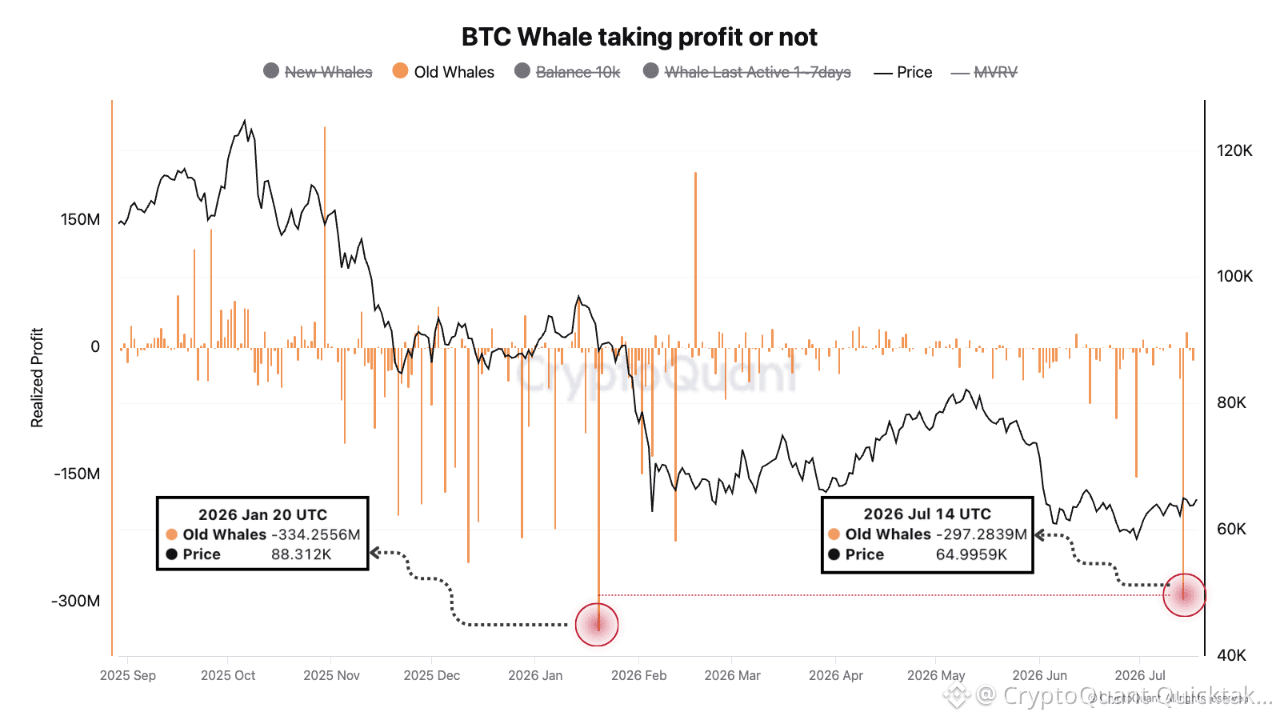
On July 14, old Bitcoin whales realized approximately $297.3 million in losses, the second-largest daily negative reading visible in this cohort since September 2025.
The only larger event occurred on January 20, when losses reached $334.3 million with BTC trading near $88,300. That spike preceded one of the sharpest capitulation phases of the current bear market.
The significance of the latest movement is not limited to its size.
Old whales generally represent more established capital with a greater capacity to withstand volatility. When this cohort begins realizing losses at this scale, it suggests that the drawdown is reaching deeper into Bitcoin’s ownership structure and forcing even mature holders to reassess their exposure.
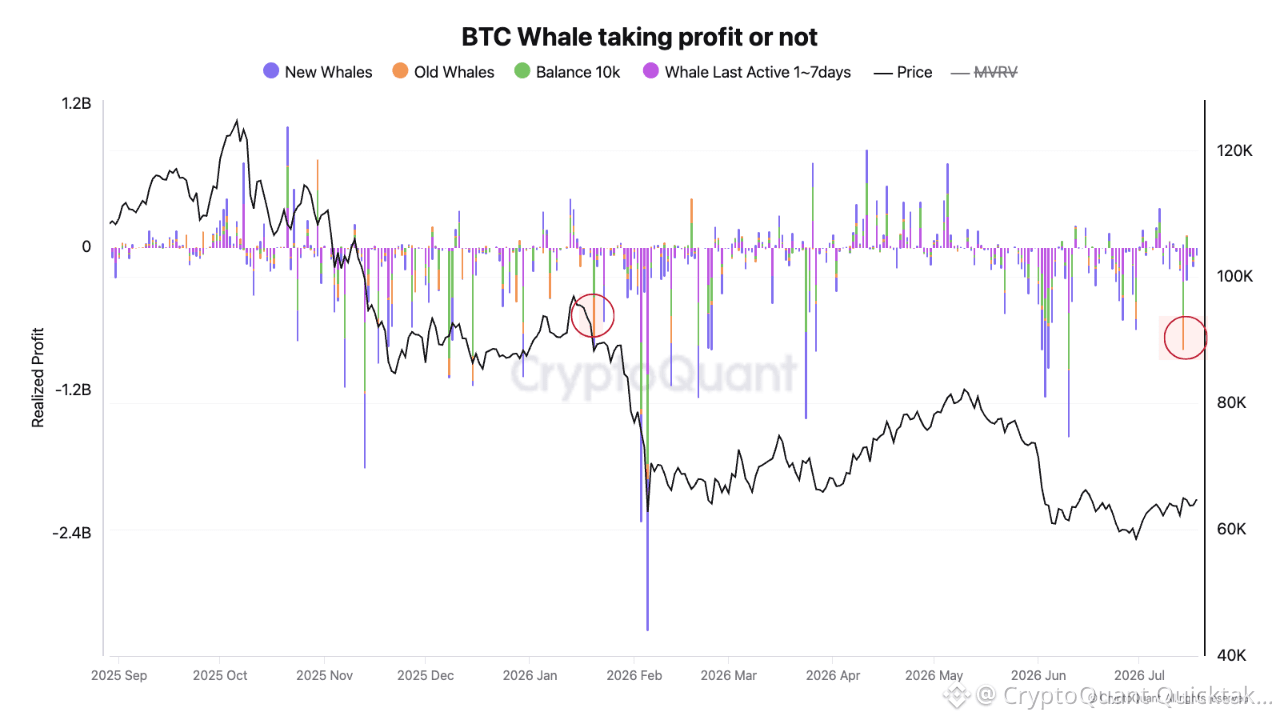
However, the broader cohort view provides an important qualification.
Throughout the downturn, new whales, recently active whales and the 10K-balance cohort have realized losses several times larger, occasionally reaching billions of dollars. Against that backdrop, the old-whale event appears relatively contained. In other words, old whales are now joining the capitulation, but they are not leading it.
The bulk of the pressure continues to come from newer and more reactive capital.
This is evidence of deeper market stress, but it can eventually become constructive if the surrendered supply is absorbed by stronger hands. Still, one extreme print does not confirm a bottom.
Confirmation would require old-whale loss realization to fade, losses across the broader whale complex to contract, and price to absorb the remaining supply without establishing new lows. If these spikes begin to cluster while BTC loses its current range, the signal would point toward another stage of capitulation rather than its conclusion.
Written by MorenoDV_