

The core message is that Bitcoin has achieved a level of institutional and structural permanence once thought impossible.
Despite extreme volatility, regulatory crackdowns, and technical challenges, the network has maintained a 99.99% uptime over 17 years.
It has transitioned from a "curiosity" to a "sovereign-grade" asset, proving its resilience through every major market crash and technical stress test.
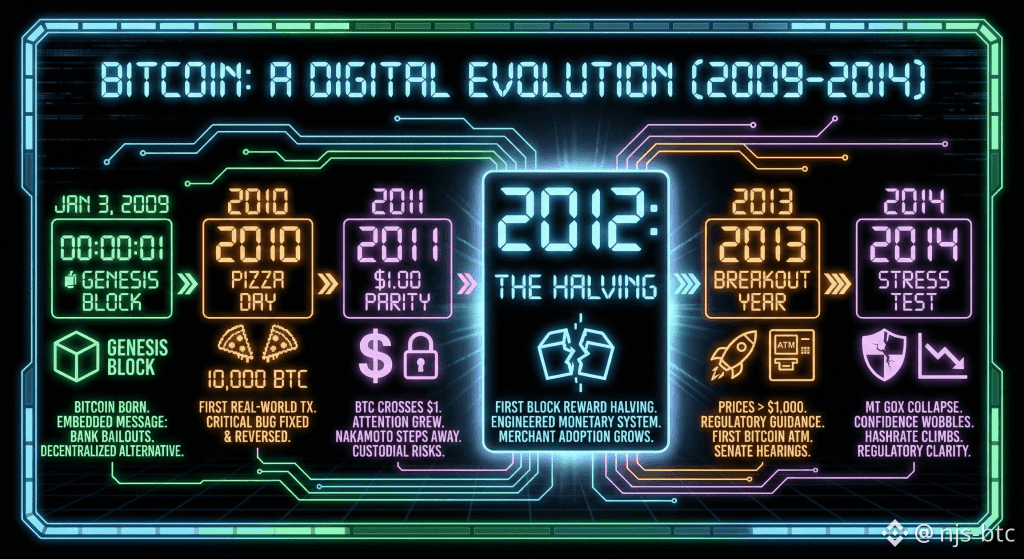
The "Anti-Fragile" Nature: $BTC has grown stronger from its failures.
2010: A critical bug allowed billions of coins to be created; it was fixed instantly, proving the community's governance.
2014: The collapse of Mt. Gox (the largest exchange at the time) failed to kill the network, instead leading to better risk controls.
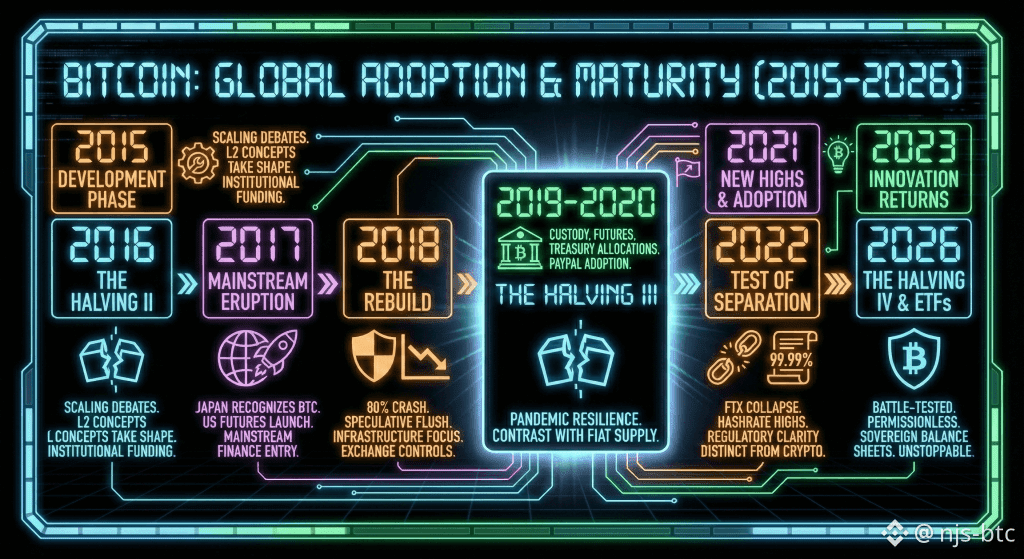
Unrivaled Reliability: The article highlights that Bitcoin’s uptime (99.99%) now rivals or exceeds critical global internet infrastructure. It has never "gone offline," even during major global crises like the 2020 pandemic or the 2024 halving.
2022: The FTX collapse served as a "stress test" that separated Bitcoin’s decentralized protocol from the failures of centralized crypto companies.
Monetary Engineering: The article emphasizes the Halving cycles (2012, 2016, 2020, 2024) as the "heartbeat" of the network. These events reinforced the narrative of scarcity, moving Bitcoin from a "pennies-per-coin" asset to one that hit six-figure prices.
Mainstream & State Adoption: Bitcoin has moved beyond mailing lists to:
National Currency: El Salvador's adoption in 2021.
Wall Street: The 2024 approval of Spot ETFs transformed it into a standard institutional portfolio asset.
Sovereign Balance Sheets: Now being considered by nations as a strategic reserve asset.
Evolution of Use Cases: While it began as "Peer-to-Peer Electronic Cash," it has evolved into a multi-layered ecosystem. The article notes recent innovations like Ordinals (NFTs on Bitcoin) and Layer 2 (L2) scaling solutions that allow for faster, cheaper transactions without compromising the main network’s security.
Survival Without a Leader: A key point of strength mentioned is that #Bitcoin continued to scale and evolve even after its creator, Satoshi Nakamoto, disappeared in 2011, proving the power of a truly decentralized system.
At 17 years old, Bitcoin is no longer a "fringe novelty." The article concludes that it is now a battle-tested, permanent fixture of the global financial system that "refuses to go away."
