


## Einführung
Das Erstellen dezentraler Anwendungen (dApps) ist mit leistungsstarken Entwicklungs-Frameworks wie Hardhat einfacher geworden. Entwickler können schnell Smart Contracts für Ethereum-kompatible Blockchains schreiben, testen und deployen. Doch das Schreiben funktionalen Codes ist nur ein Teil des Entwicklungsprozesses. Sicherheit bleibt eine der größten Herausforderungen in der Blockchain-Entwicklung – denn schon ein kleiner Fehler kann zu finanziellen Verlusten oder Schwachstellen führen, die nach dem Deployment nicht ohne Weiteres behoben werden können. Genau hier bietet Newton in Kombination mit Hardhat eine moderne Lösung: Es führt Policy-Unit-Tests ein, die Entwicklern helfen, Sicherheitsprobleme zu erkennen, bevor Smart Contracts in die Produktion gelangen.
## Warum Smart-Contract-Sicherheit wichtig ist
Traditionelle Unit-Tests sollen überprüfen, ob ein Smart Contract sich unter verschiedenen Bedingungen wie erwartet verhält. Beispielsweise kann ein Entwickler testen, ob eine Token-Übertragung erfolgreich ist, ob nur der Vertragsinhaber administrative Funktionen ausführen darf oder ob die Kontostände nach einer Transaktion korrekt aktualisiert werden. Obwohl diese Tests unverzichtbar sind, übersehen sie oft umfassendere Sicherheitsrichtlinien, die jeder Contract erfüllen sollte. Ein Contract kann alle Funktionstests bestehen, aber dennoch versteckte Schwachstellen enthalten – etwa eine unautorisierte Rechteausweitung, fehlende Zugriffskontrollen oder unsichere Interaktionen mit externen Contracts.
## Newton-Policy-Unit-Tests verstehen
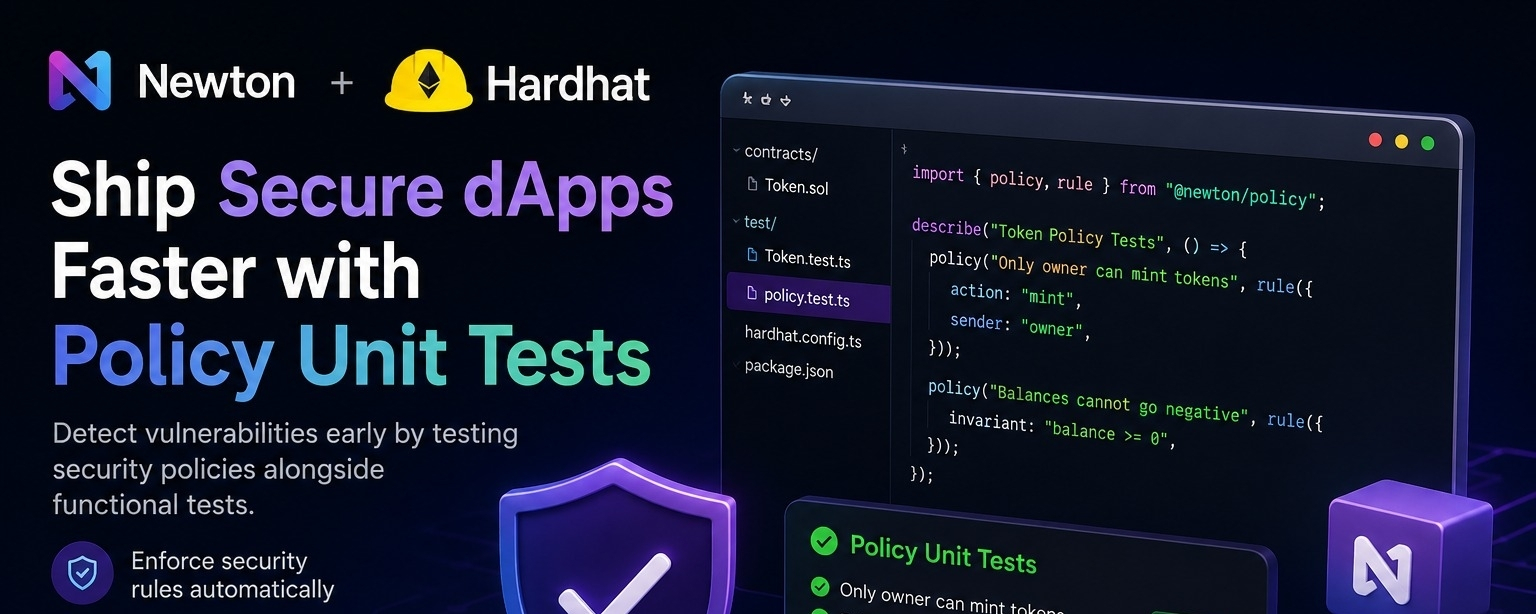
Newton erweitert den traditionellen Test-Workflow, indem es Entwicklern ermöglicht, Sicherheitsrichtlinien zusammen mit ihren bestehenden Unit-Tests zu definieren. Statt nur die Ausgaben zu prüfen, können Entwickler wichtige Sicherheitseigenschaften im gesamten Anwendungskontext verifizieren. Dieser Ansatz verlagert Sicherheit von einem nachträglichen Gedanken hin zu einem integralen Bestandteil des Softwareentwicklungszyklus. Durch das direkte Einbetten von Sicherheitsrichtlinien in das Test-Framework gewinnen Entwickler mehr Vertrauen, dass ihre Verträge in unterschiedlichen Szenarien sicher funktionieren.
## Hardhat: Ein leistungsstarkes Entwicklungs-Framework
Hardhat ist zu einer der beliebtesten Ethereum-Entwicklungsumgebungen geworden, weil es ein vollständiges Werkzeugset zum Kompilieren, Testen, Debuggen und Deployen von Solidity-Smart-Contracts bietet. Die flexible Architektur und das Plugin-Ökosystem machen es zu einer bevorzugten Wahl sowohl für Einsteiger als auch für erfahrene Blockchain-Entwickler. Newton fügt sich nahtlos in diesen Workflow ein: Entwickler können weiterhin vertraute Hardhat-Befehle verwenden und zusätzlich eine weitere Ebene automatisierter Sicherheitsvalidierung hinzufügen. Diese reibungslose Integration minimiert Störungen und ermutigt Teams, stärkere Sicherheitspraktiken zu übernehmen – ohne ihren bestehenden Entwicklungsprozess zu ändern.
## Vorteile von Policy-Unit-Testing
Policy-Unit-Tests konzentrieren sich darauf, Regeln festzulegen, die jederzeit wahr bleiben sollen. Anstatt nur zu prüfen, ob eine Funktion das erwartete Ergebnis liefert, verifizieren diese Tests, ob wichtige Sicherheitsgarantien während der Ausführung des Contracts erhalten bleiben. So kann eine Richtlinie beispielsweise festlegen, dass nur autorisierte Konten sensible Statusvariablen ändern dürfen, dass Benutzergelder nicht ohne ordnungsgemäße Freigabe übertragen werden können oder dass sich die Vertragsinhaberschaft nicht unerwartet ändern darf. Wenn irgendeine Codeänderung gegen diese vordefinierten Richtlinien verstößt, schlägt der Test sofort fehl und warnt den Entwickler, bevor der Code ausgerollt wird.
Einer der größten Vorteile von Policy-Unit-Tests ist die frühzeitige Erkennung von Schwachstellen. Sicherheitslücken erst nach dem Deployment zu entdecken, kann extrem kostspielig sein, weil Blockchain-Transaktionen dauerhaft sind und Smart Contracts oft nicht mehr veränderbar (immutable) sind. Das Beheben von Schwachstellen kann komplexe Migrationsverfahren oder Notfall-Upgrades der Verträge erfordern – und bindet dabei wertvolle Zeit und Ressourcen. Indem Newton Policy-Verstöße bereits während der Entwicklung identifiziert, hilft es Entwicklern, Probleme dann zu lösen, wenn sie sich leichter, schneller und mit geringeren Kosten beheben lassen.
Policy-Unit-Tests verbessern außerdem die Zusammenarbeit innerhalb von Entwicklungsteams. Sicherheitsanforderungen werden explizit als ausführbare Tests dokumentiert – statt nur in Design-Dokumenten oder Code-Kommentaren zu existieren. Neue Teammitglieder können das beabsichtigte Sicherheitsverhalten einfach verstehen, indem sie die Policy-Tests durchsehen. Wenn Projekte größer werden und mehrere Beitragende einbinden, reduziert dieses gemeinsame Verständnis die Wahrscheinlichkeit, bei künftigen Updates versehentlich Sicherheitslücken einzuführen.
## Continuous Integration und langfristige Zuverlässigkeit
Continuous-Integration- und Continuous-Deployment-(CI/CD)-Pipelines profitieren ebenfalls von diesem Ansatz. Jede Codeänderung kann automatisch sowohl funktionale als auch Policy-Unit-Tests auslösen, bevor sie in den Hauptbranch gemergt werden. Dieser automatisierte Verifizierungsprozess stellt sicher, dass neue Features bestehende Sicherheitsgarantien nicht unbeabsichtigt schwächen. Entwicklungsteams können einen schnelleren Release-Zyklus beibehalten und dabei dennoch ein hohes Vertrauen in die Sicherheit der Contracts bewahren.
Policy-Unit-Tests verbessern zudem die Wartbarkeit. Smart Contracts entwickeln sich häufig weiter, wenn neue Funktionen hinzukommen oder sich geschäftliche Anforderungen ändern. Ohne automatisierte Validierung von Richtlinien können Entwickler unbemerkt Sicherheitsregressionen einführen, während sie bestehende Logik anpassen. Policy-Unit-Tests dienen als langfristige Schutzmaßnahmen, die kontinuierlich kritische Annahmen prüfen – unabhängig davon, wie sich die Codebasis im Laufe der Zeit entwickelt. @NewtonProtocol
## Fazit
Obwohl kein Test-Framework perfekte Sicherheit garantieren kann, stärkt die Kombination aus traditionellem Funktionstesting und richtlinienbasierter Validierung die Zuverlässigkeit von Smart Contracts deutlich. Newton ergänzt bestehende Sicherheitspraktiken wie Code-Reviews, Tools für statische Analyse, formale Verifikation und unabhängige Audits. Zusammen schaffen diese Techniken mehrere Schutzebenen gegen Schwachstellen, die andernfalls dezentrale Anwendungen gefährden könnten.
Da die Blockchain-Technologie zunehmend in Bereiche wie Finanzen, Gaming, Gesundheitswesen und digitale Identität vordringt, erwarten Nutzer immer stärker sichere und vertrauenswürdige dezentrale Anwendungen. Entwicklungsteams müssen daher Sicherheitspraktiken „security-first“ über den gesamten Softwarelebenszyklus hinweg übernehmen – statt sich allein auf Audits in der Endphase zu verlassen. Newton und Hardhat bieten hierfür eine wirksame Kombination, mit der Entwickler Smart Contracts mit mehr Zuversicht bauen, testen und deployen können. Indem Policy-Unit-Tests in die tägliche Entwicklung integriert werden, können Teams Schwachstellen früher erkennen, die Codequalität verbessern, Deployment-Risiken reduzieren und letztlich sichere dApps schneller ausliefern. #Newt $NEWT