


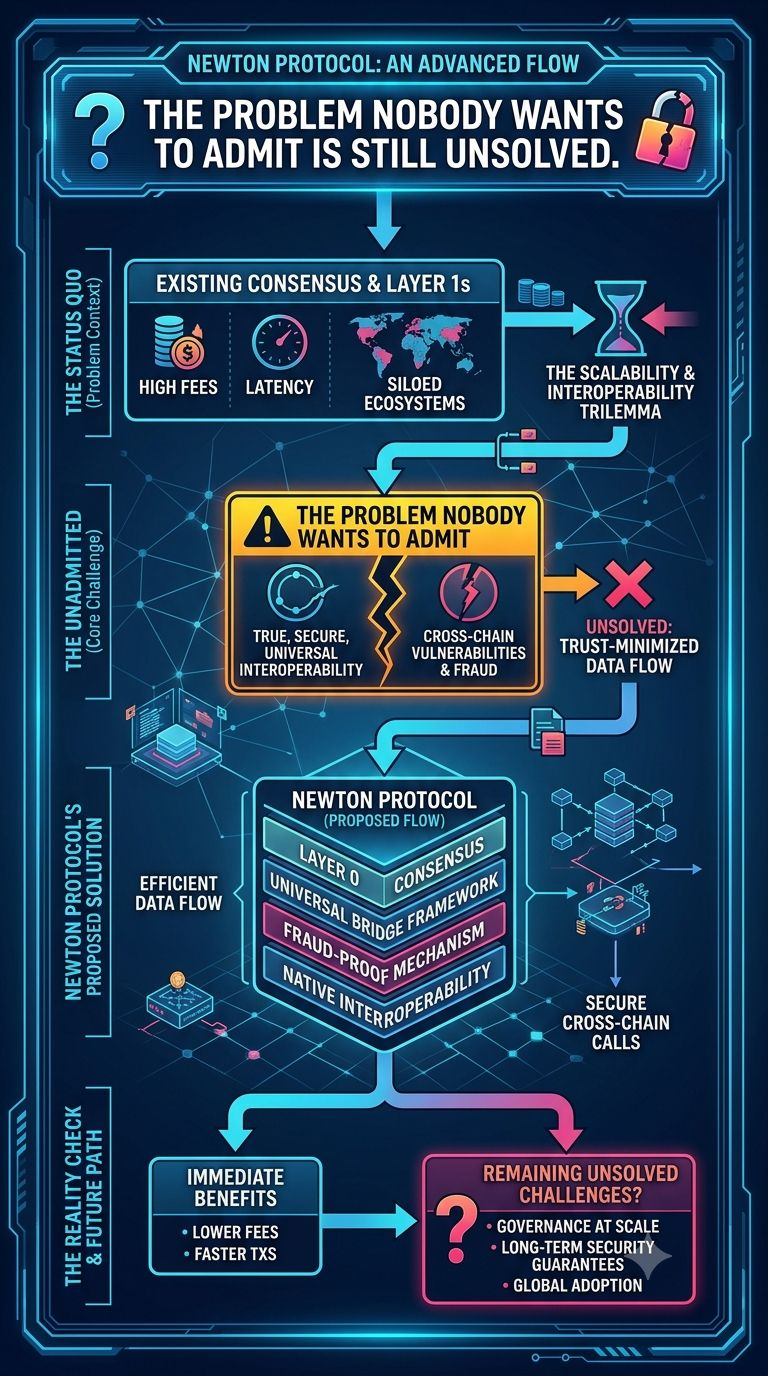
 Crypto hat zuerst das leichte Problem gelöst. Genau darauf komme ich immer wieder zurück. Wir haben die Ausführung vertrauenslos gemacht. Jeder kann jedem anderen Geld schicken, ohne dass eine Bank dazwischensteht — ohne dass irgendeine Institution entscheidet, dass deine Transaktion heute nicht in ihr Risikomodell passt. Okay. Das wurde gelöst. Gut. Das war vor Jahren schon erledigt. Aber der Teil danach — wer oder was darf in deinem Namen handeln, und wie weißt du wirklich, dass es das tut, was du ihm gesagt hast, und nicht das, was es sich selbstständig ausgedacht hat — das hat niemand so richtig geknackt. Diese Lücke versucht Newton Protocol zu überwinden. Und mal ehrlich: Die Vermarktung rundherum hilft auch nicht. KI-Agenten, Rollups, verifizierbar dies, verifizierbar jenes. Das klingt wie Buzzword-Suppe. Aber unter der Suppe steckt ein echtes Problem, und ich glaube, es wird eher unterschätzt, als die Leute zugeben.
Hier ist, was tatsächlich meine Aufmerksamkeit erregt hat. Newton ist keine Handelsbot-Plattform. Leute nennen es zwar immer wieder so, und klar: Viele Anwendungsfälle sind handelsnah – wiederkehrende Käufe, Rebalancing, Yield-Jagd, Copy Trading, Orders, die feuern, sobald ein Preis irgendeine Linie überschreitet. Aber das ist nicht das Kernstück. Das Kernstück ist eine Schicht für Berechtigungen. Eine Möglichkeit, einem KI-Agenten zu sagen: "Mach das, aber nur unter genau diesen Bedingungen – und wage es nicht, irgendetwas außerhalb dieser Box anzufassen" – und dann tatsächlich zu beweisen, dass diese Zusage eingehalten wurde, statt nur darauf zu hoffen. Trusted Execution Environments übernehmen die Offchain-Berechnungen. Zero-Knowledge-Proofs verifizieren, dass die Regeln befolgt wurden. Das ist das Gerüst. Ich will nicht so tun, als würden TEEs besonders spannend sein. Tun sie nicht. Aber die Intuition dahinter ist solide: Wenn du einer Software Zugriff auf dein Geld gibst, sollte ein hübsches Dashboard und eine Versprechung nicht mehr ausreichen. Nicht mehr.
Das Team dahinter ist Magic Labs, ein Unternehmen, das schon länger an Wallet-Infrastruktur baut. Daneben sitzt eine separate Nonprofit-Organisation, die Magic Newton Foundation, die dafür gedacht ist, die Community und die Dezentralisierungsseite abzudecken. Das ist eine bekannte Aufteilung in dieser Branche – das Unternehmen baut weiter, die Foundation übernimmt die "wir dezentralisieren, Versprechen"-Erzählung. Ob diese Aufteilung am Ende so aufgeht, wie es gepitcht wird, weiß ich nicht. Das weiß niemand. Roadmaps sind Wunschlisten mit angehängten Daten, und Krypto hat eine lange, hässliche Geschichte von "progressively decentralized" zu werden, nur um dann still und zentral zu bleiben – drei Jahre später, mit einem Governance-Forum, bei dem sich niemand die Mühe macht, etwas zu posten. Das ist kein gezielter Angriff auf Newton. Es ist nur das, was das Wort "progressively" in der Marketingphase meistens bedeutet, sobald man das Marketing-Fell abgezogen hat.
Was also steckt eigentlich darunter? Drei Hauptbausteine – mehr oder weniger – auch wenn sich die genaue Einordnung je nachdem verschiebt, welchen Text du gerade liest und wann er veröffentlicht wurde, was an sich ein kleines Indiz dafür ist, wie schnell sich hier noch alles bewegt. Erstens: das Model Registry. Ein Onchain-Katalog, in dem Entwickler "agent models" veröffentlichen – Smart Contracts, die Trigger-Action-Logik kodieren. Preis fällt um zehn Prozent, führe ein Trade aus. Die Volatilität schießt hoch, rebalance. RSI fällt unter einen bestimmten Wert, kauf. Auf Papier simpel genug. Die eigentliche Komplexität zeigt sich erst, wenn Entwickler anfangen, diese Modelle übereinanderzustapeln – auf Arten, die niemand vorausgeplant hat. Dort passiert immer der echte Test. Nicht im Demo-Modus. Der Moment, in dem ein Nutzer vier Agenten miteinander verkettet und etwas sich verhält, wie es keiner der ursprünglichen Builder kommen sah.
Zweitens die Keystore – ein dediziertes Rollup, das Berechtigungen verwaltet. Wer darf was, unter welchen Bedingungen, wie diese Regeln ausgegeben oder zurückgezogen werden. Einige nennen das konkret zkPermissions, sodass Nutzer granular Limits setzen können – Ausgabenkaps, Zeitfenster, bedingte Trigger – durch Mathematik erzwungen statt durch eine Terms-of-Service-Seite, die sowieso niemand liest. Drittens die Account-Layer-Schicht, gebaut auf ERC-4337 Smart Accounts, mit der du eine enge, begrenzte Kontrolle delegieren kannst, statt deine komplette Wallet abzugeben und die Daumen zu drücken. Dieser letzte Punkt wird ehrlich gesagt zu wenig besprochen. Der Unterschied zwischen "hier ist mein privater Schlüssel, viel Glück" und "hier ist eine eingeschränkte, widerrufbare Erlaubnis, die nichts außerhalb ihres Aufgabenbereichs anfassen kann" ist nicht klein. Es ist der komplette Unterschied zwischen etwas, dem du echtes Geld anvertrauen würdest, und etwas, das du nur je mit Geld testen würdest, das du notfalls verlieren kannst.
Außerdem taucht in ihrer Kommunikation zuletzt ein neuerer Ansatz stärker auf: Compliance als Code. Builder schreiben Richtlinien – scheinbar in etwas wie Rego, also derselben Sprache, auf die viele Cloud-Infrastrukturen bereits setzen – und ein dezentraler Verbund von Operatoren prüft jede Transaktion anhand dieser Richtlinien innerhalb sicherer Enklaven und spuckt dann einen kryptographischen Beweis aus, dass die Prüfung tatsächlich stattgefunden hat. Dieser Beweis ist für jeden über ihren Explorer verifizierbar. Meine erste Reaktion, als ich "Compliance" als Headline-Feature eines Krypto-Protokolls sah, war ein zustimmendes Zusammenzucken. Compliance ist meistens genau das Wort, das auftaucht, direkt bevor die Dezentralisierung leise aus der Hintertür entschwindet. Aber wenn ich länger darüber nachdenke, bin ich mir nicht sicher, ob diese Reaktion hier wirklich standhält. Wenn das eigentliche Ziel darin besteht, echte Finanzinstitutionen, Stablecoin-Emittenten und Plattformen für Real-World-Assets so weit zu bringen, dass sie sich wohl genug fühlen, um KI-Agenten echtes Geld anfassen zu lassen – und das scheint tatsächlich genau die Zielgruppe zu sein, die man gerade anpeilt – dann ist irgendeine Art programmierbare, verifizierbare Compliance-Schicht keine Option. Sie ist näher an einer Voraussetzung. Ob sie dabei neutral bleibt, so wie sie es beschreiben, oder sich langsam zu einem Engpass entwickelt, der von dem gesteuert wird, der die dominierenden Richtlinien schreibt – das ist die eigentliche Frage. Das kann bislang niemand ehrlich beantworten. Frag in zwei Jahren nochmal.
Der Token, NEWT, macht im Grunde das, was man erwarten würde. Er ist Gas fürs Rollup – das Ausstellen, Aktualisieren, Widerrufen von Berechtigungen und Session-Keys kostet jeweils NEWT. Außerdem dient er als Sicherheit für Operatoren, die Agenten ausführen – inklusive Slashing, falls sich ein Agent nicht korrekt verhält, sodass das Laufen eines schlampigen oder bösartigen Agenten zumindest etwas kostet, statt nichts. Er sichert das Keystore-Rollup über delegated Proof-of-Stake ab, mit einem Unstaking-Zeitraum von vierzehn Tagen, was für diese Art von Design ziemlich Standard ist. Und irgendwann trägt er auch Governance-Gewicht – sobald diese Seite tatsächlich eingeschaltet wird. Der Gebührenmarkt ist grob nach dem Vorbild von Ethereum's EIP-1559 modelliert: Er soll dafür sorgen, dass die Reihenfolge fair bleibt und das Netzwerk in geschäftigen Phasen nicht verstopft.
Die gesamte Emissionsmenge ist auf eine Milliarde Token gedeckelt. Keine inflationsbedingte Minting-Phase – das nimmt eine langfristige Sorge weg, selbst wenn es kurzfristig nichts löst. Die Aufteilung ist auf dem Papier stark community-lastig – ungefähr sechzig Prozent sind über die Zeit für Rewards, Staking-Incentives und Grants vorgesehen, statt komplett beim Gründungsteam zu liegen. Zum Launch ist nur ein bescheidener Anteil – irgendwo im unteren zweistelligen Prozentbereich – tatsächlich in Umlauf gegangen. Der Rest steckt hinter einer ziemlich Standard-Vesting-Struktur. Team und frühe Backer jeweils mit ungefähr einem zwölfmonatigen Cliff, danach lineares Entsperren über weitere etwa drei Jahre. Und hier ist der entscheidende Moment, über den niemand gern laut spricht: eine große gesperrte Supply plus ein öffentlicher Entsperrkalender ist im Grunde eine Countdown-Uhr, die der ganze Markt die ganze Zeit im Blick hat. Das ist keine spezielle Kritik an Newton. Es ist einfach das, was bei jedem Token passiert, der so gebaut wurde. Es gab bereits einen größeren, für Ende Januar 2026 markierten Unlock, und Ereignisse wie dieses bringen tendenziell Verkaufsdruck – egal ob die echte Nutzung genug gewachsen ist, um ihn aufzufangen.
Auf der Trading-Seite ging es schneller voran als beim eigentlichen Protokoll – und das ist ein Muster, das ich in dieser Branche ständig beobachte, und das mich ein bisschen nie ganz loslässt. NEWT landete pretty schnell nach dem Launch Derivatives-Listings an großen Börsen, inklusive eines gehebelten Perpetual-Vertrags auf Binance, Finanzierungsgelder, die sich alle paar Stunden setzten – die ganzen üblichen Mechaniken eines modernen Perp-Markts. Das bringt zwar Liquidität und Aufmerksamkeit. Aber es bedeutet auch, dass ein riesiger Teil der frühen Kursbewegungen im Grunde nichts damit zu tun hat, ob das Model Registry tatsächlich komponierbar ist oder ob die Keystore planmäßig dezentralisiert. Es sind gehebelte Trader, die auf gehebelte Trader reagieren. Ein separates Ökosystem, das nur zufällig denselben Ticker teilt wie die darunterliegende Infrastruktur. Das sollte man sich beim nächsten Mal merken, wenn der Preis etwas Verrücktes macht und jemand versucht, einer Kerze tiefere Bedeutung beizumessen.
Die regulatorische Einordnung ist hier einer der spannendsten Stränge – vor allem, weil die meisten Projekte in diesem Stadium bislang nicht einmal ansatzweise darüber nachgedacht haben, das öffentlich zu kommunizieren. Newton hat offenbar bereits irgendeine Form von Einstufung im Rahmen des EU-MiCA-Regelwerks gesichert – eingereicht unter etwas wie "sonstiges Krypto-Asset". Ob das gut altern wird, wenn die Durchsetzung reifer wird, oder ob US-Regulierer irgendwann an einem belastbaren Ort für autonome Finanz-Tools ankommen, was bisher eine schmerzhaft langsame und tatsächlich ungeklärte Diskussion war – wer weiß. Aber sich damit früh auseinanderzusetzen, statt zu warten, bis eine Vorladung das Thema erzwingt, sagt etwas aus. Es liest sich eher wie ein Projekt, das auf institutionelle Infrastruktur zielt als auf Retail-Spekulation – selbst dann, wenn eindeutig die Retail-Spekulation gerade den Tageskurs-Preis des Tokens antreibt.
Hier lande ich ehrlich gesagt – unsicher, und ich glaube nicht, dass das eine schlechte Position ist. Es ist nicht die Kryptographie oder die Architektur, die mich beunruhigt – die hat unabhängige Audits hinter sich, die Reports sind öffentlich, und auf dem Papier hält sie sich, oder zumindest hält sie sich so gut, wie es jede junge, sich noch verschiebende Codebase eben schafft. Unsicher bin ich tatsächlich bei der Adoption. Der langweiligen Sorte. Entscheidet ein Entwickler wirklich, einen Agenten innerhalb dieses Model Registry zu bauen, statt einfach seinen eigenen Bot zu schreiben und irgendwo auf einem gemieteten Server laufen zu lassen – ruhig im Hintergrund, abseits, niemandem verantwortlich? So, wie im Grunde jeder Trading-Bot jemals gebaut wurde? Der Pitch ist: Verifizierbarkeit und Komponierbarkeit machen das kategorisch besser, nicht nur marginal besser. Vielleicht ist das wahr. Aber "kategorisch besser"-Behauptungen über Krypto-Infrastruktur haben eine ziemlich holprige Erfolgsbilanz, wenn es darum geht, dass Entwickler tatsächlich auftauchen und es nutzen. Viele technisch überlegene Systeme sind in völliger Stille verschickt worden, weil die Umstellungskosten zu viel Reibung verursacht haben, oder weil es keine bestehende Nutzerbasis gab, in die man sich einklinken konnte, oder weil die alte zentrale Variante einfach gut genug für die Zwecke der meisten Leute war. Das tötet den Schwung, bevor er überhaupt wirklich startet.
Dann ist da der Marktplatz – immer noch "upcoming", nicht live, Stand der neuesten Updates, die ich finden kann. Der öffentliche Ort, an den man geht, um einen Agent zu entdecken, den jemand anders gebaut hat, ihn zu aktivieren, vielleicht dafür zu bezahlen, vielleicht ihn mit den Agenten zu stapeln, die man sowieso schon laufen hat. Das ist der Baustein, der Newton, falls es wirklich funktioniert, von "interessanter Infrastruktur für ein paar Protokolle, in die man leise einhakt" zu etwas mit echten Netzwerkeffekten macht – der Art, bei der jeder neu veröffentlichte Agent das Ganze für die nächste Person, die reinkommt, marginal nützlicher macht. Aber Marktplätze sind brutal. Wirklich, kategorisch schwieriger als reine Infrastruktur. Angebot und Nachfrage müssen gleichzeitig auftauchen, in den richtigen Proportionen, mit genug Qualität auf der Angebotsseite, dass frühe Nutzer nach einer schlechten Erfahrung nicht abspringen und nie wiederkommen – das ist ein Cold-Start-Problem, das still und leise schon viel ambitioniertere Plattformen gekillt hat als diese. In Krypto und weit darüber hinaus.
Nein, also: Ich gebe dir hier kein sauberes Urteil. Und ehrlich gesagt wäre ich etwas misstrauisch gegenüber jedem, der dir so früh eines liefert – bei einem Protokoll, dessen bedeutendste Bausteine – das vollständig multichainfähige Rollup, der offene Marktplatz, der Wechsel zu einem permissionless Validator-Set – noch immer in der Spalte "upcoming" im eigenen Roadmap-Plan stecken. Aber das hier glaube ich, mit mehr Sicherheit als der Rest: Das Problem, um das Newton immer wieder kreist, ist real. Vielleicht sogar realer als vieles von dem, was in dieser Ecke der Branche finanziert und gehypt wird. Automatisierung ohne Verifikation ist einfach nur Vertrauen, das sich ein Kostüm aus Code angezogen hat. Und genau diese Art von Vertrauen hat die Leute immer wieder verbrannt – jedes Mal, wenn irgendein Offchain-Bot still und leise kompromittiert wurde, jedes Mal, wenn ein zentraler Automatisierungsdienst seine Nutzer aus dem Vertrag laufen ließ, während auf der Landingpage noch "secure" stand. Wenn Newton – oder etwas, das ähnlich gebaut ist – es tatsächlich schafft, dass "der Agent hat exakt das getan, wozu er berechtigt war, und hier ist der Beweis" zu einer normalen, langweiligen, erwartbaren Funktion von Onchain-Finance wird und nicht zu einem Headline-Motiv in einem Pitch-Deck – dann würde das etwas bedeuten. Nicht, weil es flashy wäre. Es wäre überhaupt nicht flashy, wenn es so funktionieren würde, wie es soll. Es wäre die Art von Ding, die niemand bemerkt, solange sie funktioniert – und die jeder sofort bemerkt, sobald sie nicht mehr funktioniert. Das ist in meiner Erfahrung meist das wahre Warnsignal, wenn man jede Technologie-Ecke nur genau genug anschaut. Ob dieses Team, dieser Token, dieses Timing tatsächlich dort ankommt – oder dort sogar zuerst ankommt – ist eine ganz andere Frage. Und ehrlich gesagt würde ich das lieber dabei beobachten, als so zu tun, als könnte ich es im Moment schon aus dem Stand heraus vorhersagen.