
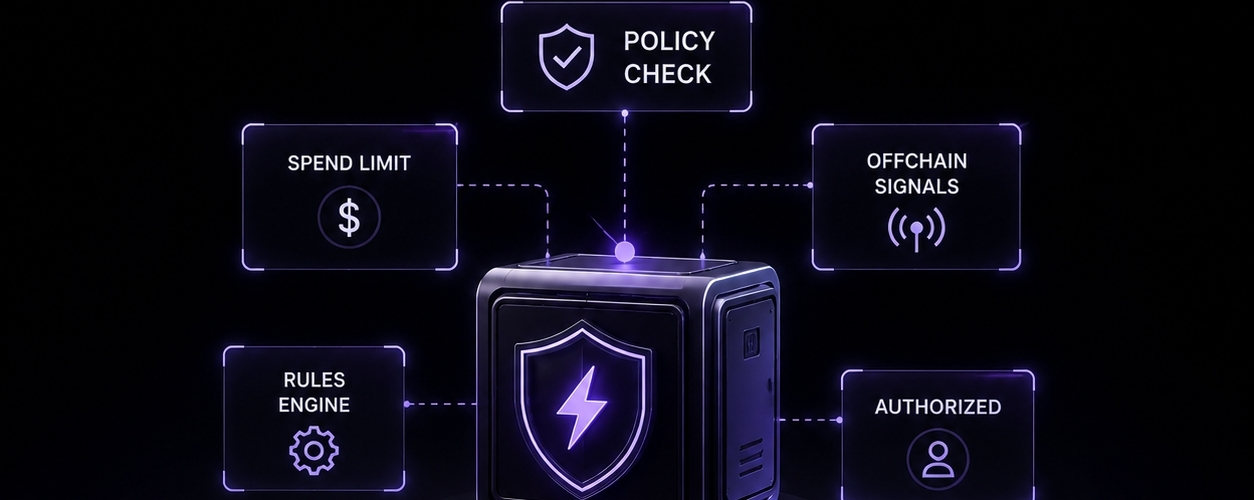
@NewtonProtocol I keep thinking about Newton Protocol for the same reason I keep paying attention to certain crypto ideas even after the market has worn me down: sometimes a project is not interesting because it sounds big, but because it seems to be circling a problem the market has not really dealt with properly.
And in this case, the problem is not transactions. Or not only transactions.
That is the part I keep coming back to. Crypto has spent years making transactions faster, cheaper, more available, more composable, more $NEWT everything. And sure, that matters. I’m not going to pretend it doesn’t. But after enough cycles, you start noticing that speed was never the whole issue. A lot of the damage in crypto happens after the transaction is already technically possible. That is where the real mess begins. The question is not always whether something can be executed. The question is whether it should be.
That sounds almost too simple, but I think that is why it deserves attention.
Newton seems to be pointing at that seam in the system. Not just the execution layer. The decision layer. The part where policy, context, and permission matter before anything becomes final. I find that more interesting than another pitch about throughput, because we already know how that movie goes. The chain gets faster, the app gets smoother, the language gets cleaner, and then eventually somebody discovers the old problem is still there, just better packaged.
I’ve seen this happen enough times that I don’t trust shiny narratives very quickly anymore. A lot of crypto projects make themselves sound inevitable by using words that feel modern, but the actual product ends up being a thin wrapper around the same basic fragility. Newton feels different to me not because it is obviously right, but because it is aiming at something more awkward and more real: the need to check decisions before they become transactions.
That distinction matters more than people admit.
A transaction is just the final act. It is the point where the outcome becomes visible. But the real question is everything that came before it. Who approved it. What rules were in place. What offchain context mattered. What the system knew, and what it should have known. Whether an AI agent was acting inside its limits. Whether a user was allowed to do what they asked. Whether compliance was supposed to be a box checked later or a condition enforced up front.
That is the kind of problem crypto usually tries to simplify away. Newton seems more willing to sit inside it.
Of course, that makes me cautious too. It always does.
Because once you move into policy, you move into power. And once you move into power, you start dealing with all the things crypto likes to avoid when it is busy talking about decentralization. Who writes the rules? Who updates them? Who decides which exceptions are acceptable? Who audits the enforcement? Who gets to trust the system, and who gets locked out by it?
Those are not small questions. They are the whole ballgame, really.
That is why I don’t immediately celebrate this kind of project, even when I think the underlying idea is worth watching. I’ve seen too many systems promise safety and then quietly accumulate their own failure modes. A policy layer can become brittle. A compliance layer can become overbuilt. A decentralized network can still become socially centralized in practice. An automation system can become useful right up until the moment it has to explain itself to a human. And crypto, more than most industries, has a bad habit of turning elegant architecture into ugly reality once real money and real pressure show up.
Still, something about Newton’s framing feels less like a slogan and more like a response to actual friction.
That is what catches my eye. Not the grand language. Not the idea that AI is suddenly the future of everything. I have a low tolerance for that stuff now. What feels more grounded here is the attempt to make automated actions pass through a policy system that can verify, record, and enforce the logic behind them. That is a more sober way to think about AI in finance. It treats the machine not as a magical decision-maker, but as something that still has to live inside boundaries.
And honestly, that seems closer to reality.
Because the more automation enters crypto, the more important those boundaries become. If an AI agent can trade, route capital, or interact with assets on a user’s behalf, then the actual product is not the agent itself. The product is the permission structure around it. Without that, you are just giving a faster interface to a slower disaster.
I keep noticing this in different parts of the market. People love autonomy until it creates liability. They love composability until it increases exposure. They love automation until it starts doing exactly what it was asked to do, which is often not what anyone really meant. That is why a protocol focused on decisions instead of transactions makes sense to me, at least conceptually. It tries to address the part of the system where mistakes become expensive.
I’m not saying it solves everything. It doesn’t. Nothing like this does. But it does feel like it is looking in the right place.
And maybe that is enough to separate it from the usual background noise.
Most of the market is still obsessed with surface-level progress. Faster. Cheaper. More scalable. More AI. More modular. More yield. More abstraction. It all starts to blend together after a while. But the projects that actually stick tend to be the ones that deal with the part everyone else would rather not touch. The unglamorous part. The part where you have to decide what is allowed before you can celebrate what has been executed.
That is what Newton seems to be reaching for.
I don’t know yet how far it will go. I don’t fully trust anything that early, and I think that is healthy. A good idea in crypto still has to survive behavior, incentives, edge cases, governance, and the usual habit the market has of misunderstanding its own priorities. But I do think this points toward something that feels more mature than the usual rush toward speed for speed’s sake.
Maybe the next evolution of rollups is not just about processing more transactions.
Maybe it is about making better decisions before transactions happen.
That feels like the more honest direction. It feels closer to the problems that actually hurt people. And maybe that is why it stays in my head longer than most of the other narratives floating around right now. It does not promise to make crypto less complicated. It seems to accept that the complication is already there, and that the real work is figuring out where judgment belongs.
That is a more human problem than a technical one, in a way. Or maybe the technical and the human have just finally collided enough that we can’t pretend they are separate anymore.
Either way, that is the part worth watching.
