



Ich habe mir eine Weile Zeit genommen, um wieder öffentliche Diskussionen rund um Ethereum zu lesen.
Nicht die üblichen Argumente über Preis oder Marktzyklen.
Die Gespräche, die mir geblieben sind, waren die über die Koordination.
Es fühlt sich so an, als hätte Ethereum eine Phase erreicht, in der fast jede Verbesserung anderswo gleich wieder neue Diskussionen auslöst. Skalierung, Governance, Account-Abstraction, Systemsicherheit für Nutzer, Dezentralisierung, Sequencing, Privatsphäre. Keines dieser Probleme existiert für sich allein mehr. Sie berühren sich ständig gegenseitig.
Das ist nicht unbedingt eine Schwäche.
Wahrscheinlich passiert das, wenn ein Ökosystem groß genug wird, dass jede Designentscheidung Tausende von Buildern betrifft statt nur Dutzende.
Während ich diesen Diskussionen folgte, dachte ich immer wieder an das Newton Protocol.
Nicht, weil behauptet wird, die Probleme von Ethereum lösen zu können.
Was meine Aufmerksamkeit geweckt hat, war, dass es so wirkt, als starte es mit einer anderen Frage.
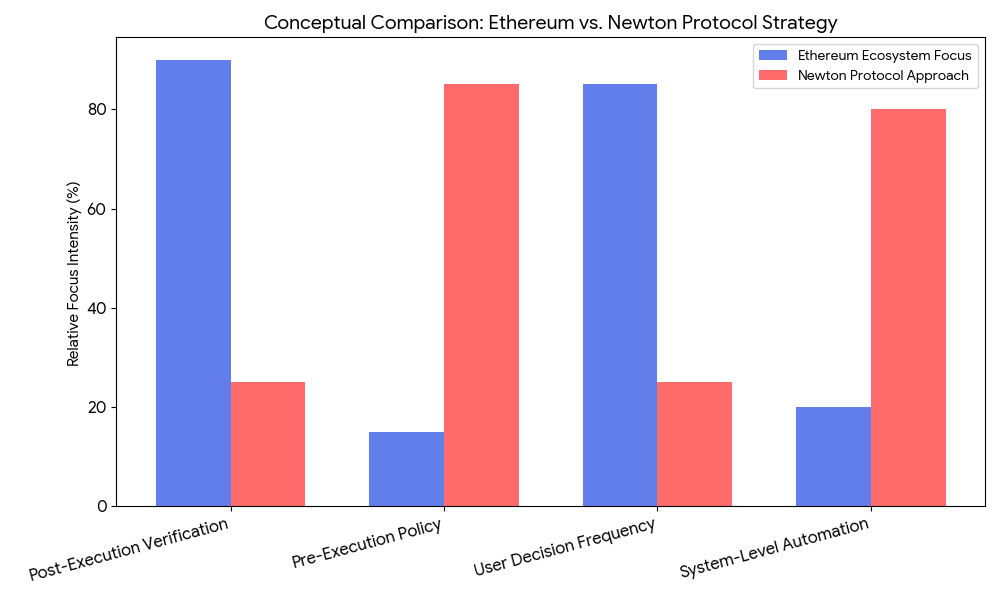
Anstatt zu fragen, wie die Ausführung schneller werden kann, wird mehr Zeit damit verbracht zu klären, wie Handlungen akzeptabel werden sollten, bevor sie ausgeführt werden.
Das klingt nach einem kleinen Unterschied.
Ich glaube nicht.
Eines taucht in Ethereum-Diskussionen immer wieder auf: Von Nutzern wird erwartet, dass sie zunehmend komplexe Entscheidungen treffen. Wallet-Berechtigungen werden detaillierter. Smart Contracts werden flexibler. Anwendungen werden besser kombinierbar.
Flexibilität ist nützlich.
Aber jede Ebene an Flexibilität schafft auch einen weiteren Ort, an dem Fehler passieren können.
Das Newton Protocol scheint anzunehmen, dass Nutzer nicht immer jede Entscheidung manuell treffen sollten. Stattdessen können Bedingungen definiert werden, bevor eine Aktion überhaupt stattfindet.
Das verändert, wo die Verantwortung liegt.
Statt jede Transaktion zu überprüfen, nachdem sie erscheint, setzt das Protokoll darauf, akzeptierbares Verhalten im Voraus zu definieren.
Ich finde diesen Ansatz interessant, weil sich die meisten Blockchain-Gespräche noch immer auf die Verifizierung danach konzentrieren.
Newton schenkt mehr Aufmerksamkeit dafür, Grenzen festzulegen, bevor die Aktivität beginnt.
Ob sich das als besser erweist, bleibt jedoch eine offene Frage.
Regeln, die heute geschrieben werden, können morgen veraltet sein.
Märkte verändern sich.
Protokolle entwickeln sich.
Das Risiko verändert sich.
Statische Richtlinien können zu schwachen Richtlinien werden, wenn sie aufhören, die Realität abzubilden.
Daher hängt die Qualität des Systems möglicherweise weniger davon ab, Regeln zu schreiben, und mehr davon, sie verantwortungsvoll zu aktualisieren.
Das wirkt wie eines der größten Unbekannten.
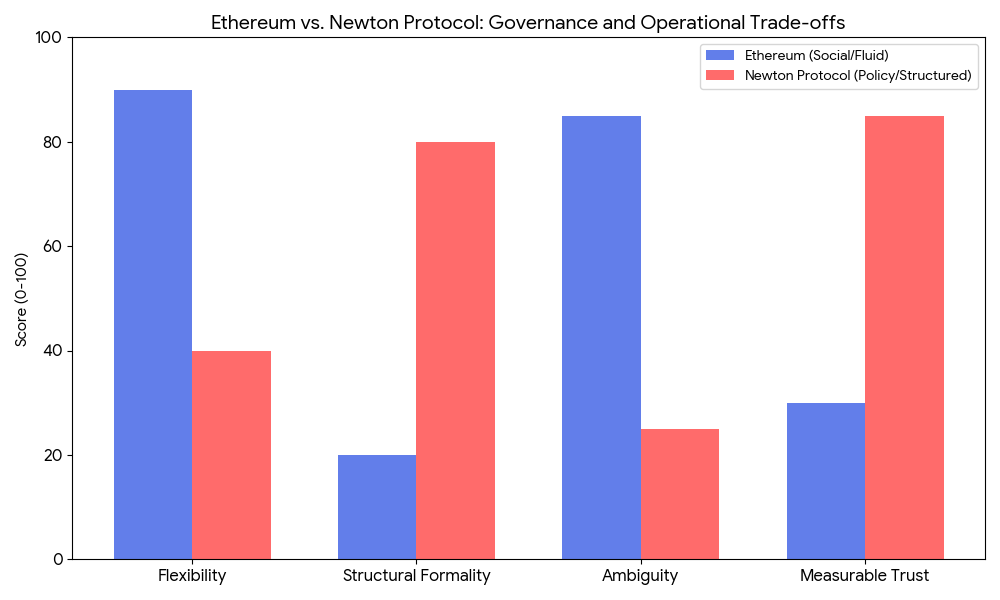
Noch etwas, das mir beim Lesen der Ethereum-Diskussionen aufgefallen ist, ist, wie oft Koordination von sozialer Übereinstimmung abhängt.
Manchmal funktioniert die Technologie exakt so, wie beabsichtigt.
Die Menschen sind sich schlicht darüber uneinig, was das beabsichtigte Ergebnis hätte sein sollen.
Dieser Unterschied ist wichtig.
Software kann perfekt ausführen, während die Governance ungeklärt bleibt.
Das Newton Protocol scheint anzuerkennen, dass allein die technische Ausführung nicht genug ist.
Das Protokoll legt großen Wert darauf, dass die Richtlinien selbst Teil der Infrastruktur werden, statt eine informelle Diskussion zu bleiben, die anderswo stattfindet.
Das fühlt sich nach dem Versuch an, Unklarheit zu reduzieren.
Ob Unklarheit tatsächlich auf Protokollebene reduziert werden kann, ist etwas, bei dem ich mir noch nicht sicher bin.
Regeln können Uneinigkeit nicht beseitigen.
Sie machen Uneinigkeit nur leichter erkennbar.
Es gibt noch einen Zielkonflikt, der mehr Aufmerksamkeit verdient.
Je stärker die Politik programmierbar wird, desto stärker verlagert sich die Verantwortung auf die Person, die diese Richtlinien definiert.
Das schafft eine andere Art von Vertrauen.
Nutzer bewerten möglicherweise nicht mehr nur Smart Contracts.
Sie müssen möglicherweise auch die Qualität der Regeln bewerten, die diese Verträge steuern.
Das verlagert Komplexität.
Es entfernt sie nicht notwendigerweise.
Ich denke auch, dass es einen interessanten Kontrast dazu gibt, wie sich Ethereum-Diskussionen oft öffentlich entfalten.
Die Debatten gehen über Monate weiter.
Verschiedene Sichtweisen konkurrieren.
Ideen reifen durch Uneinigkeit.
Das Newton Protocol scheint einen strukturierteren Weg zu gehen, bei dem operative Regeln explizit werden, statt während der Ausführung fortlaufend ausgehandelt zu werden.
Das könnte Systeme leichter nachvollziehbar machen.
Es könnte auch zu Starrheit führen, wenn sich Richtlinien-Frameworks nicht genauso schnell anpassen wie die Umgebungen, die sie steuern.
Keines der Ergebnisse sollte ignoriert werden.
Was ich schätze, ist, dass das Protokoll nicht den Eindruck macht, darauf fixiert zu sein, Vertrauen vollständig zu entfernen.
Es wirkt stärker darauf ausgerichtet, Vertrauen messbar zu machen, indem vorab festgelegtes Verhalten verwendet wird, statt auf ständiges menschliches Urteil zu setzen.
Das wirkt wie eine praktische Ausrichtung und nicht wie eine ideologische.
Dennoch treffen praktische Systeme irgendwann auf praktische Sonderfälle.
Unerwartete Ereignisse auf dem Markt.
Widersprüchliche Richtlinien.
Notfallsituationen.
Geänderte Vorschriften.
Diese Momente zeigen normalerweise, ob ein Rahmen für normale Tage oder für stressige konzipiert war.
Wahrscheinlich ist das der Bereich, in dem das Newton Protocol im Laufe der Zeit seine bedeutendsten Tests bestehen muss.
Als ich die laufenden öffentlichen Diskussionen rund um Ethereum gelesen habe, wurde mir klar, dass Infrastruktur selten allein durch Rechenleistung begrenzt ist.
Viele schwierige Fragen liegen nun über der Ausführung selbst.
Sie drehen sich um Koordination, akzeptierbares Verhalten, Verantwortlichkeit und voraussagbare Entscheidungsfindung.
Das Newton Protocol scheint um diese Ebene herum zu bauen, statt sie als das Problem von jemand anderem zu behandeln.
Ob sich daraus ein Vorteil ergibt, hängt weniger davon ab, wie streng seine Richtlinien sind, und mehr davon, ob sich diese Richtlinien weiterentwickeln können, ohne eine weitere Quelle von Komplexität zu werden, an der Nutzer sich irgendwann vorbeiarbeiten müssen.
