
When a major infrastructure project drops its mainnet, the crypto community tends to expect a magic switch: an immediate, ecosystem-wide migration to a safer paradigm. However, the true utility of decentralized plumbing lies not in automated enforcement across the board, but in its granularity.
With the recent launch of the Newton Mainnet Beta on Ethereum and Base, the rollouts of its signature developer tool—Newton VaultKit—unveil an architecture that addresses a structural DeFi blind spot: the transition from "hope-based security" to active, programmable compliance-as-code.
However, the real talking point that demands deeper analysis isn’t just the technical capability. It is the specific dynamic of opt-in execution.
The Curation Paradigm: Compliance by Choice
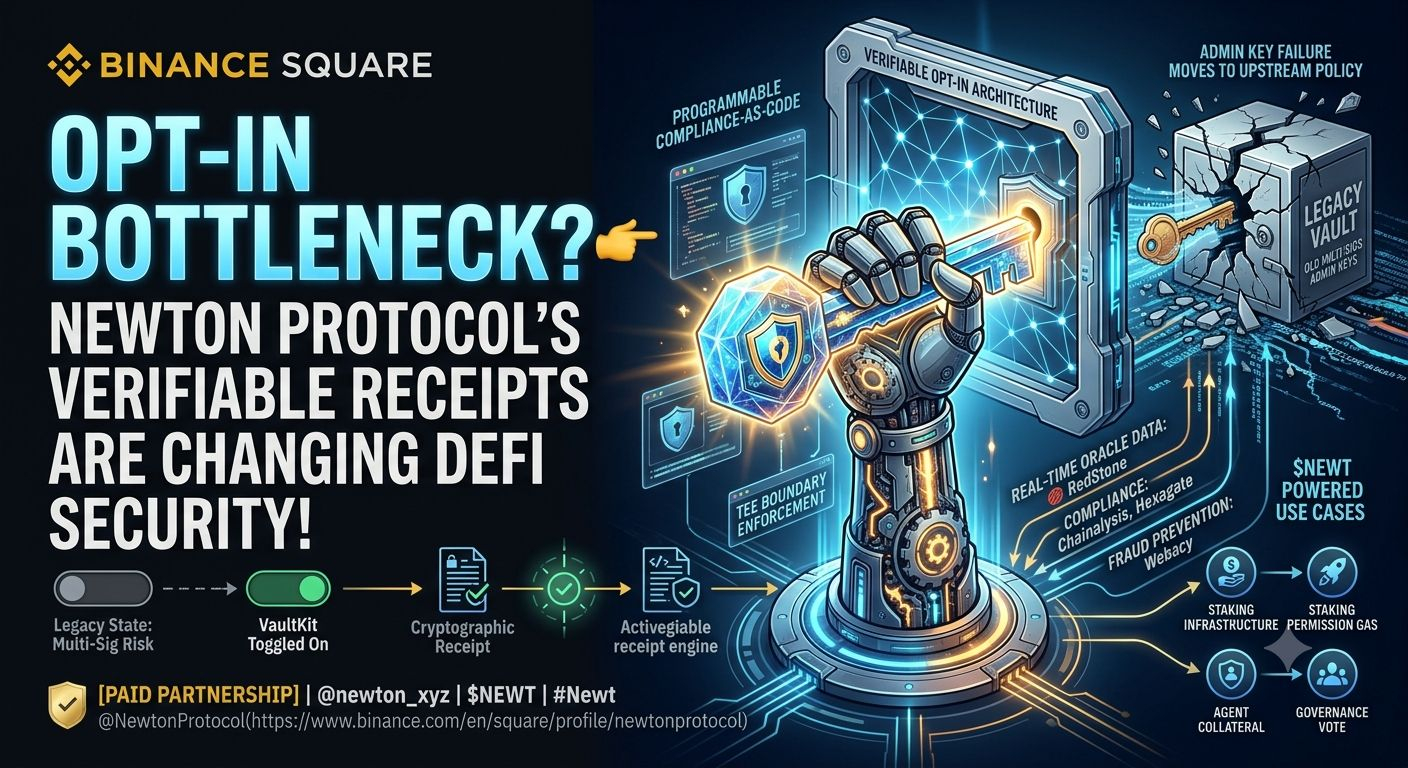
As observed in initial operational integrations with major credit hubs like Euler, Newton’s active authorization layer doesn't rewrite underlying smart contracts by default. Instead, it operates on a strict rule: the curator writes the policy, Newton enforces it.
This means every asset pool, yield vault, and automated protocol existing today continues to run on its legacy system—relying heavily on manager keys, multi-sigs, and retrospective trust—until an operator actively chooses to wire VaultKit into their pipeline.
[Legacy State: Multi-Sig/Admin Key] ──> (Manual Trust & Retrospective Hopes)
V
[VaultKit Toggled On] ──> [Upstream Policy Engine] ──> [Cryptographic Receipt]
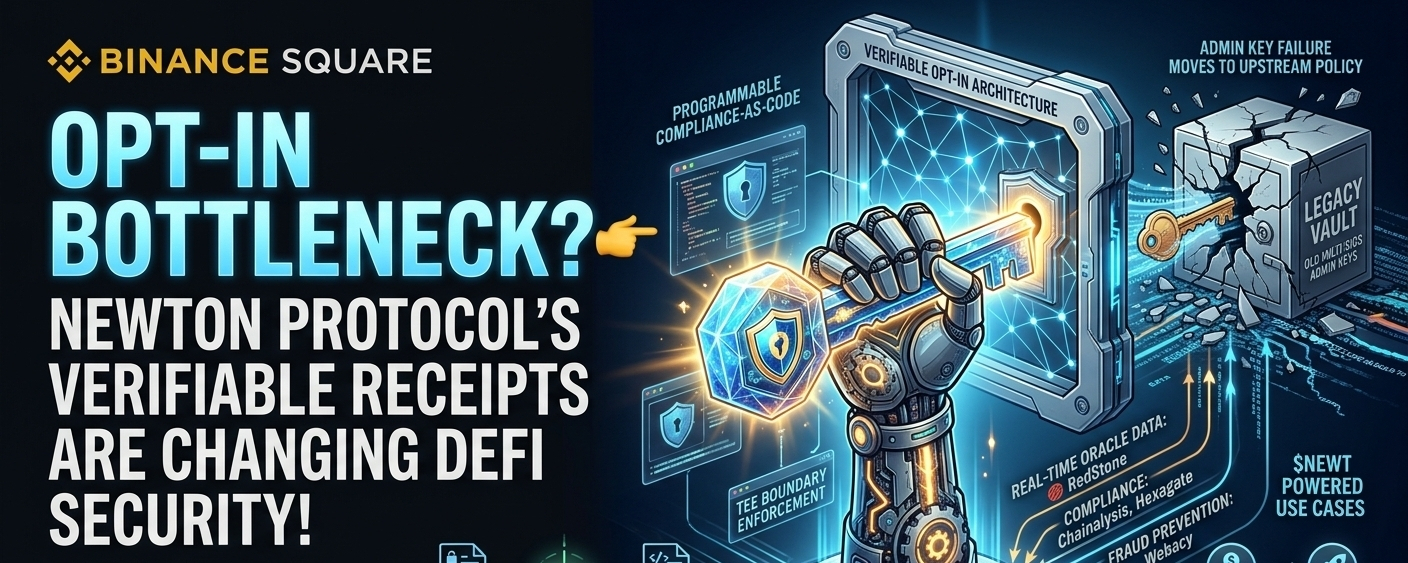
When a curator toggles VaultKit on, they aren't restricting the decentralized nature of their pool; they are installing an upstream constraint box powered by Trusted Execution Environments (TEEs).
By pulling live data strings from infrastructure mainstays—including risk oracles like RedStone and compliance networks like Chainalysis, Hexagate, and Webacy—the framework evaluates the intent of a transaction before it settles on-chain. If an action breaches predefined parameters, it is denied at the gates.
Cryptographic Attestations: The AI Agent Mandate
This structural shift becomes a non-negotiable standard when scaling up automated capital structures and autonomous AI-native wallet agents. In an economy where algorithms execute hyper-fast, complex cross-chain strategies, manual human auditing is physically impossible. The guardrails must exist natively at the execution speed of the machine.
Every time a rule is checked and an action is approved or denied, Newton produces a signed cryptographic attestation—an unalterable on-chain receipt proving that specific transaction parameters met the defined compliance standards. This deterministic verification engine runs as an EigenLayer Actively Validated Service (AVS), using shared Ethereum security to keep its off-chain evaluations fully neutral.
Driving Token Utility Within the Staking Infrastructure
For this decentralized security model to function cohesively, the underlying compute network requires clear economic boundaries. This is where the core utility structure of the $NEWT token anchors itself into the architecture. Within the Mainnet Beta framework, $NEWT serves as the foundational fuel for four distinct vectors:
* Staking Infrastructure: Securing the network and providing cryptographically sound node coordination.
* Permission Gas: Processing and managing complex on-chain permission-handling updates.
* Agent Collateral: Requiring automated agent operators to post collateral, mitigating malicious or erratic logic loops.
* Network Governance: Providing a direct voting weight to determine how policy engines adapt to evolving market structures.
The technology has officially transitioned out of the laboratory phase; it is live and verifiable. As individual curators across Base and Ethereum begin integrating these programmable boundaries, tracking the rate of active vault adoption will give us a clear look into the next era of proactive Web3 security primitives.
Learn more about the ecosystem via the official channel: @NewtonProtocol