
@NewtonProtocol I keep thinking about Newton Protocol for the same reason I keep getting tired of most crypto narratives: so much of this market is noise, and so little of it ends up mattering. Every cycle has its own favorite language. Sometimes it is “DeFi.” Sometimes it is “AI.” Sometimes it is “compliance.” Usually, by the time the pitch sounds polished enough to repeat, the edge has already gone missing. Newton feels a little different to me, not because I fully trust it, but because it seems to be reaching for something less glamorous and more durable.
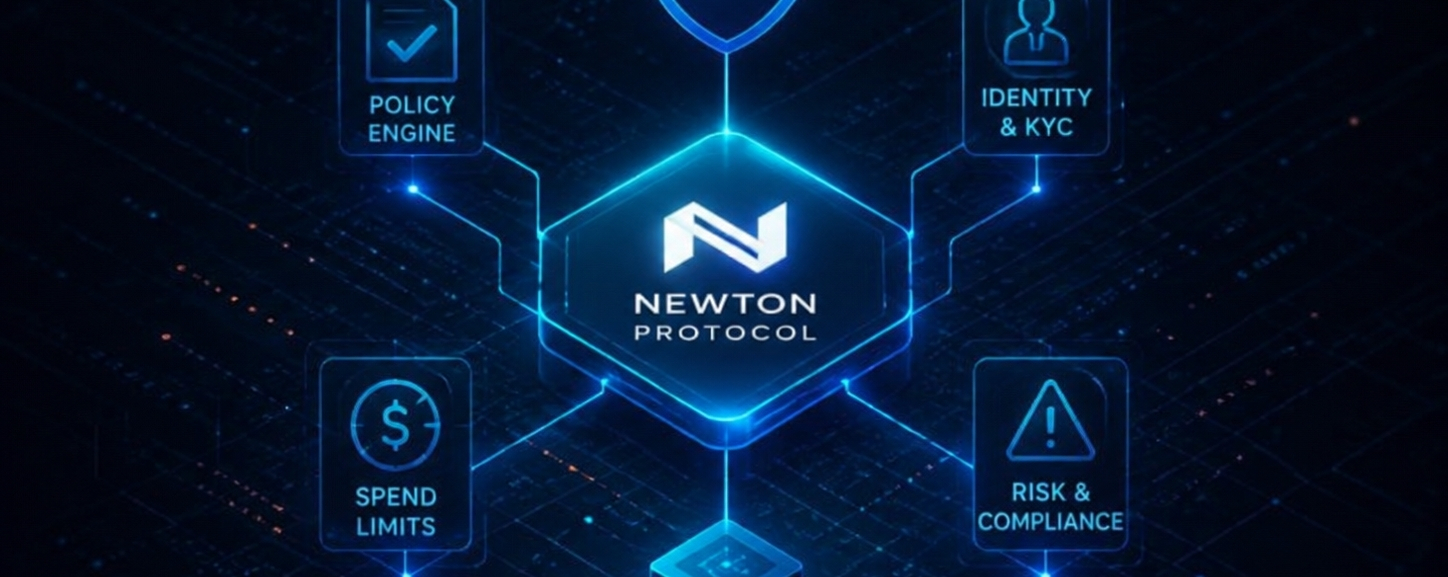
Newton describes itself as a decentralized policy engine for onchain authorization, built as an EigenLayer AVS, with rules that can handle spend limits, sanctions screening, fraud $NEWT prevention, and other compliance checks before a transaction settles. That is not the sort of thing people usually get excited about on a timeline, but it is the sort of thing that can matter if it actually works. I’ve seen enough projects come and go to know that the boring layer is often the one that survives. The flashy layer gets attention; the boring layer gets used.
What keeps pulling me back is that Newton is not just talking about a token story. It is talking about rules. About who can do what. About what happens before money moves. About how to make authorization programmable without pushing everything back into a centralized gatekeeper. That is where the real friction is. Not in the slogan, not in the meme, not in the launch thread. In the messier part where systems have to decide whether to allow something, block something, prove something, or record something in a way that can be checked later. Newton’s own materials lean hard into that idea, including programmable compliance policies and onchain authorization for institutional DeFi use cases.
I keep noticing that the strongest moats in crypto are rarely the ones people brag about early. They are usually built out of inconvenience. A protocol becomes hard to replace when enough teams build around it, integrate it, depend on it, and quietly stop wanting to rip it out. That is what makes Newton interesting to me. If it ever becomes sticky, I do not think it will be because everyone suddenly falls in love with NEWT. It will be because Newton becomes the place where permissions are checked, rules are enforced, and risk is handled in a way that people do not want to rebuild from scratch. That kind of advantage is slow, almost invisible at first, and easy to underestimate.
The AI angle makes it even more relevant, though I still don’t fully trust the category yet. Binance described Newton as a secure rollup for AI-driven strategies, automated trading, and a marketplace for AI developers. That framing makes sense to me because agentic systems need more than speed. They need boundaries. Once software is making decisions automatically, the question stops being “Can it act?” and starts becoming “Can we trust what it is allowed to do?” That is a much harder problem, and one that most crypto projects only touch on when it is convenient. Newton seems to be aiming straight at that problem rather than dancing around it.
The token itself looks wired into that system instead of floating above it. Newton’s official token announcement says NEWT is used for gas, staking, governance, and payments related to verifiable session or intent permissions for agents. That makes the token feel more like part of the machinery than a decorative asset sitting next to the product. Still, I’ve watched too many tokens with “real utility” turn out to be mostly narrative fuel. Utility helps. It does not solve everything. A token can be important and still not be enough.
I also keep thinking about how messy the target market is. Institutions want auditability, clear controls, and something they can defend when questions come later. Developers want flexibility and low friction. AI systems need permissions that are tighter than a normal wallet but less rigid than old-world infrastructure. Newton seems to be trying to stand in the middle of all that, which is exactly where things usually get complicated. Its materials mention identity, jurisdictional rules, KYC, and other verification layers, and that makes the project feel less like a simple crypto bet and more like an attempt to build a real operating layer for money and automation.
That is where the moat could come from, if it comes at all. Not from hype. Not from some heroic chart pattern. Not from people pretending they understand the future because they bought a token early. It would come from usefulness that becomes inconvenient to replace. That is a much less exciting story, but it is a more believable one. I’ve seen enough cycles to know that the things people ignore at first are often the things that end up mattering later, not because they were loud, but because they solved a real problem better than the rest.
So I’m not treating Newton like some guaranteed winner. I’m just treating it like one of the few projects that actually seems to understand where the next layer of pain is likely to be. Crypto has a habit of making simple things complicated and complicated things theatrical. Newton feels aimed at the part of the stack where things are already complicated, and where theater does not help much. That alone makes me pay attention. Not because it is safe. Not because it is certain. Just because it feels like it is reaching for something that could outlast the usual cycle of noise.
