
Market's been doing that thing again where it just... hovers. No real move, no real dump, everyone kind of glued to charts waiting for something to happen. I gave up watching mine around midday and ended up doing wallet cleanup instead — you know, the boring stuff. Revoking old token approvals I forgot I gave out two years ago to some yield farm that probably doesn't even exist anymore.
And while I was sitting there clicking "revoke" over and over, I started thinking about how dumb this whole ritual actually is. Not the revoking part — the fact that I even had unlimited approvals sitting there in the first place. Every wallet does. It's just... normal. Nobody thinks twice when a dApp asks for unlimited spend approval. You click approve, you move on, you forget it exists until some security Twitter thread reminds you six months later.
So out of curiosity — half-distracted, still revoking stuff — I started reading into Newton Protocol. Not because I was looking for it, honestly it just kept popping up in the same threads warning people about approval risk.
And here's where it got a little uncomfortable.
Everyone treats "revoke unlimited approvals" like it's the fix. Like the danger lives in the approval itself. But the approval was never the actual risk — it's just the door being left open. The risk is what happens the moment something walks through that door. And revoking doesn't stop you from re-approving the next contract five minutes later out of habit, because that's just... how onchain UX works right now. You approve first, ask questions never.
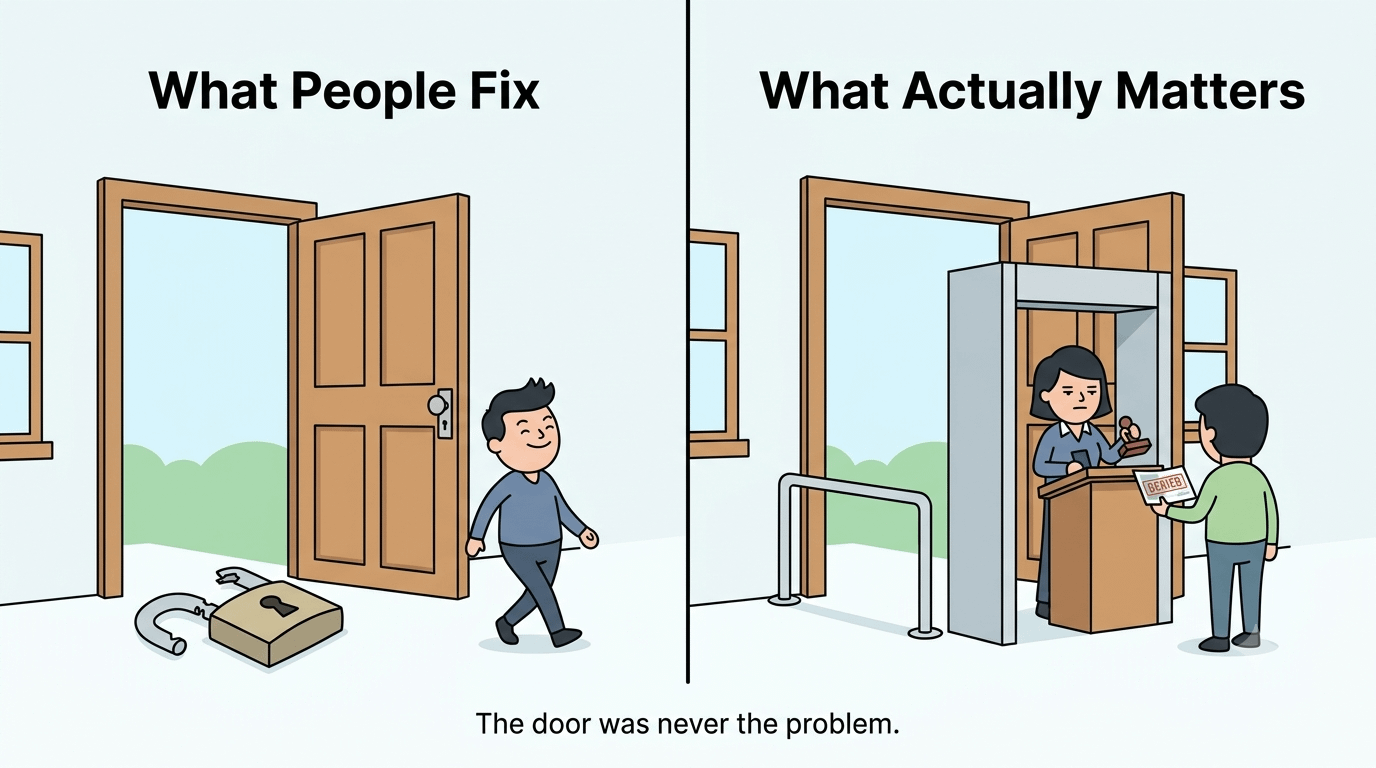
What Newton's actually doing is kind of a quiet reframe of that whole problem. Instead of trying to get people to change a habit that's basically baked into how DeFi functions, it puts a check at the moment the transaction actually tries to execute — before it settles, not after. So even if the approval is still sitting there unlimited, wide open, whatever — the transaction itself gets evaluated against a policy first. Spend limits, counterparty checks, sanctioned addresses, whatever rule a vault curator wrote. If it doesn't pass, it doesn't go through. The approval being reckless almost stops mattering as much.
Which, okay, I sat with that for a second. Because that's kind of backwards from every "wallet safety" thread I've ever read. Nobody's saying "fix the checkpoint," everyone's saying "fix your approvals." Newton's basically saying the approval habit isn't the thing worth fighting. The execution moment is.
But — and this is the part that actually bothers me a little — this only works if the app you're interacting with actually wired Newton into the contract. It's not a wallet-level shield. It's not retroactive. If the dApp didn't integrate the policy check, your unlimited approval is exactly as dangerous as it always was. So the habit still isn't safe by default, it's safe only where someone bothered to plug this in. Right now that's a fairly small list — vaults, mostly, through VaultKit, Euler being the one I kept seeing mentioned. Not some universal safety net across every contract you've ever approved.
So I'm not fully sold that this changes user behavior at scale. It changes what happens after the bad habit, in specific places, for specific integrators. Which is genuinely useful if you're a curator managing other people's capital and don't want a single compromised bot wiping a vault. But for the average wallet with forty unlimited approvals sitting there from 2023, none of this matters unless the other side of that approval decided to build with it.
Still — it did shift how I think about the actual problem. I used to assume the fix was "just be better about approvals." Now I think the fix is closer to "stop assuming the approval is where the risk lives." Different framing entirely. Not sure yet if it's the right one universally, but it's the first take on this I've read that didn't just repeat the same revoke-your-approvals PSA everyone's tired of.
Anyway. Still have twelve more approvals to revoke. Market's still flat. I'll probably keep half an eye on how many protocols actually end up wiring this in versus just talking about it.