

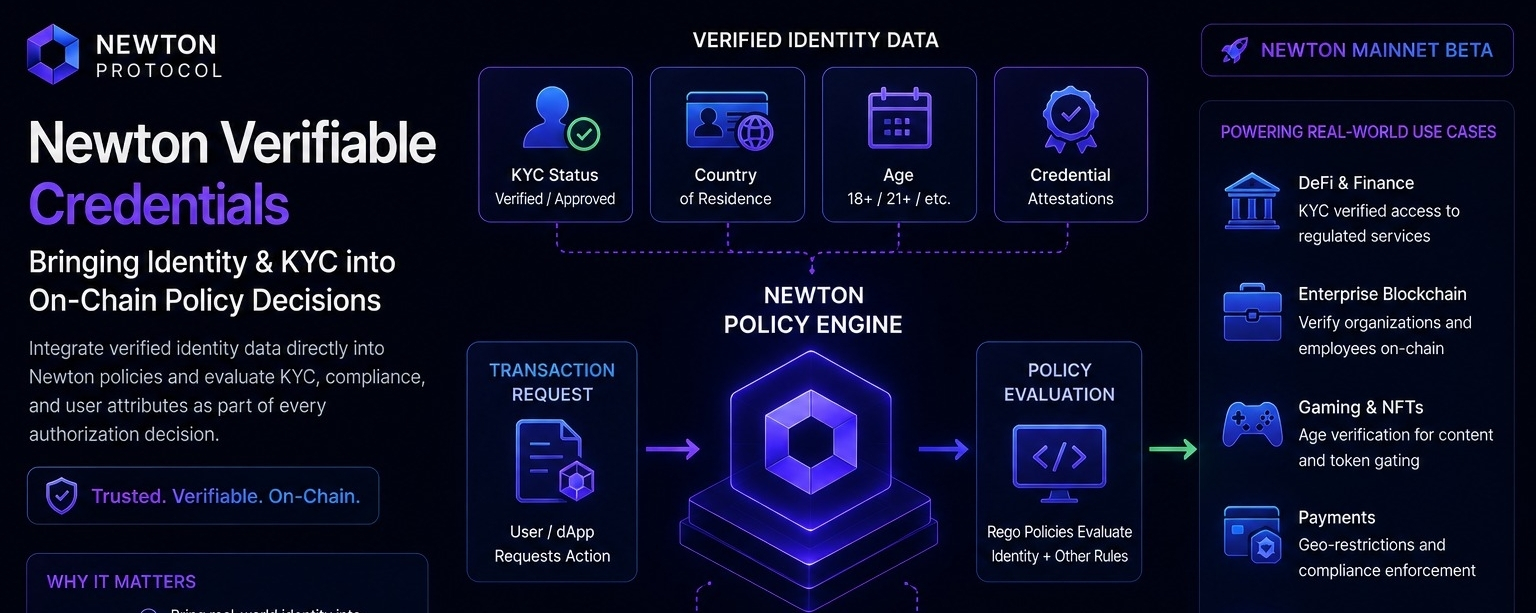

Da Blockchain-Anwendungen zunehmend in den Bereichen Finanzen, Unternehmensdienstleistungen und realer Handel expandieren, ist die Verifizierung der Nutzeridentität zu einer immer wichtigeren Anforderung geworden. Viele dezentrale Anwendungen müssen heute bestätigen, dass Nutzer die „Know Your Customer“- (KYC-) Anforderungen erfüllen, regionale Compliance-Standards einhalten oder bestimmte Credentials besitzen, bevor bestimmte Transaktionen ausgeführt werden können. Obwohl diese Prüfungen in traditionellen Finanzsystemen üblich sind, ist es eine Herausforderung geblieben, sie in dezentrale Anwendungen zu integrieren, ohne die Prinzipien der Blockchain zu beeinträchtigen.
Beim Durchsehen der Newton Mainnet Beta Entwicklerdokumentation bin ich auf eine interessante Lösung gestoßen: „Newton Verifiable Credentials (Newton VC)“. Anstatt die Identitätsprüfung als separaten Prozess zu behandeln, ermöglicht Newton Entwicklern, verifizierte Identitätsdaten direkt in die Bewertung von Policies einzubinden. So können Autorisierungsentscheidungen vertrauenswürdige Nachweise wie Alter, Wohnsitzland oder Status der Genehmigung berücksichtigen, bevor eine Transaktion freigegeben wird.
Warum Identität in dezentralen Anwendungen wichtig ist
Blockchain-Technologie hat sich traditionell eher auf Wallet-Adressen als auf verifizierte Identitäten konzentriert. Zwar bringt die pseudonyme Teilnahme Vorteile hinsichtlich des Datenschutzes, doch viele reale Anwendungen verlangen zusätzliche Verifizierung, bevor Nutzer auf bestimmte Dienste zugreifen können.
Finanzplattformen müssen möglicherweise KYC-Vorschriften durchsetzen. Unternehmenssysteme benötigen häufig die Verifizierung von Mitarbeitern oder Organisationen. Zahlungsanwendungen müssen möglicherweise Dienste auf Basis geografischer Vorschriften einschränken, während tokenisierte Vermögenswerte nur für genehmigte Teilnehmer verfügbar sein können.
Ohne integriertes Identitätsframework bauen Entwickler häufig separate Verifizierungssysteme, die die Komplexität erhöhen und die Wartung von Anwendungen erschweren.
Newton adressiert diese Herausforderung, indem es vertrauenswürdige Identitätsinformationen zu einem Teil des eigentlichen Policy-Bewertungsprozesses macht.
Was sind Newton Verifiable Credentials?
Newton Verifiable Credentials bieten einen strukturierten Weg, verifizierte Benutzerdaten in Blockchain-Autorisierungs-Policies einzubringen.
Anstatt Identitätsprüfung als einen externen Prozess zu behandeln, der von Smart Contracts entkoppelt ist, erlaubt Newton, dass verifizierte Credential-Daten direkt innerhalb von Policy-Regeln referenziert werden. Entwickler können Rego-Policies schreiben, die Identitätsattribute neben anderen Autorisierungsbedingungen auswerten und so einen einheitlichen Rahmen für die Freigabe von Transaktionen schaffen.
Dieser Ansatz vereinfacht die Anwendungsarchitektur, weil Identitätsprüfungen zu einem Bestandteil derselben Policy-Engine werden, die für die Transaktionsautorisierung zuständig ist.
KYC in die Policy-Bewertung integrieren
Ein herausragendes Merkmal ist die Möglichkeit, KYC-Anforderungen direkt in die Policy-Logik einzubinden.
Anstatt die Identitätsprüfung getrennt durchzuführen, bevor man mit einer Anwendung interagiert, ermöglicht Newton, dass Policies während der Transaktionsautorisierung verifizierte Attribute auswerten. Bedingungen wie Altersanforderungen, Ländereligibilität oder Verifizierungsstatus können alle zur endgültigen Genehmigungsentscheidung beitragen.
Dieser integrierte Workflow hilft Entwicklern, Anwendungen zu bauen, die Compliance-Anforderungen erfüllen, während gleichzeitig eine nahtlose Nutzererfahrung erhalten bleibt.
Unterstützung für mehrere reale Anwendungsfälle
Die Dokumentation zeigt mehrere praktische Szenarien auf, in denen Verifiable Credentials dezentrale Anwendungen verbessern können.
Finanzplattformen können sicherstellen, dass Nutzer die KYC-Verifizierung abgeschlossen haben, bevor sie auf regulierte Dienste zugreifen.
Institutionelle Blockchain-Anwendungen können den Betrieb auf verifizierte Organisationen oder genehmigte Teilnehmer beschränken.
Gaming-Plattformen können Altersanforderungen für bestimmte Erlebnisse bestätigen, während Unternehmenssysteme Aktionen anhand von Mitarbeiter-Credentials autorisieren können.
Indem Entwickler Identitätsinformationen direkt in Policies einbinden, können sie eine größere Bandbreite an Anwendungen unterstützen, ohne für jeden Anwendungsfall separate Autorisierungs-Frameworks zu erstellen.
Ein stärker vereinheitlichtes Autorisierungsmodell
Eine der Stärken der Newton-Architektur ist, dass sie mehrere Autorisierungsfaktoren in einer einzigen Policy-Engine zusammenführt.
Statt Identität, Compliance, Transaktionslimits, Sanktionsscreening und externe Daten über unabhängige Systeme auszuwerten, erlaubt Newton, dass diese Anforderungen in eine einzige strukturierte Policy-Bewertung zusammengeführt werden.
Dieser vereinheitlichte Ansatz reduziert unnötige Komplexität und macht Autorisierungsentscheidungen transparenter sowie leichter wartbar, wenn sich die Anforderungen der Anwendung weiterentwickeln.
Entwicklung vereinfachen
Identitätsintegration ist oft eines der kompliziertesten Themen bei der Entwicklung von Blockchain-Anwendungen. Entwickler müssen typischerweise externe Identitätsanbieter, Backend-Services, Smart Contracts und Anwendungslogik aufeinander abstimmen.
Newton vereinfacht viele Teile dieses Prozesses, indem es verifizierte Credential-Daten zu einem nativen Bestandteil der Policy-Bewertung macht. Anstatt benutzerdefinierte Autorisierungspipelines aufzubauen, können sich Entwickler darauf konzentrieren, Policy-Regeln zu definieren und dabei auf das bestehende Framework von Newton für identitätsbezogene Transaktionsentscheidungen zurückzugreifen.
Das kann die Entwicklungseffizienz verbessern und zugleich die Möglichkeiten für Konfigurationsfehler reduzieren.
Abschließende Gedanken
Nach dem Durchsehen der Newton Mainnet Beta Dokumentation ist klar, dass Verifiable Credentials eine wichtige Ergänzung zur policy-gesteuerten Architektur von Newton Protocol darstellen. Indem verifizierte Identitätsinformationen und KYC-Daten direkt an der Transaktionsautorisierung teilnehmen, ermöglicht Newton Entwicklern, dezentrale Anwendungen zu bauen, die reale regulatorische und operative Anforderungen besser widerspiegeln.
Mit der Ausweitung der Blockchain-Nutzung auf regulierte Branchen und Unternehmensumgebungen wird identitätsbezogene Autorisierung voraussichtlich immer wichtiger. Newton Verifiable Credentials bieten einen praxisnahen Rahmen, um vertrauenswürdige Identitätsdaten mit flexibler Policy-Bewertung zu kombinieren und Entwicklern dabei zu helfen, Anwendungen zu erstellen, die sowohl sicher als auch compliant sind.
Für Entwickler, die dezentrale Systeme aufbauen möchten, die Identitätsprüfung integrieren, ohne Modularität oder Skalierbarkeit zu opfern, bietet die Dokumentation von @NewtonProtocol wertvolle Einblicke dazu, wie Newton Mainnet Beta diese wichtige Herausforderung angeht. $NEWT #Newt