
Newton Protocol: Who's Actually Making the Decision Here
Was scrolling through restaurant options on a delivery app last night, too tired to actually pick, so I just tapped "Surprise Me." Got a decent meal, honestly. But afterward I realized I hadn't made a decision at all, someone else had built the logic that decided for me, I'd just agreed to let it run.
That stuck with me oddly, and today I ended up back on Newton Protocol material, this time on "changing how onchain decisions are made." So instead of just accepting that framing, I went and checked something specific — when someone sets up an agent through the model registry, are they actually authoring the decision logic themselves, or are they mostly picking from something someone else already built, the same way I tapped "Surprise Me" last night.
And it's mostly the second one. That's the part that clicked. Most users engaging with agent models aren't writing custom decision trees from scratch, they're selecting from templates other developers already built and listed in the registry, then adjusting a few parameters around the edges, thresholds, timing windows, asset selection. The actual decision logic, the reasoning about when to rebalance, what counts as a good entry, how to weigh conflicting signals, that was authored once by whoever built the template. The end user is mostly agreeing to it, with light customization, not actually making the decision themselves in any meaningful sense.
I'd been reading "changing how decisions are made" as describing a shift toward users making more decisions, faster, with AI assistance sharpening their own judgment. What's actually happening looks more like a shift in who's authoring the decision logic in the first place, away from the individual user and toward a smaller pool of template builders whose reasoning gets reused across many accounts. The user isn't deciding more. They're delegating earlier and more completely, to someone else's already-encoded judgment, then letting verification confirm it ran as written.
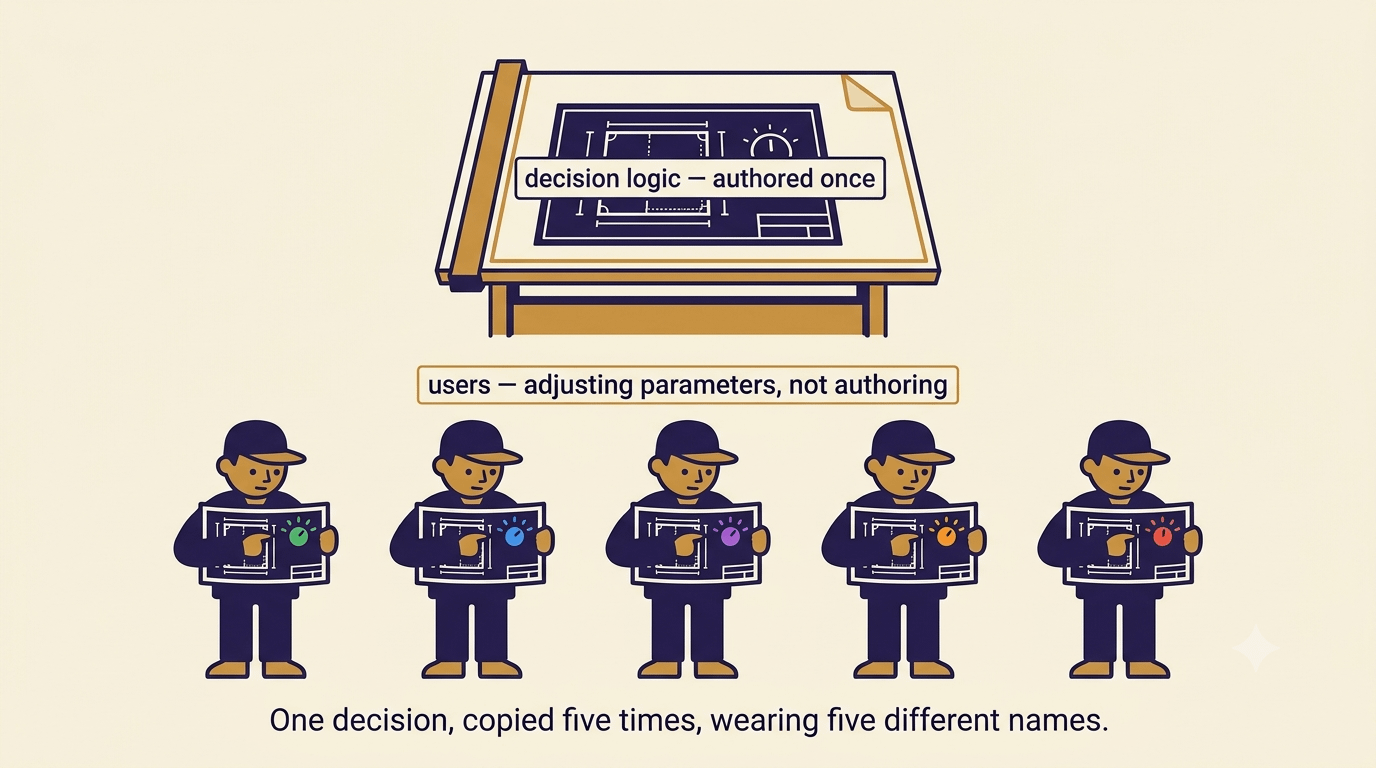
Here's what bothers me about that a little. If a handful of popular templates end up handling most of the actual decision-making across a large share of users, then a flaw or blind spot in one template's logic doesn't just affect one person's trades, it propagates across everyone who adopted that template with only minor tweaks. That's a different risk shape than individual decision-making ever had. One person making a bad call affects one person. One template maker encoding a bad assumption affects however many accounts are running variations of it, all at once, all quietly, all technically "verified" the whole time because verification only checks that the template ran as written, not whether the template's underlying logic was ever sound.
I don't think that's unique to Newton specifically, template-based systems generally carry this shape of risk, concentrated authorship, distributed exposure. I just don't think "changing how decisions are made" quite captures that the change is really about who's doing the deciding, not about users deciding differently or more actively themselves.
Matters most for anyone assuming their agent reflects their own judgment closely, versus anyone who's actually checked how much of the underlying logic came from a template they mostly accepted as-is. Worth knowing which one's actually true before leaning on it heavily.
Anyway, that delivery meal turned out fine, for what it's worth, "Surprise Me" usually does. Different stakes than a financial position, obviously. I'll probably keep asking, going forward, how much of any given decision is actually mine versus just something I agreed to let run.