

Newton Protocol:
Introduction
Artificial intelligence is changing the way people interact with blockchain technology. Only a few years ago, most blockchain applications depended entirely on users manually signing every transaction and making every important decision themselves. Today, AI agents are beginning to analyze markets, manage digital assets, optimize portfolios, execute trades, and even coordinate complex workflows without constant human intervention. While this evolution creates exciting opportunities, it also introduces a fundamental question: How can users trust autonomous systems with valuable digital assets?

This is the challenge Newton Protocol is trying to solve.,
Rather than building another blockchain focused solely on speed or transaction throughput, Newton Protocol focuses on creating a secure policy and authorization layer for AI-driven automation. Its vision is simple but ambitious: allow AI agents to operate on-chain while ensuring every action follows transparent, programmable, and verifiable policies.
Instead of asking users to blindly trust artificial intelligence, Newton Protocol attempts to make every important decision accountable.
The Growing Need for Trust in AI Automation
The blockchain industry is entering a new era.
For years, decentralized finance has relied primarily on users interacting directly with smart contracts. However, the rise of AI has changed expectations. Users increasingly want intelligent systems capable of monitoring markets around the clock, adjusting investment strategies automatically, managing liquidity positions, and responding instantly to changing market conditions.
These AI-powered systems promise greater efficiency, but they also create new risks.
If an autonomous agent controls significant financial assets, who determines what actions it is allowed to perform? How can developers prevent unauthorized transactions? What happens if market conditions suddenly change? Most importantly, how can every decision remain transparent and auditable?
Newton Protocol approaches these problems by introducing programmable policy enforcement before transactions are executed.
Instead of allowing AI agents unrestricted authority, Newton creates rules that determine whether a particular action should be approved.
This philosophy transforms automation from blind execution into governed execution.
Newton Protocol’s Vision
Newton Protocol is designed as infrastructure rather than a consumer application.
Its purpose is to provide developers with tools for building secure, policy-driven decentralized applications where AI agents, automated trading systems, and financial protocols can operate safely.
Rather than embedding every business rule directly inside smart contracts, Newton introduces reusable policies that evaluate whether an action satisfies predefined requirements before execution occurs.
This approach separates operational governance from execution logic.
As decentralized systems become increasingly automated, this distinction becomes more valuable.
Instead of rewriting security logic for every application, developers can reuse trusted policies while adapting operational parameters to different environments.
That balance between consistency and flexibility is one of Newton Protocol’s defining characteristics.
The Core Architecture: Separating Logic from Configuration
One of the most interesting design decisions in Newton Protocol is its separation of policy logic from policy configuration. At first, this may seem like a small architectural detail, but it has significant implications for security, maintainability, and governance.
Many traditional systems combine business rules and configuration values in the same codebase. Every time a spending limit changes or a new wallet is approved, developers may need to modify code, test it again, and redeploy. Over time, this increases complexity and creates more opportunities for mistakes.
Newton Protocol takes a different approach.
Developers write reusable policies using Rego, a policy language designed for expressing authorization and compliance rules. These policies describe how decisions should be evaluated rather than embedding every application specific value directly into the code.
The changing values are stored separately.
Parameters such as:
Transaction thresholds
Exposure limits
Approved wallet addresses
Allowlists and denylists
Risk scores
Asset-specific restrictions
are passed into the policy through data.params as flat JSON attached to a PolicyClient.
This means the same policy logic can be reused across multiple applications while each application maintains its own configuration.
Imagine two decentralized trading platforms.
Both want to prevent excessive trading risk.
Instead of writing two different policies, they can share the same Rego policy.
Platform A may allow a maximum exposure of $500,000.
Platform B may allow only $50,000.
The decision making process remains identical.
Only the configuration changes.
This separation provides several important advantages.
First, reusable policies are easier to audit because security researchers only need to verify the decision logic once.
Second, organizations can modify operational settings without changing policy code.
Third, maintenance becomes much simpler because updates to business requirements do not require rewriting the authorization logic itself.
Understanding
expireAfter
Among Newton Protocol’s policy settings, one variable often attracts attention: expireAfter.
At first glance, many people assume this parameter determines when configuration values expires
That interpretation is incorrect.
The configuration stored inside data.params remains valid until it is intentionally updated through a new policy configuration.
Instead, expireAfter defines the execution block window during which an attestation remains valid.
Think of an attestation as a temporary authorization.
Once generated, it cannot remain usable forever.
The protocol therefore specifies how many blockchain blocks may pass before that authorization becomes invalid.
Choosing this value involves careful engineering.
If the execution window is too short, normal network congestion or delayed block production could cause legitimate transactions to expire before execution.
Users may need to generate new attestations even though nothing malicious occurred.
However, setting a very long execution window introduces different risks.
An authorization that remains valid for an extended period increases the opportunity for delayed execution or replay attempts if an attacker somehow gains access to it.
Neither extreme is ideal.
The appropriate setting depends on the application’s operational requirements.
A high frequency trading system may prefer a shorter execution window because market conditions change rapidly.
A protocol managing slower institutional settlements may require a longer window to accommodate operational delays.
Rather than prescribing a universal value, Newton Protocol allows developers to choose the configuration that best matches their security model.
Policy Updates and the Importance of
policyId
Configuration management is another area where Newton Protocol emphasizes transparency.
Many software systems simply overwrite configuration files whenever changes occur.
While convenient, this practice makes historical auditing more difficult because previous settings disappear.
Newton Protocol avoids this problem.
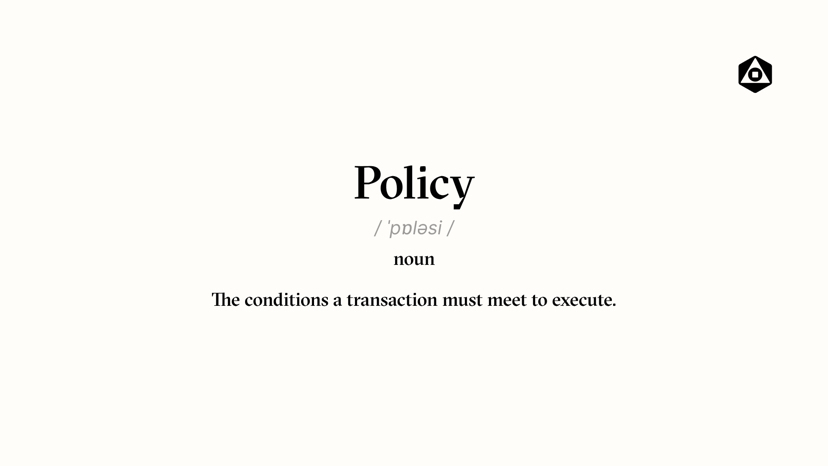
Whenever developers call setPolicy(PolicyConfig), the protocol creates a completely new policyId.
The earlier configuration is not silently modified it becomes stale, while the new configuration receives its own unique identity.
This design has several benefits.
Auditors can determine exactly which policy configuration governed any historical transaction.
Governance participants can review changes without confusion about which version is active.
Developers also gain a clear separation between policy versions, reducing the chance that outdated configurations remain unintentionally in use.
In highly regulated or security sensitive environments, this level of traceability is invaluable.
It ensures that policy evolution is transparent rather than hidden behind silent updates.
The result is stronger accountability across the entire lifecycle of policy management.
AI Agents, Real-World Applications, and the Future of Newton Protocol
One of the most exciting aspects of Newton Protocol is that it is not designed for a single use case. Instead, it provides a policy and authorization framework that can support many different types of decentralized applications. As AI becomes more capable of making financial and operational decisions, the need for programmable trust will continue to grow.
Imagine an AI trading agent managing a decentralized portfolio. The agent constantly monitors market conditions, analyzes price movements, and identifies opportunities within seconds. Without policy controls, that agent could execute trades that exceed acceptable risk levels or interact with unauthorized protocols.
With Newton Protocol, every action can be checked against predefined policies before execution. If a transaction exceeds the permitted exposure limit or violates another policy rule, it can be rejected automatically. This allows automation to continue while keeping important safeguards in place.
The same concept applies to many other industries.
In decentralized finance (DeFi), policies can govern lending limits, collateral requirements, or treasury management.
For tokenized real-world assets (RWAs), policies can verify whether transactions satisfy compliance requirements before assets move between participants.
Stablecoin issuers could use programmable policies to manage minting, redemption, and transfer permissions while maintaining transparency.
Decentralized autonomous organizations (DAOs) may also benefit from Newton’s architecture. Instead of granting unrestricted permissions to automated treasury managers, DAOs can define policies that limit spending, require specific approvals, or restrict interactions with certain contracts.
As AI agents become increasingly common, these policy controls may become just as important as the AI models themselves.
Recent Ecosystem Developments
Newton Protocol has continued expanding both its technology and ecosystem.
One important milestone has been the introduction of NEWT, the protocol’s native token. NEWT is designed to support governance, staking, protocol incentives, and broader participation within the Newton ecosystem. By involving token holders in governance, the protocol aims to encourage decentralized decision-making as the network evolves.
Newton Protocol has also continued promoting its vision of secure AI automation by providing developer resources, software development kits (SDKs), and documentation that make it easier for builders to integrate policy enforcement into decentralized applications.
The project’s focus extends beyond cryptocurrency trading. Newton’s architecture is intended to support AI-powered applications across multiple sectors, including decentralized finance, institutional blockchain infrastructure, stablecoins, tokenized assets, payment systems, and automated digital identity verification.
Another notable aspect of Newton Protocol is its emphasis on combining modern security technologies. The protocol incorporates Trusted Execution Environments (TEEs) and Zero-Knowledge Proofs (ZKPs) to improve the privacy and verifiability of AI-driven workflows. Together, these technologies aim to ensure that sensitive computations remain protected while still allowing users to verify that policies were enforced correctly.
As the Web3 ecosystem continues to explore AI-powered automation, Newton Protocol is positioning itself as foundational infrastructure rather than simply another application.
Challenges and Opportunities
Although Newton Protocol presents an innovative approach, it also faces challenges that are common to emerging blockchain infrastructure projects.
The first challenge is adoption.
A protocol can offer excellent technology, but its long-term success depends on whether developers, enterprises, and decentralized applications choose to integrate it into their products. Building a strong ecosystem requires documentation, developer support, community engagement, and real-world implementations.
Another challenge involves governance.
Newton Protocol makes policy logic reusable, but the effectiveness of those policies still depends on the people who configure them. Poorly chosen thresholds, exposure limits, or approval lists could weaken security even if the underlying policy logic is flawless.

This highlights an important lesson: secure systems are not created by code alone. They also require responsible governance, careful review processes, and continuous monitoring.
Scalability is another consideration. As thousands of AI agents begin interacting with blockchain networks simultaneously, policy evaluation must remain efficient without introducing unnecessary delays. Balancing strong security with fast execution will continue to be an important engineering objective.
Despite these challenges, the opportunities are significant.
If AI agents become common participants in decentralized finance and digital commerce, protocols capable of enforcing transparent, programmable, and verifiable policies could become essential infrastructure for the next generation of blockchain applications.
Conclusion.:
Newton Protocol represents a shift in how blockchain developers think about automation. Instead of asking only “Can this transaction execute?”, it asks “Should this transaction execute?”
By separating reusable Rego policy logic from dynamic configurations through data.params, introducing controlled execution windows with expireAfter, and creating new policyId values whenever configurations change via setPolicy(PolicyConfig), Newton Protocol emphasizes transparency, accountability, and security.
Its architecture demonstrates that the future of decentralized AI is not simply about making intelligent agents more capable. It is about ensuring those agents operate within clearly defined, verifiable boundaries that users, developers, and auditors can understand and trust.
As blockchain technology and artificial intelligence continue to evolve together, programmable policy layers may become as fundamental as smart contracts themselves. Newton Protocol is working toward that vision by providing the trust framework needed for secure AI powered automation.
Whether it ultimately becomes a core component of Web3 infrastructure will depend on adoption, continued innovation, and the strength of its developer community. Nevertheless, its approach offers an important glimpse into how decentralized systems can combine automation with accountability an essential requirement for the future of on chain intelligence.
 #Newt @NewtonProtocol $NEWT #NEWT #newt
