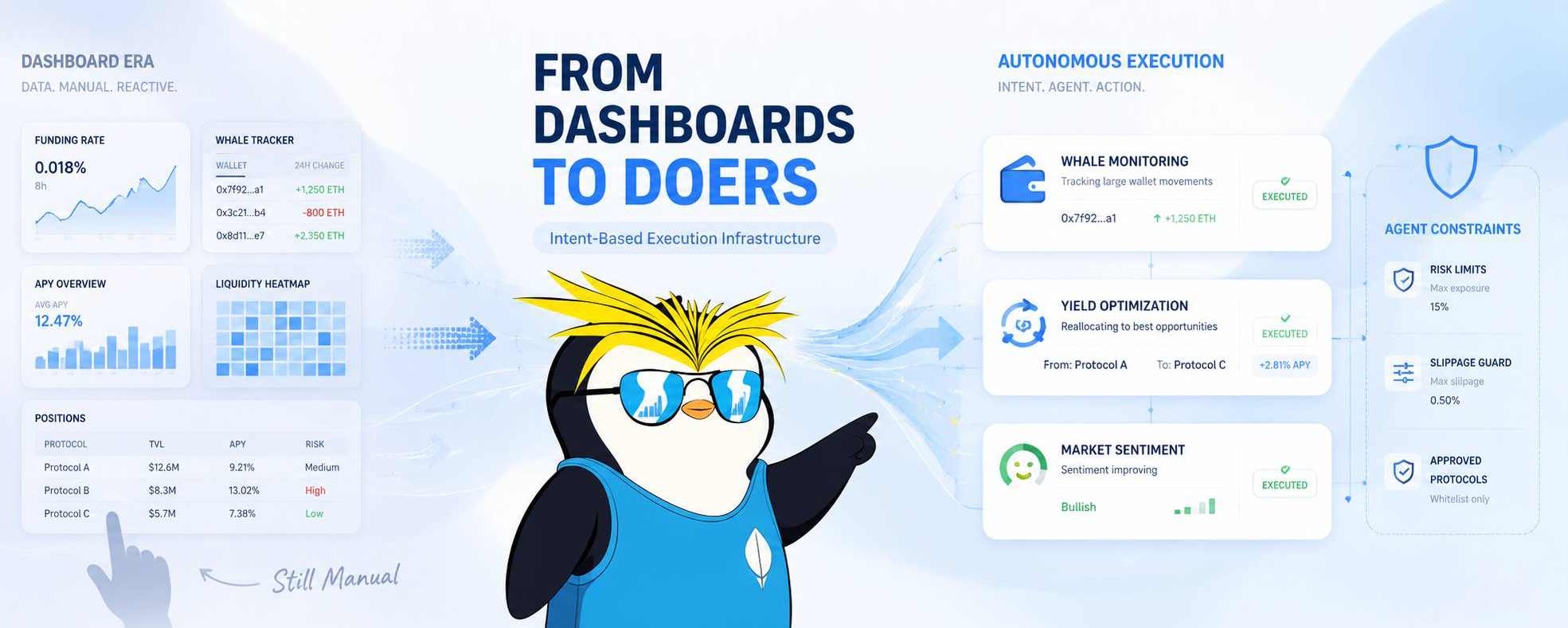

What interests me about OctoClaw isn't just the idea of "self driving agents," but the shift in how we view automation onchain.
So far, many crypto tools have become mere dashboards: all the data is there, but the decisions remain in our hands. @OpenLedger calls this "moving from dashboards to doers," and I think the phrase is apt. The problem isn't a lack of information. The problem is that information often stops at the screen.
This is where intent based execution becomes the difference. I don't need to give rigid instructions like a classic trading bot that only understands, "if X happens, do Y." What I find more useful is an agent that understands the goal: find the best yield, monitor market sentiment, or read whale activity, then choose the most sensible action for the current situation.
But autonomy without constraints is dangerous. OpenLedger has emphasized this, and I think the point is crucial: the agent must have clear boundaries. For example, risk limits, protocol whitelists, slippage limits, and conditions for when it should stop. So the agent can still act independently, but the results are dependable, not wild.
That's the difference from traditional automation. Not just fast, but trustworthy.
If a concept like this matures, we're not just talking about smarter bots. We're approaching autonomous capital that can be executed verifiably, transparently, and is far more relevant to the future of onchain finance.