

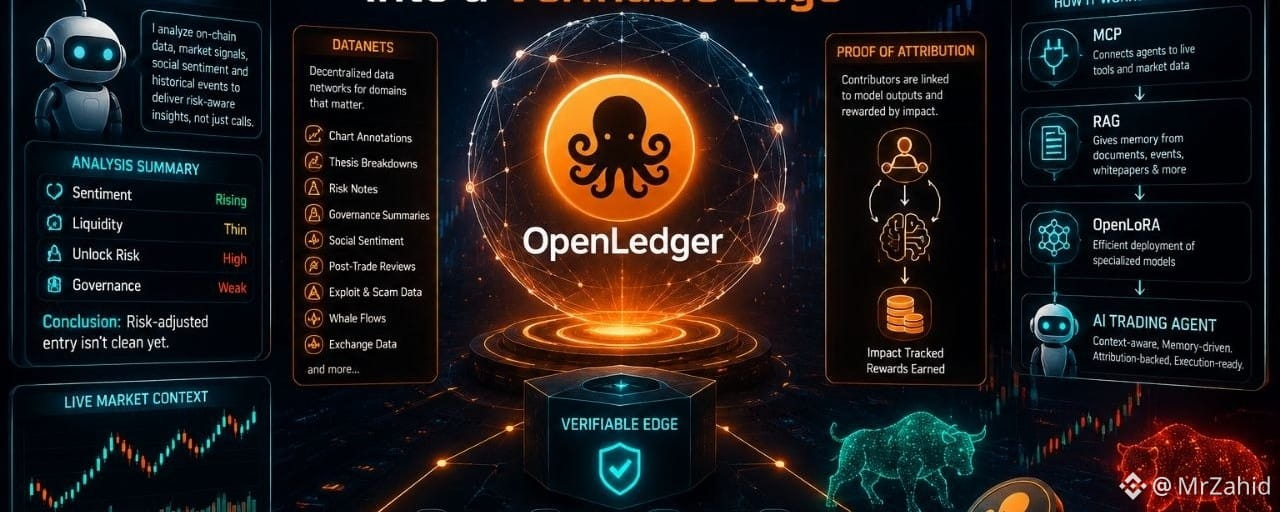

Ich habe viele „AI-Trading“-Narrative getestet, und ehrlich gesagt, die meisten fühlen sich an wie schicke Verpackungen um vage Signale. Sie sagen „bullisches Sentiment“, „Smart Money-Aktivität“ oder „AI hat Momentum erkannt“, aber wenn ich frage, warum, welche Daten diese Antwort geformt haben oder wie das Modell zu diesem Call gekommen ist, verschwindet die Spur normalerweise. Genau da fühlt sich OpenLedger für mich anders an.
@OpenLedger versucht nicht, nur eine weitere Allzweck-Chain zu sein. Die Kernidee ist spezifischer: eine AI-Blockchain aufzubauen, in der Daten, Modelle, Agenten und Mitwirkende verfolgt, zugeordnet und monetarisiert werden können. Das klingt technisch, aber der Trading-Aspekt ist einfach. In Märkten ist ein Signal nur so wertvoll wie seine Quelle. Wenn mir ein AI-Agent sagt, ein Token sieht stark aus, will ich nicht nur die Schlussfolgerung. Ich will wissen, was das befeuert hat: Liquiditätsänderungen, Governance-Historie, soziale Wahrnehmung, Token-Entsperrungen, frühere Ausbeutungsberichte, Walströme oder Echtzeit-Börsendaten.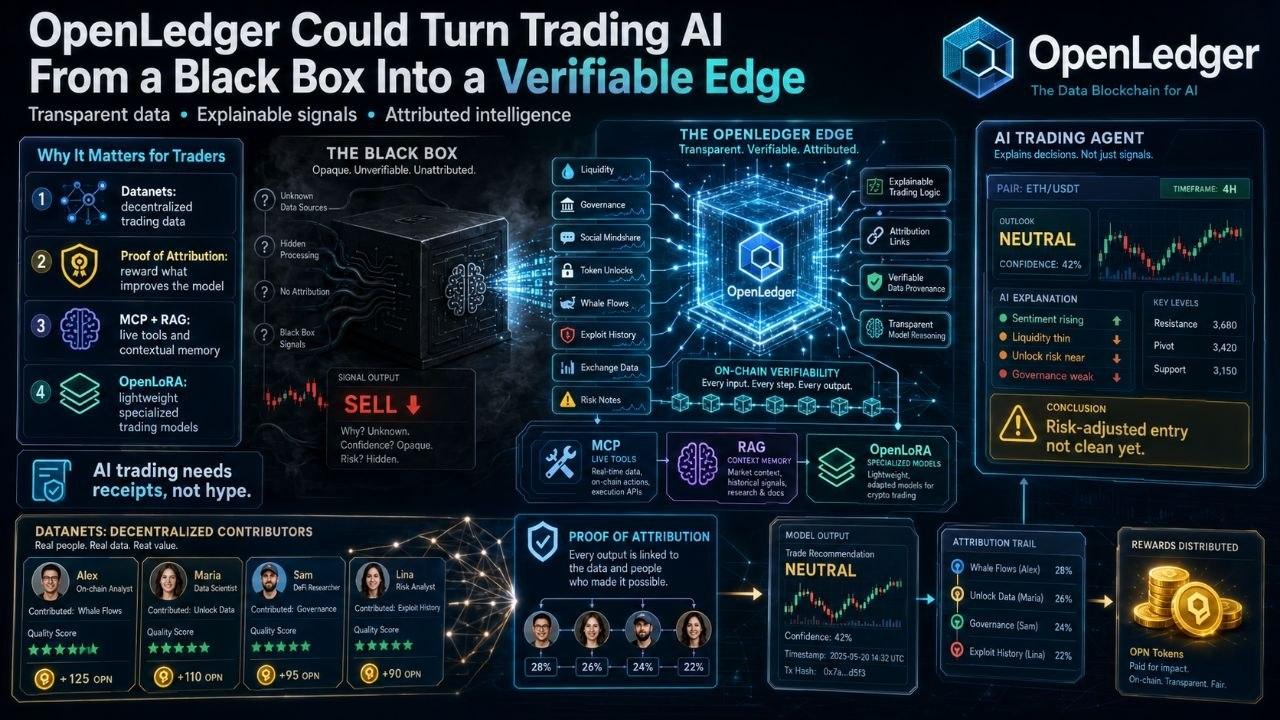
Darum sind OpenLedger’s Datanets wichtig. Ein Datanet ist im Grunde ein dezentrales Datennetzwerk, in dem Menschen domänenspezifische Datensätze beitragen können – mit nachweisbarer Zuordnung. Fürs Trading könnte das Chart-Annotations sein, Aufschlüsselungen von Thesen, Risikohinweise, Token-Recherchen, Discord-Sentiment, Governance-Zusammenfassungen oder Post-Trade-Reviews. Der heiße Take? Das nächste große Trading-Modell wird wahrscheinlich nicht aus einem einzigen Geheim-Team für Quant kommen. Es entsteht aus tausenden chaotischen, aber nützlichen menschlichen Beobachtungen – bereinigt, validiert und in Modelltreibstoff verwandelt.
Proof of Attribution ist der Teil, der das weniger ausbeuterisch macht. In klassischer KI füttern Beitragsleistende oft die Maschine und bekommen nichts zurück. Auf OpenLedger können Beiträge mit Modell-Ausgaben verknüpft und basierend auf dem Einfluss belohnt werden. Das ist ein großer Unterschied, weil Trading-Intelligenz sich aufsummiert. Eine gute Liquidity-Warnung, ein genauer Unlock-Hinweis, ein historisches Scam-Pattern-Datenset – all das kann zukünftige Entscheidungen prägen. Wenn diese Wirkung nachvollziehbar ist, dann wird Daten endlich zu einem Asset und nicht nur zu kostenloser Arbeitskraft.
Meine Trading-Logik hier ist unkompliziert: Ich vertraue keiner KI, die nur Calls ausgibt; ich vertraue einer KI, die Einschränkungen erklärt. Ein nützlicher OpenLedger-basierter Trading-Agent sollte nicht laut „kaufen“ schreien. Er sollte sowas sagen wie: „Sentiment steigt, Liquidität ist dünn, Unlock-Risiko ist nahe, Governance-Teilnahme ist schwach – also ist der risikoangepasste Einstieg noch nicht sauber.“ So denken echte Trader. Erst Risiko. Nicht Hype.
Die MCP- und RAG-Vision von OpenLedger macht das noch praktischer. MCP kann Agents mit Live-Tools verbinden – etwa Börsen, Liquiditätsquellen oder Market-APIs. Und RAG gibt dem Agenten Gedächtnis aus Dokumenten, Vorschlägen, Whitepapern und vergangenen Ereignissen. Ergänzt man OpenLoRA für eine leichte, spezialisierte Modellbereitstellung, ist der Agent plötzlich kein statischer Chatbot mehr. Es ist ein modulares Trading-System mit Kontext, Gedächtnis, Attribution und Ausführungslogik.
Warum schaue ich also OpenLedger so genau an? Weil KI-Trading keinen zusätzlichen Nebel braucht. Es braucht Belege. Das stärkste Versprechen von OpenLedger ist, KI-Ausgaben in etwas zu verwandeln, das Trader einsehen, hinterfragen und bewerten können. Und in einem Markt voller Rauschen könnte verifizierbare Intelligenz der echte Vorteil werden.