
A reward can bring someone into a game.
It cannot, by itself, explain why they should still care a month later.
That is where Pixels starts to look more interesting. The project is not only framed around token incentives and free-to-play access. The main site presents Pixels as a social gaming ecosystem, while the litepaper increasingly points toward a stronger social meta and a broader world built around progression, identity, and interaction.
That matters because stickiness in games usually comes from one of two places.
Either the economy keeps pulling people back, or the world starts to matter socially.
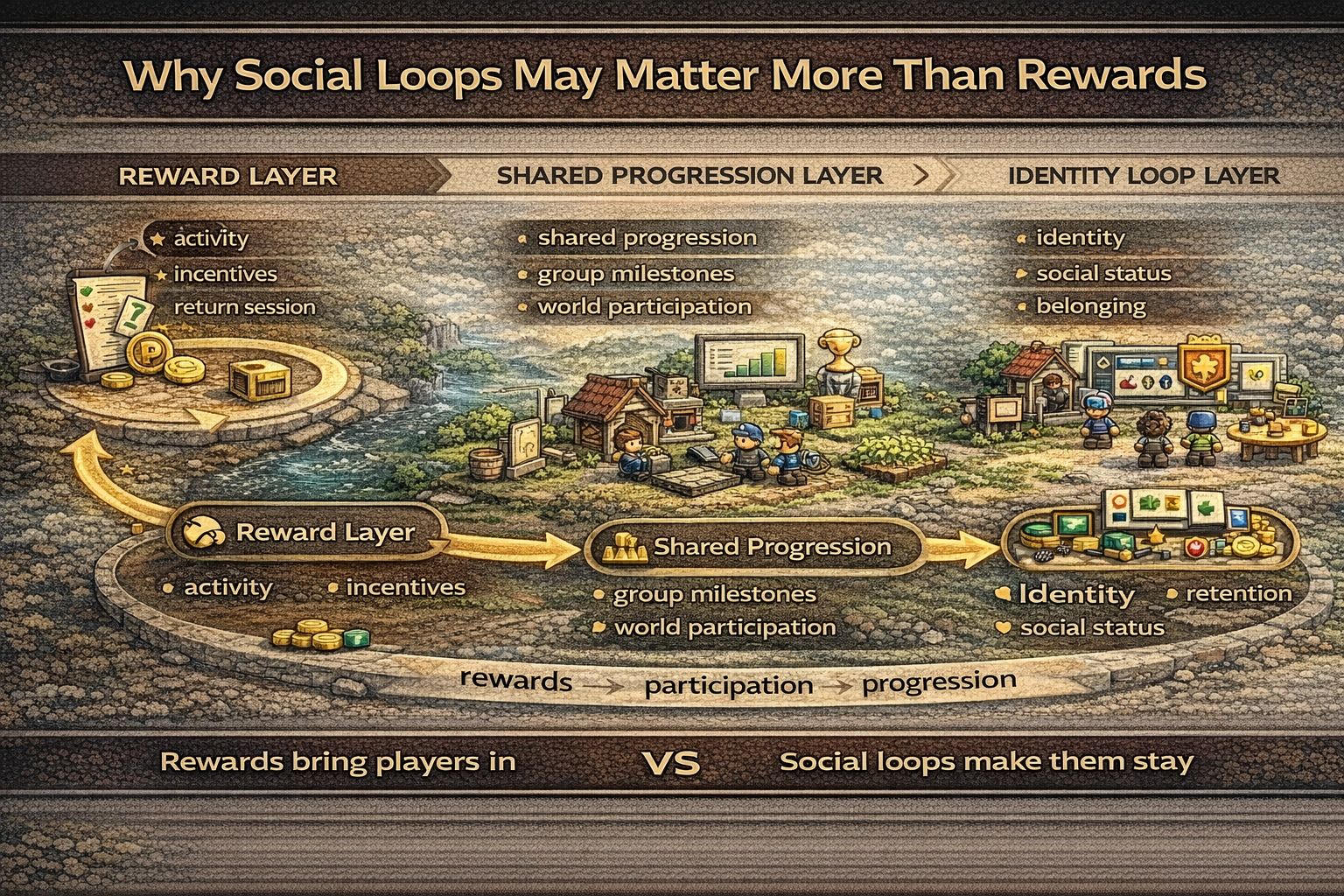
The first model is easier to launch. The second is harder to build, but usually more durable. Pixels already has the economic layer, yet the docs suggest the next phase is not just about making rewards work better. It is also about making the ecosystem feel more alive through deeper social play and shared experiences.
The important shift here is subtle.
A purely reward-driven loop asks: what does the player get?
A social loop asks: what does the player become inside the world?
That is a very different kind of retention. Once progression is visible, identity becomes legible, and interaction starts to shape status, the game is no longer held together only by payouts. It starts being held together by recognition, belonging, and shared momentum. This is an inference from the way Pixels positions itself as a social free-to-play ecosystem and from the litepaper’s emphasis on stronger social meta, not a direct quote from the docs.
That may end up being one of the more important upgrades in the whole PIXEL thesis.
Reward loops are efficient at creating activity, but they are weak at creating attachment unless that activity leads somewhere. Shared progression changes that. If players build status through visible advancement, community roles, land use, cosmetics, guild-like behavior, or recurring social spaces, then each return session carries more meaning than just another claim cycle. The value of coming back is no longer only economic. It becomes relational. That inference fits the broader Pixels direction toward social meta and ecosystem expansion.
Identity loops matter for the same reason.
In most weak game economies, users are interchangeable.
They arrive, extract, and disappear without leaving much behind.
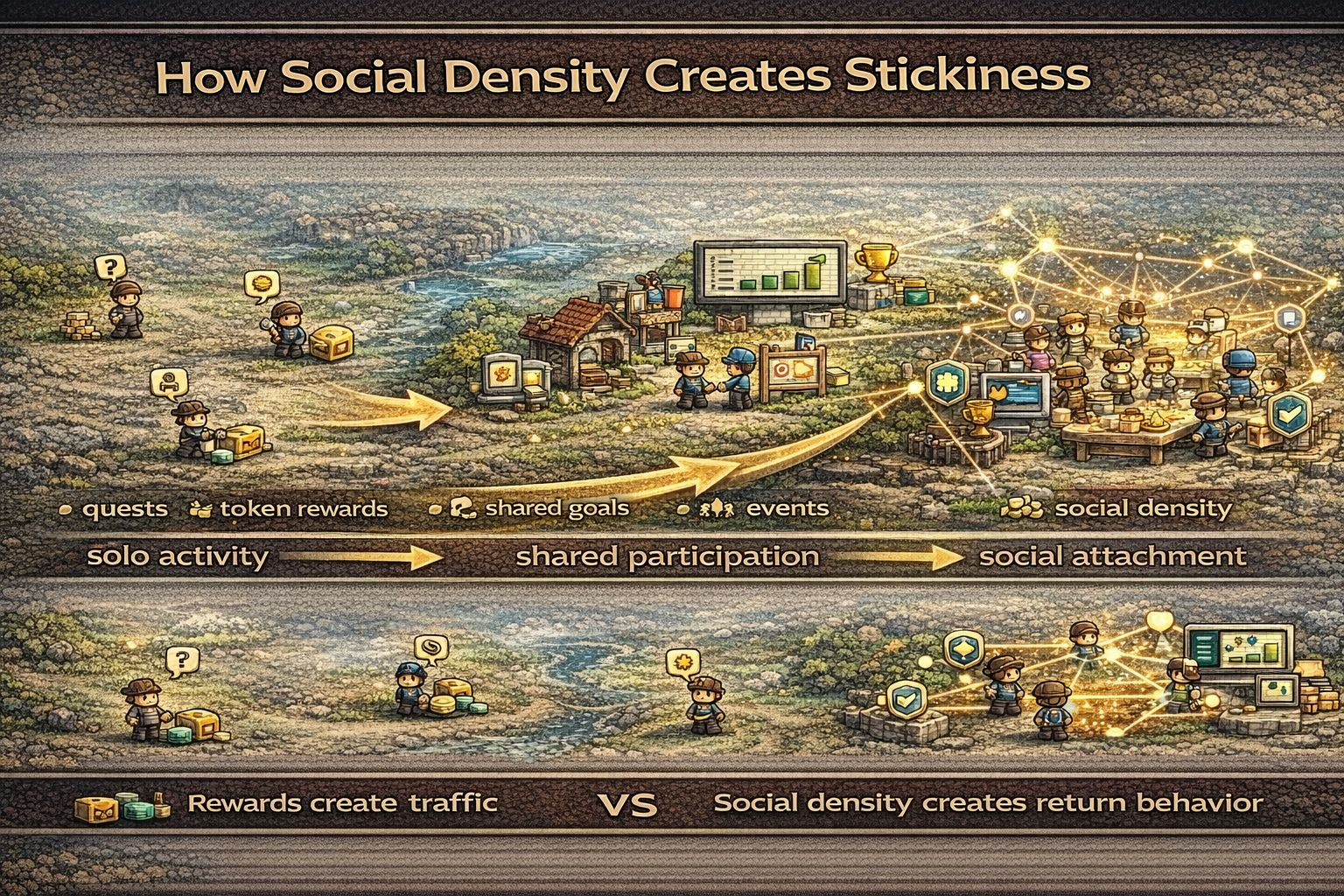
But in stronger worlds, players begin to accumulate identity: how they look, where they are known, what they own, what others associate with them, and what part of the social graph they occupy. That kind of persistence usually increases stickiness because leaving the system means leaving behind more than rewards. Here again, I am drawing an inference from Pixels’ social positioning and from the litepaper’s shift toward a stronger social layer.
This also helps explain why “millions of players” is not the strongest narrative anymore.
Raw scale sounds impressive, but social ecosystems benefit more from density than from headline volume. A smaller base of returning, expressive, socially embedded users can strengthen a world more than a larger base of low-attachment traffic. That logic fits the revised Pixels thesis, which puts more emphasis on higher-quality users, measurable retention, and better reward efficiency than on broad undifferentiated growth.
So the more interesting future for Pixels may not be “more rewards.”
It may be better reasons to care who else is still there.
If the project can combine efficient incentives with shared progression, visible identity, and stronger social meta, then retention starts coming from two places at once: economic loops and community loops. That combination is usually much harder to break than token rewards alone. This is the angle I find most compelling in the current Pixels direction.
Because attention can be bought.
But worlds become durable when players begin to feel that staying means something.