

I used to evaluate robot projects by demo quality. That was a mistake.
A strong demo only proves a system can succeed under controlled conditions. It says almost nothing about what happens when tasks are messy, operators disagree, and real money is on the line. In production, failure is rarely one dramatic crash. It is usually a chain of small unchecked decisions that nobody can challenge fast enough.
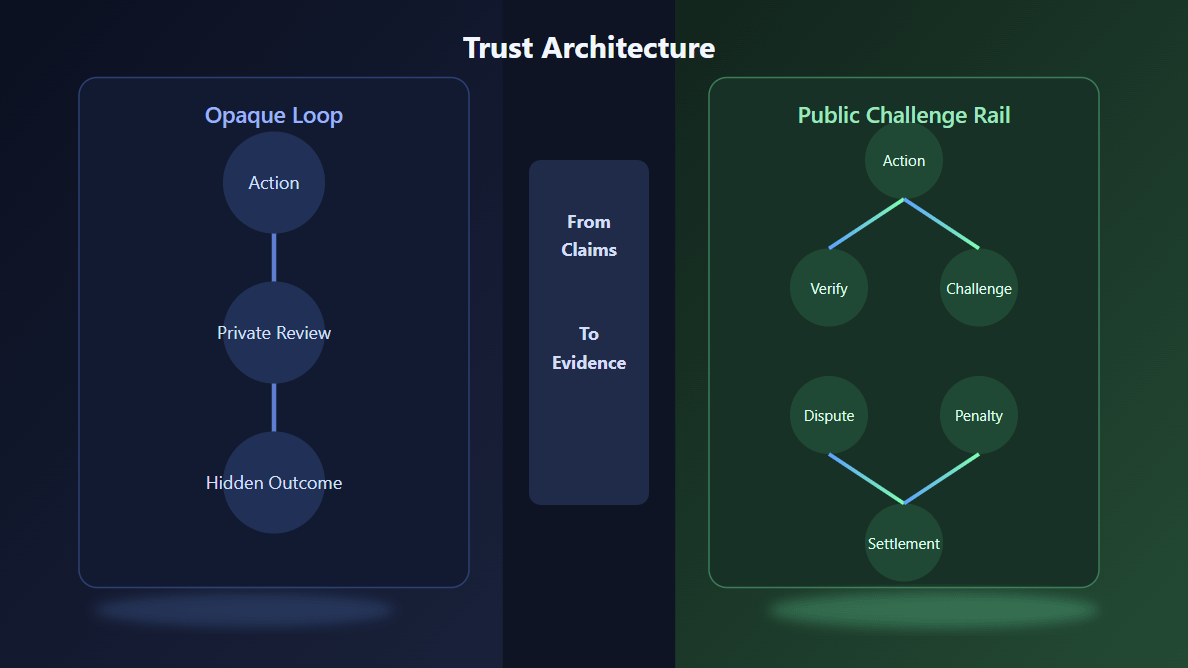
That is why Fabric stands out to me. The protocol framing is not "trust us, we built good models." The framing is operational: give robot actions an identity, make outcomes challengeable, and keep governance visible instead of hidden behind one private operator.
This matters because reliability is not just model accuracy. Reliability is process quality over time. Who can review a bad result? How is a dispute resolved? What penalty exists for repeated low-quality behavior? If those answers are unclear, scale becomes risk amplification.
My practical rule now is simple: if an action cannot be reviewed and contested through public rules, it should not be treated as trustworthy automation. Fabric's architecture direction aligns with that standard by connecting verification flows, incentive pressure, and policy updates in one coordination layer.
So the strategic question is direct: as robots move from demo rooms into public and commercial environments, do you want closed promises or auditable process discipline?
@Fabric Foundation $ROBO #ROBO