

This guide is written for educational purposes to help beginners and growing investors understand crypto wallet security better before entering the market.
If you are entering the crypto world, the very first step is choosing and setting up the right wallet. I have seen many beginners jump into trading without understanding wallet security, and later they realize how important this foundation really is. A crypto wallet is not just an app. It is your gateway to storing, sending, receiving, staking, and interacting with Web3.
There are different types of wallets, and each one serves a different purpose depending on your experience level, investment size, and security preference.
Custodial Wallets – Easy and Beginner Friendly
Custodial wallets are provided and managed by crypto exchanges. In this case, the platform holds your private keys on your behalf. It is simple, convenient, and ideal for newcomers who don’t want to manage complex security processes.
The biggest advantage is ease of use. You can reset your password if you forget it, and the platform handles technical security layers for you.
How to Set Up a Custodial Wallet
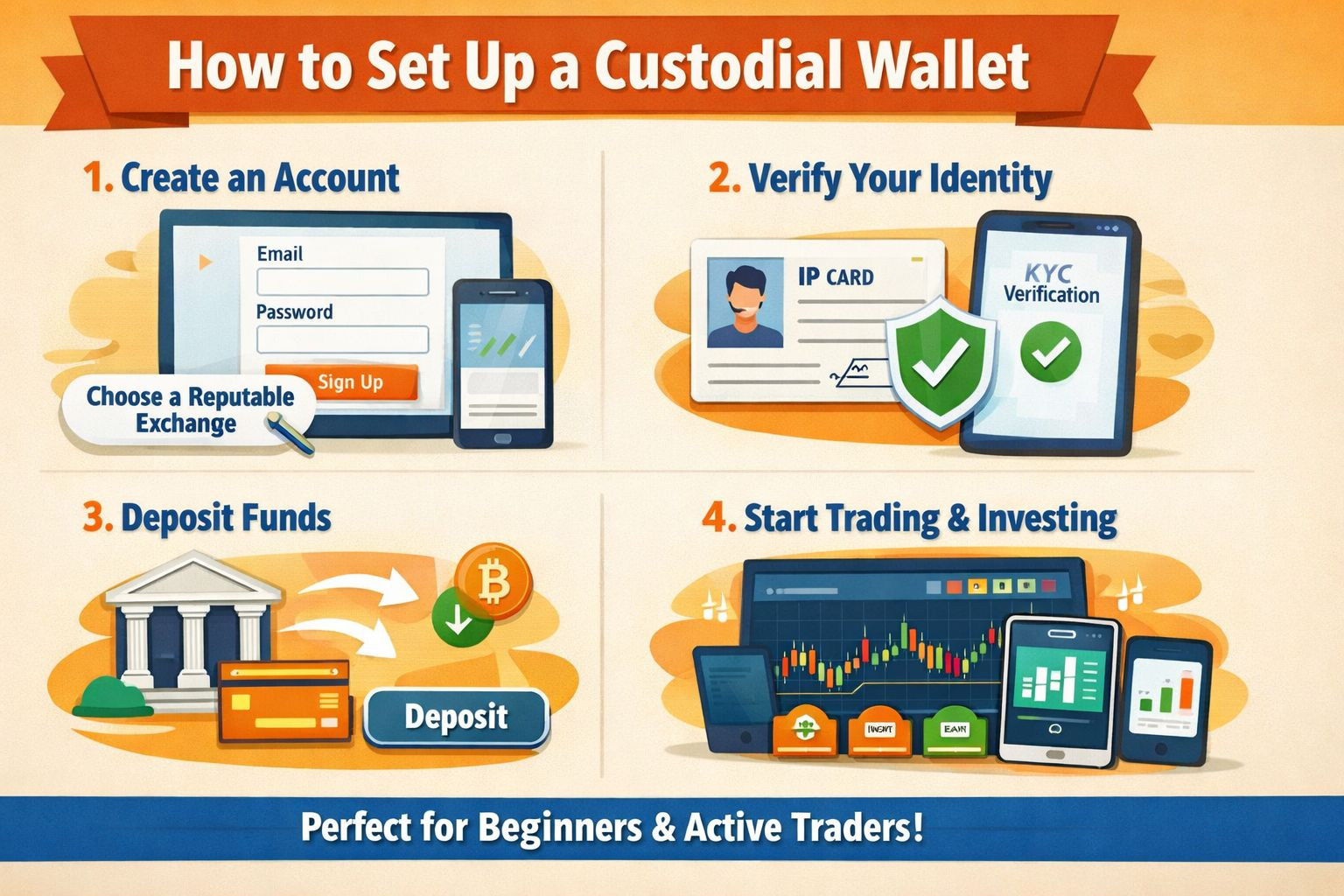
First, choose a reputable exchange like and create your account using your email and a strong password.
After registration, complete identity verification to comply with regulations.
Once verified, you can deposit funds using bank transfer, card, or crypto transfer.
After funding your account, you are ready to trade, invest, or explore earning products.
Custodial wallets are perfect for active traders and beginners who want simplicity.
Non Custodial Wallets – Full Control, Full Responsibility
Non custodial wallets give you complete control over your assets. You hold your private keys and seed phrase. That means no third party can freeze or control your funds. However, this also means if you lose access, there is no password reset button.
Popular examples include and .
How to Set Up a Non Custodial Wallet
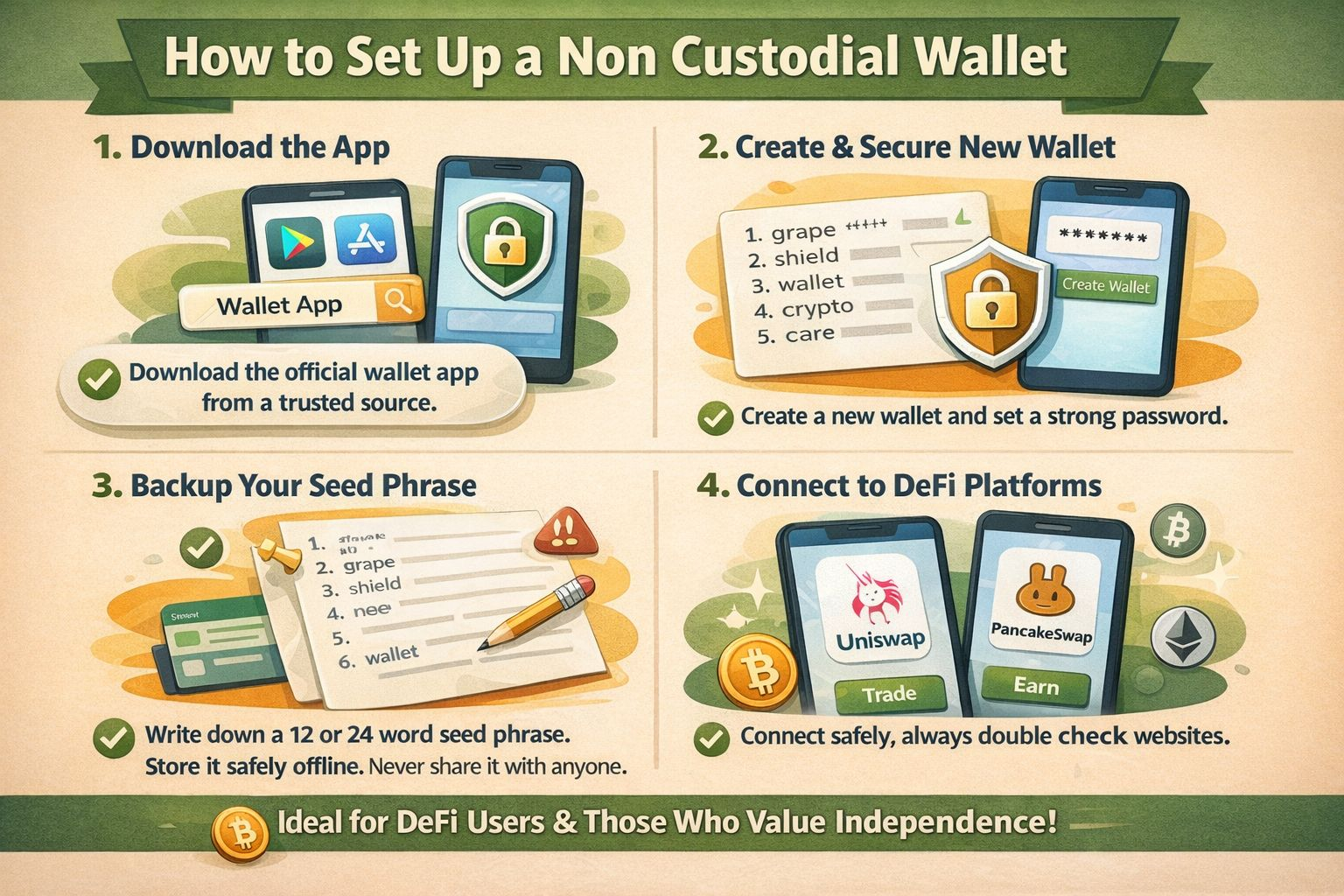
Download the official wallet app from a trusted source.
Create a new wallet and set a strong password.
You will receive a 12 or 24 word seed phrase. Write it down and store it safely offline. Never share it with anyone.
To add funds, transfer crypto from an exchange or use built in on ramp services if available.
Once set up, you can connect to decentralized platforms like or . Always double check websites before connecting your wallet to avoid phishing attacks.
Non custodial wallets are ideal for DeFi users and those who value independence.
Binance Web3 Wallet – Self Custody with Advanced Protection
The combines self custody with innovative security through Multi Party Computation technology. Instead of a single seed phrase, it generates three key shares stored in separate locations. This reduces the risk of single point failure.
It is designed for users who want self custody without the complexity of managing a traditional seed phrase.
How to Set Up Binance Web3 Wallet
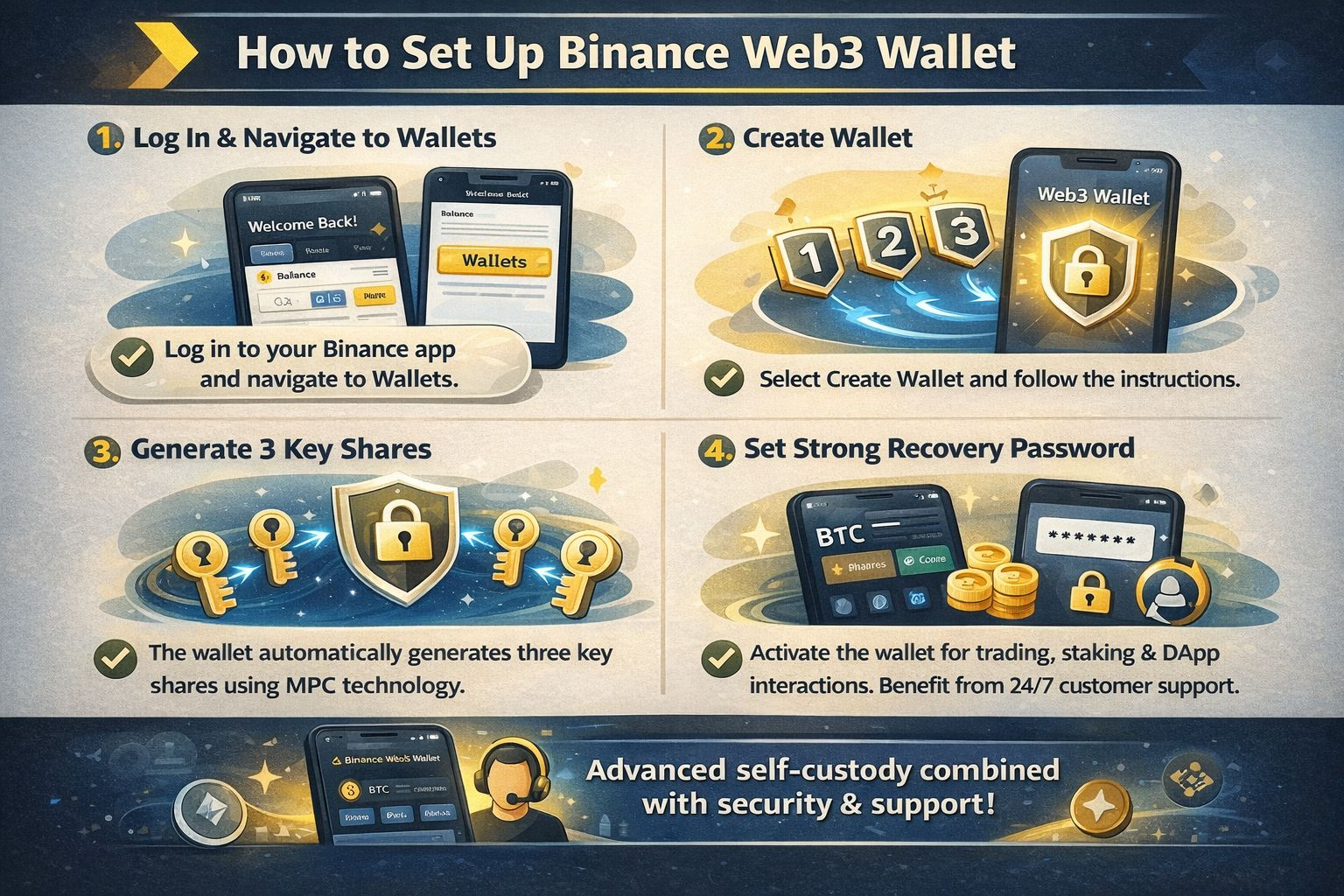
Log in to your Binance app and navigate to Wallets.
Select Create Wallet and follow the instructions.
The wallet automatically generates three key shares using MPC technology.
Set up your recovery password carefully. It protects your key shares and must remain private.
Activate the wallet and it becomes ready for trading, staking, and interacting with DApps.
One major advantage is 24 7 customer support, which gives additional confidence to users who may need guidance.
Hardware Wallets – Maximum Offline Security
Hardware wallets store your private keys offline inside a physical device. This protects your crypto from online threats, malware, and hacking attempts.
Well known brands include and .
How to Set Up a Hardware Wallet
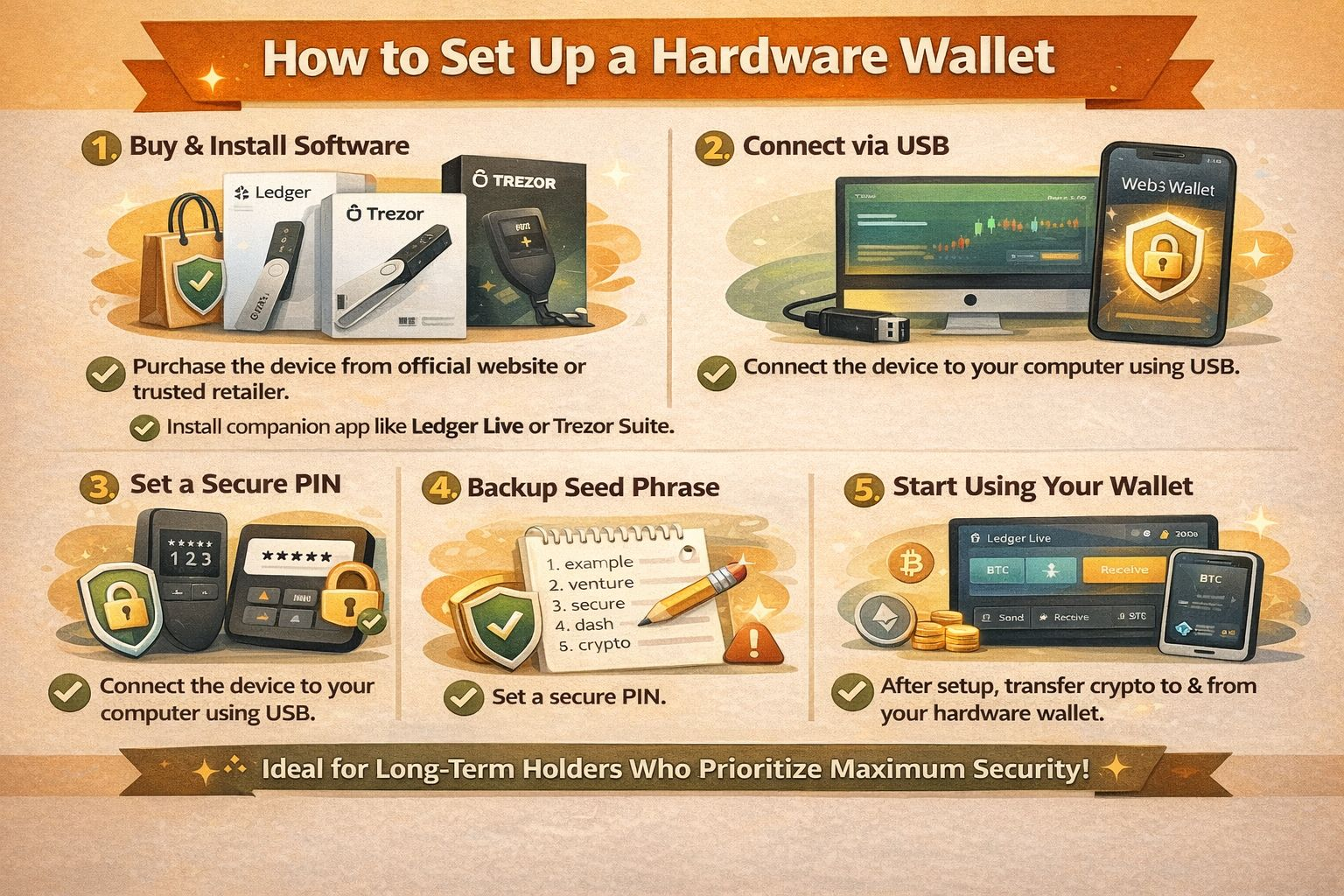
Purchase the device from the official website or trusted retailer.
Install the companion software such as Ledger Live or Trezor Suite.
Connect the device to your computer using USB.
Set a secure PIN.
Write down the recovery seed phrase generated by the device and store it safely offline.
After setup, you can transfer crypto to and from your hardware wallet.
Hardware wallets are best suited for long term holders managing large portfolios who prioritize maximum security.
Final Thoughts
Choosing the right crypto wallet depends on your goals and experience. Custodial wallets offer simplicity. Non custodial wallets provide independence. Binance Web3 Wallet delivers innovative MPC based security with user support. Hardware wallets ensure strong offline protection.
No matter which option you choose, always remember that security comes first. Protect your passwords, never share your recovery information, and stay alert to phishing attempts. In crypto, your security habits define your success.
If you build your foundation correctly today, you protect your future tomorrow.

