

#cryptoeducation
cryptoeducation
3.6M Aufrufe
22,970 Kommentare
Hot
Zuletzt

Übersetzung ansehen
🚨 Most Crypto Beginners Make This One Mistake!
Everyone watches the price. Smart investors also watch the risk. 📊
Before making any decision about $BTC , ask yourself these 3 questions:
🔹 1. What's the trend?
Is Bitcoin making higher highs and higher lows, or is the market showing weakness?
🔹 2. Where could I be wrong?
Every analysis needs an invalidation point. Never assume your prediction must be correct.
🔹 3. Am I reacting emotionally?
Fear of missing out can lead to rushed decisions. Sometimes, waiting is the smarter move.
💡 My takeaway: You don't need to predict every Bitcoin move. You need a clear plan and disciplined risk management.
👇 Let's discuss:
What's the most important skill in crypto?
A) Technical analysis 📈
B) Risk management 🛡️
C) Patience 🧠
Comment A, B, or C and tell us why!
Follow Dawood Decode for crypto education, market insights, and AI-powered analysis.
#bitcoin #BTC #cryptoeducation #BinanceSquare

102

Übersetzung ansehen
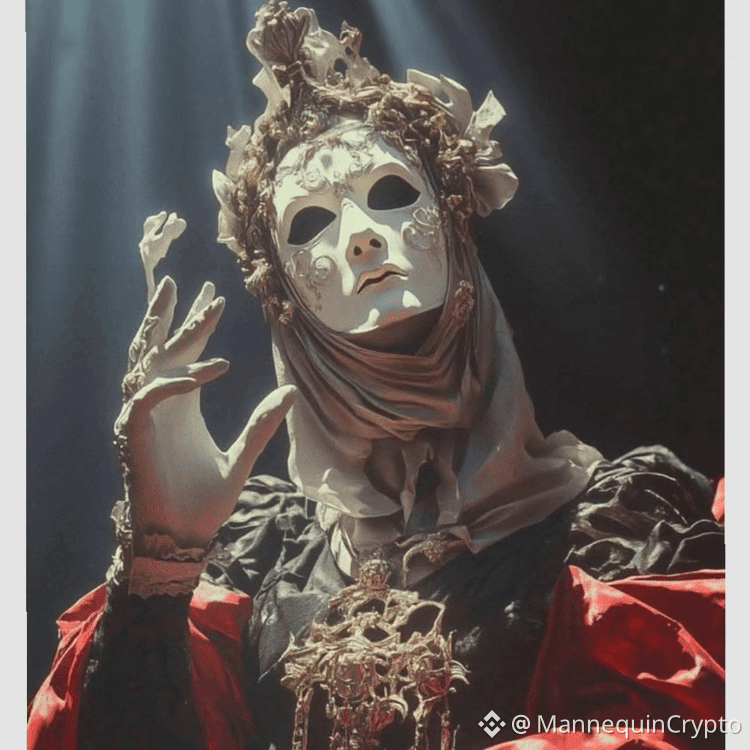
📖 INVESTOR’S JOURNAL — DAY 31
Today’s lesson: NEVER CONFUSE ACCESS WITH OWNERSHIP.
The Binance security incident is a reminder that holding cryptocurrency on an exchange introduces a different category of risk.
You may own the economic value of an asset, but your ability to access it can depend on a centralized platform.
Three principles worth remembering:
1. Understand custody.
Know where your assets are held and who controls access.
2. Control your risk.
Leverage can turn an ordinary correction into a permanent loss.
3. Separate conviction from emotion.
A market crash doesn’t automatically destroy a good investment thesis. But neither does a strong narrative justify ignoring risk.
Crypto was built around financial sovereignty.
That principle should apply to how we manage our investments, not just what we invest in.
The objective isn’t to predict every market movement.
It’s to survive long enough to benefit from the opportunities that matter.
#InvestorsJournal #cryptoeducation #RiskManagement #MannequinCrypto
8


Artikel
Übersetzung ansehen
Cryptocurrency Explained: A Complete Beginner's GuideCryptocurrency has become one of the most discussed financial technologies in the world. From Bitcoin to Ethereum, digital currencies are changing how people think about money, ownership, and financial technology.
But what exactly is cryptocurrency, and how does it work?
Let's understand it step by step.
1. What Is Cryptocurrency?
Cryptocurrency is a form of digital currency that uses cryptography to secure transactions and help control the creation or transfer of digital assets.
Unlike traditional currencies, many cryptocurrencies operate on decentralized networks using blockchain technology.
Examples of popular cryptocurrencies include:
- Bitcoin (BTC)
- Ethereum (ETH)
- Solana (SOL)
- XRP (XRP)
Each cryptocurrency has its own technology, purpose, and use cases.
2. How Does Cryptocurrency Work?
Most cryptocurrencies operate through computer networks that verify and record transactions.
Here's a simplified explanation:
1. A user initiates a cryptocurrency transaction.
2. The transaction is broadcast to the relevant network.
3. Network participants verify the transaction according to its rules.
4. The transaction is recorded on the blockchain.
5. The updated transaction history becomes available to network participants.
This process allows people to transfer digital assets without necessarily relying on a traditional bank.
3. What Is Blockchain Technology?
Blockchain is a type of distributed digital ledger.
It stores information in groups called blocks. These blocks are connected in chronological order, creating a chain of records.
Important characteristics include:
- Transparency: Public blockchains allow transactions to be independently viewed.
- Security: Cryptographic techniques help protect transaction records.
- Decentralization: Some blockchain networks operate without a single central authority.
- Traceability: Transactions can be tracked through the network.
Blockchain technology is not limited to cryptocurrency. It also has potential applications in supply chains, digital identity, and other industries.
4. What Makes Bitcoin Different?
Bitcoin (BTC) was introduced in 2009 and is widely recognized as the first successful decentralized cryptocurrency.
Its key characteristics include:
- A maximum supply of 21 million BTC.
- A decentralized network.
- A public transaction ledger.
- A proof-of-work consensus mechanism.
Bitcoin is often discussed as a digital asset, but its market price can fluctuate significantly.
5. What Is the Difference Between Cryptocurrency and Traditional Money?
Traditional money is generally issued and managed by central banks and governments.
Many cryptocurrencies, on the other hand, operate through decentralized networks.
Here are some important differences:
Traditional Money| Cryptocurrency
Usually issued by governments| Often created according to network protocols
Banking systems commonly process transfers| Blockchain networks can process transfers
Centralized monetary authorities| Many networks are decentralized
Physical and digital forms| Primarily digital
Not every cryptocurrency is decentralized, and the exact features depend on the project.
6. Is Cryptocurrency Risk-Free?
No. Understanding the risks is essential before learning about this technology.
Some common risks include:
- High price volatility.
- Online scams and phishing attacks.
- Losing access to private keys.
- Unreliable or fraudulent projects.
- Regulatory uncertainty.
Cryptocurrency education should always come before financial decisions.
7. Final Thoughts
Cryptocurrency is more than just digital money. It represents a different approach to transferring value, maintaining records, and building digital financial systems.
Understanding blockchain, Bitcoin, wallets, and security provides a strong foundation for anyone interested in this developing technology.
Knowledge is the first step toward making informed decisions.
Let's Discuss!
Which cryptocurrency concept would you like to understand next?
1. $BTC
2. $ETH
3. Blockchain
4. Crypto Wallets
Share your thoughts in the comments!
#cryptoeducation #Bitcoin #Blockchain #Cryptocurrency #BinanceSquare
Cryptocurrency Explained: A Complete Beginner's Guide
Cryptocurrency has become one of the most discussed financial technologies in the world. From Bitcoin to Ethereum, digital currencies are changing how people think about money, ownership, and financial technology.
But what exactly is cryptocurrency, and how does it work?
Let's understand it step by step.
1. What Is Cryptocurrency?
Cryptocurrency is a form of digital currency that uses cryptography to secure transactions and help control the creation or transfer of digital assets.
Unlike traditional currencies, many cryptocurrencies operate on decentralized networks using blockchain technology.
Examples of popular cryptocurrencies include:
- Bitcoin (BTC)
- Ethereum (ETH)
- Solana (SOL)
- XRP (XRP)
Each cryptocurrency has its own technology, purpose, and use cases.
2. How Does Cryptocurrency Work?
Most cryptocurrencies operate through computer networks that verify and record transactions.
Here's a simplified explanation:
1. A user initiates a cryptocurrency transaction.
2. The transaction is broadcast to the relevant network.
3. Network participants verify the transaction according to its rules.
4. The transaction is recorded on the blockchain.
5. The updated transaction history becomes available to network participants.
This process allows people to transfer digital assets without necessarily relying on a traditional bank.
3. What Is Blockchain Technology?
Blockchain is a type of distributed digital ledger.
It stores information in groups called blocks. These blocks are connected in chronological order, creating a chain of records.
Important characteristics include:
- Transparency: Public blockchains allow transactions to be independently viewed.
- Security: Cryptographic techniques help protect transaction records.
- Decentralization: Some blockchain networks operate without a single central authority.
- Traceability: Transactions can be tracked through the network.
Blockchain technology is not limited to cryptocurrency. It also has potential applications in supply chains, digital identity, and other industries.
4. What Makes Bitcoin Different?
Bitcoin (BTC) was introduced in 2009 and is widely recognized as the first successful decentralized cryptocurrency.
Its key characteristics include:
- A maximum supply of 21 million BTC.
- A decentralized network.
- A public transaction ledger.
- A proof-of-work consensus mechanism.
Bitcoin is often discussed as a digital asset, but its market price can fluctuate significantly.
5. What Is the Difference Between Cryptocurrency and Traditional Money?
Traditional money is generally issued and managed by central banks and governments.
Many cryptocurrencies, on the other hand, operate through decentralized networks.
Here are some important differences:
Traditional Money| Cryptocurrency
Usually issued by governments| Often created according to network protocols
Banking systems commonly process transfers| Blockchain networks can process transfers
Centralized monetary authorities| Many networks are decentralized
Physical and digital forms| Primarily digital
Not every cryptocurrency is decentralized, and the exact features depend on the project.
6. Is Cryptocurrency Risk-Free?
No. Understanding the risks is essential before learning about this technology.
Some common risks include:
- High price volatility.
- Online scams and phishing attacks.
- Losing access to private keys.
- Unreliable or fraudulent projects.
- Regulatory uncertainty.
Cryptocurrency education should always come before financial decisions.
7. Final Thoughts
Cryptocurrency is more than just digital money. It represents a different approach to transferring value, maintaining records, and building digital financial systems.
Understanding blockchain, Bitcoin, wallets, and security provides a strong foundation for anyone interested in this developing technology.
Knowledge is the first step toward making informed decisions.
Let's Discuss!
Which cryptocurrency concept would you like to understand next?
1. $BTC
2. $ETH
3. Blockchain
4. Crypto Wallets
Share your thoughts in the comments!
#cryptoeducation #Bitcoin #Blockchain #Cryptocurrency #BinanceSquare
130

·
--
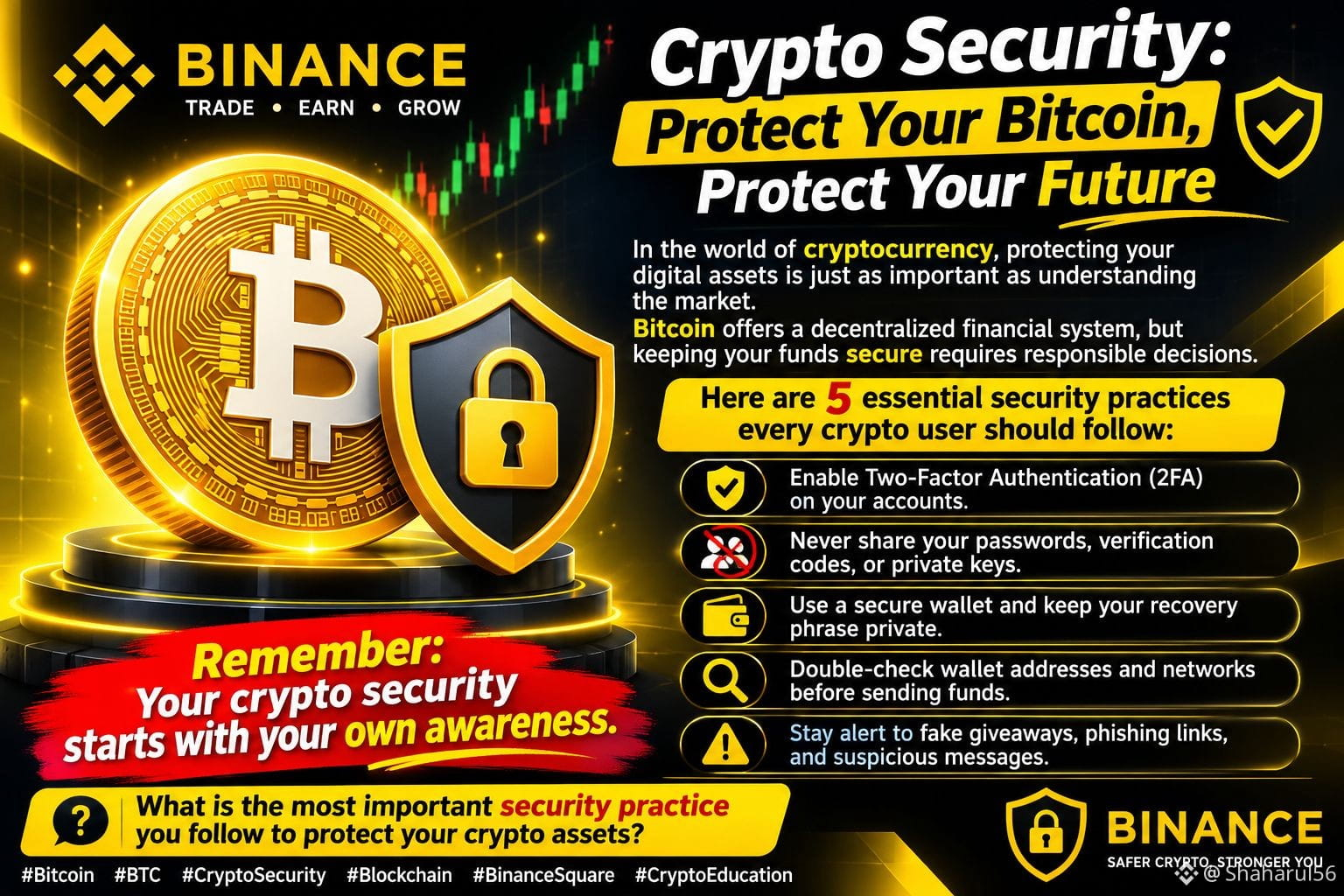
🔐 Krypto-Sicherheit: Schütze deinen Bitcoin, schütze deine Zukunft
In der Welt der Kryptowährungen ist der Schutz deiner digitalen Vermögenswerte genauso wichtig wie das Verständnis des Marktes.
Bitcoin bietet ein dezentrales Finanzsystem, aber um deine Gelder sicher aufzubewahren, musst du verantwortungsvolle Entscheidungen treffen.
Hier sind 5 wichtige Sicherheitsmaßnahmen, die alle Krypto-Nutzer befolgen sollten:
🔹 Aktiviere die Zwei-Faktor-Authentifizierung (2FA) für deine Konten.
🔹 Teile niemals deine Passwörter, Bestätigungscodes oder privaten Schlüssel.
🔹 Verwende eine sichere Wallet und halte deine Wiederherstellungsphrase geheim.
🔹 Überprüfe Wallet-Adressen und Netzwerke sorgfältig, bevor du Geld sendest.
🔹 Achte auf gefälschte Gewinnspiele, Phishing-Links und verdächtige Nachrichten.
Denk daran: Deine Krypto-Sicherheit beginnt mit deiner eigenen Wachsamkeit.
Welche Sicherheitsmaßnahme ist für dich am wichtigsten, um deine Krypto-Vermögenswerte zu schützen?
#bitcoin #BTC #CryptoSecurity #BinanceSquare #cryptoeducation
{spot}(BTCUSDT)
$BTC
🔐 Krypto-Sicherheit: Schütze deinen Bitcoin, schütze deine Zukunft
In der Welt der Kryptowährungen ist der Schutz deiner digitalen Vermögenswerte genauso wichtig wie das Verständnis des Marktes.
Bitcoin bietet ein dezentrales Finanzsystem, aber um deine Gelder sicher aufzubewahren, musst du verantwortungsvolle Entscheidungen treffen.
Hier sind 5 wichtige Sicherheitsmaßnahmen, die alle Krypto-Nutzer befolgen sollten:
🔹 Aktiviere die Zwei-Faktor-Authentifizierung (2FA) für deine Konten.
🔹 Teile niemals deine Passwörter, Bestätigungscodes oder privaten Schlüssel.
🔹 Verwende eine sichere Wallet und halte deine Wiederherstellungsphrase geheim.
🔹 Überprüfe Wallet-Adressen und Netzwerke sorgfältig, bevor du Geld sendest.
🔹 Achte auf gefälschte Gewinnspiele, Phishing-Links und verdächtige Nachrichten.
Denk daran: Deine Krypto-Sicherheit beginnt mit deiner eigenen Wachsamkeit.
Welche Sicherheitsmaßnahme ist für dich am wichtigsten, um deine Krypto-Vermögenswerte zu schützen?
#bitcoin #BTC #CryptoSecurity #BinanceSquare #cryptoeducation
$BTC
Bandook:
336699
15
1
2
73

Übersetzung ansehen
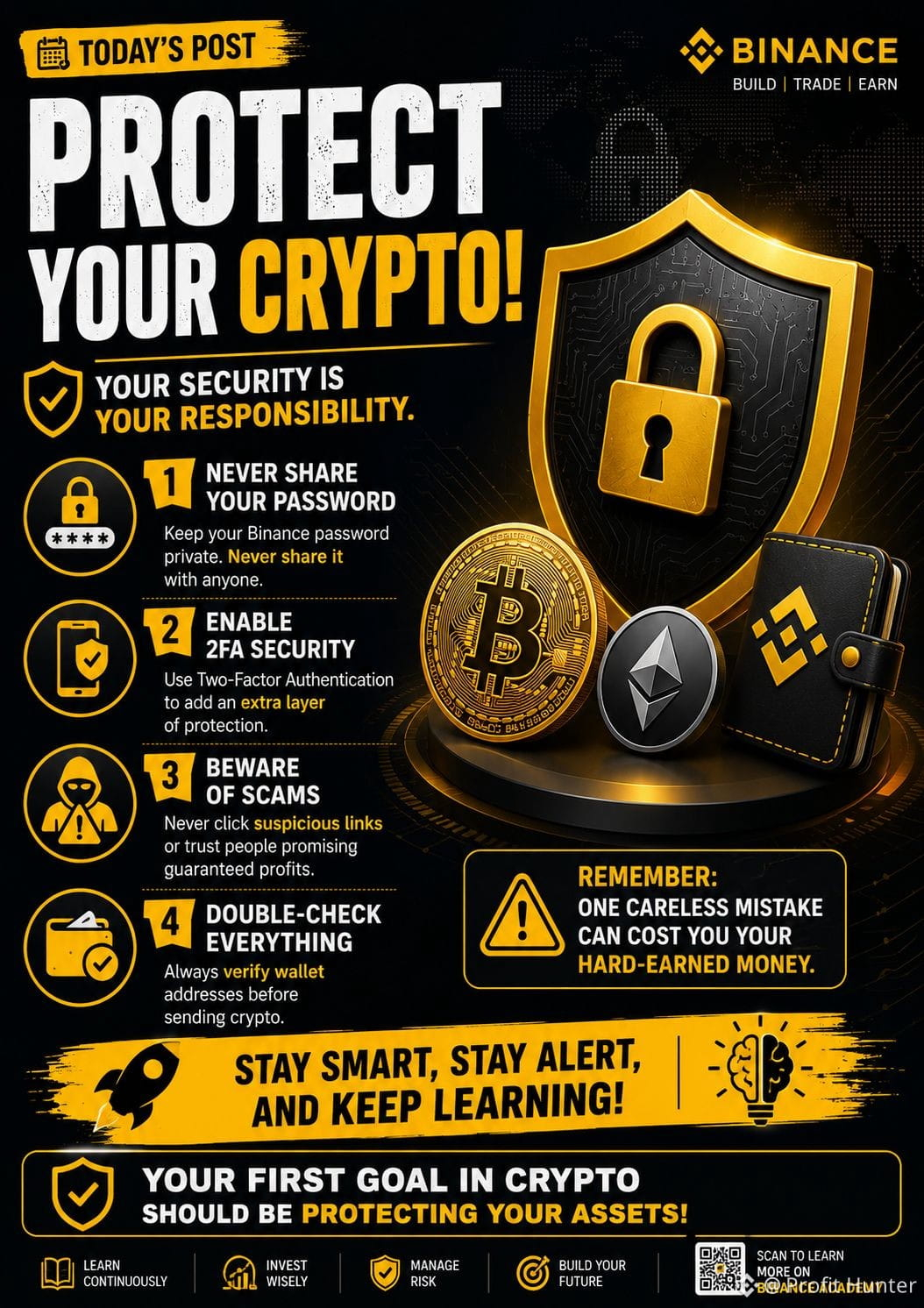
🔐 PROTECT YOUR CRYPTO! YOUR SECURITY IS YOUR RESPONSIBILITY. 🚀
In the crypto world, making money is important, but protecting your assets is even more important!
Here are 4 essential security tips every crypto beginner should follow:
🔹 1. Never Share Your Password
Keep your Binance password private. Never share it with anyone.
🔹 2. Enable 2FA Security
Use Two-Factor Authentication to add an extra layer of protection.
🔹 3. Beware of Scams
Never click suspicious links or trust people promising guaranteed profits.
🔹 4. Double-Check Everything
Always verify wallet addresses before sending crypto.
💡 Remember: One careless mistake can cost you your hard-earned money.
Stay smart, stay alert, and keep learning!
🔥 Your first goal in crypto should be protecting your assets!
#Binance #CryptoSecurity #bitcoin #cryptoeducation
79

Übersetzung ansehen
🔐 **CRYPTO BASICS: What Is a Crypto Wallet?
If you own or use cryptocurrency, understanding crypto wallets is essential.
A crypto wallet is a tool that allows you to manage your digital assets and interact with blockchain networks.
Here are 3 important things every beginner should know:
🔹 1. Public Address
This is like an account number. You can share it to receive cryptocurrency.
🔹 2. Private Keys
These prove control over your wallet. Never share them with anyone.
🔹 3. Seed Phrase
This is a recovery phrase that can restore access to your wallet. Keep it private and stored securely.
⚠️ Important: Anyone who gets access to your recovery phrase may gain control of your funds.
📚 Remember: Crypto security starts with knowledge.
Question: Have you heard of hot wallets and cold wallets? What's the difference?
Follow CryptoLearnZA for simple, beginner-friendly crypto lessons.
#CryptoEducation #CryptoWallet #Blockchain
81

·
--
Übersetzung ansehen
🚀 NEW TO CRYPTO? START HERE!
Have you ever wondered what cryptocurrency really is?
Cryptocurrency is digital money that can be transferred and stored using blockchain technology.
Unlike traditional money, many cryptocurrencies operate without a central bank controlling the network.
Bitcoin, Ethereum and Solana are popular examples.
You don't need to know everything before getting started. Learning one concept at a time is a great beginning.
Question: When did you first hear about cryptocurrency? 👇
#CryptoForBeginners #Bitcoin #BinanceSquare #CryptoEducation
116

·
--
🚨 **DER GRÖSSTE FEHLER, DEN NEUE KRYPTO-TRADER MACHEN!** 📉
Die meisten Anfänger steigen mit Profitträumen in den Kryptomarkt ein, vergessen aber die wichtigste Regel:
**Schütze dein Kapital, bevor du Gewinne jagst.** 🧠
Hier sind 3 Lektionen, die jeder Anfänger lernen sollte:
📌 Investiere niemals Geld, dessen Verlust du dir nicht leisten kannst.
📌 Lass nicht zu, dass FOMO deine Entscheidungen bestimmt.
📌 Lerne Risikomanagement, bevor du großen Renditen nachjagst.
Denk daran: Das Ziel ist nicht, über Nacht reich zu werden. Es geht darum, lange genug durchzuhalten, um ein besserer Trader zu werden. 💎
👇 **Sei ehrlich: Was ist deine größte Herausforderung im Kryptobereich?**
A) Gute Coins finden 🔍
B) Emotionen kontrollieren 🧠
C) Risiken managen 🛡️
D) FOMO vermeiden 😅
#BİNANCE #cryptotrading #bitcoin #tradingpsychology #cryptoeducation
70

Artikel
Übersetzung ansehen
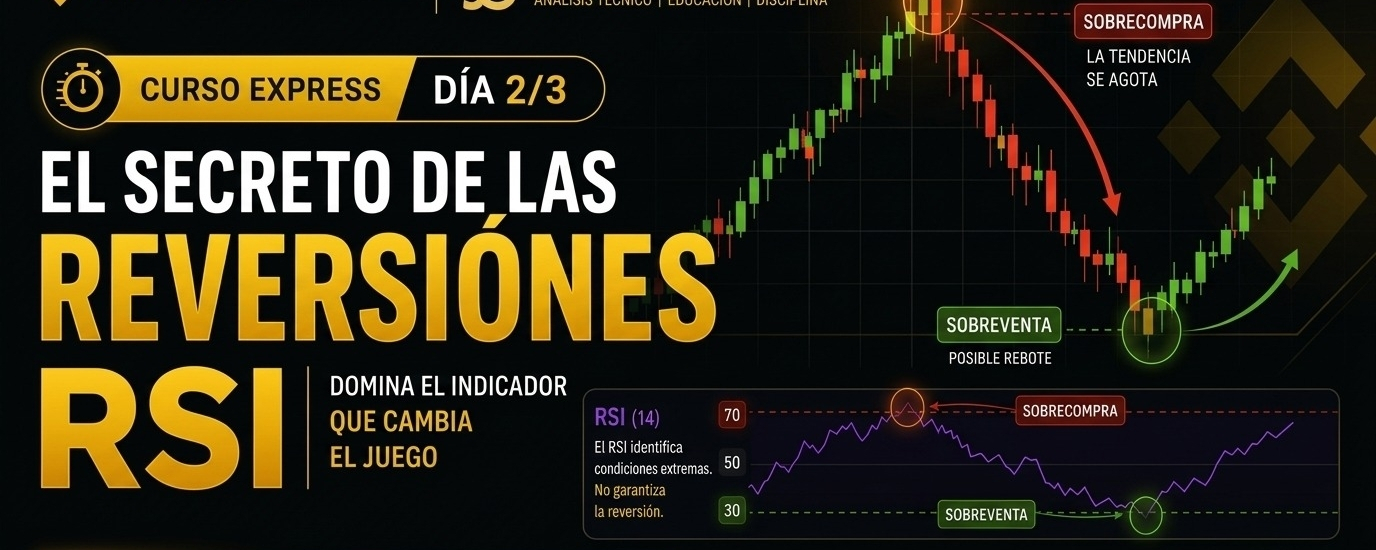
📊 DÍA 2: EL INDICADOR SECRETO DE LAS REVERSIONES (Domina el RSI)🚨 CURSO EXPRESS (DÍA 2/3): ¿CUÁNDO SE AGOTA UNA TENDENCIA? APRENDE A USAR EL RSI
📊 El Contexto: Ayer aprendiste a marcar tus zonas (Soportes/Resistencias). Hoy vas a sumarle un filtro de poder: el RSI (Índice de Fuerza Relativa). Este indicador matemático mide la velocidad y el cambio de los movimientos de precio. Te dice de forma exacta si $SOL o cualquier cripto está demasiado "cara" o demasiado "barata" en un momento específico.
🔍 Lección del Día:
Sobrecompra (Nivel > 70): Significa que el precio ha subido demasiado rápido y la fuerza compradora se está agotando. El mercado está "inflado". Zona de peligro para comprar.Sobreventa (Nivel < 30): Significa que el precio ha caído con demasiada fuerza y el pánico minorista ha exagerado la bajada. Zona de alta probabilidad para buscar rebotes.La Trampa Común: El RSI puede permanecer sobrecomprado en tendencias alcistas fuertes. Nunca operes el RSI solo; úsalo siempre junto a un soporte o resistencia.
📈 Plan de Acción:
Estrategia de Confluencia: Busca compras únicamente cuando el precio toque un Soporte Crítico Y ADEMÁS el RSI esté en Sobreventa (por debajo de 30).Filtro de Salida: Si estás en ganancias y el precio choca con una resistencia fuerte mientras el RSI marca más de 75, es hora de asegurar tus beneficios.
💡 Mini-test de hoy: ¿En qué nivel de RSI prefieres entrar al mercado: en 25 (pánico) o en 75 (euforia)? ¡Déjame tu respuesta en los comentarios! 👇
Activa el indicador RSI abriendo el widget de precio de $SOL que te dejo aquí abajo y verifica su estado actual.
{spot}(SOLUSDT)
#BinanceSquare #CryptoEducation #TradingTips #RSI #DYOR
Descargo de responsabilidad: Esto no es un consejo financiero. El trading de criptomonedas implica un alto riesgo. Realiza tu propia investigación (DYOR) antes de invertir.
📊 DÍA 2: EL INDICADOR SECRETO DE LAS REVERSIONES (Domina el RSI)
🚨 CURSO EXPRESS (DÍA 2/3): ¿CUÁNDO SE AGOTA UNA TENDENCIA? APRENDE A USAR EL RSI
📊 El Contexto: Ayer aprendiste a marcar tus zonas (Soportes/Resistencias). Hoy vas a sumarle un filtro de poder: el RSI (Índice de Fuerza Relativa). Este indicador matemático mide la velocidad y el cambio de los movimientos de precio. Te dice de forma exacta si $SOL o cualquier cripto está demasiado "cara" o demasiado "barata" en un momento específico.
🔍 Lección del Día:
Sobrecompra (Nivel > 70): Significa que el precio ha subido demasiado rápido y la fuerza compradora se está agotando. El mercado está "inflado". Zona de peligro para comprar.Sobreventa (Nivel < 30): Significa que el precio ha caído con demasiada fuerza y el pánico minorista ha exagerado la bajada. Zona de alta probabilidad para buscar rebotes.La Trampa Común: El RSI puede permanecer sobrecomprado en tendencias alcistas fuertes. Nunca operes el RSI solo; úsalo siempre junto a un soporte o resistencia.
📈 Plan de Acción:
Estrategia de Confluencia: Busca compras únicamente cuando el precio toque un Soporte Crítico Y ADEMÁS el RSI esté en Sobreventa (por debajo de 30).Filtro de Salida: Si estás en ganancias y el precio choca con una resistencia fuerte mientras el RSI marca más de 75, es hora de asegurar tus beneficios.
💡 Mini-test de hoy: ¿En qué nivel de RSI prefieres entrar al mercado: en 25 (pánico) o en 75 (euforia)? ¡Déjame tu respuesta en los comentarios! 👇
Activa el indicador RSI abriendo el widget de precio de $SOL que te dejo aquí abajo y verifica su estado actual.
#BinanceSquare #CryptoEducation #TradingTips #RSI #DYOR
Descargo de responsabilidad: Esto no es un consejo financiero. El trading de criptomonedas implica un alto riesgo. Realiza tu propia investigación (DYOR) antes de invertir.
127

Übersetzung ansehen
⛽ WHY DO YOU SOMETIMES PAY MORE TO MAKE A CRYPTO TRANSACTION?
Ever wondered why sending crypto or swapping tokens can sometimes cost more than expected?
The answer often involves network fees and blockchain demand.
🔹 1. Network Congestion
When many users compete to get transactions processed, fees can increase.
🔹 2. Transaction Complexity
A simple transfer may require less computation than a complex smart-contract interaction.
🔹 3. Layer 2 Solutions
Ethereum Layer 2 networks can offer lower transaction costs for many activities by processing transactions outside the Ethereum mainnet.
🔹 4. Timing Matters
Network fees fluctuate. Checking the estimated fee before confirming a transaction can help you avoid surprises.
⚠️ Remember: Fees depend on the network, transaction type, and current conditions. Layer 2 transactions may also involve additional costs and trade-offs.
MY TAKE: Before choosing a blockchain, don't look only at the token price. Consider transaction costs, speed, decentralization, and ecosystem activity.
💬 Which matters more to you: low fees or maximum decentralization?
#BinanceSquareBTC #Ethereum #ETH #Layer2 #Blockchain #CryptoEducation
#ASICHasReceivedNoPredictionMarketApplications #UniswapA16zSeekDeFiExemptionFromIllinoisCryptoTax #HKDollarStablecoinHKDAPToLaunchOnSolana
91

·
--
Das Gruseligste an Krypto an diesem Halloween ist kein Crash. Es ist ein Trader ohne Risikoregel. 🎃
Eine kurze Lektion zum Risikomanagement – am Beispiel von heute: $BTC .
In den letzten 24 Stunden schwankte BTC zwischen 76.326 und 78.804. Das entspricht einer Spanne von etwa 3,2 % des Preises – an einem „ruhigen“ Tag.
Hier ist das einfache Grundgerüst, das viele erfahrene Trader nutzen:
1. Lege vor dem Einstieg fest, wie viel du bei EINEM Trade maximal verlieren willst. Viele wählen 1 % ihres Kontoguthabens.
2. Setze deinen Stop dort, wo sich deine Annahme als falsch erweist – nicht dort, wo sich der Verlust „noch okay anfühlt“.
3. Berechne die Positionsgröße anhand dieser beiden Zahlen.
Beispiel: Konto mit 10.000 $, 1 % Risiko = 100 $. Liegt dein Stop 3,2 % entfernt, beträgt die Positionsgröße 100 / 0,032 ≈ 3.125 $. Nicht dein gesamtes Kapital.
Versuch es jetzt mit $HYPE, das sich in denselben 24 Stunden vom Tief bis zum Hoch um etwa 5,7 % bewegt hat. Dasselbe Risiko von 100 $, aber ein weiter entfernter Stop – dadurch schrumpft die Position auf ungefähr 1.750 $. Volatilere Coins, kleinere Positionen. Das ist der ganze Trick.
Du musst nicht jeden Trade gewinnen. Du musst lange genug durch Verlustserien kommen, damit sich dein Vorteil zeigen kann.
Wie hoch ist dein maximales Risiko pro Trade: 0,5 %, 1 %, 2 % oder „nach Gefühl“?
Keine Finanzberatung.
#RiskManagement #TradingTips #CryptoEducation
Das Gruseligste an Krypto an diesem Halloween ist kein Crash. Es ist ein Trader ohne Risikoregel. 🎃
Eine kurze Lektion zum Risikomanagement – am Beispiel von heute: $BTC .
In den letzten 24 Stunden schwankte BTC zwischen 76.326 und 78.804. Das entspricht einer Spanne von etwa 3,2 % des Preises – an einem „ruhigen“ Tag.
Hier ist das einfache Grundgerüst, das viele erfahrene Trader nutzen:
1. Lege vor dem Einstieg fest, wie viel du bei EINEM Trade maximal verlieren willst. Viele wählen 1 % ihres Kontoguthabens.
2. Setze deinen Stop dort, wo sich deine Annahme als falsch erweist – nicht dort, wo sich der Verlust „noch okay anfühlt“.
3. Berechne die Positionsgröße anhand dieser beiden Zahlen.
Beispiel: Konto mit 10.000 $, 1 % Risiko = 100 $. Liegt dein Stop 3,2 % entfernt, beträgt die Positionsgröße 100 / 0,032 ≈ 3.125 $. Nicht dein gesamtes Kapital.
Versuch es jetzt mit $HYPE , das sich in denselben 24 Stunden vom Tief bis zum Hoch um etwa 5,7 % bewegt hat. Dasselbe Risiko von 100 $, aber ein weiter entfernter Stop – dadurch schrumpft die Position auf ungefähr 1.750 $. Volatilere Coins, kleinere Positionen. Das ist der ganze Trick.
Du musst nicht jeden Trade gewinnen. Du musst lange genug durch Verlustserien kommen, damit sich dein Vorteil zeigen kann.
Wie hoch ist dein maximales Risiko pro Trade: 0,5 %, 1 %, 2 % oder „nach Gefühl“?
Keine Finanzberatung.
#RiskManagement #TradingTips #CryptoEducation
1
145

·
--
Mythos vs. Fakt 🧐
Mythos: Du musst einen ganzen Bitcoin kaufen, um einzusteigen.
Fakt: 1 $BTC lässt sich in 100.000.000 Satoshis aufteilen. Du kannst auch einen Anteil im Wert von ein paar Dollar kaufen.
Mythos: Eine Münze, die 0,0001 $ kostet, ist „günstig“ und hat mehr Luft nach oben.
Fakt: Der Preis pro Münze sagt ohne das Angebot nichts aus. Achte auf die Marktkapitalisierung, nicht auf den Preisschild.
Mythos: Der Kurs ist bereits um 80 % gefallen, also kann er kaum noch weiter fallen.
Fakt: Auf einen Rückgang von 80 % folgt ein weiterer Rückgang von 80 % – das ergibt insgesamt einen Verlust von 96 %.
Welchen dieser Mythen hast du geglaubt, als du angefangen hast? 👇
#crypto #CryptoEducation #bitcoin #Binance
76

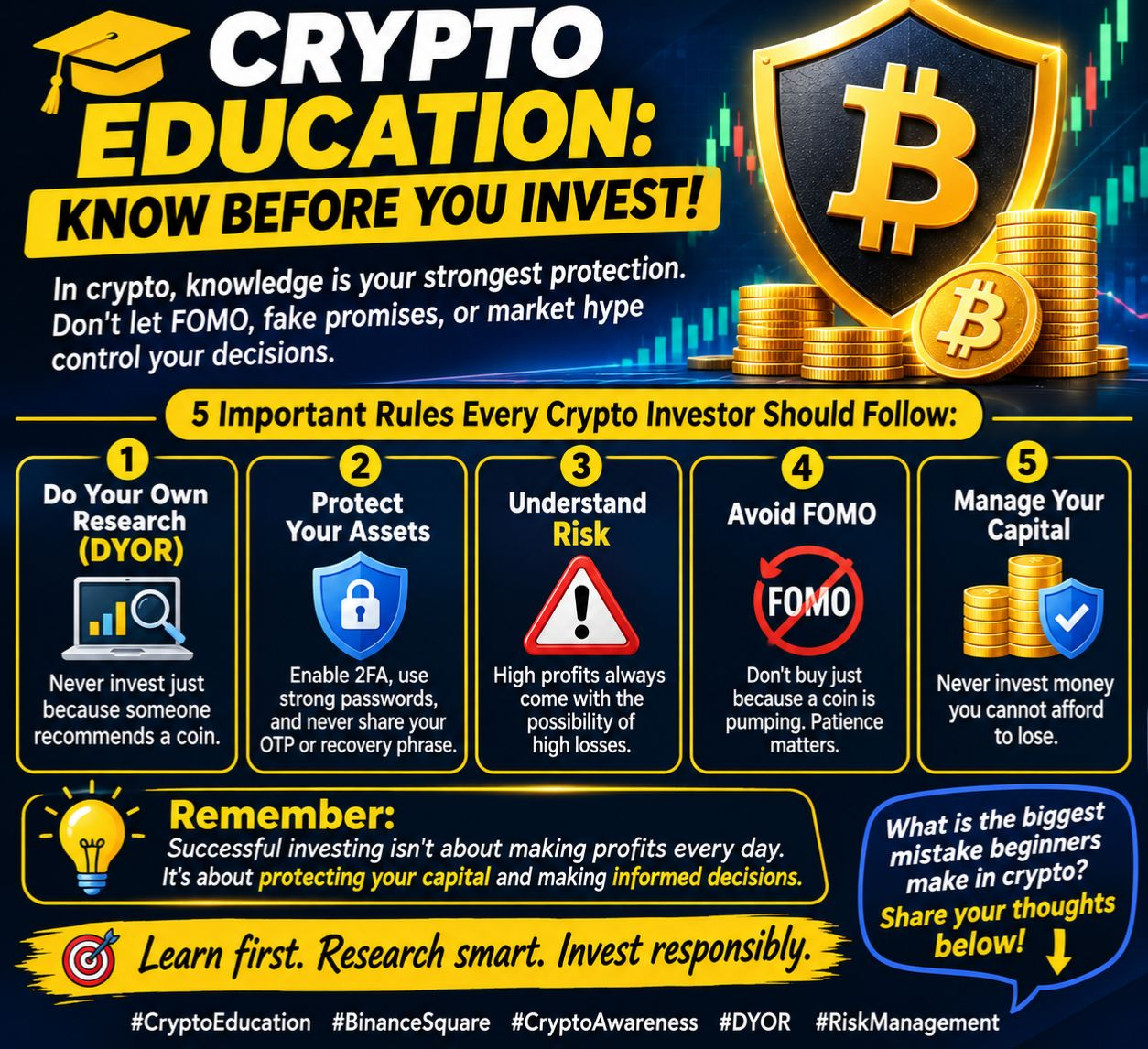
🚨 KRYPTO-BILDUNG: INFORMIERE DICH, BEVOR DU INVESTIERST! 📚
In der Kryptowelt ist Wissen dein stärkster Schutz. Lass nicht zu, dass FOMO, falsche Versprechen oder der Hype am Markt deine Entscheidungen beeinflussen.
Hier sind 5 wichtige Regeln, die jeder Krypto-Investor befolgen sollte:
🔹 1. Recherchiere selbst (DYOR): Investiere niemals nur, weil jemand einen Coin empfiehlt.
🔹 2. Schütze deine Vermögenswerte: Aktiviere 2FA, verwende sichere Passwörter und gib niemals dein OTP oder deine Wiederherstellungsphrase weiter.
🔹 3. Verstehe das Risiko: Hohe Gewinne gehen immer mit der Möglichkeit hoher Verluste einher.
🔹 4. Vermeide FOMO: Kauf nicht nur, weil der Kurs eines Coins gerade steigt. Geduld ist wichtig.
🔹 5. Verwalte dein Kapital: Investiere niemals Geld, dessen Verlust du dir nicht leisten kannst.
💡 Denk daran: Erfolgreich zu investieren bedeutet nicht, jeden Tag Gewinne zu machen. Es geht darum, dein Kapital zu schützen und fundierte Entscheidungen zu treffen.
🔥 Lerne zuerst. Recherchiere gründlich. Investiere verantwortungsbewusst.
Was ist der größte Fehler, den Anfänger beim Investieren in Kryptowährungen machen? Teile deine Meinung unten! 👇
#CryptoEducation #BinanceSquare #CryptoAwareness #DYOR!! #RiskManagement
74

·
--
Der Nutzer möchte einen Binance-Square-Beitrag, der „Marktkapitalisierung vs. vollständig verwässerte Bewertung“ erklärt und bestimmten Vorgaben folgt:
1. Kein Markdown
2. Beginne mit „Krypto-Begriff des Tages:“
3. 120–160 Wörter
4. Verwende eine einfache Analogie aus dem Alltag
5. Erkläre, warum ein Krypto-Investor das verstehen muss
6. Ende mit „Speichere diesen Beitrag und teile ihn mit deinen Krypto-Freunden!“
7. Letzte Zeile: #Chainlink #LINK #CryptoEducation #Blockchain
8. Keine Überlegungen, Begründungen, Vorrede, Meta-Kommentare, Selbstreflexion oder XML-Tags
9. Gib NUR den endgültigen Beitragstext aus
Lass mich das sorgfältig ausarbeiten.
Ziel: 120–160 Wörter.
Aufbau:
- Einleitung: „Krypto-Begriff des Tages:“
- Erklärung von Marktkapitalisierung vs. FDV
- Eine einfache Analogie
- Warum Anleger das verstehen müssen
- Schlusszeile
- Hashtag-Zeile
Mein Entwurf:
„Krypto-Begriff des Tages: Marktkapitalisierung vs. vollständig verwässerte Bewertung (FDV). Die Marktkapitalisierung ergibt sich aus dem aktuellen Preis multipliziert mit dem Umlaufangebot – also dem, was heute existiert. Die FDV ergibt sich aus dem Preis multipliziert mit dem maximalen Gesamtangebot – also dem, was es morgen geben könnte. Stell dir eine Pizza vor: Die Marktkapitalisierung zählt die Stücke, die bereits auf dem Tisch liegen; die FDV zählt die ganze Pizza, einschließlich des Teigs, der noch in der Küche aufgeht. Wenn bei einem Projekt 10 Mio. Token im Umlauf sind, es aber insgesamt 100 Mio. gibt, ist die FDV zehnmal so hoch wie die Marktkapitalisierung. Anleger müssen das wissen, denn ein geringes Umlaufangebot bei hoher FDV deutet auf eine erhebliche künftige Verwässerung hin – dein Anteil schrumpft, wenn weitere Token freigeschaltet werden. Prüfe immer beides: Die Marktkapitalisierung zeigt den aktuellen
12

·
--
🚨 BITCOIN IST GEFALLEN — ABER WURDE BITCOIN SELBST GEHACKT?
Am 30. Oktober erreichte Bitcoin laut Reuters mit 77.646 $ den niedrigsten Stand seit sechs Wochen.
Die Marktreaktion folgte auf Berichte über ein mögliches Sicherheitsproblem bei Binance. Reuters berichtete, dass Vermögenswerte im Wert von mehr als 2,5 Milliarden $ eingefroren worden seien.
Doch hier gibt es einen Unterschied, den viele Krypto-Nutzer übersehen:
🔹 Sicherheit der Börse: Ein Problem mit einer zentralisierten Plattform, die Vermögenswerte von Nutzern verwahrt oder den Zugriff darauf ermöglicht.
🔹 Sicherheit des Bitcoin-Netzwerks: Die Sicherheit der dezentralen Bitcoin-Blockchain selbst.
Das ist NICHT dasselbe.
Ein Sicherheitsvorfall bei einer Börse bedeutet nicht automatisch, dass die Bitcoin-Blockchain gehackt wurde.
Was sollten Krypto-Nutzer daraus lernen?
Macht euch mit den Risiken vertraut, die entstehen, wenn ihr Vermögenswerte auf einer Börse aufbewahrt.
Nutzt starke Kontosicherheit und schützt Auszahlungen.
Informiert euch über die Selbstverwahrung – aber denkt daran, dass auch die Verwaltung der eigenen Wallet Risiken birgt.
Trefft keine Panikentscheidungen, nur weil ihr Schlagzeilen lest.
📊 Mein Fazit: Das Vertrauen in Krypto hängt nicht nur von Preisen und Technologie ab, sondern auch von der Sicherheit der Plattformen, die Menschen nutzen.
👇 Lasst uns darüber sprechen: Was ist euch bei der Wahl des Aufbewahrungsorts für eure Kryptowährungen wichtiger?
A) Sicherheit der Börse
B) Selbstverwahrung und persönliche Kontrolle
C) Beides ist gleich wichtig
#Bitcoin #BTC #CryptoSecurity #Binance #CryptoEducation

120

Übersetzung ansehen
🚀 What is Bitcoin? | বিটকয়েন আসলে কী?
Bitcoin শুধু একটি Cryptocurrency নয়। এটি একটি Decentralized Digital Currency।
২০০৯ সালে Satoshi Nakamoto-এর মাধ্যমে Bitcoin Network চালু হয়।
কেন Bitcoin আলাদা?
🔹 No Central Bank
🔹 Peer-to-Peer Transactions
🔹 Limited Supply of 21 Million BTC
🔹 Blockchain Technology
Bitcoin সম্পর্কে জানার সবচেয়ে গুরুত্বপূর্ণ বিষয় হলো, এটি কোনো একটি কেন্দ্রীয় প্রতিষ্ঠানের নিয়ন্ত্রণে পরিচালিত হয় না।
💬 Question: তোমার মতে Bitcoin কি ভবিষ্যতের গুরুত্বপূর্ণ প্রযুক্তি?
{spot}(BTCUSDT)
#Bitcoin #BTC #CryptoEducation #Blockchain
🚀 What is Bitcoin? | বিটকয়েন আসলে কী?
Bitcoin শুধু একটি Cryptocurrency নয়। এটি একটি Decentralized Digital Currency।
২০০৯ সালে Satoshi Nakamoto-এর মাধ্যমে Bitcoin Network চালু হয়।
কেন Bitcoin আলাদা?
🔹 No Central Bank
🔹 Peer-to-Peer Transactions
🔹 Limited Supply of 21 Million BTC
🔹 Blockchain Technology
Bitcoin সম্পর্কে জানার সবচেয়ে গুরুত্বপূর্ণ বিষয় হলো, এটি কোনো একটি কেন্দ্রীয় প্রতিষ্ঠানের নিয়ন্ত্রণে পরিচালিত হয় না।
💬 Question: তোমার মতে Bitcoin কি ভবিষ্যতের গুরুত্বপূর্ণ প্রযুক্তি?
#Bitcoin #BTC #CryptoEducation #Blockchain
77

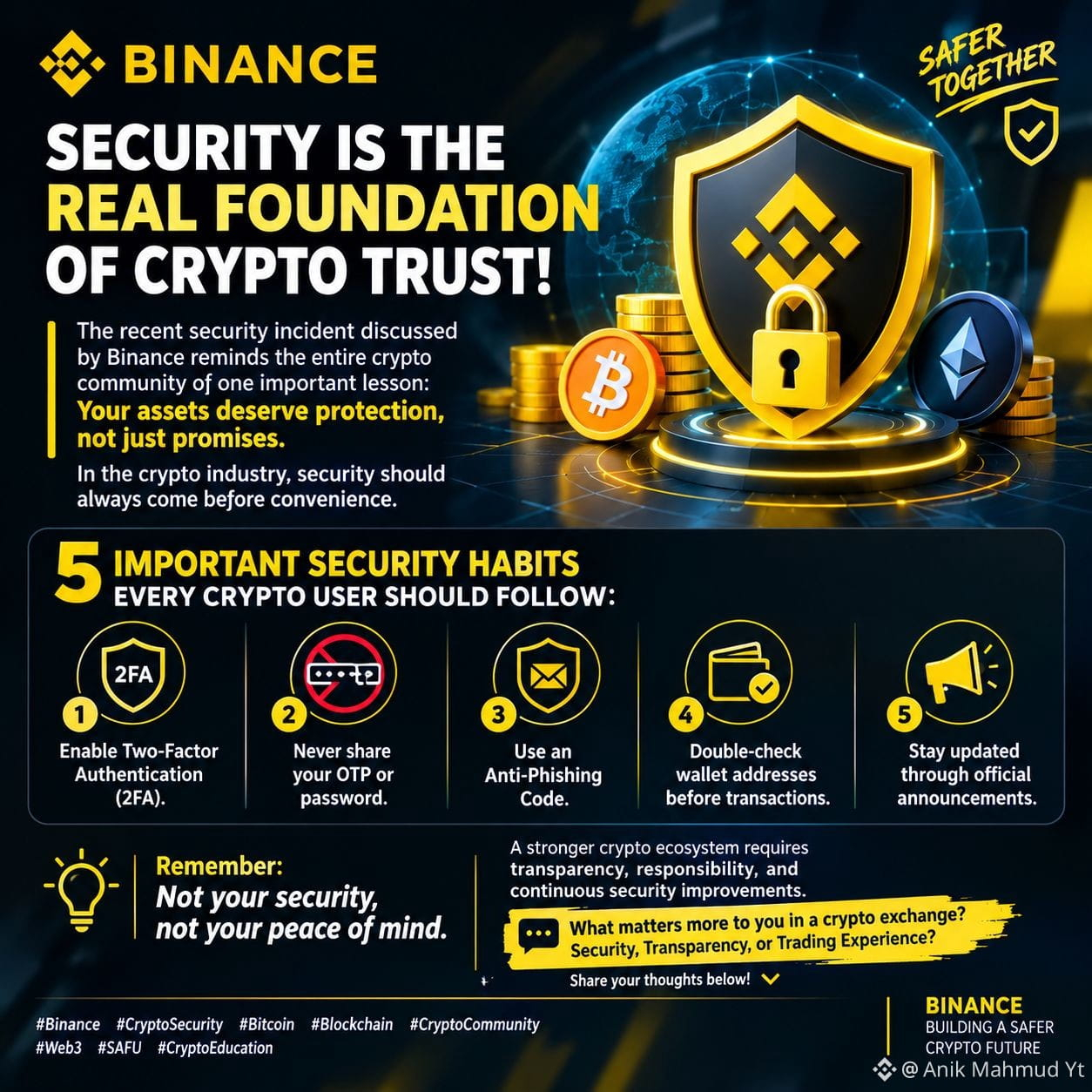
🔐 SICHERHEIT IST DAS WAHRE FUNDAMENT DES VERTRAUENS IN KRYPTO!
Der kürzlich von Binance angesprochene Sicherheitsvorfall erinnert die gesamte Krypto-Community an eine wichtige Lektion:
Deine Vermögenswerte verdienen Schutz, nicht nur Versprechen.
In der Krypto-Branche sollte Sicherheit immer Vorrang vor Komfort haben.
Hier sind 5 wichtige Sicherheitsgewohnheiten, die alle Krypto-Nutzer befolgen sollten:
1️⃣ Aktiviere die Zwei-Faktor-Authentifizierung (2FA). 2️⃣ Gib niemals dein OTP oder Passwort weiter. 3️⃣ Verwende einen Anti-Phishing-Code. 4️⃣ Überprüfe Wallet-Adressen vor Transaktionen doppelt. 5️⃣ Halte dich über offizielle Ankündigungen auf dem Laufenden.
Denk daran:
💡 Keine Sicherheit, kein Seelenfrieden.
Ein stärkeres Krypto-Ökosystem erfordert Transparenz, Verantwortungsbewusstsein und kontinuierliche Verbesserungen der Sicherheit.
Was ist dir bei einer Kryptobörse wichtiger: Sicherheit, Transparenz oder das Handelserlebnis?
Teile deine Meinung unten mit! 👇
#Binance #CryptoSecurity #Bitcoin #Blockchain #CryptoCommunity #Web3 #SAFU #cryptoeducation
91
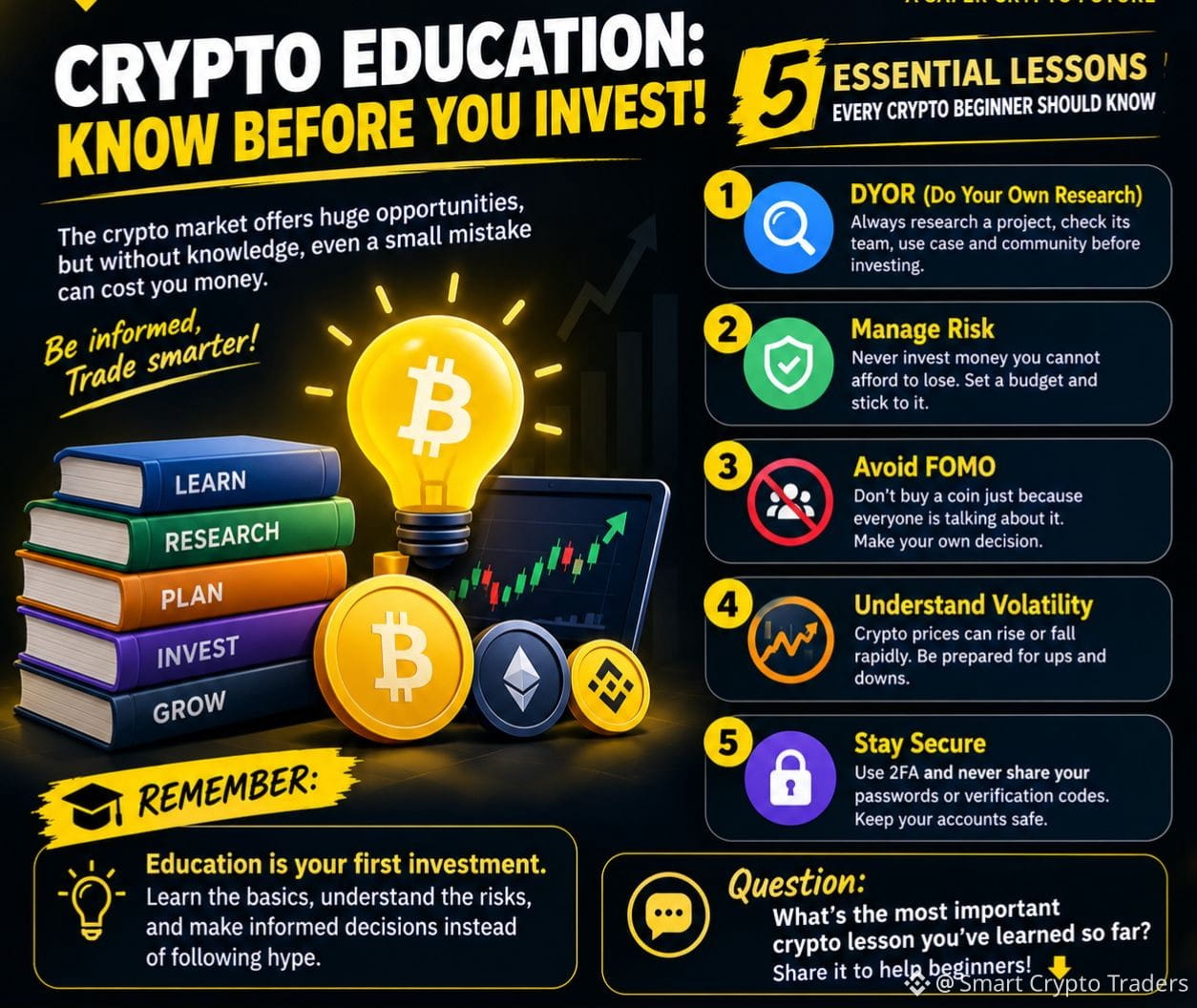
🎓 KRYPTO-BILDUNG: INFORMIERE DICH, BEVOR DU INVESTIERST! 🚀
Der Kryptomarkt bietet Chancen, aber ohne Wissen kann dich selbst ein kleiner Fehler Geld kosten. ⚠️
💡 5 wichtige Lektionen, die alle Krypto-Anfänger kennen sollten:
✅ DYOR: Recherchiere immer selbst, bevor du investierst.
✅ Risikomanagement: Investiere niemals Geld, dessen Verlust du dir nicht leisten kannst.
✅ Vermeide FOMO: Kaufe keinen Coin nur, weil alle darüber reden.
✅ Verstehe die Volatilität: Kryptopreise können schnell steigen oder fallen.
✅ Schütze dich: Nutze 2FA und teile niemals deine Passwörter oder Bestätigungscodes.
📚 Denk daran: Bildung ist deine erste Investition. Lerne die Grundlagen, verstehe die Risiken und triff fundierte Entscheidungen, statt dem Hype zu folgen.
💬 Frage: Was ist die wichtigste Krypto-Lektion, die du bisher gelernt hast? Teile sie, um Anfängern zu helfen! 👇
#CryptoEducation #Binance #CryptoAwareness #Bitcoin #RiskManagement
30

Übersetzung ansehen
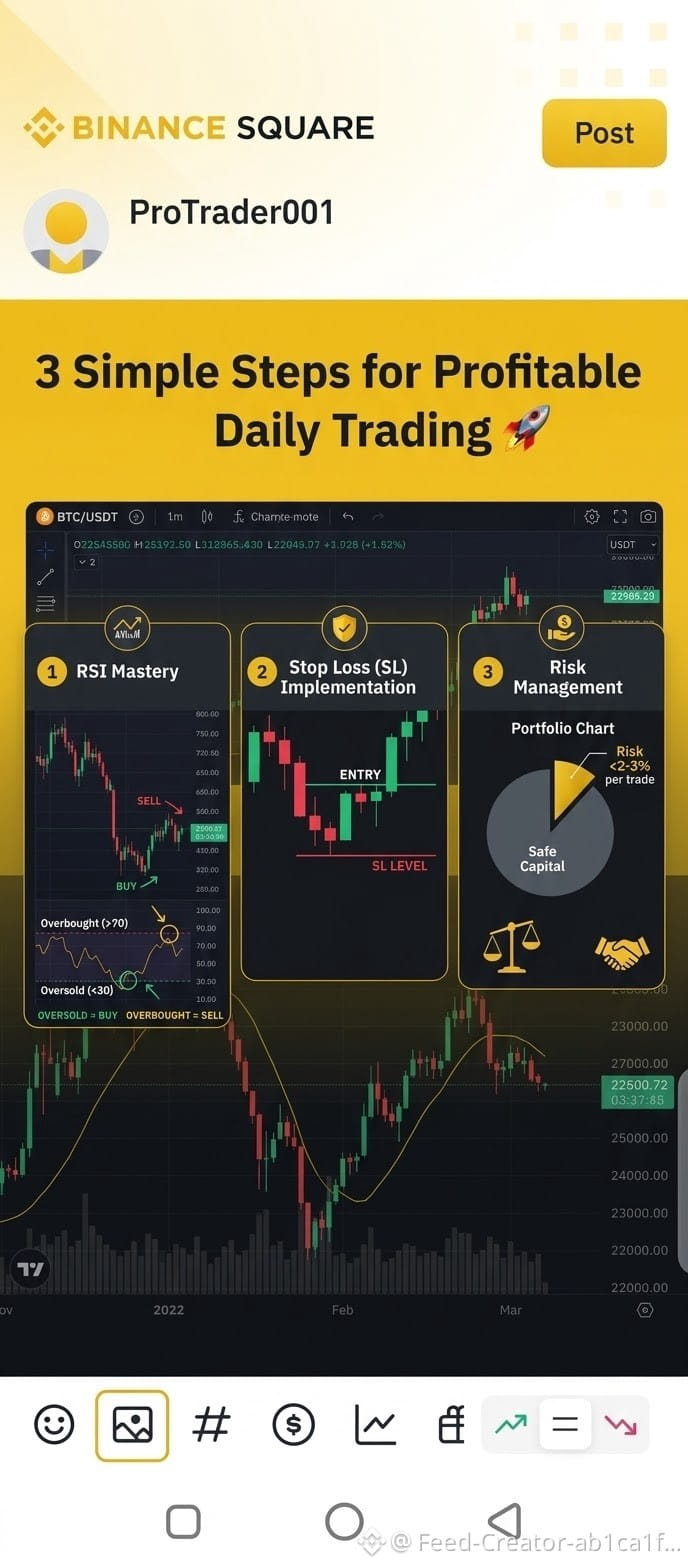
3 Simple Steps for Profitable Daily Trading 🚀
Do you want to make a daily profit in the crypto market but often end up with losses? 📉
Here are 3 golden rules you can follow to minimize your risks and maximize your profits:
Proper Use of RSI Indicator: Always look for entry points in the oversold zone and take profits in the overbought zone of the market.
Mandatory Stop Loss: Always use a stop loss in every trade to prevent massive losses during sudden market drops.
Avoid Greed (Risk Management): Never risk your entire portfolio on a single trade. Always trade with smart money management.
If you found these tips helpful, make sure to Like, Share, and Follow for more guides! 💡🔥
#BinanceSquare
#CryptoEducation
#TradingTips
#Binance
#CryptoTrading
#LearnAndEarn
72

·
--
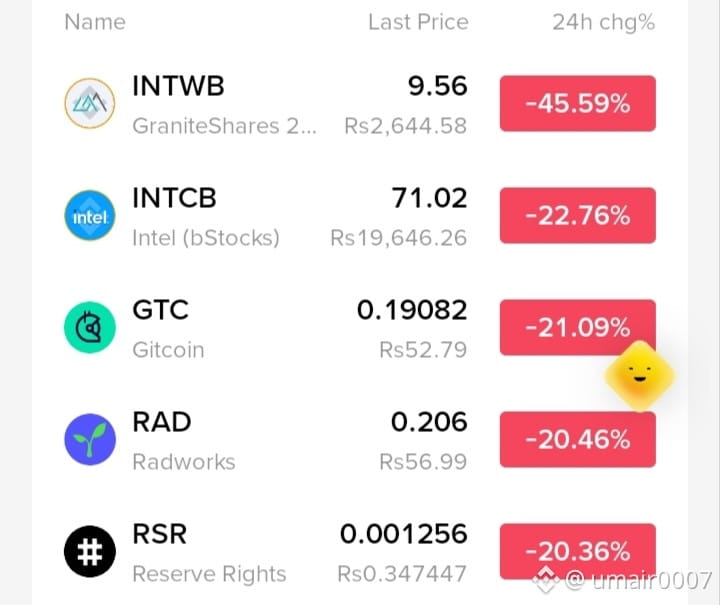
Heutige Verlierer: Was diese Coins tatsächlich machen;
INTCB (Intel bStock): Steht für Aktien des Unternehmens Intel. Intel veröffentlichte seine Q3-Ergebnisse am 29. Oktober nach Börsenschluss, und die Chip-Aktien fielen wegen Sorgen über die Ausgaben für KI bereits. (heygotrade) (mitrade)
INTWB: Wahrscheinlich ein gehebeltes GraniteShares-Produkt mit 2-fachem Hebel. Wenn die Aktie um 10 % fällt, kann es etwa 20 % nachgeben. Deshalb fiel es um -45 %.
$GTC
{spot}(GTCUSDT)
Gitcoin: Eine Plattform zur Finanzierung von Ethereum-Open-Source-Projekten. GTC ist der Governance-Token der Plattform.
$RAD
{spot}(RADUSDT)
Radworks: Der Token des Radicle-Netzwerks, das den Austausch von Code ohne großen zentralen Server ermöglicht.
$RSR
{spot}(RSRUSDT)
Reserve Rights: Der Token des Reserve-Stablecoin-Systems. Er dient als Versicherung, um das System stabil zu halten.
Was man daraus lernen kann
Ein Coin, der um 47 % steigt, kann genauso schnell wieder fallen.
Gehebelte und tokenisierte Aktienprodukte sind für Anfänger riskant.
Bevor du einen Coin kaufst, solltest du seinen Zweck, sein Team und seine Risiken verstehen.
.
.
Dies dient nur der Information und ist keine Finanzberatung.
.
.
#BİNANCE #crypto #cryptoeducation #TodayMarketAlert
Heutige Verlierer: Was diese Coins tatsächlich machen;
INTCB (Intel bStock): Steht für Aktien des Unternehmens Intel. Intel veröffentlichte seine Q3-Ergebnisse am 29. Oktober nach Börsenschluss, und die Chip-Aktien fielen wegen Sorgen über die Ausgaben für KI bereits. (heygotrade) (mitrade)
INTWB: Wahrscheinlich ein gehebeltes GraniteShares-Produkt mit 2-fachem Hebel. Wenn die Aktie um 10 % fällt, kann es etwa 20 % nachgeben. Deshalb fiel es um -45 %.
$GTC
Gitcoin: Eine Plattform zur Finanzierung von Ethereum-Open-Source-Projekten. GTC ist der Governance-Token der Plattform.
$RAD
Radworks: Der Token des Radicle-Netzwerks, das den Austausch von Code ohne großen zentralen Server ermöglicht.
$RSR
Reserve Rights: Der Token des Reserve-Stablecoin-Systems. Er dient als Versicherung, um das System stabil zu halten.
Was man daraus lernen kann
Ein Coin, der um 47 % steigt, kann genauso schnell wieder fallen.
Gehebelte und tokenisierte Aktienprodukte sind für Anfänger riskant.
Bevor du einen Coin kaufst, solltest du seinen Zweck, sein Team und seine Risiken verstehen.
.
.
Dies dient nur der Information und ist keine Finanzberatung.
.
.
#BİNANCE #crypto #cryptoeducation #TodayMarketAlert
1
876
Anmelden und weiter Inhalte entdecken
Krypto-Nutzer weltweit auf Binance Square kennenlernen
⚡️ Bleib in Sachen Krypto stets am Puls.
💬 Die weltgrößte Kryptobörse vertraut darauf.
👍 Erhalte verlässliche Einblicke von verifizierten Creators.
E-Mail-Adresse/Telefonnummer
Trendthemen
1
#BinanceReports80%Recoveryof$6.3BillioninLossesfromHackIncident
12,792 Aufrufe
123 Kommentare
2
#HeYiSaysWithdrawalsExpectedtoResumeWithin42Hours
21,792 Aufrufe
424 Kommentare
3
#CZSaysCompensationIsinPlaceUsersAreProtected
22,259 Aufrufe
327 Kommentare
4
#RichardTengSaysBinanceWillCoverAllHackedLosseswithCompanyFunds
2,854 Aufrufe
24 Kommentare
5
#IntelHasItsWorstDaySince1974
1,423 Aufrufe
76 Kommentare
6
#TRMCambodianCasinosReceived$1.07BInCrypto
1,051 Aufrufe
38 Kommentare
7
#USDCCirculationFallsAbout800MInSevenDays
14,929 Aufrufe
262 Kommentare
8
#SuspectedNorthKoreaAttacksAccountForNearly89%OfCryptoHackLosses
7,610 Aufrufe
70 Kommentare
9
#OpenAICutsFundraisingTargetBy$10B
1,426 Aufrufe
55 Kommentare
10
#ASICHasReceivedNoPredictionMarketApplications
27,936 Aufrufe
679 Kommentare