 Every chain today claims it’s building the future of finance. But Fogo doesn’t feel like it’s chasing the biggest narrative. It feels like it’s trying to fix something far more specific: why crypto still feels slow even when the performance numbers look impressive.
When I first looked into Fogo, I wasn’t seeing a project trying to reinvent Web3 or rewrite the rules of decentralization. I saw something more practical. It felt like a team staring directly at the most frustrating parts of on-chain trading latency, failed swaps, wallet pop-ups, delayed confirmations and deciding those weren’t “normal blockchain problems.” They treated them like design failures that could be engineered away.
That mindset matters. Most chains build for theoretical potential. Fogo seems to build for real-world pressure. It’s less focused on what the chain can do in perfect conditions and more focused on what happens when markets get chaotic and execution becomes the difference between profit and loss.
The decision to run the Solana Virtual Machine makes that philosophy obvious. Instead of inventing a new execution model and forcing developers to relearn everything, it chose a battle-tested environment and focused on optimizing performance around it. That doesn’t feel like ambition theater. It feels like engineering discipline. The kind of choice you make when your goal is not novelty, but reliability.
The emphasis on colocation pushes that point even further. In traditional markets, firms physically place servers close to exchanges because milliseconds are edge. Fogo applies the same logic to validator placement, treating geography as a real variable instead of pretending distance doesn’t matter. That’s not a decision made for ideology. It’s a decision made for execution quality under pressure.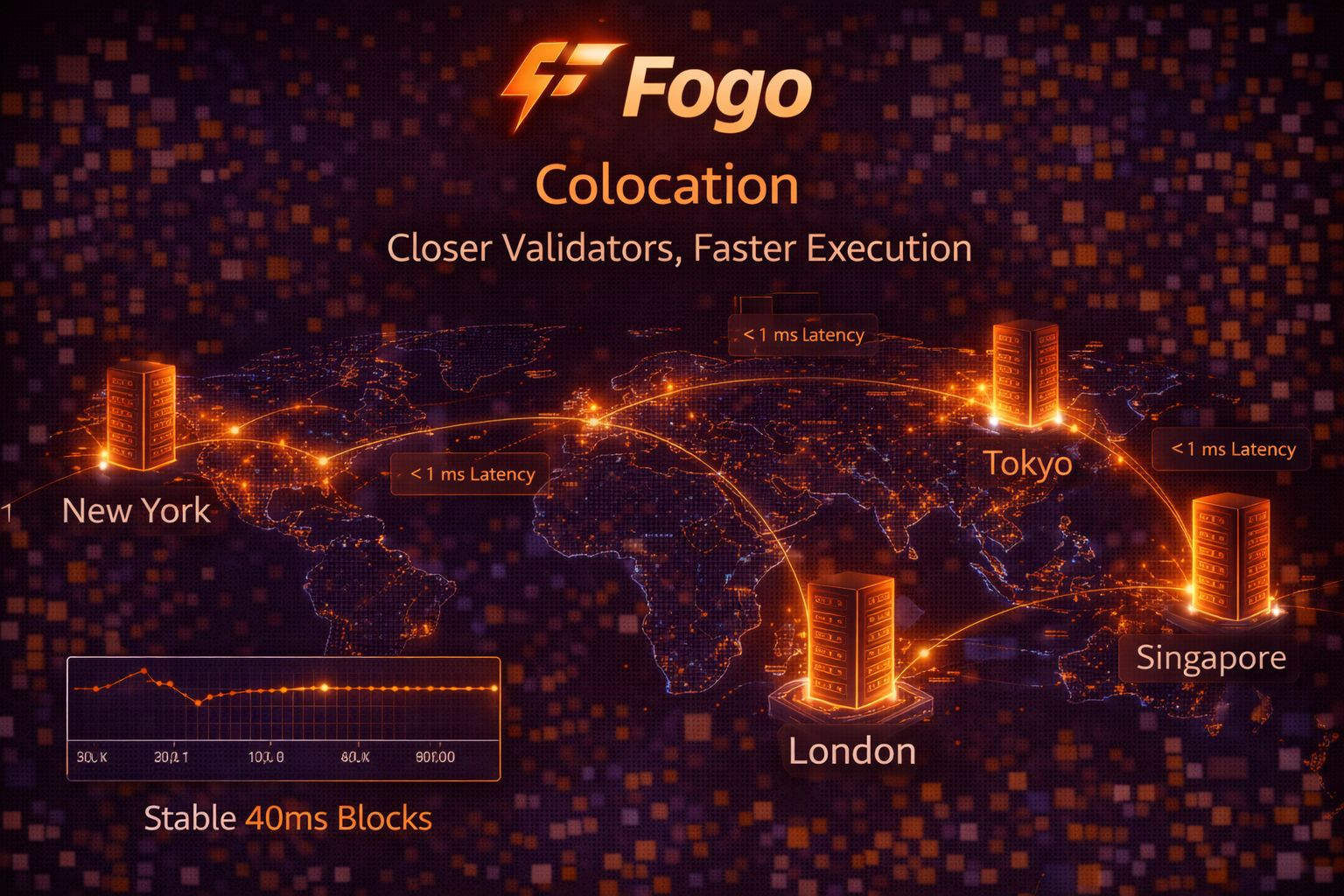 Some people will criticize that tradeoff immediately, and that’s fair. But it’s also honest. Fogo isn’t pretending it can optimize for everything at once. It’s openly prioritizing the experience of users who care about speed, stability, and predictable confirmation when markets are volatile.
Early mainnet activity suggests it’s operating inside the performance envelope it advertises. Short block times, sustained throughput, active transaction flow, and measurable fees indicate a system that’s running continuously, not just producing benchmark numbers for marketing. At the same time, the validator set still feels limited and the application layer is still forming. It feels less like a fully open city and more like a venue that’s still controlling entry.
And that may be intentional.
Where Fogo becomes genuinely interesting isn’t the block time itself. It’s the way it tries to remove the small frictions that make crypto feel clunky. Because speed doesn’t matter if users still feel like they’re fighting the system every time they interact with it.
The push toward sessions and reduced wallet signatures might sound like a minor UX feature, but it’s not. Anyone who trades regularly knows the psychological drag of constant approvals, repeated signing, and the fear of running out of gas at the worst possible moment. Those interruptions break flow. They remind the user that they’re dealing with infrastructure, not a seamless product.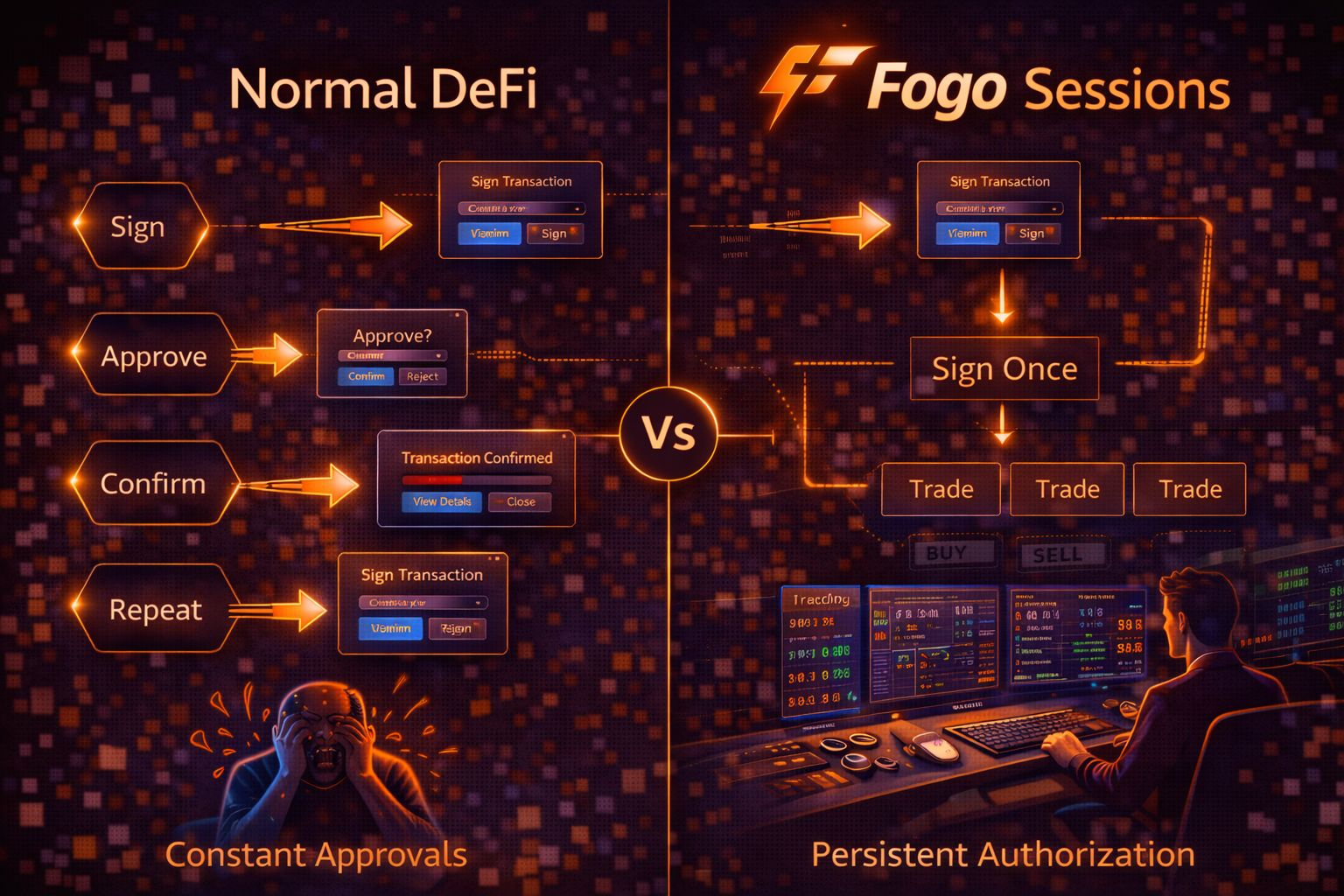 Sessions are designed to hide that infrastructure. Sign once, stay authorized, and let execution happen smoothly without forcing the user to stop every few seconds. That’s what modern trading systems feel like. And if it integrates cleanly with Solana-compatible tooling, it lowers the friction of joining the ecosystem. You don’t feel like you’re migrating to a new chain. You feel like you’re stepping into a faster execution venue.
Of course, “gasless” doesn’t mean free. Someone still pays. That shifts the economics in a meaningful way. Costs move toward applications, paymasters, and infrastructure providers, creating a more structured model where larger actors manage transaction budgets and user participation behind the scenes. Instead of millions of retail users directly thinking about fee mechanics, the system starts to look more like a venue where access and flow are sponsored.
It begins to resemble how real markets function. Users experience a smooth interface while the cost structure and infrastructure pressures stay hidden in the background.
That’s why Fogo doesn’t feel like “just another Layer 1” to me. It feels like an experiment in specialization. It’s asking a narrow but powerful question: what happens if a blockchain stops trying to be everything and instead optimizes deeply for trading behavior?
The risk is clear. If you optimize too tightly for speed and control, you may constrain decentralization or limit organic growth. But if you loosen the structure too quickly, you may lose the performance identity that makes the chain distinct. That balance will determine whether Fogo becomes a serious execution layer or simply a fast niche network.
Right now, it feels early but coherent. Validator geography, session design, execution priorities, and ecosystem tooling all point in the same direction. It doesn’t feel like marketing layered on top of generic infrastructure. It feels like infrastructure built around a specific user profile: the trader who wants the chain to disappear and the execution to simply work.
And honestly, that’s refreshing.
Crypto doesn’t always need bigger narratives. Sometimes it needs sharper ones. Fogo’s story isn’t about building a digital nation. It’s about building a trading floor that doesn’t freeze when the market moves.
And if it can scale participation without losing that crisp performance identity without letting latency creep back into the user experience that’s when the experiment becomes truly compelling.