


Most crypto narratives are loud.
New chains launch with dramatic claims.
Whitepapers promise 1 million TPS.
Communities flood timelines with hype.
But the chains that endure rarely start loud.
They start precise.
That’s how I see @Fogo Official and $FOGO .
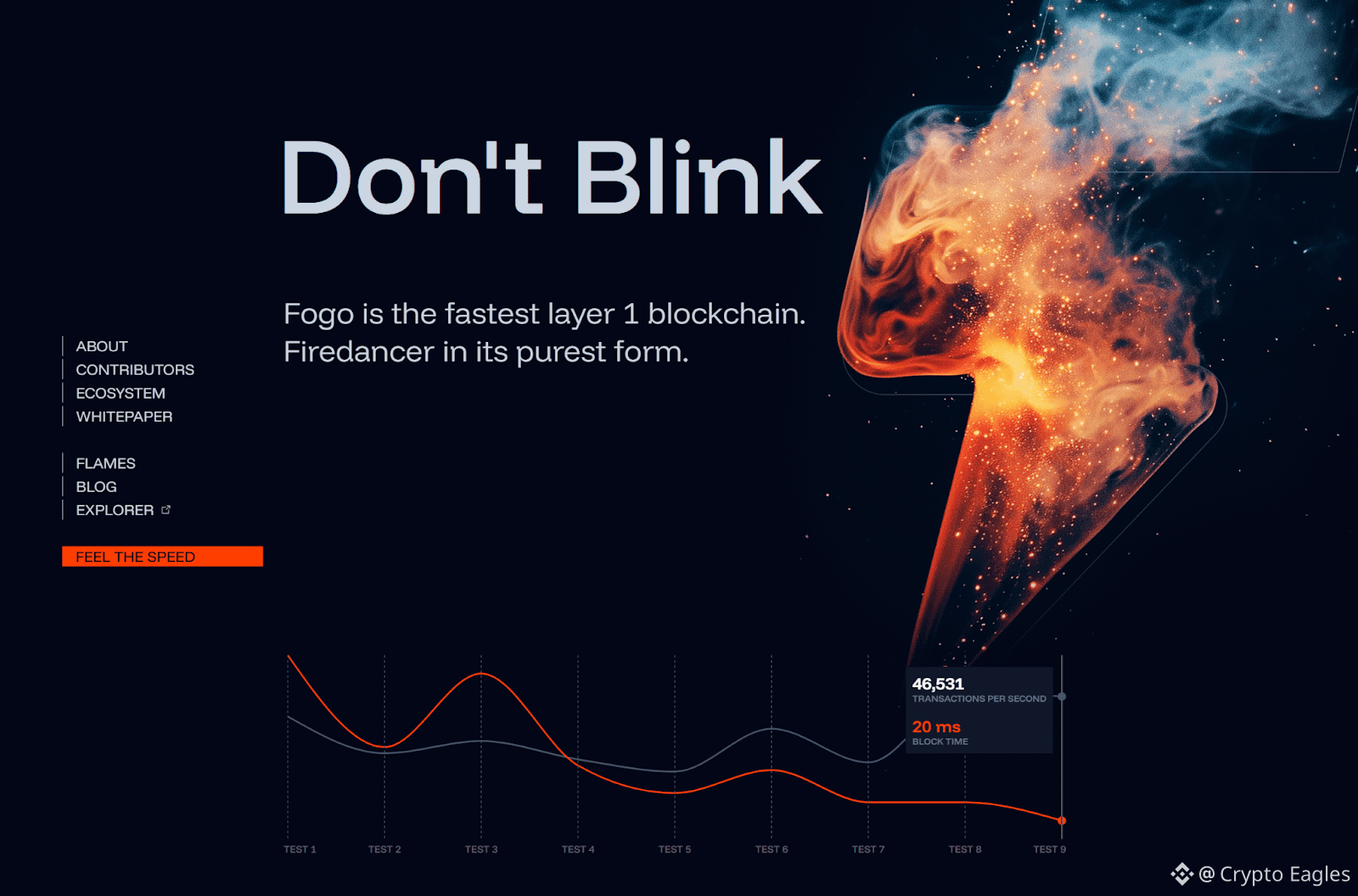
Fogo is a high-performance Layer 1 utilizing the Solana Virtual Machine. On the surface, that might sound technical. But under the surface, it represents a strategic bet on execution-layer evolution
Let’s unpack it differently.
The Execution Layer Is the Real Battlefield
Crypto conversations often focus on:
Governance.
Decentralization.
Tokenomics.
Ecosystem grants.
But the true battlefield is the execution layer.
Because that’s where applications live.
That’s where transactions finalize.
That’s where capital moves.
If execution falters, everything above it collapses.
Fogo isn’t trying to build narrative fluff.
It’s building an execution environment optimized for performance.
That distinction is critical.
Reinventing the Foundation Or Refining It?
Many Layer 1s attempt to differentiate by inventing entirely new virtual machines.
That sounds innovative.
But it also creates friction.
Developers must relearn tooling.
Auditors must adapt frameworks.
Users face compatibility issues.
Fogo takes a different route.
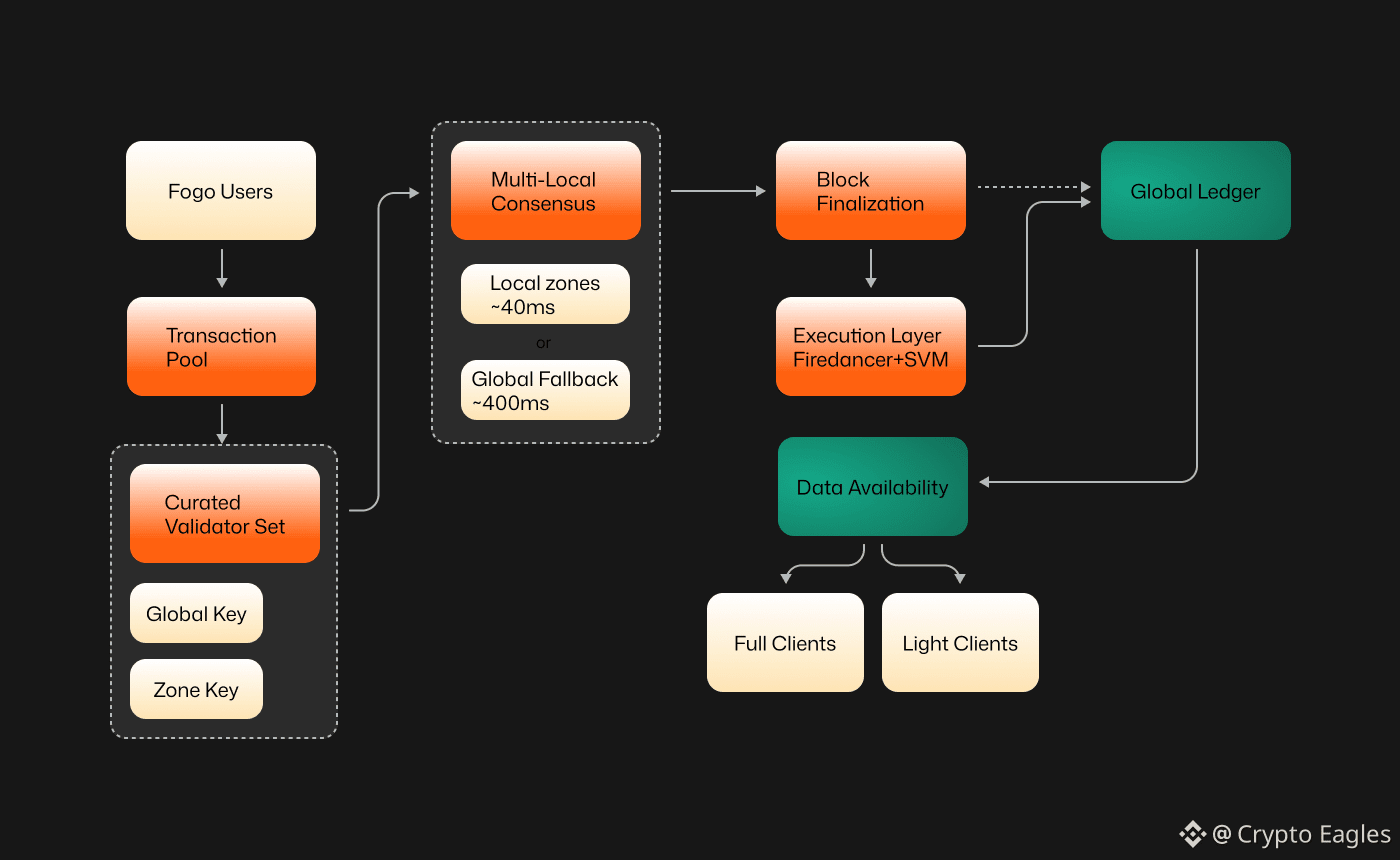
By utilizing the Solana Virtual Machine, it aligns itself with a performance-centric execution model that already understands parallelization and throughput efficiency.
Instead of fragmentation, it embraces refinement.
That approach reduces friction while maintaining architectural ambition.
It’s evolution, not chaos.
Why High-Performance L1s Matter in 2026 and Beyond
The industry has matured.
We’re no longer experimenting with basic token swaps.
We’re building:
On-chain derivatives desks.
Cross-chain liquidity routers.
Institutional trading systems.
Real-time data oracles.
Algorithmic market makers.
All of these demand stable, high-performance infrastructure.
Latency becomes more important than ideology.
Throughput becomes more important than slogans.
Fogo’s positioning as a high-performance L1 speaks directly to that maturation phase.
It’s not about retail NFT mint wars.
It’s about scalable financial architecture.
Performance Is a Compound Advantage
The faster and more reliable a chain becomes, the more attractive it is for serious builders.
More builders attract more liquidity.
More liquidity attracts more users.
More users increase transaction volume.
Higher volume strengthens token economics.
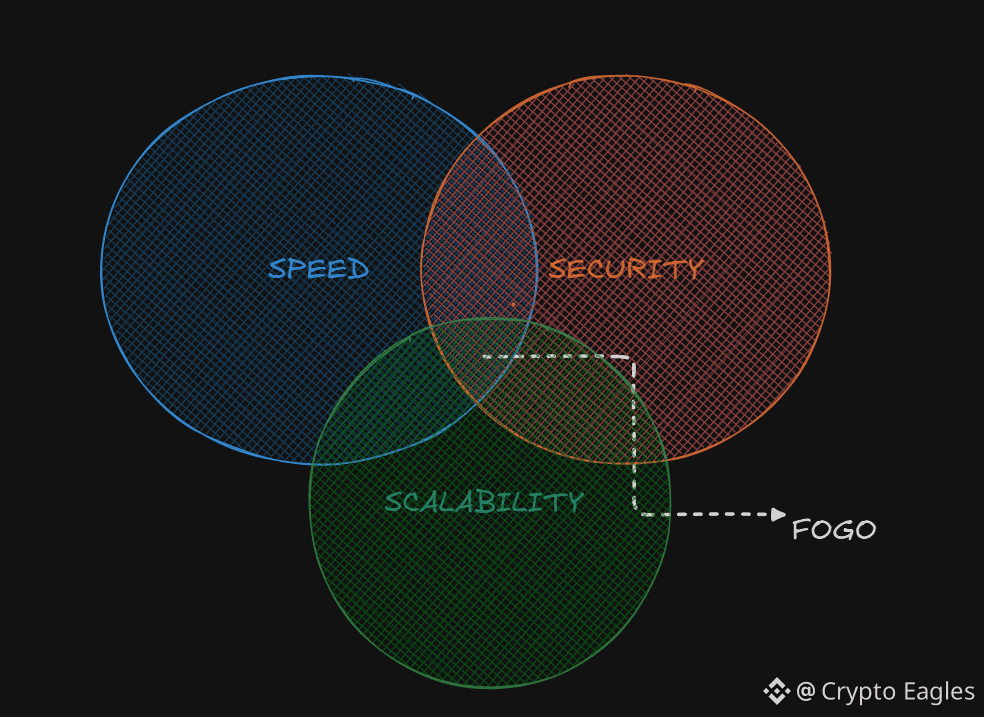
That flywheel effect begins with execution quality.
If Fogo can establish itself as a predictable, high-throughput environment powered by SVM, it unlocks that compounding mechanism.
And once compounding starts, ecosystems accelerate quickly.
$FOGO - More Than a Utility Token
In infrastructure networks, the native token is directly tied to blockspace demand.
As developers deploy more applications…
As users transact more frequently…
As financial systems operate at scale…
Blockspace becomes scarce.
Scarcity creates value.
its at the center of that dynamic.
If Fogo becomes a high-performance execution hub, ansforms from a simple utility asset into the economic layer of a performance-driven ecosystem.
And in crypto, economic gravity is powerful.
The Multi-Chain Reality
Let’s be realistic.
No single chain will dominate everything.
The future is multi-chain.
Different execution environments will specialize:
Security-focused chains.
Modular data-availability layers.
Performance-centric L1s.
Privacy-preserving networks.
Fogo’s niche appears clear: high-performance execution leveraging the Solana Virtual Machine.
That specialization is healthy.
Because in a multi-chain world, clarity of purpose is more valuable than vague ambition.
Developer Incentives Follow Infrastructure Quality
Developers are rational.
They choose environments based on:
Stability.
Performance.
Tooling.
Community support.
Economic incentives.
By building on SVM architecture, Fogo reduces onboarding friction for teams already familiar with performance-oriented execution models.
That alignment can accelerate ecosystem growth faster than chains starting from scratch.
In infrastructure races, time matters.
The Strategic Timing of Fogo
The industry is transitioning.
Regulatory clarity is improving in key regions.
Institutional capital is entering.
On-chain financial products are becoming more complex.
This environment demands infrastructure upgrades.
High-performance L1s are no longer experimental luxuries - they’re necessary.
Fogo’s timing aligns with that shift.
And timing in crypto is everything.
Why I’m Watching @fogo Closely
When analyzing new Layer 1 projects, I look for:
Clear architectural direction.
Performance-first philosophy.
Alignment with long-term industry trends.
Practical developer pathways.
Fogo checks those boxes conceptually.
It’s not trying to win a meme contest.
It’s trying to build an execution engine.
And execution engines don’t need hype.
They need adoption.
If adoption follows performance, and performance remains consistent, FOGO ld become deeply embedded in the value layer of its ecosystem.
Final Thoughts: Infrastructure Is the Quiet Alpha
Retail often chases narratives.
Smart capital studies infrastructure.
Because narratives rotate.
Infrastructure compounds.
Fogo represents a high-performance Layer 1 vision anchored in the Solana Virtual Machine.
It focuses on execution quality in a market that increasingly depends on speed, determinism, and scalability.
Whether #fogo becomes a dominant execution hub depends on adoption, developer traction, and sustained performance.
But the architectural direction is clear.
And clarity in Layer 1 design is rare.
I’m watching @fogo.
I’m tracking $FOGO.
And I’m paying attention to how this high-performance thesis unfolds.
Because in the next cycle, the chains that execute best will likely lead.

