The hardest problem in Web3 has never been technology. It has always been economics. Many blockchains ship impressive features, yet struggle to convert real usage into stable, predictable token demand. Vanar is quietly attempting to solve this problem by changing how its network creates value, shifting away from one-off transactions and speculative activity toward subscription-based AI utility that requires continuous use of VANRY.
Rather than positioning its token as a passive gas asset or a reward mechanism, Vanar is embedding VANRY directly into the ongoing use of its core products. Tools like myNeutron and other AI services are being redesigned around paid access models, where recurring subscriptions are settled in VANRY. This transforms the token from something users hold or trade into something they must repeatedly spend to keep using the platform.
This approach represents a meaningful departure from traditional Web3 economics. Historically, most blockchain products offered free access to advanced tools, with optional fees layered on top. Vanar flips this model by pricing AI capabilities from the start and integrating payments at the protocol level. myNeutron, a semantic memory and reasoning system, is not positioned as an experimental add-on, but as a paid utility designed to sit at the center of developer workflows.
The importance of this shift becomes clear when viewed through the lens of predictability. One of Web3’s structural weaknesses is that usage is irregular, which leads to volatile and unreliable token demand. Subscription models solve this by enforcing recurring costs. When developers or teams rely on AI memory, reasoning cycles, or automated workflows, they are committing to predictable token spending. VANRY demand becomes linked to real activity rather than market sentiment.
This mirrors how cloud infrastructure works in Web2. Companies budget monthly for compute, storage, and API usage because those services are essential to operations. Vanar applies the same logic to on-chain AI. Instead of paying only when transactions occur, developers pay for continuous access to intelligence layers that support their products. This reframes the blockchain as infrastructure rather than a speculative platform.
Subscriptions also introduce stickiness. Once AI services become deeply embedded in analytics, automation, or decision-making pipelines, removing them becomes costly. As long as myNeutron or Kayon AI provides tangible value, subscription payments become part of normal operating expenses. This creates a steady, non-speculative source of token demand that is far more resilient than hype-driven trading.
From a business perspective, this model is easier to justify. Enterprises and regulated industries prefer predictable and auditable costs. Subscription billing in VANRY offers transparency and stability that volatile gas fees cannot. This positions Vanar closer to enterprise-ready infrastructure rather than experimental Web3 tooling.
Another important dimension is expansion beyond the base chain. Vanar’s AI layers are designed to extend across ecosystems, allowing other chains to use compressed, semantically enriched memory while Vanar remains the settlement layer. If applications on external networks rely on Neutron for memory or reasoning, VANRY becomes required beyond a single ecosystem.
This cross-chain utility significantly amplifies the token’s relevance. Instead of competing solely as a Layer-1 for smart contracts, Vanar moves toward becoming an AI infrastructure provider for Web3 at large. Infrastructure that serves multiple ecosystems naturally commands stronger and more durable demand.
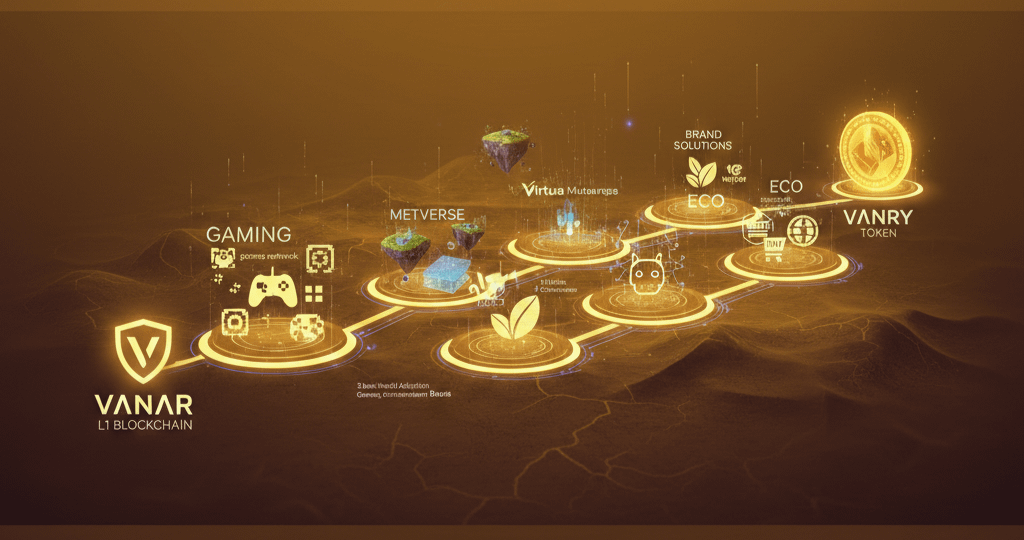
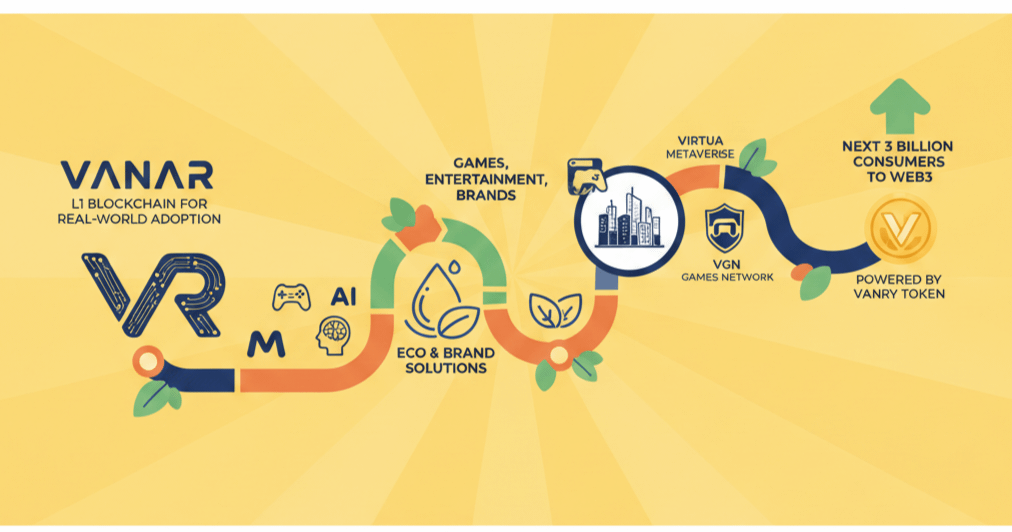
Strategic integrations reinforce this direction. Support from NVIDIA Inception enhances developer access to advanced AI tooling, while real implementations across gaming, metaverse environments, and immersive digital experiences broaden the sources of utility. Microtransactions, AI-driven interactions, and real-world applications diversify demand and reduce reliance on any single sector.
The contrast with typical Layer-1 economics is stark. Many tokens rely on trading activity and narrative momentum, which fade quickly when sentiment turns. Vanar’s model does not depend on traders to sustain value. It depends on users who need the product to function. This is closer to how successful software platforms operate, generating recurring revenue from genuine demand.
Of course, subscription models are not automatic success engines. They only work if the products justify their cost. myNeutron and related AI tools must consistently save time, improve decisions, or generate economic value. Otherwise, recurring fees become friction rather than utility. Clear documentation, reliable performance, smooth billing UX, and strong developer support will be critical.
Scale is another challenge. Meaningful token demand requires a broad base of paying users. That means education, onboarding, and ecosystem growth must accompany the technology. Tools alone are not enough; adoption is everything.
Still, Vanar’s direction signals a more mature blockchain narrative. By tying VANRY to repeatable AI usage through subscriptions and expanding utility beyond a single chain, the project is aligning token economics with real business behavior. Instead of hoping the market assigns value, Vanar is engineering conditions where value is created through consistent use.
If executed well, this approach turns VANRY into what most tokens aspire to be but rarely become: a utility asset that businesses and builders spend regularly because it powers something they genuinely rely on.