Binance Square

verifiablecomputing

675 Aufrufe
14 Kommentare
Crypto Creator1
·
--
Übersetzung ansehen
Fabric Protocol The Trust Layer for the Future of Robotics.For a long time, I kept hearing about robots AI systems, public ledgers, and something called verifiable computing. Honestly, it all sounded too technical and far away from real life. I thought it was only for engineers or big tech companies. But the day I truly understood what Fabric Protocol is trying to do, everything became simple. I realized it is not just about robots. It is about trust. It is about safety. It is about how humans and machines can work together without fear. In this article I will explain Fabric Protocol in very simple English from a beginner’s point of view. I will share what the project is, how it works, and why it could change the way we build and control robots in the future. What Is Fabric Protocol. Fabric Protocol is a global open network. It is supported by a non profit organization called the Fabric Foundation. The main goal of this network is to help people build, manage, and improve general purpose robots in a safe and transparent way. When we say general purpose robots, we mean robots that can do many different tasks. Not just one small job in a factory, but robots that can move, learn, adapt, and work in the real world with humans. Fabric Protocol gives developers a shared system where they can coordinate data, computing power, and rules. All of this is recorded on a public ledger. A public ledger is like a shared digital notebook that everyone can see and verify. It helps make sure nothing is hidden or secretly changed. So in simple words, Fabric Protocol is a system that helps people build smart robots together, while making sure everything is safe, fair, and transparent. Why Do We Even Need Something Like This At first, I used to think robots are already smart enough. We see videos online of robots walking, talking, and even doing simple tasks. But when I started reading more, I understood the real problem. Robots and AI systems can make mistakes. They can misunderstand instructions. They can act in unexpected ways. If a robot is working in a hospital, a home, or on the road, even a small mistake can become dangerous. If different companies build robots in closed systems, there is no shared standard for safety and governance. If something goes wrong, it becomes hard to check what happened and who is responsible. This is where Fabric Protocol becomes important. It tries to create a common infrastructure. It connects robots and systems through a public ledger. This means actions, data, and decisions can be verified. If something happens, we can trace it back and understand it. We are seeing a world where robots are slowly moving from labs into daily life. If we do not build trust now, it will become harder later. What Is Verifiable Computing in Simple Words Verifiable computing sounds complex, but when I finally understood it, it felt very logical. Normally, when a machine does a calculation or makes a decision, we just trust it. We assume it did the right thing. But what if we could mathematically prove that the result is correct? Verifiable computing allows a system to show proof that its computation was done correctly. It is like showing your full working in a math exam instead of only writing the final answer. In Fabric Protocol, this idea is very important. Robots and AI agents can prove that their actions or decisions followed certain rules. If they say they checked a safety condition, there is proof. If they say they followed a regulation, there is proof. This builds trust not only between humans and machines, but also between different machines. What Does Agent Native Infrastructure Mean When I first heard the term agent native infrastructure, I was confused. But then I thought about it differently. Today, most digital systems are built for humans. We click buttons. We log in. We send messages. But in the future, AI agents and robots will also interact directly with digital systems. Agent native infrastructure means the system is designed from the start for AI agents and robots. They can communicate, make agreements, share data, and follow rules automatically. If a robot needs to access certain data, it can do it through the network in a secure and verified way. If it needs permission, it can check rules recorded on the ledger. It becomes a world where machines are not just tools, but active participants in a digital ecosystem. How Governance Works in Fabric Protocol Governance simply means who makes the rules and how decisions are made. Fabric Protocol uses a public ledger to coordinate regulation. This means rules can be written into the system. They are visible. They are transparent. They cannot be secretly changed. The Fabric Foundation supports the development of the network, but the idea of an open protocol means that many people and organizations can participate. If we think about the future, robots might work in public spaces, homes, hospitals, and factories. We need shared rules. We need a way to update those rules as technology evolves. If governance is built into the infrastructure itself, it becomes easier to adapt safely. Why This Matters for Beginners Like Us When I first looked at Fabric Protocol, I thought it was only for developers. But then I realized something important. If robots become part of daily life, this affects all of us. It affects how safe our workplaces are. It affects how our data is used. It affects how decisions are made around us. Understanding projects like Fabric Protocol helps us see the bigger picture. We are not just watching technology grow. We are part of a society that must decide how it grows. If systems are built with transparency and verifiable proofs, it becomes easier to trust them. And trust is the foundation of any new technology. A Simple Example to Imagine Imagine a robot working in a hospital. It delivers medicine to patients. Without a system like Fabric Protocol, we only hope the robot follows the correct instructions. If something goes wrong, it may be hard to check what happened. With a verifiable and ledger based system, every step can be recorded. The robot can prove it received the right instruction. It can prove it checked the correct patient ID. It can prove it followed safety rules. If there is a mistake, we can trace it clearly. If everything works well, we have confidence. This is how human machine collaboration becomes safer and more reliable. The Bigger Vision When I step back and look at the full picture, I see that Fabric Protocol is not just about robots. It is about building an open and shared infrastructure for the next generation of intelligent machines. It connects data, computation, and regulation in one coordinated system. It uses a public ledger to create transparency. It supports modular infrastructure so developers can build flexible and adaptable robots. We are slowly moving toward a world where machines will not only assist us but also act independently in many situations. If we want that world to be safe, we need strong foundations. Fabric Protocol is trying to build that foundation. Conclusion The day I finally understood Fabric Protocol, I stopped seeing it as a complicated technical idea. I started seeing it as a trust layer for robots. It is a global open network supported by the Fabric Foundation. It enables the construction, governance, and evolution of general purpose robots. It uses verifiable computing and a public ledger to coordinate data, computation, and regulation. In simple words, it helps humans and machines work together safely. If we are entering a future where robots are everywhere, then systems like Fabric Protocol are not optional. They are necessary. Now I am not just watching this space with confusion. I am watching it with curiosity and hope. If you are new to this topic, take your time, read slowly, and ask questions. The future of robotics is not only for engineers. It is for all of us. Let us learn together and stay informed as this technology evolves. @FabricFND #Mira #RoboticsFuture #VerifiableComputing #OpenInfrastructure $ROBO

Fabric Protocol The Trust Layer for the Future of Robotics.

For a long time, I kept hearing about robots AI systems, public ledgers, and something called verifiable computing. Honestly, it all sounded too technical and far away from real life. I thought it was only for engineers or big tech companies. But the day I truly understood what Fabric Protocol is trying to do, everything became simple. I realized it is not just about robots. It is about trust. It is about safety. It is about how humans and machines can work together without fear.

In this article I will explain Fabric Protocol in very simple English from a beginner’s point of view. I will share what the project is, how it works, and why it could change the way we build and control robots in the future.

What Is Fabric Protocol.

Fabric Protocol is a global open network. It is supported by a non profit organization called the Fabric Foundation. The main goal of this network is to help people build, manage, and improve general purpose robots in a safe and transparent way.

When we say general purpose robots, we mean robots that can do many different tasks. Not just one small job in a factory, but robots that can move, learn, adapt, and work in the real world with humans.

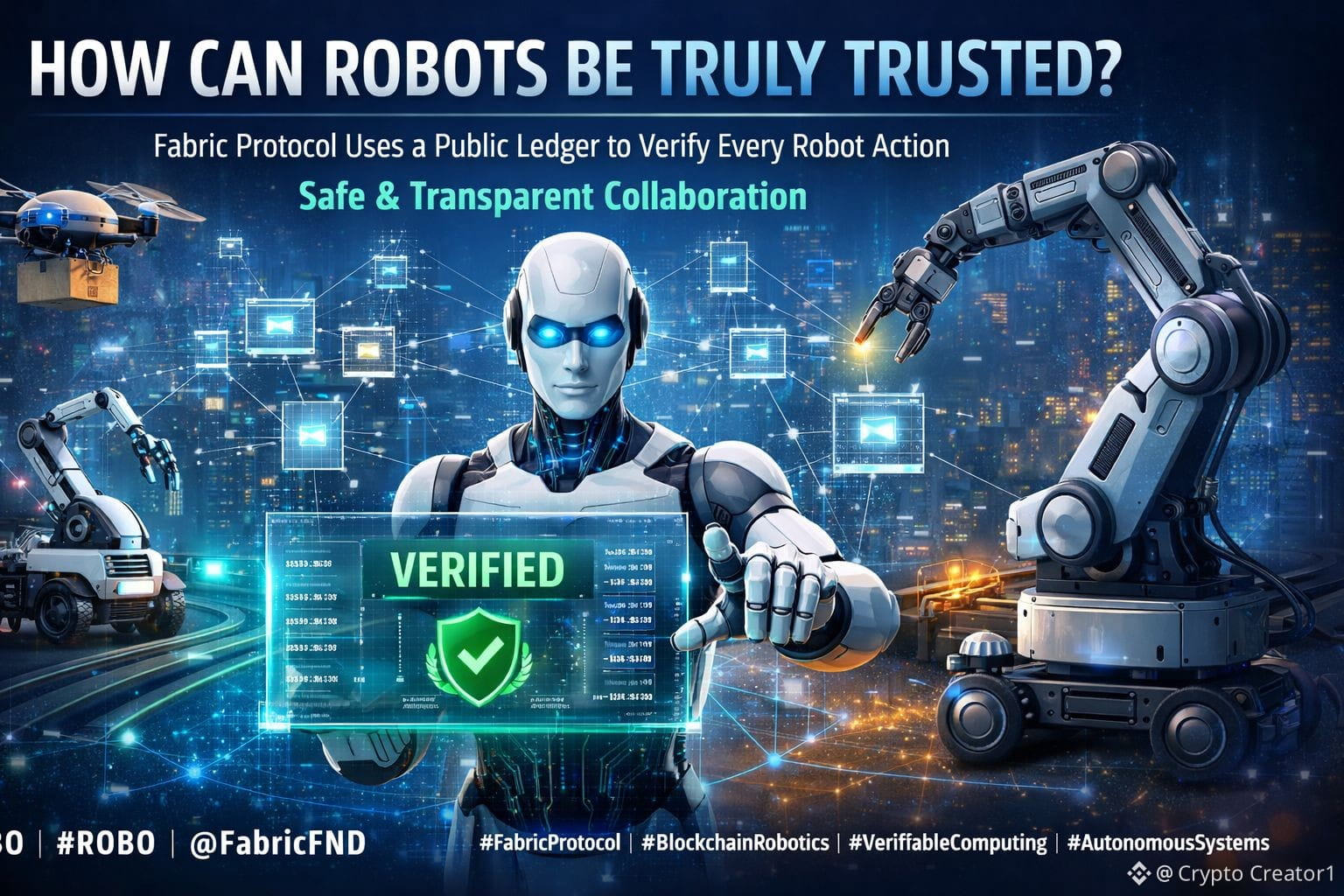
Fabric Protocol gives developers a shared system where they can coordinate data, computing power, and rules. All of this is recorded on a public ledger. A public ledger is like a shared digital notebook that everyone can see and verify. It helps make sure nothing is hidden or secretly changed.

So in simple words, Fabric Protocol is a system that helps people build smart robots together, while making sure everything is safe, fair, and transparent.

Why Do We Even Need Something Like This

At first, I used to think robots are already smart enough. We see videos online of robots walking, talking, and even doing simple tasks. But when I started reading more, I understood the real problem.

Robots and AI systems can make mistakes. They can misunderstand instructions. They can act in unexpected ways. If a robot is working in a hospital, a home, or on the road, even a small mistake can become dangerous.

If different companies build robots in closed systems, there is no shared standard for safety and governance. If something goes wrong, it becomes hard to check what happened and who is responsible.

This is where Fabric Protocol becomes important. It tries to create a common infrastructure. It connects robots and systems through a public ledger. This means actions, data, and decisions can be verified. If something happens, we can trace it back and understand it.

We are seeing a world where robots are slowly moving from labs into daily life. If we do not build trust now, it will become harder later.

What Is Verifiable Computing in Simple Words

Verifiable computing sounds complex, but when I finally understood it, it felt very logical.

Normally, when a machine does a calculation or makes a decision, we just trust it. We assume it did the right thing. But what if we could mathematically prove that the result is correct?

Verifiable computing allows a system to show proof that its computation was done correctly. It is like showing your full working in a math exam instead of only writing the final answer.

In Fabric Protocol, this idea is very important. Robots and AI agents can prove that their actions or decisions followed certain rules. If they say they checked a safety condition, there is proof. If they say they followed a regulation, there is proof.

This builds trust not only between humans and machines, but also between different machines.

What Does Agent Native Infrastructure Mean

When I first heard the term agent native infrastructure, I was confused. But then I thought about it differently.

Today, most digital systems are built for humans. We click buttons. We log in. We send messages. But in the future, AI agents and robots will also interact directly with digital systems.

Agent native infrastructure means the system is designed from the start for AI agents and robots. They can communicate, make agreements, share data, and follow rules automatically.

If a robot needs to access certain data, it can do it through the network in a secure and verified way. If it needs permission, it can check rules recorded on the ledger.

It becomes a world where machines are not just tools, but active participants in a digital ecosystem.

How Governance Works in Fabric Protocol

Governance simply means who makes the rules and how decisions are made.

Fabric Protocol uses a public ledger to coordinate regulation. This means rules can be written into the system. They are visible. They are transparent. They cannot be secretly changed.

The Fabric Foundation supports the development of the network, but the idea of an open protocol means that many people and organizations can participate.

If we think about the future, robots might work in public spaces, homes, hospitals, and factories. We need shared rules. We need a way to update those rules as technology evolves.

If governance is built into the infrastructure itself, it becomes easier to adapt safely.

Why This Matters for Beginners Like Us

When I first looked at Fabric Protocol, I thought it was only for developers. But then I realized something important.

If robots become part of daily life, this affects all of us. It affects how safe our workplaces are. It affects how our data is used. It affects how decisions are made around us.

Understanding projects like Fabric Protocol helps us see the bigger picture. We are not just watching technology grow. We are part of a society that must decide how it grows.

If systems are built with transparency and verifiable proofs, it becomes easier to trust them. And trust is the foundation of any new technology.

A Simple Example to Imagine

Imagine a robot working in a hospital. It delivers medicine to patients.

Without a system like Fabric Protocol, we only hope the robot follows the correct instructions. If something goes wrong, it may be hard to check what happened.

With a verifiable and ledger based system, every step can be recorded. The robot can prove it received the right instruction. It can prove it checked the correct patient ID. It can prove it followed safety rules.

If there is a mistake, we can trace it clearly. If everything works well, we have confidence.

This is how human machine collaboration becomes safer and more reliable.

The Bigger Vision

When I step back and look at the full picture, I see that Fabric Protocol is not just about robots. It is about building an open and shared infrastructure for the next generation of intelligent machines.

It connects data, computation, and regulation in one coordinated system. It uses a public ledger to create transparency. It supports modular infrastructure so developers can build flexible and adaptable robots.

We are slowly moving toward a world where machines will not only assist us but also act independently in many situations. If we want that world to be safe, we need strong foundations.

Fabric Protocol is trying to build that foundation.

Conclusion

The day I finally understood Fabric Protocol, I stopped seeing it as a complicated technical idea. I started seeing it as a trust layer for robots.

It is a global open network supported by the Fabric Foundation. It enables the construction, governance, and evolution of general purpose robots. It uses verifiable computing and a public ledger to coordinate data, computation, and regulation.

In simple words, it helps humans and machines work together safely.

If we are entering a future where robots are everywhere, then systems like Fabric Protocol are not optional. They are necessary.

Now I am not just watching this space with confusion. I am watching it with curiosity and hope.

If you are new to this topic, take your time, read slowly, and ask questions. The future of robotics is not only for engineers. It is for all of us.

Let us learn together and stay informed as this technology evolves.
@Fabric Foundation
#Mira
#RoboticsFuture
#VerifiableComputing
#OpenInfrastructure
$ROBO
Brenwick:
excellent openion
Fabric Protocol: Vertrauen neu denken im Zeitalter autonomer Maschinen. #ROBO @FabricFND $ROBO Einführung Wir betreten eine Ära, in der Maschinen nicht mehr auf Fabriklinien oder in Forschungslabors beschränkt sind. Sie beginnen, sich unter uns zu bewegen – unterstützen in Krankenhäusern, navigieren in Lagerhäusern, unterstützen die Infrastruktur und dringen sogar in unsere Häuser ein. Während die Robotik autonomer und stärker in das tägliche Leben integriert wird, taucht eine leise, aber tiefgreifende Frage auf: Können wir wirklich den Systemen vertrauen, die wir bauen? Fabric Foundation schlägt eine Antwort durch das Fabric Protocol vor, ein globales offenes Netzwerk, das dazu dient, den Bau, die Governance und die kollaborative Entwicklung von Robotern für allgemeine Zwecke zu koordinieren. Anstatt Vertrauen als nachträglichen Gedanken zu behandeln, versucht das Protokoll, es direkt in die Infrastruktur zu integrieren – durch verifizierbare Berechnungen, die Koordination öffentlicher Ledger und agent-native Systeme.

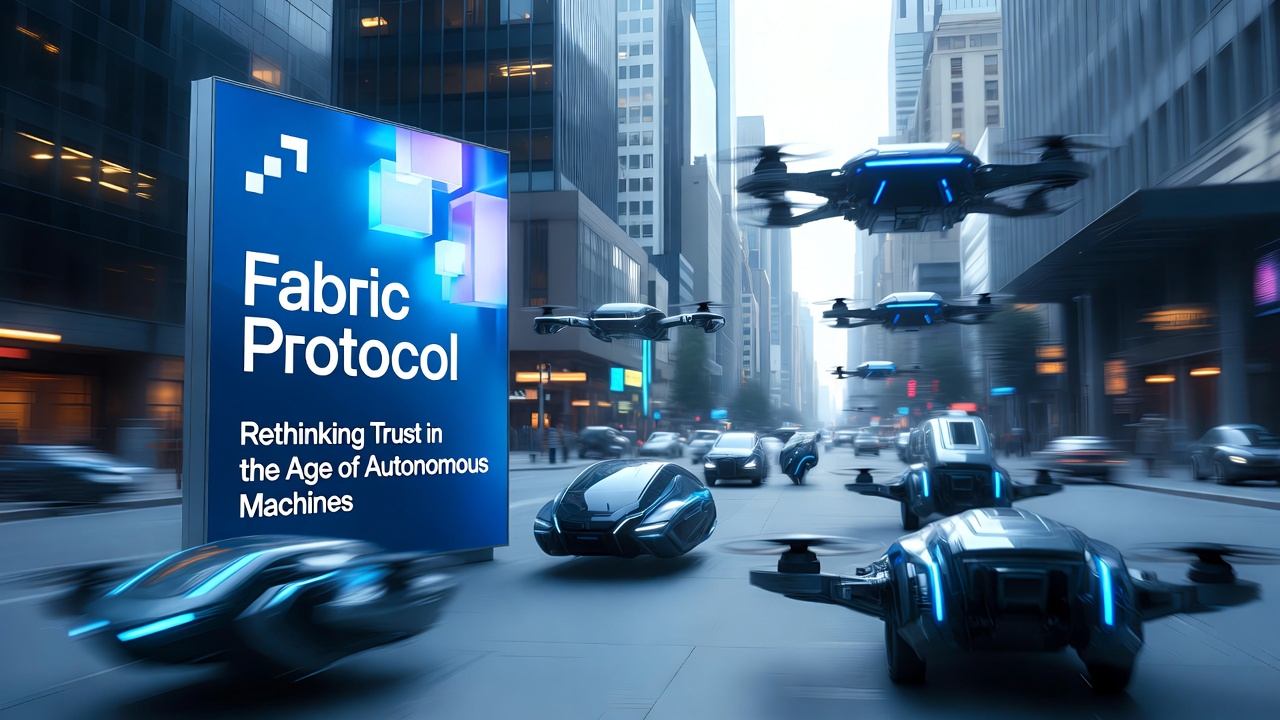
Fabric Protocol: Vertrauen neu denken im Zeitalter autonomer Maschinen.

#ROBO @Fabric Foundation $ROBO
Einführung

Wir betreten eine Ära, in der Maschinen nicht mehr auf Fabriklinien oder in Forschungslabors beschränkt sind. Sie beginnen, sich unter uns zu bewegen – unterstützen in Krankenhäusern, navigieren in Lagerhäusern, unterstützen die Infrastruktur und dringen sogar in unsere Häuser ein. Während die Robotik autonomer und stärker in das tägliche Leben integriert wird, taucht eine leise, aber tiefgreifende Frage auf:

Können wir wirklich den Systemen vertrauen, die wir bauen?

Fabric Foundation schlägt eine Antwort durch das Fabric Protocol vor, ein globales offenes Netzwerk, das dazu dient, den Bau, die Governance und die kollaborative Entwicklung von Robotern für allgemeine Zwecke zu koordinieren. Anstatt Vertrauen als nachträglichen Gedanken zu behandeln, versucht das Protokoll, es direkt in die Infrastruktur zu integrieren – durch verifizierbare Berechnungen, die Koordination öffentlicher Ledger und agent-native Systeme.
Waheed_9:
Fabric Protocol invites us to consider that trust is not something we grant to technology it is something we must deliberately design into it.
Übersetzung ansehen
Verifiable Computing Meets Robotics: Inside Fabric Protocol’s Vision @fabric $ROBO #ROBOThe first time I watched a warehouse robot freeze mid-task because its internal model misread a barcode, I felt something most people in tech rarely admit. Not awe. Not excitement. Unease. The machine had done exactly what it was programmed to do, but there was no way to verify why it had made that specific decision in that specific moment. That quiet gap between action and proof is where trust begins to fray. And that gap is exactly what Fabric Protocol is trying to close. On the surface, the idea behind Fabric and its $ROBO token looks simple. Robots generate data. Artificial intelligence models interpret that data. Fabric introduces verifiable computing so that the output of those models can be mathematically proven to be correct without exposing all of the underlying information. In plain language, a robot does something, and you can independently check that its decision followed agreed rules. Underneath, it becomes more technical. Verifiable computing uses cryptographic proofs to confirm that a computation was performed correctly. Instead of replaying every step, you check a compact proof that guarantees the result matches the input and code. That may sound abstract, but its implications are concrete. If a delivery drone reroutes itself, or an industrial arm adjusts torque levels, a proof can confirm that its choice aligns with its programmed constraints. Understanding that helps explain why this matters. Robotics is moving from controlled factory floors into open environments. Warehouses alone are expected to surpass 4 million active robots globally within a few years, and that figure matters not because it is large, but because each additional machine introduces more independent decision points. More decisions mean more opportunities for silent failure. Fabric’s thesis is that those decisions should not be taken on faith. What is happening on the surface is a protocol that anchors robotic computations to a decentralized ledger. Each critical computation produces a proof. That proof is recorded and can be validated by anyone participating in the network. What is happening underneath is a shift in where trust lives. Instead of trusting a single manufacturer’s firmware, stakeholders can verify that a robot followed agreed logic. That momentum creates another effect. If computations can be verified, they can also be monetized with greater confidence. Imagine autonomous agricultural equipment optimizing fertilizer use. If the optimization model produces a yield increase of 12 percent, that number only matters if it can be trusted. Twelve percent is not impressive on its own. It becomes meaningful when you realize that in a farm operating on thin 5 percent profit margins, a verified 12 percent efficiency gain changes survival math. Fabric’s structure allows that claim to be backed by proof rather than marketing. Meanwhile, the $$ROBO oken functions as an incentive layer. Participants who generate proofs, validate them, or provide computational resources are rewarded. Tokens are not interesting because they exist. They are interesting because they align incentives across hardware manufacturers, AI developers, and validators. Without alignment, each actor optimizes locally. With alignment, there is a shared reason to maintain accuracy. When I first looked at this model, I wondered whether robotics really needs blockchain involvement. It is a fair question. Centralized logging systems already exist. Cloud providers offer audit trails. But centralized systems assume a single trusted operator. In multi-stakeholder environments, such as cross-border logistics or shared robot fleets, that assumption breaks down. Verifiable computing reduces the need to trust a single party. The layering becomes clearer in real-world scenarios. On the surface, a delivery robot navigates city streets. Underneath, it runs a neural network interpreting camera feeds in milliseconds. What this enables is dynamic routing around obstacles. What it introduces, however, is opacity. Neural networks are not easily explainable. By generating proofs of constraint adherence, Fabric does not explain the neural network’s reasoning in human language. Instead, it proves that the output respected safety and operational boundaries. That distinction matters. It acknowledges that we may never fully interpret complex models, but we can still constrain them. If a robot is limited to certain geofenced zones and speed thresholds, a proof can confirm compliance without revealing proprietary model details. That balance between privacy and verification is subtle but important. There are trade-offs. Generating cryptographic proofs consumes computational resources. If a robot must produce a proof for every micro-decision, latency increases. In high-speed environments, even a delay of 50 milliseconds is not trivial. Fifty milliseconds is the difference between smooth motion and jitter in certain industrial tasks. Fabric’s challenge is deciding which computations require proofs and which can remain local. Too many proofs and performance suffers. Too few and trust erodes. Fabric’s vision sits at the intersection of these pressures. Robotics demands autonomy. Society demands accountability. Verifiable computing attempts to reconcile those demands without stalling innovation. Instead of slowing robots down with constant human oversight, it provides a mathematical audit trail. What struck me most is how understated the shift feels. There is no dramatic redesign of the robot itself. Motors spin. Sensors scan. Code executes. The difference lies in the proof attached afterward. That proof becomes a kind of digital receipt, quietly anchoring physical action to mathematical certainty. Whether Fabric and $R$ROBO n scale this vision depends on adoption. Protocols do not matter in isolation. They matter when integrated into manufacturing pipelines and AI toolkits. Meanwhile, the robotics sector is moving steadily toward distributed intelligence. Swarms of machines coordinating in real time introduce compounded risk. Still, the trajectory is difficult to ignore. As machines gain autonomy, the demand for verifiable action grows in parallel. Trust in robotics will not be built on polished demos. It will be built on steady, provable behavior over time. And perhaps that is the deeper point. In a world increasingly shaped by autonomous systems, the quiet proof attached to each action may matter more than the action itself. #ROBO #FabricProtocol #VerifiableComputing #RoboticsAI #BlockchainInfrastructure @FabricFND #ROBO

Verifiable Computing Meets Robotics: Inside Fabric Protocol’s Vision @fabric $ROBO #ROBO

The first time I watched a warehouse robot freeze mid-task because its internal model misread a barcode, I felt something most people in tech rarely admit. Not awe. Not excitement. Unease. The machine had done exactly what it was programmed to do, but there was no way to verify why it had made that specific decision in that specific moment. That quiet gap between action and proof is where trust begins to fray. And that gap is exactly what Fabric Protocol is trying to close.
On the surface, the idea behind Fabric and its $ROBO token looks simple. Robots generate data. Artificial intelligence models interpret that data. Fabric introduces verifiable computing so that the output of those models can be mathematically proven to be correct without exposing all of the underlying information. In plain language, a robot does something, and you can independently check that its decision followed agreed rules.
Underneath, it becomes more technical. Verifiable computing uses cryptographic proofs to confirm that a computation was performed correctly. Instead of replaying every step, you check a compact proof that guarantees the result matches the input and code. That may sound abstract, but its implications are concrete. If a delivery drone reroutes itself, or an industrial arm adjusts torque levels, a proof can confirm that its choice aligns with its programmed constraints.
Understanding that helps explain why this matters. Robotics is moving from controlled factory floors into open environments. Warehouses alone are expected to surpass 4 million active robots globally within a few years, and that figure matters not because it is large, but because each additional machine introduces more independent decision points. More decisions mean more opportunities for silent failure. Fabric’s thesis is that those decisions should not be taken on faith.
What is happening on the surface is a protocol that anchors robotic computations to a decentralized ledger. Each critical computation produces a proof. That proof is recorded and can be validated by anyone participating in the network. What is happening underneath is a shift in where trust lives. Instead of trusting a single manufacturer’s firmware, stakeholders can verify that a robot followed agreed logic.
That momentum creates another effect. If computations can be verified, they can also be monetized with greater confidence. Imagine autonomous agricultural equipment optimizing fertilizer use. If the optimization model produces a yield increase of 12 percent, that number only matters if it can be trusted. Twelve percent is not impressive on its own. It becomes meaningful when you realize that in a farm operating on thin 5 percent profit margins, a verified 12 percent efficiency gain changes survival math. Fabric’s structure allows that claim to be backed by proof rather than marketing.
Meanwhile, the $$ROBO oken functions as an incentive layer. Participants who generate proofs, validate them, or provide computational resources are rewarded. Tokens are not interesting because they exist. They are interesting because they align incentives across hardware manufacturers, AI developers, and validators. Without alignment, each actor optimizes locally. With alignment, there is a shared reason to maintain accuracy.
When I first looked at this model, I wondered whether robotics really needs blockchain involvement. It is a fair question. Centralized logging systems already exist. Cloud providers offer audit trails. But centralized systems assume a single trusted operator. In multi-stakeholder environments, such as cross-border logistics or shared robot fleets, that assumption breaks down. Verifiable computing reduces the need to trust a single party.
The layering becomes clearer in real-world scenarios. On the surface, a delivery robot navigates city streets. Underneath, it runs a neural network interpreting camera feeds in milliseconds. What this enables is dynamic routing around obstacles. What it introduces, however, is opacity. Neural networks are not easily explainable. By generating proofs of constraint adherence, Fabric does not explain the neural network’s reasoning in human language. Instead, it proves that the output respected safety and operational boundaries.
That distinction matters. It acknowledges that we may never fully interpret complex models, but we can still constrain them. If a robot is limited to certain geofenced zones and speed thresholds, a proof can confirm compliance without revealing proprietary model details. That balance between privacy and verification is subtle but important.
There are trade-offs. Generating cryptographic proofs consumes computational resources. If a robot must produce a proof for every micro-decision, latency increases. In high-speed environments, even a delay of 50 milliseconds is not trivial. Fifty milliseconds is the difference between smooth motion and jitter in certain industrial tasks. Fabric’s challenge is deciding which computations require proofs and which can remain local. Too many proofs and performance suffers. Too few and trust erodes.
Fabric’s vision sits at the intersection of these pressures. Robotics demands autonomy. Society demands accountability. Verifiable computing attempts to reconcile those demands without stalling innovation. Instead of slowing robots down with constant human oversight, it provides a mathematical audit trail.
What struck me most is how understated the shift feels. There is no dramatic redesign of the robot itself. Motors spin. Sensors scan. Code executes. The difference lies in the proof attached afterward. That proof becomes a kind of digital receipt, quietly anchoring physical action to mathematical certainty.
Whether Fabric and $R$ROBO n scale this vision depends on adoption. Protocols do not matter in isolation. They matter when integrated into manufacturing pipelines and AI toolkits. Meanwhile, the robotics sector is moving steadily toward distributed intelligence. Swarms of machines coordinating in real time introduce compounded risk.
Still, the trajectory is difficult to ignore. As machines gain autonomy, the demand for verifiable action grows in parallel. Trust in robotics will not be built on polished demos. It will be built on steady, provable behavior over time.
And perhaps that is the deeper point. In a world increasingly shaped by autonomous systems, the quiet proof attached to each action may matter more than the action itself.
#ROBO #FabricProtocol #VerifiableComputing #RoboticsAI #BlockchainInfrastructure @Fabric Foundation #ROBO
Übersetzung ansehen
Fabric Protocol is redefining the future of robotics through a decentralized and transparent infrastructure. By integrating verifiable computing with agent-based systems, it ensures that every robotic action is secure, auditable, and trustworthy. This innovative network empowers developers and organizations to collaboratively build and govern intelligent machines. As human-robot interaction evolves, Fabric Protocol sets a new standard for safe, scalable, and ethical automation worldwide #robo $ROBO @FabricFND #FabricProtocol #Robotics #ArtificialIntelligence #VerifiableComputing
Fabric Protocol is redefining the future of robotics through a decentralized and transparent infrastructure. By integrating verifiable computing with agent-based systems, it ensures that every robotic action is secure, auditable, and trustworthy. This innovative network empowers developers and organizations to collaboratively build and govern intelligent machines. As human-robot interaction evolves, Fabric Protocol sets a new standard for safe, scalable, and ethical automation worldwide

#robo $ROBO @Fabric Foundation
#FabricProtocol #Robotics #ArtificialIntelligence
#VerifiableComputing
Ich habe einmal einen Lagerroboter beobachtet, der mitten in einer Aufgabe pausierte - nicht, weil er kaputt war, sondern weil er keinen gemeinsamen Kontext hatte. Er konnte sehen. Er konnte berechnen. Aber er konnte nicht über sein eigenes Silos koordinieren. Diese Lücke zwischen Bewegung und Bedeutung ist der Ort, an dem das Fabric-Protokoll leise passt. Fabric baut eine öffentliche Ledger-Schicht für Robotik - nicht um Maschinen in Echtzeit zu steuern, sondern um sie zu koordinieren. Auf der Oberfläche sieht es aus wie Blockchain-Infrastruktur. Darunter funktioniert es mehr wie ein gemeinsamer Kortex. Roboter und KI-Agenten haben Identitäten, reichen überprüfbare Nachweise dessen ein, was sie getan haben, und interagieren über programmierbare Regeln. Das ist wichtig, denn Robotik in großem Maßstab schafft Vertrauensprobleme. Wenn 1.000 Lieferroboter 98 Prozent Erfolg beanspruchen, was bedeutet das wirklich? Fabric verankert diese Ansprüche an kryptografische Beweise. Die Zahl gewinnt Kontext. Sie wird verdient. Echtzeitentscheidungen passieren weiterhin lokal. Das Ledger steuert keine Motoren oder verarbeitet Kamera-Frames. Stattdessen zeichnet es Verpflichtungen auf, überprüft Ergebnisse und setzt die Governance nach der Ausführung durch. Diese Trennung hält Systeme schnell und macht sie gleichzeitig verantwortlich. Die tiefere Veränderung ist wirtschaftlicher Natur. Agenten können Schlüssel besitzen, Sicherheiten hinterlegen, Reputation aufbauen und sogar für Daten oder Berechnungen transagieren. Roboter hören auf, isolierte Werkzeuge zu sein, und beginnen, sich wie vernetzte Akteure zu verhalten. Das verändert, wie Flotten zusammenarbeiten, wie Modelle verbessert werden und wie Regulierung durchgesetzt wird. Wenn dieses Modell hält, bewegt sich die Robotik von isolierter Intelligenz zu gemeinsamer Erinnerung. Von Code, der auf einem Gerät läuft, zu Kognition, die über ein Protokoll verteilt ist. Und sobald Maschinen beweisen, koordinieren und gemeinsam lernen können, hört Autonomie auf, individuell zu sein - sie wird kollektiv. #FabricProtocol #AgentNative #Robotics #VerifiableComputing #DecentralizedAI @FabricFND $ROBO {future}(ROBOUSDT) #ROBO
Ich habe einmal einen Lagerroboter beobachtet, der mitten in einer Aufgabe pausierte - nicht, weil er kaputt war, sondern weil er keinen gemeinsamen Kontext hatte. Er konnte sehen. Er konnte berechnen. Aber er konnte nicht über sein eigenes Silos koordinieren. Diese Lücke zwischen Bewegung und Bedeutung ist der Ort, an dem das Fabric-Protokoll leise passt.
Fabric baut eine öffentliche Ledger-Schicht für Robotik - nicht um Maschinen in Echtzeit zu steuern, sondern um sie zu koordinieren. Auf der Oberfläche sieht es aus wie Blockchain-Infrastruktur. Darunter funktioniert es mehr wie ein gemeinsamer Kortex. Roboter und KI-Agenten haben Identitäten, reichen überprüfbare Nachweise dessen ein, was sie getan haben, und interagieren über programmierbare Regeln.
Das ist wichtig, denn Robotik in großem Maßstab schafft Vertrauensprobleme. Wenn 1.000 Lieferroboter 98 Prozent Erfolg beanspruchen, was bedeutet das wirklich? Fabric verankert diese Ansprüche an kryptografische Beweise. Die Zahl gewinnt Kontext. Sie wird verdient.
Echtzeitentscheidungen passieren weiterhin lokal. Das Ledger steuert keine Motoren oder verarbeitet Kamera-Frames. Stattdessen zeichnet es Verpflichtungen auf, überprüft Ergebnisse und setzt die Governance nach der Ausführung durch. Diese Trennung hält Systeme schnell und macht sie gleichzeitig verantwortlich.
Die tiefere Veränderung ist wirtschaftlicher Natur. Agenten können Schlüssel besitzen, Sicherheiten hinterlegen, Reputation aufbauen und sogar für Daten oder Berechnungen transagieren. Roboter hören auf, isolierte Werkzeuge zu sein, und beginnen, sich wie vernetzte Akteure zu verhalten. Das verändert, wie Flotten zusammenarbeiten, wie Modelle verbessert werden und wie Regulierung durchgesetzt wird.
Wenn dieses Modell hält, bewegt sich die Robotik von isolierter Intelligenz zu gemeinsamer Erinnerung. Von Code, der auf einem Gerät läuft, zu Kognition, die über ein Protokoll verteilt ist.
Und sobald Maschinen beweisen, koordinieren und gemeinsam lernen können, hört Autonomie auf, individuell zu sein - sie wird kollektiv.
#FabricProtocol #AgentNative #Robotics #VerifiableComputing #DecentralizedAI @Fabric Foundation $ROBO
#ROBO
Von Code zu Cortex: Wie das Fabric-Protokoll agent-native Robotik antreibtIch erinnere mich noch an das erste Mal, als ich einen Lagerroboter zögern sah. Es war eine subtile Pause - ein mechanischer Arm, der über einen Behälter schwebte, eine Kamera scannte, der Prozessor arbeitete und auf ein Signal von irgendwo wartete. Der Code war korrekt. Die Sensoren waren kalibriert. Und doch fühlte sich unter der Oberfläche etwas unvollständig an. Die Maschine konnte sich bewegen, aber sie konnte nicht wirklich koordinieren. Sie hatte Logik, aber kein gemeinsames Gedächtnis der Welt. Diese Spannung zwischen Bewegung und Bedeutung ist genau der Punkt, an dem das Fabric-Protokoll beginnt.

Von Code zu Cortex: Wie das Fabric-Protokoll agent-native Robotik antreibt

Ich erinnere mich noch an das erste Mal, als ich einen Lagerroboter zögern sah.
Es war eine subtile Pause - ein mechanischer Arm, der über einen Behälter schwebte, eine Kamera scannte, der Prozessor arbeitete und auf ein Signal von irgendwo wartete. Der Code war korrekt. Die Sensoren waren kalibriert. Und doch fühlte sich unter der Oberfläche etwas unvollständig an. Die Maschine konnte sich bewegen, aber sie konnte nicht wirklich koordinieren. Sie hatte Logik, aber kein gemeinsames Gedächtnis der Welt. Diese Spannung zwischen Bewegung und Bedeutung ist genau der Punkt, an dem das Fabric-Protokoll beginnt.
PROVE von Succinct: Die Ära des überprüfbaren Computings von Ethereum antreibenBlockchain hat sich weit über Zahlungen und Tokenisierung hinaus entwickelt – es geht jetzt darum, Wahrheit ohne Vertrauen zu etablieren. Das ist die Vision hinter $PROVE von @Succinct, dem ersten dezentralen Nachweisernetzwerk. Durch die Bereitstellung schnellerer, kostengünstigerer und zugänglicherer Null-Wissen-Nachweise (ZKPs) stellt PROVE einen Wendepunkt in der Reise von Ethereum in Richtung skalierbarem, überprüfbarem Computing dar. --- Null-Wissen praktisch machen 🌐 Null-Wissen-Nachweise werden oft als der heilige Gral der Skalierbarkeit und Privatsphäre bezeichnet. Dennoch wurde die Akzeptanz durch Kosten, Komplexität und begrenzte Werkzeuge verlangsamt. Succincts Antwort ist SP1 zkVM, ein Open-Source, Rust-basiertes Nachweissystem, das es Teams ermöglicht, Nachweise zu generieren, ohne fortgeschrittene kryptografische Kenntnisse zu benötigen. Mit SP1 können Entwickler zkEVMs, Rollups und On-Chain-Koprozessoren einfacher erstellen – wodurch ZK-Technologie endlich nutzbar, praktisch und entwicklerfreundlich wird.

PROVE von Succinct: Die Ära des überprüfbaren Computings von Ethereum antreiben

Blockchain hat sich weit über Zahlungen und Tokenisierung hinaus entwickelt – es geht jetzt darum, Wahrheit ohne Vertrauen zu etablieren. Das ist die Vision hinter $PROVE von @Succinct, dem ersten dezentralen Nachweisernetzwerk. Durch die Bereitstellung schnellerer, kostengünstigerer und zugänglicherer Null-Wissen-Nachweise (ZKPs) stellt PROVE einen Wendepunkt in der Reise von Ethereum in Richtung skalierbarem, überprüfbarem Computing dar.
---
Null-Wissen praktisch machen 🌐
Null-Wissen-Nachweise werden oft als der heilige Gral der Skalierbarkeit und Privatsphäre bezeichnet. Dennoch wurde die Akzeptanz durch Kosten, Komplexität und begrenzte Werkzeuge verlangsamt. Succincts Antwort ist SP1 zkVM, ein Open-Source, Rust-basiertes Nachweissystem, das es Teams ermöglicht, Nachweise zu generieren, ohne fortgeschrittene kryptografische Kenntnisse zu benötigen. Mit SP1 können Entwickler zkEVMs, Rollups und On-Chain-Koprozessoren einfacher erstellen – wodurch ZK-Technologie endlich nutzbar, praktisch und entwicklerfreundlich wird.
·
--
Bullisch
🚀 $LA von @lagrangedev entwickelt sich schnell zur Kerntechnologie für verifizierbare Berechnungen in Web3. Entwickelt mit nativem Zero-Knowledge (ZK) Technologie und nahtloser Interoperabilität zwischen Blockchains, treibt $LA eine neue Ära von Vertrauen, Geschwindigkeit und Skalierbarkeit voran. 🔐 Was LA ermöglicht: ✔️ KI-Integrationen mit verifizierbaren Dateninputs ✔️ Sichere, zusammensetzbare DeFi-Anwendungen ✔️ Nächste Generation von On-Chain-Tools, die ohne Kompromisse skalieren ⸻ Während die Web3-Infrastruktur fortschrittlicher wird, hält LA die Dinge schnell, vertrauenslos und zukunftssicher. Das ist nicht nur ein weiterer Token — Es ist die Infrastrukturebene, auf die Web3-Entwickler setzen. ⸻ #LA #Lagrange #ZKTech #Web3Infra #DeFi #VerifiableComputing
🚀 $LA von @Lagrange Official entwickelt sich schnell zur Kerntechnologie für verifizierbare Berechnungen in Web3.

Entwickelt mit nativem Zero-Knowledge (ZK) Technologie und nahtloser Interoperabilität zwischen Blockchains, treibt $LA eine neue Ära von Vertrauen, Geschwindigkeit und Skalierbarkeit voran.

🔐 Was LA ermöglicht:

✔️ KI-Integrationen mit verifizierbaren Dateninputs
✔️ Sichere, zusammensetzbare DeFi-Anwendungen
✔️ Nächste Generation von On-Chain-Tools, die ohne Kompromisse skalieren


Während die Web3-Infrastruktur fortschrittlicher wird, hält LA die Dinge schnell, vertrauenslos und zukunftssicher.

Das ist nicht nur ein weiterer Token —
Es ist die Infrastrukturebene, auf die Web3-Entwickler setzen.


#LA #Lagrange #ZKTech #Web3Infra #DeFi #VerifiableComputing
KI-Intelligenz ohne Verantwortlichkeit ist einfach skaliertes Versagen 🚨 Die Fixierung auf intelligentere KI verpasst das Wesentliche: Intelligenz ohne überprüfbare Verantwortlichkeit ist einfach gefährliche Automatisierung. Walrus geht es nicht darum, KI "intelligenter" zu machen; es geht darum, KI verantwortbar zu machen. Jede Handlung muss eine nachvollziehbare Spur hinterlassen, jede Entscheidung muss ihren Eingaben nachvollziehbar zugeordnet werden können. Diese überprüfbare Erinnerung ist der entscheidende Unterschied zwischen der KI, die die Menschen fürchten, und der KI, der sie vertrauen werden, um autonom zu agieren. Die Zukunft erfordert KI, die sich nach einer Handlung erklären kann. Walrus liefert diese Vertrauensebene. #Aİ #DeFi #VerifiableComputing 🧠
KI-Intelligenz ohne Verantwortlichkeit ist einfach skaliertes Versagen 🚨

Die Fixierung auf intelligentere KI verpasst das Wesentliche: Intelligenz ohne überprüfbare Verantwortlichkeit ist einfach gefährliche Automatisierung. Walrus geht es nicht darum, KI "intelligenter" zu machen; es geht darum, KI verantwortbar zu machen.

Jede Handlung muss eine nachvollziehbare Spur hinterlassen, jede Entscheidung muss ihren Eingaben nachvollziehbar zugeordnet werden können. Diese überprüfbare Erinnerung ist der entscheidende Unterschied zwischen der KI, die die Menschen fürchten, und der KI, der sie vertrauen werden, um autonom zu agieren. Die Zukunft erfordert KI, die sich nach einer Handlung erklären kann. Walrus liefert diese Vertrauensebene.

#Aİ #DeFi #VerifiableComputing 🧠
KI-Intelligenz ohne Verantwortlichkeit ist nur skaliertes Versagen 🚨 Die Fixierung auf intelligenteres KI verpasst den Punkt: Intelligenz ohne überprüfbare Verantwortlichkeit ist nur gefährliche Automatisierung. Walrus geht es nicht darum, KI "intelligenter" zu machen; es geht darum, KI verantwortbar zu machen. Jede Handlung muss eine nachvollziehbare Spur hinterlassen, jede Entscheidung muss ihren Eingaben nachvollziehbar zugeordnet werden können. Diese überprüfbare Erinnerung ist der entscheidende Unterschied zwischen der KI, die die Menschen fürchten, und der KI, der sie autonom vertrauen werden. Die Zukunft erfordert KI, die sich nach einer Aktion erklären kann. Walrus liefert diese Grundlage. #Aİ #DeFi #VerifiableComputing 🧠
KI-Intelligenz ohne Verantwortlichkeit ist nur skaliertes Versagen 🚨

Die Fixierung auf intelligenteres KI verpasst den Punkt: Intelligenz ohne überprüfbare Verantwortlichkeit ist nur gefährliche Automatisierung. Walrus geht es nicht darum, KI "intelligenter" zu machen; es geht darum, KI verantwortbar zu machen.

Jede Handlung muss eine nachvollziehbare Spur hinterlassen, jede Entscheidung muss ihren Eingaben nachvollziehbar zugeordnet werden können. Diese überprüfbare Erinnerung ist der entscheidende Unterschied zwischen der KI, die die Menschen fürchten, und der KI, der sie autonom vertrauen werden. Die Zukunft erfordert KI, die sich nach einer Aktion erklären kann. Walrus liefert diese Grundlage.

#Aİ #DeFi #VerifiableComputing 🧠
Warum @SuccinctLabs gerade Zero-Knowledge-Beweise verwendet, um das Vertrauen in Blockchain neu zu gestalten SuccinctLabs ist keineswegs ein gewöhnliches Infrastrukturprojekt – es baut ein dezentrales Netzwerk von Beweisführern auf, das kryptografische Wahrheiten anstelle traditioneller Vertrauensmodelle verwendet. Durch die Integration einer Zero-Knowledge-Beweisversorgungskette können Entwickler ZK-Beweise für Rollups, Co-Prozessoren und dApps in großem Maßstab generieren, was die Kosten erheblich senkt und die verifizierbare Sicherheit erhöht. Die SP1 zkVM ermöglicht die Erzeugung von Beweisen nahtlos wie bei herkömmlichen Berechnungen, während das Netzwerk der Beweisführer die Effizienz durch Skaleneffekte weiter optimiert. Mit einer Finanzierung von 55 Millionen Dollar durch Institutionen wie @Paradigm und Robot Ventures setzt sich @SuccinctLabs dafür ein, die Anwendung von ZK-Technologie zu demokratisieren. Zukunftsvision? Eine Ära, in der alle Blockchain-Interaktionen durch Mathematik und nicht durch Vermittler abgesichert sind 🚀 #SuccinctLabs #ZKProofs #VerifiableComputing $PROVE
Warum @Succinct gerade Zero-Knowledge-Beweise verwendet, um das Vertrauen in Blockchain neu zu gestalten
SuccinctLabs ist keineswegs ein gewöhnliches Infrastrukturprojekt – es baut ein dezentrales Netzwerk von Beweisführern auf, das kryptografische Wahrheiten anstelle traditioneller Vertrauensmodelle verwendet. Durch die Integration einer Zero-Knowledge-Beweisversorgungskette können Entwickler ZK-Beweise für Rollups, Co-Prozessoren und dApps in großem Maßstab generieren, was die Kosten erheblich senkt und die verifizierbare Sicherheit erhöht.
Die SP1 zkVM ermöglicht die Erzeugung von Beweisen nahtlos wie bei herkömmlichen Berechnungen, während das Netzwerk der Beweisführer die Effizienz durch Skaleneffekte weiter optimiert. Mit einer Finanzierung von 55 Millionen Dollar durch Institutionen wie @Paradigm und Robot Ventures setzt sich @Succinct dafür ein, die Anwendung von ZK-Technologie zu demokratisieren.
Zukunftsvision? Eine Ära, in der alle Blockchain-Interaktionen durch Mathematik und nicht durch Vermittler abgesichert sind 🚀
#SuccinctLabs #ZKProofs #VerifiableComputing $PROVE
Brevis: Skalierung von Blockchains ins Unendliche mit verifizierbarer Berechnung 🚀 | $BREV {future}(BREVUSDT) Blockchains waren nie dazu bestimmt, klein zu bleiben – aber die Skalierung ohne Vertrauen war stets die Herausforderung. Genau hier setzt Brevis an. Brevis führt verifizierbare Berechnung ein, die es Blockchains ermöglicht, weit über aktuelle Grenzen hinaus zu skalieren, ohne Sicherheit oder Dezentralisierung zu opfern. Anstatt alle Berechnungen on-chain durchzuführen, überprüft Brevis komplexe Berechnungen außerhalb der Kette mit kryptografischen Beweisen – schnell, effizient und mit minimiertem Vertrauen. Warum das wichtig ist 👇 • Massive Skalierbarkeit ohne aufgeblähte Gas-Kosten • Vertrauenslose Überprüfung von Daten außerhalb der Kette • Starke Unterstützung für DeFi, KI, Gaming und datenintensive dApps • Speziell für die nächste Generation modularer Blockchains entwickelt Mit $BREV öffnet Brevis eine Zukunft, in der Entwickler frei bauen können, Nutzer eine reibungslosere Erfahrung erhalten und Blockchains sicher in Richtung Unendlichkeit skalieren. Skalierbarkeit geht nicht nur um Geschwindigkeit. Sie geht um verifizierbare Wahrheit in großem Maßstab. #Brevis #BREV #VerifiableComputing
Brevis: Skalierung von Blockchains ins Unendliche mit verifizierbarer Berechnung 🚀 | $BREV

Blockchains waren nie dazu bestimmt, klein zu bleiben – aber die Skalierung ohne Vertrauen war stets die Herausforderung.
Genau hier setzt Brevis an.

Brevis führt verifizierbare Berechnung ein, die es Blockchains ermöglicht, weit über aktuelle Grenzen hinaus zu skalieren, ohne Sicherheit oder Dezentralisierung zu opfern. Anstatt alle Berechnungen on-chain durchzuführen, überprüft Brevis komplexe Berechnungen außerhalb der Kette mit kryptografischen Beweisen – schnell, effizient und mit minimiertem Vertrauen.

Warum das wichtig ist 👇
• Massive Skalierbarkeit ohne aufgeblähte Gas-Kosten
• Vertrauenslose Überprüfung von Daten außerhalb der Kette
• Starke Unterstützung für DeFi, KI, Gaming und datenintensive dApps
• Speziell für die nächste Generation modularer Blockchains entwickelt

Mit $BREV öffnet Brevis eine Zukunft, in der Entwickler frei bauen können, Nutzer eine reibungslosere Erfahrung erhalten und Blockchains sicher in Richtung Unendlichkeit skalieren.

Skalierbarkeit geht nicht nur um Geschwindigkeit.
Sie geht um verifizierbare Wahrheit in großem Maßstab.

#Brevis #BREV #VerifiableComputing
Melde dich an, um weitere Inhalte zu entdecken
Bleib immer am Ball mit den neuesten Nachrichten aus der Kryptowelt
⚡️ Beteilige dich an aktuellen Diskussionen rund um Kryptothemen
💬 Interagiere mit deinen bevorzugten Content-Erstellern
👍 Entdecke für dich interessante Inhalte
E-Mail-Adresse/Telefonnummer