

#tokenomics
tokenomics
2.1M Aufrufe
4,714 Kommentare
Hot
Zuletzt

·
--
Bitcoins verborgener deflationärer Motor: Warum der Umlaufbestand geringer ist, als du denkst
Während gängige Token-Unlock-Dashboards sich auf aggressive Vesting-Sperrfristen für Risikokapital bei neuen Layer-1-Protokollen konzentrieren, folgt Bitcoin einem völlig anderen Wirtschaftsmodell. Durch das Halving im April, das die tägliche Ausgabe von 900 auf 450 Coins senkte, fiel das jährliche Angebotswachstum auf unter 0,85 Prozent. Doch wer nur den Emissionsplan des Protokolls betrachtet, übersieht mehr als die Hälfte der Realität auf der Angebotsseite.
Anders als Altcoins, bei denen es regelmäßig zu einer Verwässerung des Angebots durch Token-Freigaben kommt, verzeichnet $BTC jeden einzelnen Tag eine organische, nicht vorab festgelegte Angebotsverringerung. On-Chain-Analysen deuten darauf hin, dass rund 3,7 Millionen Coins aufgrund verlorener privater Schlüssel, inaktiver Wallets aus der Frühzeit und nicht wiederherstellbarer Mining-Belohnungen aus den Anfangsjahren dauerhaft aus dem Umlauf genommen wurden. Zieht man diese verlorenen Coins von den derzeit geschürften 19,7 Millionen ab, sinkt der tatsächlich verfügbare Umlaufbestand auf näherungsweise 16 Millionen Coins.
Bei einem Spotpreis von etwa 80060 USD liegt das von langfristigen Marktteilnehmern seit über einem Jahr gehaltene illiquide Angebot weiterhin auf einem Mehrjahreshoch. Dieser geringe illiquide Umlaufbestand bedeutet, dass der Markt die tägliche Ausgabe durch Miner mühelos aufnimmt. Anders als Fiat-Zentralbanken, die das Angebot endlos ausweiten, verbindet BTC eine strikte Obergrenze von 21 Millionen mit anhaltender struktureller Illiquidität und erzeugt so über mehrjährige Zyklen hinweg eine sich verstärkende Angebotsverknappung.
Die entscheidende Frage ist nicht nur, wie viele neue Coins mit jedem Block auf den Markt kommen, sondern wie wenige davon Spotkäufern derzeit tatsächlich zum Kauf zur Verfügung stehen. Verfolgst du den tatsächlich liquiden Umlaufbestand oder schaust du nur auf die gesamte Marktkapitalisierung?
#TokenUnlocks #Tokenomics
Bitcoins verborgener deflationärer Motor: Warum der Umlaufbestand geringer ist, als du denkst
Während gängige Token-Unlock-Dashboards sich auf aggressive Vesting-Sperrfristen für Risikokapital bei neuen Layer-1-Protokollen konzentrieren, folgt Bitcoin einem völlig anderen Wirtschaftsmodell. Durch das Halving im April, das die tägliche Ausgabe von 900 auf 450 Coins senkte, fiel das jährliche Angebotswachstum auf unter 0,85 Prozent. Doch wer nur den Emissionsplan des Protokolls betrachtet, übersieht mehr als die Hälfte der Realität auf der Angebotsseite.
Anders als Altcoins, bei denen es regelmäßig zu einer Verwässerung des Angebots durch Token-Freigaben kommt, verzeichnet $BTC jeden einzelnen Tag eine organische, nicht vorab festgelegte Angebotsverringerung. On-Chain-Analysen deuten darauf hin, dass rund 3,7 Millionen Coins aufgrund verlorener privater Schlüssel, inaktiver Wallets aus der Frühzeit und nicht wiederherstellbarer Mining-Belohnungen aus den Anfangsjahren dauerhaft aus dem Umlauf genommen wurden. Zieht man diese verlorenen Coins von den derzeit geschürften 19,7 Millionen ab, sinkt der tatsächlich verfügbare Umlaufbestand auf näherungsweise 16 Millionen Coins.
Bei einem Spotpreis von etwa 80060 USD liegt das von langfristigen Marktteilnehmern seit über einem Jahr gehaltene illiquide Angebot weiterhin auf einem Mehrjahreshoch. Dieser geringe illiquide Umlaufbestand bedeutet, dass der Markt die tägliche Ausgabe durch Miner mühelos aufnimmt. Anders als Fiat-Zentralbanken, die das Angebot endlos ausweiten, verbindet BTC eine strikte Obergrenze von 21 Millionen mit anhaltender struktureller Illiquidität und erzeugt so über mehrjährige Zyklen hinweg eine sich verstärkende Angebotsverknappung.
Die entscheidende Frage ist nicht nur, wie viele neue Coins mit jedem Block auf den Markt kommen, sondern wie wenige davon Spotkäufern derzeit tatsächlich zum Kauf zur Verfügung stehen. Verfolgst du den tatsächlich liquiden Umlaufbestand oder schaust du nur auf die gesamte Marktkapitalisierung?
#TokenUnlocks #Tokenomics
Während gängige Token-Unlock-Dashboards sich auf aggressive Vesting-Sperrfristen für Risikokapital bei neuen Layer-1-Protokollen konzentrieren, folgt Bitcoin einem völlig anderen Wirtschaftsmodell. Durch das Halving im April, das die tägliche Ausgabe von 900 auf 450 Coins senkte, fiel das jährliche Angebotswachstum auf unter 0,85 Prozent. Doch wer nur den Emissionsplan des Protokolls betrachtet, übersieht mehr als die Hälfte der Realität auf der Angebotsseite.
Anders als Altcoins, bei denen es regelmäßig zu einer Verwässerung des Angebots durch Token-Freigaben kommt, verzeichnet $BTC jeden einzelnen Tag eine organische, nicht vorab festgelegte Angebotsverringerung. On-Chain-Analysen deuten darauf hin, dass rund 3,7 Millionen Coins aufgrund verlorener privater Schlüssel, inaktiver Wallets aus der Frühzeit und nicht wiederherstellbarer Mining-Belohnungen aus den Anfangsjahren dauerhaft aus dem Umlauf genommen wurden. Zieht man diese verlorenen Coins von den derzeit geschürften 19,7 Millionen ab, sinkt der tatsächlich verfügbare Umlaufbestand auf näherungsweise 16 Millionen Coins.
Bei einem Spotpreis von etwa 80060 USD liegt das von langfristigen Marktteilnehmern seit über einem Jahr gehaltene illiquide Angebot weiterhin auf einem Mehrjahreshoch. Dieser geringe illiquide Umlaufbestand bedeutet, dass der Markt die tägliche Ausgabe durch Miner mühelos aufnimmt. Anders als Fiat-Zentralbanken, die das Angebot endlos ausweiten, verbindet BTC eine strikte Obergrenze von 21 Millionen mit anhaltender struktureller Illiquidität und erzeugt so über mehrjährige Zyklen hinweg eine sich verstärkende Angebotsverknappung.
Die entscheidende Frage ist nicht nur, wie viele neue Coins mit jedem Block auf den Markt kommen, sondern wie wenige davon Spotkäufern derzeit tatsächlich zum Kauf zur Verfügung stehen. Verfolgst du den tatsächlich liquiden Umlaufbestand oder schaust du nur auf die gesamte Marktkapitalisierung?
#TokenUnlocks #Tokenomics


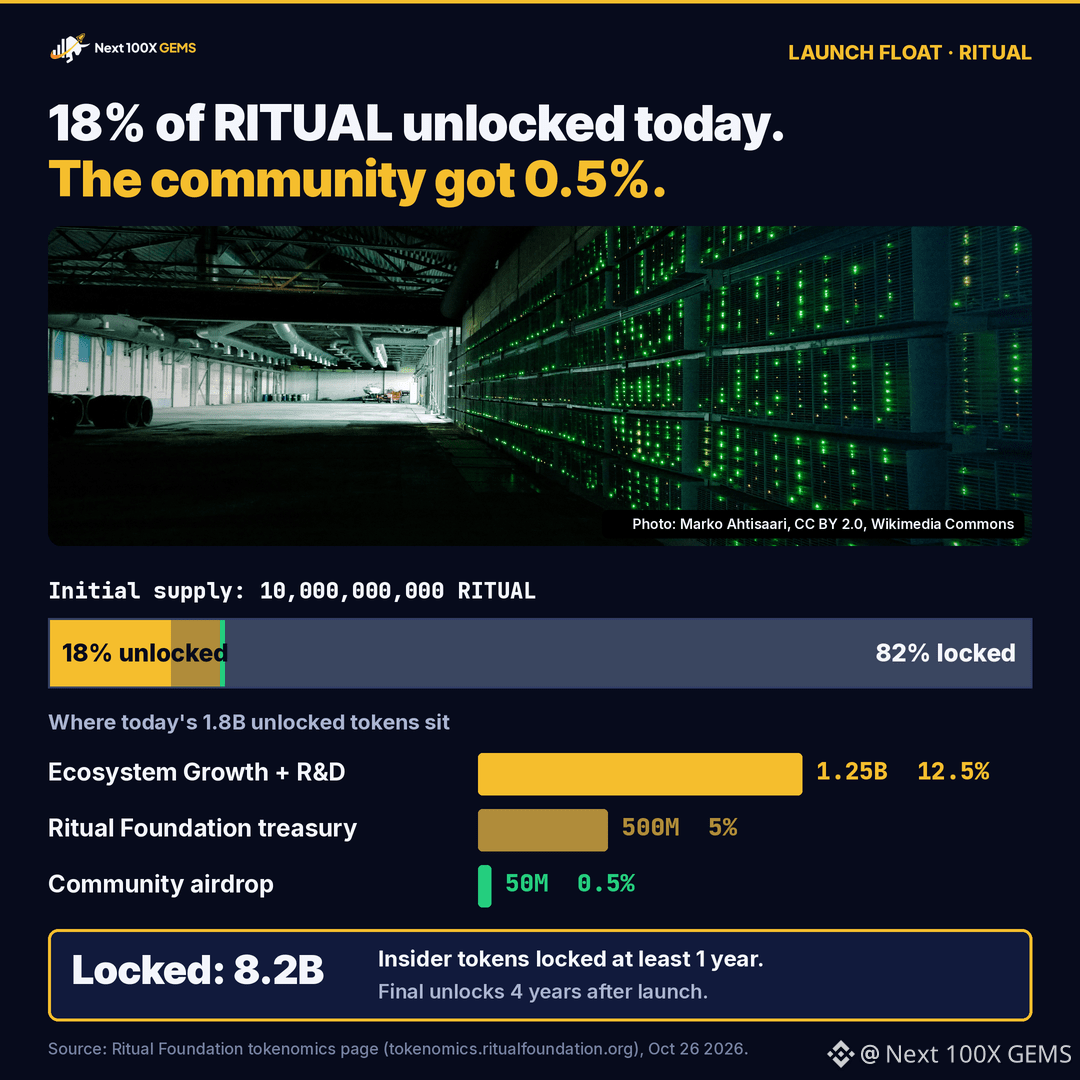
Ritual ist heute auf dem Mainnet live gegangen, und auf der Token-Seite steht, dass zum Launch 18 % von RITUAL freigeschaltet sind. Das sind 1,8 Mrd. Token von einem anfänglichen Gesamtangebot von 10 Mrd. Coinbase hat RITUAL-USD ebenfalls heute gelistet; der Handel beginnt, sobald die Liquiditätsbedingungen erfüllt sind.
Der Teil, den man sich zweimal ansehen sollte, ist die Frage, wo diese 1,8 Mrd. liegen. 1,25 Mrd. stammen aus dem Topf für Ökosystemwachstum und Forschung & Entwicklung, weitere 500 Mio. aus der Treasury der Ritual Foundation. Der Community-Airdrop an Node-Betreiber, Frenrug-Nutzer und langjährige Mitglieder umfasst 50 Mio. Token – 0,5 % des Gesamtangebots, vollständig freigeschaltet.
Damit werden 97 % des am ersten Tag verfügbaren Bestands von der Projektseite gehalten, nicht von Airdrop-Farmern. Wenn du diese Woche den Verkaufsdruck einschätzen willst, sind die Airdrop-Wallets nur eine kleine Sache. Entscheidend wäre, wenn Wallets der Foundation und des Ökosystems Token auf Börsen transferieren.
Die übrigen 8,2 Mrd. sind gesperrt. Core Contributors (29 %) und Labs-Investoren (11,3 %) müssen mindestens ein Jahr warten; die letzten Token werden vier Jahre nach dem Launch freigeschaltet. Außerdem ist das Angebot nicht gedeckelt: Die jährliche Ausgabe beträgt etwa 5 % und wird teilweise durch Burns der Basisgebühren ausgeglichen.
Bevor du mit dem Handel nach dem Listing beginnst, prüfe die Berechnung des verfügbaren Bestands – nicht nur den Chart.
$RITUAL
#Ritual #Tokenomics
NFA. DYOR.
Ritual ist heute auf dem Mainnet live gegangen, und auf der Token-Seite steht, dass zum Launch 18 % von RITUAL freigeschaltet sind. Das sind 1,8 Mrd. Token von einem anfänglichen Gesamtangebot von 10 Mrd. Coinbase hat RITUAL-USD ebenfalls heute gelistet; der Handel beginnt, sobald die Liquiditätsbedingungen erfüllt sind.
Der Teil, den man sich zweimal ansehen sollte, ist die Frage, wo diese 1,8 Mrd. liegen. 1,25 Mrd. stammen aus dem Topf für Ökosystemwachstum und Forschung & Entwicklung, weitere 500 Mio. aus der Treasury der Ritual Foundation. Der Community-Airdrop an Node-Betreiber, Frenrug-Nutzer und langjährige Mitglieder umfasst 50 Mio. Token – 0,5 % des Gesamtangebots, vollständig freigeschaltet.
Damit werden 97 % des am ersten Tag verfügbaren Bestands von der Projektseite gehalten, nicht von Airdrop-Farmern. Wenn du diese Woche den Verkaufsdruck einschätzen willst, sind die Airdrop-Wallets nur eine kleine Sache. Entscheidend wäre, wenn Wallets der Foundation und des Ökosystems Token auf Börsen transferieren.
Die übrigen 8,2 Mrd. sind gesperrt. Core Contributors (29 %) und Labs-Investoren (11,3 %) müssen mindestens ein Jahr warten; die letzten Token werden vier Jahre nach dem Launch freigeschaltet. Außerdem ist das Angebot nicht gedeckelt: Die jährliche Ausgabe beträgt etwa 5 % und wird teilweise durch Burns der Basisgebühren ausgeglichen.
Bevor du mit dem Handel nach dem Listing beginnst, prüfe die Berechnung des verfügbaren Bestands – nicht nur den Chart.
$RITUAL
#Ritual #Tokenomics
NFA. DYOR.
Der Teil, den man sich zweimal ansehen sollte, ist die Frage, wo diese 1,8 Mrd. liegen. 1,25 Mrd. stammen aus dem Topf für Ökosystemwachstum und Forschung & Entwicklung, weitere 500 Mio. aus der Treasury der Ritual Foundation. Der Community-Airdrop an Node-Betreiber, Frenrug-Nutzer und langjährige Mitglieder umfasst 50 Mio. Token – 0,5 % des Gesamtangebots, vollständig freigeschaltet.
Damit werden 97 % des am ersten Tag verfügbaren Bestands von der Projektseite gehalten, nicht von Airdrop-Farmern. Wenn du diese Woche den Verkaufsdruck einschätzen willst, sind die Airdrop-Wallets nur eine kleine Sache. Entscheidend wäre, wenn Wallets der Foundation und des Ökosystems Token auf Börsen transferieren.
Die übrigen 8,2 Mrd. sind gesperrt. Core Contributors (29 %) und Labs-Investoren (11,3 %) müssen mindestens ein Jahr warten; die letzten Token werden vier Jahre nach dem Launch freigeschaltet. Außerdem ist das Angebot nicht gedeckelt: Die jährliche Ausgabe beträgt etwa 5 % und wird teilweise durch Burns der Basisgebühren ausgeglichen.
Bevor du mit dem Handel nach dem Listing beginnst, prüfe die Berechnung des verfügbaren Bestands – nicht nur den Chart.
$RITUAL
#Ritual #Tokenomics
NFA. DYOR.
50

$SHELL | Warum sich Marktkapitalisierungsangaben zwischen Datenplattformen unterscheiden
Der Forschungsbericht ergab, dass die jüngsten $SHELL Schätzungen der Marktkapitalisierung zwischen etwa 6 Millionen und 10,4 Millionen US-Dollar lagen. Außerdem wurde auf erhebliche Unterschiede bei den Angaben zum Umlaufangebot hingewiesen: Einige Quellen nannten ungefähr 270 Millionen Token, andere rund 458 Millionen.
Diese Abweichung ist relevant, da die Marktkapitalisierung berechnet wird, indem der aktuelle Tokenpreis mit dem von der Datenplattform verwendeten Umlaufangebot multipliziert wird.
Wenn zwei Plattformen unterschiedliche Angaben zum Umlaufangebot verwenden, können ihre Schätzungen der Marktkapitalisierung voneinander abweichen, selbst wenn sie nahezu identische Preise anzeigen. Das bedeutet nicht automatisch, dass eine Plattform einen Fehler gemacht hat. Es bedeutet jedoch, dass die zugrunde liegende Methodik überprüft werden sollte.
Drei Begriffe sind besonders wichtig.
Die zirkulierende Marktkapitalisierung basiert auf der Schätzung der Plattform, wie viele Token derzeit im Umlauf sind.
Die vollständig verwässerte Bewertung (Fully Diluted Valuation, FDV) basiert im Allgemeinen auf dem Gesamtangebot oder dem maximalen Token-Angebot gemäß der jeweiligen Methodik.
Das Gesamtangebot bezeichnet die erstellten Token. Die genaue Behandlung gesperrter, verbrannter oder anderweitig eingeschränkter Token kann sich jedoch je nach Anbieter unterscheiden.
Diese Kennzahlen beantworten unterschiedliche Fragen. Die Marktkapitalisierung schätzt den Wert des Umlaufangebots zum aktuellen Preis, während die FDV veranschaulicht, wie die Bewertung bei einer umfassenderen Angebotsannahme aussehen würde. Keine der beiden Kennzahlen sagt für sich genommen aus, ob ein Token günstig oder teuer ist.
Notieren Sie beim Vergleich von Token die Quelle, den Zeitstempel, das Umlaufangebot und die Berechnungsmethode. Eine einheitliche Methodik macht Vergleiche deutlich aussagekräftiger.
#Tokenomics #MarketCap #DataQuality Krypto-Bildung Grundlagen
$SHELL | Warum sich Marktkapitalisierungsangaben zwischen Datenplattformen unterscheiden
Der Forschungsbericht ergab, dass die jüngsten $SHELL Schätzungen der Marktkapitalisierung zwischen etwa 6 Millionen und 10,4 Millionen US-Dollar lagen. Außerdem wurde auf erhebliche Unterschiede bei den Angaben zum Umlaufangebot hingewiesen: Einige Quellen nannten ungefähr 270 Millionen Token, andere rund 458 Millionen.
Diese Abweichung ist relevant, da die Marktkapitalisierung berechnet wird, indem der aktuelle Tokenpreis mit dem von der Datenplattform verwendeten Umlaufangebot multipliziert wird.
Wenn zwei Plattformen unterschiedliche Angaben zum Umlaufangebot verwenden, können ihre Schätzungen der Marktkapitalisierung voneinander abweichen, selbst wenn sie nahezu identische Preise anzeigen. Das bedeutet nicht automatisch, dass eine Plattform einen Fehler gemacht hat. Es bedeutet jedoch, dass die zugrunde liegende Methodik überprüft werden sollte.
Drei Begriffe sind besonders wichtig.
Die zirkulierende Marktkapitalisierung basiert auf der Schätzung der Plattform, wie viele Token derzeit im Umlauf sind.
Die vollständig verwässerte Bewertung (Fully Diluted Valuation, FDV) basiert im Allgemeinen auf dem Gesamtangebot oder dem maximalen Token-Angebot gemäß der jeweiligen Methodik.
Das Gesamtangebot bezeichnet die erstellten Token. Die genaue Behandlung gesperrter, verbrannter oder anderweitig eingeschränkter Token kann sich jedoch je nach Anbieter unterscheiden.
Diese Kennzahlen beantworten unterschiedliche Fragen. Die Marktkapitalisierung schätzt den Wert des Umlaufangebots zum aktuellen Preis, während die FDV veranschaulicht, wie die Bewertung bei einer umfassenderen Angebotsannahme aussehen würde. Keine der beiden Kennzahlen sagt für sich genommen aus, ob ein Token günstig oder teuer ist.
Notieren Sie beim Vergleich von Token die Quelle, den Zeitstempel, das Umlaufangebot und die Berechnungsmethode. Eine einheitliche Methodik macht Vergleiche deutlich aussagekräftiger.
#Tokenomics #MarketCap #DataQuality Krypto-Bildung Grundlagen
Der Forschungsbericht ergab, dass die jüngsten $SHELL Schätzungen der Marktkapitalisierung zwischen etwa 6 Millionen und 10,4 Millionen US-Dollar lagen. Außerdem wurde auf erhebliche Unterschiede bei den Angaben zum Umlaufangebot hingewiesen: Einige Quellen nannten ungefähr 270 Millionen Token, andere rund 458 Millionen.
Diese Abweichung ist relevant, da die Marktkapitalisierung berechnet wird, indem der aktuelle Tokenpreis mit dem von der Datenplattform verwendeten Umlaufangebot multipliziert wird.
Wenn zwei Plattformen unterschiedliche Angaben zum Umlaufangebot verwenden, können ihre Schätzungen der Marktkapitalisierung voneinander abweichen, selbst wenn sie nahezu identische Preise anzeigen. Das bedeutet nicht automatisch, dass eine Plattform einen Fehler gemacht hat. Es bedeutet jedoch, dass die zugrunde liegende Methodik überprüft werden sollte.
Drei Begriffe sind besonders wichtig.
Die zirkulierende Marktkapitalisierung basiert auf der Schätzung der Plattform, wie viele Token derzeit im Umlauf sind.
Die vollständig verwässerte Bewertung (Fully Diluted Valuation, FDV) basiert im Allgemeinen auf dem Gesamtangebot oder dem maximalen Token-Angebot gemäß der jeweiligen Methodik.
Das Gesamtangebot bezeichnet die erstellten Token. Die genaue Behandlung gesperrter, verbrannter oder anderweitig eingeschränkter Token kann sich jedoch je nach Anbieter unterscheiden.
Diese Kennzahlen beantworten unterschiedliche Fragen. Die Marktkapitalisierung schätzt den Wert des Umlaufangebots zum aktuellen Preis, während die FDV veranschaulicht, wie die Bewertung bei einer umfassenderen Angebotsannahme aussehen würde. Keine der beiden Kennzahlen sagt für sich genommen aus, ob ein Token günstig oder teuer ist.
Notieren Sie beim Vergleich von Token die Quelle, den Zeitstempel, das Umlaufangebot und die Berechnungsmethode. Eine einheitliche Methodik macht Vergleiche deutlich aussagekräftiger.
#Tokenomics #MarketCap #DataQuality Krypto-Bildung Grundlagen

1
33
·
--
Übersetzung ansehen
Traders staring exclusively at the spot ticker hovering near 740.87 are missing the structural plumbing that is quietly altering the entire market dynamics for $BNB. While legacy altcoins bleed liquidity into heavy vesting schedules and recurring team unlocks, the Binance ecosystem operates in a completely different reality. The era of early investor dilution is long gone, replaced by a ruthless, automated supply contraction that changes how base layer economics function.
The core of this supply squeeze comes down to the relentless velocity of the BNB Auto-Burn mechanism paired with massive staking participation. When you calculate the actual circulating float against the volume of protocol fees being permanently removed from circulation every quarter, the net issuance rate dips deep into negative territory. Unlike inflationary layer-ones that constantly fight sell pressure from emissions, BNB runs on a deflationary engine driven by real platform revenue recycling.
On top of the burn mechanics, a staggering percentage of the total supply is currently locked up in validator nodes and ecosystem staking contracts. This creates an intense supply vacuum on open order books. Institutional money isn't chasing short-term hype waves here; they are positioning themselves around the base layer maths where available tradeable float shrinks quarter after quarter. With no looming cliff unlocks or venture capital distribution overhangs left to pressure spot markets, the supply-demand imbalance becomes mathematically severe.
Are you factoring these deep deflationary metrics into your long-term thesis, or are you still just watching the order book?
#TokenUnlocks #Tokenomics
Traders staring exclusively at the spot ticker hovering near 740.87 are missing the structural plumbing that is quietly altering the entire market dynamics for $BNB . While legacy altcoins bleed liquidity into heavy vesting schedules and recurring team unlocks, the Binance ecosystem operates in a completely different reality. The era of early investor dilution is long gone, replaced by a ruthless, automated supply contraction that changes how base layer economics function.
The core of this supply squeeze comes down to the relentless velocity of the BNB Auto-Burn mechanism paired with massive staking participation. When you calculate the actual circulating float against the volume of protocol fees being permanently removed from circulation every quarter, the net issuance rate dips deep into negative territory. Unlike inflationary layer-ones that constantly fight sell pressure from emissions, BNB runs on a deflationary engine driven by real platform revenue recycling.
On top of the burn mechanics, a staggering percentage of the total supply is currently locked up in validator nodes and ecosystem staking contracts. This creates an intense supply vacuum on open order books. Institutional money isn't chasing short-term hype waves here; they are positioning themselves around the base layer maths where available tradeable float shrinks quarter after quarter. With no looming cliff unlocks or venture capital distribution overhangs left to pressure spot markets, the supply-demand imbalance becomes mathematically severe.
Are you factoring these deep deflationary metrics into your long-term thesis, or are you still just watching the order book?
#TokenUnlocks #Tokenomics
The core of this supply squeeze comes down to the relentless velocity of the BNB Auto-Burn mechanism paired with massive staking participation. When you calculate the actual circulating float against the volume of protocol fees being permanently removed from circulation every quarter, the net issuance rate dips deep into negative territory. Unlike inflationary layer-ones that constantly fight sell pressure from emissions, BNB runs on a deflationary engine driven by real platform revenue recycling.
On top of the burn mechanics, a staggering percentage of the total supply is currently locked up in validator nodes and ecosystem staking contracts. This creates an intense supply vacuum on open order books. Institutional money isn't chasing short-term hype waves here; they are positioning themselves around the base layer maths where available tradeable float shrinks quarter after quarter. With no looming cliff unlocks or venture capital distribution overhangs left to pressure spot markets, the supply-demand imbalance becomes mathematically severe.
Are you factoring these deep deflationary metrics into your long-term thesis, or are you still just watching the order book?
#TokenUnlocks #Tokenomics
56

·
--
🔥 $APT ANGEBOTSVERKNAPPUNG BAHNT SICH AN: JÄHRLICHE VERBRENNUNGSRATE ERREICHT 1,8 MIO. TOKEN! 📊
Erfahrene Anleger beobachten die Angebotsdynamik, lange bevor sich die Verknappung im Preis widerspiegelt. $APT hat allein im August 152,9 Tsd. Token vernichtet und damit die Gesamtzahl der auf dem Mainnet verbrannten Token auf über 1,7 Millionen erhöht. 📊
Bei einer durchschnittlichen Transaktionsgebühr von gerade einmal 0,0005 $ nimmt die Netzwerknutzung zu. Gleichzeitig wird eine jährliche Verbrennungsrate von 1,8 Millionen APT prognostiziert. 🔍 Der anhaltende Abwärtsdruck auf das Angebot in Kombination mit extrem niedrigen Nutzerkosten schafft starken strukturellen Rückenwind für langfristige Momentum-Setups.
🤔 Glaubst du, dass dieser fortlaufende Verbrennungsmechanismus bei $APT einen makroökonomischen Angebotsschock auslösen wird, oder wartest du erst auf eine Bestätigung durch ein höheres Transaktionsvolumen? 👇
⚠️ Keine Finanzberatung. Achte stets auf dein Risikomanagement. 🛡️
🏷️ #APT #Layer1 #Crypto #Tokenomics
⚡ 💎
🔥 $APT ANGEBOTSVERKNAPPUNG BAHNT SICH AN: JÄHRLICHE VERBRENNUNGSRATE ERREICHT 1,8 MIO. TOKEN! 📊
Erfahrene Anleger beobachten die Angebotsdynamik, lange bevor sich die Verknappung im Preis widerspiegelt. $APT hat allein im August 152,9 Tsd. Token vernichtet und damit die Gesamtzahl der auf dem Mainnet verbrannten Token auf über 1,7 Millionen erhöht. 📊
Bei einer durchschnittlichen Transaktionsgebühr von gerade einmal 0,0005 $ nimmt die Netzwerknutzung zu. Gleichzeitig wird eine jährliche Verbrennungsrate von 1,8 Millionen APT prognostiziert. 🔍 Der anhaltende Abwärtsdruck auf das Angebot in Kombination mit extrem niedrigen Nutzerkosten schafft starken strukturellen Rückenwind für langfristige Momentum-Setups.
🤔 Glaubst du, dass dieser fortlaufende Verbrennungsmechanismus bei $APT einen makroökonomischen Angebotsschock auslösen wird, oder wartest du erst auf eine Bestätigung durch ein höheres Transaktionsvolumen? 👇
⚠️ Keine Finanzberatung. Achte stets auf dein Risikomanagement. 🛡️
🏷️ #APT #Layer1 #Crypto #Tokenomics
⚡ 💎
Erfahrene Anleger beobachten die Angebotsdynamik, lange bevor sich die Verknappung im Preis widerspiegelt. $APT hat allein im August 152,9 Tsd. Token vernichtet und damit die Gesamtzahl der auf dem Mainnet verbrannten Token auf über 1,7 Millionen erhöht. 📊
Bei einer durchschnittlichen Transaktionsgebühr von gerade einmal 0,0005 $ nimmt die Netzwerknutzung zu. Gleichzeitig wird eine jährliche Verbrennungsrate von 1,8 Millionen APT prognostiziert. 🔍 Der anhaltende Abwärtsdruck auf das Angebot in Kombination mit extrem niedrigen Nutzerkosten schafft starken strukturellen Rückenwind für langfristige Momentum-Setups.
🤔 Glaubst du, dass dieser fortlaufende Verbrennungsmechanismus bei $APT einen makroökonomischen Angebotsschock auslösen wird, oder wartest du erst auf eine Bestätigung durch ein höheres Transaktionsvolumen? 👇
⚠️ Keine Finanzberatung. Achte stets auf dein Risikomanagement. 🛡️
🏷️ #APT #Layer1 #Crypto #Tokenomics
⚡ 💎
20

·
--
Bullisch
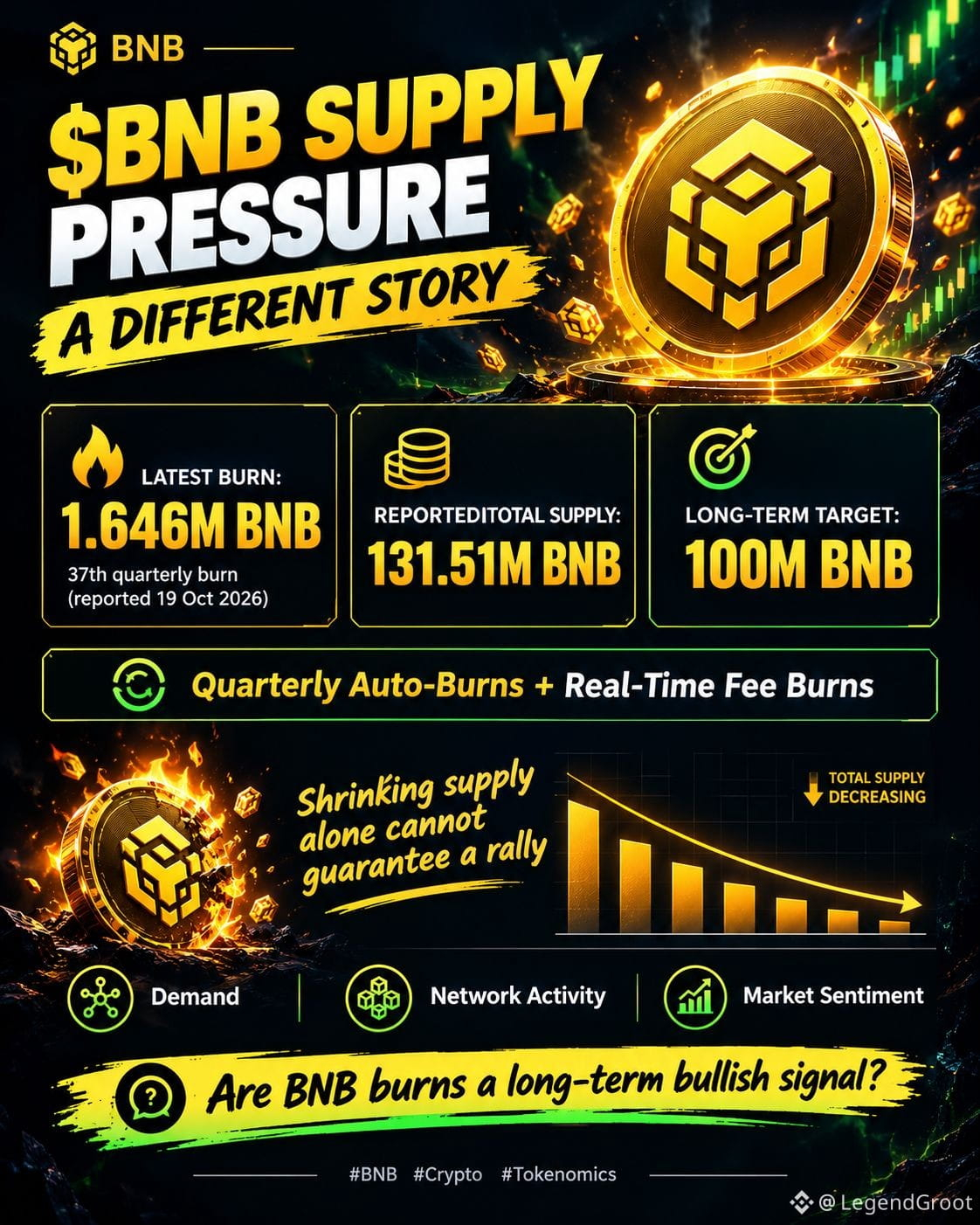
🚨 $BNB DER ANGEBOTSDRUCK ERZÄHLT EINE ANDERE GESCHICHTE!
Im Gegensatz zu Token mit umfangreichen Freigabeplänen ist BNB darauf ausgelegt, das Angebot durch vierteljährliche Auto-Burns und Echtzeit-Gebührenverbrennungen zu reduzieren.
🔥 Letzter Burn: 1.646M BNB
📉 Gemeldetes Gesamtangebot: 131.51M BNB
🎯 Langfristiges Ziel: 100M BNB
Doch denk daran: Ein schrumpfendes Angebot allein kann keinen Kursanstieg garantieren. Nachfrage, Netzwerkaktivität und Marktstimmung spielen weiterhin eine Rolle.
Sind BNB-Burns ein langfristig bullisches Signal? 👀
#BNB #Crypto #Tokenomics
🚨 $BNB DER ANGEBOTSDRUCK ERZÄHLT EINE ANDERE GESCHICHTE!
Im Gegensatz zu Token mit umfangreichen Freigabeplänen ist BNB darauf ausgelegt, das Angebot durch vierteljährliche Auto-Burns und Echtzeit-Gebührenverbrennungen zu reduzieren.
🔥 Letzter Burn: 1.646M BNB
📉 Gemeldetes Gesamtangebot: 131.51M BNB
🎯 Langfristiges Ziel: 100M BNB
Doch denk daran: Ein schrumpfendes Angebot allein kann keinen Kursanstieg garantieren. Nachfrage, Netzwerkaktivität und Marktstimmung spielen weiterhin eine Rolle.
Sind BNB-Burns ein langfristig bullisches Signal? 👀
#BNB #Crypto #Tokenomics
Im Gegensatz zu Token mit umfangreichen Freigabeplänen ist BNB darauf ausgelegt, das Angebot durch vierteljährliche Auto-Burns und Echtzeit-Gebührenverbrennungen zu reduzieren.
🔥 Letzter Burn: 1.646M BNB
📉 Gemeldetes Gesamtangebot: 131.51M BNB
🎯 Langfristiges Ziel: 100M BNB
Doch denk daran: Ein schrumpfendes Angebot allein kann keinen Kursanstieg garantieren. Nachfrage, Netzwerkaktivität und Marktstimmung spielen weiterhin eine Rolle.
Sind BNB-Burns ein langfristig bullisches Signal? 👀
#BNB #Crypto #Tokenomics
172

·
--
💡 Ein Krypto-Coin für 0,01 $ ist nicht immer günstig!
Viele Anfänger sehen einen Coin, der 0,01 $ kostet, und denken, dass er enormes Wachstumspotenzial hat.
Doch der Preis eines einzelnen Coins erzählt nicht die ganze Geschichte. 👇
📊 Beispiel:
🔹 Coin A: Preis von 0,01 $ × 100 Milliarden Token = 1 Milliarde $ Marktkapitalisierung.
🔹 Coin B: Preis von 100 $ × 10 Millionen Token = 1 Milliarde $ Marktkapitalisierung.
Beide haben dieselbe Marktkapitalisierung – obwohl der Preis pro Coin sehr unterschiedlich ist.
Bevor du investierst, solltest du Folgendes prüfen:
✅ Marktkapitalisierung
✅ Umlaufmenge
✅ Vollständig verwässerte Bewertung (FDV)
✅ Token-Freischaltungen und Inflation des Angebots
Ein niedriger Preis pro Token bedeutet nicht automatisch, dass ein Coin unterbewertet ist.
Prüfst du vor dem Kauf eines Coins die Marktkapitalisierung oder achtest du hauptsächlich auf den Preis? 👇
Folge mir für tägliche Krypto-Einblicke und Markt-Updates. 🚀📊
#CryptoEducation #MarketCap #Altcoins #Tokenomics #BinanceSquare
💡 Ein Krypto-Coin für 0,01 $ ist nicht immer günstig!
Viele Anfänger sehen einen Coin, der 0,01 $ kostet, und denken, dass er enormes Wachstumspotenzial hat.
Doch der Preis eines einzelnen Coins erzählt nicht die ganze Geschichte. 👇
📊 Beispiel:
🔹 Coin A: Preis von 0,01 $ × 100 Milliarden Token = 1 Milliarde $ Marktkapitalisierung.
🔹 Coin B: Preis von 100 $ × 10 Millionen Token = 1 Milliarde $ Marktkapitalisierung.
Beide haben dieselbe Marktkapitalisierung – obwohl der Preis pro Coin sehr unterschiedlich ist.
Bevor du investierst, solltest du Folgendes prüfen:
✅ Marktkapitalisierung
✅ Umlaufmenge
✅ Vollständig verwässerte Bewertung (FDV)
✅ Token-Freischaltungen und Inflation des Angebots
Ein niedriger Preis pro Token bedeutet nicht automatisch, dass ein Coin unterbewertet ist.
Prüfst du vor dem Kauf eines Coins die Marktkapitalisierung oder achtest du hauptsächlich auf den Preis? 👇
Folge mir für tägliche Krypto-Einblicke und Markt-Updates. 🚀📊
#CryptoEducation #MarketCap #Altcoins #Tokenomics #BinanceSquare
Viele Anfänger sehen einen Coin, der 0,01 $ kostet, und denken, dass er enormes Wachstumspotenzial hat.
Doch der Preis eines einzelnen Coins erzählt nicht die ganze Geschichte. 👇
📊 Beispiel:
🔹 Coin A: Preis von 0,01 $ × 100 Milliarden Token = 1 Milliarde $ Marktkapitalisierung.
🔹 Coin B: Preis von 100 $ × 10 Millionen Token = 1 Milliarde $ Marktkapitalisierung.
Beide haben dieselbe Marktkapitalisierung – obwohl der Preis pro Coin sehr unterschiedlich ist.
Bevor du investierst, solltest du Folgendes prüfen:
✅ Marktkapitalisierung
✅ Umlaufmenge
✅ Vollständig verwässerte Bewertung (FDV)
✅ Token-Freischaltungen und Inflation des Angebots
Ein niedriger Preis pro Token bedeutet nicht automatisch, dass ein Coin unterbewertet ist.
Prüfst du vor dem Kauf eines Coins die Marktkapitalisierung oder achtest du hauptsächlich auf den Preis? 👇
Folge mir für tägliche Krypto-Einblicke und Markt-Updates. 🚀📊
#CryptoEducation #MarketCap #Altcoins #Tokenomics #BinanceSquare
1
106
·
--
Übersetzung ansehen
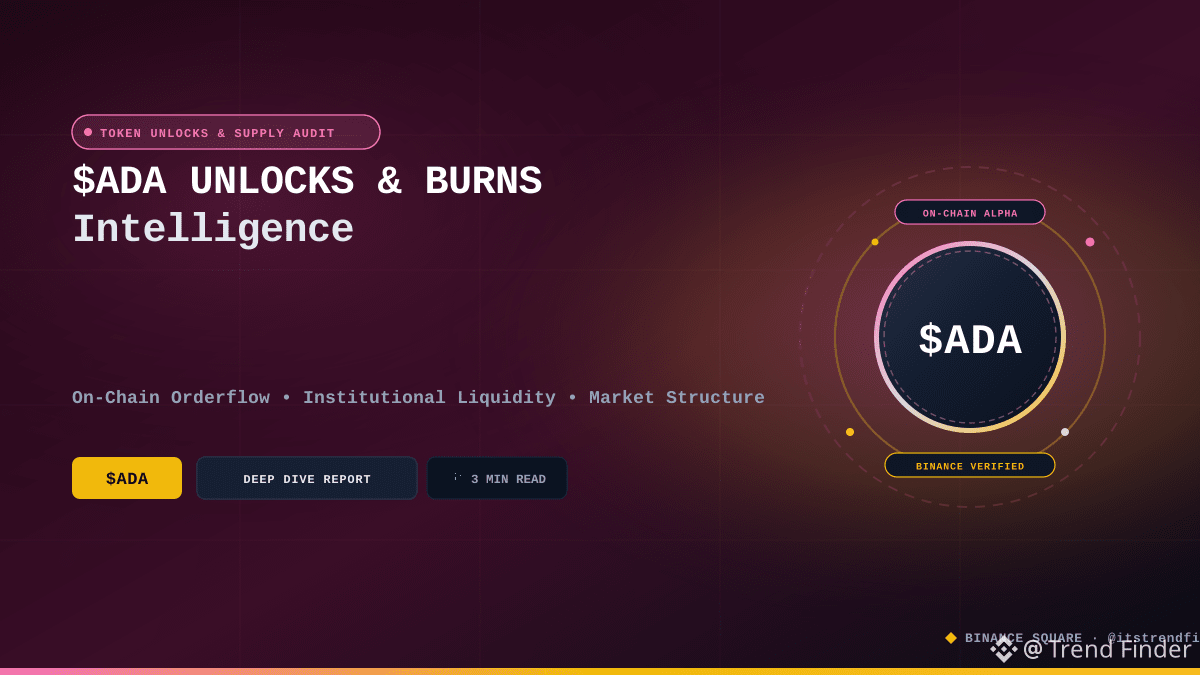
Checking $ADA supply dynamics today at 0.2054. The ~70% staking ratio is doing heavy lifting by keeping effective circulation super tight. No heavy VC vesting cliffs ahead means low net inflation pressure. Healthy setup for $BTC correlation.
#TokenUnlocks #Tokenomics #ADA
Checking $ADA supply dynamics today at 0.2054. The ~70% staking ratio is doing heavy lifting by keeping effective circulation super tight. No heavy VC vesting cliffs ahead means low net inflation pressure. Healthy setup for $BTC correlation.
#TokenUnlocks #Tokenomics #ADA
#TokenUnlocks #Tokenomics #ADA
3

🚨 TOKEN-FREIGABEN: BLICKE ÜBER DIE SCHLAGZEILE HINAUS.
.
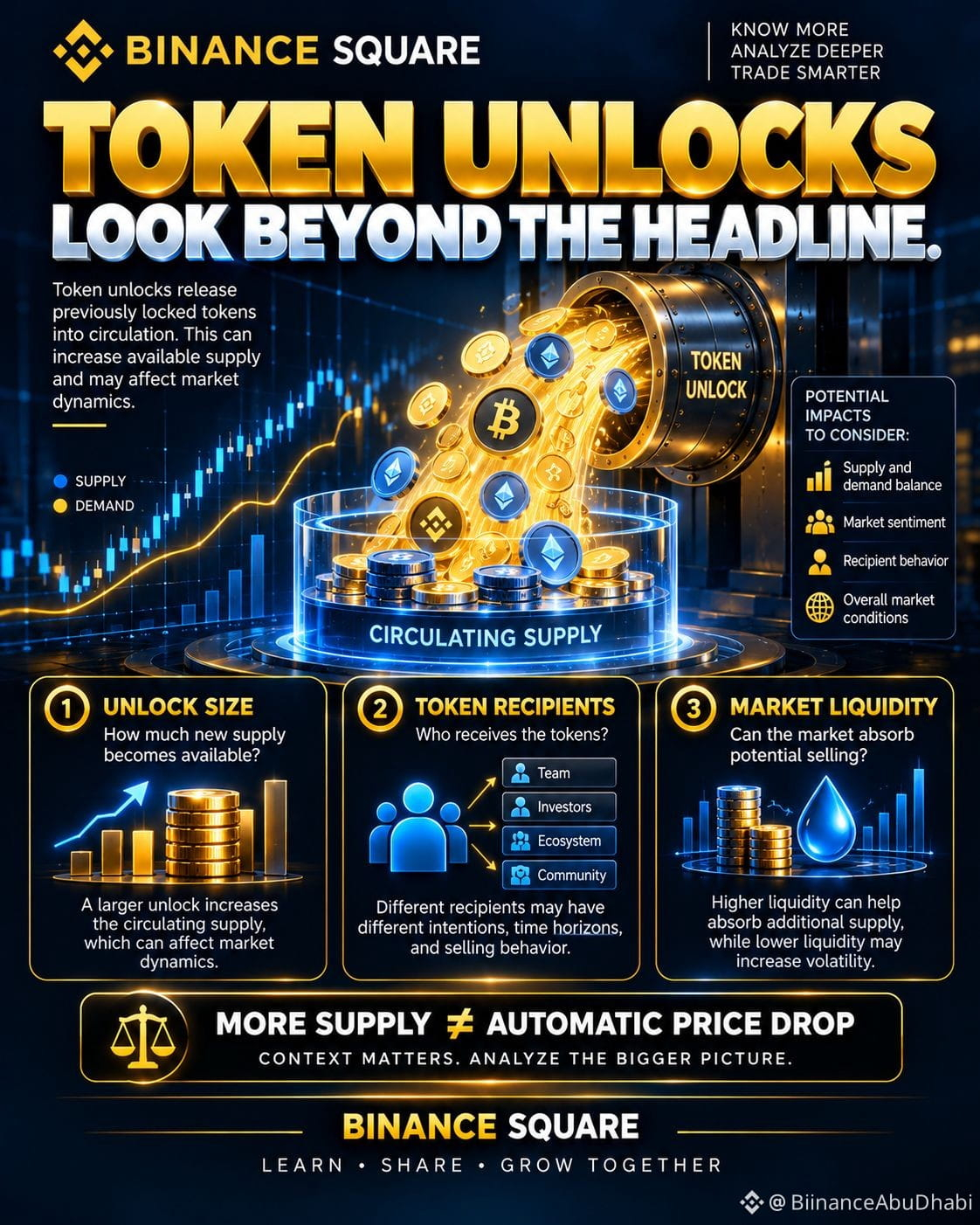
Eine planmäßige Token-Freigabe bedeutet nicht automatisch einen Kurssturz. Sie kann jedoch das Verhältnis zwischen Angebot und Nachfrage verändern.
.
Prüfe vor dem Handel drei Dinge:
.
🔹 Umfang der Freigabe: Wie viel des umlaufenden Angebots wird verfügbar?
🔹 Empfänger: Wer erhält die Token, und was könnten sie damit tun?
🔹 Marktliquidität: Kann der Markt möglichen Verkaufsdruck auffangen?
.
Dass mehr Token verfügbar werden, garantiert keinen Ausverkauf. Der Kontext ist wichtiger als die Schlagzeilen.
.
Kluge Trader untersuchen das Angebot – nicht nur die Stimmung.
.
Worauf achtest du zuerst, wenn du eine Token-Freigabe recherchierst?
.
#BTC $BTC #Tokenomics #CryptoEducation #TradingTips #BinanceSquare
🚨 TOKEN-FREIGABEN: BLICKE ÜBER DIE SCHLAGZEILE HINAUS.
.
Eine planmäßige Token-Freigabe bedeutet nicht automatisch einen Kurssturz. Sie kann jedoch das Verhältnis zwischen Angebot und Nachfrage verändern.
.
Prüfe vor dem Handel drei Dinge:
.
🔹 Umfang der Freigabe: Wie viel des umlaufenden Angebots wird verfügbar?
🔹 Empfänger: Wer erhält die Token, und was könnten sie damit tun?
🔹 Marktliquidität: Kann der Markt möglichen Verkaufsdruck auffangen?
.
Dass mehr Token verfügbar werden, garantiert keinen Ausverkauf. Der Kontext ist wichtiger als die Schlagzeilen.
.
Kluge Trader untersuchen das Angebot – nicht nur die Stimmung.
.
Worauf achtest du zuerst, wenn du eine Token-Freigabe recherchierst?
.
#BTC $BTC #Tokenomics #CryptoEducation #TradingTips #BinanceSquare
.
Eine planmäßige Token-Freigabe bedeutet nicht automatisch einen Kurssturz. Sie kann jedoch das Verhältnis zwischen Angebot und Nachfrage verändern.
.
Prüfe vor dem Handel drei Dinge:
.
🔹 Umfang der Freigabe: Wie viel des umlaufenden Angebots wird verfügbar?
🔹 Empfänger: Wer erhält die Token, und was könnten sie damit tun?
🔹 Marktliquidität: Kann der Markt möglichen Verkaufsdruck auffangen?
.
Dass mehr Token verfügbar werden, garantiert keinen Ausverkauf. Der Kontext ist wichtiger als die Schlagzeilen.
.
Kluge Trader untersuchen das Angebot – nicht nur die Stimmung.
.
Worauf achtest du zuerst, wenn du eine Token-Freigabe recherchierst?
.
#BTC $BTC #Tokenomics #CryptoEducation #TradingTips #BinanceSquare
16

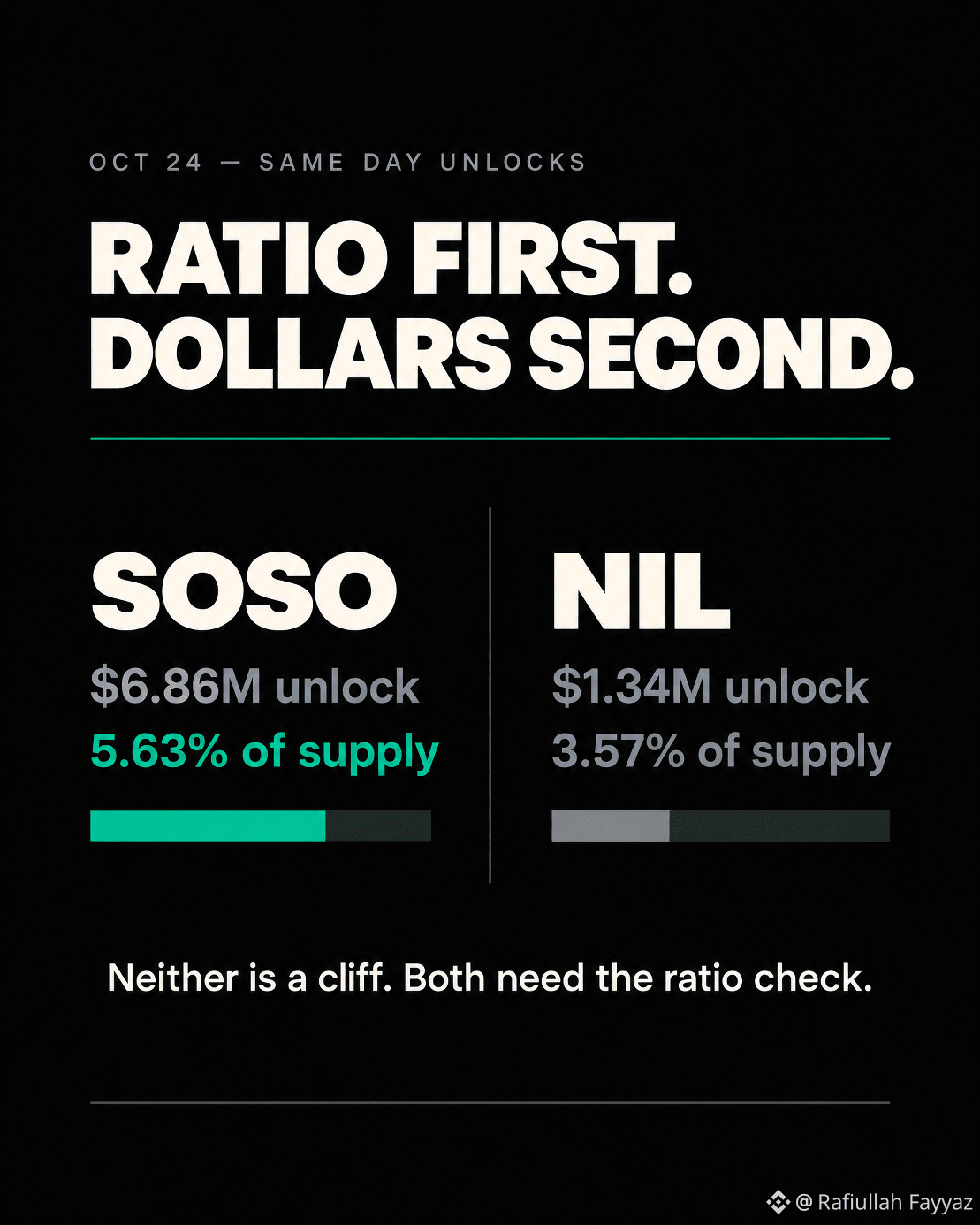
SOSO hat heute Token im Wert von 6,86 Millionen US-Dollar freigegeben. NIL gibt Token im Wert von 1,34 Millionen US-Dollar frei.
Der Dollarbetrag von SOSO ist fünfmal so hoch. Die Freigabe von SOSO entspricht jedoch 5,63 % des umlaufenden Angebots. Bei NIL sind es 3,57 %.
Bei keinem der beiden handelt es sich um eine Cliff-Freigabe. Beide Quoten sind relativ niedrig. Trotzdem ist der Vergleich wichtig.
Die meisten prüfen Token-Freigaben anhand ihres Dollarwerts. Das ist der falsche Maßstab. Eine Freigabe von 50 Mio. US-Dollar bei einem Projekt mit einem Wert von einer Milliarde US-Dollar bedeutet eine Verwässerung von 5 %. Eine Freigabe von 5 Mio. US-Dollar bei einem Projekt mit einem Wert von 40 Mio. US-Dollar entspricht 12,5 %. Der niedrigere Dollarbetrag ist das größere Ereignis.
SOSO und NIL liegen beide im mittleren Bereich. Doch der Maßstab ist derselbe: zuerst die Quote, dann die Dollarbeträge.
$SOSO $NIL
#crypto #EducationalContent #Tokenomics #unlocks #BinanceSquare
{spot}(NILUSDT)
SOSO hat heute Token im Wert von 6,86 Millionen US-Dollar freigegeben. NIL gibt Token im Wert von 1,34 Millionen US-Dollar frei.
Der Dollarbetrag von SOSO ist fünfmal so hoch. Die Freigabe von SOSO entspricht jedoch 5,63 % des umlaufenden Angebots. Bei NIL sind es 3,57 %.
Bei keinem der beiden handelt es sich um eine Cliff-Freigabe. Beide Quoten sind relativ niedrig. Trotzdem ist der Vergleich wichtig.
Die meisten prüfen Token-Freigaben anhand ihres Dollarwerts. Das ist der falsche Maßstab. Eine Freigabe von 50 Mio. US-Dollar bei einem Projekt mit einem Wert von einer Milliarde US-Dollar bedeutet eine Verwässerung von 5 %. Eine Freigabe von 5 Mio. US-Dollar bei einem Projekt mit einem Wert von 40 Mio. US-Dollar entspricht 12,5 %. Der niedrigere Dollarbetrag ist das größere Ereignis.
SOSO und NIL liegen beide im mittleren Bereich. Doch der Maßstab ist derselbe: zuerst die Quote, dann die Dollarbeträge.
$SOSO $NIL
#crypto #EducationalContent #Tokenomics #unlocks #BinanceSquare
Der Dollarbetrag von SOSO ist fünfmal so hoch. Die Freigabe von SOSO entspricht jedoch 5,63 % des umlaufenden Angebots. Bei NIL sind es 3,57 %.
Bei keinem der beiden handelt es sich um eine Cliff-Freigabe. Beide Quoten sind relativ niedrig. Trotzdem ist der Vergleich wichtig.
Die meisten prüfen Token-Freigaben anhand ihres Dollarwerts. Das ist der falsche Maßstab. Eine Freigabe von 50 Mio. US-Dollar bei einem Projekt mit einem Wert von einer Milliarde US-Dollar bedeutet eine Verwässerung von 5 %. Eine Freigabe von 5 Mio. US-Dollar bei einem Projekt mit einem Wert von 40 Mio. US-Dollar entspricht 12,5 %. Der niedrigere Dollarbetrag ist das größere Ereignis.
SOSO und NIL liegen beide im mittleren Bereich. Doch der Maßstab ist derselbe: zuerst die Quote, dann die Dollarbeträge.
$SOSO $NIL
#crypto #EducationalContent #Tokenomics #unlocks #BinanceSquare
1
261

·
--
Die Tokenökonomie des Backpack(BP)-Tokens wird erneut intensiv diskutiert(2026-10-23):Gesamtangebot 1 Milliarde Token; zum TGE werden 25 % freigegeben(240 Millionen für Punkte-Nutzer + 10 Millionen für Mad Lads);die verbleibenden 37,5 % entfallen auf den Pre-IPO-Meilensteinpool und 37,5 % auf die Post-IPO-Treasury(nach dem IPO mindestens 1 Jahr gesperrt)。Gründer / Führungskräfte / Investoren: keine Token, keine Warrants. Staking gewährt Gebührenrabatte; Pre-IPO-Token können einem Eigenkapitalpool von bis zu etwa ~20 % zugeordnet werden. Aktueller Preis etwa ~$0.99, Staking-Quote etwa ~56.4 %(etwa 140.88 Millionen Token)。
Wichtige Aspekte des Mechanismus: Die Struktur kombiniert „keine Zuteilung an Insider“ mit einem zweigleisigen Modell aus Meilensteinpool und Treasury. Dadurch wird die Freigabe des Angebots an die Governance nach dem Börsengang geknüpft, statt an einen traditionellen linearen Freigabeplan für Team und VC. Eine Staking-Quote von über 50 % deutet auf eine starke Bindung an die Umlaufbedingungen und Gebühren hin. Weiter zu beobachten sind jedoch das Tempo, mit dem die Meilensteine erreicht werden, und die Einzelheiten der Umsetzung der Eigenkapitalzuordnung.
Nächster Beobachtungspunkt: Werden die Auslösebedingungen für die Pre-IPO-Meilensteine veröffentlicht und überprüfbar sein, und bleibt die Staking-Quote auch in volatilen Märkten bei 50 % oder höher?
Quellen: Crypto Briefing https://cryptobriefing.com/backpack-founder-extreme-tokenomics-no-insider-tokens/ ;Backpack https://backpack.exchange/bp ;Backpack offiziell https://x.com/Backpack/status/2113643108449837214
#Backpack #BP #Web3 #Tokenomics $BP
Nur zu Informationszwecken; stellt keine Anlageberatung dar / NFA
Die Tokenökonomie des Backpack(BP)-Tokens wird erneut intensiv diskutiert(2026-10-23):Gesamtangebot 1 Milliarde Token; zum TGE werden 25 % freigegeben(240 Millionen für Punkte-Nutzer + 10 Millionen für Mad Lads);die verbleibenden 37,5 % entfallen auf den Pre-IPO-Meilensteinpool und 37,5 % auf die Post-IPO-Treasury(nach dem IPO mindestens 1 Jahr gesperrt)。Gründer / Führungskräfte / Investoren: keine Token, keine Warrants. Staking gewährt Gebührenrabatte; Pre-IPO-Token können einem Eigenkapitalpool von bis zu etwa ~20 % zugeordnet werden. Aktueller Preis etwa ~$0.99, Staking-Quote etwa ~56.4 %(etwa 140.88 Millionen Token)。
Wichtige Aspekte des Mechanismus: Die Struktur kombiniert „keine Zuteilung an Insider“ mit einem zweigleisigen Modell aus Meilensteinpool und Treasury. Dadurch wird die Freigabe des Angebots an die Governance nach dem Börsengang geknüpft, statt an einen traditionellen linearen Freigabeplan für Team und VC. Eine Staking-Quote von über 50 % deutet auf eine starke Bindung an die Umlaufbedingungen und Gebühren hin. Weiter zu beobachten sind jedoch das Tempo, mit dem die Meilensteine erreicht werden, und die Einzelheiten der Umsetzung der Eigenkapitalzuordnung.
Nächster Beobachtungspunkt: Werden die Auslösebedingungen für die Pre-IPO-Meilensteine veröffentlicht und überprüfbar sein, und bleibt die Staking-Quote auch in volatilen Märkten bei 50 % oder höher?
Quellen: Crypto Briefing https://cryptobriefing.com/backpack-founder-extreme-tokenomics-no-insider-tokens/ ;Backpack https://backpack.exchange/bp ;Backpack offiziell https://x.com/Backpack/status/2113643108449837214
#Backpack #BP #Web3 #Tokenomics $BP
Nur zu Informationszwecken; stellt keine Anlageberatung dar / NFA
Wichtige Aspekte des Mechanismus: Die Struktur kombiniert „keine Zuteilung an Insider“ mit einem zweigleisigen Modell aus Meilensteinpool und Treasury. Dadurch wird die Freigabe des Angebots an die Governance nach dem Börsengang geknüpft, statt an einen traditionellen linearen Freigabeplan für Team und VC. Eine Staking-Quote von über 50 % deutet auf eine starke Bindung an die Umlaufbedingungen und Gebühren hin. Weiter zu beobachten sind jedoch das Tempo, mit dem die Meilensteine erreicht werden, und die Einzelheiten der Umsetzung der Eigenkapitalzuordnung.
Nächster Beobachtungspunkt: Werden die Auslösebedingungen für die Pre-IPO-Meilensteine veröffentlicht und überprüfbar sein, und bleibt die Staking-Quote auch in volatilen Märkten bei 50 % oder höher?
Quellen: Crypto Briefing https://cryptobriefing.com/backpack-founder-extreme-tokenomics-no-insider-tokens/ ;Backpack https://backpack.exchange/bp ;Backpack offiziell https://x.com/Backpack/status/2113643108449837214
#Backpack #BP #Web3 #Tokenomics $BP
Nur zu Informationszwecken; stellt keine Anlageberatung dar / NFA
26
·
--
Bullisch
5 FRAGEN, DIE DU BEANTWORTEN SOLLTEST, BEVOR DU IN EINEN TOKEN INVESTIERST 🔍
Schau nicht nur auf den Kurschart und verlass dich nicht auf Werbeversprechen. Beginne mit einer gründlichen Recherche:
1️⃣ Welches Problem löst das Projekt?
Gibt es einen tatsächlichen Bedarf oder beruht alles nur auf der Aufmerksamkeit der Community?
2️⃣ Wofür wird der Token verwendet?
Hat der Token im Ökosystem einen klaren Nutzen oder beruht sein Wert hauptsächlich auf Erwartungen?
3️⃣ Wie sieht die Tokenomics aus?
Das Gesamtangebot, die Umlaufmenge, der Zeitplan für Token-Freischaltungen und die Zuteilung an das Team können den Verkaufsdruck beeinflussen.
4️⃣ Wie stehen Team und Ökosystem da?
Gibt es ein Produkt, Entwicklungsaktivitäten und echte Nutzer?
5️⃣ Was ist das größte Risiko?
Wettbewerb, Sicherheit, rechtliche Fragen, Liquidität oder die Abhängigkeit von einer kleinen Gruppe?
Selbst bei einem großen Ökosystem wie Ethereum ($ETH ) kann gründliche Recherche keine Gewinne garantieren.
Meiner Meinung nach ist es wichtiger, genau zu verstehen, warum man einen Vermögenswert besitzt, als ihn nur zu kaufen, weil andere es tun.
Wenn du nur einen Faktor auswählen dürftest, um ein Krypto-Projekt zu bewerten: Würdest du Technologie, Team oder Tokenomics wählen?
#Ethereum #ETH #CryptoResearch #Tokenomics #Web3
{future}(ETHUSDT)
5 FRAGEN, DIE DU BEANTWORTEN SOLLTEST, BEVOR DU IN EINEN TOKEN INVESTIERST 🔍
Schau nicht nur auf den Kurschart und verlass dich nicht auf Werbeversprechen. Beginne mit einer gründlichen Recherche:
1️⃣ Welches Problem löst das Projekt?
Gibt es einen tatsächlichen Bedarf oder beruht alles nur auf der Aufmerksamkeit der Community?
2️⃣ Wofür wird der Token verwendet?
Hat der Token im Ökosystem einen klaren Nutzen oder beruht sein Wert hauptsächlich auf Erwartungen?
3️⃣ Wie sieht die Tokenomics aus?
Das Gesamtangebot, die Umlaufmenge, der Zeitplan für Token-Freischaltungen und die Zuteilung an das Team können den Verkaufsdruck beeinflussen.
4️⃣ Wie stehen Team und Ökosystem da?
Gibt es ein Produkt, Entwicklungsaktivitäten und echte Nutzer?
5️⃣ Was ist das größte Risiko?
Wettbewerb, Sicherheit, rechtliche Fragen, Liquidität oder die Abhängigkeit von einer kleinen Gruppe?
Selbst bei einem großen Ökosystem wie Ethereum ($ETH ) kann gründliche Recherche keine Gewinne garantieren.
Meiner Meinung nach ist es wichtiger, genau zu verstehen, warum man einen Vermögenswert besitzt, als ihn nur zu kaufen, weil andere es tun.
Wenn du nur einen Faktor auswählen dürftest, um ein Krypto-Projekt zu bewerten: Würdest du Technologie, Team oder Tokenomics wählen?
#Ethereum #ETH #CryptoResearch #Tokenomics #Web3
Schau nicht nur auf den Kurschart und verlass dich nicht auf Werbeversprechen. Beginne mit einer gründlichen Recherche:
1️⃣ Welches Problem löst das Projekt?
Gibt es einen tatsächlichen Bedarf oder beruht alles nur auf der Aufmerksamkeit der Community?
2️⃣ Wofür wird der Token verwendet?
Hat der Token im Ökosystem einen klaren Nutzen oder beruht sein Wert hauptsächlich auf Erwartungen?
3️⃣ Wie sieht die Tokenomics aus?
Das Gesamtangebot, die Umlaufmenge, der Zeitplan für Token-Freischaltungen und die Zuteilung an das Team können den Verkaufsdruck beeinflussen.
4️⃣ Wie stehen Team und Ökosystem da?
Gibt es ein Produkt, Entwicklungsaktivitäten und echte Nutzer?
5️⃣ Was ist das größte Risiko?
Wettbewerb, Sicherheit, rechtliche Fragen, Liquidität oder die Abhängigkeit von einer kleinen Gruppe?
Selbst bei einem großen Ökosystem wie Ethereum ($ETH ) kann gründliche Recherche keine Gewinne garantieren.
Meiner Meinung nach ist es wichtiger, genau zu verstehen, warum man einen Vermögenswert besitzt, als ihn nur zu kaufen, weil andere es tun.
Wenn du nur einen Faktor auswählen dürftest, um ein Krypto-Projekt zu bewerten: Würdest du Technologie, Team oder Tokenomics wählen?
#Ethereum #ETH #CryptoResearch #Tokenomics #Web3
2
58
·
--
Wir behalten den Angebotsplan $SOL genau im Blick. Bevorstehende Vesting-Klippen und lineare Freigaben sind wichtige Faktoren, während der Preis bei 101.9 liegt. Die Aufteilung zwischen Ökosystemwachstum und Zuteilungen an frühe Investoren ist der entscheidende Punkt. Hohe Staking-Quoten helfen, doch die Nettoinflation und das Tempo der Gebührenverbrennung sind die Kennzahlen, die es zu beobachten gilt. Die Angebotsdynamik lügt nie. _
#TokenUnlocks #Tokenomics #SOL
Wir behalten den Angebotsplan $SOL genau im Blick. Bevorstehende Vesting-Klippen und lineare Freigaben sind wichtige Faktoren, während der Preis bei 101.9 liegt. Die Aufteilung zwischen Ökosystemwachstum und Zuteilungen an frühe Investoren ist der entscheidende Punkt. Hohe Staking-Quoten helfen, doch die Nettoinflation und das Tempo der Gebührenverbrennung sind die Kennzahlen, die es zu beobachten gilt. Die Angebotsdynamik lügt nie. _
#TokenUnlocks #Tokenomics #SOL
#TokenUnlocks #Tokenomics #SOL
1
1

🚨 $JST
{spot}(JSTUSDT)
EINE TREASURY-UNTERGRENZE VON 50 MIO. USD ÄNDERT DIE RÜCKKAUF-STORY.
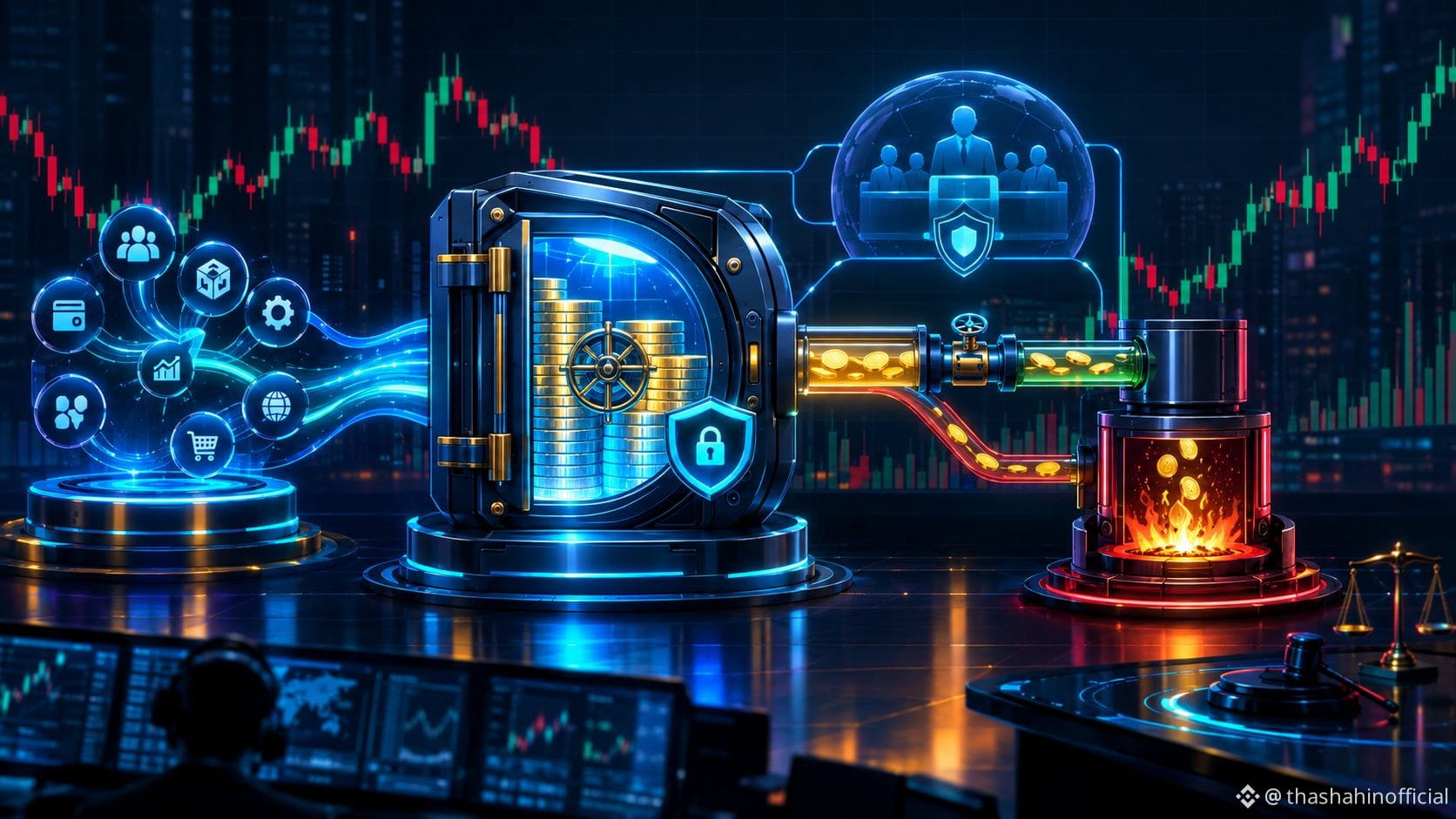
JUST gab am 23. Oktober einen überarbeiteten Rückkauf- und Verbrennungsmechanismus bekannt. Die Governance wird dabei der JUST DAO unterstellt, und die Treasury muss mindestens 50 Mio. USD an Reserven halten. Finanziert werden die Rückkäufe aus nachhaltigen vierteljährlichen Ökosystemeinnahmen – nicht durch unbegrenzte Ausgaben.
Für JST-Inhaber ist entscheidend, ob die Einnahmen dauerhaft den Reserve- und Betriebsbedarf übersteigen. Behaltet die tatsächlichen Rückkauftransaktionen, Einnahmenberichte und verbrannten Token im Blick. Ein neuer Mechanismus ist keine Garantie für Kursgewinne.
Können umsatzfinanzierte Token-Verbrennungen dauerhaften Wert für JST schaffen?
#JST #JUST #Tokenomics #CryptoNews
🚨 $JST
EINE TREASURY-UNTERGRENZE VON 50 MIO. USD ÄNDERT DIE RÜCKKAUF-STORY.
JUST gab am 23. Oktober einen überarbeiteten Rückkauf- und Verbrennungsmechanismus bekannt. Die Governance wird dabei der JUST DAO unterstellt, und die Treasury muss mindestens 50 Mio. USD an Reserven halten. Finanziert werden die Rückkäufe aus nachhaltigen vierteljährlichen Ökosystemeinnahmen – nicht durch unbegrenzte Ausgaben.
Für JST-Inhaber ist entscheidend, ob die Einnahmen dauerhaft den Reserve- und Betriebsbedarf übersteigen. Behaltet die tatsächlichen Rückkauftransaktionen, Einnahmenberichte und verbrannten Token im Blick. Ein neuer Mechanismus ist keine Garantie für Kursgewinne.
Können umsatzfinanzierte Token-Verbrennungen dauerhaften Wert für JST schaffen?
#JST #JUST #Tokenomics #CryptoNews
EINE TREASURY-UNTERGRENZE VON 50 MIO. USD ÄNDERT DIE RÜCKKAUF-STORY.
JUST gab am 23. Oktober einen überarbeiteten Rückkauf- und Verbrennungsmechanismus bekannt. Die Governance wird dabei der JUST DAO unterstellt, und die Treasury muss mindestens 50 Mio. USD an Reserven halten. Finanziert werden die Rückkäufe aus nachhaltigen vierteljährlichen Ökosystemeinnahmen – nicht durch unbegrenzte Ausgaben.
Für JST-Inhaber ist entscheidend, ob die Einnahmen dauerhaft den Reserve- und Betriebsbedarf übersteigen. Behaltet die tatsächlichen Rückkauftransaktionen, Einnahmenberichte und verbrannten Token im Blick. Ein neuer Mechanismus ist keine Garantie für Kursgewinne.
Können umsatzfinanzierte Token-Verbrennungen dauerhaften Wert für JST schaffen?
#JST #JUST #Tokenomics #CryptoNews
146

·
--
Warum 80 % der FDV-Coins abstürzen: Die versteckte Gefahr von Tokens mit geringem Umlaufangebot 🚨📉
Du entdeckst einen neuen Token, der direkt nach dem Listing durchstartet. Die Marktkapitalisierung beträgt nur 200 Mio. $, die Community schreit „100x-Juwel“, und du steigst ein.
Sechs Monate später ist der Kurs um 70 % gefallen – obwohl das Team alle Roadmap-Updates geliefert hat.
Was ist passiert? Du bist direkt in die Falle aus geringem Umlaufangebot und hoher FDV getappt.
1. Marktkapitalisierung vs. vollständig verwässerte Bewertung (FDV)
Um diesen Markt zu überstehen, musst du den Unterschied zwischen diesen beiden Zahlen verstehen:
Marktkapitalisierung (MCap): Aktueller Preis × Umlaufmenge
Das ist nur der Anteil, der derzeit liquide und handelbar ist.
Vollständig verwässerte Bewertung (FDV): Aktueller Preis × maximale Gesamtmenge
Das ist der Wert des Projekts, sobald jeder einzelne Token freigeschaltet ist.
Das Warnsignal:
Hat ein Token eine Marktkapitalisierung von 200 Mio. $, aber eine FDV von 2 Mrd. $, bedeutet das, dass derzeit nur 10 % des Tokenangebots im Umlauf sind.
Die übrigen 90 % der Tokens sind gesperrt – und werden direkt auf den Markt gelangen
$BTC #ETH #Tokenomics #BinanceSquare #CryptoTradingInsights
Warum 80 % der FDV-Coins abstürzen: Die versteckte Gefahr von Tokens mit geringem Umlaufangebot 🚨📉
Du entdeckst einen neuen Token, der direkt nach dem Listing durchstartet. Die Marktkapitalisierung beträgt nur 200 Mio. $, die Community schreit „100x-Juwel“, und du steigst ein.
Sechs Monate später ist der Kurs um 70 % gefallen – obwohl das Team alle Roadmap-Updates geliefert hat.
Was ist passiert? Du bist direkt in die Falle aus geringem Umlaufangebot und hoher FDV getappt.
1. Marktkapitalisierung vs. vollständig verwässerte Bewertung (FDV)
Um diesen Markt zu überstehen, musst du den Unterschied zwischen diesen beiden Zahlen verstehen:
Marktkapitalisierung (MCap): Aktueller Preis × Umlaufmenge
Das ist nur der Anteil, der derzeit liquide und handelbar ist.
Vollständig verwässerte Bewertung (FDV): Aktueller Preis × maximale Gesamtmenge
Das ist der Wert des Projekts, sobald jeder einzelne Token freigeschaltet ist.
Das Warnsignal:
Hat ein Token eine Marktkapitalisierung von 200 Mio. $, aber eine FDV von 2 Mrd. $, bedeutet das, dass derzeit nur 10 % des Tokenangebots im Umlauf sind.
Die übrigen 90 % der Tokens sind gesperrt – und werden direkt auf den Markt gelangen
$BTC #ETH #Tokenomics #BinanceSquare #CryptoTradingInsights
Du entdeckst einen neuen Token, der direkt nach dem Listing durchstartet. Die Marktkapitalisierung beträgt nur 200 Mio. $, die Community schreit „100x-Juwel“, und du steigst ein.
Sechs Monate später ist der Kurs um 70 % gefallen – obwohl das Team alle Roadmap-Updates geliefert hat.
Was ist passiert? Du bist direkt in die Falle aus geringem Umlaufangebot und hoher FDV getappt.
1. Marktkapitalisierung vs. vollständig verwässerte Bewertung (FDV)
Um diesen Markt zu überstehen, musst du den Unterschied zwischen diesen beiden Zahlen verstehen:
Marktkapitalisierung (MCap): Aktueller Preis × Umlaufmenge
Das ist nur der Anteil, der derzeit liquide und handelbar ist.
Vollständig verwässerte Bewertung (FDV): Aktueller Preis × maximale Gesamtmenge
Das ist der Wert des Projekts, sobald jeder einzelne Token freigeschaltet ist.
Das Warnsignal:
Hat ein Token eine Marktkapitalisierung von 200 Mio. $, aber eine FDV von 2 Mrd. $, bedeutet das, dass derzeit nur 10 % des Tokenangebots im Umlauf sind.
Die übrigen 90 % der Tokens sind gesperrt – und werden direkt auf den Markt gelangen
$BTC #ETH #Tokenomics #BinanceSquare #CryptoTradingInsights
Mo7_Aj:
DONE ✅
100
5
100
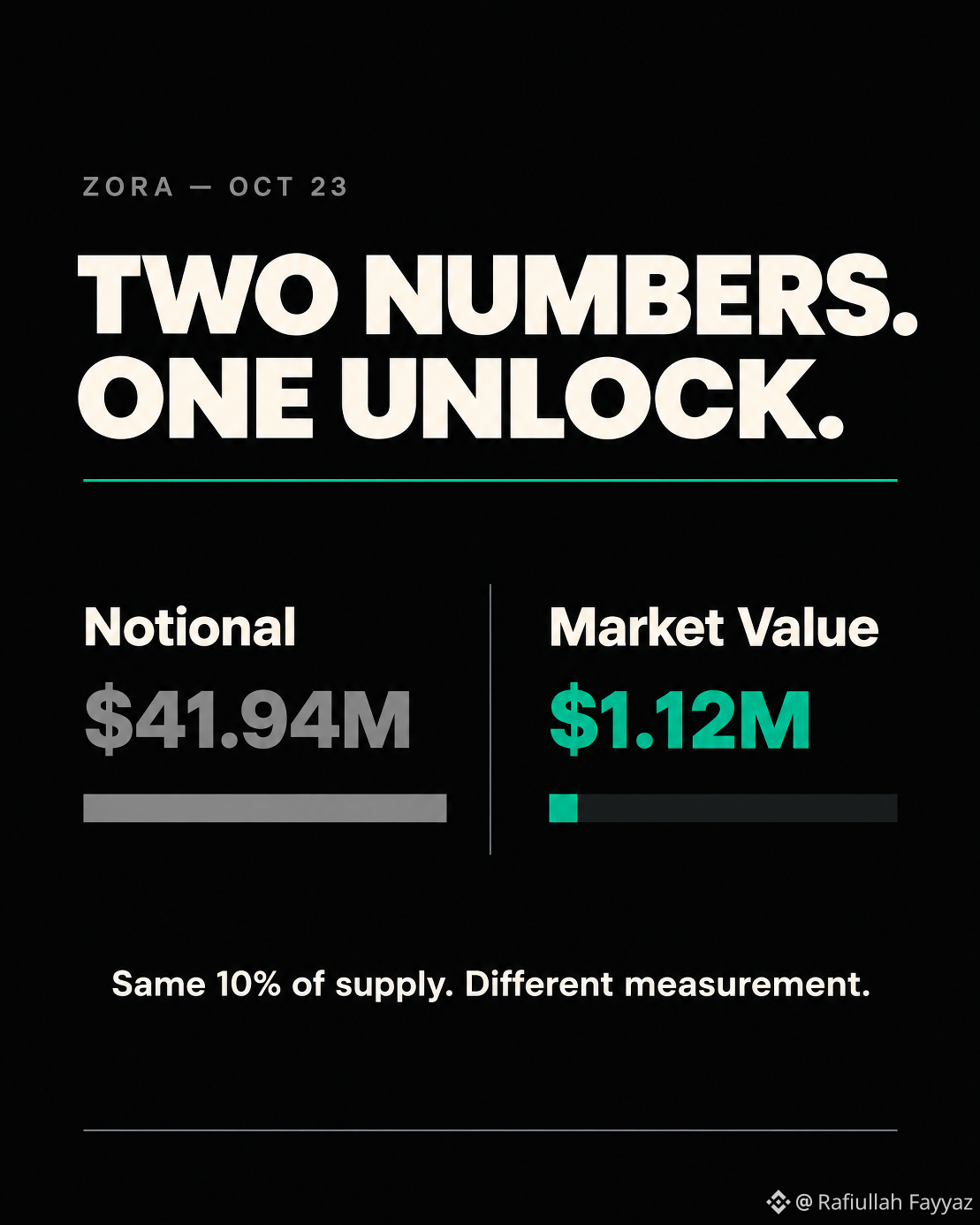
ZORA wird heute freigeschaltet. Eine Quelle nennt 41,94 Mio. $. Eine andere 1,12 Mio. $.
Beide haben recht. Sie messen unterschiedliche Dinge.
Die Zahl von 41,94 Mio. $ ist der Nominalwert von 1,67 Milliarden Token zu einem Referenzpreis. Die Zahl von 1,12 Mio. $ ist der tatsächliche Marktwert zu den aktuellen Preisen. Das Angebot selbst entspricht etwa 10 % des Umlaufbestands.
Das ist das Problem mit Unlock-Daten. Nominalwert und Marktwert können sich um das 30-Fache unterscheiden. Wenn du nur die Schlagzeilenzahl liest, misst du das Falsche.
Das Verhältnis beträgt 10 %. Das ändert sich nicht.
$ZORA
#crypto #EducationalContent #Tokenomics #unlocks #BinanceSquare
{future}(ZORAUSDT)
ZORA wird heute freigeschaltet. Eine Quelle nennt 41,94 Mio. $. Eine andere 1,12 Mio. $.
Beide haben recht. Sie messen unterschiedliche Dinge.
Die Zahl von 41,94 Mio. $ ist der Nominalwert von 1,67 Milliarden Token zu einem Referenzpreis. Die Zahl von 1,12 Mio. $ ist der tatsächliche Marktwert zu den aktuellen Preisen. Das Angebot selbst entspricht etwa 10 % des Umlaufbestands.
Das ist das Problem mit Unlock-Daten. Nominalwert und Marktwert können sich um das 30-Fache unterscheiden. Wenn du nur die Schlagzeilenzahl liest, misst du das Falsche.
Das Verhältnis beträgt 10 %. Das ändert sich nicht.
$ZORA
#crypto #EducationalContent #Tokenomics #unlocks #BinanceSquare
Beide haben recht. Sie messen unterschiedliche Dinge.
Die Zahl von 41,94 Mio. $ ist der Nominalwert von 1,67 Milliarden Token zu einem Referenzpreis. Die Zahl von 1,12 Mio. $ ist der tatsächliche Marktwert zu den aktuellen Preisen. Das Angebot selbst entspricht etwa 10 % des Umlaufbestands.
Das ist das Problem mit Unlock-Daten. Nominalwert und Marktwert können sich um das 30-Fache unterscheiden. Wenn du nur die Schlagzeilenzahl liest, misst du das Falsche.
Das Verhältnis beträgt 10 %. Das ändert sich nicht.
$ZORA
#crypto #EducationalContent #Tokenomics #unlocks #BinanceSquare
185

🚀 $OG : Nur 5 Millionen Token? Könnten #Scarcity die nächste Rallye befeuern?
💎 Wenn $OG eine feste Gesamtmenge von nur 5 Millionen Token hat und keine weiteren ausgegeben werden, könnte die Knappheit zu einem interessanten Teil der Marktgeschichte werden.
📈 Könnten 15 $ das nächste Kursziel sein? Bei 15 $ pro Token würde eine vollständig umlaufende Menge von 5 Millionen eine Marktkapitalisierung von etwa 75 Millionen $ bedeuten.
{spot}(OGUSDT)
🎯 Anleger aufgepasst: Bevor du mit einem Ausbruch rechnest, solltest du die offiziellen Tokenomics, die umlaufende Menge, die Liquidität an den Börsen und das Kaufvolumen überprüfen. Ein begrenztes Angebot kann eine bullische These stützen, doch für einen Kurs von 15 $ wären weiterhin ausreichende Nachfrage und Marktdynamik erforderlich.
👀 Bereitet sich $OG auf eine größere Bewegung vor, oder braucht es zunächst stärkere Bestätigung? Teile deine Einschätzung unten! 💬
#OG #CryptoAnalysis #Tokenomics #CoinVahini
🚀 $OG : Nur 5 Millionen Token? Könnten #Scarcity die nächste Rallye befeuern?
💎 Wenn $OG eine feste Gesamtmenge von nur 5 Millionen Token hat und keine weiteren ausgegeben werden, könnte die Knappheit zu einem interessanten Teil der Marktgeschichte werden.
📈 Könnten 15 $ das nächste Kursziel sein? Bei 15 $ pro Token würde eine vollständig umlaufende Menge von 5 Millionen eine Marktkapitalisierung von etwa 75 Millionen $ bedeuten.
🎯 Anleger aufgepasst: Bevor du mit einem Ausbruch rechnest, solltest du die offiziellen Tokenomics, die umlaufende Menge, die Liquidität an den Börsen und das Kaufvolumen überprüfen. Ein begrenztes Angebot kann eine bullische These stützen, doch für einen Kurs von 15 $ wären weiterhin ausreichende Nachfrage und Marktdynamik erforderlich.
👀 Bereitet sich $OG auf eine größere Bewegung vor, oder braucht es zunächst stärkere Bestätigung? Teile deine Einschätzung unten! 💬
#OG #CryptoAnalysis #Tokenomics #CoinVahini
💎 Wenn $OG eine feste Gesamtmenge von nur 5 Millionen Token hat und keine weiteren ausgegeben werden, könnte die Knappheit zu einem interessanten Teil der Marktgeschichte werden.
📈 Könnten 15 $ das nächste Kursziel sein? Bei 15 $ pro Token würde eine vollständig umlaufende Menge von 5 Millionen eine Marktkapitalisierung von etwa 75 Millionen $ bedeuten.
🎯 Anleger aufgepasst: Bevor du mit einem Ausbruch rechnest, solltest du die offiziellen Tokenomics, die umlaufende Menge, die Liquidität an den Börsen und das Kaufvolumen überprüfen. Ein begrenztes Angebot kann eine bullische These stützen, doch für einen Kurs von 15 $ wären weiterhin ausreichende Nachfrage und Marktdynamik erforderlich.
👀 Bereitet sich $OG auf eine größere Bewegung vor, oder braucht es zunächst stärkere Bestätigung? Teile deine Einschätzung unten! 💬
#OG #CryptoAnalysis #Tokenomics #CoinVahini
15
·
--
Die angebotsseitigen Fundamentaldaten von $SILVER durchlaufen gerade einen tiefgreifenden Wandel, den viele zugunsten der Volatilität von High-Beta-Anlagen übersehen. Während physisches Silber sich bei 60.27 behauptet und Gold auf 4,140 zusteuert, zeigt uns das Gold-Silber-Verhältnis von 68.5, dass der Rohstoffkomplex auf eine Outperformance von Silber zusteuert. Im digitalen Bereich sind die Daten rund um SILVER noch überzeugender, denn wir verlassen gerade die Phase der großen Vesting-Freigaben und treten in einen strukturellen Burn-Zyklus ein.
Aktuelle On-Chain-Daten zeigen, dass sich der frei umlaufende Bestand verknappt, da institutionelle Handelsabteilungen die letzten 12 Prozent der Freigaben aus der Seed-Runde aufgenommen haben. Bei einem Spot-Referenzkurs von 53.716 sorgt die Lücke zwischen dem tokenisierten Wert und physischem Edelmetall für einen einzigartigen Arbitragedruck. Anders als PAXG, das den Goldpreis im Verhältnis 1:1 abbildet, umfassen die spezifischen Mechanismen von SILVER einen periodischen, durch das Transaktionsvolumen ausgelösten Supply-Burn, der die Obergrenze des Gesamtangebots effektiv jedes Mal senkt, wenn ein Großinvestor Liquidität zwischen Börsen verschiebt.
Die Zentralbanken stocken ihre Reserven weiterhin aggressiv auf, und die inverse Korrelation zum DXY bleibt der maßgebliche makroökonomische Treiber. Während der Dollar-Index Ermüdungserscheinungen zeigt, beschleunigt sich die Flucht in rohstoffgedeckte Vermögenswerte. Wir beobachten massive Abflüsse von zentralisierten Börsen in Cold Storage – ein Spiegelbild des Marktes für physisches Edelmetall, wo die COMEX-Bestände Mehrjahrestiefs erreichen. Der deflationäre Druck ist hier nicht bloß ein Marketing-Narrativ, sondern wird durch fest programmierte Vesting-Zeitpläne gestützt, die offiziell von inflationär auf kontraktiv umgeschaltet haben.
In den kommenden Wochen wird sich zeigen, ob die aktuelle Burn-Rate mit der steigenden Nachfrage nach einem On-Chain-Engagement in Rohstoffen Schritt halten kann. Seht ihr derzeit mehr Wert darin, physisch gedeckte Vermögenswerte zu halten, oder jagt ihr weiterhin rein algorithmischen Projekten hinterher?
#TokenUnlocks #Tokenomics
Die angebotsseitigen Fundamentaldaten von $SILVER durchlaufen gerade einen tiefgreifenden Wandel, den viele zugunsten der Volatilität von High-Beta-Anlagen übersehen. Während physisches Silber sich bei 60.27 behauptet und Gold auf 4,140 zusteuert, zeigt uns das Gold-Silber-Verhältnis von 68.5, dass der Rohstoffkomplex auf eine Outperformance von Silber zusteuert. Im digitalen Bereich sind die Daten rund um SILVER noch überzeugender, denn wir verlassen gerade die Phase der großen Vesting-Freigaben und treten in einen strukturellen Burn-Zyklus ein.
Aktuelle On-Chain-Daten zeigen, dass sich der frei umlaufende Bestand verknappt, da institutionelle Handelsabteilungen die letzten 12 Prozent der Freigaben aus der Seed-Runde aufgenommen haben. Bei einem Spot-Referenzkurs von 53.716 sorgt die Lücke zwischen dem tokenisierten Wert und physischem Edelmetall für einen einzigartigen Arbitragedruck. Anders als PAXG, das den Goldpreis im Verhältnis 1:1 abbildet, umfassen die spezifischen Mechanismen von SILVER einen periodischen, durch das Transaktionsvolumen ausgelösten Supply-Burn, der die Obergrenze des Gesamtangebots effektiv jedes Mal senkt, wenn ein Großinvestor Liquidität zwischen Börsen verschiebt.
Die Zentralbanken stocken ihre Reserven weiterhin aggressiv auf, und die inverse Korrelation zum DXY bleibt der maßgebliche makroökonomische Treiber. Während der Dollar-Index Ermüdungserscheinungen zeigt, beschleunigt sich die Flucht in rohstoffgedeckte Vermögenswerte. Wir beobachten massive Abflüsse von zentralisierten Börsen in Cold Storage – ein Spiegelbild des Marktes für physisches Edelmetall, wo die COMEX-Bestände Mehrjahrestiefs erreichen. Der deflationäre Druck ist hier nicht bloß ein Marketing-Narrativ, sondern wird durch fest programmierte Vesting-Zeitpläne gestützt, die offiziell von inflationär auf kontraktiv umgeschaltet haben.
In den kommenden Wochen wird sich zeigen, ob die aktuelle Burn-Rate mit der steigenden Nachfrage nach einem On-Chain-Engagement in Rohstoffen Schritt halten kann. Seht ihr derzeit mehr Wert darin, physisch gedeckte Vermögenswerte zu halten, oder jagt ihr weiterhin rein algorithmischen Projekten hinterher?
#TokenUnlocks #Tokenomics
Aktuelle On-Chain-Daten zeigen, dass sich der frei umlaufende Bestand verknappt, da institutionelle Handelsabteilungen die letzten 12 Prozent der Freigaben aus der Seed-Runde aufgenommen haben. Bei einem Spot-Referenzkurs von 53.716 sorgt die Lücke zwischen dem tokenisierten Wert und physischem Edelmetall für einen einzigartigen Arbitragedruck. Anders als PAXG, das den Goldpreis im Verhältnis 1:1 abbildet, umfassen die spezifischen Mechanismen von SILVER einen periodischen, durch das Transaktionsvolumen ausgelösten Supply-Burn, der die Obergrenze des Gesamtangebots effektiv jedes Mal senkt, wenn ein Großinvestor Liquidität zwischen Börsen verschiebt.
Die Zentralbanken stocken ihre Reserven weiterhin aggressiv auf, und die inverse Korrelation zum DXY bleibt der maßgebliche makroökonomische Treiber. Während der Dollar-Index Ermüdungserscheinungen zeigt, beschleunigt sich die Flucht in rohstoffgedeckte Vermögenswerte. Wir beobachten massive Abflüsse von zentralisierten Börsen in Cold Storage – ein Spiegelbild des Marktes für physisches Edelmetall, wo die COMEX-Bestände Mehrjahrestiefs erreichen. Der deflationäre Druck ist hier nicht bloß ein Marketing-Narrativ, sondern wird durch fest programmierte Vesting-Zeitpläne gestützt, die offiziell von inflationär auf kontraktiv umgeschaltet haben.
In den kommenden Wochen wird sich zeigen, ob die aktuelle Burn-Rate mit der steigenden Nachfrage nach einem On-Chain-Engagement in Rohstoffen Schritt halten kann. Seht ihr derzeit mehr Wert darin, physisch gedeckte Vermögenswerte zu halten, oder jagt ihr weiterhin rein algorithmischen Projekten hinterher?
#TokenUnlocks #Tokenomics
1
3

Warnung vor dem Gesamtangebot und dem Verkaufsplan: Ein Warnsignal für Holder?Warnung vor dem Gesamtangebot und dem Verkaufsplan: Ein Warnsignal für Holder?
Ein Blick auf die Zahlen:
• Umlaufangebot: 3,82 Mrd. WLD (etwa 38,2 % des Maximalangebots von 10 Mrd. WLD).
• FDV: ~5,4 Mrd. USD (das 2,6-Fache der tatsächlichen Marktkapitalisierung von ~2,06 Mrd. USD bei einem Kurs von etwa 0,54 USD).
• Kontinuierlicher Unlock-Zeitplan: Jede Woche werden regelmäßig ~5,59 Mio. WLD (~3 Mio. USD pro Woche) linear bis 2028–2029 freigeschaltet.
• Binance-Derivatedaten: Die Top-Trader sind stark netto Long positioniert (76,42 % Long gegenüber 23,58 % Short), während das Open Interest mit 95,1 Mio. USD (176 Mio. WLD) auf hohem Niveau verharrt.
Warnung vor dem Gesamtangebot und dem Verkaufsplan: Ein Warnsignal für Holder?
Warnung vor dem Gesamtangebot und dem Verkaufsplan: Ein Warnsignal für Holder?
Ein Blick auf die Zahlen:
• Umlaufangebot: 3,82 Mrd. WLD (etwa 38,2 % des Maximalangebots von 10 Mrd. WLD).
• FDV: ~5,4 Mrd. USD (das 2,6-Fache der tatsächlichen Marktkapitalisierung von ~2,06 Mrd. USD bei einem Kurs von etwa 0,54 USD).
• Kontinuierlicher Unlock-Zeitplan: Jede Woche werden regelmäßig ~5,59 Mio. WLD (~3 Mio. USD pro Woche) linear bis 2028–2029 freigeschaltet.
• Binance-Derivatedaten: Die Top-Trader sind stark netto Long positioniert (76,42 % Long gegenüber 23,58 % Short), während das Open Interest mit 95,1 Mio. USD (176 Mio. WLD) auf hohem Niveau verharrt.
Ein Blick auf die Zahlen:
• Umlaufangebot: 3,82 Mrd. WLD (etwa 38,2 % des Maximalangebots von 10 Mrd. WLD).
• FDV: ~5,4 Mrd. USD (das 2,6-Fache der tatsächlichen Marktkapitalisierung von ~2,06 Mrd. USD bei einem Kurs von etwa 0,54 USD).
• Kontinuierlicher Unlock-Zeitplan: Jede Woche werden regelmäßig ~5,59 Mio. WLD (~3 Mio. USD pro Woche) linear bis 2028–2029 freigeschaltet.
• Binance-Derivatedaten: Die Top-Trader sind stark netto Long positioniert (76,42 % Long gegenüber 23,58 % Short), während das Open Interest mit 95,1 Mio. USD (176 Mio. WLD) auf hohem Niveau verharrt.
5

·
--
Verifiziert

Artikel
AAVE TOKENOMICS 3.0: RÜCKKÄUFE, STAKING & BURNS!Aave ($AAVE ) bereitet ein umfassendes Upgrade seiner Tokenomics vor!
Gründer Stani Kulechov hat bestätigt, dass Aavenomics 3.0 drei zentrale Mechanismen umfassen wird:
💰 Rückkäufe — der Kauf von AAVE-Token auf dem Markt.
🔒 Staking — Token-Inhabern ermöglichen, ihre Token im Rahmen des aktualisierten Systems zu staken.
🔥 Token-Burns — Token dauerhaft aus dem Umlauf entfernen.
📉 Warum ist das wichtig?
Bei den bisherigen Rückkäufen von Aave wurden die Token in der Treasury angesammelt, anstatt sie dauerhaft zu vernichten. Die Einführung von Burns könnte einen direkten Mechanismus zur Verringerung des Angebots schaffen.
AAVE TOKENOMICS 3.0: RÜCKKÄUFE, STAKING & BURNS!
Aave ($AAVE ) bereitet ein umfassendes Upgrade seiner Tokenomics vor!
Gründer Stani Kulechov hat bestätigt, dass Aavenomics 3.0 drei zentrale Mechanismen umfassen wird:
💰 Rückkäufe — der Kauf von AAVE-Token auf dem Markt.
🔒 Staking — Token-Inhabern ermöglichen, ihre Token im Rahmen des aktualisierten Systems zu staken.
🔥 Token-Burns — Token dauerhaft aus dem Umlauf entfernen.
📉 Warum ist das wichtig?
Bei den bisherigen Rückkäufen von Aave wurden die Token in der Treasury angesammelt, anstatt sie dauerhaft zu vernichten. Die Einführung von Burns könnte einen direkten Mechanismus zur Verringerung des Angebots schaffen.
Gründer Stani Kulechov hat bestätigt, dass Aavenomics 3.0 drei zentrale Mechanismen umfassen wird:
💰 Rückkäufe — der Kauf von AAVE-Token auf dem Markt.
🔒 Staking — Token-Inhabern ermöglichen, ihre Token im Rahmen des aktualisierten Systems zu staken.
🔥 Token-Burns — Token dauerhaft aus dem Umlauf entfernen.
📉 Warum ist das wichtig?
Bei den bisherigen Rückkäufen von Aave wurden die Token in der Treasury angesammelt, anstatt sie dauerhaft zu vernichten. Die Einführung von Burns könnte einen direkten Mechanismus zur Verringerung des Angebots schaffen.
Rao G 914:
Great insight
1
2
62
Anmelden und weiter Inhalte entdecken
Krypto-Nutzer weltweit auf Binance Square kennenlernen
⚡️ Bleib in Sachen Krypto stets am Puls.
💬 Die weltgrößte Kryptobörse vertraut darauf.
👍 Erhalte verlässliche Einblicke von verifizierten Creators.
E-Mail-Adresse/Telefonnummer
Trendthemen
1
#BinancePick
3.1M Aufrufe
152,707 Kommentare
2
#EarningsSeason
5.3M Aufrufe
25,976 Kommentare
3
#AnthropicTTMRevenueGrewAbout1200%
28,363 Aufrufe
406 Kommentare
4
#AnthropicS1ExpectedToday
25,380 Aufrufe
338 Kommentare
5
#SouthKoreaReportedlyWeighsFourthCryptoTaxDelay
29,946 Aufrufe
461 Kommentare
6
#FranklinTempletonFilesForTwoDividendToBitcoinETFs
39,448 Aufrufe
535 Kommentare
7
#StrategyMSTRSurpassesNasdaqInMarketCap
29,874 Aufrufe
382 Kommentare
8
#CanadaProposesStablecoinRedemptionWithin3BusinessDays
1,310 Aufrufe
36 Kommentare
9
#ElectrumWalletBugLetRogueServersStealFunds
30,723 Aufrufe
460 Kommentare
10
#ArgentineCourtDismissesLIBRACaseAgainstMilei
46,078 Aufrufe
575 Kommentare