

#regulation
regulation
2.1M Aufrufe
14,471 Kommentare
Hot
Zuletzt

·
--
🚨 DIE STEUERLICHEN RAHMENBEDINGUNGEN FÜR KRYPTOANLAGEN ÄNDERN SICH RASANT, UND $BTC HÄNDLER MÜSSEN SICH VORBEREITEN! ⚡
Steuerbehörden führen spezielle Buchungscodes für einzelne Unterposten ein, die eigens für Kryptoanlagen vorgesehen sind. Das signalisiert, dass sich die institutionellen Regulierungsrahmen verschärfen. 📊 Vorausschauende Anleger verfolgen solche politischen Änderungen frühzeitig, denn eine klare steuerliche Infrastruktur ging historisch großen institutionellen Kapitalzuflüssen voraus.
Ob beim Handel auf lokalen Börsen oder internationalen Plattformen: Die Meldefristen und Buchungsmechanismen zu verstehen, wird zunehmend genauso wichtig wie den Orderflow zu lesen. 💡 Klarheit bei der Einhaltung der Vorschriften beseitigt langfristige Reibungsverluste und verwandelt regulatorischen Gegenwind in strukturelle Unterstützung.
💬 Passt du deine Buchhaltungsstrategie für dein Portfolio bereits im Hinblick auf diese Steuerrichtlinien an, oder wartest du, bis die endgültigen Details zur Umsetzung vorliegen? 👇
⚠️ Keine Finanzberatung. Behalte dein Risiko stets im Blick. 🛡️
🏷️ #BTC #CryptoTax #Regulation #Crypto
📌 💡
🚨 DIE STEUERLICHEN RAHMENBEDINGUNGEN FÜR KRYPTOANLAGEN ÄNDERN SICH RASANT, UND $BTC HÄNDLER MÜSSEN SICH VORBEREITEN! ⚡
Steuerbehörden führen spezielle Buchungscodes für einzelne Unterposten ein, die eigens für Kryptoanlagen vorgesehen sind. Das signalisiert, dass sich die institutionellen Regulierungsrahmen verschärfen. 📊 Vorausschauende Anleger verfolgen solche politischen Änderungen frühzeitig, denn eine klare steuerliche Infrastruktur ging historisch großen institutionellen Kapitalzuflüssen voraus.
Ob beim Handel auf lokalen Börsen oder internationalen Plattformen: Die Meldefristen und Buchungsmechanismen zu verstehen, wird zunehmend genauso wichtig wie den Orderflow zu lesen. 💡 Klarheit bei der Einhaltung der Vorschriften beseitigt langfristige Reibungsverluste und verwandelt regulatorischen Gegenwind in strukturelle Unterstützung.
💬 Passt du deine Buchhaltungsstrategie für dein Portfolio bereits im Hinblick auf diese Steuerrichtlinien an, oder wartest du, bis die endgültigen Details zur Umsetzung vorliegen? 👇
⚠️ Keine Finanzberatung. Behalte dein Risiko stets im Blick. 🛡️
🏷️ #BTC #CryptoTax #Regulation #Crypto
📌 💡
Steuerbehörden führen spezielle Buchungscodes für einzelne Unterposten ein, die eigens für Kryptoanlagen vorgesehen sind. Das signalisiert, dass sich die institutionellen Regulierungsrahmen verschärfen. 📊 Vorausschauende Anleger verfolgen solche politischen Änderungen frühzeitig, denn eine klare steuerliche Infrastruktur ging historisch großen institutionellen Kapitalzuflüssen voraus.
Ob beim Handel auf lokalen Börsen oder internationalen Plattformen: Die Meldefristen und Buchungsmechanismen zu verstehen, wird zunehmend genauso wichtig wie den Orderflow zu lesen. 💡 Klarheit bei der Einhaltung der Vorschriften beseitigt langfristige Reibungsverluste und verwandelt regulatorischen Gegenwind in strukturelle Unterstützung.
💬 Passt du deine Buchhaltungsstrategie für dein Portfolio bereits im Hinblick auf diese Steuerrichtlinien an, oder wartest du, bis die endgültigen Details zur Umsetzung vorliegen? 👇
⚠️ Keine Finanzberatung. Behalte dein Risiko stets im Blick. 🛡️
🏷️ #BTC #CryptoTax #Regulation #Crypto
📌 💡
11

·
--
Binance hat gerade eine Lizenz für virtuelle Vermögenswerte in Brasilien beantragt – kurz vor der Frist der Zentralbank am 30. Oktober 2026.
Die Börse reichte am 23. Oktober 2026 über die lokale Gesellschaft BBrasil ihren Antrag auf Zulassung als Sociedade Prestadora de Serviços de Ativos Virtuais (SPSAV) bei der brasilianischen Zentralbank ein. Durch die Antragstellung kann der Übergangsbetrieb während der Prüfung des Antrags fortgesetzt werden; sie stellt keine endgültige Genehmigung dar. Das Unternehmen erklärt, dass Nutzer in Brasilien im Rahmen des neuen Regelwerks weiterhin Zugang zu Krypto-Assets, Stablecoin-Handel, Zahlungsdiensten und Anlageleistungen haben sollten.
Im Zuge der Umstellung auf die neuen Compliance-Vorgaben schränkte Binance ab dem 27. Oktober 2026 außerdem sein Angebot in Brasilien ein: Margin-Handel, Kreditvergabe und mehrere Renditeprodukte wurden beschränkt, und 22 Assets wurden für lokale Nutzer delistet. Brasilien bleibt einer der größten Kryptomärkte Lateinamerikas. Die Frist am 30. Oktober markiert daher den Unterschied zwischen einer Fortführung des Betriebs während der Prüfung und einer schrittweisen Einstellung. Beobachte, wie die Zentralbank den Antrag in den kommenden Monaten bearbeitet.
#Binance #Brazil #Crypto #Regulierung
DYOR. Keine Finanzberatung.
Binance hat gerade eine Lizenz für virtuelle Vermögenswerte in Brasilien beantragt – kurz vor der Frist der Zentralbank am 30. Oktober 2026.
Die Börse reichte am 23. Oktober 2026 über die lokale Gesellschaft BBrasil ihren Antrag auf Zulassung als Sociedade Prestadora de Serviços de Ativos Virtuais (SPSAV) bei der brasilianischen Zentralbank ein. Durch die Antragstellung kann der Übergangsbetrieb während der Prüfung des Antrags fortgesetzt werden; sie stellt keine endgültige Genehmigung dar. Das Unternehmen erklärt, dass Nutzer in Brasilien im Rahmen des neuen Regelwerks weiterhin Zugang zu Krypto-Assets, Stablecoin-Handel, Zahlungsdiensten und Anlageleistungen haben sollten.
Im Zuge der Umstellung auf die neuen Compliance-Vorgaben schränkte Binance ab dem 27. Oktober 2026 außerdem sein Angebot in Brasilien ein: Margin-Handel, Kreditvergabe und mehrere Renditeprodukte wurden beschränkt, und 22 Assets wurden für lokale Nutzer delistet. Brasilien bleibt einer der größten Kryptomärkte Lateinamerikas. Die Frist am 30. Oktober markiert daher den Unterschied zwischen einer Fortführung des Betriebs während der Prüfung und einer schrittweisen Einstellung. Beobachte, wie die Zentralbank den Antrag in den kommenden Monaten bearbeitet.
#Binance #Brazil #Crypto #Regulierung
DYOR. Keine Finanzberatung.
Die Börse reichte am 23. Oktober 2026 über die lokale Gesellschaft BBrasil ihren Antrag auf Zulassung als Sociedade Prestadora de Serviços de Ativos Virtuais (SPSAV) bei der brasilianischen Zentralbank ein. Durch die Antragstellung kann der Übergangsbetrieb während der Prüfung des Antrags fortgesetzt werden; sie stellt keine endgültige Genehmigung dar. Das Unternehmen erklärt, dass Nutzer in Brasilien im Rahmen des neuen Regelwerks weiterhin Zugang zu Krypto-Assets, Stablecoin-Handel, Zahlungsdiensten und Anlageleistungen haben sollten.
Im Zuge der Umstellung auf die neuen Compliance-Vorgaben schränkte Binance ab dem 27. Oktober 2026 außerdem sein Angebot in Brasilien ein: Margin-Handel, Kreditvergabe und mehrere Renditeprodukte wurden beschränkt, und 22 Assets wurden für lokale Nutzer delistet. Brasilien bleibt einer der größten Kryptomärkte Lateinamerikas. Die Frist am 30. Oktober markiert daher den Unterschied zwischen einer Fortführung des Betriebs während der Prüfung und einer schrittweisen Einstellung. Beobachte, wie die Zentralbank den Antrag in den kommenden Monaten bearbeitet.
#Binance #Brazil #Crypto #Regulierung
DYOR. Keine Finanzberatung.

2
·
--
📰 SEC räumt Plattformen für tokenisierte Aktien eine Vorlaufzeit ein, aber keinen Blankoscheck
SEC-Leitlinien verpflichten geeignete Handelsplätze für tokenisierte Aktien, mindestens 30 Tage vor dem Start Angaben zu ihrem Betrieb zu veröffentlichen.
Quelle : Btcnews
Zeit : 2026-10-27 03:00:00
Redaktion: btc news editorial desk
#regulation #sec_tokenized_stocks_exemption
Teile deine Meinung im Kommentarbereich unten
📰 SEC räumt Plattformen für tokenisierte Aktien eine Vorlaufzeit ein, aber keinen Blankoscheck
SEC-Leitlinien verpflichten geeignete Handelsplätze für tokenisierte Aktien, mindestens 30 Tage vor dem Start Angaben zu ihrem Betrieb zu veröffentlichen.
Quelle : Btcnews
Zeit : 2026-10-27 03:00:00
Redaktion: btc news editorial desk
#regulation #sec_tokenized_stocks_exemption
Teile deine Meinung im Kommentarbereich unten
SEC-Leitlinien verpflichten geeignete Handelsplätze für tokenisierte Aktien, mindestens 30 Tage vor dem Start Angaben zu ihrem Betrieb zu veröffentlichen.
Quelle : Btcnews
Zeit : 2026-10-27 03:00:00
Redaktion: btc news editorial desk
#regulation #sec_tokenized_stocks_exemption
Teile deine Meinung im Kommentarbereich unten

·
--
🚨 $HUMA TREIBT 176 MIO. $ POLITISCHE KRYPTO-EINSTIEGSRAMPE VORAN 🚀
📊 Die Branche hat gerade 176 Millionen Dollar in über 100 umkämpfte Wahlbezirke gelenkt – eine koordinierte Offensive, um parteiübergreifende Unterstützung für Gesetze zu digitalen Vermögenswerten zu sichern. 🦈 Diese Liquiditätsspritze erinnert an eine strategische Positionierung von Großinvestoren: Sie soll die Politik zugunsten von Innovatoren verankern und abweichende Stimmen an den Rand drängen. 📈 Analysten warnen angesichts der näher rückenden Wahl vor verstärkter regulatorischer Kontrolle. Damit wird die Einhaltung von Vorschriften zu einem entscheidenden Marktkatalysator.
💡 Da $SYN und $AIN dieselbe Strategie verfolgen, signalisiert die Branche eine gemeinsame Wette darauf, dass günstige Regeln künftig weiteres Aufwärtspotenzial freisetzen werden. 📌 Wird diese politische Schlagkraft bei diesen Token zu einer strukturellen Aufwärtstendenz führen? 💬
⚠️ Keine Finanzberatung. Behalten Sie Ihr Risiko stets im Griff. 🛡️
🏷️ #HUMA #CryptoPolitics #Regulation #SmartMoney
🦈 📊
🚨 $HUMA TREIBT 176 MIO. $ POLITISCHE KRYPTO-EINSTIEGSRAMPE VORAN 🚀
📊 Die Branche hat gerade 176 Millionen Dollar in über 100 umkämpfte Wahlbezirke gelenkt – eine koordinierte Offensive, um parteiübergreifende Unterstützung für Gesetze zu digitalen Vermögenswerten zu sichern. 🦈 Diese Liquiditätsspritze erinnert an eine strategische Positionierung von Großinvestoren: Sie soll die Politik zugunsten von Innovatoren verankern und abweichende Stimmen an den Rand drängen. 📈 Analysten warnen angesichts der näher rückenden Wahl vor verstärkter regulatorischer Kontrolle. Damit wird die Einhaltung von Vorschriften zu einem entscheidenden Marktkatalysator.
💡 Da $SYN und $AIN dieselbe Strategie verfolgen, signalisiert die Branche eine gemeinsame Wette darauf, dass günstige Regeln künftig weiteres Aufwärtspotenzial freisetzen werden. 📌 Wird diese politische Schlagkraft bei diesen Token zu einer strukturellen Aufwärtstendenz führen? 💬
⚠️ Keine Finanzberatung. Behalten Sie Ihr Risiko stets im Griff. 🛡️
🏷️ #HUMA #CryptoPolitics #Regulation #SmartMoney
🦈 📊
📊 Die Branche hat gerade 176 Millionen Dollar in über 100 umkämpfte Wahlbezirke gelenkt – eine koordinierte Offensive, um parteiübergreifende Unterstützung für Gesetze zu digitalen Vermögenswerten zu sichern. 🦈 Diese Liquiditätsspritze erinnert an eine strategische Positionierung von Großinvestoren: Sie soll die Politik zugunsten von Innovatoren verankern und abweichende Stimmen an den Rand drängen. 📈 Analysten warnen angesichts der näher rückenden Wahl vor verstärkter regulatorischer Kontrolle. Damit wird die Einhaltung von Vorschriften zu einem entscheidenden Marktkatalysator.
💡 Da $SYN und $AIN dieselbe Strategie verfolgen, signalisiert die Branche eine gemeinsame Wette darauf, dass günstige Regeln künftig weiteres Aufwärtspotenzial freisetzen werden. 📌 Wird diese politische Schlagkraft bei diesen Token zu einer strukturellen Aufwärtstendenz führen? 💬
⚠️ Keine Finanzberatung. Behalten Sie Ihr Risiko stets im Griff. 🛡️
🏷️ #HUMA #CryptoPolitics #Regulation #SmartMoney
🦈 📊
9

·
--
Bullisch
Binance in Brasilien, eine Woche vor Ablauf der Frist: Der Antrag wurde am 23. Oktober bei der Zentralbank eingereicht. Zu früh zum Feiern.
Ein Antrag ≠ eine Lizenz. Er ist nur das Ticket, um am 30. Oktober nicht dichtmachen zu müssen – wer es nicht rechtzeitig schafft, muss den Betrieb einstellen. Eine Genehmigung hat noch niemand erteilt.
Und die Rechnung für das Ticket kam schon. Ab dem 27. Oktober müssen brasilianische Nutzer auf 22 Token, Margin-Handel, Kredite, Launchpool und HODLer Airdrops verzichten. Alles, womit man Geld verdienen oder zocken kann, wird gestrichen.
Und schaut mal, wohin sie steuern. Binance-Chef in Brasilien, Thiago Sarandy, sagt, die Börse wolle mehr Produkte anbieten als jede Bank. Und er beklagt das Tempo: Börsen bekamen nur 270 Tage, um sich vorzubereiten, Zahlungsinstitute insgesamt fünf Jahre.
Für die Kleinen wird es noch härter. Laut einer Branchenschätzung werden weniger als 10 % der Anbieter einen Antrag stellen – der Rest verschwindet einfach vom Markt.
Mein Gradmesser: ob nach der Genehmigung überhaupt einige der 22 Token zurückkommen. Bis dahin: GG für Brasiliens Farmer
#Binance #Regulation
Binance in Brasilien, eine Woche vor Ablauf der Frist: Der Antrag wurde am 23. Oktober bei der Zentralbank eingereicht. Zu früh zum Feiern.
Ein Antrag ≠ eine Lizenz. Er ist nur das Ticket, um am 30. Oktober nicht dichtmachen zu müssen – wer es nicht rechtzeitig schafft, muss den Betrieb einstellen. Eine Genehmigung hat noch niemand erteilt.
Und die Rechnung für das Ticket kam schon. Ab dem 27. Oktober müssen brasilianische Nutzer auf 22 Token, Margin-Handel, Kredite, Launchpool und HODLer Airdrops verzichten. Alles, womit man Geld verdienen oder zocken kann, wird gestrichen.
Und schaut mal, wohin sie steuern. Binance-Chef in Brasilien, Thiago Sarandy, sagt, die Börse wolle mehr Produkte anbieten als jede Bank. Und er beklagt das Tempo: Börsen bekamen nur 270 Tage, um sich vorzubereiten, Zahlungsinstitute insgesamt fünf Jahre.
Für die Kleinen wird es noch härter. Laut einer Branchenschätzung werden weniger als 10 % der Anbieter einen Antrag stellen – der Rest verschwindet einfach vom Markt.
Mein Gradmesser: ob nach der Genehmigung überhaupt einige der 22 Token zurückkommen. Bis dahin: GG für Brasiliens Farmer
#Binance #Regulation
Ein Antrag ≠ eine Lizenz. Er ist nur das Ticket, um am 30. Oktober nicht dichtmachen zu müssen – wer es nicht rechtzeitig schafft, muss den Betrieb einstellen. Eine Genehmigung hat noch niemand erteilt.
Und die Rechnung für das Ticket kam schon. Ab dem 27. Oktober müssen brasilianische Nutzer auf 22 Token, Margin-Handel, Kredite, Launchpool und HODLer Airdrops verzichten. Alles, womit man Geld verdienen oder zocken kann, wird gestrichen.
Und schaut mal, wohin sie steuern. Binance-Chef in Brasilien, Thiago Sarandy, sagt, die Börse wolle mehr Produkte anbieten als jede Bank. Und er beklagt das Tempo: Börsen bekamen nur 270 Tage, um sich vorzubereiten, Zahlungsinstitute insgesamt fünf Jahre.
Für die Kleinen wird es noch härter. Laut einer Branchenschätzung werden weniger als 10 % der Anbieter einen Antrag stellen – der Rest verschwindet einfach vom Markt.
Mein Gradmesser: ob nach der Genehmigung überhaupt einige der 22 Token zurückkommen. Bis dahin: GG für Brasiliens Farmer
#Binance #Regulation
63

·
--
Bärisch
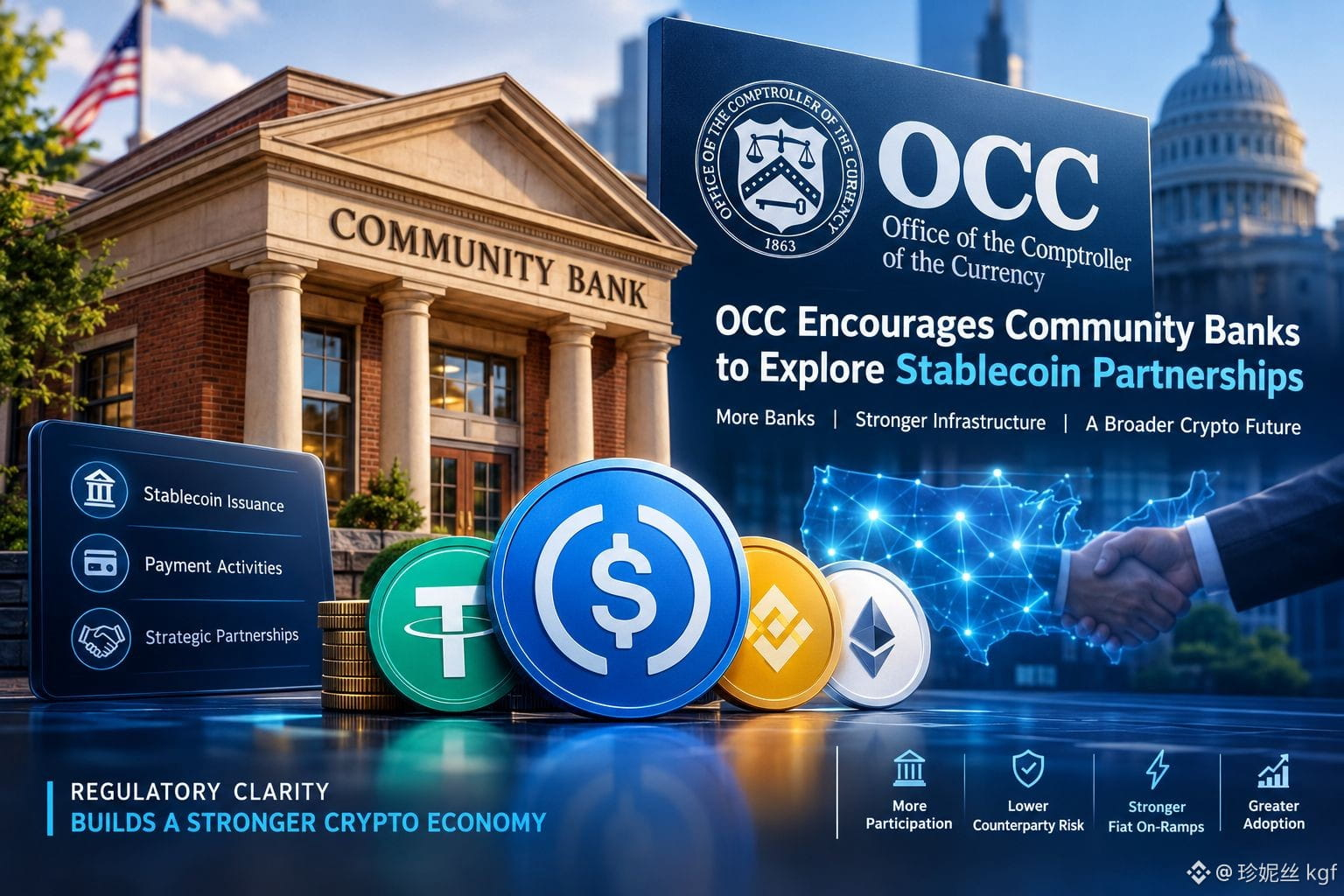
#occurgescommunitybankstoenterstablecoinpayments Das Office of the Comptroller of the Currency (OCC) ermutigt Community-Banken offiziell dazu, Partnerschaften für die Ausgabe von Stablecoins und Zahlungsaktivitäten zu prüfen. Dies markiert eine bedeutende Wende in der Haltung der US-Regulierungsbehörden: weg von vorsichtiger Beobachtung, hin zu aktiver Integration.
Jahrelang blieben Community-Banken aufgrund regulatorischer Unklarheiten im Bereich digitaler Vermögenswerte außen vor. Indem der OCC sie ausdrücklich dazu einlädt, Partnerschaften mit auf Kryptowährungen spezialisierten Unternehmen einzugehen, dezentralisiert er die Stablecoin-Infrastruktur. Dabei geht es nicht nur um große Institutionen: So wird das Vertrauen in traditionelle Banken auch auf die Basis digitaler Zahlungen übertragen.
Warum ist das für den breiteren Kryptomarkt wichtig? Es bestätigt grundsätzlich, dass der Stablecoin-Sektor ein zentraler Bestandteil des Finanzsystems der Zukunft ist. Wenn Community-Banken mitwirken, sinkt das Kontrahentenrisiko und es entstehen mehr Möglichkeiten, Fiatgeld in den Kryptomarkt einzubringen. Die Marktstimmung dürfte positiv reagieren, da regulatorische Klarheit in der Vergangenheit häufig zu Kapitalzuflüssen institutioneller Anleger geführt hat.
Entscheidend ist jedoch die Umsetzung. Community-Banken müssen strenge Compliance-Anforderungen erfüllen. Händler sollten auf frühe Vorreiter unter den regionalen Kreditinstituten achten und beobachten, wie sich dies auf den Total Value Locked von Stablecoins und die täglichen Transaktionsvolumina auswirkt. Bei erfolgreicher Umsetzung könnte dies die breite Akzeptanz von Kryptowährungen deutlich beschleunigen.
#Stablecoins #KryptoNews #TradFi #Regulation
$SOXSB $CVC $SKY
{future}(SKYUSDT)
{future}(CVCUSDT)
{spot}(SOXSBUSDT)
#occurgescommunitybankstoenterstablecoinpayments Das Office of the Comptroller of the Currency (OCC) ermutigt Community-Banken offiziell dazu, Partnerschaften für die Ausgabe von Stablecoins und Zahlungsaktivitäten zu prüfen. Dies markiert eine bedeutende Wende in der Haltung der US-Regulierungsbehörden: weg von vorsichtiger Beobachtung, hin zu aktiver Integration.
Jahrelang blieben Community-Banken aufgrund regulatorischer Unklarheiten im Bereich digitaler Vermögenswerte außen vor. Indem der OCC sie ausdrücklich dazu einlädt, Partnerschaften mit auf Kryptowährungen spezialisierten Unternehmen einzugehen, dezentralisiert er die Stablecoin-Infrastruktur. Dabei geht es nicht nur um große Institutionen: So wird das Vertrauen in traditionelle Banken auch auf die Basis digitaler Zahlungen übertragen.
Warum ist das für den breiteren Kryptomarkt wichtig? Es bestätigt grundsätzlich, dass der Stablecoin-Sektor ein zentraler Bestandteil des Finanzsystems der Zukunft ist. Wenn Community-Banken mitwirken, sinkt das Kontrahentenrisiko und es entstehen mehr Möglichkeiten, Fiatgeld in den Kryptomarkt einzubringen. Die Marktstimmung dürfte positiv reagieren, da regulatorische Klarheit in der Vergangenheit häufig zu Kapitalzuflüssen institutioneller Anleger geführt hat.
Entscheidend ist jedoch die Umsetzung. Community-Banken müssen strenge Compliance-Anforderungen erfüllen. Händler sollten auf frühe Vorreiter unter den regionalen Kreditinstituten achten und beobachten, wie sich dies auf den Total Value Locked von Stablecoins und die täglichen Transaktionsvolumina auswirkt. Bei erfolgreicher Umsetzung könnte dies die breite Akzeptanz von Kryptowährungen deutlich beschleunigen.
#Stablecoins #KryptoNews #TradFi #Regulation
$SOXSB $CVC $SKY
Jahrelang blieben Community-Banken aufgrund regulatorischer Unklarheiten im Bereich digitaler Vermögenswerte außen vor. Indem der OCC sie ausdrücklich dazu einlädt, Partnerschaften mit auf Kryptowährungen spezialisierten Unternehmen einzugehen, dezentralisiert er die Stablecoin-Infrastruktur. Dabei geht es nicht nur um große Institutionen: So wird das Vertrauen in traditionelle Banken auch auf die Basis digitaler Zahlungen übertragen.
Warum ist das für den breiteren Kryptomarkt wichtig? Es bestätigt grundsätzlich, dass der Stablecoin-Sektor ein zentraler Bestandteil des Finanzsystems der Zukunft ist. Wenn Community-Banken mitwirken, sinkt das Kontrahentenrisiko und es entstehen mehr Möglichkeiten, Fiatgeld in den Kryptomarkt einzubringen. Die Marktstimmung dürfte positiv reagieren, da regulatorische Klarheit in der Vergangenheit häufig zu Kapitalzuflüssen institutioneller Anleger geführt hat.
Entscheidend ist jedoch die Umsetzung. Community-Banken müssen strenge Compliance-Anforderungen erfüllen. Händler sollten auf frühe Vorreiter unter den regionalen Kreditinstituten achten und beobachten, wie sich dies auf den Total Value Locked von Stablecoins und die täglichen Transaktionsvolumina auswirkt. Bei erfolgreicher Umsetzung könnte dies die breite Akzeptanz von Kryptowährungen deutlich beschleunigen.
#Stablecoins #KryptoNews #TradFi #Regulation
$SOXSB $CVC $SKY
2
586

·
--
Übersetzung ansehen
🚨 Zcash privacy vision faces a critical test. A policy group is demanding the SEC’s proposed fundraising rules allow founders to disclose material holdings without concealing unrelated wallet activity. This regulatory scrutiny could impact ZEC’s privacy narrative and market perception.
**Market Implication:** Increased transparency requirements may pressure ZEC’s privacy features, potentially affecting adoption and price sentiment.
#Privacy #Regulation
$ZEC #TradingSignal #CryptoAnalysis
🚨 Zcash privacy vision faces a critical test. A policy group is demanding the SEC’s proposed fundraising rules allow founders to disclose material holdings without concealing unrelated wallet activity. This regulatory scrutiny could impact ZEC’s privacy narrative and market perception.
**Market Implication:** Increased transparency requirements may pressure ZEC’s privacy features, potentially affecting adoption and price sentiment.
#Privacy #Regulation
$ZEC #TradingSignal #CryptoAnalysis
**Market Implication:** Increased transparency requirements may pressure ZEC’s privacy features, potentially affecting adoption and price sentiment.
#Privacy #Regulation
$ZEC #TradingSignal #CryptoAnalysis


🚨 WASHINGTON SETZT DEN 15. SEPTEMBER ALS FRIST FÜR EIN WEGWEISENDES $BTC -GESETZ ZUR REGULIERUNG! ⚡
SEC-Chef Atkins treibt den CLARITY Act offiziell auf eine wichtige Verfahrensabstimmung im Senat am 15. September zu. 📊 Vorausschauende Anleger positionieren sich bereits vor diesem möglichen Wendepunkt in der Regulierung, während die Aufsichtsbehörden grünes Licht für maßgeschneiderte Regeln für den Kryptomarkt signalisieren.
Selbst wenn der Kongress auf der Stelle tritt, gehen die Aufsichtsbehörden entschlossen vor, um im Rahmen ihrer bestehenden Befugnisse eine formelle Marktaufsicht einzurichten. 💡 Die dunkle Wolke der regulatorischen Unklarheit, die institutionelles Kapital fernhielt, lichtet sich endlich und ebnet den Weg für eine langfristige Marktexpansion.
💬 Kann der Senat am 15. September die nötigen 60 Stimmen sichern, oder hat der Markt einen gewaltigen Sieg für $BTC ohnehin schon eingepreist? 👇
⚠️ Keine Finanzberatung. Behalten Sie Ihr Risiko stets im Blick. 🛡️
🏷️ #BTC #CryptoNews #Regulation #Bitcoin
⚡ 💎
🚨 WASHINGTON SETZT DEN 15. SEPTEMBER ALS FRIST FÜR EIN WEGWEISENDES $BTC -GESETZ ZUR REGULIERUNG! ⚡
SEC-Chef Atkins treibt den CLARITY Act offiziell auf eine wichtige Verfahrensabstimmung im Senat am 15. September zu. 📊 Vorausschauende Anleger positionieren sich bereits vor diesem möglichen Wendepunkt in der Regulierung, während die Aufsichtsbehörden grünes Licht für maßgeschneiderte Regeln für den Kryptomarkt signalisieren.
Selbst wenn der Kongress auf der Stelle tritt, gehen die Aufsichtsbehörden entschlossen vor, um im Rahmen ihrer bestehenden Befugnisse eine formelle Marktaufsicht einzurichten. 💡 Die dunkle Wolke der regulatorischen Unklarheit, die institutionelles Kapital fernhielt, lichtet sich endlich und ebnet den Weg für eine langfristige Marktexpansion.
💬 Kann der Senat am 15. September die nötigen 60 Stimmen sichern, oder hat der Markt einen gewaltigen Sieg für $BTC ohnehin schon eingepreist? 👇
⚠️ Keine Finanzberatung. Behalten Sie Ihr Risiko stets im Blick. 🛡️
🏷️ #BTC #CryptoNews #Regulation #Bitcoin
⚡ 💎
SEC-Chef Atkins treibt den CLARITY Act offiziell auf eine wichtige Verfahrensabstimmung im Senat am 15. September zu. 📊 Vorausschauende Anleger positionieren sich bereits vor diesem möglichen Wendepunkt in der Regulierung, während die Aufsichtsbehörden grünes Licht für maßgeschneiderte Regeln für den Kryptomarkt signalisieren.
Selbst wenn der Kongress auf der Stelle tritt, gehen die Aufsichtsbehörden entschlossen vor, um im Rahmen ihrer bestehenden Befugnisse eine formelle Marktaufsicht einzurichten. 💡 Die dunkle Wolke der regulatorischen Unklarheit, die institutionelles Kapital fernhielt, lichtet sich endlich und ebnet den Weg für eine langfristige Marktexpansion.
💬 Kann der Senat am 15. September die nötigen 60 Stimmen sichern, oder hat der Markt einen gewaltigen Sieg für $BTC ohnehin schon eingepreist? 👇
⚠️ Keine Finanzberatung. Behalten Sie Ihr Risiko stets im Blick. 🛡️
🏷️ #BTC #CryptoNews #Regulation #Bitcoin
⚡ 💎
9

·
--
Verifiziert
📊 BTC-Marktupdate | $79,812.13
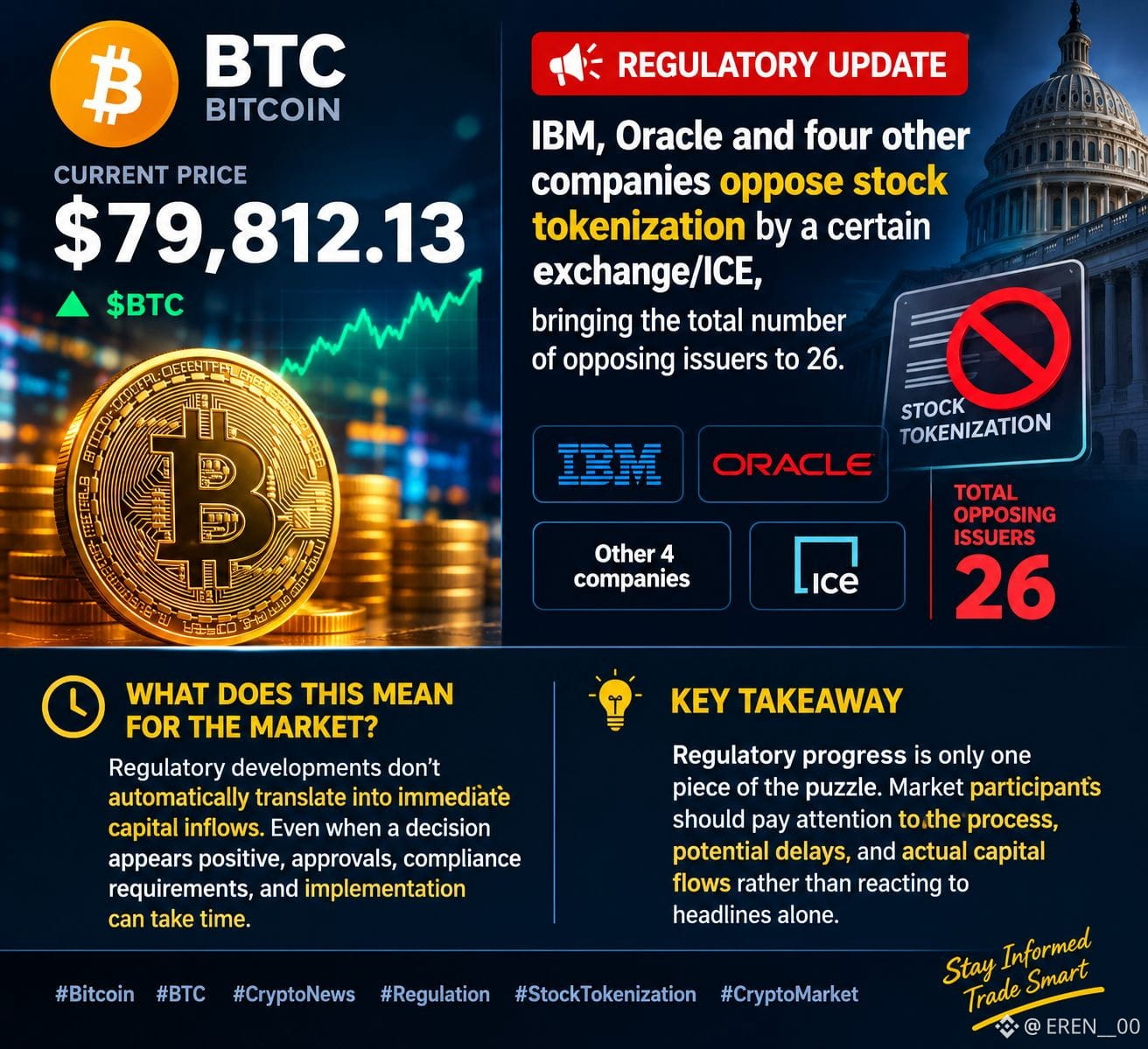
Bitcoin ($BTC) wird derzeit zu $79,812.13 gehandelt. Unterdessen geht die regulatorische Debatte über die Tokenisierung von Aktien weiter. Berichten zufolge lehnen IBM, Oracle und vier weitere Unternehmen eine mit ICE verbundene Börseninitiative ab. Damit steigt die Zahl der ablehnenden Emittenten auf 26.
🚨 Was bedeutet das für den Markt?
Regulatorische Entwicklungen führen nicht automatisch zu unmittelbaren Kapitalzuflüssen. Selbst wenn eine Entscheidung positiv erscheint, können Genehmigungen, Compliance-Anforderungen und die Umsetzung Zeit in Anspruch nehmen.
💡 Wichtigste Erkenntnis: Regulatorische Fortschritte sind nur ein Teil des Gesamtbilds. Marktteilnehmer sollten den Prozess, mögliche Verzögerungen und die tatsächlichen Kapitalflüsse im Blick behalten, statt nur auf Schlagzeilen zu reagieren.
#bitcoin #BTC #CryptoNews #Regulation #StockTokenization #CryptoMarket
📊 BTC-Marktupdate | $79,812.13
Bitcoin ($BTC) wird derzeit zu $79,812.13 gehandelt. Unterdessen geht die regulatorische Debatte über die Tokenisierung von Aktien weiter. Berichten zufolge lehnen IBM, Oracle und vier weitere Unternehmen eine mit ICE verbundene Börseninitiative ab. Damit steigt die Zahl der ablehnenden Emittenten auf 26.
🚨 Was bedeutet das für den Markt?
Regulatorische Entwicklungen führen nicht automatisch zu unmittelbaren Kapitalzuflüssen. Selbst wenn eine Entscheidung positiv erscheint, können Genehmigungen, Compliance-Anforderungen und die Umsetzung Zeit in Anspruch nehmen.
💡 Wichtigste Erkenntnis: Regulatorische Fortschritte sind nur ein Teil des Gesamtbilds. Marktteilnehmer sollten den Prozess, mögliche Verzögerungen und die tatsächlichen Kapitalflüsse im Blick behalten, statt nur auf Schlagzeilen zu reagieren.
#bitcoin #BTC #CryptoNews #Regulation #StockTokenization #CryptoMarket
Bitcoin ($BTC) wird derzeit zu $79,812.13 gehandelt. Unterdessen geht die regulatorische Debatte über die Tokenisierung von Aktien weiter. Berichten zufolge lehnen IBM, Oracle und vier weitere Unternehmen eine mit ICE verbundene Börseninitiative ab. Damit steigt die Zahl der ablehnenden Emittenten auf 26.
🚨 Was bedeutet das für den Markt?
Regulatorische Entwicklungen führen nicht automatisch zu unmittelbaren Kapitalzuflüssen. Selbst wenn eine Entscheidung positiv erscheint, können Genehmigungen, Compliance-Anforderungen und die Umsetzung Zeit in Anspruch nehmen.
💡 Wichtigste Erkenntnis: Regulatorische Fortschritte sind nur ein Teil des Gesamtbilds. Marktteilnehmer sollten den Prozess, mögliche Verzögerungen und die tatsächlichen Kapitalflüsse im Blick behalten, statt nur auf Schlagzeilen zu reagieren.
#bitcoin #BTC #CryptoNews #Regulation #StockTokenization #CryptoMarket
maan _ moh 1111:
Yes
28
3
32

·
--
Bärisch
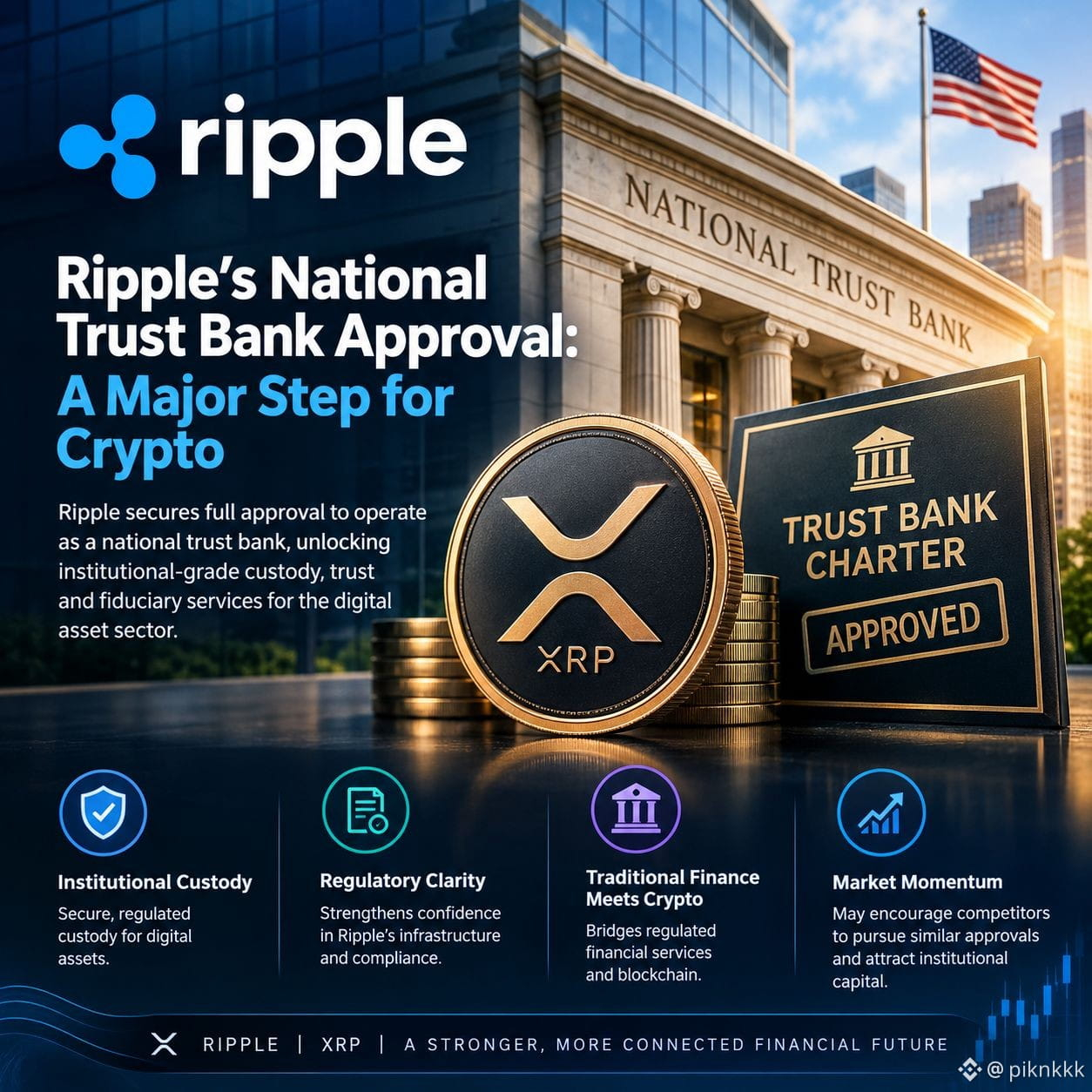
#ripplewinsfullapprovalasnationaltrustbank Ripple hat offiziell die vollständige Genehmigung erhalten, als nationale Trustbank tätig zu sein. Damit erreicht der Sektor der digitalen Vermögenswerte einen bedeutenden regulatorischen Meilenstein. Diese Zulassung macht Ripple aus einem grenzüberschreitenden Zahlungsnetzwerk zu einem regulierten Finanzinstitut, das Verwahrungs-, Trust- und Treuhanddienstleistungen auf institutionellem Niveau anbieten kann.
Jahrelang hat die regulatorische Unklarheit die institutionelle Akzeptanz gebremst. Mit der Trustbank-Lizenz umgeht Ripple nun traditionelle Hürden des Bankwesens. Das Unternehmen kann Kundenvermögen jetzt direkt verwahren und so die Compliance für Hedgefonds und Vermögensverwalter vereinfachen, die in Kryptowährungen investieren möchten, ohne auf Drittverwahrer angewiesen zu sein.
Diese Entwicklung stärkt die Marktstimmung erheblich. Sie bestätigt, dass die Krypto-Infrastruktur gereift ist, und signalisiert, dass die Aufsichtsbehörden integrierten Rahmenbedingungen für digitale Vermögenswerte zunehmend aufgeschlossen gegenüberstehen. Es ist mit einem Welleneffekt am breiteren Markt zu rechnen, da Wettbewerber ihre eigenen Zulassungsanträge beschleunigen, um institutionelles Kapital zu gewinnen.
Händler sollten in den kommenden Wochen die XRP-Handelsvolumina und Kennzahlen zu institutionellen Zuflüssen beobachten. Auch wenn dies für Ripples langfristigen Nutzen grundsätzlich positiv ist, wird die kurzfristige Kursentwicklung weiterhin mit den allgemeinen makroökonomischen Trends und der Marktentwicklung von Bitcoin zusammenhängen. Behalten Sie Ihr Risiko stets im Blick.
#Ripple #XRP #CryptoNews #Regulation
$POLYX $MITO $EPIC
{spot}(EPICUSDT)
{spot}(MITOUSDT)
{future}(POLYXUSDT)
#ripplewinsfullapprovalasnationaltrustbank Ripple hat offiziell die vollständige Genehmigung erhalten, als nationale Trustbank tätig zu sein. Damit erreicht der Sektor der digitalen Vermögenswerte einen bedeutenden regulatorischen Meilenstein. Diese Zulassung macht Ripple aus einem grenzüberschreitenden Zahlungsnetzwerk zu einem regulierten Finanzinstitut, das Verwahrungs-, Trust- und Treuhanddienstleistungen auf institutionellem Niveau anbieten kann.
Jahrelang hat die regulatorische Unklarheit die institutionelle Akzeptanz gebremst. Mit der Trustbank-Lizenz umgeht Ripple nun traditionelle Hürden des Bankwesens. Das Unternehmen kann Kundenvermögen jetzt direkt verwahren und so die Compliance für Hedgefonds und Vermögensverwalter vereinfachen, die in Kryptowährungen investieren möchten, ohne auf Drittverwahrer angewiesen zu sein.
Diese Entwicklung stärkt die Marktstimmung erheblich. Sie bestätigt, dass die Krypto-Infrastruktur gereift ist, und signalisiert, dass die Aufsichtsbehörden integrierten Rahmenbedingungen für digitale Vermögenswerte zunehmend aufgeschlossen gegenüberstehen. Es ist mit einem Welleneffekt am breiteren Markt zu rechnen, da Wettbewerber ihre eigenen Zulassungsanträge beschleunigen, um institutionelles Kapital zu gewinnen.
Händler sollten in den kommenden Wochen die XRP-Handelsvolumina und Kennzahlen zu institutionellen Zuflüssen beobachten. Auch wenn dies für Ripples langfristigen Nutzen grundsätzlich positiv ist, wird die kurzfristige Kursentwicklung weiterhin mit den allgemeinen makroökonomischen Trends und der Marktentwicklung von Bitcoin zusammenhängen. Behalten Sie Ihr Risiko stets im Blick.
#Ripple #XRP #CryptoNews #Regulation
$POLYX $MITO $EPIC
Jahrelang hat die regulatorische Unklarheit die institutionelle Akzeptanz gebremst. Mit der Trustbank-Lizenz umgeht Ripple nun traditionelle Hürden des Bankwesens. Das Unternehmen kann Kundenvermögen jetzt direkt verwahren und so die Compliance für Hedgefonds und Vermögensverwalter vereinfachen, die in Kryptowährungen investieren möchten, ohne auf Drittverwahrer angewiesen zu sein.
Diese Entwicklung stärkt die Marktstimmung erheblich. Sie bestätigt, dass die Krypto-Infrastruktur gereift ist, und signalisiert, dass die Aufsichtsbehörden integrierten Rahmenbedingungen für digitale Vermögenswerte zunehmend aufgeschlossen gegenüberstehen. Es ist mit einem Welleneffekt am breiteren Markt zu rechnen, da Wettbewerber ihre eigenen Zulassungsanträge beschleunigen, um institutionelles Kapital zu gewinnen.
Händler sollten in den kommenden Wochen die XRP-Handelsvolumina und Kennzahlen zu institutionellen Zuflüssen beobachten. Auch wenn dies für Ripples langfristigen Nutzen grundsätzlich positiv ist, wird die kurzfristige Kursentwicklung weiterhin mit den allgemeinen makroökonomischen Trends und der Marktentwicklung von Bitcoin zusammenhängen. Behalten Sie Ihr Risiko stets im Blick.
#Ripple #XRP #CryptoNews #Regulation
$POLYX $MITO $EPIC
2.5k

Übersetzung ansehen
🚀 $XRP UNLOCKS NATIONAL TRUST BANK STATUS – GAME‑CHANGER ALERT! 🟢
📊 Ripple’s fresh regulator green light transforms it into a national trust bank, instantly turning the token into a prime conduit for institutional cash flow. 🦈 Smart‑money whales are already scouting the new vault, and liquidity pools could see a swift influx as banks eye compliant on‑ramps. ⚡ The market narrative flips from speculative to service‑driven, sharpening the bullish edge on the 4‑hour chart where volume is already ticking up. 📈
💬 How will this regulatory green light reshape XRP’s price action in the weeks ahead? 👇
⚠️ Not financial advice. Always manage your risk. 🛡️
🏷️ #XRP #Regulation #Bullish #Crypto
🚀 💎
🚀 $XRP UNLOCKS NATIONAL TRUST BANK STATUS – GAME‑CHANGER ALERT! 🟢
📊 Ripple’s fresh regulator green light transforms it into a national trust bank, instantly turning the token into a prime conduit for institutional cash flow. 🦈 Smart‑money whales are already scouting the new vault, and liquidity pools could see a swift influx as banks eye compliant on‑ramps. ⚡ The market narrative flips from speculative to service‑driven, sharpening the bullish edge on the 4‑hour chart where volume is already ticking up. 📈
💬 How will this regulatory green light reshape XRP’s price action in the weeks ahead? 👇
⚠️ Not financial advice. Always manage your risk. 🛡️
🏷️ #XRP #Regulation #Bullish #Crypto
🚀 💎
📊 Ripple’s fresh regulator green light transforms it into a national trust bank, instantly turning the token into a prime conduit for institutional cash flow. 🦈 Smart‑money whales are already scouting the new vault, and liquidity pools could see a swift influx as banks eye compliant on‑ramps. ⚡ The market narrative flips from speculative to service‑driven, sharpening the bullish edge on the 4‑hour chart where volume is already ticking up. 📈
💬 How will this regulatory green light reshape XRP’s price action in the weeks ahead? 👇
⚠️ Not financial advice. Always manage your risk. 🛡️
🏷️ #XRP #Regulation #Bullish #Crypto
🚀 💎
1

Kanada hat den Stablecoin-Markt mit einem überraschend strengen neuen Regulierungsvorschlag aufgeschreckt und damit bei vielen Besorgnis über die Zukunft von DeFi ausgelöst.
Der Kernpunkt ist ein VOLLSTÄNDIGES VERBOT von Zinsen oder Renditen für Stablecoin-Inhaber – ob direkt oder indirekt. Damit werden Stablecoins zu reinen Zahlungsmitteln und nicht zu renditebringenden Anlagewerten.
Nichtbankliche Emittenten müssen eine Reserve im Verhältnis 1:1 bei kanadischen Finanzinstituten halten. Das soll absolute Sicherheit gewährleisten, bindet sie aber auch eng an das traditionelle Finanzsystem. Die Regelung schreibt außerdem vor, dass Rücknahmen innerhalb von drei Werktagen erfolgen müssen; die Gebühren dürfen höchstens 1 % betragen.
Das ist ein äußerst wichtiger Schritt. Sollte sich dieser Trend ausweiten, könnte sich die Zukunft von DeFi-Projekten, die auf Stablecoin-Yield-Farming setzen, rasant verändern. Die Botschaft ist eindeutig: Stablecoins sind keine Banken.
Wie wird der Kryptomarkt darauf reagieren, dass Stablecoins von jeder Form der Rendite „bereinigt“ werden? Ist dies der Auftakt zu einer weltweiten Welle strengerer Regulierung?
#Crypto #Stablecoin #Regulation #Canada
Kanada hat den Stablecoin-Markt mit einem überraschend strengen neuen Regulierungsvorschlag aufgeschreckt und damit bei vielen Besorgnis über die Zukunft von DeFi ausgelöst.
Der Kernpunkt ist ein VOLLSTÄNDIGES VERBOT von Zinsen oder Renditen für Stablecoin-Inhaber – ob direkt oder indirekt. Damit werden Stablecoins zu reinen Zahlungsmitteln und nicht zu renditebringenden Anlagewerten.
Nichtbankliche Emittenten müssen eine Reserve im Verhältnis 1:1 bei kanadischen Finanzinstituten halten. Das soll absolute Sicherheit gewährleisten, bindet sie aber auch eng an das traditionelle Finanzsystem. Die Regelung schreibt außerdem vor, dass Rücknahmen innerhalb von drei Werktagen erfolgen müssen; die Gebühren dürfen höchstens 1 % betragen.
Das ist ein äußerst wichtiger Schritt. Sollte sich dieser Trend ausweiten, könnte sich die Zukunft von DeFi-Projekten, die auf Stablecoin-Yield-Farming setzen, rasant verändern. Die Botschaft ist eindeutig: Stablecoins sind keine Banken.
Wie wird der Kryptomarkt darauf reagieren, dass Stablecoins von jeder Form der Rendite „bereinigt“ werden? Ist dies der Auftakt zu einer weltweiten Welle strengerer Regulierung?
#Crypto #Stablecoin #Regulation #Canada
Der Kernpunkt ist ein VOLLSTÄNDIGES VERBOT von Zinsen oder Renditen für Stablecoin-Inhaber – ob direkt oder indirekt. Damit werden Stablecoins zu reinen Zahlungsmitteln und nicht zu renditebringenden Anlagewerten.
Nichtbankliche Emittenten müssen eine Reserve im Verhältnis 1:1 bei kanadischen Finanzinstituten halten. Das soll absolute Sicherheit gewährleisten, bindet sie aber auch eng an das traditionelle Finanzsystem. Die Regelung schreibt außerdem vor, dass Rücknahmen innerhalb von drei Werktagen erfolgen müssen; die Gebühren dürfen höchstens 1 % betragen.
Das ist ein äußerst wichtiger Schritt. Sollte sich dieser Trend ausweiten, könnte sich die Zukunft von DeFi-Projekten, die auf Stablecoin-Yield-Farming setzen, rasant verändern. Die Botschaft ist eindeutig: Stablecoins sind keine Banken.
Wie wird der Kryptomarkt darauf reagieren, dass Stablecoins von jeder Form der Rendite „bereinigt“ werden? Ist dies der Auftakt zu einer weltweiten Welle strengerer Regulierung?
#Crypto #Stablecoin #Regulation #Canada
1
·
--
Zwei Faktoren werden darüber entscheiden, ob $BTC und $XRP dem erdrückenden Gewicht des vorgeschlagenen CLARITY Act standhalten können.
Achte zunächst auf die Spannungen zwischen etablierten Prüfungen und Selbstverwahrung. Sieh dir dann an, wie institutionelle Brücken bei einem Compliance-Ereignis „Kontrolle“ definieren. Diese Definition ist der einzige Engpass, der für die Einführung wirklich zählt.
$BTC $XRP #CryptoCompliance #Regulation #Narrative
Zwei Faktoren werden darüber entscheiden, ob $BTC und $XRP dem erdrückenden Gewicht des vorgeschlagenen CLARITY Act standhalten können.
Achte zunächst auf die Spannungen zwischen etablierten Prüfungen und Selbstverwahrung. Sieh dir dann an, wie institutionelle Brücken bei einem Compliance-Ereignis „Kontrolle“ definieren. Diese Definition ist der einzige Engpass, der für die Einführung wirklich zählt.
$BTC $XRP #CryptoCompliance #Regulation #Narrative
Achte zunächst auf die Spannungen zwischen etablierten Prüfungen und Selbstverwahrung. Sieh dir dann an, wie institutionelle Brücken bei einem Compliance-Ereignis „Kontrolle“ definieren. Diese Definition ist der einzige Engpass, der für die Einführung wirklich zählt.
$BTC $XRP #CryptoCompliance #Regulation #Narrative

104

🚨 $BEAMX $CHIP $BULLA AUF DER CFTC-SCHUTZWELLE MITREITEN 🚀
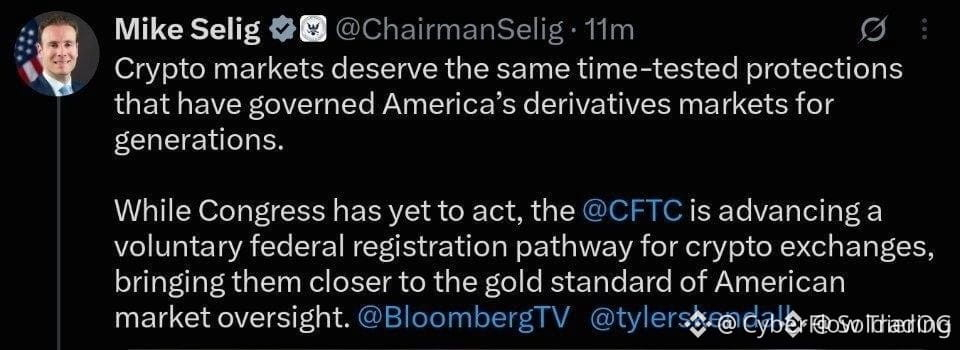
📊 Das Versprechen der CFTC, Kryptowährungen dieselben Schutzmaßnahmen wie US-Derivate zu gewähren, ist ein echter Gamechanger und lenkt kluges Kapital auf die drei Token. ⚡ Mit steigender Glaubwürdigkeit dank der Einhaltung regulatorischer Vorgaben könnten institutionelle Kaufaufträge in großer Zahl einströmen, während der Markt auf mögliche Liquiditätsbewegungen achtet, die die neuen Regeln auf die Probe stellen. 🦈 Rechne kurzfristig mit erhöhter Volatilität, wenn Trader versuchen, sich zu positionieren, bevor sich die regulatorische Lage beruhigt.
💬 Wie wird die neue regulatorische Leitlinie deine Allokationsstrategie für diese Vermögenswerte verändern? 👇
⚠️ Keine Finanzberatung. Behalte dein Risiko stets im Griff. 🛡️
🏷️ #BEAMX #Regulation #Institutional #Crypto
🚀 ⚡
🚨 $BEAMX $CHIP $BULLA AUF DER CFTC-SCHUTZWELLE MITREITEN 🚀
📊 Das Versprechen der CFTC, Kryptowährungen dieselben Schutzmaßnahmen wie US-Derivate zu gewähren, ist ein echter Gamechanger und lenkt kluges Kapital auf die drei Token. ⚡ Mit steigender Glaubwürdigkeit dank der Einhaltung regulatorischer Vorgaben könnten institutionelle Kaufaufträge in großer Zahl einströmen, während der Markt auf mögliche Liquiditätsbewegungen achtet, die die neuen Regeln auf die Probe stellen. 🦈 Rechne kurzfristig mit erhöhter Volatilität, wenn Trader versuchen, sich zu positionieren, bevor sich die regulatorische Lage beruhigt.
💬 Wie wird die neue regulatorische Leitlinie deine Allokationsstrategie für diese Vermögenswerte verändern? 👇
⚠️ Keine Finanzberatung. Behalte dein Risiko stets im Griff. 🛡️
🏷️ #BEAMX #Regulation #Institutional #Crypto
🚀 ⚡
📊 Das Versprechen der CFTC, Kryptowährungen dieselben Schutzmaßnahmen wie US-Derivate zu gewähren, ist ein echter Gamechanger und lenkt kluges Kapital auf die drei Token. ⚡ Mit steigender Glaubwürdigkeit dank der Einhaltung regulatorischer Vorgaben könnten institutionelle Kaufaufträge in großer Zahl einströmen, während der Markt auf mögliche Liquiditätsbewegungen achtet, die die neuen Regeln auf die Probe stellen. 🦈 Rechne kurzfristig mit erhöhter Volatilität, wenn Trader versuchen, sich zu positionieren, bevor sich die regulatorische Lage beruhigt.
💬 Wie wird die neue regulatorische Leitlinie deine Allokationsstrategie für diese Vermögenswerte verändern? 👇
⚠️ Keine Finanzberatung. Behalte dein Risiko stets im Griff. 🛡️
🏷️ #BEAMX #Regulation #Institutional #Crypto
🚀 ⚡
12
Übersetzung ansehen
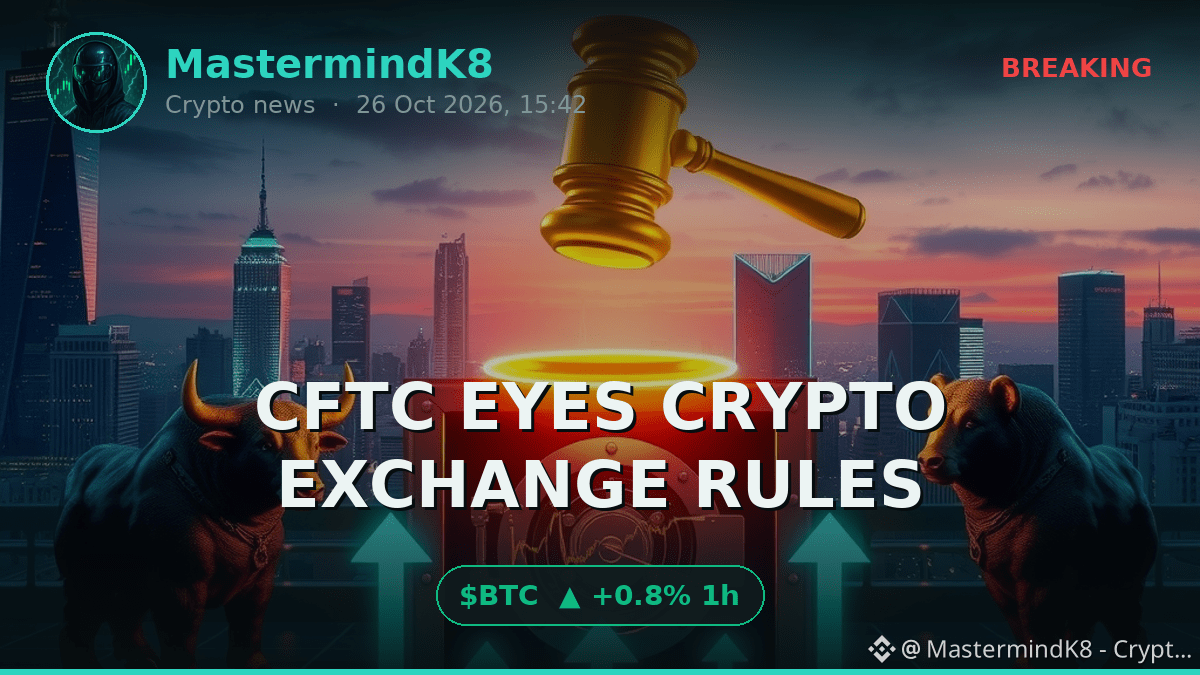
🚨 BREAKING: The CFTC reportedly is developing new rules requiring crypto exchanges to register with US regulators.
Federal oversight could boost market confidence and stability, potentially shaping Bitcoin's market dynamics in a positive way. 🏛️
BTC moved +0.84% in the last hour 🟢↑
My take: clearer rules for exchanges could draw more institutional players in over time. 📊
Do you see regulated exchanges as a net positive for the market?
Follow me for breaking crypto news 🔔
$BTC #BreakingNews #CryptoNews #Regulation
🚨 BREAKING: The CFTC reportedly is developing new rules requiring crypto exchanges to register with US regulators.
Federal oversight could boost market confidence and stability, potentially shaping Bitcoin's market dynamics in a positive way. 🏛️
BTC moved +0.84% in the last hour 🟢↑
My take: clearer rules for exchanges could draw more institutional players in over time. 📊
Do you see regulated exchanges as a net positive for the market?
Follow me for breaking crypto news 🔔
$BTC #BreakingNews #CryptoNews #Regulation
Federal oversight could boost market confidence and stability, potentially shaping Bitcoin's market dynamics in a positive way. 🏛️
BTC moved +0.84% in the last hour 🟢↑
My take: clearer rules for exchanges could draw more institutional players in over time. 📊
Do you see regulated exchanges as a net positive for the market?
Follow me for breaking crypto news 🔔
$BTC #BreakingNews #CryptoNews #Regulation
80

·
--
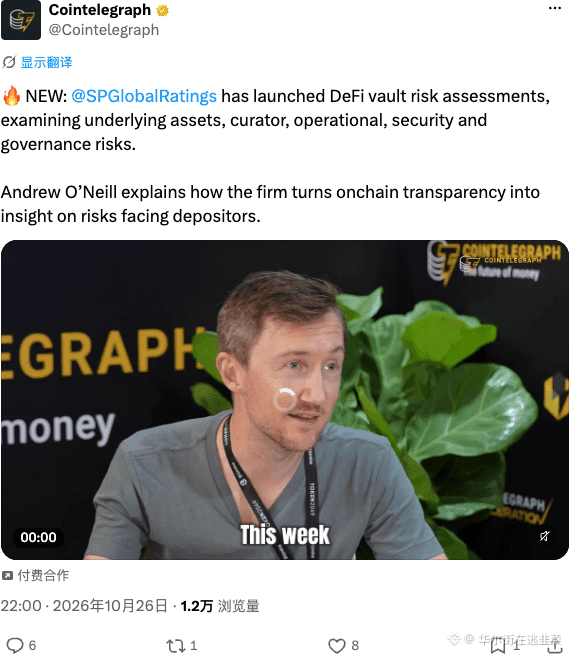
S&P Global unterzieht DeFi-Treasuries einem gründlichen Check-up und legt dabei alles offen: Basiswerte, Betriebssicherheit und Schwachstellen in der Governance.
Früher hat man sich einfach über einen hohen TVL gefreut. Jetzt gibt es endlich jemanden, der großen Investoren den Weg weist. Der Trend zur Regulierung ist unaufhaltsam – die Zeiten, in denen man sich mit Glück zurücklehnen und gewinnen konnte, sind endgültig vorbei.
&P
#DeFi #Regulation #S
S&P Global unterzieht DeFi-Treasuries einem gründlichen Check-up und legt dabei alles offen: Basiswerte, Betriebssicherheit und Schwachstellen in der Governance.
Früher hat man sich einfach über einen hohen TVL gefreut. Jetzt gibt es endlich jemanden, der großen Investoren den Weg weist. Der Trend zur Regulierung ist unaufhaltsam – die Zeiten, in denen man sich mit Glück zurücklehnen und gewinnen konnte, sind endgültig vorbei.
&P
#DeFi #Regulation #S
Früher hat man sich einfach über einen hohen TVL gefreut. Jetzt gibt es endlich jemanden, der großen Investoren den Weg weist. Der Trend zur Regulierung ist unaufhaltsam – die Zeiten, in denen man sich mit Glück zurücklehnen und gewinnen konnte, sind endgültig vorbei.
&P
#DeFi #Regulation #S
7

#southkoreareportedlyweighsfourthcryptotaxdelay
Südkorea könnte die Besteuerung von Kryptowährungen erneut verschieben. Die Steuer von 20 %, die bereits 2022 hätte in Kraft treten sollen und für 2025 vorgesehen ist, könnte zum vierten Mal verschoben werden.
Die praktischen Auswirkungen für Trader:
Die Verschiebung verschafft Kleinanlegern vor Ort eine unmittelbare Entlastung und verhindert einen Kapitalabfluss. Inländische Börsen wie Upbit können weiterhin durchatmen, da ihre Liquidität eng mit Privatanlegern verknüpft ist.
Die Einordnung des Marktes:
Verwechseln Sie dieses Ereignis nicht mit einem makroökonomischen Kurstreiber. Es handelt sich um einen Liquiditätsstabilisator. Die Maßnahme nimmt kurzfristig Druck nach unten, ändert aber nichts an den Grundlagen der globalen Akzeptanz. Der Markt gewinnt lediglich Zeit, während er sich mit dem politischen Spannungsfeld zwischen einer Besteuerung und der Förderung des Sektors auseinandersetzt.
Der Aktionsplan:
Behalten Sie die Nationalversammlung im Blick. Ein endgültiger Zeitplan wird die regionale Stimmung beeinflussen. Bis ein Konsens erreicht ist, wird die Volatilität im Inland von politischen Nachrichten abhängen.
#Regulation $BANK $PYTH $XEC
{spot}(PYTHUSDT)
{spot}(BANKUSDT)
{spot}(XECUSDT)
#southkoreareportedlyweighsfourthcryptotaxdelay
Südkorea könnte die Besteuerung von Kryptowährungen erneut verschieben. Die Steuer von 20 %, die bereits 2022 hätte in Kraft treten sollen und für 2025 vorgesehen ist, könnte zum vierten Mal verschoben werden.
Die praktischen Auswirkungen für Trader:
Die Verschiebung verschafft Kleinanlegern vor Ort eine unmittelbare Entlastung und verhindert einen Kapitalabfluss. Inländische Börsen wie Upbit können weiterhin durchatmen, da ihre Liquidität eng mit Privatanlegern verknüpft ist.
Die Einordnung des Marktes:
Verwechseln Sie dieses Ereignis nicht mit einem makroökonomischen Kurstreiber. Es handelt sich um einen Liquiditätsstabilisator. Die Maßnahme nimmt kurzfristig Druck nach unten, ändert aber nichts an den Grundlagen der globalen Akzeptanz. Der Markt gewinnt lediglich Zeit, während er sich mit dem politischen Spannungsfeld zwischen einer Besteuerung und der Förderung des Sektors auseinandersetzt.
Der Aktionsplan:
Behalten Sie die Nationalversammlung im Blick. Ein endgültiger Zeitplan wird die regionale Stimmung beeinflussen. Bis ein Konsens erreicht ist, wird die Volatilität im Inland von politischen Nachrichten abhängen.
#Regulation $BANK $PYTH $XEC
Südkorea könnte die Besteuerung von Kryptowährungen erneut verschieben. Die Steuer von 20 %, die bereits 2022 hätte in Kraft treten sollen und für 2025 vorgesehen ist, könnte zum vierten Mal verschoben werden.
Die praktischen Auswirkungen für Trader:
Die Verschiebung verschafft Kleinanlegern vor Ort eine unmittelbare Entlastung und verhindert einen Kapitalabfluss. Inländische Börsen wie Upbit können weiterhin durchatmen, da ihre Liquidität eng mit Privatanlegern verknüpft ist.
Die Einordnung des Marktes:
Verwechseln Sie dieses Ereignis nicht mit einem makroökonomischen Kurstreiber. Es handelt sich um einen Liquiditätsstabilisator. Die Maßnahme nimmt kurzfristig Druck nach unten, ändert aber nichts an den Grundlagen der globalen Akzeptanz. Der Markt gewinnt lediglich Zeit, während er sich mit dem politischen Spannungsfeld zwischen einer Besteuerung und der Förderung des Sektors auseinandersetzt.
Der Aktionsplan:
Behalten Sie die Nationalversammlung im Blick. Ein endgültiger Zeitplan wird die regionale Stimmung beeinflussen. Bis ein Konsens erreicht ist, wird die Volatilität im Inland von politischen Nachrichten abhängen.
#Regulation $BANK $PYTH $XEC

1
1.9k
🚨 $BTC KOREANISCHE STEUERPAUSE BIS 2029 VERLÄNGERT 🟢
📊 Südkorea erwägt eine vierte Verschiebung der 22-prozentigen Steuer auf Kryptogewinne und könnte die Frist von 2027 auf 2029 verschieben. Der Knackpunkt? Bis zur Abstimmung globaler Meldestandards lassen sich Transaktionen im Ausland nicht nachverfolgen. 🦈 Dadurch erhalten einheimische Händler, die $BTC , $ETH und $BNB im Wert von über 2,5 Mio. KRW halten, mehrere Jahre Aufschub. 📈 Da DeFi-Erträge auf der Blockchain und grenzüberschreitende Swaps unter dem Radar bleiben, ist die Steuerkontrolle weiterhin locker – und die Aktivität auf dem lokalen Kryptomarkt nimmt stark zu.
💬 Wie wird sich diese regulatorische Pause in den kommenden Monaten auf den Kaufdruck bei den großen Coins auswirken? 👇
⚠️ Keine Finanzberatung. Behalte dein Risiko immer im Blick. 🛡️
🏷️ #BTC #Regulation #TaxDelay #CryptoFreedom
🚀 🔥
🚨 $BTC KOREANISCHE STEUERPAUSE BIS 2029 VERLÄNGERT 🟢
📊 Südkorea erwägt eine vierte Verschiebung der 22-prozentigen Steuer auf Kryptogewinne und könnte die Frist von 2027 auf 2029 verschieben. Der Knackpunkt? Bis zur Abstimmung globaler Meldestandards lassen sich Transaktionen im Ausland nicht nachverfolgen. 🦈 Dadurch erhalten einheimische Händler, die $BTC , $ETH und $BNB im Wert von über 2,5 Mio. KRW halten, mehrere Jahre Aufschub. 📈 Da DeFi-Erträge auf der Blockchain und grenzüberschreitende Swaps unter dem Radar bleiben, ist die Steuerkontrolle weiterhin locker – und die Aktivität auf dem lokalen Kryptomarkt nimmt stark zu.
💬 Wie wird sich diese regulatorische Pause in den kommenden Monaten auf den Kaufdruck bei den großen Coins auswirken? 👇
⚠️ Keine Finanzberatung. Behalte dein Risiko immer im Blick. 🛡️
🏷️ #BTC #Regulation #TaxDelay #CryptoFreedom
🚀 🔥
📊 Südkorea erwägt eine vierte Verschiebung der 22-prozentigen Steuer auf Kryptogewinne und könnte die Frist von 2027 auf 2029 verschieben. Der Knackpunkt? Bis zur Abstimmung globaler Meldestandards lassen sich Transaktionen im Ausland nicht nachverfolgen. 🦈 Dadurch erhalten einheimische Händler, die $BTC , $ETH und $BNB im Wert von über 2,5 Mio. KRW halten, mehrere Jahre Aufschub. 📈 Da DeFi-Erträge auf der Blockchain und grenzüberschreitende Swaps unter dem Radar bleiben, ist die Steuerkontrolle weiterhin locker – und die Aktivität auf dem lokalen Kryptomarkt nimmt stark zu.
💬 Wie wird sich diese regulatorische Pause in den kommenden Monaten auf den Kaufdruck bei den großen Coins auswirken? 👇
⚠️ Keine Finanzberatung. Behalte dein Risiko immer im Blick. 🛡️
🏷️ #BTC #Regulation #TaxDelay #CryptoFreedom
🚀 🔥

·
--
Bullisch
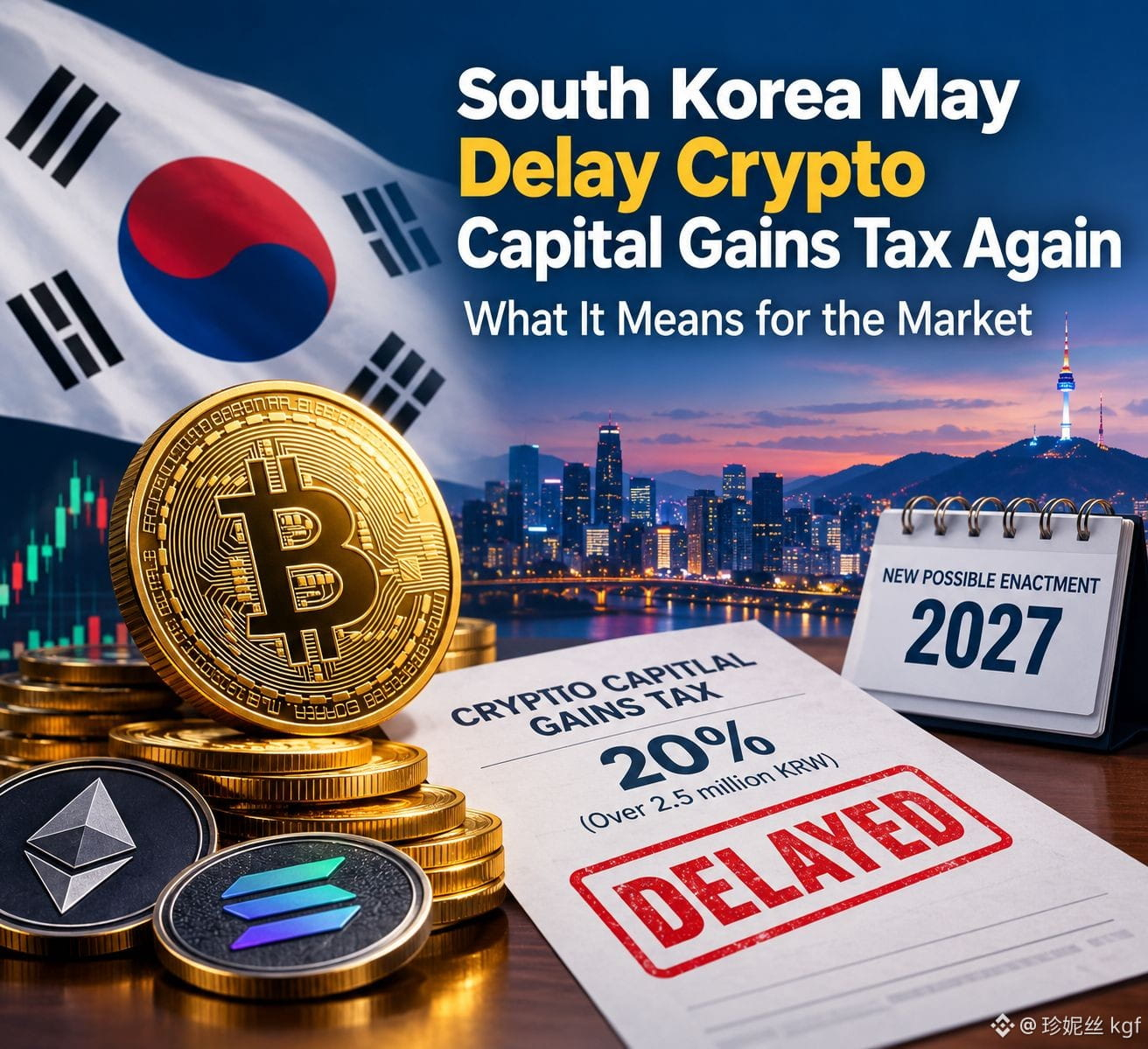
#southkoreareportedlyweighsfourthcryptotaxdelay Südkoreanische Abgeordnete erwägen Berichten zufolge eine vierte Verschiebung der Kapitalertragsteuer auf Kryptowährungen. Die ursprünglich für 2023 geplante Abgabe von 20 % auf Gewinne aus digitalen Vermögenswerten über 2,5 Millionen KRW könnte erneut aufgeschoben werden. Damit würde ihr Inkrafttreten möglicherweise auf 2027 verschoben.
Diese wiederholte legislative Pause verdeutlicht die komplexen regulatorischen Spannungen in einem der größten Kryptomärkte Asiens für Privatanleger. Befürworter der Verschiebung verweisen auf eine unzureichende Infrastruktur für die automatisierte Steuerberichterstattung sowie auf anhaltenden politischen Druck, Privatanleger vor den nationalen Wahlen zu schützen.
Für den Gesamtmarkt ergibt sich dadurch ein differenziertes Bild. Kurzfristig würde der Wegfall der unmittelbar drohenden Steuerlast das lokale Handelsvolumen stützen und die Liquidität von Privatanlegern in der Region aufrechterhalten. Die anhaltende regulatorische Unklarheit könnte jedoch ausländische institutionelle Anleger abschrecken, die auf berechenbare Compliance-Rahmenbedingungen angewiesen sind.
Anleger sollten die anstehenden Abstimmungen in der Nationalversammlung genau verfolgen. Eine offizielle Verlängerung dürfte die Stimmung unter lokalen Händlern vorübergehend verbessern. Sollte das Gesetz jedoch schließlich verabschiedet werden, ist mit einer raschen Neuausrichtung der regionalen Handelsstrategien zu rechnen. Letztlich ist eine verbindliche regulatorische Klarheit – und nicht wiederholte Verzögerungen – der entscheidende Impuls für die langfristige Marktreifung und nachhaltige Kapitalzuflüsse.
#Südkorea #Kryptosteuer #Marktanalyse #Regulation
$BANK $HAEDAL $PYTH
{future}(PYTHUSDT)
{future}(HAEDALUSDT)
{future}(BANKUSDT)
#southkoreareportedlyweighsfourthcryptotaxdelay Südkoreanische Abgeordnete erwägen Berichten zufolge eine vierte Verschiebung der Kapitalertragsteuer auf Kryptowährungen. Die ursprünglich für 2023 geplante Abgabe von 20 % auf Gewinne aus digitalen Vermögenswerten über 2,5 Millionen KRW könnte erneut aufgeschoben werden. Damit würde ihr Inkrafttreten möglicherweise auf 2027 verschoben.
Diese wiederholte legislative Pause verdeutlicht die komplexen regulatorischen Spannungen in einem der größten Kryptomärkte Asiens für Privatanleger. Befürworter der Verschiebung verweisen auf eine unzureichende Infrastruktur für die automatisierte Steuerberichterstattung sowie auf anhaltenden politischen Druck, Privatanleger vor den nationalen Wahlen zu schützen.
Für den Gesamtmarkt ergibt sich dadurch ein differenziertes Bild. Kurzfristig würde der Wegfall der unmittelbar drohenden Steuerlast das lokale Handelsvolumen stützen und die Liquidität von Privatanlegern in der Region aufrechterhalten. Die anhaltende regulatorische Unklarheit könnte jedoch ausländische institutionelle Anleger abschrecken, die auf berechenbare Compliance-Rahmenbedingungen angewiesen sind.
Anleger sollten die anstehenden Abstimmungen in der Nationalversammlung genau verfolgen. Eine offizielle Verlängerung dürfte die Stimmung unter lokalen Händlern vorübergehend verbessern. Sollte das Gesetz jedoch schließlich verabschiedet werden, ist mit einer raschen Neuausrichtung der regionalen Handelsstrategien zu rechnen. Letztlich ist eine verbindliche regulatorische Klarheit – und nicht wiederholte Verzögerungen – der entscheidende Impuls für die langfristige Marktreifung und nachhaltige Kapitalzuflüsse.
#Südkorea #Kryptosteuer #Marktanalyse #Regulation
$BANK $HAEDAL $PYTH
Diese wiederholte legislative Pause verdeutlicht die komplexen regulatorischen Spannungen in einem der größten Kryptomärkte Asiens für Privatanleger. Befürworter der Verschiebung verweisen auf eine unzureichende Infrastruktur für die automatisierte Steuerberichterstattung sowie auf anhaltenden politischen Druck, Privatanleger vor den nationalen Wahlen zu schützen.
Für den Gesamtmarkt ergibt sich dadurch ein differenziertes Bild. Kurzfristig würde der Wegfall der unmittelbar drohenden Steuerlast das lokale Handelsvolumen stützen und die Liquidität von Privatanlegern in der Region aufrechterhalten. Die anhaltende regulatorische Unklarheit könnte jedoch ausländische institutionelle Anleger abschrecken, die auf berechenbare Compliance-Rahmenbedingungen angewiesen sind.
Anleger sollten die anstehenden Abstimmungen in der Nationalversammlung genau verfolgen. Eine offizielle Verlängerung dürfte die Stimmung unter lokalen Händlern vorübergehend verbessern. Sollte das Gesetz jedoch schließlich verabschiedet werden, ist mit einer raschen Neuausrichtung der regionalen Handelsstrategien zu rechnen. Letztlich ist eine verbindliche regulatorische Klarheit – und nicht wiederholte Verzögerungen – der entscheidende Impuls für die langfristige Marktreifung und nachhaltige Kapitalzuflüsse.
#Südkorea #Kryptosteuer #Marktanalyse #Regulation
$BANK $HAEDAL $PYTH
628
·
--
Bullisch
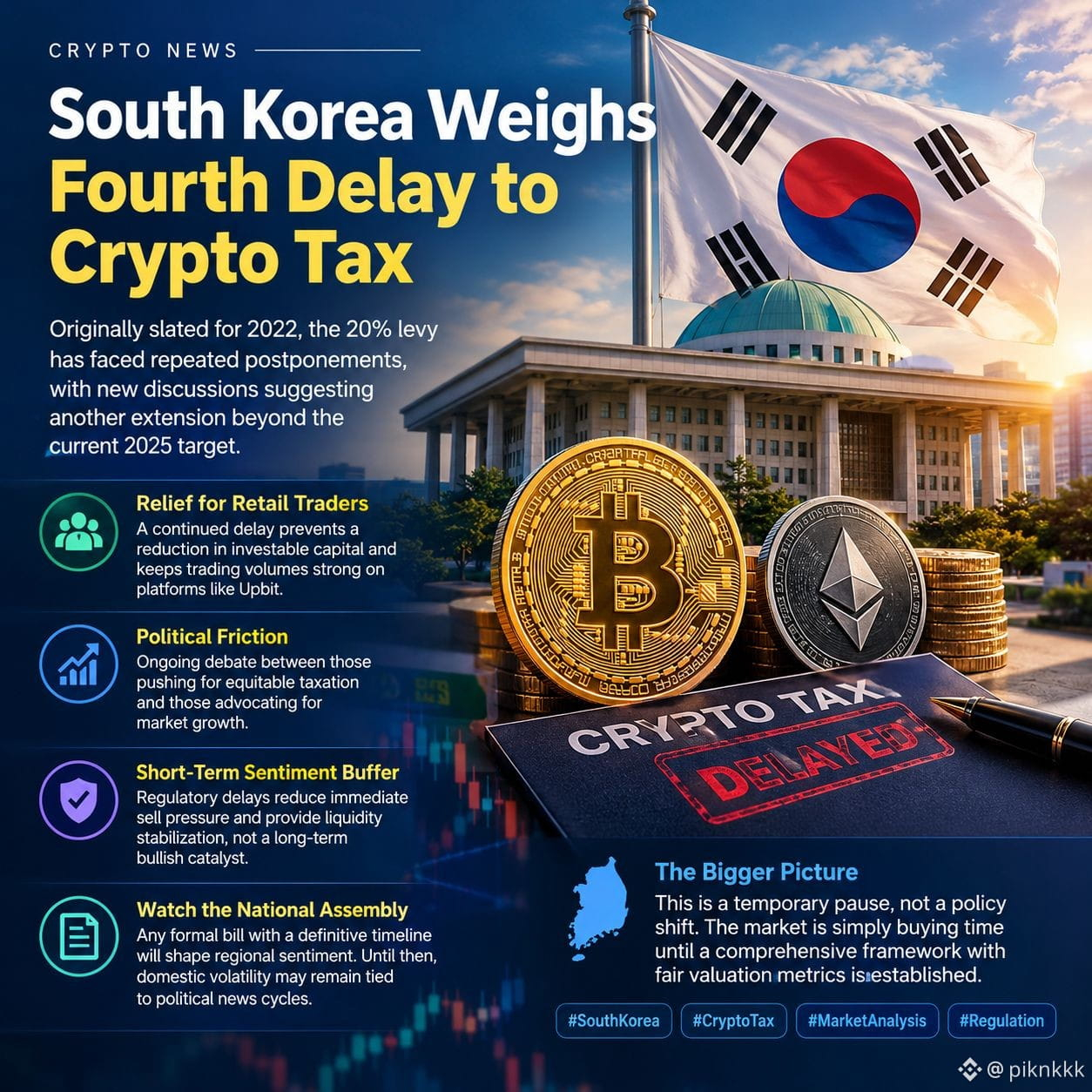
#southkoreareportedlyweighsfourthcryptotaxdelay Südkoreanische Abgeordnete erwägen Berichten zufolge eine vierte Verschiebung der Krypto-Steuer des Landes. Ursprünglich für 2022 geplant, wurde die Abgabe von 20 % wiederholt aufgeschoben. Neue Diskussionen deuten nun auf eine weitere Verlängerung über das derzeitige Zieljahr 2025 hinaus hin.
Dies ist ein entscheidender Schwerpunkt für die Liquidität der asiatischen Märkte. Für lokale Privatanleger bedeutet ein weiterer Aufschub eine sofortige Entlastung, da so eine Verringerung des investierbaren Kapitals verhindert wird. Er stützt die Handelsvolumina auf inländischen Plattformen wie Upbit, die stark auf die Beteiligung von Privatanlegern angewiesen sind. Zugleich verdeutlicht er jedoch die anhaltenden politischen Spannungen zwischen den Fraktionen, die sich für eine gerechte Besteuerung einsetzen, und jenen, die das Marktwachstum fördern wollen.
Aus Sicht der Marktstimmung wirken regulatorische Verzögerungen kurzfristig als Puffer gegen lokalen Verkaufsdruck. Sie sind zwar kein makroökonomischer Kurstreiber, beseitigen aber einen unmittelbaren Belastungsfaktor. Händler sollten dies eher als stabilisierenden Faktor für die Liquidität denn als grundlegenden Wandel bei der weltweiten Akzeptanz betrachten. Der Markt gewinnt lediglich Zeit, bis ein umfassender Rahmen mit fairen Bewertungsmaßstäben geschaffen ist.
In nächster Zeit sollten Marktteilnehmer die Tagesordnung der Nationalversammlung im Blick behalten. Jeder formelle Gesetzentwurf, der einen verbindlichen Zeitplan vorschlägt, wird die regionale Marktstimmung bestimmen. Solange kein Konsens erzielt ist, dürfte die Volatilität im Inland weiterhin von politischen Nachrichtenzyklen abhängen.
#Südkorea #KryptoSteuer #Marktanalyse #Regulation
$BANK $PYTH $XEC
{spot}(XECUSDT)
{future}(PYTHUSDT)
{future}(BANKUSDT)
#southkoreareportedlyweighsfourthcryptotaxdelay Südkoreanische Abgeordnete erwägen Berichten zufolge eine vierte Verschiebung der Krypto-Steuer des Landes. Ursprünglich für 2022 geplant, wurde die Abgabe von 20 % wiederholt aufgeschoben. Neue Diskussionen deuten nun auf eine weitere Verlängerung über das derzeitige Zieljahr 2025 hinaus hin.
Dies ist ein entscheidender Schwerpunkt für die Liquidität der asiatischen Märkte. Für lokale Privatanleger bedeutet ein weiterer Aufschub eine sofortige Entlastung, da so eine Verringerung des investierbaren Kapitals verhindert wird. Er stützt die Handelsvolumina auf inländischen Plattformen wie Upbit, die stark auf die Beteiligung von Privatanlegern angewiesen sind. Zugleich verdeutlicht er jedoch die anhaltenden politischen Spannungen zwischen den Fraktionen, die sich für eine gerechte Besteuerung einsetzen, und jenen, die das Marktwachstum fördern wollen.
Aus Sicht der Marktstimmung wirken regulatorische Verzögerungen kurzfristig als Puffer gegen lokalen Verkaufsdruck. Sie sind zwar kein makroökonomischer Kurstreiber, beseitigen aber einen unmittelbaren Belastungsfaktor. Händler sollten dies eher als stabilisierenden Faktor für die Liquidität denn als grundlegenden Wandel bei der weltweiten Akzeptanz betrachten. Der Markt gewinnt lediglich Zeit, bis ein umfassender Rahmen mit fairen Bewertungsmaßstäben geschaffen ist.
In nächster Zeit sollten Marktteilnehmer die Tagesordnung der Nationalversammlung im Blick behalten. Jeder formelle Gesetzentwurf, der einen verbindlichen Zeitplan vorschlägt, wird die regionale Marktstimmung bestimmen. Solange kein Konsens erzielt ist, dürfte die Volatilität im Inland weiterhin von politischen Nachrichtenzyklen abhängen.
#Südkorea #KryptoSteuer #Marktanalyse #Regulation
$BANK $PYTH $XEC
Dies ist ein entscheidender Schwerpunkt für die Liquidität der asiatischen Märkte. Für lokale Privatanleger bedeutet ein weiterer Aufschub eine sofortige Entlastung, da so eine Verringerung des investierbaren Kapitals verhindert wird. Er stützt die Handelsvolumina auf inländischen Plattformen wie Upbit, die stark auf die Beteiligung von Privatanlegern angewiesen sind. Zugleich verdeutlicht er jedoch die anhaltenden politischen Spannungen zwischen den Fraktionen, die sich für eine gerechte Besteuerung einsetzen, und jenen, die das Marktwachstum fördern wollen.
Aus Sicht der Marktstimmung wirken regulatorische Verzögerungen kurzfristig als Puffer gegen lokalen Verkaufsdruck. Sie sind zwar kein makroökonomischer Kurstreiber, beseitigen aber einen unmittelbaren Belastungsfaktor. Händler sollten dies eher als stabilisierenden Faktor für die Liquidität denn als grundlegenden Wandel bei der weltweiten Akzeptanz betrachten. Der Markt gewinnt lediglich Zeit, bis ein umfassender Rahmen mit fairen Bewertungsmaßstäben geschaffen ist.
In nächster Zeit sollten Marktteilnehmer die Tagesordnung der Nationalversammlung im Blick behalten. Jeder formelle Gesetzentwurf, der einen verbindlichen Zeitplan vorschlägt, wird die regionale Marktstimmung bestimmen. Solange kein Konsens erzielt ist, dürfte die Volatilität im Inland weiterhin von politischen Nachrichtenzyklen abhängen.
#Südkorea #KryptoSteuer #Marktanalyse #Regulation
$BANK $PYTH $XEC
1.3k
Anmelden und weiter Inhalte entdecken
Krypto-Nutzer weltweit auf Binance Square kennenlernen
⚡️ Bleib in Sachen Krypto stets am Puls.
💬 Die weltgrößte Kryptobörse vertraut darauf.
👍 Erhalte verlässliche Einblicke von verifizierten Creators.
E-Mail-Adresse/Telefonnummer
Trendthemen
1
#CanMicrosoftDeliverOnAI
128,941 Aufrufe
1,003 Kommentare
2
#CanGoogleDefindItsCore
62,997 Aufrufe
707 Kommentare
3
#FOMCWatch
9.1M Aufrufe
28,278 Kommentare
4
#SKHynixUnveils$45BShareholderReturns
0 Aufrufe
0 Kommentare
5
#OSMOPlansToBurn100MTokensFromCommunityPool
528 Aufrufe
50 Kommentare
6
#EthereumDropsBelow$2300
12,268 Aufrufe
163 Kommentare
7
#BitcoinSlipsBelow$80KAgain
34,477 Aufrufe
131 Kommentare
8
#ThailandLaunchesWORPTStablecoinToQRPaymentApp
74,005 Aufrufe
885 Kommentare
9
#StrategySkipsBitcoinPurchasesSpends$205MOnSTRCBuybacks
13,548 Aufrufe
99 Kommentare
10
#BitmineAdds10452ETH
124,454 Aufrufe
1,314 Kommentare