
#grm
grm
786 Aufrufe
8 Kommentare
Hot
Zuletzt
$GRM DUMPS 8% AS APPLE YANKS TELEGRAM AUS DEM APP STORE 🔴
📉 Der App-Store-Ausfall dauerte nur Stunden, aber $GRM-Inhaber spürten das volle Gewicht der Panik. Apple zog Telegram mit der Begründung von CSAM-Verstößen zurück, und der Token gab ~8% nach, bevor die App leise wieder hochgekriecht ist. Klassischer Liquiditätsschock — aber der Markt ist zuerst ausgerastet.
🔍 Das ist das zweite Mal seit 2018, dass Apple Telegram mit der Keule trifft. Das Präzedenzfall? Das Protokoll hat aufgeräumt, die Moderation verschärft und überlebt. Der Token erholt sich, aber die Verfärbung der Stimmung bleibt.
💡 Die eigentliche Frage ist nicht, ob Telegram zurückkommt — sondern ob dieser regulatorische Schatten $GRM s Aufwärtspotenzial weiter deckelt. 💬 Behandelst du diesen Dip als Rabatt oder als Warnsignal?
⚠️ Keine Finanzberatung. Manage immer dein Risiko. 🛡️
🏷️ #GRM #Telegram #Crypto #Bearish #AppStore
🩸 📉
$GRM DUMPS 8% AS APPLE YANKS TELEGRAM AUS DEM APP STORE 🔴
📉 Der App-Store-Ausfall dauerte nur Stunden, aber $GRM-Inhaber spürten das volle Gewicht der Panik. Apple zog Telegram mit der Begründung von CSAM-Verstößen zurück, und der Token gab ~8% nach, bevor die App leise wieder hochgekriecht ist. Klassischer Liquiditätsschock — aber der Markt ist zuerst ausgerastet.
🔍 Das ist das zweite Mal seit 2018, dass Apple Telegram mit der Keule trifft. Das Präzedenzfall? Das Protokoll hat aufgeräumt, die Moderation verschärft und überlebt. Der Token erholt sich, aber die Verfärbung der Stimmung bleibt.
💡 Die eigentliche Frage ist nicht, ob Telegram zurückkommt — sondern ob dieser regulatorische Schatten $GRM s Aufwärtspotenzial weiter deckelt. 💬 Behandelst du diesen Dip als Rabatt oder als Warnsignal?
⚠️ Keine Finanzberatung. Manage immer dein Risiko. 🛡️
🏷️ #GRM #Telegram #Crypto #Bearish #AppStore
🩸 📉
📉 Der App-Store-Ausfall dauerte nur Stunden, aber $GRM-Inhaber spürten das volle Gewicht der Panik. Apple zog Telegram mit der Begründung von CSAM-Verstößen zurück, und der Token gab ~8% nach, bevor die App leise wieder hochgekriecht ist. Klassischer Liquiditätsschock — aber der Markt ist zuerst ausgerastet.
🔍 Das ist das zweite Mal seit 2018, dass Apple Telegram mit der Keule trifft. Das Präzedenzfall? Das Protokoll hat aufgeräumt, die Moderation verschärft und überlebt. Der Token erholt sich, aber die Verfärbung der Stimmung bleibt.
💡 Die eigentliche Frage ist nicht, ob Telegram zurückkommt — sondern ob dieser regulatorische Schatten $GRM s Aufwärtspotenzial weiter deckelt. 💬 Behandelst du diesen Dip als Rabatt oder als Warnsignal?
⚠️ Keine Finanzberatung. Manage immer dein Risiko. 🛡️
🏷️ #GRM #Telegram #Crypto #Bearish #AppStore
🩸 📉
6
·
--
Während alle auf die Situation zwischen dem App Store und #Telegram fixiert sind, möchte ich stattdessen über den @thegrm-Bot auf Telegram sprechen. Hier sind drei interessante Dinge, die ich gefunden habe.😵😵😵
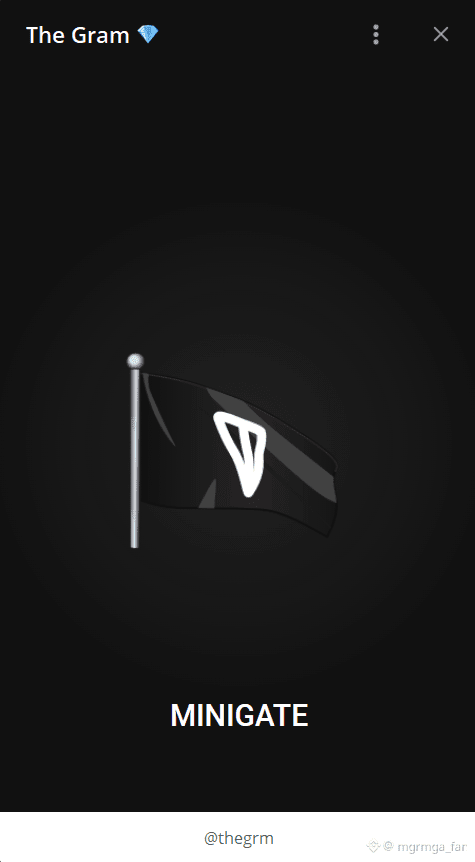
1. Ich bin ziemlich sicher, dass dieser Bot im Hintergrund still und leise aktualisiert wird. Früher hat er funktioniert, es gab Auktionen und sogar eine Gram (GRM)-Wallet. Jetzt erscheint beim Start unten auf dem Bildschirm MINIGATE, gefolgt von „Loading failed.“
(Leider kann ich mich nicht mehr erinnern, ob die MINIGATE-Bezeichnung vorher schon da war, aber soweit ich mich erinnere, war sie das nicht.)
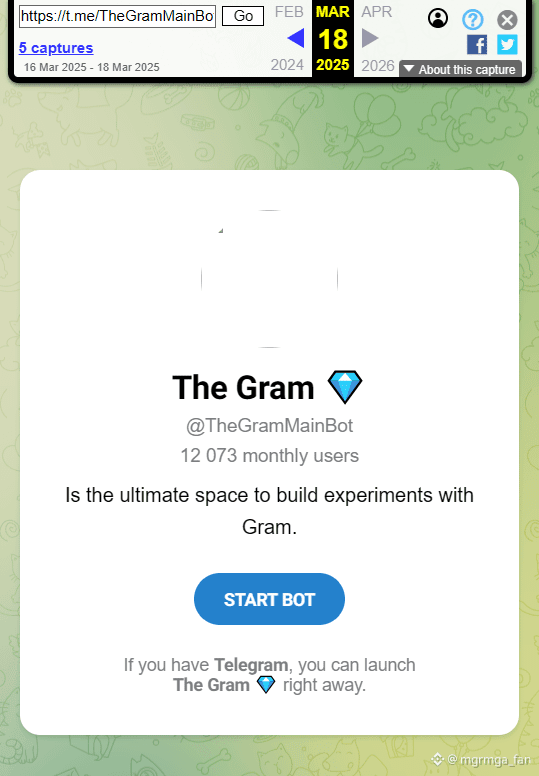
2. Der Benutzername des Bots wurde geändert. (Ich habe einen Screenshot aus dem Wayback Machine beigefügt.)
Alt: t.me/TheGramMainBot
Neu: t.me/thegrm
3. Der Bot wurde von Oleg Oskolsky erstellt (auch bekannt als Gorilla🙊).
Du kannst diesen Bot selbst beobachten, aber sobald sich etwas ändert, gebe ich mir bestmöglich Mühe, es dir als Erstes mitzuteilen.
MINIGATE… was könnte das bedeuten? Soweit ich mich erinnere, ist dieses Wort zuvor in der App noch nie aufgetaucht.
#GRM #Bot $GRAM
Während alle auf die Situation zwischen dem App Store und #Telegram fixiert sind, möchte ich stattdessen über den @thegrm-Bot auf Telegram sprechen. Hier sind drei interessante Dinge, die ich gefunden habe.😵😵😵
1. Ich bin ziemlich sicher, dass dieser Bot im Hintergrund still und leise aktualisiert wird. Früher hat er funktioniert, es gab Auktionen und sogar eine Gram (GRM)-Wallet. Jetzt erscheint beim Start unten auf dem Bildschirm MINIGATE, gefolgt von „Loading failed.“
(Leider kann ich mich nicht mehr erinnern, ob die MINIGATE-Bezeichnung vorher schon da war, aber soweit ich mich erinnere, war sie das nicht.)
2. Der Benutzername des Bots wurde geändert. (Ich habe einen Screenshot aus dem Wayback Machine beigefügt.)
Alt: t.me/TheGramMainBot
Neu: t.me/thegrm
3. Der Bot wurde von Oleg Oskolsky erstellt (auch bekannt als Gorilla🙊).
Du kannst diesen Bot selbst beobachten, aber sobald sich etwas ändert, gebe ich mir bestmöglich Mühe, es dir als Erstes mitzuteilen.
MINIGATE… was könnte das bedeuten? Soweit ich mich erinnere, ist dieses Wort zuvor in der App noch nie aufgetaucht.
#GRM #Bot $GRAM
1. Ich bin ziemlich sicher, dass dieser Bot im Hintergrund still und leise aktualisiert wird. Früher hat er funktioniert, es gab Auktionen und sogar eine Gram (GRM)-Wallet. Jetzt erscheint beim Start unten auf dem Bildschirm MINIGATE, gefolgt von „Loading failed.“
(Leider kann ich mich nicht mehr erinnern, ob die MINIGATE-Bezeichnung vorher schon da war, aber soweit ich mich erinnere, war sie das nicht.)
2. Der Benutzername des Bots wurde geändert. (Ich habe einen Screenshot aus dem Wayback Machine beigefügt.)
Alt: t.me/TheGramMainBot
Neu: t.me/thegrm
3. Der Bot wurde von Oleg Oskolsky erstellt (auch bekannt als Gorilla🙊).
Du kannst diesen Bot selbst beobachten, aber sobald sich etwas ändert, gebe ich mir bestmöglich Mühe, es dir als Erstes mitzuteilen.
MINIGATE… was könnte das bedeuten? Soweit ich mich erinnere, ist dieses Wort zuvor in der App noch nie aufgetaucht.
#GRM #Bot $GRAM
2
222
·
--
Übrigens habe ich selbst einige Domains gesammelt. Eine davon ist mgrmgafan.gram / mgrmgafan.grm.
Warum habe ich sowohl .gram als auch .grm geschrieben? Die Antwort steht unten in Fact #2.
Fact #2
Falls du Fact #1 verpasst hast, findest du es hier: [Fact 1 — Gram DNS](https://www.binance.com/en/square/post/354898494113249)
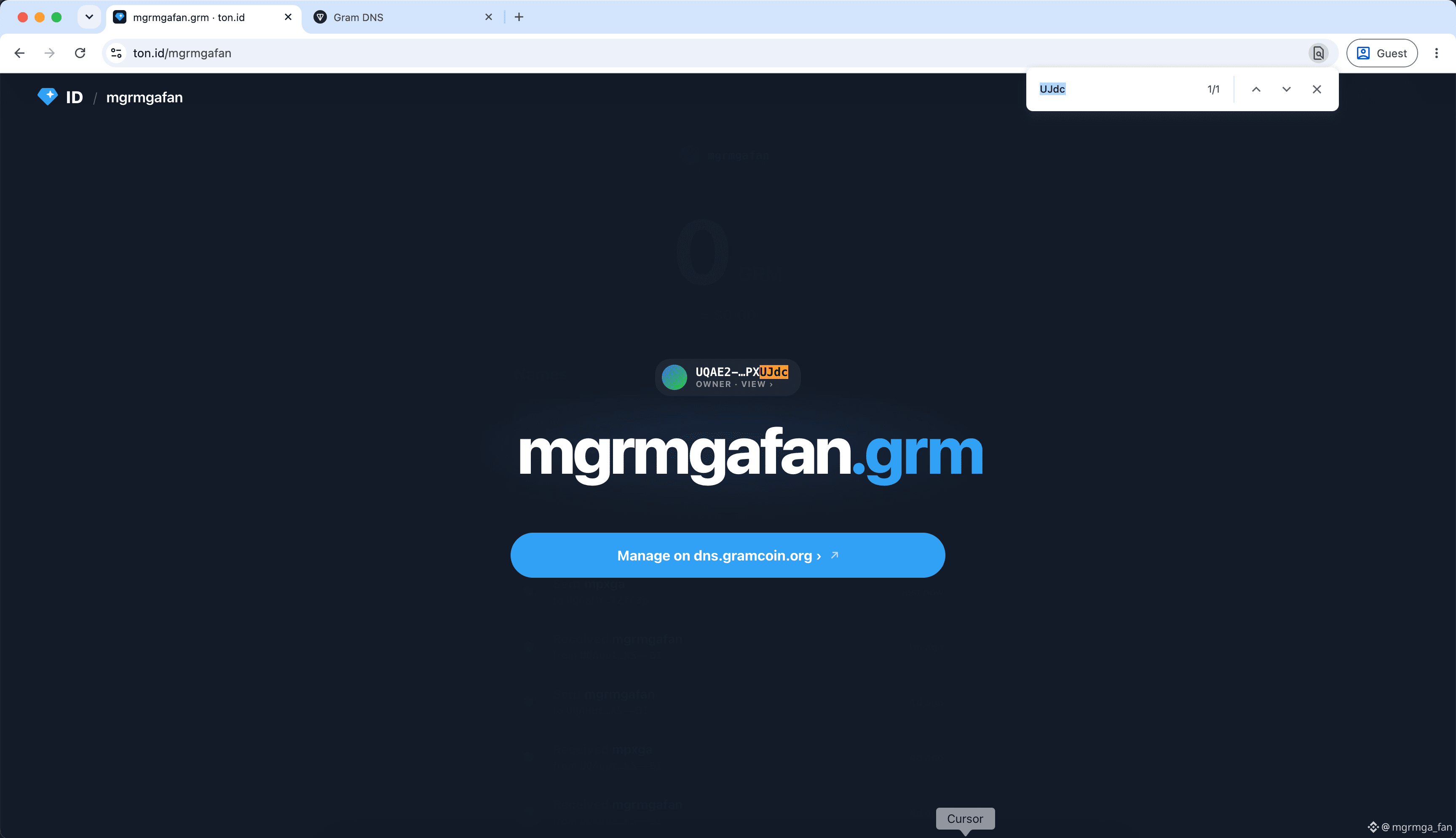
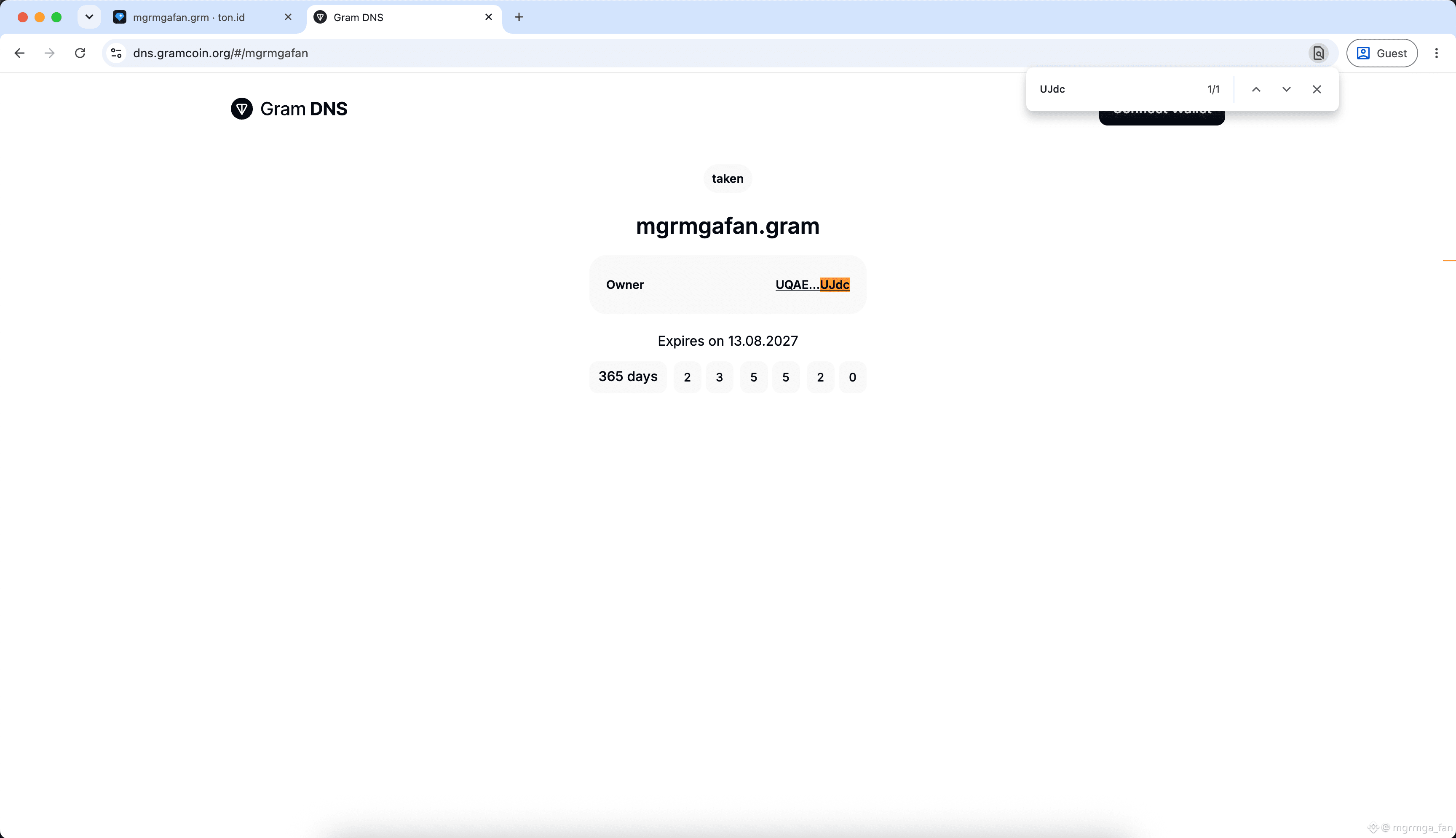
Ich habe Domains bei dns.gramcoin.org mit der .gram-TLD gekauft. Danach konnte ich meine Domain auf ton.id finden, aber dort erschien sie als .grm.
Außerdem hatte ich ton.id schon verfolgt, bevor es die ersten Änderungen gab. Zuvor konnte ich sehen, wie Leute Domains besaßen, die auf .gram endeten, aber nach einem Update wurde .gram zu .grm geändert.
Auch jetzt, wenn ich meine Domain auf dns.gramcoin.org nachschlage, sehe ich mgrmgafan.gram, während sie auf ton.id als mgrmgafan.grm erscheint.
#GRAM #GRM #MGRMGA #Telegram
Übrigens habe ich selbst einige Domains gesammelt. Eine davon ist mgrmgafan.gram / mgrmgafan.grm.
Warum habe ich sowohl .gram als auch .grm geschrieben? Die Antwort steht unten in Fact #2.
Fact #2
Falls du Fact #1 verpasst hast, findest du es hier: Fact 1 — Gram DNS
Ich habe Domains bei dns.gramcoin.org mit der .gram-TLD gekauft. Danach konnte ich meine Domain auf ton.id finden, aber dort erschien sie als .grm.
Außerdem hatte ich ton.id schon verfolgt, bevor es die ersten Änderungen gab. Zuvor konnte ich sehen, wie Leute Domains besaßen, die auf .gram endeten, aber nach einem Update wurde .gram zu .grm geändert.
Auch jetzt, wenn ich meine Domain auf dns.gramcoin.org nachschlage, sehe ich mgrmgafan.gram, während sie auf ton.id als mgrmgafan.grm erscheint.
#GRAM #GRM #MGRMGA #Telegram
Warum habe ich sowohl .gram als auch .grm geschrieben? Die Antwort steht unten in Fact #2.
Fact #2
Falls du Fact #1 verpasst hast, findest du es hier: Fact 1 — Gram DNS
Ich habe Domains bei dns.gramcoin.org mit der .gram-TLD gekauft. Danach konnte ich meine Domain auf ton.id finden, aber dort erschien sie als .grm.
Außerdem hatte ich ton.id schon verfolgt, bevor es die ersten Änderungen gab. Zuvor konnte ich sehen, wie Leute Domains besaßen, die auf .gram endeten, aber nach einem Update wurde .gram zu .grm geändert.
Auch jetzt, wenn ich meine Domain auf dns.gramcoin.org nachschlage, sehe ich mgrmgafan.gram, während sie auf ton.id als mgrmgafan.grm erscheint.
#GRAM #GRM #MGRMGA #Telegram
1
111

·
--
Artikel
Übersetzung ansehen
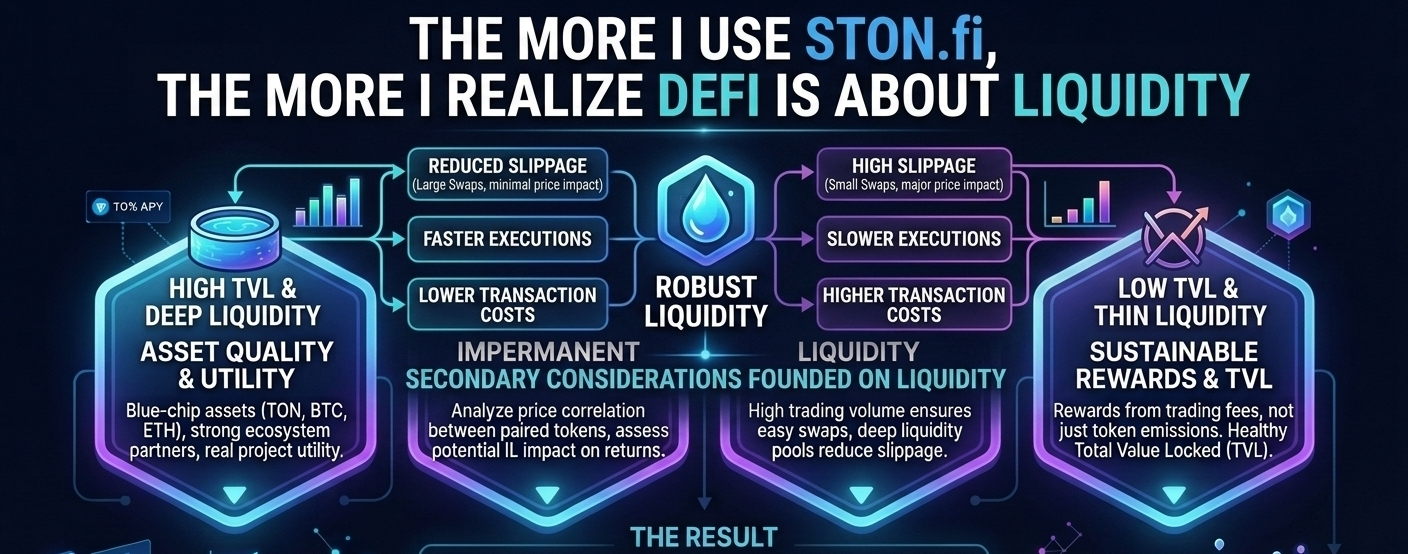
The More I Use STON.fi, the More I Realize DeFi Is About LiquidityThe More I Use STON.fi, the More I Realize DeFi Is About Liquidity
When I first started exploring STON.fi, I was mostly interested in one thing: earning from my crypto.
I would look at the farming page, check the APRs, compare the pools, and naturally gravitate toward whichever number looked the most attractive.
But the longer I spend around STON.fi, the more my perspective has changed.
I now understand that liquidity farming isn't simply about finding a high APR and depositing funds. There is a bigger story happening behind every swap, every liquidity pool, and every reward earned by an LP.
And honestly, that's what has made DeFi more interesting to me.
I Used to See Pools as Just a Place to Earn
At the beginning, I looked at a liquidity pool from a very simple perspective:
"I put my tokens here, and I receive rewards."
That's true, but it's only part of the picture.
When I provide liquidity, those assets are helping other users trade. The pool needs liquidity so people can swap one token for another without relying on a traditional order book.
STON.fi describes liquidity provision and farming as separate steps: providing liquidity gives you LP tokens representing your position, while farming involves staking those LP tokens to earn additional rewards. �
STON.fi Blog +1
Once I understood that, I started looking at my role differently.
I'm not simply depositing money into a farm.
I'm contributing liquidity to a market.
That's When APR Became Less Important to Me
I still check APR. I probably always will.
It's useful for comparing current opportunities.
But I don't let APR make the entire decision anymore.
I've seen how quickly farming numbers can change. A pool that looks extremely attractive today may have a completely different APR later.
So now, when I see a pool with a big number, I become curious rather than excited.
I ask myself:
What is driving this APR?
Is there strong trading activity?
Are there additional farming incentives?
How volatile are the tokens?
Would I still be comfortable holding these assets if the market moved against me?
Those questions are much more useful than simply chasing the biggest percentage.
Liquidity Is the Part of DeFi I Appreciate More Now
One thing I've come to appreciate is how important liquidity actually is.
As a user, it's easy to think about swaps from the perspective of the person clicking "Swap."
You choose a token, enter an amount, confirm the transaction, and you're done.
But behind that simple experience is liquidity.
Someone has supplied those assets.
Someone is taking on the risks associated with providing liquidity.
And that liquidity helps make trading possible.
That's why STON.fi's farming model interests me. Farming isn't completely disconnected from the activity happening on the DEX. Liquidity providers are contributing to the infrastructure that other users depend on.
STON.fi itself describes liquidity as one of the core ways users can contribute to TON DeFi, alongside governance through staking. �
STON.fi Blog
I Also Had to Learn About Impermanent Loss
This was one of the concepts I struggled with when I started.
At first, I thought:
"If I provide liquidity and earn rewards, why wouldn't I simply make more than holding the tokens?"
Then I learned about impermanent loss.
When the relative prices of the two assets in a liquidity pool change, the value of the position can differ from simply holding the two assets separately. That's one of the fundamental risks liquidity providers need to understand. �
STON.fi Blog
Learning this didn't make me stop using liquidity pools.
Instead, it made me more careful.
I stopped looking at farming as "free money" and started treating it as what it really is: a strategy with potential rewards and real risks.
That change in mindset was important for me.
Now I Look at the Whole Picture
These days, when I'm checking STON.fi, I don't look at just one number.
I look at the APR.
I look at the tokens.
I think about volatility.
I consider impermanent loss.
I pay attention to liquidity and trading activity.
And I ask myself whether the opportunity actually makes sense for me.
That doesn't mean I always get it right. DeFi moves too quickly for anyone to predict everything.
But I feel much better making a decision after understanding what I'm getting into rather than simply following the crowd.
Why This Journey Has Been Valuable for Me
The biggest thing STON.fi has given me isn't a particular farm or a particular APR.
It's experience.
Every week, when I check the pools and see how the numbers have changed, I'm learning something about markets, liquidity, incentives and risk.
One week, a particular pool might dominate the farming numbers.
Another week, a different opportunity might attract attention.
And that's actually the interesting part.
DeFi isn't static.
The ecosystem keeps moving, and as a liquidity provider, you have to keep learning with it.
My Biggest Lesson So Far
If there's one thing I'd tell someone just starting out, it's this:
Don't enter DeFi just because you saw a high APR.
Take some time to understand what you're actually doing.
Learn what a liquidity pool is.
Understand where your rewards come from.
Learn about impermanent loss.
Look at the tokens you're providing.
And most importantly, never assume that a high return comes without additional risk.
STON.fi's own educational material makes the same broader point: liquidity provision and farming can create opportunities, but rates fluctuate and risks such as impermanent loss and smart-contract vulnerabilities need to be considered. �
STON.fi Blog +1
Final Thoughts
My view of STON.fi has changed quite a lot since I first started exploring it.
At the beginning, I saw farming as a way to potentially earn more from my crypto.
Now, I see something bigger.
I see liquidity providers helping markets function. I see farmers participating in the TON DeFi economy. I see an ecosystem where the numbers change constantly and where learning is just as important as earning.
And that's probably the biggest lesson I've taken from my experience so far:
In DeFi, the goal shouldn't only be to find the highest yield. The goal should be to understand what you're participating in.
The more I learn about STON.fi, the more I realise that liquidity isn't just a number on a dashboard.
It's the foundation that keeps the whole trading experience moving. 🗿
This is a personal perspective on using and following STON.fi and is not financial advice. Liquidity provision and DeFi involve risk, and APRs can change over time.
#GRM $GRAM
{spot}(GRAMUSDT)
The More I Use STON.fi, the More I Realize DeFi Is About Liquidity
The More I Use STON.fi, the More I Realize DeFi Is About Liquidity
When I first started exploring STON.fi, I was mostly interested in one thing: earning from my crypto.
I would look at the farming page, check the APRs, compare the pools, and naturally gravitate toward whichever number looked the most attractive.
But the longer I spend around STON.fi, the more my perspective has changed.
I now understand that liquidity farming isn't simply about finding a high APR and depositing funds. There is a bigger story happening behind every swap, every liquidity pool, and every reward earned by an LP.
And honestly, that's what has made DeFi more interesting to me.
I Used to See Pools as Just a Place to Earn
At the beginning, I looked at a liquidity pool from a very simple perspective:
"I put my tokens here, and I receive rewards."
That's true, but it's only part of the picture.
When I provide liquidity, those assets are helping other users trade. The pool needs liquidity so people can swap one token for another without relying on a traditional order book.
STON.fi describes liquidity provision and farming as separate steps: providing liquidity gives you LP tokens representing your position, while farming involves staking those LP tokens to earn additional rewards. �
STON.fi Blog +1
Once I understood that, I started looking at my role differently.
I'm not simply depositing money into a farm.
I'm contributing liquidity to a market.
That's When APR Became Less Important to Me
I still check APR. I probably always will.
It's useful for comparing current opportunities.
But I don't let APR make the entire decision anymore.
I've seen how quickly farming numbers can change. A pool that looks extremely attractive today may have a completely different APR later.
So now, when I see a pool with a big number, I become curious rather than excited.
I ask myself:
What is driving this APR?
Is there strong trading activity?
Are there additional farming incentives?
How volatile are the tokens?
Would I still be comfortable holding these assets if the market moved against me?
Those questions are much more useful than simply chasing the biggest percentage.
Liquidity Is the Part of DeFi I Appreciate More Now
One thing I've come to appreciate is how important liquidity actually is.
As a user, it's easy to think about swaps from the perspective of the person clicking "Swap."
You choose a token, enter an amount, confirm the transaction, and you're done.
But behind that simple experience is liquidity.
Someone has supplied those assets.
Someone is taking on the risks associated with providing liquidity.
And that liquidity helps make trading possible.
That's why STON.fi's farming model interests me. Farming isn't completely disconnected from the activity happening on the DEX. Liquidity providers are contributing to the infrastructure that other users depend on.
STON.fi itself describes liquidity as one of the core ways users can contribute to TON DeFi, alongside governance through staking. �
STON.fi Blog
I Also Had to Learn About Impermanent Loss
This was one of the concepts I struggled with when I started.
At first, I thought:
"If I provide liquidity and earn rewards, why wouldn't I simply make more than holding the tokens?"
Then I learned about impermanent loss.
When the relative prices of the two assets in a liquidity pool change, the value of the position can differ from simply holding the two assets separately. That's one of the fundamental risks liquidity providers need to understand. �
STON.fi Blog
Learning this didn't make me stop using liquidity pools.
Instead, it made me more careful.
I stopped looking at farming as "free money" and started treating it as what it really is: a strategy with potential rewards and real risks.
That change in mindset was important for me.
Now I Look at the Whole Picture
These days, when I'm checking STON.fi, I don't look at just one number.
I look at the APR.
I look at the tokens.
I think about volatility.
I consider impermanent loss.
I pay attention to liquidity and trading activity.
And I ask myself whether the opportunity actually makes sense for me.
That doesn't mean I always get it right. DeFi moves too quickly for anyone to predict everything.
But I feel much better making a decision after understanding what I'm getting into rather than simply following the crowd.
Why This Journey Has Been Valuable for Me
The biggest thing STON.fi has given me isn't a particular farm or a particular APR.
It's experience.
Every week, when I check the pools and see how the numbers have changed, I'm learning something about markets, liquidity, incentives and risk.
One week, a particular pool might dominate the farming numbers.
Another week, a different opportunity might attract attention.
And that's actually the interesting part.
DeFi isn't static.
The ecosystem keeps moving, and as a liquidity provider, you have to keep learning with it.
My Biggest Lesson So Far
If there's one thing I'd tell someone just starting out, it's this:
Don't enter DeFi just because you saw a high APR.
Take some time to understand what you're actually doing.
Learn what a liquidity pool is.
Understand where your rewards come from.
Learn about impermanent loss.
Look at the tokens you're providing.
And most importantly, never assume that a high return comes without additional risk.
STON.fi's own educational material makes the same broader point: liquidity provision and farming can create opportunities, but rates fluctuate and risks such as impermanent loss and smart-contract vulnerabilities need to be considered. �
STON.fi Blog +1
Final Thoughts
My view of STON.fi has changed quite a lot since I first started exploring it.
At the beginning, I saw farming as a way to potentially earn more from my crypto.
Now, I see something bigger.
I see liquidity providers helping markets function. I see farmers participating in the TON DeFi economy. I see an ecosystem where the numbers change constantly and where learning is just as important as earning.
And that's probably the biggest lesson I've taken from my experience so far:
In DeFi, the goal shouldn't only be to find the highest yield. The goal should be to understand what you're participating in.
The more I learn about STON.fi, the more I realise that liquidity isn't just a number on a dashboard.
It's the foundation that keeps the whole trading experience moving. 🗿
This is a personal perspective on using and following STON.fi and is not financial advice. Liquidity provision and DeFi involve risk, and APRs can change over time.
#GRM $GRAM
When I first started exploring STON.fi, I was mostly interested in one thing: earning from my crypto.
I would look at the farming page, check the APRs, compare the pools, and naturally gravitate toward whichever number looked the most attractive.
But the longer I spend around STON.fi, the more my perspective has changed.
I now understand that liquidity farming isn't simply about finding a high APR and depositing funds. There is a bigger story happening behind every swap, every liquidity pool, and every reward earned by an LP.
And honestly, that's what has made DeFi more interesting to me.
I Used to See Pools as Just a Place to Earn
At the beginning, I looked at a liquidity pool from a very simple perspective:
"I put my tokens here, and I receive rewards."
That's true, but it's only part of the picture.
When I provide liquidity, those assets are helping other users trade. The pool needs liquidity so people can swap one token for another without relying on a traditional order book.
STON.fi describes liquidity provision and farming as separate steps: providing liquidity gives you LP tokens representing your position, while farming involves staking those LP tokens to earn additional rewards. �
STON.fi Blog +1
Once I understood that, I started looking at my role differently.
I'm not simply depositing money into a farm.
I'm contributing liquidity to a market.
That's When APR Became Less Important to Me
I still check APR. I probably always will.
It's useful for comparing current opportunities.
But I don't let APR make the entire decision anymore.
I've seen how quickly farming numbers can change. A pool that looks extremely attractive today may have a completely different APR later.
So now, when I see a pool with a big number, I become curious rather than excited.
I ask myself:
What is driving this APR?
Is there strong trading activity?
Are there additional farming incentives?
How volatile are the tokens?
Would I still be comfortable holding these assets if the market moved against me?
Those questions are much more useful than simply chasing the biggest percentage.
Liquidity Is the Part of DeFi I Appreciate More Now
One thing I've come to appreciate is how important liquidity actually is.
As a user, it's easy to think about swaps from the perspective of the person clicking "Swap."
You choose a token, enter an amount, confirm the transaction, and you're done.
But behind that simple experience is liquidity.
Someone has supplied those assets.
Someone is taking on the risks associated with providing liquidity.
And that liquidity helps make trading possible.
That's why STON.fi's farming model interests me. Farming isn't completely disconnected from the activity happening on the DEX. Liquidity providers are contributing to the infrastructure that other users depend on.
STON.fi itself describes liquidity as one of the core ways users can contribute to TON DeFi, alongside governance through staking. �
STON.fi Blog
I Also Had to Learn About Impermanent Loss
This was one of the concepts I struggled with when I started.
At first, I thought:
"If I provide liquidity and earn rewards, why wouldn't I simply make more than holding the tokens?"
Then I learned about impermanent loss.
When the relative prices of the two assets in a liquidity pool change, the value of the position can differ from simply holding the two assets separately. That's one of the fundamental risks liquidity providers need to understand. �
STON.fi Blog
Learning this didn't make me stop using liquidity pools.
Instead, it made me more careful.
I stopped looking at farming as "free money" and started treating it as what it really is: a strategy with potential rewards and real risks.
That change in mindset was important for me.
Now I Look at the Whole Picture
These days, when I'm checking STON.fi, I don't look at just one number.
I look at the APR.
I look at the tokens.
I think about volatility.
I consider impermanent loss.
I pay attention to liquidity and trading activity.
And I ask myself whether the opportunity actually makes sense for me.
That doesn't mean I always get it right. DeFi moves too quickly for anyone to predict everything.
But I feel much better making a decision after understanding what I'm getting into rather than simply following the crowd.
Why This Journey Has Been Valuable for Me
The biggest thing STON.fi has given me isn't a particular farm or a particular APR.
It's experience.
Every week, when I check the pools and see how the numbers have changed, I'm learning something about markets, liquidity, incentives and risk.
One week, a particular pool might dominate the farming numbers.
Another week, a different opportunity might attract attention.
And that's actually the interesting part.
DeFi isn't static.
The ecosystem keeps moving, and as a liquidity provider, you have to keep learning with it.
My Biggest Lesson So Far
If there's one thing I'd tell someone just starting out, it's this:
Don't enter DeFi just because you saw a high APR.
Take some time to understand what you're actually doing.
Learn what a liquidity pool is.
Understand where your rewards come from.
Learn about impermanent loss.
Look at the tokens you're providing.
And most importantly, never assume that a high return comes without additional risk.
STON.fi's own educational material makes the same broader point: liquidity provision and farming can create opportunities, but rates fluctuate and risks such as impermanent loss and smart-contract vulnerabilities need to be considered. �
STON.fi Blog +1
Final Thoughts
My view of STON.fi has changed quite a lot since I first started exploring it.
At the beginning, I saw farming as a way to potentially earn more from my crypto.
Now, I see something bigger.
I see liquidity providers helping markets function. I see farmers participating in the TON DeFi economy. I see an ecosystem where the numbers change constantly and where learning is just as important as earning.
And that's probably the biggest lesson I've taken from my experience so far:
In DeFi, the goal shouldn't only be to find the highest yield. The goal should be to understand what you're participating in.
The more I learn about STON.fi, the more I realise that liquidity isn't just a number on a dashboard.
It's the foundation that keeps the whole trading experience moving. 🗿
This is a personal perspective on using and following STON.fi and is not financial advice. Liquidity provision and DeFi involve risk, and APRs can change over time.
#GRM $GRAM
1
164
·
--
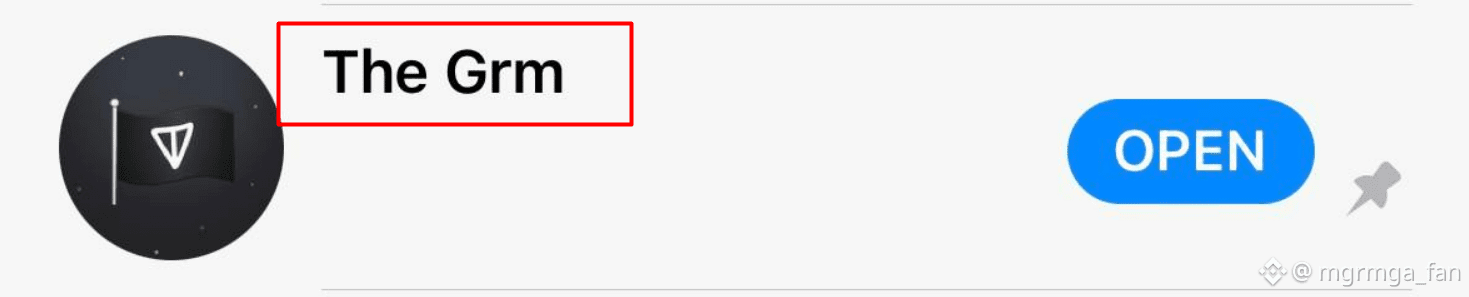
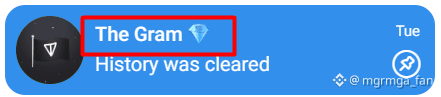
Ich möchte die Diskussion über den @thegrm-Bot auf #Telegram fortsetzen. Ich habe einen seltsamen Bug bemerkt – oder vielleicht ist es auch ein Feature, ich bin mir nicht sicher. Irgendwie ändert sich in der Windows-App (2. Screenshot) der Name manchmal zu „The Grm“ und dann wieder zurück zum alten, „The Gram 🐳“.
Das Gleiche passiert auch in der Web-Version (1. und letzter Screenshot).
Passiert das auch bei dir?
Das ist wirklich sehr seltsam.
🐳: Das Wal-Emoji soll eigentlich ein Kristall sein, aber Binance hat dieses Emoji noch nicht. Wir sollten sie wahrscheinlich darauf hinweisen – vielleicht fügen sie es ja irgendwann in der Zukunft hinzu.
#MGRMGA #GRM #GRAM #HODL
Ich möchte die Diskussion über den @thegrm-Bot auf #Telegram fortsetzen. Ich habe einen seltsamen Bug bemerkt – oder vielleicht ist es auch ein Feature, ich bin mir nicht sicher. Irgendwie ändert sich in der Windows-App (2. Screenshot) der Name manchmal zu „The Grm“ und dann wieder zurück zum alten, „The Gram 🐳“.
Das Gleiche passiert auch in der Web-Version (1. und letzter Screenshot).
Passiert das auch bei dir?
Das ist wirklich sehr seltsam.
🐳: Das Wal-Emoji soll eigentlich ein Kristall sein, aber Binance hat dieses Emoji noch nicht. Wir sollten sie wahrscheinlich darauf hinweisen – vielleicht fügen sie es ja irgendwann in der Zukunft hinzu.
#MGRMGA #GRM #GRAM #HODL
Das Gleiche passiert auch in der Web-Version (1. und letzter Screenshot).
Passiert das auch bei dir?
Das ist wirklich sehr seltsam.
🐳: Das Wal-Emoji soll eigentlich ein Kristall sein, aber Binance hat dieses Emoji noch nicht. Wir sollten sie wahrscheinlich darauf hinweisen – vielleicht fügen sie es ja irgendwann in der Zukunft hinzu.
#MGRMGA #GRM #GRAM #HODL


1
2
1.3k
·
--
Die Antwort auf das Rätsel: Mitglied der Bande #MGRMGA . Noch mehr verrückte Gorillas. Noch mehr Community!
🙉🙈🙊🙉🙈🙊🙉🙈🙊
MACH #OLEH WIEDER GROßARTIG!
MACH #GRAM WIEDER GROßARTIG!
MACH #COMMUNITY WIEDER GROßARTIG!
MACH #GRM WIEDER GROßARTIG!
Die Antwort auf das Rätsel: Mitglied der Bande #MGRMGA . Noch mehr verrückte Gorillas. Noch mehr Community!
🙉🙈🙊🙉🙈🙊🙉🙈🙊
MACH #OLEH WIEDER GROßARTIG!
MACH #GRAM WIEDER GROßARTIG!
MACH #COMMUNITY WIEDER GROßARTIG!
MACH #GRM WIEDER GROßARTIG!
🙉🙈🙊🙉🙈🙊🙉🙈🙊
MACH #OLEH WIEDER GROßARTIG!
MACH #GRAM WIEDER GROßARTIG!
MACH #COMMUNITY WIEDER GROßARTIG!
MACH #GRM WIEDER GROßARTIG!
MGRMGAFAN
·
--
🙊(Gorilla) + 🐳(Diamant) = ?
#REBUS #GRM #GRAM #TON #MGRMGA
#REBUS #GRM #GRAM #TON #MGRMGA
2
306
Anmelden und weiter Inhalte entdecken
Krypto-Nutzer weltweit auf Binance Square kennenlernen
⚡️ Bleib in Sachen Krypto stets am Puls.
💬 Die weltgrößte Kryptobörse vertraut darauf.
👍 Erhalte verlässliche Einblicke von verifizierten Creators.
E-Mail-Adresse/Telefonnummer
Trendthemen
1
#BTCBreaks80K
78,203 Aufrufe
1,509 Kommentare
2
#比特币突破8万
69,804 Aufrufe
242 Kommentare
3
#BuffettBecomesBerkshireChairmanEmeritus
18,752 Aufrufe
525 Kommentare
4
#ZcashSpotETFTops$230MMonthlyInflow
5,195 Aufrufe
79 Kommentare
5
#HYPEJumpsOver11%
70,339 Aufrufe
1,096 Kommentare
6
#ZcashDevelopersTargetNU7MainnetActivationNov5
31,870 Aufrufe
541 Kommentare
7
#BitcoinSpotETFsNetInflow$159M
27,360 Aufrufe
102 Kommentare
8
#HKMAPlansWholesaleCBDCByYearEnd
49,869 Aufrufe
932 Kommentare
9
#NEARSurges26%Past$3.45
22,569 Aufrufe
148 Kommentare
10
#BOJHikesRatesTo31YearHigh
86,262 Aufrufe
1,326 Kommentare