

#defievolution
defievolution
94,714 Aufrufe
167 Kommentare
Hot
Zuletzt

·
--
Ripples Unterstützung entzündet einen verborgenen Katalysator für XRPDie echten Game-Changer im Krypto-Bereich sind nicht nur neue Token oder gehypte Projekte – es sind diejenigen, die im Verborgenen robuste Netzwerke aufbauen und damit den Status quo durcheinanderbringen könnten.
Die meisten Trader schauen auf den Preis, aber die Insidern wissen, worauf es ankommt: auf die subtilen Anzeichen für eine heranreifende Ökosystem-Entwicklung – wie die Unterstützung von Ripple für zwei XRP-Ledger-Änderungen, die darauf ausgelegt sind, Single-Asset-Vaults und institutionelles Lending mit festen Laufzeiten zu stärken.
DAS SIGNAL (3 Hashtags): Wir sehen ein deutliches Interesse an XPRLs Vault- und Lending-Funktionen, wie die erhöhte Abstimmungsaktivität und das Engagement von renommierten Validator-Nodes belegen. (#XRP #LendingInfrastructure #DeFiEvolution)
Ripples Unterstützung entzündet einen verborgenen Katalysator für XRP
Die echten Game-Changer im Krypto-Bereich sind nicht nur neue Token oder gehypte Projekte – es sind diejenigen, die im Verborgenen robuste Netzwerke aufbauen und damit den Status quo durcheinanderbringen könnten.
Die meisten Trader schauen auf den Preis, aber die Insidern wissen, worauf es ankommt: auf die subtilen Anzeichen für eine heranreifende Ökosystem-Entwicklung – wie die Unterstützung von Ripple für zwei XRP-Ledger-Änderungen, die darauf ausgelegt sind, Single-Asset-Vaults und institutionelles Lending mit festen Laufzeiten zu stärken.
DAS SIGNAL (3 Hashtags): Wir sehen ein deutliches Interesse an XPRLs Vault- und Lending-Funktionen, wie die erhöhte Abstimmungsaktivität und das Engagement von renommierten Validator-Nodes belegen. (#XRP #LendingInfrastructure #DeFiEvolution)
Die meisten Trader schauen auf den Preis, aber die Insidern wissen, worauf es ankommt: auf die subtilen Anzeichen für eine heranreifende Ökosystem-Entwicklung – wie die Unterstützung von Ripple für zwei XRP-Ledger-Änderungen, die darauf ausgelegt sind, Single-Asset-Vaults und institutionelles Lending mit festen Laufzeiten zu stärken.
DAS SIGNAL (3 Hashtags): Wir sehen ein deutliches Interesse an XPRLs Vault- und Lending-Funktionen, wie die erhöhte Abstimmungsaktivität und das Engagement von renommierten Validator-Nodes belegen. (#XRP #LendingInfrastructure #DeFiEvolution)
87
·
--
Wissen Sie, dass traditionelle Finanzvorschriften bald möglicherweise nicht mehr ausreichen werden, um mit der sich rasant weiterentwickelnden Welt des DeFi-Handels Schritt zu halten?
#DeFiEvolution #CFTCRegulations
Lassen Sie uns eintauchen, was hinter diesem dringenden Problem steckt: Bestehende Vorschriften, die für traditionelle Finanzmärkte entwickelt wurden, passen nicht zur dezentralen Infrastruktur wie beim DeFi-Handel. Stellen Sie sich vor, man würde die Regeln eines physischen Supermarkts auf eine Online-Shopping-Plattform anwenden – das würde einfach nicht funktionieren. Das Hyperliquid Policy Center und Phantom rufen dazu auf, dass die US-amerikanische CFTC ihr Regelwerk für Onchain-Handel aktualisiert. Das bedeutet: DeFi-Plattformen wie dezentrale Börsen und Kreditprotokolle benötigen maßgeschneiderte Regelungen, um den Schutz der Nutzer und Transparenz zu gewährleisten.
Konkretes Beispiel aus der Praxis: Binance ist bereits eine Vorreiterin in Sachen DeFi-Compliance und verfügt über robuste Maßnahmen zur Bekämpfung der Geldwäsche (AML) sowie zur Identitätsprüfung (KYC). Wenn wir der regulatorischen Entwicklung voraus sind, können wir ein sichereres und besser geschütztes DeFi-Ökosystem fördern.
Was können Sie tun, um bei den DeFi-Vorschriften den Anschluss nicht zu verlieren? Bleiben Sie über Updates von Aufsichtsbehörden und DeFi-Plattformen informiert und nutzen Sie stets seriöse Börsen mit robusten Sicherheitsmaßnahmen. Was denken Sie – werden DeFi-spezifische Vorschriften eine neue Ära der Innovation und des Vertrauens im Raum einläuten?
Wissen Sie, dass traditionelle Finanzvorschriften bald möglicherweise nicht mehr ausreichen werden, um mit der sich rasant weiterentwickelnden Welt des DeFi-Handels Schritt zu halten?
#DeFiEvolution #CFTCRegulations
Lassen Sie uns eintauchen, was hinter diesem dringenden Problem steckt: Bestehende Vorschriften, die für traditionelle Finanzmärkte entwickelt wurden, passen nicht zur dezentralen Infrastruktur wie beim DeFi-Handel. Stellen Sie sich vor, man würde die Regeln eines physischen Supermarkts auf eine Online-Shopping-Plattform anwenden – das würde einfach nicht funktionieren. Das Hyperliquid Policy Center und Phantom rufen dazu auf, dass die US-amerikanische CFTC ihr Regelwerk für Onchain-Handel aktualisiert. Das bedeutet: DeFi-Plattformen wie dezentrale Börsen und Kreditprotokolle benötigen maßgeschneiderte Regelungen, um den Schutz der Nutzer und Transparenz zu gewährleisten.
Konkretes Beispiel aus der Praxis: Binance ist bereits eine Vorreiterin in Sachen DeFi-Compliance und verfügt über robuste Maßnahmen zur Bekämpfung der Geldwäsche (AML) sowie zur Identitätsprüfung (KYC). Wenn wir der regulatorischen Entwicklung voraus sind, können wir ein sichereres und besser geschütztes DeFi-Ökosystem fördern.
Was können Sie tun, um bei den DeFi-Vorschriften den Anschluss nicht zu verlieren? Bleiben Sie über Updates von Aufsichtsbehörden und DeFi-Plattformen informiert und nutzen Sie stets seriöse Börsen mit robusten Sicherheitsmaßnahmen. Was denken Sie – werden DeFi-spezifische Vorschriften eine neue Ära der Innovation und des Vertrauens im Raum einläuten?
#DeFiEvolution #CFTCRegulations
Lassen Sie uns eintauchen, was hinter diesem dringenden Problem steckt: Bestehende Vorschriften, die für traditionelle Finanzmärkte entwickelt wurden, passen nicht zur dezentralen Infrastruktur wie beim DeFi-Handel. Stellen Sie sich vor, man würde die Regeln eines physischen Supermarkts auf eine Online-Shopping-Plattform anwenden – das würde einfach nicht funktionieren. Das Hyperliquid Policy Center und Phantom rufen dazu auf, dass die US-amerikanische CFTC ihr Regelwerk für Onchain-Handel aktualisiert. Das bedeutet: DeFi-Plattformen wie dezentrale Börsen und Kreditprotokolle benötigen maßgeschneiderte Regelungen, um den Schutz der Nutzer und Transparenz zu gewährleisten.
Konkretes Beispiel aus der Praxis: Binance ist bereits eine Vorreiterin in Sachen DeFi-Compliance und verfügt über robuste Maßnahmen zur Bekämpfung der Geldwäsche (AML) sowie zur Identitätsprüfung (KYC). Wenn wir der regulatorischen Entwicklung voraus sind, können wir ein sichereres und besser geschütztes DeFi-Ökosystem fördern.
Was können Sie tun, um bei den DeFi-Vorschriften den Anschluss nicht zu verlieren? Bleiben Sie über Updates von Aufsichtsbehörden und DeFi-Plattformen informiert und nutzen Sie stets seriöse Börsen mit robusten Sicherheitsmaßnahmen. Was denken Sie – werden DeFi-spezifische Vorschriften eine neue Ära der Innovation und des Vertrauens im Raum einläuten?
3

⚡ Hyperliquid und die DEX-Entwicklung: HYPEs nachhaltiges Wachstum signalisiert einen Paradigmenwechsel im Trading
Am 19. Juli 2026 zeigt Hyperliquid $HYPE bei 60,82 $ mit einer Marktkapitalisierung von 13,53 Mrd. $, dass On-Chain-Perpetual-Trading mit zentralisierten Börsen konkurrieren kann. Der heutige Anstieg von +2,62 % und ein Handelsvolumen von 288,89 Mio. $ bestätigen eine wachsende Nutzerakzeptanz.
Die These geht über einen einzelnen Token hinaus: Self-Custody kombiniert mit Trading-Erfahrung auf CEX-Niveau ist der heilige Gral von DeFi. Wenn $HYPE diesen Kurs beibehält, könnte das die Annahme herausfordern, dass DEXs grundsätzlich unterlegen seien.
📌 Kernaussage:
Hyperliquid steht für eine These, die in Echtzeit bestätigt wird. On-Chain-Derivate mit CEX-Niveau sind kein Traum mehr – das ist eine Realität mit einer Marktkapitalisierung von 13,5 Mrd. $.
#Hyperliquid #HYPE #DeFiEvolution
#BinanceAlphaAlert
⚡ Hyperliquid und die DEX-Entwicklung: HYPEs nachhaltiges Wachstum signalisiert einen Paradigmenwechsel im Trading
Am 19. Juli 2026 zeigt Hyperliquid $HYPE bei 60,82 $ mit einer Marktkapitalisierung von 13,53 Mrd. $, dass On-Chain-Perpetual-Trading mit zentralisierten Börsen konkurrieren kann. Der heutige Anstieg von +2,62 % und ein Handelsvolumen von 288,89 Mio. $ bestätigen eine wachsende Nutzerakzeptanz.
Die These geht über einen einzelnen Token hinaus: Self-Custody kombiniert mit Trading-Erfahrung auf CEX-Niveau ist der heilige Gral von DeFi. Wenn $HYPE diesen Kurs beibehält, könnte das die Annahme herausfordern, dass DEXs grundsätzlich unterlegen seien.
📌 Kernaussage:
Hyperliquid steht für eine These, die in Echtzeit bestätigt wird. On-Chain-Derivate mit CEX-Niveau sind kein Traum mehr – das ist eine Realität mit einer Marktkapitalisierung von 13,5 Mrd. $.
#Hyperliquid #HYPE #DeFiEvolution
#BinanceAlphaAlert
Am 19. Juli 2026 zeigt Hyperliquid $HYPE bei 60,82 $ mit einer Marktkapitalisierung von 13,53 Mrd. $, dass On-Chain-Perpetual-Trading mit zentralisierten Börsen konkurrieren kann. Der heutige Anstieg von +2,62 % und ein Handelsvolumen von 288,89 Mio. $ bestätigen eine wachsende Nutzerakzeptanz.
Die These geht über einen einzelnen Token hinaus: Self-Custody kombiniert mit Trading-Erfahrung auf CEX-Niveau ist der heilige Gral von DeFi. Wenn $HYPE diesen Kurs beibehält, könnte das die Annahme herausfordern, dass DEXs grundsätzlich unterlegen seien.
📌 Kernaussage:
Hyperliquid steht für eine These, die in Echtzeit bestätigt wird. On-Chain-Derivate mit CEX-Niveau sind kein Traum mehr – das ist eine Realität mit einer Marktkapitalisierung von 13,5 Mrd. $.
#Hyperliquid #HYPE #DeFiEvolution
#BinanceAlphaAlert
38
·
--
Hast du dich jemals gefragt, was passiert, wenn ein heiß erwartetes DeFi-Protokoll einen Schlag einstecken muss? Radiant, eine führende DeFi-Plattform, hat angekündigt, dass sie die Geschäfte nach einem verheerenden Hack im Jahr 2024 einstellen wird, der einen bleibenden Eindruck hinterlassen hat.
#DeFiEvolution #CryptoResilience
Lass uns in das Konzept des Herunterfahrens der Operationen eintauchen. Denk daran wie an ein Unternehmen, das eine gescheiterte Geschäftslinie schließt – sie stellen nicht ganz den Betrieb ein, sondern konzentrieren sich darauf, was wirklich wichtig ist. Im Fall von Radiant können die Nutzer weiterhin über das Frontend und Smart Contracts abheben, zurückzahlen und ihre Positionen verwalten.
Das reale Beispiel ist Radiant selbst. Trotz der Herausforderungen nach dem Hack entscheiden sie sich, die kritische Funktionalität aufrechtzuerhalten, anstatt das Schiff ganz aufzugeben. Eine Lektion für alle DeFi-Enthusiasten – manchmal ist weniger mehr.
Also, was kannst du mit diesem Wissen anfangen? Mach eine Bestandsaufnahme deiner eigenen Krypto-Investitionen und bewerte, was für deine langfristige Wachstumsstrategie am wichtigsten ist. #CryptoGrowthStrategy
Hast du dich jemals gefragt, was passiert, wenn ein heiß erwartetes DeFi-Protokoll einen Schlag einstecken muss? Radiant, eine führende DeFi-Plattform, hat angekündigt, dass sie die Geschäfte nach einem verheerenden Hack im Jahr 2024 einstellen wird, der einen bleibenden Eindruck hinterlassen hat.
#DeFiEvolution #CryptoResilience
Lass uns in das Konzept des Herunterfahrens der Operationen eintauchen. Denk daran wie an ein Unternehmen, das eine gescheiterte Geschäftslinie schließt – sie stellen nicht ganz den Betrieb ein, sondern konzentrieren sich darauf, was wirklich wichtig ist. Im Fall von Radiant können die Nutzer weiterhin über das Frontend und Smart Contracts abheben, zurückzahlen und ihre Positionen verwalten.
Das reale Beispiel ist Radiant selbst. Trotz der Herausforderungen nach dem Hack entscheiden sie sich, die kritische Funktionalität aufrechtzuerhalten, anstatt das Schiff ganz aufzugeben. Eine Lektion für alle DeFi-Enthusiasten – manchmal ist weniger mehr.
Also, was kannst du mit diesem Wissen anfangen? Mach eine Bestandsaufnahme deiner eigenen Krypto-Investitionen und bewerte, was für deine langfristige Wachstumsstrategie am wichtigsten ist. #CryptoGrowthStrategy
#DeFiEvolution #CryptoResilience
Lass uns in das Konzept des Herunterfahrens der Operationen eintauchen. Denk daran wie an ein Unternehmen, das eine gescheiterte Geschäftslinie schließt – sie stellen nicht ganz den Betrieb ein, sondern konzentrieren sich darauf, was wirklich wichtig ist. Im Fall von Radiant können die Nutzer weiterhin über das Frontend und Smart Contracts abheben, zurückzahlen und ihre Positionen verwalten.
Das reale Beispiel ist Radiant selbst. Trotz der Herausforderungen nach dem Hack entscheiden sie sich, die kritische Funktionalität aufrechtzuerhalten, anstatt das Schiff ganz aufzugeben. Eine Lektion für alle DeFi-Enthusiasten – manchmal ist weniger mehr.
Also, was kannst du mit diesem Wissen anfangen? Mach eine Bestandsaufnahme deiner eigenen Krypto-Investitionen und bewerte, was für deine langfristige Wachstumsstrategie am wichtigsten ist. #CryptoGrowthStrategy
60
·
--
"Es sieht so aus, als hätte sich die institutionelle Außenwirkung der Ethereum Foundation gerade selbst institutionalisiert. Eine neue Non-Profit-Organisation, unterstützt von den üblichen Verdächtigen, ist ausgegründet worden – und dieses Mal ist es nicht nur ein Spin-off: Es ist ein ausgewachsener Coup, Leute.
DIE ALPHA
Der institutionelle Ethereum-Start ist jetzt unabhängig von der Foundation – dank BitMine, SharpLink und Joseph Lubins Zauberei. Sie werben bei Banken und Vermögensverwaltern, als wäre es DeFi 2.0.
DIE PUNCHLINE-ERKENNTNIS
Die entscheidende Frage ist hier nicht, wer dahintersteckt, sondern wer als Nächstes kommt – werden die anderen großen Player im Ökosystem nachziehen?
ENGAGEMENT-FANG
Wer denkt, dass das signalisiert, dass institutionelles DeFi endlich in Sicht ist? Wird es Binance sein – oder jemand anderes? Teilt eure Gedanken!" #EthereumInstitutional #CryptoRegulation #DeFiEvolution
"Es sieht so aus, als hätte sich die institutionelle Außenwirkung der Ethereum Foundation gerade selbst institutionalisiert. Eine neue Non-Profit-Organisation, unterstützt von den üblichen Verdächtigen, ist ausgegründet worden – und dieses Mal ist es nicht nur ein Spin-off: Es ist ein ausgewachsener Coup, Leute.
DIE ALPHA
Der institutionelle Ethereum-Start ist jetzt unabhängig von der Foundation – dank BitMine, SharpLink und Joseph Lubins Zauberei. Sie werben bei Banken und Vermögensverwaltern, als wäre es DeFi 2.0.
DIE PUNCHLINE-ERKENNTNIS
Die entscheidende Frage ist hier nicht, wer dahintersteckt, sondern wer als Nächstes kommt – werden die anderen großen Player im Ökosystem nachziehen?
ENGAGEMENT-FANG
Wer denkt, dass das signalisiert, dass institutionelles DeFi endlich in Sicht ist? Wird es Binance sein – oder jemand anderes? Teilt eure Gedanken!" #EthereumInstitutional #CryptoRegulation #DeFiEvolution
DIE ALPHA
Der institutionelle Ethereum-Start ist jetzt unabhängig von der Foundation – dank BitMine, SharpLink und Joseph Lubins Zauberei. Sie werben bei Banken und Vermögensverwaltern, als wäre es DeFi 2.0.
DIE PUNCHLINE-ERKENNTNIS
Die entscheidende Frage ist hier nicht, wer dahintersteckt, sondern wer als Nächstes kommt – werden die anderen großen Player im Ökosystem nachziehen?
ENGAGEMENT-FANG
Wer denkt, dass das signalisiert, dass institutionelles DeFi endlich in Sicht ist? Wird es Binance sein – oder jemand anderes? Teilt eure Gedanken!" #EthereumInstitutional #CryptoRegulation #DeFiEvolution
22

#bedrock $BR
💡 Die echte Frage im DeFi ist nicht "Wie viel verdiene ich?" sondern "Wie viel riskiere ich?"
Bedrock 2.0 beantwortet das mit einem cleveren Design, das die Risiken reduziert, ohne die Renditen zu opfern.
@Bedrock bietet ein dynamisches Liquiditätsmodell, das sich an die Marktbedingungen anpasst, und der Token $BR belohnt aktive Teilnehmer an der Governance.
Es ist die Erfahrung wert.
#Bedrock #BR #DeFiEvolution
{future}(BRUSDT)
#bedrock $BR
💡 Die echte Frage im DeFi ist nicht "Wie viel verdiene ich?" sondern "Wie viel riskiere ich?"
Bedrock 2.0 beantwortet das mit einem cleveren Design, das die Risiken reduziert, ohne die Renditen zu opfern.
@Bedrock bietet ein dynamisches Liquiditätsmodell, das sich an die Marktbedingungen anpasst, und der Token $BR belohnt aktive Teilnehmer an der Governance.
Es ist die Erfahrung wert.
#Bedrock #BR #DeFiEvolution
💡 Die echte Frage im DeFi ist nicht "Wie viel verdiene ich?" sondern "Wie viel riskiere ich?"
Bedrock 2.0 beantwortet das mit einem cleveren Design, das die Risiken reduziert, ohne die Renditen zu opfern.
@Bedrock bietet ein dynamisches Liquiditätsmodell, das sich an die Marktbedingungen anpasst, und der Token $BR belohnt aktive Teilnehmer an der Governance.
Es ist die Erfahrung wert.
#Bedrock #BR #DeFiEvolution
2
75

·
--
Artikel
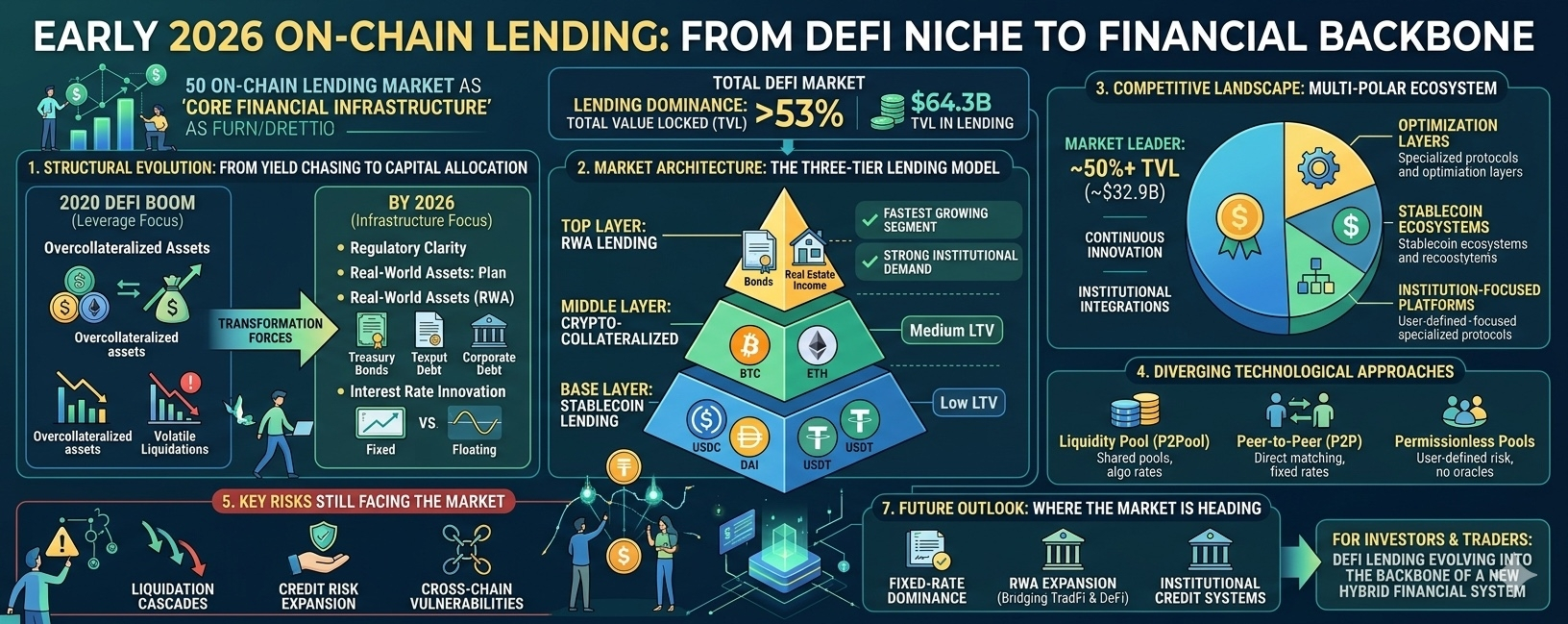
Markt für On-Chain-Kredite Anfang 2026: Von der DeFi-Nische zum finanziellen RückgratDer On-Chain-Kreditsektor hat sich entscheidend von einer spekulativen DeFi-Nische zu einem der kritischsten Pfeiler des digitalen Finanzsystems entwickelt. Bis Anfang 2026 verwalten Kreditprotokolle über $64,3 Milliarden an Total Value Locked (TVL) – mehr als 53 % des gesamten DeFi-Ökosystems – was ihre Dominanz und Reife unterstreicht.
Diese Evolution geht nicht nur um das Volumen. Sie spiegelt einen tiefergehenden strukturellen Wandel wider: von hochriskanten Krypto-Leverage-Tools hin zu institutioneller Finanzinfrastruktur.
1. Strukturelle Evolution: Von Leverage zu Infrastruktur
Markt für On-Chain-Kredite Anfang 2026: Von der DeFi-Nische zum finanziellen Rückgrat
Der On-Chain-Kreditsektor hat sich entscheidend von einer spekulativen DeFi-Nische zu einem der kritischsten Pfeiler des digitalen Finanzsystems entwickelt. Bis Anfang 2026 verwalten Kreditprotokolle über $64,3 Milliarden an Total Value Locked (TVL) – mehr als 53 % des gesamten DeFi-Ökosystems – was ihre Dominanz und Reife unterstreicht.
Diese Evolution geht nicht nur um das Volumen. Sie spiegelt einen tiefergehenden strukturellen Wandel wider: von hochriskanten Krypto-Leverage-Tools hin zu institutioneller Finanzinfrastruktur.
1. Strukturelle Evolution: Von Leverage zu Infrastruktur
Diese Evolution geht nicht nur um das Volumen. Sie spiegelt einen tiefergehenden strukturellen Wandel wider: von hochriskanten Krypto-Leverage-Tools hin zu institutioneller Finanzinfrastruktur.
1. Strukturelle Evolution: Von Leverage zu Infrastruktur
88

Artikel
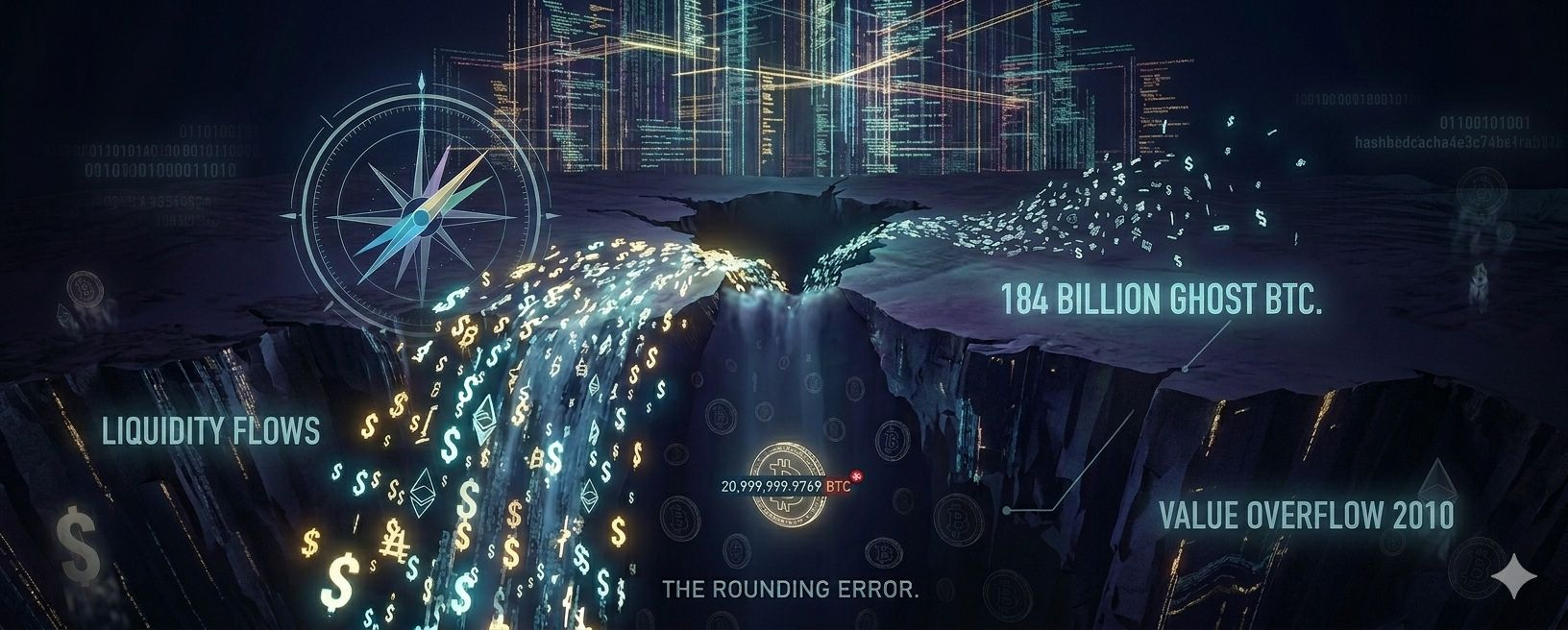
Die unsichtbaren Algorithmen: 3 strukturelle Eigenheiten, die Web3 gerade jetzt transformierenDie Kryptowährungs-Diskussion ist tief gespalten. Auf der einen Seite fixiert sich die Mainstream-Medien völlig auf Preisdiagramme und regulatorische Kämpfe. Auf der anderen Seite recyclen gängige KI-Tools die gleichen oberflächlichen Definitionen von Dezentralisierung und Smart Contracts.
Wenn du jedoch unter die Haube moderner Blockchain-Netzwerke schaust, wirst du architektonische Paradoxien, verborgene Infrastrukturkriege und Protokollfehler finden, die alles in Frage stellen, was wir über digitale Vermögenswerte zu wissen glauben.
Hier sind drei strukturelle Realitäten der Krypto-Welt, die selten besprochen werden, aber genau bestimmen, wohin die Technologie steuert.
Die unsichtbaren Algorithmen: 3 strukturelle Eigenheiten, die Web3 gerade jetzt transformieren
Die Kryptowährungs-Diskussion ist tief gespalten. Auf der einen Seite fixiert sich die Mainstream-Medien völlig auf Preisdiagramme und regulatorische Kämpfe. Auf der anderen Seite recyclen gängige KI-Tools die gleichen oberflächlichen Definitionen von Dezentralisierung und Smart Contracts.
Wenn du jedoch unter die Haube moderner Blockchain-Netzwerke schaust, wirst du architektonische Paradoxien, verborgene Infrastrukturkriege und Protokollfehler finden, die alles in Frage stellen, was wir über digitale Vermögenswerte zu wissen glauben.
Hier sind drei strukturelle Realitäten der Krypto-Welt, die selten besprochen werden, aber genau bestimmen, wohin die Technologie steuert.
Wenn du jedoch unter die Haube moderner Blockchain-Netzwerke schaust, wirst du architektonische Paradoxien, verborgene Infrastrukturkriege und Protokollfehler finden, die alles in Frage stellen, was wir über digitale Vermögenswerte zu wissen glauben.
Hier sind drei strukturelle Realitäten der Krypto-Welt, die selten besprochen werden, aber genau bestimmen, wohin die Technologie steuert.
83

·
--
🧠 $MORPHO … Warum wird DeFi (dezentrale Finanzierung) gleichzeitig intelligent und institutionell!
Wie immer sind es die Projekte, die still arbeiten, die die Spielregeln ändern — und Morpho ist eines davon, es baut auf Ethereum auf, arbeitet aber mit einer institutionellen Denkweise 💼
Der Markt spricht von einem Protokoll mit einer Marktkapitalisierung von 1,09 Milliarden Dollar und einem Total Value Locked (TVL) von über 518 Millionen… aber die Zahlen allein reichen nicht aus, lass uns die wahre Tiefe sehen.
🚀 Was macht $MORPHO anders?
– Es kombiniert die Effizienz von Kreditvergabe und -aufnahme mit der Benutzerfreundlichkeit von Plattformen wie Aave und Compound
– Anerkannt von Institutionen wie Société Générale und SG-Forge — das bedeutet, es ist nicht nur für Nutzer, sondern auch für Banken
– Unterstützt verschiedene Vermögenswerte wie ETH, USDC, DAI und BTC und arbeitet in einem riesigen technischen Umfeld von über 5000 Milliarden Dollar
📌 Das Protokoll ist Open Source, kompatibel mit den MICA-Vorschriften und unterliegt der Governance der Morpho Association und CreatorPad
Ich persönlich beobachte $MORPHO , weil es die Welt von DeFi mit traditioneller Finanzierung auf eine Weise verbindet, die wir noch nie zuvor gesehen haben ⏳
📲 Folge dem Kanal #CryptoEmad für Analysen von Projekten, die den Unterschied machen, bevor sie sich verbreiten
{future}(MORPHOUSDT)
#MorphoProtocol #DeFiEvolution #EthereumFinance #SmartLending
🧠 $MORPHO … Warum wird DeFi (dezentrale Finanzierung) gleichzeitig intelligent und institutionell!
Wie immer sind es die Projekte, die still arbeiten, die die Spielregeln ändern — und Morpho ist eines davon, es baut auf Ethereum auf, arbeitet aber mit einer institutionellen Denkweise 💼
Der Markt spricht von einem Protokoll mit einer Marktkapitalisierung von 1,09 Milliarden Dollar und einem Total Value Locked (TVL) von über 518 Millionen… aber die Zahlen allein reichen nicht aus, lass uns die wahre Tiefe sehen.
🚀 Was macht $MORPHO anders?
– Es kombiniert die Effizienz von Kreditvergabe und -aufnahme mit der Benutzerfreundlichkeit von Plattformen wie Aave und Compound
– Anerkannt von Institutionen wie Société Générale und SG-Forge — das bedeutet, es ist nicht nur für Nutzer, sondern auch für Banken
– Unterstützt verschiedene Vermögenswerte wie ETH, USDC, DAI und BTC und arbeitet in einem riesigen technischen Umfeld von über 5000 Milliarden Dollar
📌 Das Protokoll ist Open Source, kompatibel mit den MICA-Vorschriften und unterliegt der Governance der Morpho Association und CreatorPad
Ich persönlich beobachte $MORPHO , weil es die Welt von DeFi mit traditioneller Finanzierung auf eine Weise verbindet, die wir noch nie zuvor gesehen haben ⏳
📲 Folge dem Kanal #CryptoEmad für Analysen von Projekten, die den Unterschied machen, bevor sie sich verbreiten
#MorphoProtocol #DeFiEvolution #EthereumFinance #SmartLending
Wie immer sind es die Projekte, die still arbeiten, die die Spielregeln ändern — und Morpho ist eines davon, es baut auf Ethereum auf, arbeitet aber mit einer institutionellen Denkweise 💼
Der Markt spricht von einem Protokoll mit einer Marktkapitalisierung von 1,09 Milliarden Dollar und einem Total Value Locked (TVL) von über 518 Millionen… aber die Zahlen allein reichen nicht aus, lass uns die wahre Tiefe sehen.
🚀 Was macht $MORPHO anders?
– Es kombiniert die Effizienz von Kreditvergabe und -aufnahme mit der Benutzerfreundlichkeit von Plattformen wie Aave und Compound
– Anerkannt von Institutionen wie Société Générale und SG-Forge — das bedeutet, es ist nicht nur für Nutzer, sondern auch für Banken
– Unterstützt verschiedene Vermögenswerte wie ETH, USDC, DAI und BTC und arbeitet in einem riesigen technischen Umfeld von über 5000 Milliarden Dollar
📌 Das Protokoll ist Open Source, kompatibel mit den MICA-Vorschriften und unterliegt der Governance der Morpho Association und CreatorPad
Ich persönlich beobachte $MORPHO , weil es die Welt von DeFi mit traditioneller Finanzierung auf eine Weise verbindet, die wir noch nie zuvor gesehen haben ⏳
📲 Folge dem Kanal #CryptoEmad für Analysen von Projekten, die den Unterschied machen, bevor sie sich verbreiten
#MorphoProtocol #DeFiEvolution #EthereumFinance #SmartLending
1
6
7k

Artikel
Die Zukunft der DeFi: Ist Intent-Based Automation die letzte Grenze?Die Landschaft der dezentralen Finanzen (DeFi) verändert sich unter unseren Füßen. Jahrelang waren wir besessen von "Yield Farming", "Liquiditätspools" und "manuellem Rebalancing". Doch während wir tiefer ins Jahr 2026 eintauchen, entsteht ein neues Paradigma: Intent-Based DeFi.
Plattformen wie
stehen im Mittelpunkt dieses Wandels. Anstatt die Nutzer dazu zu zwingen, sich durch komplexe Smart Contracts zu navigieren oder sich um Gasoptimierung zu sorgen, fungieren diese Plattformen als Ausführungsebene, die die "Absicht" des Nutzers interpretiert und den effizientesten Weg findet, sie auszuführen.
Die Zukunft der DeFi: Ist Intent-Based Automation die letzte Grenze?
Die Landschaft der dezentralen Finanzen (DeFi) verändert sich unter unseren Füßen. Jahrelang waren wir besessen von "Yield Farming", "Liquiditätspools" und "manuellem Rebalancing". Doch während wir tiefer ins Jahr 2026 eintauchen, entsteht ein neues Paradigma: Intent-Based DeFi.
Plattformen wie
stehen im Mittelpunkt dieses Wandels. Anstatt die Nutzer dazu zu zwingen, sich durch komplexe Smart Contracts zu navigieren oder sich um Gasoptimierung zu sorgen, fungieren diese Plattformen als Ausführungsebene, die die "Absicht" des Nutzers interpretiert und den effizientesten Weg findet, sie auszuführen.
Plattformen wie
stehen im Mittelpunkt dieses Wandels. Anstatt die Nutzer dazu zu zwingen, sich durch komplexe Smart Contracts zu navigieren oder sich um Gasoptimierung zu sorgen, fungieren diese Plattformen als Ausführungsebene, die die "Absicht" des Nutzers interpretiert und den effizientesten Weg findet, sie auszuführen.
16

·
--
#StablecoinLaw formt die Finanzen neu
Regulierungsbehörden sind nicht länger am Rande — Klarheit kommt.
🔐 Stabilität trifft auf Überprüfung, während die Compliance-Rahmenbedingungen strenger werden.
💸 Digitale Dollars treten aus den Schatten in die rechtliche Legitimität.
🌍 Von Überweisungen bis zu Reserven, das Rückgrat von DeFi entwickelt sich weiter.
Das ist nicht nur Politik — es ist das Fundament zukünftiger Währungen.
Machen Sie sich bereit für eine regulierte, skalierbare und souverän unterstützte Krypto-Ökonomie.
#FinanceReform #CryptoPolicy #DigitalAssets #DeFiEvolution
#StablecoinLaw formt die Finanzen neu
Regulierungsbehörden sind nicht länger am Rande — Klarheit kommt.
🔐 Stabilität trifft auf Überprüfung, während die Compliance-Rahmenbedingungen strenger werden.
💸 Digitale Dollars treten aus den Schatten in die rechtliche Legitimität.
🌍 Von Überweisungen bis zu Reserven, das Rückgrat von DeFi entwickelt sich weiter.
Das ist nicht nur Politik — es ist das Fundament zukünftiger Währungen.
Machen Sie sich bereit für eine regulierte, skalierbare und souverän unterstützte Krypto-Ökonomie.
#FinanceReform #CryptoPolicy #DigitalAssets #DeFiEvolution
Regulierungsbehörden sind nicht länger am Rande — Klarheit kommt.
🔐 Stabilität trifft auf Überprüfung, während die Compliance-Rahmenbedingungen strenger werden.
💸 Digitale Dollars treten aus den Schatten in die rechtliche Legitimität.
🌍 Von Überweisungen bis zu Reserven, das Rückgrat von DeFi entwickelt sich weiter.
Das ist nicht nur Politik — es ist das Fundament zukünftiger Währungen.
Machen Sie sich bereit für eine regulierte, skalierbare und souverän unterstützte Krypto-Ökonomie.
#FinanceReform #CryptoPolicy #DigitalAssets #DeFiEvolution
74

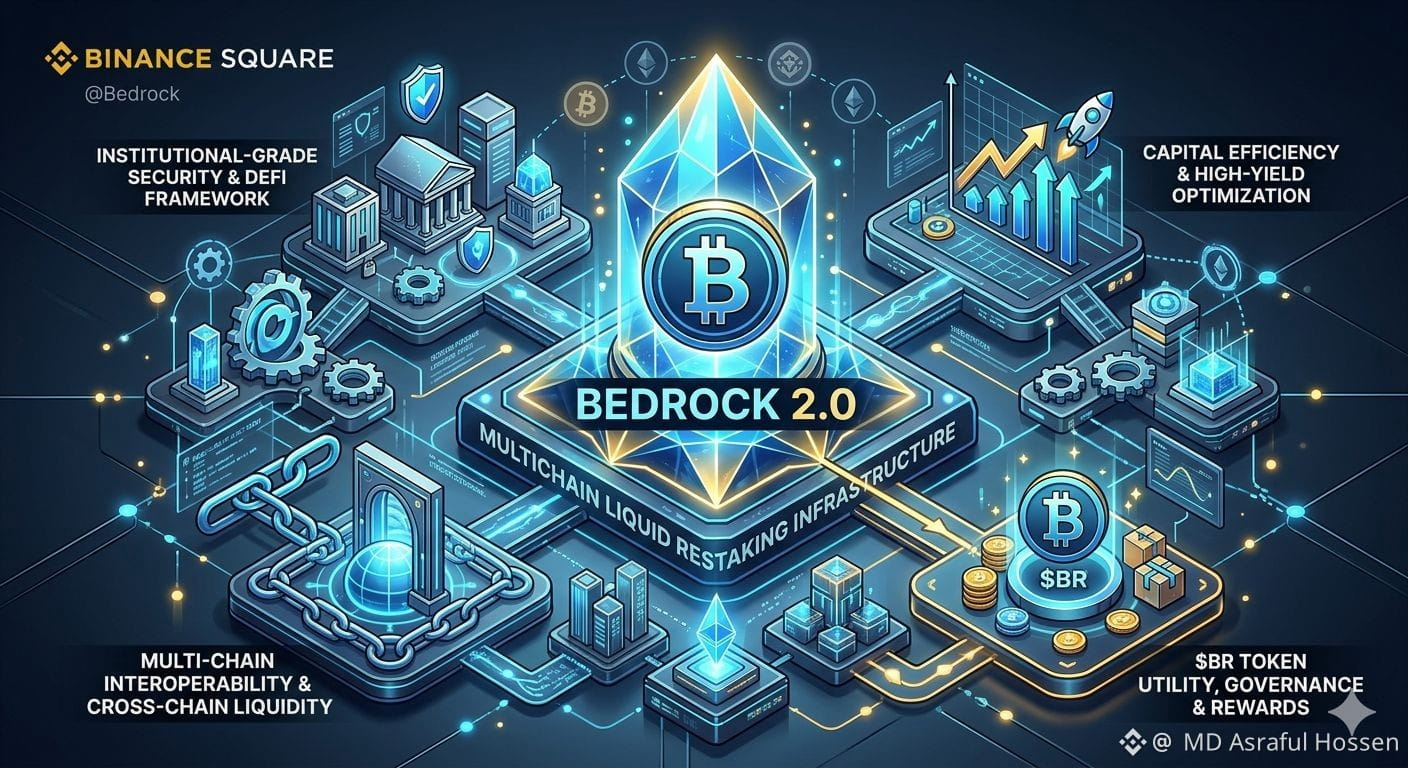
Während das dezentrale Finanzwesen (DeFi) reift, werden die Einschränkungen des traditionellen Stakings – bei dem Vermögenswerte blockiert und Kapital stagnieren – immer deutlicher. Genau hier kommt die bahnbrechende Architektur von Bedrock 2.0 ins Spiel, um den Markt zu revolutionieren. Durch die nahtlose Kombination von Sicherheit mit absoluter Kapitalflexibilität setzt @Bedrock einen neuen Maßstab für Multi-Chain Liquid Restaking.
Die Kernphilosophie hinter Bedrock 2.0 ist sicherzustellen, dass deine Krypto-Vermögenswerte niemals schlafen. Egal, ob du in institutionelle Ertragsstrukturen eintauchen oder deine Bitcoin-Bestände durch dezentrale Rahmenbedingungen optimieren möchtest, diese Plattform überbrückt die Lücke mit unvergleichlicher Effizienz. Sie mindert die Risiken des traditionellen Restakings durch robuste Sicherheitsschichten und Slash-Schutz und bietet somit eine zuverlässige Infrastruktur sowohl für Einzelhandelsnutzer als auch für große Kapitalgeber.
Im Zentrum dieses wachsenden Ökosystems steht der $BR Token. Während Bedrock weiterhin mit großen Blockchain-Netzwerken integriert wird und Multi-Chain-Liquidität vorantreibt, sind der Nutzen, die Governance-Power und die Belohnungsmechanismen, die an $BR gebunden sind, auf eine nachhaltige Wertschöpfung für die lange Sicht ausgerichtet. Wenn du ernsthaft daran interessiert bist, deine DeFi-Strategie zu maximieren und gleichzeitig die volle Vermögensliquidität zu erhalten, ist es äußerst wichtig, dieses Upgrade im Auge zu behalten. 🚀🔥
#Bedrock $BR @Bedrock #LiquidRestaking #DeFiEvolution #SmartInvesting #CryptoInfrastructure #web3Finance
Während das dezentrale Finanzwesen (DeFi) reift, werden die Einschränkungen des traditionellen Stakings – bei dem Vermögenswerte blockiert und Kapital stagnieren – immer deutlicher. Genau hier kommt die bahnbrechende Architektur von Bedrock 2.0 ins Spiel, um den Markt zu revolutionieren. Durch die nahtlose Kombination von Sicherheit mit absoluter Kapitalflexibilität setzt @Bedrock einen neuen Maßstab für Multi-Chain Liquid Restaking.
Die Kernphilosophie hinter Bedrock 2.0 ist sicherzustellen, dass deine Krypto-Vermögenswerte niemals schlafen. Egal, ob du in institutionelle Ertragsstrukturen eintauchen oder deine Bitcoin-Bestände durch dezentrale Rahmenbedingungen optimieren möchtest, diese Plattform überbrückt die Lücke mit unvergleichlicher Effizienz. Sie mindert die Risiken des traditionellen Restakings durch robuste Sicherheitsschichten und Slash-Schutz und bietet somit eine zuverlässige Infrastruktur sowohl für Einzelhandelsnutzer als auch für große Kapitalgeber.
Im Zentrum dieses wachsenden Ökosystems steht der $BR Token. Während Bedrock weiterhin mit großen Blockchain-Netzwerken integriert wird und Multi-Chain-Liquidität vorantreibt, sind der Nutzen, die Governance-Power und die Belohnungsmechanismen, die an $BR gebunden sind, auf eine nachhaltige Wertschöpfung für die lange Sicht ausgerichtet. Wenn du ernsthaft daran interessiert bist, deine DeFi-Strategie zu maximieren und gleichzeitig die volle Vermögensliquidität zu erhalten, ist es äußerst wichtig, dieses Upgrade im Auge zu behalten. 🚀🔥
#Bedrock $BR @Bedrock #LiquidRestaking #DeFiEvolution #SmartInvesting #CryptoInfrastructure #web3Finance
Die Kernphilosophie hinter Bedrock 2.0 ist sicherzustellen, dass deine Krypto-Vermögenswerte niemals schlafen. Egal, ob du in institutionelle Ertragsstrukturen eintauchen oder deine Bitcoin-Bestände durch dezentrale Rahmenbedingungen optimieren möchtest, diese Plattform überbrückt die Lücke mit unvergleichlicher Effizienz. Sie mindert die Risiken des traditionellen Restakings durch robuste Sicherheitsschichten und Slash-Schutz und bietet somit eine zuverlässige Infrastruktur sowohl für Einzelhandelsnutzer als auch für große Kapitalgeber.
Im Zentrum dieses wachsenden Ökosystems steht der $BR Token. Während Bedrock weiterhin mit großen Blockchain-Netzwerken integriert wird und Multi-Chain-Liquidität vorantreibt, sind der Nutzen, die Governance-Power und die Belohnungsmechanismen, die an $BR gebunden sind, auf eine nachhaltige Wertschöpfung für die lange Sicht ausgerichtet. Wenn du ernsthaft daran interessiert bist, deine DeFi-Strategie zu maximieren und gleichzeitig die volle Vermögensliquidität zu erhalten, ist es äußerst wichtig, dieses Upgrade im Auge zu behalten. 🚀🔥
#Bedrock $BR @Bedrock #LiquidRestaking #DeFiEvolution #SmartInvesting #CryptoInfrastructure #web3Finance
72

·
--
Datenschutz ist kein Luxus in Krypto; er ist eine grundlegende Notwendigkeit. GRVT nutzt fortschrittliche Layer-3-Technologie, die auf zkSync basiert, um beispiellose Datenprivatsphäre und Skalierbarkeit zu ermöglichen. Durch die Nutzung von Zero-Knowledge-Proofs können Nutzer hochfrequente Trades ausführen, ohne sensible Transaktionsdaten böswilligen Akteuren offenzulegen. So entsteht ein sicheres Ökosystem, in dem sowohl institutionelle Akteure als auch Retail-Trader mit vollem Vertrauen agieren können. Sicherheit, Privatsphäre und Skalierbarkeit schließen sich nicht länger gegenseitig aus. Wir freuen uns auf die nächsten Meilensteine dieses Ökosystems!
#GRVT #zkSync #Layer3 #PrivacyMatters #Web3Security
📅 Tag 3: 12. Juli – Nahtlose UX und echte Selbstverwahrung
Eines der größten Hindernisse für die Massenadoption von Web3 war schon immer die komplexe Benutzererfahrung. GRVT geht genau das entschlossen an, indem es eine nahtlose, intuitive Oberfläche liefert, die sich genauso anfühlt wie eine erstklassige zentrale Plattform – mit einem großen Upgrade: 100% Selbstverwahrung. Du musst einer zentralen Einheit nicht vertrauen, um professionelle Handels-Tools, tiefe Liquidität und sofortiges Order-Matching zu nutzen. Deine Schlüssel, dein Krypto – jederzeit. Genau das braucht die Branche, um in die Zukunft des dezentralen Finanzwesens voranzuschreiten.
#grvt #SelfCustody #CryptoUX #DeFiEvolution #SmartTrading
Datenschutz ist kein Luxus in Krypto; er ist eine grundlegende Notwendigkeit. GRVT nutzt fortschrittliche Layer-3-Technologie, die auf zkSync basiert, um beispiellose Datenprivatsphäre und Skalierbarkeit zu ermöglichen. Durch die Nutzung von Zero-Knowledge-Proofs können Nutzer hochfrequente Trades ausführen, ohne sensible Transaktionsdaten böswilligen Akteuren offenzulegen. So entsteht ein sicheres Ökosystem, in dem sowohl institutionelle Akteure als auch Retail-Trader mit vollem Vertrauen agieren können. Sicherheit, Privatsphäre und Skalierbarkeit schließen sich nicht länger gegenseitig aus. Wir freuen uns auf die nächsten Meilensteine dieses Ökosystems!
#GRVT #zkSync #Layer3 #PrivacyMatters #Web3Security
📅 Tag 3: 12. Juli – Nahtlose UX und echte Selbstverwahrung
Eines der größten Hindernisse für die Massenadoption von Web3 war schon immer die komplexe Benutzererfahrung. GRVT geht genau das entschlossen an, indem es eine nahtlose, intuitive Oberfläche liefert, die sich genauso anfühlt wie eine erstklassige zentrale Plattform – mit einem großen Upgrade: 100% Selbstverwahrung. Du musst einer zentralen Einheit nicht vertrauen, um professionelle Handels-Tools, tiefe Liquidität und sofortiges Order-Matching zu nutzen. Deine Schlüssel, dein Krypto – jederzeit. Genau das braucht die Branche, um in die Zukunft des dezentralen Finanzwesens voranzuschreiten.
#grvt #SelfCustody #CryptoUX #DeFiEvolution #SmartTrading
#GRVT #zkSync #Layer3 #PrivacyMatters #Web3Security
📅 Tag 3: 12. Juli – Nahtlose UX und echte Selbstverwahrung
Eines der größten Hindernisse für die Massenadoption von Web3 war schon immer die komplexe Benutzererfahrung. GRVT geht genau das entschlossen an, indem es eine nahtlose, intuitive Oberfläche liefert, die sich genauso anfühlt wie eine erstklassige zentrale Plattform – mit einem großen Upgrade: 100% Selbstverwahrung. Du musst einer zentralen Einheit nicht vertrauen, um professionelle Handels-Tools, tiefe Liquidität und sofortiges Order-Matching zu nutzen. Deine Schlüssel, dein Krypto – jederzeit. Genau das braucht die Branche, um in die Zukunft des dezentralen Finanzwesens voranzuschreiten.
#grvt #SelfCustody #CryptoUX #DeFiEvolution #SmartTrading
100
·
--
#grvt Eine der größten Hürden für die Massenadoption von Web3 war schon immer die komplexe Nutzererfahrung. GRVT geht genau das mit einer reibungslosen, intuitiven Oberfläche an, die sich genauso anfühlt wie eine erstklassige zentrale Plattform – aber mit einem gewaltigen Upgrade: 100% Self-Custody. Du musst keiner zentralen Instanz vertrauen, um professionelle Trading-Tools, tiefe Liquidität und sofortiges Order-Matching zu nutzen. Deine Keys, dein Krypto – immer. Das ist genau das, was die Branche braucht, um in die Zukunft des dezentralen Finanzwesens voranzukommen.
#SelfCustody #CryptoUX #DeFiEvolution #SmartTrading
#grvt Eine der größten Hürden für die Massenadoption von Web3 war schon immer die komplexe Nutzererfahrung. GRVT geht genau das mit einer reibungslosen, intuitiven Oberfläche an, die sich genauso anfühlt wie eine erstklassige zentrale Plattform – aber mit einem gewaltigen Upgrade: 100% Self-Custody. Du musst keiner zentralen Instanz vertrauen, um professionelle Trading-Tools, tiefe Liquidität und sofortiges Order-Matching zu nutzen. Deine Keys, dein Krypto – immer. Das ist genau das, was die Branche braucht, um in die Zukunft des dezentralen Finanzwesens voranzukommen.
#SelfCustody #CryptoUX #DeFiEvolution #SmartTrading
#SelfCustody #CryptoUX #DeFiEvolution #SmartTrading
98
Anmelden und weiter Inhalte entdecken
Krypto-Nutzer weltweit auf Binance Square kennenlernen
⚡️ Bleib in Sachen Krypto stets am Puls.
💬 Die weltgrößte Kryptobörse vertraut darauf.
👍 Erhalte verlässliche Einblicke von verifizierten Creators.
E-Mail-Adresse/Telefonnummer
Trendthemen
1
#EarningsSeason
223,381 Aufrufe
2,026 Kommentare
2
#BitwiseLaunchesFirstSpotNEARETF
10,303 Aufrufe
328 Kommentare
3
#USJobOpeningsFallToFiveMonthLow
15,332 Aufrufe
252 Kommentare
4
#ECBToTestAIAgentsInDigitalEuroPayments
15,481 Aufrufe
411 Kommentare
5
#JapanFSABacksFourthStablecoinTradeSettlementPilot
18,063 Aufrufe
451 Kommentare
6
#BitgetHackerFailsToMoveStolenFunds
33,342 Aufrufe
559 Kommentare
7
#BitMineETHHoldingsTop6Million
28,602 Aufrufe
666 Kommentare
8
#StrategyAdds1666BTCHoldingsReach847666
24,629 Aufrufe
464 Kommentare
9
#NvidiaApproves$150BBuyback
4,642 Aufrufe
71 Kommentare
10
#OpenAIDelaysGPT6.1OverSafetyIssues
37,196 Aufrufe
833 Kommentare