
#russiancrypto
russiancrypto
842 Aufrufe
15 Kommentare
Hot
Zuletzt

Übersetzung ansehen
How are Russian corporations using digital financial assets (DFAs) for corporate borrowingRussian corporations and major financial institutions have increasingly utilized Digital Financial Assets (DFAs) to bypass traditional credit friction, navigate high domestic interest rates, and streamline complex business transactions.
Operating under specialized platforms authorized by the Central Bank (such as Sber’s platform, Atomyze, and Lighthouse), DFAs have transformed from an experimental legal framework into a core instrument for corporate finance.
1. Alternative Corporate Borrowing & Debt Issuance
High benchmark interest rates and restrictions on accessing international capital markets have driven Russian companies to turn to domestic DFAs for agile corporate fundraising.
Speed and Lower Administrative Overhead: Traditional bond issuances or syndicated loans involve lengthy regulatory disclosures, underwriting syndicates, and heavy administrative costs. DFA issuances are tokenized on permissioned ledgers, drastically reducing time-to-market. Companies can launch commercial paper, short-term digital bonds, and monetary claims in a matter of days.Flexible Yields and Maturities: Corporations frequently issue short-term DFAs (ranging from 1 to 12 months) with tailored structures—such as monthly coupon payments or yields tied to specific asset performance—allowing them to attract targeted liquidity directly from institutional portfolios and qualified retail investors without going through traditional exchange listing hurdles.Fractionalized Debt: DFAs enable companies to split massive corporate debt requirements into small, highly divisible digital tokens, broadening the investor base and speeding up subscription periods.
2. Supply Chain Financing & Factoring
Supply chain operations and B2B settlements have historically suffered from payment delays, trapped working capital, and traditional factoring bottlenecks. DFAs have modernized these flows:
Tokenized Monetary Claims (Digital Factoring): When a supplier delivers goods to a major enterprise buyer, the payment is often deferred for 60 to 90 days. Instead of waiting or paying high fees to traditional commercial factors, the supplier can convert their right of monetary claim (an invoice equivalent) into a DFA.Instant Liquidity and Transferability: This digital invoice token can be sold instantly on-chain to banks or other liquidity providers. The supplier receives immediate working capital, while the purchasing corporation settles the obligation at maturity on-chain.Smart-Contract Automation: Utilizing programmable smart contracts embedded in DFA platforms, obligations, discounts for early payment, and final settlements execute automatically upon fulfillment confirmation, eliminating manual reconciliation overhead and reducing counterparty risk.
3. Asset-Backed and Hybrid Financing
Beyond traditional corporate debt, Russian firms are leveraging DFAs to monetize balance-sheet assets directly:
Commodity-Backed Instruments: Mining, energy, and agricultural firms issue DFAs legally pegged to physical commodities or precious metals. This allows corporations to borrow against future production or pre-sell goods directly to industrial partners.Cross-Border Supply Chain Bridges: With traditional Western banking channels restricted, companies are increasingly exploring tokenized digital rights and Russian-issued stablecoin/DFA mechanisms to settle cross-border supply chain obligations with friendly trading partners.
#RussianCrypto #SberbankBTC #USD
How are Russian corporations using digital financial assets (DFAs) for corporate borrowing
Russian corporations and major financial institutions have increasingly utilized Digital Financial Assets (DFAs) to bypass traditional credit friction, navigate high domestic interest rates, and streamline complex business transactions.
Operating under specialized platforms authorized by the Central Bank (such as Sber’s platform, Atomyze, and Lighthouse), DFAs have transformed from an experimental legal framework into a core instrument for corporate finance.
1. Alternative Corporate Borrowing & Debt Issuance
High benchmark interest rates and restrictions on accessing international capital markets have driven Russian companies to turn to domestic DFAs for agile corporate fundraising.
Speed and Lower Administrative Overhead: Traditional bond issuances or syndicated loans involve lengthy regulatory disclosures, underwriting syndicates, and heavy administrative costs. DFA issuances are tokenized on permissioned ledgers, drastically reducing time-to-market. Companies can launch commercial paper, short-term digital bonds, and monetary claims in a matter of days.Flexible Yields and Maturities: Corporations frequently issue short-term DFAs (ranging from 1 to 12 months) with tailored structures—such as monthly coupon payments or yields tied to specific asset performance—allowing them to attract targeted liquidity directly from institutional portfolios and qualified retail investors without going through traditional exchange listing hurdles.Fractionalized Debt: DFAs enable companies to split massive corporate debt requirements into small, highly divisible digital tokens, broadening the investor base and speeding up subscription periods.
2. Supply Chain Financing & Factoring
Supply chain operations and B2B settlements have historically suffered from payment delays, trapped working capital, and traditional factoring bottlenecks. DFAs have modernized these flows:
Tokenized Monetary Claims (Digital Factoring): When a supplier delivers goods to a major enterprise buyer, the payment is often deferred for 60 to 90 days. Instead of waiting or paying high fees to traditional commercial factors, the supplier can convert their right of monetary claim (an invoice equivalent) into a DFA.Instant Liquidity and Transferability: This digital invoice token can be sold instantly on-chain to banks or other liquidity providers. The supplier receives immediate working capital, while the purchasing corporation settles the obligation at maturity on-chain.Smart-Contract Automation: Utilizing programmable smart contracts embedded in DFA platforms, obligations, discounts for early payment, and final settlements execute automatically upon fulfillment confirmation, eliminating manual reconciliation overhead and reducing counterparty risk.
3. Asset-Backed and Hybrid Financing
Beyond traditional corporate debt, Russian firms are leveraging DFAs to monetize balance-sheet assets directly:
Commodity-Backed Instruments: Mining, energy, and agricultural firms issue DFAs legally pegged to physical commodities or precious metals. This allows corporations to borrow against future production or pre-sell goods directly to industrial partners.Cross-Border Supply Chain Bridges: With traditional Western banking channels restricted, companies are increasingly exploring tokenized digital rights and Russian-issued stablecoin/DFA mechanisms to settle cross-border supply chain obligations with friendly trading partners.
#RussianCrypto #SberbankBTC #USD
1

Russland hat seine ersten Krypto-Börsen und Verwahrer registriert, wobei Sberbank im Dezember Krypto-Produkte auf den Markt bringt.
#RussianCrypto #Sberbank
Russland hat seine ersten Krypto-Börsen und Verwahrer registriert, wobei Sberbank im Dezember Krypto-Produkte auf den Markt bringt.
#RussianCrypto #Sberbank
#RussianCrypto #Sberbank
5

·
--
Bärisch
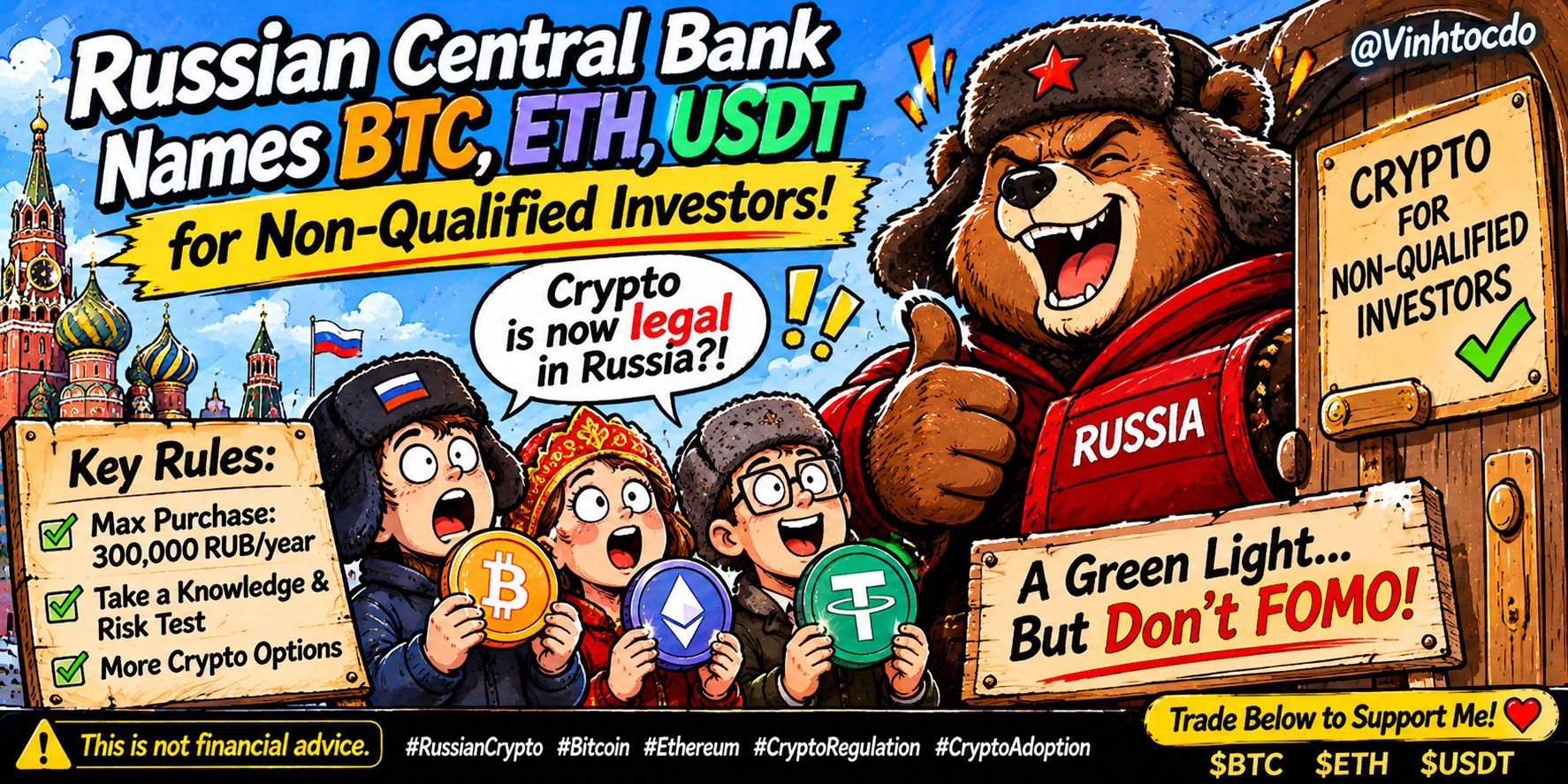
🐻 **DER RUSSISCHE BÄR ÖFFNET DIE TÜR ZU KRYPTO – ABER ANSTEHEN MUSS MAN TROTZDEM!** 🇷🇺
Eilmeldung aus dem Land der Birken! Die russische Zentralbank hat BTC, ETH und USDT in die Liste der Krypto-Assets aufgenommen, mit denen nicht-professionelle Anleger handeln dürfen.
🚀 Das ist ein bemerkenswertes Signal für die Legalisierung und Regulierung des Kryptomarktes in Russland.
Aber noch nicht zu früh freuen! Der russische Bär hat sein Maßband schon in der Hand:
- Höchstbetrag für Käufe: 300.000 RUB pro Jahr bei jedem einzelnen Intermediär.
- Anleger müssen einen Wissens- und Risikotest bestehen.
- Qualifizierte Anleger erhalten Zugang zu einer größeren Auswahl an Assets.
🎯 **Was sollten Trader tun?**
Behalte die Kapitalflüsse und die Liquidität von BTC, ETH und USDT im Blick. Das könnte ein positives Signal für die Akzeptanz von Krypto sein, aber stürze dich nicht vorschnell aus FOMO hinein. Der russische Bär hat grünes Licht gegeben – das heißt noch lange nicht, dass der Preis durch die Decke geht! 😂
⚠️ Dies ist keine Finanzberatung.
👇 Handle unten, um mich zu unterstützen ❤️
$BTC
{spot}(BTCUSDT)
$ETH
{spot}(ETHUSDT)
$UAI
{future}(UAIUSDT)
#RussianCentralBankNamesBTCETHUSDTForNonQualifiedInvestors #RussianCrypto #Bitcoin #Ethereum #CryptoRegulation #VINHTOCDO #CryptoAdoption
🐻 **DER RUSSISCHE BÄR ÖFFNET DIE TÜR ZU KRYPTO – ABER ANSTEHEN MUSS MAN TROTZDEM!** 🇷🇺
Eilmeldung aus dem Land der Birken! Die russische Zentralbank hat BTC, ETH und USDT in die Liste der Krypto-Assets aufgenommen, mit denen nicht-professionelle Anleger handeln dürfen.
🚀 Das ist ein bemerkenswertes Signal für die Legalisierung und Regulierung des Kryptomarktes in Russland.
Aber noch nicht zu früh freuen! Der russische Bär hat sein Maßband schon in der Hand:
- Höchstbetrag für Käufe: 300.000 RUB pro Jahr bei jedem einzelnen Intermediär.
- Anleger müssen einen Wissens- und Risikotest bestehen.
- Qualifizierte Anleger erhalten Zugang zu einer größeren Auswahl an Assets.
🎯 **Was sollten Trader tun?**
Behalte die Kapitalflüsse und die Liquidität von BTC, ETH und USDT im Blick. Das könnte ein positives Signal für die Akzeptanz von Krypto sein, aber stürze dich nicht vorschnell aus FOMO hinein. Der russische Bär hat grünes Licht gegeben – das heißt noch lange nicht, dass der Preis durch die Decke geht! 😂
⚠️ Dies ist keine Finanzberatung.
👇 Handle unten, um mich zu unterstützen ❤️
$BTC
$ETH
$UAI
#RussianCentralBankNamesBTCETHUSDTForNonQualifiedInvestors #RussianCrypto #Bitcoin #Ethereum #CryptoRegulation #VINHTOCDO #CryptoAdoption
2
751

·
--
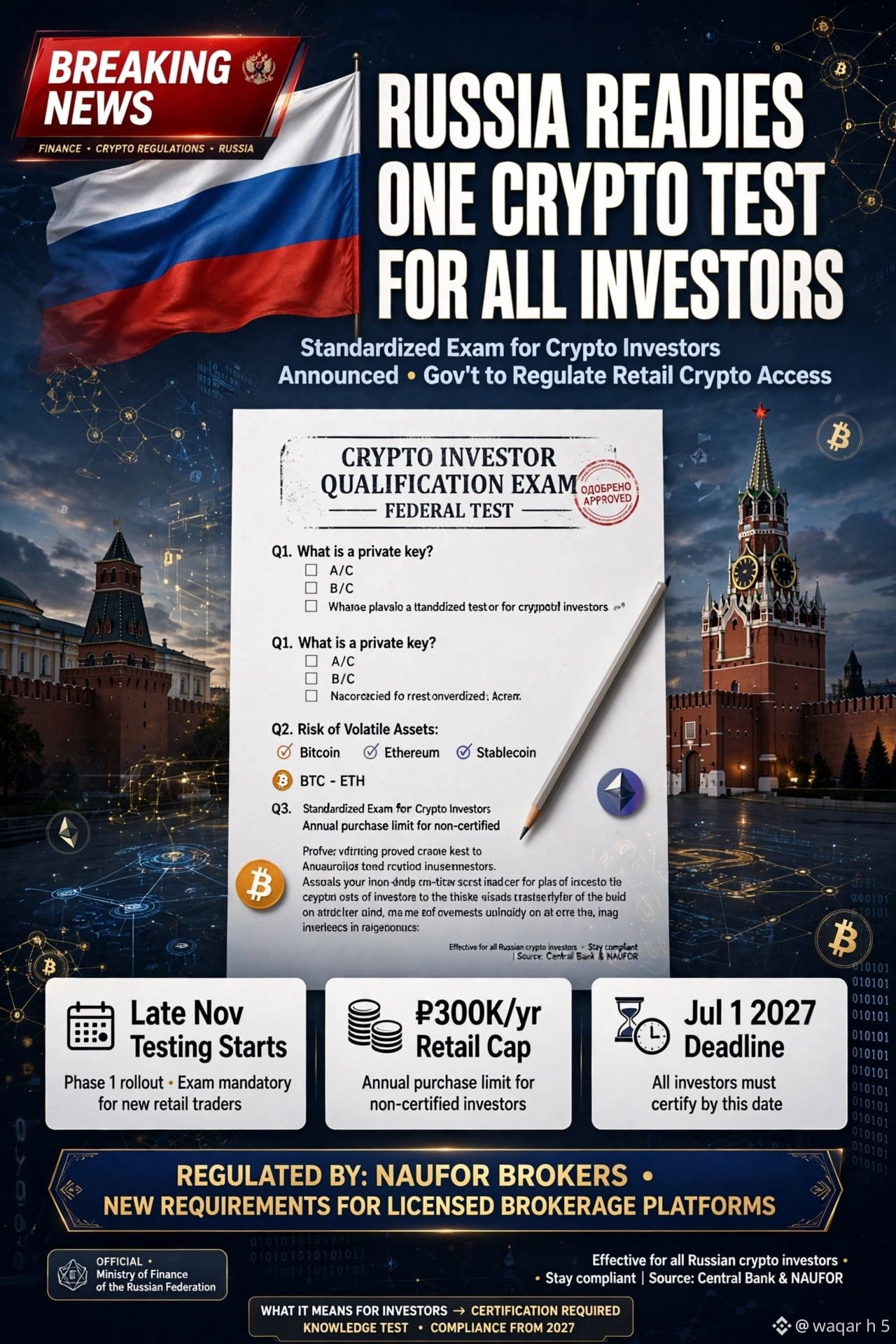
#RussiaPlansStandardizedTestForCryptoInvestors 🚨 EILMELDUNG: RUSSLAND BEREITET EINEN KRYPTOTEST FÜR ALLE ANLEGER VOR
🇷🇺 Russland plant einen standardisierten Test für Krypto-Anleger!
Laut NAUFOR könnten Broker schon bald von allen Privatanlegern verlangen, eine Krypto-Qualifikationsprüfung zu bestehen.
*Wichtige Details:*
📅 Ende November – Beginn der Tests (Phase 1)
💰 Höchstgrenze von ₽300K/Jahr für nicht zertifizierte Anleger
🪙 Vermögenswerte: BTC, ETH gemäß den neuen Regeln
⏰ 1. Juli 2027 – Frist für die vollständige Umsetzung
Was das bedeutet: Kein Test = eingeschränkter Zugang zu Kryptowährungen. Test bestanden = unbegrenzter Handel.
Macht Russland Kryptowährungen sicherer oder nur schwerer zugänglich?
Bullisch oder bärisch für die Verbreitung? Kommentiert unten 👇
#Russia #CryptoNews $BTC $ETH #breakingnews #CryptoRegulation #NAUFOR #RussianCrypto
1
1
129
Anmelden und weiter Inhalte entdecken
Krypto-Nutzer weltweit auf Binance Square kennenlernen
⚡️ Bleib in Sachen Krypto stets am Puls.
💬 Die weltgrößte Kryptobörse vertraut darauf.
👍 Erhalte verlässliche Einblicke von verifizierten Creators.
E-Mail-Adresse/Telefonnummer
Trendthemen
1
#NVDASoarsOnJensenReturn
1,852 Aufrufe
74 Kommentare
2
#Bitcoin'sReboundFadesBelow$60K
13,333 Aufrufe
160 Kommentare
3
#NVIDIAReinstatesJensenHuangasCEO
280,274 Aufrufe
1,818 Kommentare
4
#WillMarketsStageAThanksgivingReliefRally?
351,038 Aufrufe
2,528 Kommentare
5
#WillOctCorePCEShiftFedHikeExpectations?
127,807 Aufrufe
1,258 Kommentare
6
#EvolveAtBinanceBlockchainWeek
249,869 Aufrufe
1,574 Kommentare
7
#SouthKoreaBeginsCryptoProviderShareholderReviews
6,573 Aufrufe
139 Kommentare
8
#USAddsMegaspeedToEntityList
13,565 Aufrufe
218 Kommentare
9
#GrayscaleLaunches2xLeveragedZcashETF
7,233 Aufrufe
137 Kommentare
10
#StrategyValueFallsBelowItsBitcoinHoldings
6,278 Aufrufe
138 Kommentare