

#cryptosupply
cryptosupply
47,947 Aufrufe
85 Kommentare
Hot
Zuletzt

·
--
Verifiziert
Als jemand, der in der Welt der Krypto-Kurse vorne bleiben möchte: Wusstest du, dass die vierteljährlichen Burns von BNB Chain ein riesiger Mechanismus sind, um das Angebot zu reduzieren und den Wert für Inhaber zu steigern? Heute hat BNB Chain 1,61 Millionen BNB verbrannt – im Wert von etwa 932 Millionen US-Dollar – und damit die gesamte Angebotsmenge auf 133,17 Millionen Coins gesenkt.
#CryptoSupply #BNBChain
Stell dir vor, du hättest ein Sammlerstück in limitierter Auflage, bei dem nur eine bestimmte Anzahl gedruckt wird. Je niedriger das Angebot, desto höher sein Wert. Genau das passiert bei BNB Chain: sinkendes Angebot und steigendes potenzielles Wertpotenzial.
Schauen wir uns das reale Beispiel von Kunst-Sammlerstücken an. Ein berühmter Künstler druckt 100 einzigartige Stücke. Wenn 20 verkauft werden, werden die restlichen 80 noch wertvoller, weil sie schwerer zu finden sind. Ebenso könnte bei weniger BNB-Coins im Umlauf der Wert der bereits vorhandenen Coins steigen.
#SupplyAndDemand
Was kannst du also jetzt tun, nachdem du den Einfluss der vierteljährlichen Burns von BNB Chain verstanden hast?
Glaubst du, dass der BNB-Preis in den kommenden Monaten weiter steigen oder fallen wird?
Als jemand, der in der Welt der Krypto-Kurse vorne bleiben möchte: Wusstest du, dass die vierteljährlichen Burns von BNB Chain ein riesiger Mechanismus sind, um das Angebot zu reduzieren und den Wert für Inhaber zu steigern? Heute hat BNB Chain 1,61 Millionen BNB verbrannt – im Wert von etwa 932 Millionen US-Dollar – und damit die gesamte Angebotsmenge auf 133,17 Millionen Coins gesenkt.
#CryptoSupply #BNBChain
Stell dir vor, du hättest ein Sammlerstück in limitierter Auflage, bei dem nur eine bestimmte Anzahl gedruckt wird. Je niedriger das Angebot, desto höher sein Wert. Genau das passiert bei BNB Chain: sinkendes Angebot und steigendes potenzielles Wertpotenzial.
Schauen wir uns das reale Beispiel von Kunst-Sammlerstücken an. Ein berühmter Künstler druckt 100 einzigartige Stücke. Wenn 20 verkauft werden, werden die restlichen 80 noch wertvoller, weil sie schwerer zu finden sind. Ebenso könnte bei weniger BNB-Coins im Umlauf der Wert der bereits vorhandenen Coins steigen.
#SupplyAndDemand
Was kannst du also jetzt tun, nachdem du den Einfluss der vierteljährlichen Burns von BNB Chain verstanden hast?
Glaubst du, dass der BNB-Preis in den kommenden Monaten weiter steigen oder fallen wird?
#CryptoSupply #BNBChain
Stell dir vor, du hättest ein Sammlerstück in limitierter Auflage, bei dem nur eine bestimmte Anzahl gedruckt wird. Je niedriger das Angebot, desto höher sein Wert. Genau das passiert bei BNB Chain: sinkendes Angebot und steigendes potenzielles Wertpotenzial.
Schauen wir uns das reale Beispiel von Kunst-Sammlerstücken an. Ein berühmter Künstler druckt 100 einzigartige Stücke. Wenn 20 verkauft werden, werden die restlichen 80 noch wertvoller, weil sie schwerer zu finden sind. Ebenso könnte bei weniger BNB-Coins im Umlauf der Wert der bereits vorhandenen Coins steigen.
#SupplyAndDemand
Was kannst du also jetzt tun, nachdem du den Einfluss der vierteljährlichen Burns von BNB Chain verstanden hast?
Glaubst du, dass der BNB-Preis in den kommenden Monaten weiter steigen oder fallen wird?
27

·
--
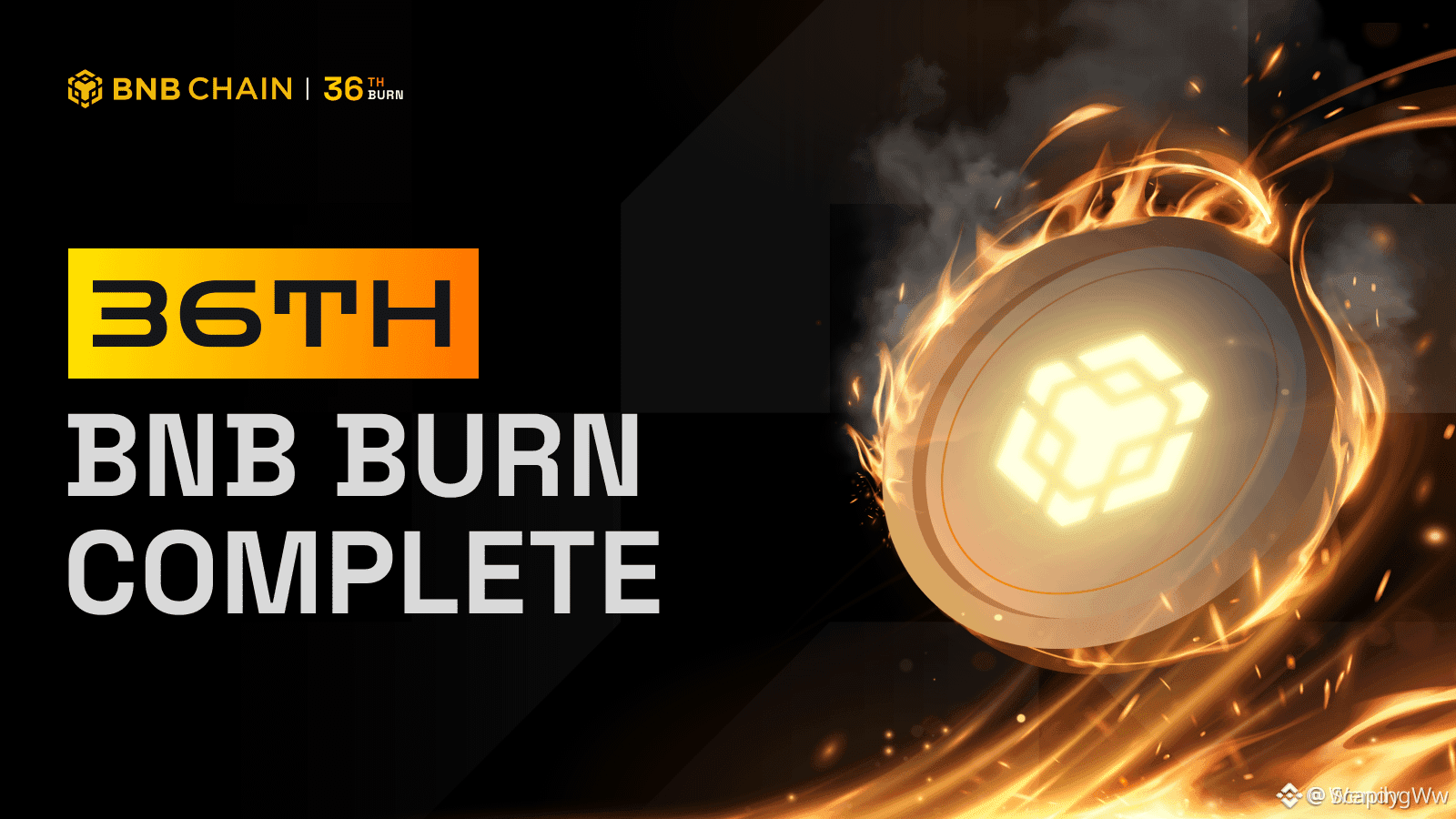
$BNB JUST BURNED 1.62M TOKENS WORTH $932M 🔥
Das war der 36. vierteljährliche Auto-Burn auf der BNB Smart Chain – mit dem dauerhaft über eine Million Coins aus dem Umlauf entfernt wurden. Burn-Anpassungen sind an den Preis und die Netzwerkaktivität gekoppelt, wodurch dieses Ereignis einer transparenten Angebotsverknappung entspricht.
Auch wenn Burns keine Pumps garantieren: Weniger Coins bedeuten ein engeres Angebot in einem Markt, der Tokenomics genau beobachtet. Die Frage ist, ob die Nachfrage nachzieht, um den reduzierten Free Float aufzufangen.
Keine Finanzberatung. Verwalte immer dein Risiko.
#BNB #TokenBurn #BNBChain #CryptoSupply
🔥
$BNB JUST BURNED 1.62M TOKENS WORTH $932M 🔥
Das war der 36. vierteljährliche Auto-Burn auf der BNB Smart Chain – mit dem dauerhaft über eine Million Coins aus dem Umlauf entfernt wurden. Burn-Anpassungen sind an den Preis und die Netzwerkaktivität gekoppelt, wodurch dieses Ereignis einer transparenten Angebotsverknappung entspricht.
Auch wenn Burns keine Pumps garantieren: Weniger Coins bedeuten ein engeres Angebot in einem Markt, der Tokenomics genau beobachtet. Die Frage ist, ob die Nachfrage nachzieht, um den reduzierten Free Float aufzufangen.
Keine Finanzberatung. Verwalte immer dein Risiko.
#BNB #TokenBurn #BNBChain #CryptoSupply
🔥
Das war der 36. vierteljährliche Auto-Burn auf der BNB Smart Chain – mit dem dauerhaft über eine Million Coins aus dem Umlauf entfernt wurden. Burn-Anpassungen sind an den Preis und die Netzwerkaktivität gekoppelt, wodurch dieses Ereignis einer transparenten Angebotsverknappung entspricht.
Auch wenn Burns keine Pumps garantieren: Weniger Coins bedeuten ein engeres Angebot in einem Markt, der Tokenomics genau beobachtet. Die Frage ist, ob die Nachfrage nachzieht, um den reduzierten Free Float aufzufangen.
Keine Finanzberatung. Verwalte immer dein Risiko.
#BNB #TokenBurn #BNBChain #CryptoSupply
🔥
10

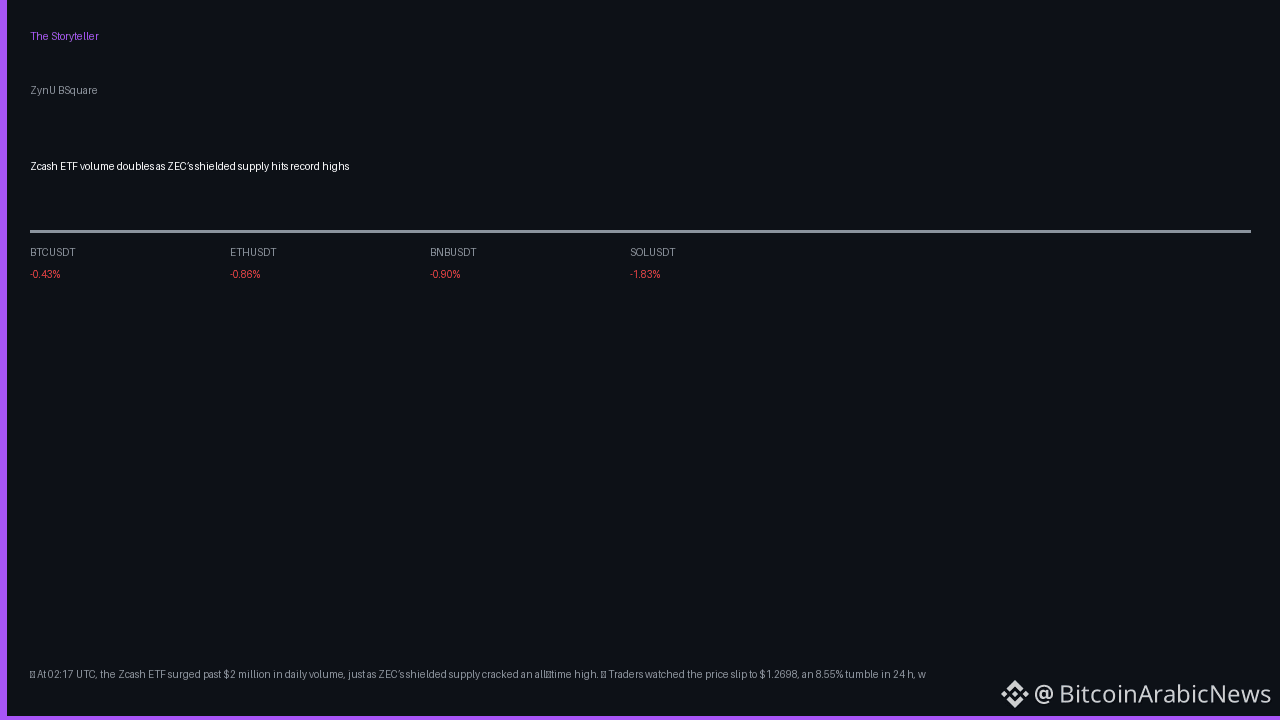
🔥 Um 02:17 UTC schoss der Zcash‑ETF mit einem Tagesvolumen von über 2 Millionen US‑Dollar durch die Decke – genau in dem Moment, als ZECs abgeschirmtes Angebot ein Allzeithoch knackte.
📊 Trader beobachteten, wie der Kurs auf 1,2698 US‑Dollar zurückrutschte: ein Minus von 8,55% in 24 h. Gleichzeitig flossen 364 M US‑Dollar an On‑Chain‑Aktivität ein, der RSI fiel auf 33,7 und das Bollinger‑Band schmiegte sich an die untere Kante. Doch die #ZEC #ETF riss durch die Stille, verdoppelte ihren Flow und brachte die neutrale Sentiment‑Bewertung des Marktes von 51/100 ins Wanken. Währenddessen merken #CryptoSupply Analysten an, dass der Anstieg abgeschirmter Coins eine stille Armee ist, die sich unbemerkt formiert – selbst während das Open Interest von #Bitcoin bei 8,13 B US‑Dollar liegt und darauf hindeutet, dass Institutionen den Dip ins Auge fassen.
💡 Was ist die Wendung? Dasselbe Smart‑Money, das sich noch von Bitcoins Rally zurückhielt, lädt jetzt die Privacy‑Tresore von ZEC nach – und verwandelt ein bärisches Chartbild in ein verdecktes Akkumulations‑Szenario.
❓ Wird das Rekord‑Allzeithoch beim abgeschirmten Angebot zum Auslöser, der ZEC von einer Story über Kursverluste zur nächsten Privacy‑getriebenen Explosion macht?
🔥 Um 02:17 UTC schoss der Zcash‑ETF mit einem Tagesvolumen von über 2 Millionen US‑Dollar durch die Decke – genau in dem Moment, als ZECs abgeschirmtes Angebot ein Allzeithoch knackte.
📊 Trader beobachteten, wie der Kurs auf 1,2698 US‑Dollar zurückrutschte: ein Minus von 8,55% in 24 h. Gleichzeitig flossen 364 M US‑Dollar an On‑Chain‑Aktivität ein, der RSI fiel auf 33,7 und das Bollinger‑Band schmiegte sich an die untere Kante. Doch die #ZEC #ETF riss durch die Stille, verdoppelte ihren Flow und brachte die neutrale Sentiment‑Bewertung des Marktes von 51/100 ins Wanken. Währenddessen merken #CryptoSupply Analysten an, dass der Anstieg abgeschirmter Coins eine stille Armee ist, die sich unbemerkt formiert – selbst während das Open Interest von #Bitcoin bei 8,13 B US‑Dollar liegt und darauf hindeutet, dass Institutionen den Dip ins Auge fassen.
💡 Was ist die Wendung? Dasselbe Smart‑Money, das sich noch von Bitcoins Rally zurückhielt, lädt jetzt die Privacy‑Tresore von ZEC nach – und verwandelt ein bärisches Chartbild in ein verdecktes Akkumulations‑Szenario.
❓ Wird das Rekord‑Allzeithoch beim abgeschirmten Angebot zum Auslöser, der ZEC von einer Story über Kursverluste zur nächsten Privacy‑getriebenen Explosion macht?
📊 Trader beobachteten, wie der Kurs auf 1,2698 US‑Dollar zurückrutschte: ein Minus von 8,55% in 24 h. Gleichzeitig flossen 364 M US‑Dollar an On‑Chain‑Aktivität ein, der RSI fiel auf 33,7 und das Bollinger‑Band schmiegte sich an die untere Kante. Doch die #ZEC #ETF riss durch die Stille, verdoppelte ihren Flow und brachte die neutrale Sentiment‑Bewertung des Marktes von 51/100 ins Wanken. Währenddessen merken #CryptoSupply Analysten an, dass der Anstieg abgeschirmter Coins eine stille Armee ist, die sich unbemerkt formiert – selbst während das Open Interest von #Bitcoin bei 8,13 B US‑Dollar liegt und darauf hindeutet, dass Institutionen den Dip ins Auge fassen.
💡 Was ist die Wendung? Dasselbe Smart‑Money, das sich noch von Bitcoins Rally zurückhielt, lädt jetzt die Privacy‑Tresore von ZEC nach – und verwandelt ein bärisches Chartbild in ein verdecktes Akkumulations‑Szenario.
❓ Wird das Rekord‑Allzeithoch beim abgeschirmten Angebot zum Auslöser, der ZEC von einer Story über Kursverluste zur nächsten Privacy‑getriebenen Explosion macht?
178

·
--
Artikel
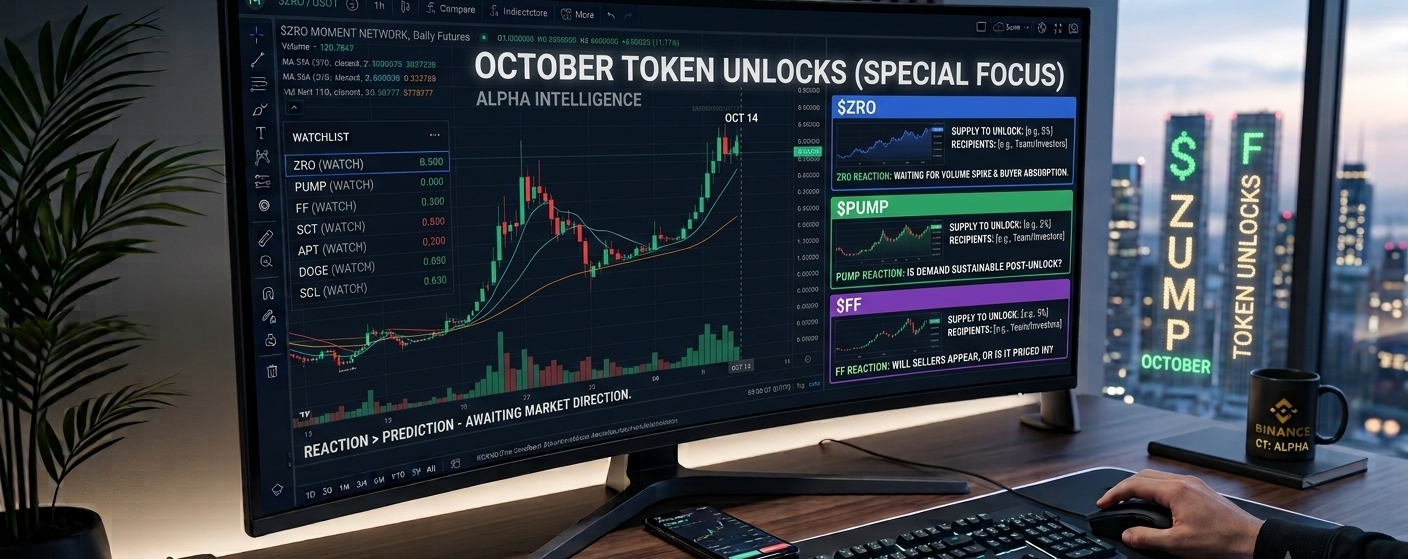
3 Token-Entsperrungen, die ich diesen Oktober besonders genau beobachte 🔥Der Oktober hat mit einigen interessanten Token-Entsperrungen begonnen, und das beobachte ich diesen Monat besonders genau. 👀
Wenn neue Tokens in Umlauf kommen, denken viele Trader sofort:
„Entsperren = Abverkauf.“
Aber ich glaube nicht, dass es immer so einfach ist. Der Markt muss die neue Liquidität erst aufnehmen.
Wenn die Nachfrage stark bleibt, kann der Preis sich halten.
Wenn die Nachfrage schwach ist, kann das zusätzliche Angebot Verkaufsdruck erzeugen.
Drei Entsperrungen im Oktober, die ich persönlich im Blick habe, sind:
$ZRO
$PUMP
$FF
Was mich nicht einfach nur am Entsperrdatum interessiert. Ich möchte sehen, wie der Markt reagiert, wenn diese Tokens tatsächlich verfügbar werden.
3 Token-Entsperrungen, die ich diesen Oktober besonders genau beobachte 🔥
Der Oktober hat mit einigen interessanten Token-Entsperrungen begonnen, und das beobachte ich diesen Monat besonders genau. 👀
Wenn neue Tokens in Umlauf kommen, denken viele Trader sofort:
„Entsperren = Abverkauf.“
Aber ich glaube nicht, dass es immer so einfach ist. Der Markt muss die neue Liquidität erst aufnehmen.
Wenn die Nachfrage stark bleibt, kann der Preis sich halten.
Wenn die Nachfrage schwach ist, kann das zusätzliche Angebot Verkaufsdruck erzeugen.
Drei Entsperrungen im Oktober, die ich persönlich im Blick habe, sind:
$ZRO
$PUMP
$FF
Was mich nicht einfach nur am Entsperrdatum interessiert. Ich möchte sehen, wie der Markt reagiert, wenn diese Tokens tatsächlich verfügbar werden.
Wenn neue Tokens in Umlauf kommen, denken viele Trader sofort:
„Entsperren = Abverkauf.“
Aber ich glaube nicht, dass es immer so einfach ist. Der Markt muss die neue Liquidität erst aufnehmen.
Wenn die Nachfrage stark bleibt, kann der Preis sich halten.
Wenn die Nachfrage schwach ist, kann das zusätzliche Angebot Verkaufsdruck erzeugen.
Drei Entsperrungen im Oktober, die ich persönlich im Blick habe, sind:
$ZRO
$PUMP
$FF
Was mich nicht einfach nur am Entsperrdatum interessiert. Ich möchte sehen, wie der Markt reagiert, wenn diese Tokens tatsächlich verfügbar werden.
1
491

·
--
Übersetzung ansehen
Bitcoin's halving mechanism is widely discussed but consistently underestimated — not for the first cycle after it fires, but for the compounding effect across multiple halvings.
Here's the math most people skip. Before the 2012 halving, 7,200 BTC were mined daily. Today, post-2024 halving, that number sits at 450 BTC per day. By 2028 it will be 225. Against a backdrop where spot ETFs alone absorbed more than 10x that daily issuance during their first year of flows, the supply side of this equation becomes structurally trivial.
But the deeper point is behavioral, not arithmetic. Long-term holders — tracked on-chain through dormancy metrics and coin days destroyed — have consistently absorbed newly mined supply and then some during accumulation phases. The halving doesn't cause price increases directly. It removes the pressure valve. Miners who would have sold to cover operational costs are selling half as much. That marginal seller pressure disappears quietly, before most market participants notice.
The pattern across 2013, 2017, and 2021: price discovery followed the halving by 12–18 months, not immediately. The mechanism is slow, structural, and repeatable — which is precisely why it keeps working. Markets price fast narratives, not slow math.
Understanding this cycle is the single most durable edge in long-term $BTC positioning. Pair it with $ETH burn mechanics and $BNB Auto-Burn, and you have three assets where supply reduction is protocol-enforced, not just narrative-driven.
Slow supply math beats fast headlines, every cycle.
#Bitcoin #Halving #CryptoSupply #LongTermConviction #BinanceSquare
Bitcoin's halving mechanism is widely discussed but consistently underestimated — not for the first cycle after it fires, but for the compounding effect across multiple halvings.
Here's the math most people skip. Before the 2012 halving, 7,200 BTC were mined daily. Today, post-2024 halving, that number sits at 450 BTC per day. By 2028 it will be 225. Against a backdrop where spot ETFs alone absorbed more than 10x that daily issuance during their first year of flows, the supply side of this equation becomes structurally trivial.
But the deeper point is behavioral, not arithmetic. Long-term holders — tracked on-chain through dormancy metrics and coin days destroyed — have consistently absorbed newly mined supply and then some during accumulation phases. The halving doesn't cause price increases directly. It removes the pressure valve. Miners who would have sold to cover operational costs are selling half as much. That marginal seller pressure disappears quietly, before most market participants notice.
The pattern across 2013, 2017, and 2021: price discovery followed the halving by 12–18 months, not immediately. The mechanism is slow, structural, and repeatable — which is precisely why it keeps working. Markets price fast narratives, not slow math.
Understanding this cycle is the single most durable edge in long-term $BTC positioning. Pair it with $ETH burn mechanics and $BNB Auto-Burn, and you have three assets where supply reduction is protocol-enforced, not just narrative-driven.
Slow supply math beats fast headlines, every cycle.
#Bitcoin #Halving #CryptoSupply #LongTermConviction #BinanceSquare
Here's the math most people skip. Before the 2012 halving, 7,200 BTC were mined daily. Today, post-2024 halving, that number sits at 450 BTC per day. By 2028 it will be 225. Against a backdrop where spot ETFs alone absorbed more than 10x that daily issuance during their first year of flows, the supply side of this equation becomes structurally trivial.
But the deeper point is behavioral, not arithmetic. Long-term holders — tracked on-chain through dormancy metrics and coin days destroyed — have consistently absorbed newly mined supply and then some during accumulation phases. The halving doesn't cause price increases directly. It removes the pressure valve. Miners who would have sold to cover operational costs are selling half as much. That marginal seller pressure disappears quietly, before most market participants notice.
The pattern across 2013, 2017, and 2021: price discovery followed the halving by 12–18 months, not immediately. The mechanism is slow, structural, and repeatable — which is precisely why it keeps working. Markets price fast narratives, not slow math.
Understanding this cycle is the single most durable edge in long-term $BTC positioning. Pair it with $ETH burn mechanics and $BNB Auto-Burn, and you have three assets where supply reduction is protocol-enforced, not just narrative-driven.
Slow supply math beats fast headlines, every cycle.
#Bitcoin #Halving #CryptoSupply #LongTermConviction #BinanceSquare
14
SCARCE SUPPLY DRIVES $BTC'S STORE-OF-VALUE CASE 📈
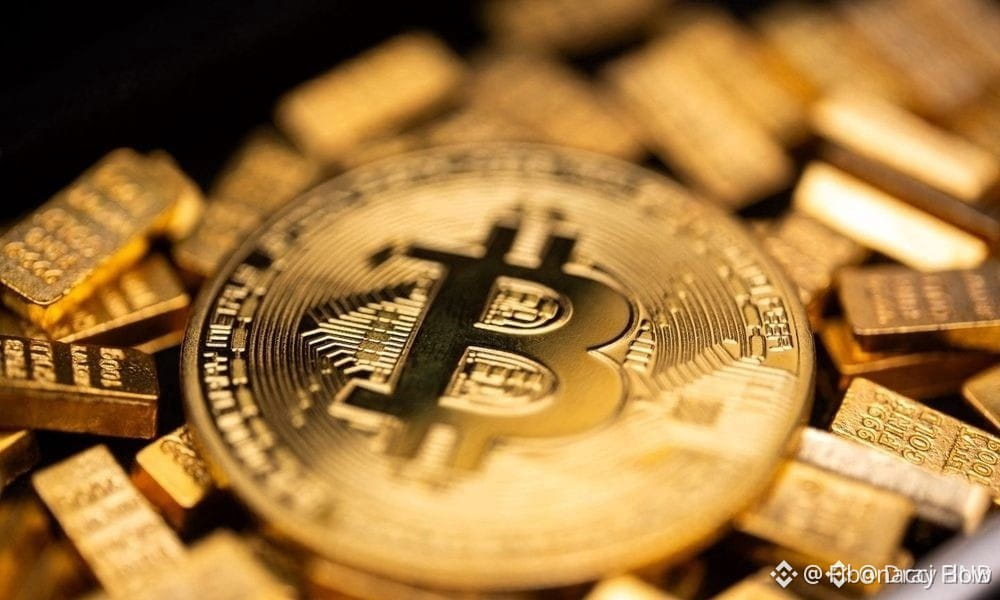
Bitcoins begrenzte Versorgung von 21 Millionen, mit ~20 Millionen geschürft bis 2025, verstärkt seine Positionierung als digitales Gold inmitten strengerer Geldpolitik. Die bevorstehenden Halving-Zyklen reduzieren weiterhin die Neuemission, ein Faktor, der von institutionellen Investoren genau beobachtet wird. Ethereums schnellere Blockzeit (~12 Sekunden) hebt seine einzigartige Nutzschicht hervor und unterstützt breitere DeFi- und Unternehmensadoption.
Das endliche Versorgungsmodell unterscheidet Bitcoin von Fiat-Währungen und führt zu einer erhöhten Nachfrage von Treasury-Teams, die nach Inflationsabsicherungen suchen. Mit den bevorstehenden Halving-Events verengen sich die On-Chain-Mangelmetriken, was potenziell die Preisstabilität unterstützen könnte. In der Zwischenzeit untermauert Ethereums schnelle Blockkadenz einen höheren Transaktionsdurchsatz, was Entwickler und institutionelle Partner anzieht, die sich auf die Infrastruktur von Smart Contracts konzentrieren. Marktteilnehmer sollten die Emissionskurven, die Teilnahme am Staking und die Cross-Asset-Flüsse beobachten, um das risikoadjustierte Engagement zu beurteilen.
Keine Finanzberatung. Manage dein Risiko.
#Bitcoin #Ethereum #CryptoSupply #DigitalGold #Blockchain
🔒
{future}(BTCUSDT)
SCARCE SUPPLY DRIVES $BTC'S STORE-OF-VALUE CASE 📈
Bitcoins begrenzte Versorgung von 21 Millionen, mit ~20 Millionen geschürft bis 2025, verstärkt seine Positionierung als digitales Gold inmitten strengerer Geldpolitik. Die bevorstehenden Halving-Zyklen reduzieren weiterhin die Neuemission, ein Faktor, der von institutionellen Investoren genau beobachtet wird. Ethereums schnellere Blockzeit (~12 Sekunden) hebt seine einzigartige Nutzschicht hervor und unterstützt breitere DeFi- und Unternehmensadoption.
Das endliche Versorgungsmodell unterscheidet Bitcoin von Fiat-Währungen und führt zu einer erhöhten Nachfrage von Treasury-Teams, die nach Inflationsabsicherungen suchen. Mit den bevorstehenden Halving-Events verengen sich die On-Chain-Mangelmetriken, was potenziell die Preisstabilität unterstützen könnte. In der Zwischenzeit untermauert Ethereums schnelle Blockkadenz einen höheren Transaktionsdurchsatz, was Entwickler und institutionelle Partner anzieht, die sich auf die Infrastruktur von Smart Contracts konzentrieren. Marktteilnehmer sollten die Emissionskurven, die Teilnahme am Staking und die Cross-Asset-Flüsse beobachten, um das risikoadjustierte Engagement zu beurteilen.
Keine Finanzberatung. Manage dein Risiko.
#Bitcoin #Ethereum #CryptoSupply #DigitalGold #Blockchain
🔒
Bitcoins begrenzte Versorgung von 21 Millionen, mit ~20 Millionen geschürft bis 2025, verstärkt seine Positionierung als digitales Gold inmitten strengerer Geldpolitik. Die bevorstehenden Halving-Zyklen reduzieren weiterhin die Neuemission, ein Faktor, der von institutionellen Investoren genau beobachtet wird. Ethereums schnellere Blockzeit (~12 Sekunden) hebt seine einzigartige Nutzschicht hervor und unterstützt breitere DeFi- und Unternehmensadoption.
Das endliche Versorgungsmodell unterscheidet Bitcoin von Fiat-Währungen und führt zu einer erhöhten Nachfrage von Treasury-Teams, die nach Inflationsabsicherungen suchen. Mit den bevorstehenden Halving-Events verengen sich die On-Chain-Mangelmetriken, was potenziell die Preisstabilität unterstützen könnte. In der Zwischenzeit untermauert Ethereums schnelle Blockkadenz einen höheren Transaktionsdurchsatz, was Entwickler und institutionelle Partner anzieht, die sich auf die Infrastruktur von Smart Contracts konzentrieren. Marktteilnehmer sollten die Emissionskurven, die Teilnahme am Staking und die Cross-Asset-Flüsse beobachten, um das risikoadjustierte Engagement zu beurteilen.
Keine Finanzberatung. Manage dein Risiko.
#Bitcoin #Ethereum #CryptoSupply #DigitalGold #Blockchain
🔒
24
·
--
Das Halving ist nicht nur ein Preissignal — es ist eine Bestandsprüfung
Alle vier Jahre zwingt Bitcoin den Markt zu einer einfachen Frage: Bei welchem Preis macht das Verkaufen Sinn?
Wenn die Blockprämien halbiert werden, sinkt die Miner-Einnahme über Nacht grob um 50%. Ineffiziente Miner geben auf. Die Hash-Rate fällt kurzfristig und steigt dann wieder an, während nur die kostenkompetitivsten Betriebe überleben. Die Angebotsseite wird aufgeräumt.
Doch die spannendere Dynamik spielt sich auf der Nachfrageseite ab. Jeder Halving-Zyklus zieht eine neue Gruppe langfristiger Inhaber an — Investoren, die den vorherigen Zyklus beobachtet und sich schon vor dem nächsten positioniert haben. Diese Halter entziehen dem Umlauf Coins. Die Bestände an Börsen sinken. Das verfügbare Angebot verknappt sich.
Das Ergebnis ist kein garantierter Preissprung unmittelbar nach dem Halving. Die Geschichte zeigt: Die entscheidende Bewegung kommt erst 6–18 Monate später, wenn das reduzierte Angebot auf eine Nachfragewelle trifft, die von Institutionen, Privatanlegern und ETF-Zuflüssen still aufgebaut wird.
$BTC ist das einzige Asset der Welt mit einem mathematisch erzwungenen, öffentlich verifizierbaren Emissionsfahrplan. Keine Zentralbank kann ihn überstimmen. Kein Gremium kann dafür stimmen, ihn zu verwässern. Diese Planbarkeit wird als Treasury-Eigenschaft unterschätzt.
$ETHs EIP-1559-Burn-Mechanismus fügt eine nachfrageabhängige, deflationäre Schicht hinzu. $BNB nutzt mit dem quartalsweisen Burn das Konzept für Utility-Token.
Das Halving ist kein Hype. Es ist das transparenteste Ereignis der Geldpolitik in der Finanzgeschichte.
#Bitcoin #Halving #CryptoSupply #BullMarket #CryptoInvesting
Das Halving ist nicht nur ein Preissignal — es ist eine Bestandsprüfung
Alle vier Jahre zwingt Bitcoin den Markt zu einer einfachen Frage: Bei welchem Preis macht das Verkaufen Sinn?
Wenn die Blockprämien halbiert werden, sinkt die Miner-Einnahme über Nacht grob um 50%. Ineffiziente Miner geben auf. Die Hash-Rate fällt kurzfristig und steigt dann wieder an, während nur die kostenkompetitivsten Betriebe überleben. Die Angebotsseite wird aufgeräumt.
Doch die spannendere Dynamik spielt sich auf der Nachfrageseite ab. Jeder Halving-Zyklus zieht eine neue Gruppe langfristiger Inhaber an — Investoren, die den vorherigen Zyklus beobachtet und sich schon vor dem nächsten positioniert haben. Diese Halter entziehen dem Umlauf Coins. Die Bestände an Börsen sinken. Das verfügbare Angebot verknappt sich.
Das Ergebnis ist kein garantierter Preissprung unmittelbar nach dem Halving. Die Geschichte zeigt: Die entscheidende Bewegung kommt erst 6–18 Monate später, wenn das reduzierte Angebot auf eine Nachfragewelle trifft, die von Institutionen, Privatanlegern und ETF-Zuflüssen still aufgebaut wird.
$BTC ist das einzige Asset der Welt mit einem mathematisch erzwungenen, öffentlich verifizierbaren Emissionsfahrplan. Keine Zentralbank kann ihn überstimmen. Kein Gremium kann dafür stimmen, ihn zu verwässern. Diese Planbarkeit wird als Treasury-Eigenschaft unterschätzt.
$ETHs EIP-1559-Burn-Mechanismus fügt eine nachfrageabhängige, deflationäre Schicht hinzu. $BNB nutzt mit dem quartalsweisen Burn das Konzept für Utility-Token.
Das Halving ist kein Hype. Es ist das transparenteste Ereignis der Geldpolitik in der Finanzgeschichte.
#Bitcoin #Halving #CryptoSupply #BullMarket #CryptoInvesting
Alle vier Jahre zwingt Bitcoin den Markt zu einer einfachen Frage: Bei welchem Preis macht das Verkaufen Sinn?
Wenn die Blockprämien halbiert werden, sinkt die Miner-Einnahme über Nacht grob um 50%. Ineffiziente Miner geben auf. Die Hash-Rate fällt kurzfristig und steigt dann wieder an, während nur die kostenkompetitivsten Betriebe überleben. Die Angebotsseite wird aufgeräumt.
Doch die spannendere Dynamik spielt sich auf der Nachfrageseite ab. Jeder Halving-Zyklus zieht eine neue Gruppe langfristiger Inhaber an — Investoren, die den vorherigen Zyklus beobachtet und sich schon vor dem nächsten positioniert haben. Diese Halter entziehen dem Umlauf Coins. Die Bestände an Börsen sinken. Das verfügbare Angebot verknappt sich.
Das Ergebnis ist kein garantierter Preissprung unmittelbar nach dem Halving. Die Geschichte zeigt: Die entscheidende Bewegung kommt erst 6–18 Monate später, wenn das reduzierte Angebot auf eine Nachfragewelle trifft, die von Institutionen, Privatanlegern und ETF-Zuflüssen still aufgebaut wird.
$BTC ist das einzige Asset der Welt mit einem mathematisch erzwungenen, öffentlich verifizierbaren Emissionsfahrplan. Keine Zentralbank kann ihn überstimmen. Kein Gremium kann dafür stimmen, ihn zu verwässern. Diese Planbarkeit wird als Treasury-Eigenschaft unterschätzt.
$ETHs EIP-1559-Burn-Mechanismus fügt eine nachfrageabhängige, deflationäre Schicht hinzu. $BNB nutzt mit dem quartalsweisen Burn das Konzept für Utility-Token.
Das Halving ist kein Hype. Es ist das transparenteste Ereignis der Geldpolitik in der Finanzgeschichte.
#Bitcoin #Halving #CryptoSupply #BullMarket #CryptoInvesting
70
Anmelden und weiter Inhalte entdecken
Krypto-Nutzer weltweit auf Binance Square kennenlernen
⚡️ Bleib in Sachen Krypto stets am Puls.
💬 Die weltgrößte Kryptobörse vertraut darauf.
👍 Erhalte verlässliche Einblicke von verifizierten Creators.
E-Mail-Adresse/Telefonnummer
Trendthemen
1
#BNBSurpasses$790
13,061 Aufrufe
109 Kommentare
2
#ZamaRises15.99%ToIntradayHigh$0.09
8,509 Aufrufe
89 Kommentare
3
#BitcoinSpotETFsDraw$6.34BInflowsInQ3
4,432 Aufrufe
72 Kommentare
4
#EthereumValidatorExitQueueJumps392%
71,012 Aufrufe
819 Kommentare
5
#IMFApprovesElSalvador$138MWithBitcoinWaiver
9,781 Aufrufe
53 Kommentare
6
#SECHaltsCryptoETFReviewsAmidFundingLapse
226,536 Aufrufe
1,708 Kommentare
7
#ZcashETFPostsFirstWeeklyOutflow$93.6M
91,408 Aufrufe
250 Kommentare
8
#GreekPoliceBustCryptoScamRingArrest17
353,800 Aufrufe
2,378 Kommentare
9
#BitcoinRejectedAt$87K
211,673 Aufrufe
315 Kommentare
10
#FedOctoberRateHikeOddsFallTo17%
354,086 Aufrufe
2,481 Kommentare