
Cryptopolitan
57k Posts

Cryptopolitan
 Square Verified+
Report
Block User
Crypto news that doesn't waste your time. Breaking updates, market analysis, on-chain insights. Building the smartest crypto community.

Creator of the Year
1 Following
161.5K+ Followers
572.9K+ Liked
1 Badges
Posts
PINNED
At Cryptopolitan, we research, analyze, and deliver news—daily.
From breaking updates to in-depth analysis, educational guides, and market insights, we’re here to keep you informed with neutral and authentic news.
Thank you for trusting us to be your go-to source!
At Cryptopolitan, we research, analyze, and deliver news—daily.
From breaking updates to in-depth analysis, educational guides, and market insights, we’re here to keep you informed with neutral and authentic news.
Thank you for trusting us to be your go-to source!
From breaking updates to in-depth analysis, educational guides, and market insights, we’re here to keep you informed with neutral and authentic news.
Thank you for trusting us to be your go-to source!

120
68
339
1.7k
ZCash cools after rallying to 8-year price record on ETF hypeZcash has made a retreat from an eight-year high on Monday, as it has shed part of the rally that saw the privacy coin go up by over 55% in days after Grayscale moved to convert its Zcash Trust into a US spot exchange-traded fund.
Zcash (ZEC) rose to over $880 on August 23 before easing. The figures it hit in the past few days are the strongest level it has attained since 2018.
Before it started dropping, the gains it had made over the week were around 66%. However, it is currently trading around $814. The token has a market cap of over $13.7 billion and sits at number 11 on Coinmarketcap’s list of tokens ranked by market value.
While the recent rally is still a far cry from the all-time high of $5,941.80 that the token hit in October 2016, trading is not as thin as it was then.
Roughly a year ago, ZEC was trading around $40, and it has come a long way since then, having risen by over 1,805%.
Why a privacy-coin ETF would break new ground
The move that lit the fuse was Grayscale’s amended registration statement with the Securities and Exchange Commission (SEC).
The asset manager wants Zcash Trust to be listed on NYSE Arca under the ticker ZCSH as an exchange-traded fund (ETF). The shares are expected to begin trading on or about August 25, should Grayscale get the regulatory sign-off.
Clearing that hurdle would produce the first US ETF tracking a privacy coin, an asset class regulated products have largely avoided.
Zcash has been known for its privacy features, as it uses zero-knowledge cryptography to hide a transaction’s sender, recipient, and amount.
This design has made it appealing to investors who want financial privacy. However, it has been worrying for regulators who see it as a harder-to-trace vehicle for money laundering or sanctions evasion.
Grayscale’s filing also disclosed non-binding talks under which DCG International Investments, a Digital Currency Group subsidiary, could seed the fund with 200,000 ZEC, a stake worth roughly $110 million at the cited valuation. The asset manager said the trust held about $263.5 million in assets as of August 21.
Leverage crowds into ZEC futures
Buying alone was not the only action investors were carrying out with respect to ZEC. Open interest in ZEC perpetual futures nearly doubled from $962.5 million on August 19 to $1.8 billion by Monday.
The 24-hour volume reportedly hit $5.3 billion. The average eight-hour funding rate stood at 0.0106%, which is a sign that traders were paying up to stay long.
Some market observers have also pointed out that there is a general rally in the crypto market, stating that the growth that is being witnessed is market-wide. Bitcoin and ETH have both risen by double-digit percentages. Bitcoin is currently trading close to $80,000 after a Treasury bond-buyback announcement and a wave of short liquidations.
An upcoming coinholder vote
Zcash also had its own catalyst. A community vote on the NU7 upgrade, organized by Valar Group and Project Tachyon, opens August 25 and runs about 18 days, closing September 14.
Eligibility was set by shielded ZEC held in the Ironwood pool at a network snapshot around 19:00 UTC on August 24, which may have nudged some holders to move funds into shielded balances.
The ballot could reshape Zcash’s issuance schedule, though available data does not show how much of the price jump came from voting-related transfers.
If you're reading this, you’re already ahead. Stay there with our newsletter.
ZCash cools after rallying to 8-year price record on ETF hype
Zcash has made a retreat from an eight-year high on Monday, as it has shed part of the rally that saw the privacy coin go up by over 55% in days after Grayscale moved to convert its Zcash Trust into a US spot exchange-traded fund.
Zcash (ZEC) rose to over $880 on August 23 before easing. The figures it hit in the past few days are the strongest level it has attained since 2018.
Before it started dropping, the gains it had made over the week were around 66%. However, it is currently trading around $814. The token has a market cap of over $13.7 billion and sits at number 11 on Coinmarketcap’s list of tokens ranked by market value.
While the recent rally is still a far cry from the all-time high of $5,941.80 that the token hit in October 2016, trading is not as thin as it was then.
Roughly a year ago, ZEC was trading around $40, and it has come a long way since then, having risen by over 1,805%.
Why a privacy-coin ETF would break new ground
The move that lit the fuse was Grayscale’s amended registration statement with the Securities and Exchange Commission (SEC).
The asset manager wants Zcash Trust to be listed on NYSE Arca under the ticker ZCSH as an exchange-traded fund (ETF). The shares are expected to begin trading on or about August 25, should Grayscale get the regulatory sign-off.
Clearing that hurdle would produce the first US ETF tracking a privacy coin, an asset class regulated products have largely avoided.
Zcash has been known for its privacy features, as it uses zero-knowledge cryptography to hide a transaction’s sender, recipient, and amount.
This design has made it appealing to investors who want financial privacy. However, it has been worrying for regulators who see it as a harder-to-trace vehicle for money laundering or sanctions evasion.
Grayscale’s filing also disclosed non-binding talks under which DCG International Investments, a Digital Currency Group subsidiary, could seed the fund with 200,000 ZEC, a stake worth roughly $110 million at the cited valuation. The asset manager said the trust held about $263.5 million in assets as of August 21.
Leverage crowds into ZEC futures
Buying alone was not the only action investors were carrying out with respect to ZEC. Open interest in ZEC perpetual futures nearly doubled from $962.5 million on August 19 to $1.8 billion by Monday.
The 24-hour volume reportedly hit $5.3 billion. The average eight-hour funding rate stood at 0.0106%, which is a sign that traders were paying up to stay long.
Some market observers have also pointed out that there is a general rally in the crypto market, stating that the growth that is being witnessed is market-wide. Bitcoin and ETH have both risen by double-digit percentages. Bitcoin is currently trading close to $80,000 after a Treasury bond-buyback announcement and a wave of short liquidations.
An upcoming coinholder vote
Zcash also had its own catalyst. A community vote on the NU7 upgrade, organized by Valar Group and Project Tachyon, opens August 25 and runs about 18 days, closing September 14.
Eligibility was set by shielded ZEC held in the Ironwood pool at a network snapshot around 19:00 UTC on August 24, which may have nudged some holders to move funds into shielded balances.
The ballot could reshape Zcash’s issuance schedule, though available data does not show how much of the price jump came from voting-related transfers.
If you're reading this, you’re already ahead. Stay there with our newsletter.
Zcash (ZEC) rose to over $880 on August 23 before easing. The figures it hit in the past few days are the strongest level it has attained since 2018.
Before it started dropping, the gains it had made over the week were around 66%. However, it is currently trading around $814. The token has a market cap of over $13.7 billion and sits at number 11 on Coinmarketcap’s list of tokens ranked by market value.
While the recent rally is still a far cry from the all-time high of $5,941.80 that the token hit in October 2016, trading is not as thin as it was then.
Roughly a year ago, ZEC was trading around $40, and it has come a long way since then, having risen by over 1,805%.
Why a privacy-coin ETF would break new ground
The move that lit the fuse was Grayscale’s amended registration statement with the Securities and Exchange Commission (SEC).
The asset manager wants Zcash Trust to be listed on NYSE Arca under the ticker ZCSH as an exchange-traded fund (ETF). The shares are expected to begin trading on or about August 25, should Grayscale get the regulatory sign-off.
Clearing that hurdle would produce the first US ETF tracking a privacy coin, an asset class regulated products have largely avoided.
Zcash has been known for its privacy features, as it uses zero-knowledge cryptography to hide a transaction’s sender, recipient, and amount.
This design has made it appealing to investors who want financial privacy. However, it has been worrying for regulators who see it as a harder-to-trace vehicle for money laundering or sanctions evasion.
Grayscale’s filing also disclosed non-binding talks under which DCG International Investments, a Digital Currency Group subsidiary, could seed the fund with 200,000 ZEC, a stake worth roughly $110 million at the cited valuation. The asset manager said the trust held about $263.5 million in assets as of August 21.
Leverage crowds into ZEC futures
Buying alone was not the only action investors were carrying out with respect to ZEC. Open interest in ZEC perpetual futures nearly doubled from $962.5 million on August 19 to $1.8 billion by Monday.
The 24-hour volume reportedly hit $5.3 billion. The average eight-hour funding rate stood at 0.0106%, which is a sign that traders were paying up to stay long.
Some market observers have also pointed out that there is a general rally in the crypto market, stating that the growth that is being witnessed is market-wide. Bitcoin and ETH have both risen by double-digit percentages. Bitcoin is currently trading close to $80,000 after a Treasury bond-buyback announcement and a wave of short liquidations.
An upcoming coinholder vote
Zcash also had its own catalyst. A community vote on the NU7 upgrade, organized by Valar Group and Project Tachyon, opens August 25 and runs about 18 days, closing September 14.
Eligibility was set by shielded ZEC held in the Ironwood pool at a network snapshot around 19:00 UTC on August 24, which may have nudged some holders to move funds into shielded balances.
The ballot could reshape Zcash’s issuance schedule, though available data does not show how much of the price jump came from voting-related transfers.
If you're reading this, you’re already ahead. Stay there with our newsletter.
127
HPC continues US advance with SEC, CFTC perpetual contracts framework pushThe Hyperliquid Policy Center (HPC) told the SEC and CFTC on August 24 that cash-settled equity perpetual contracts should be allowed into US markets as “security futures.”
Perpetual contracts have become one of the most liquid instruments in global markets; however, to date, US law has not provided a defined answer to the question of whether they are futures or swaps.
Hyperliquid Policy Center (HPC) is trying to get that answer with its comment letter, where it stated that the two categories, futures and swaps, have identical economics but carry different rules on who can trade them and where.
In its letter and an accompanying blog post, HPC pointed to a federal judge who once likened sorting these products to deciding “whether tetrahedrons belong in square or round holes.”
Novel options, index participations, and volatility-index futures all ran into the same boundary between the agencies over the past four decades, and each dispute stalled new markets for years.
What HPC wants the agencies to do
HPC’s core claim is that a perpetual contract already behaves like a futures contract. It cited the hallmarks courts have long used, such as standardized terms, fungibility, futurity, and the option to close out through an offsetting trade and said the missing expiry date is not disqualifying.
HPC’s filing is in response to the joint request for comments by the SEC and CFTC on how to further define “swap” and “security-based swap.”
HPC asks the agencies to carry out four steps, and the first one is to confirm that a qualifying equity perpetual can be listed as a security future.
The second step the HPC is asking the commissions to take is to preserve venues’ current freedom to make listing calls.
HPC asked the commissions to “keep classification consistent across both agencies” and “modernize the security futures framework” as steps three and four, respectively.
According to the advocacy group, the commissions can take each of the steps without any need for formal rulemaking. It said interpretive guidance policy statements and staff action will get the job done.
Why the $480 billion number is the argument
Independent operators deploying their own perpetual markets in oil, metals, currencies, equity indices, and single stocks have booked more than $480 billion in cumulative notional trading over their first ten months on Hyperliquid. They also hold roughly $4 billion in open interest. However, their liquidity was developed offshore.
According to HPC, if the commissions follow the steps it recommends, they could bring more of that market onshore.
DefiLlama puts Hyperliquid’s cumulative perpetual volume at more than $5 trillion and open interest near $13 billion.
The regulators have also been making moves as the CFTC cleared the first US-listed perpetual, Kalshi’s BTCPERP, as a futures contract on May 29. In its policy statement, the regulator flagged equity perpetuals as products needing joint SEC-CFTC review.
CME Group revived single-stock futures on July 27, the first real activity in the security-futures category in years.
A well-connected campaign with political cover
HPC was launched in February 2026 by the Hyper Foundation with 1 million HYPE tokens, worth about $30 million at the time. The foundation also brought in crypto lawyer Jake Chervinsky as the advocacy group’s CEO.
The effort also has political backing, as President Trump said on August 20 that CFTC Chairman Michael Selig was working to bring Hyperliquid into the US “in a fully compliant and legal fashion.”
HYPE went up by over 17% following the remark.
Don’t just read crypto news. Understand it. Subscribe to our newsletter. It's free.
HPC continues US advance with SEC, CFTC perpetual contracts framework push
The Hyperliquid Policy Center (HPC) told the SEC and CFTC on August 24 that cash-settled equity perpetual contracts should be allowed into US markets as “security futures.”
Perpetual contracts have become one of the most liquid instruments in global markets; however, to date, US law has not provided a defined answer to the question of whether they are futures or swaps.
Hyperliquid Policy Center (HPC) is trying to get that answer with its comment letter, where it stated that the two categories, futures and swaps, have identical economics but carry different rules on who can trade them and where.
In its letter and an accompanying blog post, HPC pointed to a federal judge who once likened sorting these products to deciding “whether tetrahedrons belong in square or round holes.”
Novel options, index participations, and volatility-index futures all ran into the same boundary between the agencies over the past four decades, and each dispute stalled new markets for years.
What HPC wants the agencies to do
HPC’s core claim is that a perpetual contract already behaves like a futures contract. It cited the hallmarks courts have long used, such as standardized terms, fungibility, futurity, and the option to close out through an offsetting trade and said the missing expiry date is not disqualifying.
HPC’s filing is in response to the joint request for comments by the SEC and CFTC on how to further define “swap” and “security-based swap.”
HPC asks the agencies to carry out four steps, and the first one is to confirm that a qualifying equity perpetual can be listed as a security future.
The second step the HPC is asking the commissions to take is to preserve venues’ current freedom to make listing calls.
HPC asked the commissions to “keep classification consistent across both agencies” and “modernize the security futures framework” as steps three and four, respectively.
According to the advocacy group, the commissions can take each of the steps without any need for formal rulemaking. It said interpretive guidance policy statements and staff action will get the job done.
Why the $480 billion number is the argument
Independent operators deploying their own perpetual markets in oil, metals, currencies, equity indices, and single stocks have booked more than $480 billion in cumulative notional trading over their first ten months on Hyperliquid. They also hold roughly $4 billion in open interest. However, their liquidity was developed offshore.
According to HPC, if the commissions follow the steps it recommends, they could bring more of that market onshore.
DefiLlama puts Hyperliquid’s cumulative perpetual volume at more than $5 trillion and open interest near $13 billion.
The regulators have also been making moves as the CFTC cleared the first US-listed perpetual, Kalshi’s BTCPERP, as a futures contract on May 29. In its policy statement, the regulator flagged equity perpetuals as products needing joint SEC-CFTC review.
CME Group revived single-stock futures on July 27, the first real activity in the security-futures category in years.
A well-connected campaign with political cover
HPC was launched in February 2026 by the Hyper Foundation with 1 million HYPE tokens, worth about $30 million at the time. The foundation also brought in crypto lawyer Jake Chervinsky as the advocacy group’s CEO.
The effort also has political backing, as President Trump said on August 20 that CFTC Chairman Michael Selig was working to bring Hyperliquid into the US “in a fully compliant and legal fashion.”
HYPE went up by over 17% following the remark.
Don’t just read crypto news. Understand it. Subscribe to our newsletter. It's free.
Perpetual contracts have become one of the most liquid instruments in global markets; however, to date, US law has not provided a defined answer to the question of whether they are futures or swaps.
Hyperliquid Policy Center (HPC) is trying to get that answer with its comment letter, where it stated that the two categories, futures and swaps, have identical economics but carry different rules on who can trade them and where.
In its letter and an accompanying blog post, HPC pointed to a federal judge who once likened sorting these products to deciding “whether tetrahedrons belong in square or round holes.”
Novel options, index participations, and volatility-index futures all ran into the same boundary between the agencies over the past four decades, and each dispute stalled new markets for years.
What HPC wants the agencies to do
HPC’s core claim is that a perpetual contract already behaves like a futures contract. It cited the hallmarks courts have long used, such as standardized terms, fungibility, futurity, and the option to close out through an offsetting trade and said the missing expiry date is not disqualifying.
HPC’s filing is in response to the joint request for comments by the SEC and CFTC on how to further define “swap” and “security-based swap.”
HPC asks the agencies to carry out four steps, and the first one is to confirm that a qualifying equity perpetual can be listed as a security future.
The second step the HPC is asking the commissions to take is to preserve venues’ current freedom to make listing calls.
HPC asked the commissions to “keep classification consistent across both agencies” and “modernize the security futures framework” as steps three and four, respectively.
According to the advocacy group, the commissions can take each of the steps without any need for formal rulemaking. It said interpretive guidance policy statements and staff action will get the job done.
Why the $480 billion number is the argument
Independent operators deploying their own perpetual markets in oil, metals, currencies, equity indices, and single stocks have booked more than $480 billion in cumulative notional trading over their first ten months on Hyperliquid. They also hold roughly $4 billion in open interest. However, their liquidity was developed offshore.
According to HPC, if the commissions follow the steps it recommends, they could bring more of that market onshore.
DefiLlama puts Hyperliquid’s cumulative perpetual volume at more than $5 trillion and open interest near $13 billion.
The regulators have also been making moves as the CFTC cleared the first US-listed perpetual, Kalshi’s BTCPERP, as a futures contract on May 29. In its policy statement, the regulator flagged equity perpetuals as products needing joint SEC-CFTC review.
CME Group revived single-stock futures on July 27, the first real activity in the security-futures category in years.
A well-connected campaign with political cover
HPC was launched in February 2026 by the Hyper Foundation with 1 million HYPE tokens, worth about $30 million at the time. The foundation also brought in crypto lawyer Jake Chervinsky as the advocacy group’s CEO.
The effort also has political backing, as President Trump said on August 20 that CFTC Chairman Michael Selig was working to bring Hyperliquid into the US “in a fully compliant and legal fashion.”
HYPE went up by over 17% following the remark.
Don’t just read crypto news. Understand it. Subscribe to our newsletter. It's free.
1
169
TAC Protocol stages small recovery after third scare in four monthsTAC Protocol’s token rose off its recent all-time low by roughly 53%, following an attack two days earlier that forced validators to halt the chain. The attacker gained access through a gap and emptied a single account before the network was stopped.
The team has attributed the flaw to a shared vulnerability in the Cosmos EVM precompile layer rather than the chain’s own code.
What the attacker actually reached
The break in was noticed and flagged on August 22 via the protocol’s X account, where the chain announced that it was investigating an exploited gap on its Cosmos-based EVM side and was planning to temporarily halt the chain following the validators’ decision.
Two days later, the team disclosed that the attacker had drained a single account before the network halted all transactions at block 24,671,475.
According to TAC, the damage was contained, and only $TAC (the native token) was stolen before the chain was halted. Noticeably, the halt happened within minutes of the exploit being spotted, hinting at growth caused by earlier attacks, which hit bridged user assets rather than just the native token itself.
TAC says the defect isn’t its own infrastructure
TAC placed the bug outside its own codebase, and the team believes that the vulnerability actually sat in the Cosmos EVM precompile layer (a shared module) rather than anything belonging to TAC, sharing that several chains also run the same code.
This means that the stakes extend beyond TAC holders and also affect anyone building on the Cosmos EVM chains. Since the flaw is not just in the TAC code, but a shared code, any fix or disclosure timeline could affect not just TAC, but also other projects built on Cosmos EVM chains.
Price increase is a bounce from all-time lows
The token’s recovery looks a lot stronger if you consider the percentages instead of the money. Before the attack, CoinMarketCap logged TAC’s all-time low at $0.001129 as of August 22, and since then, the token has recovered about 53% of that plunge. Over the past 24 hours, it swung between $0.001626 and $0.001894.
Regardless of the bounce back, the position of the token hasn’t changed that much. TAC’s June 30 peak of $0.06688 now looks like a distant achievement, leaving the token down 97.4% from its all-time record high.
At the time of writing, though, its market cap stands at roughly $8.3 million, with $2.46 million in 24-hour trading volume and a CoinMarketCap rank of #1007. Circulating supply sits at around 4.8 billion tokens.
$TAC has had a rough few months, with the platform enduring its third major scare in four months. Back in May, an attacker stole about $2.8 million from the TON side of its cross-chain bridge, thus affecting USDT, BLUM, and tsTON balances.
The TAC team reclassified the incident as white-hat activity after recovering about 90% of the funds (the exploiter kept 10% as a bounty), and reopened bridge transfers between TON and TAC on June 10.
The calm didn’t last long before the token dropped by around 82% to around $0.0056 on July 7 with no explanation. By August, right before the exploit, TAC was already weak and suffering, which is why a 53% bounce off the floor still leaves the token near record lows.
The smartest crypto minds already read our newsletter. Want in? Join them.
TAC Protocol stages small recovery after third scare in four months
TAC Protocol’s token rose off its recent all-time low by roughly 53%, following an attack two days earlier that forced validators to halt the chain. The attacker gained access through a gap and emptied a single account before the network was stopped.
The team has attributed the flaw to a shared vulnerability in the Cosmos EVM precompile layer rather than the chain’s own code.
What the attacker actually reached
The break in was noticed and flagged on August 22 via the protocol’s X account, where the chain announced that it was investigating an exploited gap on its Cosmos-based EVM side and was planning to temporarily halt the chain following the validators’ decision.
Two days later, the team disclosed that the attacker had drained a single account before the network halted all transactions at block 24,671,475.
According to TAC, the damage was contained, and only $TAC (the native token) was stolen before the chain was halted. Noticeably, the halt happened within minutes of the exploit being spotted, hinting at growth caused by earlier attacks, which hit bridged user assets rather than just the native token itself.
TAC says the defect isn’t its own infrastructure
TAC placed the bug outside its own codebase, and the team believes that the vulnerability actually sat in the Cosmos EVM precompile layer (a shared module) rather than anything belonging to TAC, sharing that several chains also run the same code.
This means that the stakes extend beyond TAC holders and also affect anyone building on the Cosmos EVM chains. Since the flaw is not just in the TAC code, but a shared code, any fix or disclosure timeline could affect not just TAC, but also other projects built on Cosmos EVM chains.
Price increase is a bounce from all-time lows
The token’s recovery looks a lot stronger if you consider the percentages instead of the money. Before the attack, CoinMarketCap logged TAC’s all-time low at $0.001129 as of August 22, and since then, the token has recovered about 53% of that plunge. Over the past 24 hours, it swung between $0.001626 and $0.001894.
Regardless of the bounce back, the position of the token hasn’t changed that much. TAC’s June 30 peak of $0.06688 now looks like a distant achievement, leaving the token down 97.4% from its all-time record high.
At the time of writing, though, its market cap stands at roughly $8.3 million, with $2.46 million in 24-hour trading volume and a CoinMarketCap rank of #1007. Circulating supply sits at around 4.8 billion tokens.
$TAC has had a rough few months, with the platform enduring its third major scare in four months. Back in May, an attacker stole about $2.8 million from the TON side of its cross-chain bridge, thus affecting USDT, BLUM, and tsTON balances.
The TAC team reclassified the incident as white-hat activity after recovering about 90% of the funds (the exploiter kept 10% as a bounty), and reopened bridge transfers between TON and TAC on June 10.
The calm didn’t last long before the token dropped by around 82% to around $0.0056 on July 7 with no explanation. By August, right before the exploit, TAC was already weak and suffering, which is why a 53% bounce off the floor still leaves the token near record lows.
The smartest crypto minds already read our newsletter. Want in? Join them.
The team has attributed the flaw to a shared vulnerability in the Cosmos EVM precompile layer rather than the chain’s own code.
What the attacker actually reached
The break in was noticed and flagged on August 22 via the protocol’s X account, where the chain announced that it was investigating an exploited gap on its Cosmos-based EVM side and was planning to temporarily halt the chain following the validators’ decision.
Two days later, the team disclosed that the attacker had drained a single account before the network halted all transactions at block 24,671,475.
According to TAC, the damage was contained, and only $TAC (the native token) was stolen before the chain was halted. Noticeably, the halt happened within minutes of the exploit being spotted, hinting at growth caused by earlier attacks, which hit bridged user assets rather than just the native token itself.
TAC says the defect isn’t its own infrastructure
TAC placed the bug outside its own codebase, and the team believes that the vulnerability actually sat in the Cosmos EVM precompile layer (a shared module) rather than anything belonging to TAC, sharing that several chains also run the same code.
This means that the stakes extend beyond TAC holders and also affect anyone building on the Cosmos EVM chains. Since the flaw is not just in the TAC code, but a shared code, any fix or disclosure timeline could affect not just TAC, but also other projects built on Cosmos EVM chains.
Price increase is a bounce from all-time lows
The token’s recovery looks a lot stronger if you consider the percentages instead of the money. Before the attack, CoinMarketCap logged TAC’s all-time low at $0.001129 as of August 22, and since then, the token has recovered about 53% of that plunge. Over the past 24 hours, it swung between $0.001626 and $0.001894.
Regardless of the bounce back, the position of the token hasn’t changed that much. TAC’s June 30 peak of $0.06688 now looks like a distant achievement, leaving the token down 97.4% from its all-time record high.
At the time of writing, though, its market cap stands at roughly $8.3 million, with $2.46 million in 24-hour trading volume and a CoinMarketCap rank of #1007. Circulating supply sits at around 4.8 billion tokens.
$TAC has had a rough few months, with the platform enduring its third major scare in four months. Back in May, an attacker stole about $2.8 million from the TON side of its cross-chain bridge, thus affecting USDT, BLUM, and tsTON balances.
The TAC team reclassified the incident as white-hat activity after recovering about 90% of the funds (the exploiter kept 10% as a bounty), and reopened bridge transfers between TON and TAC on June 10.
The calm didn’t last long before the token dropped by around 82% to around $0.0056 on July 7 with no explanation. By August, right before the exploit, TAC was already weak and suffering, which is why a 53% bounce off the floor still leaves the token near record lows.
The smartest crypto minds already read our newsletter. Want in? Join them.
1
234
XPeng's robot unit raises $900M at $6.3B valuation, led by IDGXpeng’s robotics business has raised more than $900 million at a $6.3 billion valuation in a round led by IDG Capital
The Chinese EV maker now has the cash to push its IRON humanoid to reach mass production this year.
Why is Xpeng making robots if its car business is suffering?
The Chinese electric vehicle maker Xpeng (NYSE: XPEV) has raised over $900 million for its robotics business at a $6.3 billion valuation. The funding round was led by IDG Capital, with other major investors including Tencent and Alibaba (NYSE: BABA).
Cryptopolitan previously reported that Xpeng calls itself a “Physical AI company” that makes humanoid robots, robotaxis, and flying vehicles. The company is spinning off its robotics assets and staff into a standalone subsidiary called Dogotix. The money will help the company mass-produce its IRON humanoid robot by the end of 2026, with commercial deliveries in China and overseas markets scheduled to start in 2027.
On the other hand, Xpeng’s car business reported a net loss of 1.34 billion yuan ($199.4 million) for the second quarter of 2026. That loss is 179% larger than the same period last year. However, revenue rose 8% to 19.7 billion yuan. The company delivered 103,295 vehicles in the second quarter, up 64.8% from the first quarter.
Early units of the IRON humanoid robot will work in Xpeng’s own showrooms and factories in order to let the company test and improve the robots without needing outside customers first.
The IRON robot has 76 degrees of freedom across its body. Each hand has 21 degrees of freedom, giving it near-human movement. It runs on three of Xpeng’s own Turing AI chips that provide a combined 2,250 TOPS of computing power. The company also says IRON can perform complex tasks on its own without remote control from a human.
Xpeng believes it has a manufacturing advantage over competitors like Tesla’s Optimus robot because it can use the supply chains and factories it already built for its cars. Notably, Tesla has yet to sell any of its Optimus robots.
Xpeng wants to make over 1,000 robots per month at first, but its long-term goal is to produce 1 million robots per year by 2030.
What companies invested in XPeng?
Of the $900 million raised by XPeng, $600 million came from outside investors, while $200 million was taken from an XPeng subsidiary. Xpeng CEO He Xiaopeng and co-president Brian Gu provided the last $100 million. Xpeng called the round the largest single private funding round ever for a Chinese robotics maker.
The company will own about 82% of the new subsidiary, but after all warrants and incentives are used, that stake could drop to 68.41%.
The deal includes a seven-year timeline in which Dogotix must complete a qualified IPO or risk investors forcing a buyback. In the event of that, they would get back their original investment plus 8% annual compound interest. Or they could get 120% of what they paid, whichever is higher.
Notably, none of the closing conditions have been met yet, so the deal could still fall through, and despite the impressive funding round, XPEV traded down 2.38% at $11.90 in pre-market activity.
The smartest crypto minds already read our newsletter. Want in? Join them.
XPeng's robot unit raises $900M at $6.3B valuation, led by IDG
Xpeng’s robotics business has raised more than $900 million at a $6.3 billion valuation in a round led by IDG Capital
The Chinese EV maker now has the cash to push its IRON humanoid to reach mass production this year.
Why is Xpeng making robots if its car business is suffering?
The Chinese electric vehicle maker Xpeng (NYSE: XPEV) has raised over $900 million for its robotics business at a $6.3 billion valuation. The funding round was led by IDG Capital, with other major investors including Tencent and Alibaba (NYSE: BABA).
Cryptopolitan previously reported that Xpeng calls itself a “Physical AI company” that makes humanoid robots, robotaxis, and flying vehicles. The company is spinning off its robotics assets and staff into a standalone subsidiary called Dogotix. The money will help the company mass-produce its IRON humanoid robot by the end of 2026, with commercial deliveries in China and overseas markets scheduled to start in 2027.
On the other hand, Xpeng’s car business reported a net loss of 1.34 billion yuan ($199.4 million) for the second quarter of 2026. That loss is 179% larger than the same period last year. However, revenue rose 8% to 19.7 billion yuan. The company delivered 103,295 vehicles in the second quarter, up 64.8% from the first quarter.
Early units of the IRON humanoid robot will work in Xpeng’s own showrooms and factories in order to let the company test and improve the robots without needing outside customers first.
The IRON robot has 76 degrees of freedom across its body. Each hand has 21 degrees of freedom, giving it near-human movement. It runs on three of Xpeng’s own Turing AI chips that provide a combined 2,250 TOPS of computing power. The company also says IRON can perform complex tasks on its own without remote control from a human.
Xpeng believes it has a manufacturing advantage over competitors like Tesla’s Optimus robot because it can use the supply chains and factories it already built for its cars. Notably, Tesla has yet to sell any of its Optimus robots.
Xpeng wants to make over 1,000 robots per month at first, but its long-term goal is to produce 1 million robots per year by 2030.
What companies invested in XPeng?
Of the $900 million raised by XPeng, $600 million came from outside investors, while $200 million was taken from an XPeng subsidiary. Xpeng CEO He Xiaopeng and co-president Brian Gu provided the last $100 million. Xpeng called the round the largest single private funding round ever for a Chinese robotics maker.
The company will own about 82% of the new subsidiary, but after all warrants and incentives are used, that stake could drop to 68.41%.
The deal includes a seven-year timeline in which Dogotix must complete a qualified IPO or risk investors forcing a buyback. In the event of that, they would get back their original investment plus 8% annual compound interest. Or they could get 120% of what they paid, whichever is higher.
Notably, none of the closing conditions have been met yet, so the deal could still fall through, and despite the impressive funding round, XPEV traded down 2.38% at $11.90 in pre-market activity.
The smartest crypto minds already read our newsletter. Want in? Join them.
The Chinese EV maker now has the cash to push its IRON humanoid to reach mass production this year.
Why is Xpeng making robots if its car business is suffering?
The Chinese electric vehicle maker Xpeng (NYSE: XPEV) has raised over $900 million for its robotics business at a $6.3 billion valuation. The funding round was led by IDG Capital, with other major investors including Tencent and Alibaba (NYSE: BABA).
Cryptopolitan previously reported that Xpeng calls itself a “Physical AI company” that makes humanoid robots, robotaxis, and flying vehicles. The company is spinning off its robotics assets and staff into a standalone subsidiary called Dogotix. The money will help the company mass-produce its IRON humanoid robot by the end of 2026, with commercial deliveries in China and overseas markets scheduled to start in 2027.
On the other hand, Xpeng’s car business reported a net loss of 1.34 billion yuan ($199.4 million) for the second quarter of 2026. That loss is 179% larger than the same period last year. However, revenue rose 8% to 19.7 billion yuan. The company delivered 103,295 vehicles in the second quarter, up 64.8% from the first quarter.
Early units of the IRON humanoid robot will work in Xpeng’s own showrooms and factories in order to let the company test and improve the robots without needing outside customers first.
The IRON robot has 76 degrees of freedom across its body. Each hand has 21 degrees of freedom, giving it near-human movement. It runs on three of Xpeng’s own Turing AI chips that provide a combined 2,250 TOPS of computing power. The company also says IRON can perform complex tasks on its own without remote control from a human.
Xpeng believes it has a manufacturing advantage over competitors like Tesla’s Optimus robot because it can use the supply chains and factories it already built for its cars. Notably, Tesla has yet to sell any of its Optimus robots.
Xpeng wants to make over 1,000 robots per month at first, but its long-term goal is to produce 1 million robots per year by 2030.
What companies invested in XPeng?
Of the $900 million raised by XPeng, $600 million came from outside investors, while $200 million was taken from an XPeng subsidiary. Xpeng CEO He Xiaopeng and co-president Brian Gu provided the last $100 million. Xpeng called the round the largest single private funding round ever for a Chinese robotics maker.
The company will own about 82% of the new subsidiary, but after all warrants and incentives are used, that stake could drop to 68.41%.
The deal includes a seven-year timeline in which Dogotix must complete a qualified IPO or risk investors forcing a buyback. In the event of that, they would get back their original investment plus 8% annual compound interest. Or they could get 120% of what they paid, whichever is higher.
Notably, none of the closing conditions have been met yet, so the deal could still fall through, and despite the impressive funding round, XPEV traded down 2.38% at $11.90 in pre-market activity.
The smartest crypto minds already read our newsletter. Want in? Join them.
114
XPeng's robot unit raises $900M at $6.3B valuation, led by IDGXpeng’s robotics business has raised more than $900 million at a $6.3 billion valuation in a round led by IDG Capital
The Chinese EV maker now has the cash to push its IRON humanoid to reach mass production this year.
Why is Xpeng making robots if its car business is suffering?
The Chinese electric vehicle maker Xpeng (NYSE: XPEV) has raised over $900 million for its robotics business at a $6.3 billion valuation. The funding round was led by IDG Capital, with other major investors including Tencent and Alibaba (NYSE: BABA).
Cryptopolitan previously reported that Xpeng calls itself a “Physical AI company” that makes humanoid robots, robotaxis, and flying vehicles. The company is spinning off its robotics assets and staff into a standalone subsidiary called Dogotix. The money will help the company mass-produce its IRON humanoid robot by the end of 2026, with commercial deliveries in China and overseas markets scheduled to start in 2027.
On the other hand, Xpeng’s car business reported a net loss of 1.34 billion yuan ($199.4 million) for the second quarter of 2026. That loss is 179% larger than the same period last year. However, revenue rose 8% to 19.7 billion yuan. The company delivered 103,295 vehicles in the second quarter, up 64.8% from the first quarter.
Early units of the IRON humanoid robot will work in Xpeng’s own showrooms and factories in order to let the company test and improve the robots without needing outside customers first.
The IRON robot has 76 degrees of freedom across its body. Each hand has 21 degrees of freedom, giving it near-human movement. It runs on three of Xpeng’s own Turing AI chips that provide a combined 2,250 TOPS of computing power. The company also says IRON can perform complex tasks on its own without remote control from a human.
Xpeng believes it has a manufacturing advantage over competitors like Tesla’s Optimus robot because it can use the supply chains and factories it already built for its cars. Notably, Tesla has yet to sell any of its Optimus robots.
Xpeng wants to make over 1,000 robots per month at first, but its long-term goal is to produce 1 million robots per year by 2030.
What companies invested in XPeng?
Of the $900 million raised by XPeng, $600 million came from outside investors, while $200 million was taken from an XPeng subsidiary. Xpeng CEO He Xiaopeng and co-president Brian Gu provided the last $100 million. Xpeng called the round the largest single private funding round ever for a Chinese robotics maker.
The company will own about 82% of the new subsidiary, but after all warrants and incentives are used, that stake could drop to 68.41%.
The deal includes a seven-year timeline in which Dogotix must complete a qualified IPO or risk investors forcing a buyback. In the event of that, they would get back their original investment plus 8% annual compound interest. Or they could get 120% of what they paid, whichever is higher.
Notably, none of the closing conditions have been met yet, so the deal could still fall through, and despite the impressive funding round, XPEV traded down 2.38% at $11.90 in pre-market activity.
The smartest crypto minds already read our newsletter. Want in? Join them.
XPeng's robot unit raises $900M at $6.3B valuation, led by IDG
Xpeng’s robotics business has raised more than $900 million at a $6.3 billion valuation in a round led by IDG Capital
The Chinese EV maker now has the cash to push its IRON humanoid to reach mass production this year.
Why is Xpeng making robots if its car business is suffering?
The Chinese electric vehicle maker Xpeng (NYSE: XPEV) has raised over $900 million for its robotics business at a $6.3 billion valuation. The funding round was led by IDG Capital, with other major investors including Tencent and Alibaba (NYSE: BABA).
Cryptopolitan previously reported that Xpeng calls itself a “Physical AI company” that makes humanoid robots, robotaxis, and flying vehicles. The company is spinning off its robotics assets and staff into a standalone subsidiary called Dogotix. The money will help the company mass-produce its IRON humanoid robot by the end of 2026, with commercial deliveries in China and overseas markets scheduled to start in 2027.
On the other hand, Xpeng’s car business reported a net loss of 1.34 billion yuan ($199.4 million) for the second quarter of 2026. That loss is 179% larger than the same period last year. However, revenue rose 8% to 19.7 billion yuan. The company delivered 103,295 vehicles in the second quarter, up 64.8% from the first quarter.
Early units of the IRON humanoid robot will work in Xpeng’s own showrooms and factories in order to let the company test and improve the robots without needing outside customers first.
The IRON robot has 76 degrees of freedom across its body. Each hand has 21 degrees of freedom, giving it near-human movement. It runs on three of Xpeng’s own Turing AI chips that provide a combined 2,250 TOPS of computing power. The company also says IRON can perform complex tasks on its own without remote control from a human.
Xpeng believes it has a manufacturing advantage over competitors like Tesla’s Optimus robot because it can use the supply chains and factories it already built for its cars. Notably, Tesla has yet to sell any of its Optimus robots.
Xpeng wants to make over 1,000 robots per month at first, but its long-term goal is to produce 1 million robots per year by 2030.
What companies invested in XPeng?
Of the $900 million raised by XPeng, $600 million came from outside investors, while $200 million was taken from an XPeng subsidiary. Xpeng CEO He Xiaopeng and co-president Brian Gu provided the last $100 million. Xpeng called the round the largest single private funding round ever for a Chinese robotics maker.
The company will own about 82% of the new subsidiary, but after all warrants and incentives are used, that stake could drop to 68.41%.
The deal includes a seven-year timeline in which Dogotix must complete a qualified IPO or risk investors forcing a buyback. In the event of that, they would get back their original investment plus 8% annual compound interest. Or they could get 120% of what they paid, whichever is higher.
Notably, none of the closing conditions have been met yet, so the deal could still fall through, and despite the impressive funding round, XPEV traded down 2.38% at $11.90 in pre-market activity.
The smartest crypto minds already read our newsletter. Want in? Join them.
The Chinese EV maker now has the cash to push its IRON humanoid to reach mass production this year.
Why is Xpeng making robots if its car business is suffering?
The Chinese electric vehicle maker Xpeng (NYSE: XPEV) has raised over $900 million for its robotics business at a $6.3 billion valuation. The funding round was led by IDG Capital, with other major investors including Tencent and Alibaba (NYSE: BABA).
Cryptopolitan previously reported that Xpeng calls itself a “Physical AI company” that makes humanoid robots, robotaxis, and flying vehicles. The company is spinning off its robotics assets and staff into a standalone subsidiary called Dogotix. The money will help the company mass-produce its IRON humanoid robot by the end of 2026, with commercial deliveries in China and overseas markets scheduled to start in 2027.
On the other hand, Xpeng’s car business reported a net loss of 1.34 billion yuan ($199.4 million) for the second quarter of 2026. That loss is 179% larger than the same period last year. However, revenue rose 8% to 19.7 billion yuan. The company delivered 103,295 vehicles in the second quarter, up 64.8% from the first quarter.
Early units of the IRON humanoid robot will work in Xpeng’s own showrooms and factories in order to let the company test and improve the robots without needing outside customers first.
The IRON robot has 76 degrees of freedom across its body. Each hand has 21 degrees of freedom, giving it near-human movement. It runs on three of Xpeng’s own Turing AI chips that provide a combined 2,250 TOPS of computing power. The company also says IRON can perform complex tasks on its own without remote control from a human.
Xpeng believes it has a manufacturing advantage over competitors like Tesla’s Optimus robot because it can use the supply chains and factories it already built for its cars. Notably, Tesla has yet to sell any of its Optimus robots.
Xpeng wants to make over 1,000 robots per month at first, but its long-term goal is to produce 1 million robots per year by 2030.
What companies invested in XPeng?
Of the $900 million raised by XPeng, $600 million came from outside investors, while $200 million was taken from an XPeng subsidiary. Xpeng CEO He Xiaopeng and co-president Brian Gu provided the last $100 million. Xpeng called the round the largest single private funding round ever for a Chinese robotics maker.
The company will own about 82% of the new subsidiary, but after all warrants and incentives are used, that stake could drop to 68.41%.
The deal includes a seven-year timeline in which Dogotix must complete a qualified IPO or risk investors forcing a buyback. In the event of that, they would get back their original investment plus 8% annual compound interest. Or they could get 120% of what they paid, whichever is higher.
Notably, none of the closing conditions have been met yet, so the deal could still fall through, and despite the impressive funding round, XPEV traded down 2.38% at $11.90 in pre-market activity.
The smartest crypto minds already read our newsletter. Want in? Join them.
78
Ceffu’s 120M USDC withdrawal from Ethena puts custody rails in focusAn on-chain transfer has become a hot topic in the crypto world this Monday, August 24. According to blockchain tracker Onchain Lens, institutional custodian Ceffu has pulled out 120 million USDC worth from wallets associated with Ethena, which is behind the protocol for USDe valued at $4 billion or more.
In a market where institutions seem to prefer using third-party custodians to hold their collateral instead of keeping it on exchanges directly, the transfer points to the framework that sustains that practice.
The synthetic dollar of Ethena is built on hedged investments and off-exchange settlement providers that protect the collateral received. When $120 million is processed within this framework in just one day, those who have USDe or use it as collateral should be concerned.
Six transfers over a single day
According to Onchain Lens, Ceffu has withdrawn 120 million USDC from Ethena’s Coinbase Prime custody wallets via six different transactions made in the last day. The most recent transaction reportedly involved transferring 30 million USDC about six hours before the post was published. The transaction can be traced to the wallet designated as 0x0066…1049.
INSTITUTIONAL CRYPTO CUSTODIAN CEFFU WITHDRAWS 120M USDC
Ceffu withdrew 120M $USDC from Ethena’s Coinbase Prime Custody wallets across 6 transactions over the past day.
The latest withdrawal was 30M $USDC, ~6 hours ago.
Address: 0x00669Bf9BA4EAab1BBd301C1ccDf69932F521049 pic.twitter.com/LGpeduxKYi
— Onchain Lens (@OnchainLens) August 24, 2026
Cryptopolitan has not been able to independently verify the on-chain data, and neither Ceffu nor Ethena has publicly commented. The article did not mention where the funds from the custodial wallets ended up and the reasons behind it.
Why does a custodian sit between Ethena and the market?
Ceffu is not just a peripheral participant. Based on its own information, the firm is Binance’s only partner for institutional custody and has been offering its services (custody, asset management, and off-exchange settlements) to both financial institutions and crypto investors since December 2021.
Ethena considers Ceffu, along with Copper and Fireblocks, as off-exchange settlement providers, as stated in its documentation, which mentions that these providers hold collateral without beneficial ownership. Furthermore, according to the same document, distributing the assets through many providers is aimed at limiting the damage in case one provider has a service disruption.
Ethena states:
“Protocol assets are never held in control or beneficially owned by the ‘Off-Exchange Settlement’ provider at any point.“
Ethena separately says disruption to a provider’s availability should not affect the value of USDe’s backing. That distinction matters when a large transfer appears without an explanation.
The scale keeps the impact contained
Against Ethena’s overall size, $120 million is relatively small. A June 2026 governance update from risk firm LlamaRisk put USDe supply at roughly $4.46 billion, with the protocol’s backing ratio above 101% and the peg holding through a quiet market.
The report also described Coinbase as Ethena’s primary custodian, wallet provider, and perpetuals venue across more than $5 billion in assets.
Those figures suggest a transfer of this size could fit within normal collateral reallocation rather than signaling stress, but they do not establish why this particular withdrawal happened. Ethena’s own workflow describes delegating and undelegating collateral from trading venues as routine operations carried out without delay or additional cost.
Institutions are demanding exactly this kind of custody
The episode comes as institutional investors place more weight on regulated custody. In a Coinbase and EY-Parthenon survey of 351 institutional investors conducted in January 2026, 66% cited regulatory compliance as a key factor when choosing a custodian, up from 25% a year earlier. The same share pointed to security and key-signing protocols.
Ceffu has been positioning itself for that demand. It secured a full Virtual Asset Service Provider license from Dubai’s VARA in October 2025, while OSL Group said this month that Ceffu had added support for its regulated stablecoin USDGO.
What the reported Ethena transfer shows is that the size is not as relevant as the fact that it demonstrates the existence of the custody layer that the institutional crypto depends upon while it is being shifted — and at a level that remains somewhat obscure until clarified by the concerned parties.
If you're reading this, you’re already ahead. Stay there with our newsletter.
Ceffu’s 120M USDC withdrawal from Ethena puts custody rails in focus
An on-chain transfer has become a hot topic in the crypto world this Monday, August 24. According to blockchain tracker Onchain Lens, institutional custodian Ceffu has pulled out 120 million USDC worth from wallets associated with Ethena, which is behind the protocol for USDe valued at $4 billion or more.
In a market where institutions seem to prefer using third-party custodians to hold their collateral instead of keeping it on exchanges directly, the transfer points to the framework that sustains that practice.
The synthetic dollar of Ethena is built on hedged investments and off-exchange settlement providers that protect the collateral received. When $120 million is processed within this framework in just one day, those who have USDe or use it as collateral should be concerned.
Six transfers over a single day
According to Onchain Lens, Ceffu has withdrawn 120 million USDC from Ethena’s Coinbase Prime custody wallets via six different transactions made in the last day. The most recent transaction reportedly involved transferring 30 million USDC about six hours before the post was published. The transaction can be traced to the wallet designated as 0x0066…1049.
INSTITUTIONAL CRYPTO CUSTODIAN CEFFU WITHDRAWS 120M USDC
Ceffu withdrew 120M $USDC from Ethena’s Coinbase Prime Custody wallets across 6 transactions over the past day.
The latest withdrawal was 30M $USDC, ~6 hours ago.
Address: 0x00669Bf9BA4EAab1BBd301C1ccDf69932F521049 pic.twitter.com/LGpeduxKYi
— Onchain Lens (@OnchainLens) August 24, 2026
Cryptopolitan has not been able to independently verify the on-chain data, and neither Ceffu nor Ethena has publicly commented. The article did not mention where the funds from the custodial wallets ended up and the reasons behind it.
Why does a custodian sit between Ethena and the market?
Ceffu is not just a peripheral participant. Based on its own information, the firm is Binance’s only partner for institutional custody and has been offering its services (custody, asset management, and off-exchange settlements) to both financial institutions and crypto investors since December 2021.
Ethena considers Ceffu, along with Copper and Fireblocks, as off-exchange settlement providers, as stated in its documentation, which mentions that these providers hold collateral without beneficial ownership. Furthermore, according to the same document, distributing the assets through many providers is aimed at limiting the damage in case one provider has a service disruption.
Ethena states:
“Protocol assets are never held in control or beneficially owned by the ‘Off-Exchange Settlement’ provider at any point.“
Ethena separately says disruption to a provider’s availability should not affect the value of USDe’s backing. That distinction matters when a large transfer appears without an explanation.
The scale keeps the impact contained
Against Ethena’s overall size, $120 million is relatively small. A June 2026 governance update from risk firm LlamaRisk put USDe supply at roughly $4.46 billion, with the protocol’s backing ratio above 101% and the peg holding through a quiet market.
The report also described Coinbase as Ethena’s primary custodian, wallet provider, and perpetuals venue across more than $5 billion in assets.
Those figures suggest a transfer of this size could fit within normal collateral reallocation rather than signaling stress, but they do not establish why this particular withdrawal happened. Ethena’s own workflow describes delegating and undelegating collateral from trading venues as routine operations carried out without delay or additional cost.
Institutions are demanding exactly this kind of custody
The episode comes as institutional investors place more weight on regulated custody. In a Coinbase and EY-Parthenon survey of 351 institutional investors conducted in January 2026, 66% cited regulatory compliance as a key factor when choosing a custodian, up from 25% a year earlier. The same share pointed to security and key-signing protocols.
Ceffu has been positioning itself for that demand. It secured a full Virtual Asset Service Provider license from Dubai’s VARA in October 2025, while OSL Group said this month that Ceffu had added support for its regulated stablecoin USDGO.
What the reported Ethena transfer shows is that the size is not as relevant as the fact that it demonstrates the existence of the custody layer that the institutional crypto depends upon while it is being shifted — and at a level that remains somewhat obscure until clarified by the concerned parties.
If you're reading this, you’re already ahead. Stay there with our newsletter.
In a market where institutions seem to prefer using third-party custodians to hold their collateral instead of keeping it on exchanges directly, the transfer points to the framework that sustains that practice.
The synthetic dollar of Ethena is built on hedged investments and off-exchange settlement providers that protect the collateral received. When $120 million is processed within this framework in just one day, those who have USDe or use it as collateral should be concerned.
Six transfers over a single day
According to Onchain Lens, Ceffu has withdrawn 120 million USDC from Ethena’s Coinbase Prime custody wallets via six different transactions made in the last day. The most recent transaction reportedly involved transferring 30 million USDC about six hours before the post was published. The transaction can be traced to the wallet designated as 0x0066…1049.
INSTITUTIONAL CRYPTO CUSTODIAN CEFFU WITHDRAWS 120M USDC
Ceffu withdrew 120M $USDC from Ethena’s Coinbase Prime Custody wallets across 6 transactions over the past day.
The latest withdrawal was 30M $USDC, ~6 hours ago.
Address: 0x00669Bf9BA4EAab1BBd301C1ccDf69932F521049 pic.twitter.com/LGpeduxKYi
— Onchain Lens (@OnchainLens) August 24, 2026
Cryptopolitan has not been able to independently verify the on-chain data, and neither Ceffu nor Ethena has publicly commented. The article did not mention where the funds from the custodial wallets ended up and the reasons behind it.
Why does a custodian sit between Ethena and the market?
Ceffu is not just a peripheral participant. Based on its own information, the firm is Binance’s only partner for institutional custody and has been offering its services (custody, asset management, and off-exchange settlements) to both financial institutions and crypto investors since December 2021.
Ethena considers Ceffu, along with Copper and Fireblocks, as off-exchange settlement providers, as stated in its documentation, which mentions that these providers hold collateral without beneficial ownership. Furthermore, according to the same document, distributing the assets through many providers is aimed at limiting the damage in case one provider has a service disruption.
Ethena states:
“Protocol assets are never held in control or beneficially owned by the ‘Off-Exchange Settlement’ provider at any point.“
Ethena separately says disruption to a provider’s availability should not affect the value of USDe’s backing. That distinction matters when a large transfer appears without an explanation.
The scale keeps the impact contained
Against Ethena’s overall size, $120 million is relatively small. A June 2026 governance update from risk firm LlamaRisk put USDe supply at roughly $4.46 billion, with the protocol’s backing ratio above 101% and the peg holding through a quiet market.
The report also described Coinbase as Ethena’s primary custodian, wallet provider, and perpetuals venue across more than $5 billion in assets.
Those figures suggest a transfer of this size could fit within normal collateral reallocation rather than signaling stress, but they do not establish why this particular withdrawal happened. Ethena’s own workflow describes delegating and undelegating collateral from trading venues as routine operations carried out without delay or additional cost.
Institutions are demanding exactly this kind of custody
The episode comes as institutional investors place more weight on regulated custody. In a Coinbase and EY-Parthenon survey of 351 institutional investors conducted in January 2026, 66% cited regulatory compliance as a key factor when choosing a custodian, up from 25% a year earlier. The same share pointed to security and key-signing protocols.
Ceffu has been positioning itself for that demand. It secured a full Virtual Asset Service Provider license from Dubai’s VARA in October 2025, while OSL Group said this month that Ceffu had added support for its regulated stablecoin USDGO.
What the reported Ethena transfer shows is that the size is not as relevant as the fact that it demonstrates the existence of the custody layer that the institutional crypto depends upon while it is being shifted — and at a level that remains somewhat obscure until clarified by the concerned parties.
If you're reading this, you’re already ahead. Stay there with our newsletter.
67

Article
Originality.ai flags 1,272 of 2,034 Amazon religious titles as machine-writtenDetection firm Originality[.]ai scanned religious books on Amazon and found that about two-thirds of them were probably written by AI.
The discovery impacts millions of readers who buy faith and spirituality titles sight unseen. Cheap, machine-made books are pouring into Amazon’s store faster than the retailer can review them.
Originality.ai flagged 1,272 of 2,034 titles it scanned.
The firm found that 78% of the titles in the Wicca, Witchcraft, and Paganism category were likely written by AI, the highest share of any category.
Hinduism followed at 76% and Taoism at 74%. At the other end, Satanism was lowest at 22%. Atheism was 40%, and Mormonism was 42%.
Those three categories had far fewer titles to draw from, so their percentages are based on thinner samples. The report’s author, Michael Fraiman, noted that authors pumping out AI books chase the busiest categories, which may explain why the small subgenres show less of it.
Witchcraft relied on crystals, herbal remedies, and cleansing “negative energies,” the kind of stuff that sells without having to clear any scientific bar.
“One can picture the ideal customer as someone looking for solutions to heal themselves, improve their mental health, or ‘detox’ from commonplace chemicals and drugs,” said Fraiman.
Originality.ai analyzed 2,034 English-language paperbacks across 14 categories of faith and belief. Each had an average four-star rating or better.
Most were published in the first six months of 2026. The firm flagged 1,272, or 63%, as likely AI-written. The scan looked at the summary, the author bio, and a sample from inside the book.
The sample was weighted the most, since it’s from inside the book itself. Any score of 50 or higher was labeled “Likely AI.”
“We don’t make claims to certainty about whether books are definitively AI-written,” Fraiman said. “Our model determines the likelihood that something was AI-written to a degree of certainty.”
The authors of the study suggested that the high rates across Eastern religions could be explained by non-native English speakers using AI to gain a foothold in the English-language market.
Source: Originality.ai.
AI books run $2 cheaper and 38 pages shorter
Likely AI books averaged $16.84 and 170 pages, versus $18.96 and 208 pages for those deemed to be human-written.
The study portrays the practice as exploitation and contends that AI books “pull at the heart of a religious person’s beliefs” while charging them for the trouble.
In titles about witchcraft, 53% of the fact-checkable claims were flagged as potentially false. Four other categories passed the halfway mark on false claims. Atheism hit 58%, agnosticism 53%, Satanism 52%, and Buddhism 52%.
Amazon does not prohibit AI writing. A company spokesperson pointed to content guidelines. The retailer takes “proactive and reactive measures to prevent, detect, and remove content that violates those guidelines, whether AI-generated or not,” the spokesperson said.
Amazon has already limited the number of books an author can publish to three a day in reaction to the deluge of listings written by machines.
According to Cryptopolitan, one study found that up to 22% of computer science papers showed signs of language-model use. AI writing in general has spread across the web.
If you're reading this, you’re already ahead. Stay there with our newsletter.
Originality.ai flags 1,272 of 2,034 Amazon religious titles as machine-written
Detection firm Originality[.]ai scanned religious books on Amazon and found that about two-thirds of them were probably written by AI.
The discovery impacts millions of readers who buy faith and spirituality titles sight unseen. Cheap, machine-made books are pouring into Amazon’s store faster than the retailer can review them.
Originality.ai flagged 1,272 of 2,034 titles it scanned.
The firm found that 78% of the titles in the Wicca, Witchcraft, and Paganism category were likely written by AI, the highest share of any category.
Hinduism followed at 76% and Taoism at 74%. At the other end, Satanism was lowest at 22%. Atheism was 40%, and Mormonism was 42%.
Those three categories had far fewer titles to draw from, so their percentages are based on thinner samples. The report’s author, Michael Fraiman, noted that authors pumping out AI books chase the busiest categories, which may explain why the small subgenres show less of it.
Witchcraft relied on crystals, herbal remedies, and cleansing “negative energies,” the kind of stuff that sells without having to clear any scientific bar.
“One can picture the ideal customer as someone looking for solutions to heal themselves, improve their mental health, or ‘detox’ from commonplace chemicals and drugs,” said Fraiman.
Originality.ai analyzed 2,034 English-language paperbacks across 14 categories of faith and belief. Each had an average four-star rating or better.
Most were published in the first six months of 2026. The firm flagged 1,272, or 63%, as likely AI-written. The scan looked at the summary, the author bio, and a sample from inside the book.
The sample was weighted the most, since it’s from inside the book itself. Any score of 50 or higher was labeled “Likely AI.”
“We don’t make claims to certainty about whether books are definitively AI-written,” Fraiman said. “Our model determines the likelihood that something was AI-written to a degree of certainty.”
The authors of the study suggested that the high rates across Eastern religions could be explained by non-native English speakers using AI to gain a foothold in the English-language market.
Source: Originality.ai.
AI books run $2 cheaper and 38 pages shorter
Likely AI books averaged $16.84 and 170 pages, versus $18.96 and 208 pages for those deemed to be human-written.
The study portrays the practice as exploitation and contends that AI books “pull at the heart of a religious person’s beliefs” while charging them for the trouble.
In titles about witchcraft, 53% of the fact-checkable claims were flagged as potentially false. Four other categories passed the halfway mark on false claims. Atheism hit 58%, agnosticism 53%, Satanism 52%, and Buddhism 52%.
Amazon does not prohibit AI writing. A company spokesperson pointed to content guidelines. The retailer takes “proactive and reactive measures to prevent, detect, and remove content that violates those guidelines, whether AI-generated or not,” the spokesperson said.
Amazon has already limited the number of books an author can publish to three a day in reaction to the deluge of listings written by machines.
According to Cryptopolitan, one study found that up to 22% of computer science papers showed signs of language-model use. AI writing in general has spread across the web.
If you're reading this, you’re already ahead. Stay there with our newsletter.
The discovery impacts millions of readers who buy faith and spirituality titles sight unseen. Cheap, machine-made books are pouring into Amazon’s store faster than the retailer can review them.
Originality.ai flagged 1,272 of 2,034 titles it scanned.
The firm found that 78% of the titles in the Wicca, Witchcraft, and Paganism category were likely written by AI, the highest share of any category.
Hinduism followed at 76% and Taoism at 74%. At the other end, Satanism was lowest at 22%. Atheism was 40%, and Mormonism was 42%.
Those three categories had far fewer titles to draw from, so their percentages are based on thinner samples. The report’s author, Michael Fraiman, noted that authors pumping out AI books chase the busiest categories, which may explain why the small subgenres show less of it.
Witchcraft relied on crystals, herbal remedies, and cleansing “negative energies,” the kind of stuff that sells without having to clear any scientific bar.
“One can picture the ideal customer as someone looking for solutions to heal themselves, improve their mental health, or ‘detox’ from commonplace chemicals and drugs,” said Fraiman.
Originality.ai analyzed 2,034 English-language paperbacks across 14 categories of faith and belief. Each had an average four-star rating or better.
Most were published in the first six months of 2026. The firm flagged 1,272, or 63%, as likely AI-written. The scan looked at the summary, the author bio, and a sample from inside the book.
The sample was weighted the most, since it’s from inside the book itself. Any score of 50 or higher was labeled “Likely AI.”
“We don’t make claims to certainty about whether books are definitively AI-written,” Fraiman said. “Our model determines the likelihood that something was AI-written to a degree of certainty.”
The authors of the study suggested that the high rates across Eastern religions could be explained by non-native English speakers using AI to gain a foothold in the English-language market.
Source: Originality.ai.
AI books run $2 cheaper and 38 pages shorter
Likely AI books averaged $16.84 and 170 pages, versus $18.96 and 208 pages for those deemed to be human-written.
The study portrays the practice as exploitation and contends that AI books “pull at the heart of a religious person’s beliefs” while charging them for the trouble.
In titles about witchcraft, 53% of the fact-checkable claims were flagged as potentially false. Four other categories passed the halfway mark on false claims. Atheism hit 58%, agnosticism 53%, Satanism 52%, and Buddhism 52%.
Amazon does not prohibit AI writing. A company spokesperson pointed to content guidelines. The retailer takes “proactive and reactive measures to prevent, detect, and remove content that violates those guidelines, whether AI-generated or not,” the spokesperson said.
Amazon has already limited the number of books an author can publish to three a day in reaction to the deluge of listings written by machines.
According to Cryptopolitan, one study found that up to 22% of computer science papers showed signs of language-model use. AI writing in general has spread across the web.
If you're reading this, you’re already ahead. Stay there with our newsletter.
88
Ether's rally adds $3.5 billion to BitMine's balance sheet in seven daysTom Lee’s BitMine Immersion Technologies added 32,447 Ether last week. That takes its stash to 5,847,611 ETH, around 187,000 tokens shy of a 5% stake in Ethereum’s supply.
BitMine is the largest corporate buyer of the asset. Ether logged its biggest weekly increase in over a year.
BitMine buys 32,000 ETH a week toward the “Alchemy of 5%”
The amount of Ethereum in circulation is about 120.7 million tokens. That puts the 5% milestone at around 6.04 million ETH.
BitMine’s 5.85 million holdings account for about 4.84% of supply. The firm requires another 187,000 to cross the line Lee has branded the “Alchemy of 5%.”
If the buying continues at a recent pace of about 32,000 ETH per week, that difference could close in a couple of months. The timeline stays subject to board discretion and market conditions.
Lee’s team has bought Ether every week, without a break, since it kicked off its Ethereum Treasury Strategy on June 30, 2025.
Hitting the 5% target would hand BitMine no say in the network. Owning 6.04 million ETH grants no control over Ethereum’s transactions, upgrades, or governance.
BitMine provided its latest holdings update for August 24, 2026
$14.9 billion in total crypto + “moonshots”:
– 5,847,611 ETH at $2,440 per ETH per ETH (per @coinbase)
– 210 Bitcoin (BTC)
– $180 million stake in Beast Industries @MrBeast
– $89 million stake in Eightco Holdings…
— Bitmine (NYSE-BMNR) $ETH $BMNP (@BitMNR) August 24, 2026
Ether’s re-rating drives a $3.5 billion week
BitMine said its total holdings of crypto, cash, and equity were $14.9 billion as of August 24, up from $11.4 billion a week earlier.
Most of the $3.5 billion swing was due to a re-rating of Ether. The company pegged its ETH at a reference price of $2,440 from Coinbase, versus $1,893 a week ago.
That price move, on some 5.85 million tokens, was responsible for most of the gain. Ether was trading just below $2,500, up 31.5% over seven days and outpacing a 24% advance for Bitcoin.
“This is the largest weekly gain since May 2025; prior to that, it was July 2021,” said Lee. “In those two precedent instances, this weekly gain of >30% signaled a launch point for a larger move in ETH.”
BitMine’s balance sheet carries 210 Bitcoin, a $180 million stake in MrBeast’s Beast Industries, and an $89 million position in Eightco Holdings, which trades on the Nasdaq under the ticker ORBS.
The last two investments are the ones the company calls its “moonshot” bets. Cash and marketable securities surged to $308 million from $78 million a week earlier.
The firm finances a portion of its weekly buying with a Series A Perpetual Preferred traded on the NYSE as BMNP. It pays a 9.50% coupon in weekly cash dividends.
On June 10, 2026, BitMine priced it at $80 a share, raising about $273.8 million. Backers listed by the company include Cathie Wood’s ARK Invest, Founders Fund, Pantera Capital, Kraken, and Galaxy Digital.
BMNR was trading near 52-week lows, Cryptopolitan reported on July 13. The stock’s market value was less than the value of the company’s Ether.
It had an unrealized loss of about $9 billion with an average cost of around $3,997 per token. That report also noted that BitMine’s weekly buys were slowing at the time, from 42,197 ETH to 27,801 in a week.
Don’t just read crypto news. Understand it. Subscribe to our newsletter. It's free.
Ether's rally adds $3.5 billion to BitMine's balance sheet in seven days
Tom Lee’s BitMine Immersion Technologies added 32,447 Ether last week. That takes its stash to 5,847,611 ETH, around 187,000 tokens shy of a 5% stake in Ethereum’s supply.
BitMine is the largest corporate buyer of the asset. Ether logged its biggest weekly increase in over a year.
BitMine buys 32,000 ETH a week toward the “Alchemy of 5%”
The amount of Ethereum in circulation is about 120.7 million tokens. That puts the 5% milestone at around 6.04 million ETH.
BitMine’s 5.85 million holdings account for about 4.84% of supply. The firm requires another 187,000 to cross the line Lee has branded the “Alchemy of 5%.”
If the buying continues at a recent pace of about 32,000 ETH per week, that difference could close in a couple of months. The timeline stays subject to board discretion and market conditions.
Lee’s team has bought Ether every week, without a break, since it kicked off its Ethereum Treasury Strategy on June 30, 2025.
Hitting the 5% target would hand BitMine no say in the network. Owning 6.04 million ETH grants no control over Ethereum’s transactions, upgrades, or governance.
BitMine provided its latest holdings update for August 24, 2026
$14.9 billion in total crypto + “moonshots”:
– 5,847,611 ETH at $2,440 per ETH per ETH (per @coinbase)
– 210 Bitcoin (BTC)
– $180 million stake in Beast Industries @MrBeast
– $89 million stake in Eightco Holdings…
— Bitmine (NYSE-BMNR) $ETH $BMNP (@BitMNR) August 24, 2026
Ether’s re-rating drives a $3.5 billion week
BitMine said its total holdings of crypto, cash, and equity were $14.9 billion as of August 24, up from $11.4 billion a week earlier.
Most of the $3.5 billion swing was due to a re-rating of Ether. The company pegged its ETH at a reference price of $2,440 from Coinbase, versus $1,893 a week ago.
That price move, on some 5.85 million tokens, was responsible for most of the gain. Ether was trading just below $2,500, up 31.5% over seven days and outpacing a 24% advance for Bitcoin.
“This is the largest weekly gain since May 2025; prior to that, it was July 2021,” said Lee. “In those two precedent instances, this weekly gain of >30% signaled a launch point for a larger move in ETH.”
BitMine’s balance sheet carries 210 Bitcoin, a $180 million stake in MrBeast’s Beast Industries, and an $89 million position in Eightco Holdings, which trades on the Nasdaq under the ticker ORBS.
The last two investments are the ones the company calls its “moonshot” bets. Cash and marketable securities surged to $308 million from $78 million a week earlier.
The firm finances a portion of its weekly buying with a Series A Perpetual Preferred traded on the NYSE as BMNP. It pays a 9.50% coupon in weekly cash dividends.
On June 10, 2026, BitMine priced it at $80 a share, raising about $273.8 million. Backers listed by the company include Cathie Wood’s ARK Invest, Founders Fund, Pantera Capital, Kraken, and Galaxy Digital.
BMNR was trading near 52-week lows, Cryptopolitan reported on July 13. The stock’s market value was less than the value of the company’s Ether.
It had an unrealized loss of about $9 billion with an average cost of around $3,997 per token. That report also noted that BitMine’s weekly buys were slowing at the time, from 42,197 ETH to 27,801 in a week.
Don’t just read crypto news. Understand it. Subscribe to our newsletter. It's free.
BitMine is the largest corporate buyer of the asset. Ether logged its biggest weekly increase in over a year.
BitMine buys 32,000 ETH a week toward the “Alchemy of 5%”
The amount of Ethereum in circulation is about 120.7 million tokens. That puts the 5% milestone at around 6.04 million ETH.
BitMine’s 5.85 million holdings account for about 4.84% of supply. The firm requires another 187,000 to cross the line Lee has branded the “Alchemy of 5%.”
If the buying continues at a recent pace of about 32,000 ETH per week, that difference could close in a couple of months. The timeline stays subject to board discretion and market conditions.
Lee’s team has bought Ether every week, without a break, since it kicked off its Ethereum Treasury Strategy on June 30, 2025.
Hitting the 5% target would hand BitMine no say in the network. Owning 6.04 million ETH grants no control over Ethereum’s transactions, upgrades, or governance.
BitMine provided its latest holdings update for August 24, 2026
$14.9 billion in total crypto + “moonshots”:
– 5,847,611 ETH at $2,440 per ETH per ETH (per @coinbase)
– 210 Bitcoin (BTC)
– $180 million stake in Beast Industries @MrBeast
– $89 million stake in Eightco Holdings…
— Bitmine (NYSE-BMNR) $ETH $BMNP (@BitMNR) August 24, 2026
Ether’s re-rating drives a $3.5 billion week
BitMine said its total holdings of crypto, cash, and equity were $14.9 billion as of August 24, up from $11.4 billion a week earlier.
Most of the $3.5 billion swing was due to a re-rating of Ether. The company pegged its ETH at a reference price of $2,440 from Coinbase, versus $1,893 a week ago.
That price move, on some 5.85 million tokens, was responsible for most of the gain. Ether was trading just below $2,500, up 31.5% over seven days and outpacing a 24% advance for Bitcoin.
“This is the largest weekly gain since May 2025; prior to that, it was July 2021,” said Lee. “In those two precedent instances, this weekly gain of >30% signaled a launch point for a larger move in ETH.”
BitMine’s balance sheet carries 210 Bitcoin, a $180 million stake in MrBeast’s Beast Industries, and an $89 million position in Eightco Holdings, which trades on the Nasdaq under the ticker ORBS.
The last two investments are the ones the company calls its “moonshot” bets. Cash and marketable securities surged to $308 million from $78 million a week earlier.
The firm finances a portion of its weekly buying with a Series A Perpetual Preferred traded on the NYSE as BMNP. It pays a 9.50% coupon in weekly cash dividends.
On June 10, 2026, BitMine priced it at $80 a share, raising about $273.8 million. Backers listed by the company include Cathie Wood’s ARK Invest, Founders Fund, Pantera Capital, Kraken, and Galaxy Digital.
BMNR was trading near 52-week lows, Cryptopolitan reported on July 13. The stock’s market value was less than the value of the company’s Ether.
It had an unrealized loss of about $9 billion with an average cost of around $3,997 per token. That report also noted that BitMine’s weekly buys were slowing at the time, from 42,197 ETH to 27,801 in a week.
Don’t just read crypto news. Understand it. Subscribe to our newsletter. It's free.
43
Nvidia's Perplexity talks add another customer to its circular financing problemNvidia has started discussions to invest in Perplexity’s next funding round at a valuation of over $30 billion, according to a report from The Information.
The deal would boost the valuation of the AI search startup by more than 50% in a year. It would also provide another Nvidia-backed customer with fresh capital.
The talks surfaced on Sunday, sourced to people familiar with the discussions.
Perplexity revenue triples while its valuation climbs past $30B
The proposed round would value Perplexity at more than $30 billion, up from its $20 billion valuation last September. That is an increase of more than 50% in about a year.
Nvidia is pondering whether to join. Both Nvidia and Perplexity declined to comment or did not respond to requests for comment.
Perplexity’s investors include Amazon founder Jeff Bezos and Japan’s SoftBank Group.
The company’s annualized revenue has grown to over $750 million from less than $250 million at the beginning of the year, tripling in about eight months.
Perplexity Computer sells to professionals to automate tasks on their machines. The growing demand for AI search and autonomous agents is feeding investors’ appetite.
Perplexity is aiming to go public in 2028, a timeline CEO Aravind Srinivas detailed in a June interview. The company would move ahead regardless of how the market treats the planned listings of OpenAI and Anthropic, he said.
Regulators flag Nvidia’s habit of funding its own customers
Nvidia has invested in companies that are also its customers or suppliers. The list includes cloud providers CoreWeave and Nebius and AI data firm Mercor, which is reported to be in talks with Nvidia at a valuation of $20 billion.
Critics call the arrangement circular financing. The supplier funds the buyer, the buyer spends that money again on the supplier’s products, and demand can look stronger than it is.
In its 2026 Annual Report, the Bank for International Settlements (BIS) listed circular financing as one of the three greatest risks to global financial stability.
As Cryptopolitan has reported, the Bank of England (BOE) has warned that the speed of AI investment is unprecedented in history.
Chips are “productive, they’re long-lived, they’re fungible, they’re flexible,” CEO Jensen Huang said of the financing program. The company guarantees up to 25% of its chips’ residual value if resale falls short at the end of a
Earlier this year, Perplexity agreed to run workloads on Microsoft’s Azure for $750 million. The company inked that deal while fighting Amazon in court over shopping features in its AI tools, Cryptopolitan earlier reported.
Amazon Web Services would continue to be the company’s preferred cloud provider, a Perplexity spokesperson said at the time.
Nvidia shares fell 2.16% to $210.09 in Monday afternoon trading, down from Friday’s $214.72 close.
If you're reading this, you’re already ahead. Stay there with our newsletter.
Nvidia's Perplexity talks add another customer to its circular financing problem
Nvidia has started discussions to invest in Perplexity’s next funding round at a valuation of over $30 billion, according to a report from The Information.
The deal would boost the valuation of the AI search startup by more than 50% in a year. It would also provide another Nvidia-backed customer with fresh capital.
The talks surfaced on Sunday, sourced to people familiar with the discussions.
Perplexity revenue triples while its valuation climbs past $30B
The proposed round would value Perplexity at more than $30 billion, up from its $20 billion valuation last September. That is an increase of more than 50% in about a year.
Nvidia is pondering whether to join. Both Nvidia and Perplexity declined to comment or did not respond to requests for comment.
Perplexity’s investors include Amazon founder Jeff Bezos and Japan’s SoftBank Group.
The company’s annualized revenue has grown to over $750 million from less than $250 million at the beginning of the year, tripling in about eight months.
Perplexity Computer sells to professionals to automate tasks on their machines. The growing demand for AI search and autonomous agents is feeding investors’ appetite.
Perplexity is aiming to go public in 2028, a timeline CEO Aravind Srinivas detailed in a June interview. The company would move ahead regardless of how the market treats the planned listings of OpenAI and Anthropic, he said.
Regulators flag Nvidia’s habit of funding its own customers
Nvidia has invested in companies that are also its customers or suppliers. The list includes cloud providers CoreWeave and Nebius and AI data firm Mercor, which is reported to be in talks with Nvidia at a valuation of $20 billion.
Critics call the arrangement circular financing. The supplier funds the buyer, the buyer spends that money again on the supplier’s products, and demand can look stronger than it is.
In its 2026 Annual Report, the Bank for International Settlements (BIS) listed circular financing as one of the three greatest risks to global financial stability.
As Cryptopolitan has reported, the Bank of England (BOE) has warned that the speed of AI investment is unprecedented in history.
Chips are “productive, they’re long-lived, they’re fungible, they’re flexible,” CEO Jensen Huang said of the financing program. The company guarantees up to 25% of its chips’ residual value if resale falls short at the end of a
Earlier this year, Perplexity agreed to run workloads on Microsoft’s Azure for $750 million. The company inked that deal while fighting Amazon in court over shopping features in its AI tools, Cryptopolitan earlier reported.
Amazon Web Services would continue to be the company’s preferred cloud provider, a Perplexity spokesperson said at the time.
Nvidia shares fell 2.16% to $210.09 in Monday afternoon trading, down from Friday’s $214.72 close.
If you're reading this, you’re already ahead. Stay there with our newsletter.
The deal would boost the valuation of the AI search startup by more than 50% in a year. It would also provide another Nvidia-backed customer with fresh capital.
The talks surfaced on Sunday, sourced to people familiar with the discussions.
Perplexity revenue triples while its valuation climbs past $30B
The proposed round would value Perplexity at more than $30 billion, up from its $20 billion valuation last September. That is an increase of more than 50% in about a year.
Nvidia is pondering whether to join. Both Nvidia and Perplexity declined to comment or did not respond to requests for comment.
Perplexity’s investors include Amazon founder Jeff Bezos and Japan’s SoftBank Group.
The company’s annualized revenue has grown to over $750 million from less than $250 million at the beginning of the year, tripling in about eight months.
Perplexity Computer sells to professionals to automate tasks on their machines. The growing demand for AI search and autonomous agents is feeding investors’ appetite.
Perplexity is aiming to go public in 2028, a timeline CEO Aravind Srinivas detailed in a June interview. The company would move ahead regardless of how the market treats the planned listings of OpenAI and Anthropic, he said.
Regulators flag Nvidia’s habit of funding its own customers
Nvidia has invested in companies that are also its customers or suppliers. The list includes cloud providers CoreWeave and Nebius and AI data firm Mercor, which is reported to be in talks with Nvidia at a valuation of $20 billion.
Critics call the arrangement circular financing. The supplier funds the buyer, the buyer spends that money again on the supplier’s products, and demand can look stronger than it is.
In its 2026 Annual Report, the Bank for International Settlements (BIS) listed circular financing as one of the three greatest risks to global financial stability.
As Cryptopolitan has reported, the Bank of England (BOE) has warned that the speed of AI investment is unprecedented in history.
Chips are “productive, they’re long-lived, they’re fungible, they’re flexible,” CEO Jensen Huang said of the financing program. The company guarantees up to 25% of its chips’ residual value if resale falls short at the end of a
Earlier this year, Perplexity agreed to run workloads on Microsoft’s Azure for $750 million. The company inked that deal while fighting Amazon in court over shopping features in its AI tools, Cryptopolitan earlier reported.
Amazon Web Services would continue to be the company’s preferred cloud provider, a Perplexity spokesperson said at the time.
Nvidia shares fell 2.16% to $210.09 in Monday afternoon trading, down from Friday’s $214.72 close.
If you're reading this, you’re already ahead. Stay there with our newsletter.
59
Nvidia's Perplexity talks add another customer to its circular financing problemNvidia has started discussions to invest in Perplexity’s next funding round at a valuation of over $30 billion, according to a report from The Information.
The deal would boost the valuation of the AI search startup by more than 50% in a year. It would also provide another Nvidia-backed customer with fresh capital.
The talks surfaced on Sunday, sourced to people familiar with the discussions.
Perplexity revenue triples while its valuation climbs past $30B
The proposed round would value Perplexity at more than $30 billion, up from its $20 billion valuation last September. That is an increase of more than 50% in about a year.
Nvidia is pondering whether to join. Both Nvidia and Perplexity declined to comment or did not respond to requests for comment.
Perplexity’s investors include Amazon founder Jeff Bezos and Japan’s SoftBank Group.
The company’s annualized revenue has grown to over $750 million from less than $250 million at the beginning of the year, tripling in about eight months.
Perplexity Computer sells to professionals to automate tasks on their machines. The growing demand for AI search and autonomous agents is feeding investors’ appetite.
Perplexity is aiming to go public in 2028, a timeline CEO Aravind Srinivas detailed in a June interview. The company would move ahead regardless of how the market treats the planned listings of OpenAI and Anthropic, he said.
Regulators flag Nvidia’s habit of funding its own customers
Nvidia has invested in companies that are also its customers or suppliers. The list includes cloud providers CoreWeave and Nebius and AI data firm Mercor, which is reported to be in talks with Nvidia at a valuation of $20 billion.
Critics call the arrangement circular financing. The supplier funds the buyer, the buyer spends that money again on the supplier’s products, and demand can look stronger than it is.
In its 2026 Annual Report, the Bank for International Settlements (BIS) listed circular financing as one of the three greatest risks to global financial stability.
As Cryptopolitan has reported, the Bank of England (BOE) has warned that the speed of AI investment is unprecedented in history.
Chips are “productive, they’re long-lived, they’re fungible, they’re flexible,” CEO Jensen Huang said of the financing program. The company guarantees up to 25% of its chips’ residual value if resale falls short at the end of a
Earlier this year, Perplexity agreed to run workloads on Microsoft’s Azure for $750 million. The company inked that deal while fighting Amazon in court over shopping features in its AI tools, Cryptopolitan earlier reported.
Amazon Web Services would continue to be the company’s preferred cloud provider, a Perplexity spokesperson said at the time.
Nvidia shares fell 2.16% to $210.09 in Monday afternoon trading, down from Friday’s $214.72 close.
If you're reading this, you’re already ahead. Stay there with our newsletter.
Nvidia's Perplexity talks add another customer to its circular financing problem
Nvidia has started discussions to invest in Perplexity’s next funding round at a valuation of over $30 billion, according to a report from The Information.
The deal would boost the valuation of the AI search startup by more than 50% in a year. It would also provide another Nvidia-backed customer with fresh capital.
The talks surfaced on Sunday, sourced to people familiar with the discussions.
Perplexity revenue triples while its valuation climbs past $30B
The proposed round would value Perplexity at more than $30 billion, up from its $20 billion valuation last September. That is an increase of more than 50% in about a year.
Nvidia is pondering whether to join. Both Nvidia and Perplexity declined to comment or did not respond to requests for comment.
Perplexity’s investors include Amazon founder Jeff Bezos and Japan’s SoftBank Group.
The company’s annualized revenue has grown to over $750 million from less than $250 million at the beginning of the year, tripling in about eight months.
Perplexity Computer sells to professionals to automate tasks on their machines. The growing demand for AI search and autonomous agents is feeding investors’ appetite.
Perplexity is aiming to go public in 2028, a timeline CEO Aravind Srinivas detailed in a June interview. The company would move ahead regardless of how the market treats the planned listings of OpenAI and Anthropic, he said.
Regulators flag Nvidia’s habit of funding its own customers
Nvidia has invested in companies that are also its customers or suppliers. The list includes cloud providers CoreWeave and Nebius and AI data firm Mercor, which is reported to be in talks with Nvidia at a valuation of $20 billion.
Critics call the arrangement circular financing. The supplier funds the buyer, the buyer spends that money again on the supplier’s products, and demand can look stronger than it is.
In its 2026 Annual Report, the Bank for International Settlements (BIS) listed circular financing as one of the three greatest risks to global financial stability.
As Cryptopolitan has reported, the Bank of England (BOE) has warned that the speed of AI investment is unprecedented in history.
Chips are “productive, they’re long-lived, they’re fungible, they’re flexible,” CEO Jensen Huang said of the financing program. The company guarantees up to 25% of its chips’ residual value if resale falls short at the end of a
Earlier this year, Perplexity agreed to run workloads on Microsoft’s Azure for $750 million. The company inked that deal while fighting Amazon in court over shopping features in its AI tools, Cryptopolitan earlier reported.
Amazon Web Services would continue to be the company’s preferred cloud provider, a Perplexity spokesperson said at the time.
Nvidia shares fell 2.16% to $210.09 in Monday afternoon trading, down from Friday’s $214.72 close.
If you're reading this, you’re already ahead. Stay there with our newsletter.
The deal would boost the valuation of the AI search startup by more than 50% in a year. It would also provide another Nvidia-backed customer with fresh capital.
The talks surfaced on Sunday, sourced to people familiar with the discussions.
Perplexity revenue triples while its valuation climbs past $30B
The proposed round would value Perplexity at more than $30 billion, up from its $20 billion valuation last September. That is an increase of more than 50% in about a year.
Nvidia is pondering whether to join. Both Nvidia and Perplexity declined to comment or did not respond to requests for comment.
Perplexity’s investors include Amazon founder Jeff Bezos and Japan’s SoftBank Group.
The company’s annualized revenue has grown to over $750 million from less than $250 million at the beginning of the year, tripling in about eight months.
Perplexity Computer sells to professionals to automate tasks on their machines. The growing demand for AI search and autonomous agents is feeding investors’ appetite.
Perplexity is aiming to go public in 2028, a timeline CEO Aravind Srinivas detailed in a June interview. The company would move ahead regardless of how the market treats the planned listings of OpenAI and Anthropic, he said.
Regulators flag Nvidia’s habit of funding its own customers
Nvidia has invested in companies that are also its customers or suppliers. The list includes cloud providers CoreWeave and Nebius and AI data firm Mercor, which is reported to be in talks with Nvidia at a valuation of $20 billion.
Critics call the arrangement circular financing. The supplier funds the buyer, the buyer spends that money again on the supplier’s products, and demand can look stronger than it is.
In its 2026 Annual Report, the Bank for International Settlements (BIS) listed circular financing as one of the three greatest risks to global financial stability.
As Cryptopolitan has reported, the Bank of England (BOE) has warned that the speed of AI investment is unprecedented in history.
Chips are “productive, they’re long-lived, they’re fungible, they’re flexible,” CEO Jensen Huang said of the financing program. The company guarantees up to 25% of its chips’ residual value if resale falls short at the end of a
Earlier this year, Perplexity agreed to run workloads on Microsoft’s Azure for $750 million. The company inked that deal while fighting Amazon in court over shopping features in its AI tools, Cryptopolitan earlier reported.
Amazon Web Services would continue to be the company’s preferred cloud provider, a Perplexity spokesperson said at the time.
Nvidia shares fell 2.16% to $210.09 in Monday afternoon trading, down from Friday’s $214.72 close.
If you're reading this, you’re already ahead. Stay there with our newsletter.
51
Peter Schiff says AI competes with Bitcoin for capital, power, and spacePeter Schiff took to the social media platform X to share his thoughts on artificial intelligence. He believes that AI is a competitor rather than an aid to Bitcoin. This reasoning comes amid the ongoing rush of the AI industry to acquire the very same resources that Schiff indicates the two sectors are in competition for. With many billions of dollars flowing to newly established computing infrastructure, the experienced advocate of gold considers the growth of AI to be a negative factor for cryptocurrency, rather than part of the bullish narrative.
It is essential that timing is factored in. The expenditure of the AI industry is at an all-time high, and publicly listed Bitcoin miners have already begun to transfer their resources to AI. Schiff’s post came into conflict with the idea that Bitcoin is a natural extension of AI investments.
The three resources Schiff says AI is taking
Schiff gives three reasons for his argument: capital, electricity, and data center capacity. He wrote in his post:
“Bitcoin pumpers are trying to hitch Bitcoin to the AI wagon, hoping investors will see it as part of the AI trade.”
He claimed that promoters have their approach mixed up. Instead of backing Bitcoin, AI competes for the same speculative cash, provision of electricity, and infrastructure.
Each argument is backed by some evidence. In relation to capital, according to Coinbase Institutional, crypto AI tokens experienced a surge during Nvidia’s GTC conference in 2026, as investors were geared to calculate the amount of investment that autonomous software will need in terms of infrastructure, proving that the AI boom can attract speculative investment.
In terms of electricity, according to the forecast of the International Energy Agency, the world will experience a significant increase in the power consumption of data centers, which is expected to grow from 485 terawatt-hours currently up to 950 terawatt-hours by 2030 owing to artificial intelligence. The US alone is expected to witness about a 50% increase in electricity demand this decade as a result of data centers.
Miners are cashing out Bitcoin to build AI
Miners provide strong evidence in support of Schiff’s thesis. Cryptopolitan has reported that both Cipher Digital and Hyperscale Data are among the companies that sell Bitcoin to fund AI data centers.
Hyperscale Data converted approximately 150.5 BTC into about $9.6 million within a week, leaving the firm with 959 coins valued at approximately $60.8 million. Cipher made a net loss of $267.5 million at the same time as its mining revenue dropped by 29% quarter-on-quarter.
In the given sector, more than 15,000 BTC were sold by public miners after the peak of their treasury assets. According to data from CoinShares cited in the article, the average cost of mining one bitcoin in the fourth quarter of 2025 stood at approximately $79,995 compared to the value of bitcoin, which was in the range of $68,000 to $70,000, causing the operators to incur a loss of around $19,000 from one BTC. It is also important to note that some miners might generate up to 70% of their total income from AI by the end of the year 2026.
Why does the AI market get the miners’ hardware
AI is targeting assets miners already have. CoinShares describes a structural shortage of “energised land” — sites with grid connections, high-voltage infrastructure and cooling that can take years to permit. Bitcoin miners spent the past decade building exactly that.
Galaxy reached a similar conclusion, citing Goldman Sachs forecasts that US data-center demand could hit 45 gigawatts by 2030. It also noted that a single ChatGPT query uses about 2.9 watt-hours of electricity, compared with 0.3 watt-hours for a Google search.
The contracts show where capacity is moving. CoinShares counts more than $70 billion in announced AI and high-performance-computing deals across the mining industry. They include Core Scientific’s 12-year, $10.2 billion agreement with CoreWeave, IREN’s $9.7 billion Microsoft contract, and TeraWulf’s HPC leasing revenue overtaking Bitcoin mining income for the first time in the first quarter of 2026.
Hyperscaler agreements, AI-cloud/neocloud, or AI-developer contracts
Major Bitcoin-mining companies are increasingly converting power-backed infrastructure into AI and high-performance-computing capacity. Contract values are company-reported potential or contracted revenue and are not directly comparable because terms, extensions, and capacity differ. For the AI industry, that means more power and real estate secured. For Bitcoin, in Schiff’s telling, it means capacity walking out the door.
Bitcoin miner Major AI contract Date Contract value AI capacity Contract term Core Scientific AMD / AMD ecosystem Jul. 28, 2026 >$14B ~530 MW initially 15 years IREN Microsoft Nov. 3, 2025 ~$9.7B 200 MW 5 years TeraWulf Anthropic Jul. 6, 2026 ~$19B ~401 MW 20 years Cipher Mining AWS Nov. 3, 2025 ~$5.5B 300 MW 15 years Hyperscale Data California neocloud Jun. 24, 2026 >$1.2B 20 MW 10 years
Multi-billion-dollar, multi-year AI agreements
Schiff’s “capital, power and space” argument can now be illustrated with actual contracts: miners are not merely talking about AI diversification; they are signing multi-billion-dollar, multi-year agreements that put their scarce power and data-center footprints into competition with Bitcoin mining.
Miner AI contract value AI/HPC MW TeraWulf $19B 401 MW Core Scientific >$14B ~530 MW IREN $9.7B 200 MW Cipher Mining $5.5B 300 MW Hyperscale Data >$1.2B 20 MW
Major Bitcoin-mining companies are increasingly converting power-backed infrastructure into AI and high-performance-computing capacity. Contract values are company-reported potential or contracted revenue and are not directly comparable because terms, extensions, and capacity differ.
Don’t just read crypto news. Understand it. Subscribe to our newsletter. It's free.
Peter Schiff says AI competes with Bitcoin for capital, power, and space
Peter Schiff took to the social media platform X to share his thoughts on artificial intelligence. He believes that AI is a competitor rather than an aid to Bitcoin. This reasoning comes amid the ongoing rush of the AI industry to acquire the very same resources that Schiff indicates the two sectors are in competition for. With many billions of dollars flowing to newly established computing infrastructure, the experienced advocate of gold considers the growth of AI to be a negative factor for cryptocurrency, rather than part of the bullish narrative.
It is essential that timing is factored in. The expenditure of the AI industry is at an all-time high, and publicly listed Bitcoin miners have already begun to transfer their resources to AI. Schiff’s post came into conflict with the idea that Bitcoin is a natural extension of AI investments.
The three resources Schiff says AI is taking
Schiff gives three reasons for his argument: capital, electricity, and data center capacity. He wrote in his post:
“Bitcoin pumpers are trying to hitch Bitcoin to the AI wagon, hoping investors will see it as part of the AI trade.”
He claimed that promoters have their approach mixed up. Instead of backing Bitcoin, AI competes for the same speculative cash, provision of electricity, and infrastructure.
Each argument is backed by some evidence. In relation to capital, according to Coinbase Institutional, crypto AI tokens experienced a surge during Nvidia’s GTC conference in 2026, as investors were geared to calculate the amount of investment that autonomous software will need in terms of infrastructure, proving that the AI boom can attract speculative investment.
In terms of electricity, according to the forecast of the International Energy Agency, the world will experience a significant increase in the power consumption of data centers, which is expected to grow from 485 terawatt-hours currently up to 950 terawatt-hours by 2030 owing to artificial intelligence. The US alone is expected to witness about a 50% increase in electricity demand this decade as a result of data centers.
Miners are cashing out Bitcoin to build AI
Miners provide strong evidence in support of Schiff’s thesis. Cryptopolitan has reported that both Cipher Digital and Hyperscale Data are among the companies that sell Bitcoin to fund AI data centers.
Hyperscale Data converted approximately 150.5 BTC into about $9.6 million within a week, leaving the firm with 959 coins valued at approximately $60.8 million. Cipher made a net loss of $267.5 million at the same time as its mining revenue dropped by 29% quarter-on-quarter.
In the given sector, more than 15,000 BTC were sold by public miners after the peak of their treasury assets. According to data from CoinShares cited in the article, the average cost of mining one bitcoin in the fourth quarter of 2025 stood at approximately $79,995 compared to the value of bitcoin, which was in the range of $68,000 to $70,000, causing the operators to incur a loss of around $19,000 from one BTC. It is also important to note that some miners might generate up to 70% of their total income from AI by the end of the year 2026.
Why does the AI market get the miners’ hardware
AI is targeting assets miners already have. CoinShares describes a structural shortage of “energised land” — sites with grid connections, high-voltage infrastructure and cooling that can take years to permit. Bitcoin miners spent the past decade building exactly that.
Galaxy reached a similar conclusion, citing Goldman Sachs forecasts that US data-center demand could hit 45 gigawatts by 2030. It also noted that a single ChatGPT query uses about 2.9 watt-hours of electricity, compared with 0.3 watt-hours for a Google search.
The contracts show where capacity is moving. CoinShares counts more than $70 billion in announced AI and high-performance-computing deals across the mining industry. They include Core Scientific’s 12-year, $10.2 billion agreement with CoreWeave, IREN’s $9.7 billion Microsoft contract, and TeraWulf’s HPC leasing revenue overtaking Bitcoin mining income for the first time in the first quarter of 2026.
Hyperscaler agreements, AI-cloud/neocloud, or AI-developer contracts
Major Bitcoin-mining companies are increasingly converting power-backed infrastructure into AI and high-performance-computing capacity. Contract values are company-reported potential or contracted revenue and are not directly comparable because terms, extensions, and capacity differ. For the AI industry, that means more power and real estate secured. For Bitcoin, in Schiff’s telling, it means capacity walking out the door.
Bitcoin miner Major AI contract Date Contract value AI capacity Contract term Core Scientific AMD / AMD ecosystem Jul. 28, 2026 >$14B ~530 MW initially 15 years IREN Microsoft Nov. 3, 2025 ~$9.7B 200 MW 5 years TeraWulf Anthropic Jul. 6, 2026 ~$19B ~401 MW 20 years Cipher Mining AWS Nov. 3, 2025 ~$5.5B 300 MW 15 years Hyperscale Data California neocloud Jun. 24, 2026 >$1.2B 20 MW 10 years
Multi-billion-dollar, multi-year AI agreements
Schiff’s “capital, power and space” argument can now be illustrated with actual contracts: miners are not merely talking about AI diversification; they are signing multi-billion-dollar, multi-year agreements that put their scarce power and data-center footprints into competition with Bitcoin mining.
Miner AI contract value AI/HPC MW TeraWulf $19B 401 MW Core Scientific >$14B ~530 MW IREN $9.7B 200 MW Cipher Mining $5.5B 300 MW Hyperscale Data >$1.2B 20 MW
Major Bitcoin-mining companies are increasingly converting power-backed infrastructure into AI and high-performance-computing capacity. Contract values are company-reported potential or contracted revenue and are not directly comparable because terms, extensions, and capacity differ.
Don’t just read crypto news. Understand it. Subscribe to our newsletter. It's free.
It is essential that timing is factored in. The expenditure of the AI industry is at an all-time high, and publicly listed Bitcoin miners have already begun to transfer their resources to AI. Schiff’s post came into conflict with the idea that Bitcoin is a natural extension of AI investments.
The three resources Schiff says AI is taking
Schiff gives three reasons for his argument: capital, electricity, and data center capacity. He wrote in his post:
“Bitcoin pumpers are trying to hitch Bitcoin to the AI wagon, hoping investors will see it as part of the AI trade.”
He claimed that promoters have their approach mixed up. Instead of backing Bitcoin, AI competes for the same speculative cash, provision of electricity, and infrastructure.
Each argument is backed by some evidence. In relation to capital, according to Coinbase Institutional, crypto AI tokens experienced a surge during Nvidia’s GTC conference in 2026, as investors were geared to calculate the amount of investment that autonomous software will need in terms of infrastructure, proving that the AI boom can attract speculative investment.
In terms of electricity, according to the forecast of the International Energy Agency, the world will experience a significant increase in the power consumption of data centers, which is expected to grow from 485 terawatt-hours currently up to 950 terawatt-hours by 2030 owing to artificial intelligence. The US alone is expected to witness about a 50% increase in electricity demand this decade as a result of data centers.
Miners are cashing out Bitcoin to build AI
Miners provide strong evidence in support of Schiff’s thesis. Cryptopolitan has reported that both Cipher Digital and Hyperscale Data are among the companies that sell Bitcoin to fund AI data centers.
Hyperscale Data converted approximately 150.5 BTC into about $9.6 million within a week, leaving the firm with 959 coins valued at approximately $60.8 million. Cipher made a net loss of $267.5 million at the same time as its mining revenue dropped by 29% quarter-on-quarter.
In the given sector, more than 15,000 BTC were sold by public miners after the peak of their treasury assets. According to data from CoinShares cited in the article, the average cost of mining one bitcoin in the fourth quarter of 2025 stood at approximately $79,995 compared to the value of bitcoin, which was in the range of $68,000 to $70,000, causing the operators to incur a loss of around $19,000 from one BTC. It is also important to note that some miners might generate up to 70% of their total income from AI by the end of the year 2026.
Why does the AI market get the miners’ hardware
AI is targeting assets miners already have. CoinShares describes a structural shortage of “energised land” — sites with grid connections, high-voltage infrastructure and cooling that can take years to permit. Bitcoin miners spent the past decade building exactly that.
Galaxy reached a similar conclusion, citing Goldman Sachs forecasts that US data-center demand could hit 45 gigawatts by 2030. It also noted that a single ChatGPT query uses about 2.9 watt-hours of electricity, compared with 0.3 watt-hours for a Google search.
The contracts show where capacity is moving. CoinShares counts more than $70 billion in announced AI and high-performance-computing deals across the mining industry. They include Core Scientific’s 12-year, $10.2 billion agreement with CoreWeave, IREN’s $9.7 billion Microsoft contract, and TeraWulf’s HPC leasing revenue overtaking Bitcoin mining income for the first time in the first quarter of 2026.
Hyperscaler agreements, AI-cloud/neocloud, or AI-developer contracts
Major Bitcoin-mining companies are increasingly converting power-backed infrastructure into AI and high-performance-computing capacity. Contract values are company-reported potential or contracted revenue and are not directly comparable because terms, extensions, and capacity differ. For the AI industry, that means more power and real estate secured. For Bitcoin, in Schiff’s telling, it means capacity walking out the door.
Bitcoin miner Major AI contract Date Contract value AI capacity Contract term Core Scientific AMD / AMD ecosystem Jul. 28, 2026 >$14B ~530 MW initially 15 years IREN Microsoft Nov. 3, 2025 ~$9.7B 200 MW 5 years TeraWulf Anthropic Jul. 6, 2026 ~$19B ~401 MW 20 years Cipher Mining AWS Nov. 3, 2025 ~$5.5B 300 MW 15 years Hyperscale Data California neocloud Jun. 24, 2026 >$1.2B 20 MW 10 years
Multi-billion-dollar, multi-year AI agreements
Schiff’s “capital, power and space” argument can now be illustrated with actual contracts: miners are not merely talking about AI diversification; they are signing multi-billion-dollar, multi-year agreements that put their scarce power and data-center footprints into competition with Bitcoin mining.
Miner AI contract value AI/HPC MW TeraWulf $19B 401 MW Core Scientific >$14B ~530 MW IREN $9.7B 200 MW Cipher Mining $5.5B 300 MW Hyperscale Data >$1.2B 20 MW
Major Bitcoin-mining companies are increasingly converting power-backed infrastructure into AI and high-performance-computing capacity. Contract values are company-reported potential or contracted revenue and are not directly comparable because terms, extensions, and capacity differ.
Don’t just read crypto news. Understand it. Subscribe to our newsletter. It's free.
78
Coinbase funded group backs 32 House members as the CLARITY Act sits stuck in the SenateStand With Crypto endorsed 32 sitting members of Congress Monday for November’s midterm elections.
The advocacy group is funded by Coinbase. All 32 members voted last year to get the CLARITY Act passed through the House. Now the Senate has stalled the bill.
Stand With Crypto ties its slate to one CLARITY vote
The group has endorsed 32 incumbents it wants back in Washington. A single vote binds them. Each supported the CLARITY Act when it passed the House last year.
The CLARITY Act is the industry’s No. 1 legislative priority. Crypto firms say it would provide the legal assurance they have chased for years.
“In 2024 we were very much proving that the crypto voter is real,” said Lynaugh, the executive director, in an interview.
He continued, “In 2026 we’re very much showing that we have the organizing capacity and that our advocates are a true voting bloc that can move the needle.”
CLARITY faced opposition in the Senate this summer as some lawmakers pushed back. The industry’s marquee bill stalls short of the finish line despite clearing the House.
The measure passed the Senate Banking Committee in May. The distance between that committee vote and the current floor gridlock is the pressure point Stand With Crypto wants to exploit, rewarding lawmakers who have already cast a yes.
Tying the slate to one recorded vote makes the ballot a referendum on the bill. The group wants House members who voted for CLARITY back in their seats when the next Congress takes it up.
Coinbase built the group into a claimed 2.7 million advocates
In 2023, Coinbase launched Stand With Crypto as a grassroots pro-crypto advocacy vehicle. The group, which is backed by Coinbase, started an affiliated political action committee in May 2024 and spent the following year testing its reach in state primaries.
In March, it opened a “voter hub” that rates lawmakers on their digital asset positions. That rollout came with an initial six endorsements.
Reps. Zach Nunn, Susie Lee, Mike Lawler, Don Davis, Greg Landsman, and Rob Bresnahan all received A grades. The goal was to make the 120th Congress “the most pro-crypto session in America’s history,” Lynaugh said at the time.
The group claims it can mobilize 2.7 million advocates. It references survey data collected in February from 1,000 crypto owners. That data reveals 59% of owners and 77% of its voters don’t consistently vote for one party.
Another bipartisan PAC, the Blockchain Leadership Fund, backed by Anchorage Digital and Chainlink, rolled out its own 2026 endorsements in May.
The smartest crypto minds already read our newsletter. Want in? Join them.
Coinbase funded group backs 32 House members as the CLARITY Act sits stuck in the Senate
Stand With Crypto endorsed 32 sitting members of Congress Monday for November’s midterm elections.
The advocacy group is funded by Coinbase. All 32 members voted last year to get the CLARITY Act passed through the House. Now the Senate has stalled the bill.
Stand With Crypto ties its slate to one CLARITY vote
The group has endorsed 32 incumbents it wants back in Washington. A single vote binds them. Each supported the CLARITY Act when it passed the House last year.
The CLARITY Act is the industry’s No. 1 legislative priority. Crypto firms say it would provide the legal assurance they have chased for years.
“In 2024 we were very much proving that the crypto voter is real,” said Lynaugh, the executive director, in an interview.
He continued, “In 2026 we’re very much showing that we have the organizing capacity and that our advocates are a true voting bloc that can move the needle.”
CLARITY faced opposition in the Senate this summer as some lawmakers pushed back. The industry’s marquee bill stalls short of the finish line despite clearing the House.
The measure passed the Senate Banking Committee in May. The distance between that committee vote and the current floor gridlock is the pressure point Stand With Crypto wants to exploit, rewarding lawmakers who have already cast a yes.
Tying the slate to one recorded vote makes the ballot a referendum on the bill. The group wants House members who voted for CLARITY back in their seats when the next Congress takes it up.
Coinbase built the group into a claimed 2.7 million advocates
In 2023, Coinbase launched Stand With Crypto as a grassroots pro-crypto advocacy vehicle. The group, which is backed by Coinbase, started an affiliated political action committee in May 2024 and spent the following year testing its reach in state primaries.
In March, it opened a “voter hub” that rates lawmakers on their digital asset positions. That rollout came with an initial six endorsements.
Reps. Zach Nunn, Susie Lee, Mike Lawler, Don Davis, Greg Landsman, and Rob Bresnahan all received A grades. The goal was to make the 120th Congress “the most pro-crypto session in America’s history,” Lynaugh said at the time.
The group claims it can mobilize 2.7 million advocates. It references survey data collected in February from 1,000 crypto owners. That data reveals 59% of owners and 77% of its voters don’t consistently vote for one party.
Another bipartisan PAC, the Blockchain Leadership Fund, backed by Anchorage Digital and Chainlink, rolled out its own 2026 endorsements in May.
The smartest crypto minds already read our newsletter. Want in? Join them.
The advocacy group is funded by Coinbase. All 32 members voted last year to get the CLARITY Act passed through the House. Now the Senate has stalled the bill.
Stand With Crypto ties its slate to one CLARITY vote
The group has endorsed 32 incumbents it wants back in Washington. A single vote binds them. Each supported the CLARITY Act when it passed the House last year.
The CLARITY Act is the industry’s No. 1 legislative priority. Crypto firms say it would provide the legal assurance they have chased for years.
“In 2024 we were very much proving that the crypto voter is real,” said Lynaugh, the executive director, in an interview.
He continued, “In 2026 we’re very much showing that we have the organizing capacity and that our advocates are a true voting bloc that can move the needle.”
CLARITY faced opposition in the Senate this summer as some lawmakers pushed back. The industry’s marquee bill stalls short of the finish line despite clearing the House.
The measure passed the Senate Banking Committee in May. The distance between that committee vote and the current floor gridlock is the pressure point Stand With Crypto wants to exploit, rewarding lawmakers who have already cast a yes.
Tying the slate to one recorded vote makes the ballot a referendum on the bill. The group wants House members who voted for CLARITY back in their seats when the next Congress takes it up.
Coinbase built the group into a claimed 2.7 million advocates
In 2023, Coinbase launched Stand With Crypto as a grassroots pro-crypto advocacy vehicle. The group, which is backed by Coinbase, started an affiliated political action committee in May 2024 and spent the following year testing its reach in state primaries.
In March, it opened a “voter hub” that rates lawmakers on their digital asset positions. That rollout came with an initial six endorsements.
Reps. Zach Nunn, Susie Lee, Mike Lawler, Don Davis, Greg Landsman, and Rob Bresnahan all received A grades. The goal was to make the 120th Congress “the most pro-crypto session in America’s history,” Lynaugh said at the time.
The group claims it can mobilize 2.7 million advocates. It references survey data collected in February from 1,000 crypto owners. That data reveals 59% of owners and 77% of its voters don’t consistently vote for one party.
Another bipartisan PAC, the Blockchain Leadership Fund, backed by Anchorage Digital and Chainlink, rolled out its own 2026 endorsements in May.
The smartest crypto minds already read our newsletter. Want in? Join them.
66
Alibaba's $10 billion AI raise lands one day before Wan3.0 shipsAlibaba on Monday released its Wan3.0 AI video model. The tool turns documents, spreadsheets, slide decks, and web pages into 30-second clips, the company said in a post on WeChat.
The launch comes one day after Alibaba’s announcement of a $10 billion AI share sale.
Wan3.0 goes from beta to full rollout in three weeks
Alibaba Cloud said that Wan3.0 went into public beta on August 6. Since then, users have used it for short dramas, film production, advertising, tourism campaigns, and music videos.
A user simply has to feed the model existing material, a slide deck, or a spreadsheet and get a short video. This is for businesses that already produce documents and want them repackaged, not for hobbyists making clips from scratch.
ByteDance, the owner of TikTok, shipped Seedance 2.0 in February. The competing model produces video from text, images, or existing footage.
It wasn’t long before Disney issued a cease-and-desist order over the characters that appeared in user-made clips, as Cryptopolitan reported at the time.
Alibaba hauls in $10 billion as quarterly profit drops 76%
The day before Wan3.0 was shipped, Alibaba said it would place HK$80 billion, or about $10.2 billion, in new shares and put all of that into AI.
The raise would “extend the company’s global AI leadership,” Alibaba said. In its August 23 announcement, it says it’s investing in its full-stack AI push, including expansion of infrastructure.
Demand from sovereign wealth funds and long-only funds outstripped the size of the offering, a person familiar with the deal said.
That prompted Alibaba to raise the placement to HK$80 billion. This is the largest primary follow-on offering ever made by a Hong Kong-listed company.
Alibaba’s profit for the three months to June 30 fell 76% to 10.54 billion yuan, or about $1.55 billion. The company said on August 20 that revenue rose 9% to 268.95 billion yuan, ~$39.64 billion.
Capital expenditure increased 75% to 67.68 billion yuan, ~$9.98 billion, most of it related to AI infrastructure. Cloud revenue was up by 45%.
CEO Eddie Wu Yongming told investors the company expects its AI computing investments to break even within three years.
Margins could improve enough to reduce the payback period to around two years, he said on last week’s earnings call. Alibaba aims for $100 billion in combined annual cloud and AI revenue within five years.
Don’t just read crypto news. Understand it. Subscribe to our newsletter. It's free.
Alibaba's $10 billion AI raise lands one day before Wan3.0 ships
Alibaba on Monday released its Wan3.0 AI video model. The tool turns documents, spreadsheets, slide decks, and web pages into 30-second clips, the company said in a post on WeChat.
The launch comes one day after Alibaba’s announcement of a $10 billion AI share sale.
Wan3.0 goes from beta to full rollout in three weeks
Alibaba Cloud said that Wan3.0 went into public beta on August 6. Since then, users have used it for short dramas, film production, advertising, tourism campaigns, and music videos.
A user simply has to feed the model existing material, a slide deck, or a spreadsheet and get a short video. This is for businesses that already produce documents and want them repackaged, not for hobbyists making clips from scratch.
ByteDance, the owner of TikTok, shipped Seedance 2.0 in February. The competing model produces video from text, images, or existing footage.
It wasn’t long before Disney issued a cease-and-desist order over the characters that appeared in user-made clips, as Cryptopolitan reported at the time.
Alibaba hauls in $10 billion as quarterly profit drops 76%
The day before Wan3.0 was shipped, Alibaba said it would place HK$80 billion, or about $10.2 billion, in new shares and put all of that into AI.
The raise would “extend the company’s global AI leadership,” Alibaba said. In its August 23 announcement, it says it’s investing in its full-stack AI push, including expansion of infrastructure.
Demand from sovereign wealth funds and long-only funds outstripped the size of the offering, a person familiar with the deal said.
That prompted Alibaba to raise the placement to HK$80 billion. This is the largest primary follow-on offering ever made by a Hong Kong-listed company.
Alibaba’s profit for the three months to June 30 fell 76% to 10.54 billion yuan, or about $1.55 billion. The company said on August 20 that revenue rose 9% to 268.95 billion yuan, ~$39.64 billion.
Capital expenditure increased 75% to 67.68 billion yuan, ~$9.98 billion, most of it related to AI infrastructure. Cloud revenue was up by 45%.
CEO Eddie Wu Yongming told investors the company expects its AI computing investments to break even within three years.
Margins could improve enough to reduce the payback period to around two years, he said on last week’s earnings call. Alibaba aims for $100 billion in combined annual cloud and AI revenue within five years.
Don’t just read crypto news. Understand it. Subscribe to our newsletter. It's free.
The launch comes one day after Alibaba’s announcement of a $10 billion AI share sale.
Wan3.0 goes from beta to full rollout in three weeks
Alibaba Cloud said that Wan3.0 went into public beta on August 6. Since then, users have used it for short dramas, film production, advertising, tourism campaigns, and music videos.
A user simply has to feed the model existing material, a slide deck, or a spreadsheet and get a short video. This is for businesses that already produce documents and want them repackaged, not for hobbyists making clips from scratch.
ByteDance, the owner of TikTok, shipped Seedance 2.0 in February. The competing model produces video from text, images, or existing footage.
It wasn’t long before Disney issued a cease-and-desist order over the characters that appeared in user-made clips, as Cryptopolitan reported at the time.
Alibaba hauls in $10 billion as quarterly profit drops 76%
The day before Wan3.0 was shipped, Alibaba said it would place HK$80 billion, or about $10.2 billion, in new shares and put all of that into AI.
The raise would “extend the company’s global AI leadership,” Alibaba said. In its August 23 announcement, it says it’s investing in its full-stack AI push, including expansion of infrastructure.
Demand from sovereign wealth funds and long-only funds outstripped the size of the offering, a person familiar with the deal said.
That prompted Alibaba to raise the placement to HK$80 billion. This is the largest primary follow-on offering ever made by a Hong Kong-listed company.
Alibaba’s profit for the three months to June 30 fell 76% to 10.54 billion yuan, or about $1.55 billion. The company said on August 20 that revenue rose 9% to 268.95 billion yuan, ~$39.64 billion.
Capital expenditure increased 75% to 67.68 billion yuan, ~$9.98 billion, most of it related to AI infrastructure. Cloud revenue was up by 45%.
CEO Eddie Wu Yongming told investors the company expects its AI computing investments to break even within three years.
Margins could improve enough to reduce the payback period to around two years, he said on last week’s earnings call. Alibaba aims for $100 billion in combined annual cloud and AI revenue within five years.
Don’t just read crypto news. Understand it. Subscribe to our newsletter. It's free.
39
Alibaba's $10 billion AI raise lands one day before Wan3.0 shipsAlibaba on Monday released its Wan3.0 AI video model. The tool turns documents, spreadsheets, slide decks, and web pages into 30-second clips, the company said in a post on WeChat.
The launch comes one day after Alibaba’s announcement of a $10 billion AI share sale.
Wan3.0 goes from beta to full rollout in three weeks
Alibaba Cloud said that Wan3.0 went into public beta on August 6. Since then, users have used it for short dramas, film production, advertising, tourism campaigns, and music videos.
A user simply has to feed the model existing material, a slide deck, or a spreadsheet and get a short video. This is for businesses that already produce documents and want them repackaged, not for hobbyists making clips from scratch.
ByteDance, the owner of TikTok, shipped Seedance 2.0 in February. The competing model produces video from text, images, or existing footage.
It wasn’t long before Disney issued a cease-and-desist order over the characters that appeared in user-made clips, as Cryptopolitan reported at the time.
Alibaba hauls in $10 billion as quarterly profit drops 76%
The day before Wan3.0 was shipped, Alibaba said it would place HK$80 billion, or about $10.2 billion, in new shares and put all of that into AI.
The raise would “extend the company’s global AI leadership,” Alibaba said. In its August 23 announcement, it says it’s investing in its full-stack AI push, including expansion of infrastructure.
Demand from sovereign wealth funds and long-only funds outstripped the size of the offering, a person familiar with the deal said.
That prompted Alibaba to raise the placement to HK$80 billion. This is the largest primary follow-on offering ever made by a Hong Kong-listed company.
Alibaba’s profit for the three months to June 30 fell 76% to 10.54 billion yuan, or about $1.55 billion. The company said on August 20 that revenue rose 9% to 268.95 billion yuan, ~$39.64 billion.
Capital expenditure increased 75% to 67.68 billion yuan, ~$9.98 billion, most of it related to AI infrastructure. Cloud revenue was up by 45%.
CEO Eddie Wu Yongming told investors the company expects its AI computing investments to break even within three years.
Margins could improve enough to reduce the payback period to around two years, he said on last week’s earnings call. Alibaba aims for $100 billion in combined annual cloud and AI revenue within five years.
Don’t just read crypto news. Understand it. Subscribe to our newsletter. It's free.
Alibaba's $10 billion AI raise lands one day before Wan3.0 ships
Alibaba on Monday released its Wan3.0 AI video model. The tool turns documents, spreadsheets, slide decks, and web pages into 30-second clips, the company said in a post on WeChat.
The launch comes one day after Alibaba’s announcement of a $10 billion AI share sale.
Wan3.0 goes from beta to full rollout in three weeks
Alibaba Cloud said that Wan3.0 went into public beta on August 6. Since then, users have used it for short dramas, film production, advertising, tourism campaigns, and music videos.
A user simply has to feed the model existing material, a slide deck, or a spreadsheet and get a short video. This is for businesses that already produce documents and want them repackaged, not for hobbyists making clips from scratch.
ByteDance, the owner of TikTok, shipped Seedance 2.0 in February. The competing model produces video from text, images, or existing footage.
It wasn’t long before Disney issued a cease-and-desist order over the characters that appeared in user-made clips, as Cryptopolitan reported at the time.
Alibaba hauls in $10 billion as quarterly profit drops 76%
The day before Wan3.0 was shipped, Alibaba said it would place HK$80 billion, or about $10.2 billion, in new shares and put all of that into AI.
The raise would “extend the company’s global AI leadership,” Alibaba said. In its August 23 announcement, it says it’s investing in its full-stack AI push, including expansion of infrastructure.
Demand from sovereign wealth funds and long-only funds outstripped the size of the offering, a person familiar with the deal said.
That prompted Alibaba to raise the placement to HK$80 billion. This is the largest primary follow-on offering ever made by a Hong Kong-listed company.
Alibaba’s profit for the three months to June 30 fell 76% to 10.54 billion yuan, or about $1.55 billion. The company said on August 20 that revenue rose 9% to 268.95 billion yuan, ~$39.64 billion.
Capital expenditure increased 75% to 67.68 billion yuan, ~$9.98 billion, most of it related to AI infrastructure. Cloud revenue was up by 45%.
CEO Eddie Wu Yongming told investors the company expects its AI computing investments to break even within three years.
Margins could improve enough to reduce the payback period to around two years, he said on last week’s earnings call. Alibaba aims for $100 billion in combined annual cloud and AI revenue within five years.
Don’t just read crypto news. Understand it. Subscribe to our newsletter. It's free.
The launch comes one day after Alibaba’s announcement of a $10 billion AI share sale.
Wan3.0 goes from beta to full rollout in three weeks
Alibaba Cloud said that Wan3.0 went into public beta on August 6. Since then, users have used it for short dramas, film production, advertising, tourism campaigns, and music videos.
A user simply has to feed the model existing material, a slide deck, or a spreadsheet and get a short video. This is for businesses that already produce documents and want them repackaged, not for hobbyists making clips from scratch.
ByteDance, the owner of TikTok, shipped Seedance 2.0 in February. The competing model produces video from text, images, or existing footage.
It wasn’t long before Disney issued a cease-and-desist order over the characters that appeared in user-made clips, as Cryptopolitan reported at the time.
Alibaba hauls in $10 billion as quarterly profit drops 76%
The day before Wan3.0 was shipped, Alibaba said it would place HK$80 billion, or about $10.2 billion, in new shares and put all of that into AI.
The raise would “extend the company’s global AI leadership,” Alibaba said. In its August 23 announcement, it says it’s investing in its full-stack AI push, including expansion of infrastructure.
Demand from sovereign wealth funds and long-only funds outstripped the size of the offering, a person familiar with the deal said.
That prompted Alibaba to raise the placement to HK$80 billion. This is the largest primary follow-on offering ever made by a Hong Kong-listed company.
Alibaba’s profit for the three months to June 30 fell 76% to 10.54 billion yuan, or about $1.55 billion. The company said on August 20 that revenue rose 9% to 268.95 billion yuan, ~$39.64 billion.
Capital expenditure increased 75% to 67.68 billion yuan, ~$9.98 billion, most of it related to AI infrastructure. Cloud revenue was up by 45%.
CEO Eddie Wu Yongming told investors the company expects its AI computing investments to break even within three years.
Margins could improve enough to reduce the payback period to around two years, he said on last week’s earnings call. Alibaba aims for $100 billion in combined annual cloud and AI revenue within five years.
Don’t just read crypto news. Understand it. Subscribe to our newsletter. It's free.
129
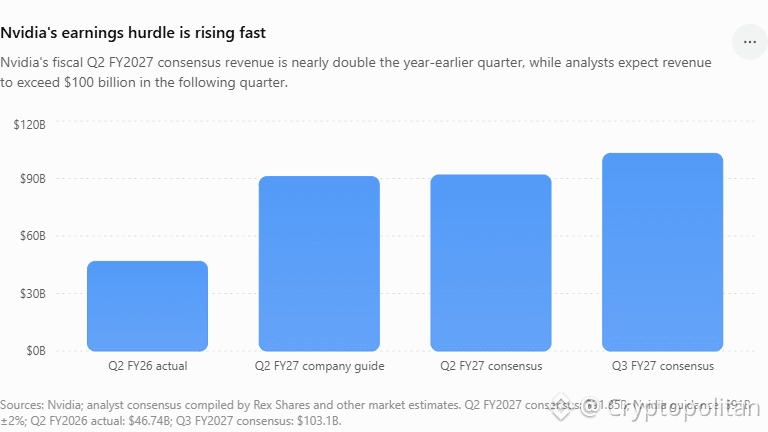
Article
Nvidia earnings could expose cracks in the AI boomAfter the conclusion of trading on Wednesday, August 26, Nvidia will announce the results of its second quarter, and these numbers will be significant for more than just its own share price. The results will also be monitored by a variety of chipmakers, cloud providers, and suppliers of equipment throughout the entire AI supply chain in order to try to assess whether the increased spending on the global infrastructure boom translates into actual orders for Nvidia’s machinery.
According to the July announcement from Nvidia’s investor relations team, the call will take place at 2 p.m. Pacific Time, and the results will be made public around 1:20 p.m.
Why does the whole AI market key off one report
Very few announcements about profits have this much importance for a whole sector. Chips from Nvidia are present in the data centers that are being developed by Microsoft, Alphabet, Amazon, Meta, and Oracle, which means that the sales figures of the company provide real-time information about how fast the expansion is taking place.
In August, TrendForce upgraded its AI server shipment prediction for 2026 to almost 31% compared to the previous year, as large cloud providers boosted their orders for Nvidia’s vision of rack-scale infrastructure. According to the market research firm, the amount spent by the eight largest cloud companies this year will go up by about 90% to over $886.7 billion. IDC confirmed that the same trend is presently being observed, with its data showing that global server spending has increased by 30.7% in Q1 of 2026, due to the introduction of GPU technology.
What Nvidia’s earnings are actually made of
For those unfamiliar with Nvidia’s statistics, the bottom line is as follows: hardware for data centers is the most important part of their business operations.
When Nvidia last reported on May 20, data center sales reached a record $75.2 billion out of $81.6 billion in total revenue. The remaining $6.4 billion came from Edge Computing, Nvidia’s category for PCs, consoles, robotics, and automotive chips.
Furthermore, the company has decided to separate its data center reporting into two divisions: Hyperscale, which will include public clouds and the biggest internet businesses, and the second, which will only serve AI clouds as well as industrial and commercial markets. Revenues for the data center increased by 85 percent year-on-year in the first quarter, while the company projected total revenues of around 91 billion dollars for the quarter about to finish.
The spending question hangs over the numbers
A major question as we approach Wednesday is whether the budgets for cloud computing can continue to grow at this pace.
According to a Reuters report released in July, major hyperscalers will spend more on capital expenditures than they are able to generate in free cash flow by 2027, with capex shooting up by approximately $534 billion, compared to a lesser rise in operating cash.
“Investors are underestimating how fundamentally AI is changing the Big Tech business model,” Futurum Equities strategist Shay Boloor told Reuters, arguing that AI is turning asset-light software companies traditionally into infrastructure-heavy businesses.
Those companies are also Nvidia’s largest clients. When they start to cut back on spending, the repercussions will quickly fall upon Nvidia’s order volume.
The China gap Nvidia has already priced out
Nvidia’s forecast excludes one very important industry.
The company’s roughly $91 billion outlook assumes no data center compute sales to China, reflecting how much ground Nvidia has lost there. Cryptopolitan reported that Nvidia’s share of China’s AI chip market could fall to about 8% in 2026 from nearly 40% a year earlier, according to a Bernstein estimate, as Huawei and other domestic suppliers move above half the market.
Chief executive Jensen Huang has said Nvidia “largely conceded that market” after years of tightening US export restrictions. Small batches of H200 accelerators have begun returning under case-by-case licenses, but Chinese companies are increasingly directing their budgets toward domestic chips.
Who actually captures the economic returns?
One additional current wrinkle: Nvidia is reportedly telling major customers that AI-server prices could rise more than 15% from early 2027, largely because of surging memory costs. That could become important for gross margins and the economics of the entire AI infrastructure buildout.
Nvidia’s revenue hurdle has nearly doubled in a year, with analysts expecting the company to approach $92 billion in fiscal Q2 and surpass $100 billion in the following quarter.
Reuters reported last week that investors are increasingly shifting the question from “How much are Big Tech companies spending?” to “Who actually captures the economic returns?” Strong cloud growth and persistent capacity constraints have so far helped ease some concerns about AI capex. Nvidia’s real test is no longer whether AI demand exists. It’s whether $700B-plus of hyperscaler spending can keep translating into accelerating chip revenue.
The smartest crypto minds already read our newsletter. Want in? Join them.
Nvidia earnings could expose cracks in the AI boom
After the conclusion of trading on Wednesday, August 26, Nvidia will announce the results of its second quarter, and these numbers will be significant for more than just its own share price. The results will also be monitored by a variety of chipmakers, cloud providers, and suppliers of equipment throughout the entire AI supply chain in order to try to assess whether the increased spending on the global infrastructure boom translates into actual orders for Nvidia’s machinery.
According to the July announcement from Nvidia’s investor relations team, the call will take place at 2 p.m. Pacific Time, and the results will be made public around 1:20 p.m.
Why does the whole AI market key off one report
Very few announcements about profits have this much importance for a whole sector. Chips from Nvidia are present in the data centers that are being developed by Microsoft, Alphabet, Amazon, Meta, and Oracle, which means that the sales figures of the company provide real-time information about how fast the expansion is taking place.
In August, TrendForce upgraded its AI server shipment prediction for 2026 to almost 31% compared to the previous year, as large cloud providers boosted their orders for Nvidia’s vision of rack-scale infrastructure. According to the market research firm, the amount spent by the eight largest cloud companies this year will go up by about 90% to over $886.7 billion. IDC confirmed that the same trend is presently being observed, with its data showing that global server spending has increased by 30.7% in Q1 of 2026, due to the introduction of GPU technology.
What Nvidia’s earnings are actually made of
For those unfamiliar with Nvidia’s statistics, the bottom line is as follows: hardware for data centers is the most important part of their business operations.
When Nvidia last reported on May 20, data center sales reached a record $75.2 billion out of $81.6 billion in total revenue. The remaining $6.4 billion came from Edge Computing, Nvidia’s category for PCs, consoles, robotics, and automotive chips.
Furthermore, the company has decided to separate its data center reporting into two divisions: Hyperscale, which will include public clouds and the biggest internet businesses, and the second, which will only serve AI clouds as well as industrial and commercial markets. Revenues for the data center increased by 85 percent year-on-year in the first quarter, while the company projected total revenues of around 91 billion dollars for the quarter about to finish.
The spending question hangs over the numbers
A major question as we approach Wednesday is whether the budgets for cloud computing can continue to grow at this pace.
According to a Reuters report released in July, major hyperscalers will spend more on capital expenditures than they are able to generate in free cash flow by 2027, with capex shooting up by approximately $534 billion, compared to a lesser rise in operating cash.
“Investors are underestimating how fundamentally AI is changing the Big Tech business model,” Futurum Equities strategist Shay Boloor told Reuters, arguing that AI is turning asset-light software companies traditionally into infrastructure-heavy businesses.
Those companies are also Nvidia’s largest clients. When they start to cut back on spending, the repercussions will quickly fall upon Nvidia’s order volume.
The China gap Nvidia has already priced out
Nvidia’s forecast excludes one very important industry.
The company’s roughly $91 billion outlook assumes no data center compute sales to China, reflecting how much ground Nvidia has lost there. Cryptopolitan reported that Nvidia’s share of China’s AI chip market could fall to about 8% in 2026 from nearly 40% a year earlier, according to a Bernstein estimate, as Huawei and other domestic suppliers move above half the market.
Chief executive Jensen Huang has said Nvidia “largely conceded that market” after years of tightening US export restrictions. Small batches of H200 accelerators have begun returning under case-by-case licenses, but Chinese companies are increasingly directing their budgets toward domestic chips.
Who actually captures the economic returns?
One additional current wrinkle: Nvidia is reportedly telling major customers that AI-server prices could rise more than 15% from early 2027, largely because of surging memory costs. That could become important for gross margins and the economics of the entire AI infrastructure buildout.
Nvidia’s revenue hurdle has nearly doubled in a year, with analysts expecting the company to approach $92 billion in fiscal Q2 and surpass $100 billion in the following quarter.
Reuters reported last week that investors are increasingly shifting the question from “How much are Big Tech companies spending?” to “Who actually captures the economic returns?” Strong cloud growth and persistent capacity constraints have so far helped ease some concerns about AI capex. Nvidia’s real test is no longer whether AI demand exists. It’s whether $700B-plus of hyperscaler spending can keep translating into accelerating chip revenue.
The smartest crypto minds already read our newsletter. Want in? Join them.
According to the July announcement from Nvidia’s investor relations team, the call will take place at 2 p.m. Pacific Time, and the results will be made public around 1:20 p.m.
Why does the whole AI market key off one report
Very few announcements about profits have this much importance for a whole sector. Chips from Nvidia are present in the data centers that are being developed by Microsoft, Alphabet, Amazon, Meta, and Oracle, which means that the sales figures of the company provide real-time information about how fast the expansion is taking place.
In August, TrendForce upgraded its AI server shipment prediction for 2026 to almost 31% compared to the previous year, as large cloud providers boosted their orders for Nvidia’s vision of rack-scale infrastructure. According to the market research firm, the amount spent by the eight largest cloud companies this year will go up by about 90% to over $886.7 billion. IDC confirmed that the same trend is presently being observed, with its data showing that global server spending has increased by 30.7% in Q1 of 2026, due to the introduction of GPU technology.
What Nvidia’s earnings are actually made of
For those unfamiliar with Nvidia’s statistics, the bottom line is as follows: hardware for data centers is the most important part of their business operations.
When Nvidia last reported on May 20, data center sales reached a record $75.2 billion out of $81.6 billion in total revenue. The remaining $6.4 billion came from Edge Computing, Nvidia’s category for PCs, consoles, robotics, and automotive chips.
Furthermore, the company has decided to separate its data center reporting into two divisions: Hyperscale, which will include public clouds and the biggest internet businesses, and the second, which will only serve AI clouds as well as industrial and commercial markets. Revenues for the data center increased by 85 percent year-on-year in the first quarter, while the company projected total revenues of around 91 billion dollars for the quarter about to finish.
The spending question hangs over the numbers
A major question as we approach Wednesday is whether the budgets for cloud computing can continue to grow at this pace.
According to a Reuters report released in July, major hyperscalers will spend more on capital expenditures than they are able to generate in free cash flow by 2027, with capex shooting up by approximately $534 billion, compared to a lesser rise in operating cash.
“Investors are underestimating how fundamentally AI is changing the Big Tech business model,” Futurum Equities strategist Shay Boloor told Reuters, arguing that AI is turning asset-light software companies traditionally into infrastructure-heavy businesses.
Those companies are also Nvidia’s largest clients. When they start to cut back on spending, the repercussions will quickly fall upon Nvidia’s order volume.
The China gap Nvidia has already priced out
Nvidia’s forecast excludes one very important industry.
The company’s roughly $91 billion outlook assumes no data center compute sales to China, reflecting how much ground Nvidia has lost there. Cryptopolitan reported that Nvidia’s share of China’s AI chip market could fall to about 8% in 2026 from nearly 40% a year earlier, according to a Bernstein estimate, as Huawei and other domestic suppliers move above half the market.
Chief executive Jensen Huang has said Nvidia “largely conceded that market” after years of tightening US export restrictions. Small batches of H200 accelerators have begun returning under case-by-case licenses, but Chinese companies are increasingly directing their budgets toward domestic chips.
Who actually captures the economic returns?
One additional current wrinkle: Nvidia is reportedly telling major customers that AI-server prices could rise more than 15% from early 2027, largely because of surging memory costs. That could become important for gross margins and the economics of the entire AI infrastructure buildout.
Nvidia’s revenue hurdle has nearly doubled in a year, with analysts expecting the company to approach $92 billion in fiscal Q2 and surpass $100 billion in the following quarter.
Reuters reported last week that investors are increasingly shifting the question from “How much are Big Tech companies spending?” to “Who actually captures the economic returns?” Strong cloud growth and persistent capacity constraints have so far helped ease some concerns about AI capex. Nvidia’s real test is no longer whether AI demand exists. It’s whether $700B-plus of hyperscaler spending can keep translating into accelerating chip revenue.
The smartest crypto minds already read our newsletter. Want in? Join them.
144
Why is Nvidia stock falling today?Nvidia (NASDAQ: NVDA) turned fast on Monday. The stock jumped about 3% soon after the opening bell rang, then dropped roughly 2% after the Groq news came out.
Earlier today, Nvidia announced its Groq 3 LPX rack is now being produced at scale, turning technology from the largest acquisition in Nvidia’s history into customer-ready hardware.
Nvidia spent $20 billion last December to buy assets from AI chip startup Groq. Those racks are headed to neocloud company Nebius Group (NASDAQ: NBIS), where they’ll work with Vera CPUs and Rubin GPUs.
Nvidia senior director Dion Harris told reporters it should be online later this year. Nvidia is going after faster inference, where speed matters for AI agents, especially coding systems that need to respond without long delays. Nvidia says cloud providers can charge more for tokens that come with stricter speed and latency requirements.
Nvidia is now worth close to $5.2 trillion, based on FactSet (NYSE: FDS) data, making it the biggest company worldwide by market value. The shares were up nearly 7% in August through Friday’s close, while the S&P 500 had risen around 2.5%.
London Stock Exchange Group (LSE: LSEG) shows analysts expect quarterly revenue and earnings to reach about twice their levels from the same period last year.
Nvidia puts Groq 3 into customer systems as faster AI output creates another paid service
Each Groq 3 LPX rack holds 256 individual Groq 3 chips. Nvidia says the full setup can generate 3,400 tokens per second, based on Artificial Analysis benchmarks. Each processor has 500 megabytes of SRAM directly on the chip.
That keeps data close to the processor and cuts slowdowns from slower memory. Samsung Electronics (KRX: 005930) manufactures Groq’s chips, while Taiwan Semiconductor Manufacturing (NYSE: TSM) produces Nvidia’s GPUs.
Dion explained how Nvidia thinks cloud providers can make money from that speed during the call. “For folks who are serving tokens, it unlocks the ability to offer premium tiers of service for those users and those customers who actually demand the most latency-sensitive” service agreements, he said.
Cloud companies can then create another price level for customers who want quicker AI responses instead of standard service speeds.
Nvidia is also sending out more of its Vera Rubin systems, which entered production earlier this year. When Vera Rubin and Groq 3 LPX were shown in March, CEO Jensen Huang said Blackwell and Vera Rubin together could generate $1 trillion in total sales through 2027.
Jensen also said he planned to give 25% of the data-center space used for coding workloads to Groq processors. “The rest of my data center is all 100% Vera Rubin,” Jensen said.
Wall Street raises the bar for Nvidia while analysts stick with high price expectations
Rosenblatt Securities kept its Buy rating on Nvidia and left its share-price target at $325.00. Nvidia was trading at $214.72, while InvestingPro put its fair-value estimate at $259.96.
Rosenblatt expects Nvidia’s fiscal second-quarter 2027 report to come in above Wall Street expectations for both revenue and earnings. It also expects the earnings release to push the shares higher.
Wedbush analyst Matt Bryson, who has an Outperform rating on Nvidia, expects the stock’s recent rally to keep going after Wednesday’s results. Matt also believes Nvidia will come in above its own guidance and give an October-quarter outlook that beats what Wall Street currently expects.
“We again expect NVDA to exceed its guidance and to guide October above Street, given 1) a strong hyperscale spending backdrop that firmed further through CQ2 earnings, and 2) a supply position we continue to view as the best in the industry at a point where component and material access, not end demand, is defining shipments,” Matt wrote.
Nvidia is due to report its fiscal second-quarter numbers Wednesday after the market closes and as usual, Cryptopolitan will be reporting it live.
Don’t just read crypto news. Understand it. Subscribe to our newsletter. It's free.
Why is Nvidia stock falling today?
Nvidia (NASDAQ: NVDA) turned fast on Monday. The stock jumped about 3% soon after the opening bell rang, then dropped roughly 2% after the Groq news came out.
Earlier today, Nvidia announced its Groq 3 LPX rack is now being produced at scale, turning technology from the largest acquisition in Nvidia’s history into customer-ready hardware.
Nvidia spent $20 billion last December to buy assets from AI chip startup Groq. Those racks are headed to neocloud company Nebius Group (NASDAQ: NBIS), where they’ll work with Vera CPUs and Rubin GPUs.
Nvidia senior director Dion Harris told reporters it should be online later this year. Nvidia is going after faster inference, where speed matters for AI agents, especially coding systems that need to respond without long delays. Nvidia says cloud providers can charge more for tokens that come with stricter speed and latency requirements.
Nvidia is now worth close to $5.2 trillion, based on FactSet (NYSE: FDS) data, making it the biggest company worldwide by market value. The shares were up nearly 7% in August through Friday’s close, while the S&P 500 had risen around 2.5%.
London Stock Exchange Group (LSE: LSEG) shows analysts expect quarterly revenue and earnings to reach about twice their levels from the same period last year.
Nvidia puts Groq 3 into customer systems as faster AI output creates another paid service
Each Groq 3 LPX rack holds 256 individual Groq 3 chips. Nvidia says the full setup can generate 3,400 tokens per second, based on Artificial Analysis benchmarks. Each processor has 500 megabytes of SRAM directly on the chip.
That keeps data close to the processor and cuts slowdowns from slower memory. Samsung Electronics (KRX: 005930) manufactures Groq’s chips, while Taiwan Semiconductor Manufacturing (NYSE: TSM) produces Nvidia’s GPUs.
Dion explained how Nvidia thinks cloud providers can make money from that speed during the call. “For folks who are serving tokens, it unlocks the ability to offer premium tiers of service for those users and those customers who actually demand the most latency-sensitive” service agreements, he said.
Cloud companies can then create another price level for customers who want quicker AI responses instead of standard service speeds.
Nvidia is also sending out more of its Vera Rubin systems, which entered production earlier this year. When Vera Rubin and Groq 3 LPX were shown in March, CEO Jensen Huang said Blackwell and Vera Rubin together could generate $1 trillion in total sales through 2027.
Jensen also said he planned to give 25% of the data-center space used for coding workloads to Groq processors. “The rest of my data center is all 100% Vera Rubin,” Jensen said.
Wall Street raises the bar for Nvidia while analysts stick with high price expectations
Rosenblatt Securities kept its Buy rating on Nvidia and left its share-price target at $325.00. Nvidia was trading at $214.72, while InvestingPro put its fair-value estimate at $259.96.
Rosenblatt expects Nvidia’s fiscal second-quarter 2027 report to come in above Wall Street expectations for both revenue and earnings. It also expects the earnings release to push the shares higher.
Wedbush analyst Matt Bryson, who has an Outperform rating on Nvidia, expects the stock’s recent rally to keep going after Wednesday’s results. Matt also believes Nvidia will come in above its own guidance and give an October-quarter outlook that beats what Wall Street currently expects.
“We again expect NVDA to exceed its guidance and to guide October above Street, given 1) a strong hyperscale spending backdrop that firmed further through CQ2 earnings, and 2) a supply position we continue to view as the best in the industry at a point where component and material access, not end demand, is defining shipments,” Matt wrote.
Nvidia is due to report its fiscal second-quarter numbers Wednesday after the market closes and as usual, Cryptopolitan will be reporting it live.
Don’t just read crypto news. Understand it. Subscribe to our newsletter. It's free.
Earlier today, Nvidia announced its Groq 3 LPX rack is now being produced at scale, turning technology from the largest acquisition in Nvidia’s history into customer-ready hardware.
Nvidia spent $20 billion last December to buy assets from AI chip startup Groq. Those racks are headed to neocloud company Nebius Group (NASDAQ: NBIS), where they’ll work with Vera CPUs and Rubin GPUs.
Nvidia senior director Dion Harris told reporters it should be online later this year. Nvidia is going after faster inference, where speed matters for AI agents, especially coding systems that need to respond without long delays. Nvidia says cloud providers can charge more for tokens that come with stricter speed and latency requirements.
Nvidia is now worth close to $5.2 trillion, based on FactSet (NYSE: FDS) data, making it the biggest company worldwide by market value. The shares were up nearly 7% in August through Friday’s close, while the S&P 500 had risen around 2.5%.
London Stock Exchange Group (LSE: LSEG) shows analysts expect quarterly revenue and earnings to reach about twice their levels from the same period last year.
Nvidia puts Groq 3 into customer systems as faster AI output creates another paid service
Each Groq 3 LPX rack holds 256 individual Groq 3 chips. Nvidia says the full setup can generate 3,400 tokens per second, based on Artificial Analysis benchmarks. Each processor has 500 megabytes of SRAM directly on the chip.
That keeps data close to the processor and cuts slowdowns from slower memory. Samsung Electronics (KRX: 005930) manufactures Groq’s chips, while Taiwan Semiconductor Manufacturing (NYSE: TSM) produces Nvidia’s GPUs.
Dion explained how Nvidia thinks cloud providers can make money from that speed during the call. “For folks who are serving tokens, it unlocks the ability to offer premium tiers of service for those users and those customers who actually demand the most latency-sensitive” service agreements, he said.
Cloud companies can then create another price level for customers who want quicker AI responses instead of standard service speeds.
Nvidia is also sending out more of its Vera Rubin systems, which entered production earlier this year. When Vera Rubin and Groq 3 LPX were shown in March, CEO Jensen Huang said Blackwell and Vera Rubin together could generate $1 trillion in total sales through 2027.
Jensen also said he planned to give 25% of the data-center space used for coding workloads to Groq processors. “The rest of my data center is all 100% Vera Rubin,” Jensen said.
Wall Street raises the bar for Nvidia while analysts stick with high price expectations
Rosenblatt Securities kept its Buy rating on Nvidia and left its share-price target at $325.00. Nvidia was trading at $214.72, while InvestingPro put its fair-value estimate at $259.96.
Rosenblatt expects Nvidia’s fiscal second-quarter 2027 report to come in above Wall Street expectations for both revenue and earnings. It also expects the earnings release to push the shares higher.
Wedbush analyst Matt Bryson, who has an Outperform rating on Nvidia, expects the stock’s recent rally to keep going after Wednesday’s results. Matt also believes Nvidia will come in above its own guidance and give an October-quarter outlook that beats what Wall Street currently expects.
“We again expect NVDA to exceed its guidance and to guide October above Street, given 1) a strong hyperscale spending backdrop that firmed further through CQ2 earnings, and 2) a supply position we continue to view as the best in the industry at a point where component and material access, not end demand, is defining shipments,” Matt wrote.
Nvidia is due to report its fiscal second-quarter numbers Wednesday after the market closes and as usual, Cryptopolitan will be reporting it live.
Don’t just read crypto news. Understand it. Subscribe to our newsletter. It's free.
142
How well is Canada weathering Trump’s tariff war?Canada is already feeling more of the pressure from the latest trade fight with the United States from its dollar after Trump started yet another economic spat.
At press time, the loonie was down 0.58% against the U.S. dollar. It also lost ground against the euro, British pound and Japanese yen.
Cryptopolitan reported that Washington imposed a 50% tariff on about $20 billion of Canadian goods on Saturday. But Canada is America’s second-largest trading partner after Mexico, so the dispute reaches far beyond a few narrow industries.
Canada’s Prime Minister Mark Carney has already promised that he will introduce his own tariffs on September 8.
As we reported, Carney said Ottawa would retaliate “dollar for dollar” and release the complete list “in the coming days.” The government has also suggested that fiscal support could be used to help businesses hit by the conflict. Carney has been clear about the cost, though. He said the new duties would “raise costs and reduce choice for Canadians.”
The political reaction inside Canada has been more supportive than the economic numbers might suggest. Recent polling shows a majority of Canadians back taking a tougher position against Washington. At the same time, more people are becoming worried about their jobs. Canadian economist Trevor Tombe estimates that keeping U.S. tariffs at 50% could lead to roughly 90,000 job losses.
Washington says Canada pushed for more after negotiators nearly reached a trade deal
Negotiators from both countries spent the week trying to prevent the tariff increase. By the weekend, the talks had broken down and the language from both governments had become much sharper. Washington and Ottawa each blamed the other side for the failure and accused the other of maintaining unfair trade practices.
U.S. Trade Representative Jamieson Greer said Monday that both sides had been close to an agreement before things changed near the end.
“The Canadians ‘wanted more’ than Washington was willing to offer,” Jamieson said. According to him:
“We offered them the best access to the United States of any country in the world. Obviously, there’s always going to be tariffs, and there’s going to be that protection for American workers and companies.”
Jamieson said the U.S. proposal included major cuts to several duties that matter to Canada.
“But we sought to accommodate the Canadians by … cutting tariffs in half on steel, on aluminum, and extensively reducing them on autos, and even on things like softwood lumber, accommodating some element of that. Things that are sensitive for the Canadians. They simply … wanted more. I don’t know if it was political for them. It certainly doesn’t make economic sense.”
He played down the size of the new measures from the American side, saying markets “understand that this affects a very small amount of trade.” The Canadian products covered by the latest tariffs equal about 0.6% of total U.S. goods imports. The United States currently runs a $48.3 billion goods trade deficit with Canada, according to the U.S. Treasury website.
Trump threatens 50% auto and steel tariffs as Canada prepares its September response
Naturally, Trump took a much harder tone in a post on Truth Social, accusing Canada of taking advantage of the United States and focused heavily on agricultural trade.
“Canada has been ripping off the United States of America for years. Their ridiculously high tariffs on our Farmers and farm products has made life impossible for these great American Patriots, and has long created a 60 Billion Dollar Deficit between our two Countries. Not sustainable, and NOT ANYMORE!”
Trump also announced another possible escalation beginning next year. He said tariffs on Canadian cars, trucks, automotive parts and steel will rise to 50% on January 1, 2027.
“Build in the U.S. and there are ZERO TARIFFS,” Trump wrote.
He then said Canada would no longer receive the kind of treatment Washington had previously extended to it.
“Canada will be treated like a State no longer! On Trade, and in other ways, also, they are among the worst Nations in the World to deal with. They feel entitled, and yet, WE DON’T NEED CANADA, THEY NEED US! They do 95% of their business with the U.S., with us, the exact opposite!”
The smartest crypto minds already read our newsletter. Want in? Join them.
How well is Canada weathering Trump’s tariff war?
Canada is already feeling more of the pressure from the latest trade fight with the United States from its dollar after Trump started yet another economic spat.
At press time, the loonie was down 0.58% against the U.S. dollar. It also lost ground against the euro, British pound and Japanese yen.
Cryptopolitan reported that Washington imposed a 50% tariff on about $20 billion of Canadian goods on Saturday. But Canada is America’s second-largest trading partner after Mexico, so the dispute reaches far beyond a few narrow industries.
Canada’s Prime Minister Mark Carney has already promised that he will introduce his own tariffs on September 8.
As we reported, Carney said Ottawa would retaliate “dollar for dollar” and release the complete list “in the coming days.” The government has also suggested that fiscal support could be used to help businesses hit by the conflict. Carney has been clear about the cost, though. He said the new duties would “raise costs and reduce choice for Canadians.”
The political reaction inside Canada has been more supportive than the economic numbers might suggest. Recent polling shows a majority of Canadians back taking a tougher position against Washington. At the same time, more people are becoming worried about their jobs. Canadian economist Trevor Tombe estimates that keeping U.S. tariffs at 50% could lead to roughly 90,000 job losses.
Washington says Canada pushed for more after negotiators nearly reached a trade deal
Negotiators from both countries spent the week trying to prevent the tariff increase. By the weekend, the talks had broken down and the language from both governments had become much sharper. Washington and Ottawa each blamed the other side for the failure and accused the other of maintaining unfair trade practices.
U.S. Trade Representative Jamieson Greer said Monday that both sides had been close to an agreement before things changed near the end.
“The Canadians ‘wanted more’ than Washington was willing to offer,” Jamieson said. According to him:
“We offered them the best access to the United States of any country in the world. Obviously, there’s always going to be tariffs, and there’s going to be that protection for American workers and companies.”
Jamieson said the U.S. proposal included major cuts to several duties that matter to Canada.
“But we sought to accommodate the Canadians by … cutting tariffs in half on steel, on aluminum, and extensively reducing them on autos, and even on things like softwood lumber, accommodating some element of that. Things that are sensitive for the Canadians. They simply … wanted more. I don’t know if it was political for them. It certainly doesn’t make economic sense.”
He played down the size of the new measures from the American side, saying markets “understand that this affects a very small amount of trade.” The Canadian products covered by the latest tariffs equal about 0.6% of total U.S. goods imports. The United States currently runs a $48.3 billion goods trade deficit with Canada, according to the U.S. Treasury website.
Trump threatens 50% auto and steel tariffs as Canada prepares its September response
Naturally, Trump took a much harder tone in a post on Truth Social, accusing Canada of taking advantage of the United States and focused heavily on agricultural trade.
“Canada has been ripping off the United States of America for years. Their ridiculously high tariffs on our Farmers and farm products has made life impossible for these great American Patriots, and has long created a 60 Billion Dollar Deficit between our two Countries. Not sustainable, and NOT ANYMORE!”
Trump also announced another possible escalation beginning next year. He said tariffs on Canadian cars, trucks, automotive parts and steel will rise to 50% on January 1, 2027.
“Build in the U.S. and there are ZERO TARIFFS,” Trump wrote.
He then said Canada would no longer receive the kind of treatment Washington had previously extended to it.
“Canada will be treated like a State no longer! On Trade, and in other ways, also, they are among the worst Nations in the World to deal with. They feel entitled, and yet, WE DON’T NEED CANADA, THEY NEED US! They do 95% of their business with the U.S., with us, the exact opposite!”
The smartest crypto minds already read our newsletter. Want in? Join them.
At press time, the loonie was down 0.58% against the U.S. dollar. It also lost ground against the euro, British pound and Japanese yen.
Cryptopolitan reported that Washington imposed a 50% tariff on about $20 billion of Canadian goods on Saturday. But Canada is America’s second-largest trading partner after Mexico, so the dispute reaches far beyond a few narrow industries.
Canada’s Prime Minister Mark Carney has already promised that he will introduce his own tariffs on September 8.
As we reported, Carney said Ottawa would retaliate “dollar for dollar” and release the complete list “in the coming days.” The government has also suggested that fiscal support could be used to help businesses hit by the conflict. Carney has been clear about the cost, though. He said the new duties would “raise costs and reduce choice for Canadians.”
The political reaction inside Canada has been more supportive than the economic numbers might suggest. Recent polling shows a majority of Canadians back taking a tougher position against Washington. At the same time, more people are becoming worried about their jobs. Canadian economist Trevor Tombe estimates that keeping U.S. tariffs at 50% could lead to roughly 90,000 job losses.
Washington says Canada pushed for more after negotiators nearly reached a trade deal
Negotiators from both countries spent the week trying to prevent the tariff increase. By the weekend, the talks had broken down and the language from both governments had become much sharper. Washington and Ottawa each blamed the other side for the failure and accused the other of maintaining unfair trade practices.
U.S. Trade Representative Jamieson Greer said Monday that both sides had been close to an agreement before things changed near the end.
“The Canadians ‘wanted more’ than Washington was willing to offer,” Jamieson said. According to him:
“We offered them the best access to the United States of any country in the world. Obviously, there’s always going to be tariffs, and there’s going to be that protection for American workers and companies.”
Jamieson said the U.S. proposal included major cuts to several duties that matter to Canada.
“But we sought to accommodate the Canadians by … cutting tariffs in half on steel, on aluminum, and extensively reducing them on autos, and even on things like softwood lumber, accommodating some element of that. Things that are sensitive for the Canadians. They simply … wanted more. I don’t know if it was political for them. It certainly doesn’t make economic sense.”
He played down the size of the new measures from the American side, saying markets “understand that this affects a very small amount of trade.” The Canadian products covered by the latest tariffs equal about 0.6% of total U.S. goods imports. The United States currently runs a $48.3 billion goods trade deficit with Canada, according to the U.S. Treasury website.
Trump threatens 50% auto and steel tariffs as Canada prepares its September response
Naturally, Trump took a much harder tone in a post on Truth Social, accusing Canada of taking advantage of the United States and focused heavily on agricultural trade.
“Canada has been ripping off the United States of America for years. Their ridiculously high tariffs on our Farmers and farm products has made life impossible for these great American Patriots, and has long created a 60 Billion Dollar Deficit between our two Countries. Not sustainable, and NOT ANYMORE!”
Trump also announced another possible escalation beginning next year. He said tariffs on Canadian cars, trucks, automotive parts and steel will rise to 50% on January 1, 2027.
“Build in the U.S. and there are ZERO TARIFFS,” Trump wrote.
He then said Canada would no longer receive the kind of treatment Washington had previously extended to it.
“Canada will be treated like a State no longer! On Trade, and in other ways, also, they are among the worst Nations in the World to deal with. They feel entitled, and yet, WE DON’T NEED CANADA, THEY NEED US! They do 95% of their business with the U.S., with us, the exact opposite!”
The smartest crypto minds already read our newsletter. Want in? Join them.
103
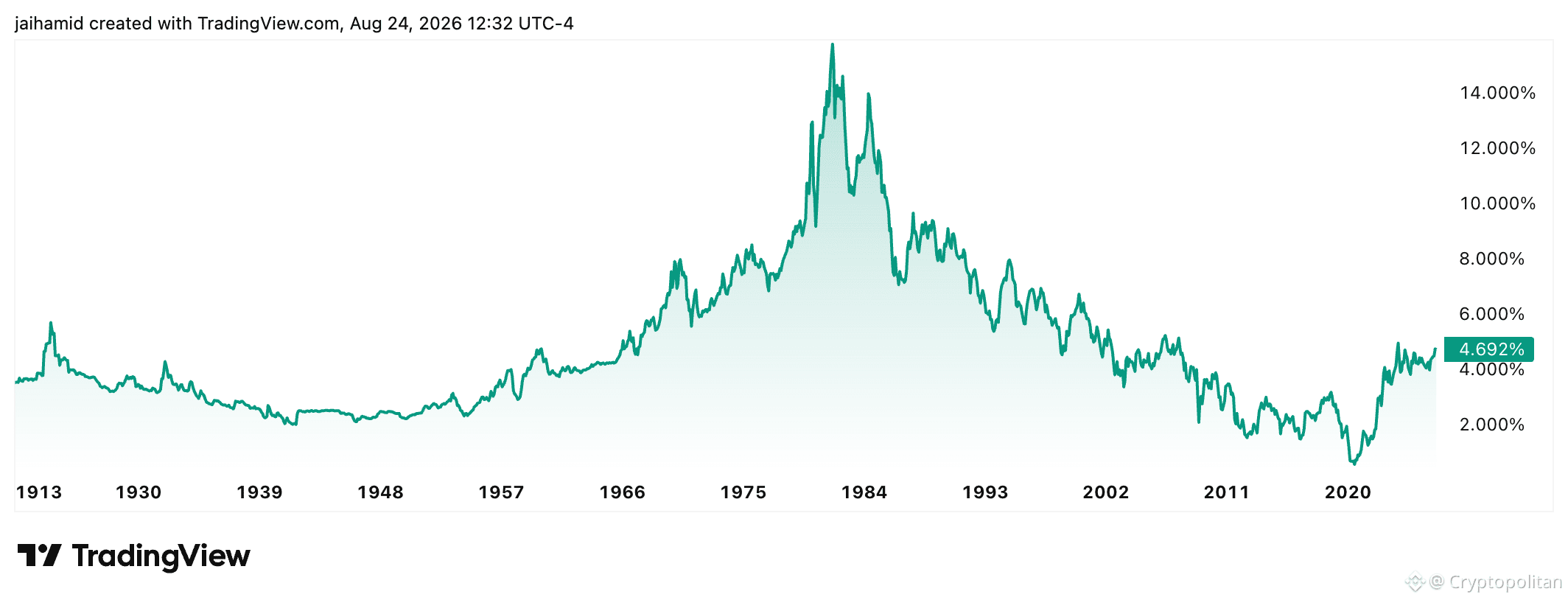
Article
Bessent arms Treasury with $950B cash reserve as bond yields surgeThe Treasury may tap its roughly $950 billion General Account to help fund larger purchases of U.S. government bonds as long-term yields climb again.
Two senior Treasury officials reportedly said the cash is available. Treasury last week doubled planned buybacks of older, off-the-run long-dated securities from $2 billion to at least $4 billion per operation. Treasury Secretary Scott Bessent has said those purchases could go above the new minimum.
Treasury did not say how it would pay for the larger buys. Most traders expected more short-term bill sales, and officials have not ruled that out. Scott called the plan a “Treasury Twist” in an interview last week, meaning longer-term Treasurys would be bought while shorter-term debt could be issued.
Source: TradingView.
Treasury weighs its $950B cash account
The Treasury General Account, or TGA, is the government’s main cash account at the Federal Reserve. It already holds tax collections. Using it could let Treasury pay for part of the buybacks with cash already on hand rather than relying only on new bill issuance.
The balance is now near $950 billion, compared with the Biden administration’s stated target of about $550 billion to $600 billion. Scott built the account above that earlier range.
The officials did not say how much of the TGA might be used, whether any cash will be used at all, or when an announcement could come. They gave no sign that the money would support purchases beyond the off-the-run securities covered by last week’s plan. They did say the account is available.
Officials allegedly also rejected claims that Treasury had dropped its “regular and predictable” approach to debt sales or was gaming the market. The larger buyback plan came about two weeks after the quarterly refunding announcement, where such information would normally appear.
According to CNBC, the official auction schedule did not change. Treasury announced the plan on Aug. 19, nearly three weeks before the first operation on Sept. 9, and released the schedule for the whole quarter.
Trump’s Treasury prepares a new Iran financial offensive
The U.S. is also set to unveil new financial measures against Iran on Monday. Washington and Tehran missed a 60-day ceasefire window to reach a deal, shutting the formal truce route as the Middle East war enters its sixth month. Tehran has threatened to seize vessels that break transit rules in the Strait of Hormuz.
On X Sunday evening, he said Trump had annihilated nearly all Iranian military facilities, destroyed its military capability, and made its nuclear program inconsequential. The next step he referred to was described as an “economic D-Day”, with Scott stating how Iranians believed retaliation was certain and American sanctions were negotiable. Scott further said that:
“The Islamic Republic has drawn strength from a calculus that regards Iranian retaliation as certain and American enforcement as negotiable. Under President Trump, those who fear the danger of defying Tehran ought not to discount the cost of testing Washington. The President has created the conditions to leverage every agency, every authority and action many assumed we would never summon. Our objective is to sever every economic lifeline that sustains the tyrannical regime until Tehran stands alone.”
The new measures will add to sanctions already targeting Iran’s banking, energy, aviation and cryptocurrency sectors. The Trump administration says Iran’s economy is in sharp decline, with runaway inflation and a falling currency. The Iranian rial hit a new open-market low Sunday, with one U.S. dollar moving above 2 million rials.
Scott also wrote in a Financial Times opinion piece that countries cutting Iran’s remaining financial and commercial links could strengthen their own access to global capital and markets.
Scott said:
“Those who sever Iran’s remaining financial and commercial connectivity will reinvigorate their own. They will deepen their access to global capital, reinforce confidence in their markets and attain the standing they seek in the world economy. And any nation that serves as a financial artery of a withering regime should expect to share in its isolation. To become a sanctuary for terror is to become, in the eyes of the United States, a global pariah.”
Don’t just read crypto news. Understand it. Subscribe to our newsletter. It's free.
Bessent arms Treasury with $950B cash reserve as bond yields surge
The Treasury may tap its roughly $950 billion General Account to help fund larger purchases of U.S. government bonds as long-term yields climb again.
Two senior Treasury officials reportedly said the cash is available. Treasury last week doubled planned buybacks of older, off-the-run long-dated securities from $2 billion to at least $4 billion per operation. Treasury Secretary Scott Bessent has said those purchases could go above the new minimum.
Treasury did not say how it would pay for the larger buys. Most traders expected more short-term bill sales, and officials have not ruled that out. Scott called the plan a “Treasury Twist” in an interview last week, meaning longer-term Treasurys would be bought while shorter-term debt could be issued.
Source: TradingView.
Treasury weighs its $950B cash account
The Treasury General Account, or TGA, is the government’s main cash account at the Federal Reserve. It already holds tax collections. Using it could let Treasury pay for part of the buybacks with cash already on hand rather than relying only on new bill issuance.
The balance is now near $950 billion, compared with the Biden administration’s stated target of about $550 billion to $600 billion. Scott built the account above that earlier range.
The officials did not say how much of the TGA might be used, whether any cash will be used at all, or when an announcement could come. They gave no sign that the money would support purchases beyond the off-the-run securities covered by last week’s plan. They did say the account is available.
Officials allegedly also rejected claims that Treasury had dropped its “regular and predictable” approach to debt sales or was gaming the market. The larger buyback plan came about two weeks after the quarterly refunding announcement, where such information would normally appear.
According to CNBC, the official auction schedule did not change. Treasury announced the plan on Aug. 19, nearly three weeks before the first operation on Sept. 9, and released the schedule for the whole quarter.
Trump’s Treasury prepares a new Iran financial offensive
The U.S. is also set to unveil new financial measures against Iran on Monday. Washington and Tehran missed a 60-day ceasefire window to reach a deal, shutting the formal truce route as the Middle East war enters its sixth month. Tehran has threatened to seize vessels that break transit rules in the Strait of Hormuz.
On X Sunday evening, he said Trump had annihilated nearly all Iranian military facilities, destroyed its military capability, and made its nuclear program inconsequential. The next step he referred to was described as an “economic D-Day”, with Scott stating how Iranians believed retaliation was certain and American sanctions were negotiable. Scott further said that:
“The Islamic Republic has drawn strength from a calculus that regards Iranian retaliation as certain and American enforcement as negotiable. Under President Trump, those who fear the danger of defying Tehran ought not to discount the cost of testing Washington. The President has created the conditions to leverage every agency, every authority and action many assumed we would never summon. Our objective is to sever every economic lifeline that sustains the tyrannical regime until Tehran stands alone.”
The new measures will add to sanctions already targeting Iran’s banking, energy, aviation and cryptocurrency sectors. The Trump administration says Iran’s economy is in sharp decline, with runaway inflation and a falling currency. The Iranian rial hit a new open-market low Sunday, with one U.S. dollar moving above 2 million rials.
Scott also wrote in a Financial Times opinion piece that countries cutting Iran’s remaining financial and commercial links could strengthen their own access to global capital and markets.
Scott said:
“Those who sever Iran’s remaining financial and commercial connectivity will reinvigorate their own. They will deepen their access to global capital, reinforce confidence in their markets and attain the standing they seek in the world economy. And any nation that serves as a financial artery of a withering regime should expect to share in its isolation. To become a sanctuary for terror is to become, in the eyes of the United States, a global pariah.”
Don’t just read crypto news. Understand it. Subscribe to our newsletter. It's free.
Two senior Treasury officials reportedly said the cash is available. Treasury last week doubled planned buybacks of older, off-the-run long-dated securities from $2 billion to at least $4 billion per operation. Treasury Secretary Scott Bessent has said those purchases could go above the new minimum.
Treasury did not say how it would pay for the larger buys. Most traders expected more short-term bill sales, and officials have not ruled that out. Scott called the plan a “Treasury Twist” in an interview last week, meaning longer-term Treasurys would be bought while shorter-term debt could be issued.
Source: TradingView.
Treasury weighs its $950B cash account
The Treasury General Account, or TGA, is the government’s main cash account at the Federal Reserve. It already holds tax collections. Using it could let Treasury pay for part of the buybacks with cash already on hand rather than relying only on new bill issuance.
The balance is now near $950 billion, compared with the Biden administration’s stated target of about $550 billion to $600 billion. Scott built the account above that earlier range.
The officials did not say how much of the TGA might be used, whether any cash will be used at all, or when an announcement could come. They gave no sign that the money would support purchases beyond the off-the-run securities covered by last week’s plan. They did say the account is available.
Officials allegedly also rejected claims that Treasury had dropped its “regular and predictable” approach to debt sales or was gaming the market. The larger buyback plan came about two weeks after the quarterly refunding announcement, where such information would normally appear.
According to CNBC, the official auction schedule did not change. Treasury announced the plan on Aug. 19, nearly three weeks before the first operation on Sept. 9, and released the schedule for the whole quarter.
Trump’s Treasury prepares a new Iran financial offensive
The U.S. is also set to unveil new financial measures against Iran on Monday. Washington and Tehran missed a 60-day ceasefire window to reach a deal, shutting the formal truce route as the Middle East war enters its sixth month. Tehran has threatened to seize vessels that break transit rules in the Strait of Hormuz.
On X Sunday evening, he said Trump had annihilated nearly all Iranian military facilities, destroyed its military capability, and made its nuclear program inconsequential. The next step he referred to was described as an “economic D-Day”, with Scott stating how Iranians believed retaliation was certain and American sanctions were negotiable. Scott further said that:
“The Islamic Republic has drawn strength from a calculus that regards Iranian retaliation as certain and American enforcement as negotiable. Under President Trump, those who fear the danger of defying Tehran ought not to discount the cost of testing Washington. The President has created the conditions to leverage every agency, every authority and action many assumed we would never summon. Our objective is to sever every economic lifeline that sustains the tyrannical regime until Tehran stands alone.”
The new measures will add to sanctions already targeting Iran’s banking, energy, aviation and cryptocurrency sectors. The Trump administration says Iran’s economy is in sharp decline, with runaway inflation and a falling currency. The Iranian rial hit a new open-market low Sunday, with one U.S. dollar moving above 2 million rials.
Scott also wrote in a Financial Times opinion piece that countries cutting Iran’s remaining financial and commercial links could strengthen their own access to global capital and markets.
Scott said:
“Those who sever Iran’s remaining financial and commercial connectivity will reinvigorate their own. They will deepen their access to global capital, reinforce confidence in their markets and attain the standing they seek in the world economy. And any nation that serves as a financial artery of a withering regime should expect to share in its isolation. To become a sanctuary for terror is to become, in the eyes of the United States, a global pariah.”
Don’t just read crypto news. Understand it. Subscribe to our newsletter. It's free.
52
Digital Sovereignty Alliance Concludes Digital Asset Case Study Course at St. Andrew’s Episcopal ...Washington, D.C., August 24, 2026 — The Digital Sovereignty Alliance (DSA), a nonprofit organization dedicated to advancing clear and ethical public policy, research, and education surrounding emerging technologies, today announced the completion of its inaugural Digital Asset Case Study Course at St. Andrew’s Episcopal School.
Developed by DSA in collaboration with Professor Charles C.Y. Wang, Tandon Family Professor of Business Administration at Harvard Business School, and Giveback Backpack, the four-session program introduced high school students to real-world questions at the intersection of technology, markets, governance, and public policy.
The program concluded on Saturday, August 22, with a case study class on Axie Infinity and Sky Mavis co-founder Jeff Zirlin. Students examined the company’s business model and evolution while considering broader questions surrounding digital ownership, community-driven economies, leadership, and the challenges confronting businesses operating at the frontier of Web3.
Professor Wang, a leading scholar in accounting, digital assets, and capital markets, brought the case method into the high school classroom, giving students an opportunity to examine complex decisions through discussion, analysis, and debate. Rather than delivering traditional lectures, he challenged students to take positions, defend their reasoning, question one another’s assumptions, and work through the ambiguity inherent in real business decisions.
The four-session program explored digital assets, capital markets, trust, leadership, and the future of business in a Web3 world. Students examined cases involving Alibaba, Coinbase, and Wells Fargo, gaining exposure to different questions surrounding technology, finance, governance, leadership, and emerging business models.
Over the course of the program, students progressed from analyzing individual companies to considering broader questions about how technology can reshape markets, institutions, and business models. The case-based format gave students the opportunity to approach these questions not simply as observers, but as active participants in the discussion.
“Students learn best when they have the chance to apply ideas to the real world,” said Adrian Wall, Managing Director of DSA. “This program gave students the opportunity to move beyond learning about digital assets in the abstract. That is the lasting value of this program: equipping the next generation to engage critically and confidently with technologies that will increasingly influence business, public policy, and society.”
With the completion of the four-session program, DSA introduced students to a practical framework for thinking about some of the defining business and technology questions of the digital economy. The initiative is part of DSA’s broader educational mission to equip young people with the critical-thinking skills needed to understand emerging technologies and engage thoughtfully with the opportunities and challenges they present.
About Digital Sovereignty Alliance
The Digital Sovereignty Alliance (DSA) is a nonprofit social welfare organization committed to advocating for public policies that support ethical innovation in decentralized technologies, blockchain, cryptocurrency, Web3, and artificial intelligence. DSA conducts research, organizes educational events, and promotes policies that prioritize public welfare and digital sovereignty.
Media contact
Maghan Lusk
PR@dsaf.org
Digital Sovereignty Alliance Concludes Digital Asset Case Study Course at St. Andrew’s Episcopal ...
Washington, D.C., August 24, 2026 — The Digital Sovereignty Alliance (DSA), a nonprofit organization dedicated to advancing clear and ethical public policy, research, and education surrounding emerging technologies, today announced the completion of its inaugural Digital Asset Case Study Course at St. Andrew’s Episcopal School.
Developed by DSA in collaboration with Professor Charles C.Y. Wang, Tandon Family Professor of Business Administration at Harvard Business School, and Giveback Backpack, the four-session program introduced high school students to real-world questions at the intersection of technology, markets, governance, and public policy.
The program concluded on Saturday, August 22, with a case study class on Axie Infinity and Sky Mavis co-founder Jeff Zirlin. Students examined the company’s business model and evolution while considering broader questions surrounding digital ownership, community-driven economies, leadership, and the challenges confronting businesses operating at the frontier of Web3.
Professor Wang, a leading scholar in accounting, digital assets, and capital markets, brought the case method into the high school classroom, giving students an opportunity to examine complex decisions through discussion, analysis, and debate. Rather than delivering traditional lectures, he challenged students to take positions, defend their reasoning, question one another’s assumptions, and work through the ambiguity inherent in real business decisions.
The four-session program explored digital assets, capital markets, trust, leadership, and the future of business in a Web3 world. Students examined cases involving Alibaba, Coinbase, and Wells Fargo, gaining exposure to different questions surrounding technology, finance, governance, leadership, and emerging business models.
Over the course of the program, students progressed from analyzing individual companies to considering broader questions about how technology can reshape markets, institutions, and business models. The case-based format gave students the opportunity to approach these questions not simply as observers, but as active participants in the discussion.
“Students learn best when they have the chance to apply ideas to the real world,” said Adrian Wall, Managing Director of DSA. “This program gave students the opportunity to move beyond learning about digital assets in the abstract. That is the lasting value of this program: equipping the next generation to engage critically and confidently with technologies that will increasingly influence business, public policy, and society.”
With the completion of the four-session program, DSA introduced students to a practical framework for thinking about some of the defining business and technology questions of the digital economy. The initiative is part of DSA’s broader educational mission to equip young people with the critical-thinking skills needed to understand emerging technologies and engage thoughtfully with the opportunities and challenges they present.
About Digital Sovereignty Alliance
The Digital Sovereignty Alliance (DSA) is a nonprofit social welfare organization committed to advocating for public policies that support ethical innovation in decentralized technologies, blockchain, cryptocurrency, Web3, and artificial intelligence. DSA conducts research, organizes educational events, and promotes policies that prioritize public welfare and digital sovereignty.
Media contact
Maghan Lusk
PR@dsaf.org
Developed by DSA in collaboration with Professor Charles C.Y. Wang, Tandon Family Professor of Business Administration at Harvard Business School, and Giveback Backpack, the four-session program introduced high school students to real-world questions at the intersection of technology, markets, governance, and public policy.
The program concluded on Saturday, August 22, with a case study class on Axie Infinity and Sky Mavis co-founder Jeff Zirlin. Students examined the company’s business model and evolution while considering broader questions surrounding digital ownership, community-driven economies, leadership, and the challenges confronting businesses operating at the frontier of Web3.
Professor Wang, a leading scholar in accounting, digital assets, and capital markets, brought the case method into the high school classroom, giving students an opportunity to examine complex decisions through discussion, analysis, and debate. Rather than delivering traditional lectures, he challenged students to take positions, defend their reasoning, question one another’s assumptions, and work through the ambiguity inherent in real business decisions.
The four-session program explored digital assets, capital markets, trust, leadership, and the future of business in a Web3 world. Students examined cases involving Alibaba, Coinbase, and Wells Fargo, gaining exposure to different questions surrounding technology, finance, governance, leadership, and emerging business models.
Over the course of the program, students progressed from analyzing individual companies to considering broader questions about how technology can reshape markets, institutions, and business models. The case-based format gave students the opportunity to approach these questions not simply as observers, but as active participants in the discussion.
“Students learn best when they have the chance to apply ideas to the real world,” said Adrian Wall, Managing Director of DSA. “This program gave students the opportunity to move beyond learning about digital assets in the abstract. That is the lasting value of this program: equipping the next generation to engage critically and confidently with technologies that will increasingly influence business, public policy, and society.”
With the completion of the four-session program, DSA introduced students to a practical framework for thinking about some of the defining business and technology questions of the digital economy. The initiative is part of DSA’s broader educational mission to equip young people with the critical-thinking skills needed to understand emerging technologies and engage thoughtfully with the opportunities and challenges they present.
About Digital Sovereignty Alliance
The Digital Sovereignty Alliance (DSA) is a nonprofit social welfare organization committed to advocating for public policies that support ethical innovation in decentralized technologies, blockchain, cryptocurrency, Web3, and artificial intelligence. DSA conducts research, organizes educational events, and promotes policies that prioritize public welfare and digital sovereignty.
Media contact
Maghan Lusk
PR@dsaf.org
144
Log in to explore more content
Join global crypto users on Binance Square
⚡️ Get latest and useful information about crypto.
💬 Trusted by the world’s largest crypto exchange.
👍 Discover real insights from verified creators.
Email / Phone number
Trending Topics
BTCReaches$80000
4,769 views
162 Discussing
Bitcoin Stalking the $80,000 Milestone: Genuine Expansion vs. Liquidity Exhaustion
Bitcoin is aggressively knocking on the door of the $80,000 mark after surging from $64,000 to tap local highs near $79,800. While retail timelines are already pricing in a parabolic continuation, examining the structural conditions near psychological thresholds provides a clearer picture of market health.
Key Structural Drivers Behind the Push:
Cascading Squeeze vs. Spot ETF Backing:
The explosive run toward $80k was heavily propelled by forced short liquidations as $BTC cleared key resistance between $72k–$75k. Crucially, this was accompanied by nearly $2B in weekly spot ETF inflows, signaling institutional capital absorption rather than an isolated leverage spike.
The $80k Psychological Wall:
The $79,500–$80,000 band represents a massive cluster of resting limit sell orders and un-triggered call option open interest. As price probes this ceiling, buyers must absorb heavy distribution from earlier dip-buyers taking profit.
Macro Tailwinds:
The broader hard-asset expansion—catalyzed by softer Treasury yields and dollar weakness, continues to provide macro liquidity support for digital assets.
The Structural Reality:
Reaching a major psychological round number like $80,000 often triggers a high-volatility liquidity sweep before genuine price discovery begins. If aggressive breakout buyers get absorbed at the threshold, a healthy consolidation toward the $75,500–$76,500 support shelf would allow the market to build structure.
A clean reclaim of $80k with sustained spot volume opens the door to further expansion, but chasing momentum directly into multi-month supply walls carries high asymmetric risk.
#BTCReaches$80000
Shontz
·3 Likes
·509 views
BitcoinOpenInterestFallsToTwoMonthLow
33,828 views
1,129 Discussing
BitcoinRises23.6%Weekly
53,298 views
1,092 Discussing