
Eddie Walker
7.8k Posts

Eddie Walker
 Square Verified+
No excuses,Just progress X: @Eddie_Walker_
Open Trade
High-Frequency Trader
2.4 Years
32 Following
33.7K+ Followers
58.4K+ Liked
Posts
Portfolio
All
Quotes
Live
PINNED
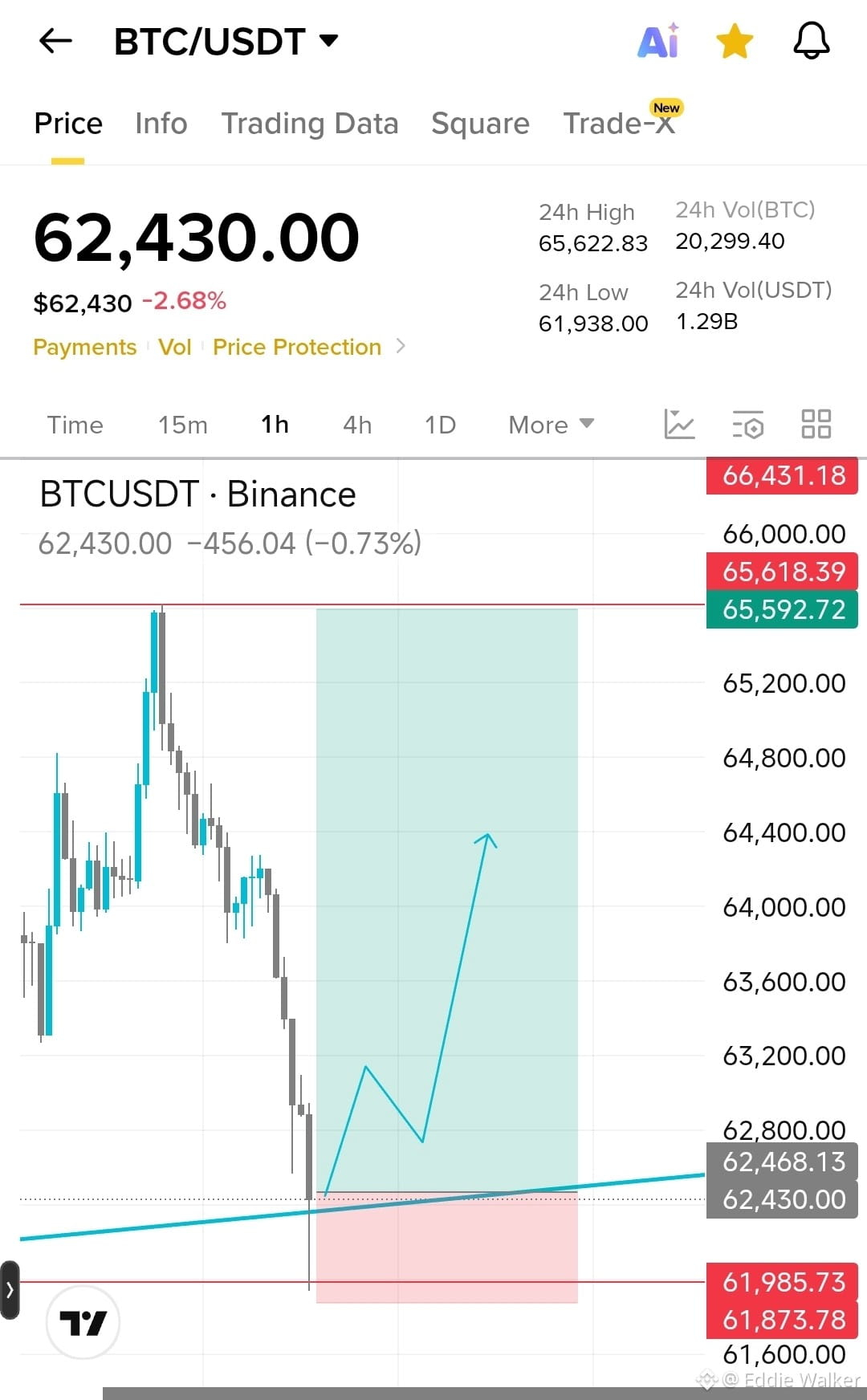
$BTC / USDT Long Setup
Entry: $62,300 – $62,600
Stop Loss: $61,850
TP1: $63,200
TP2: $64,300
TP3: $65,500 – $65,600
BTC is sitting near trendline/support. If buyers defend this zone, a bounce toward $64K–$65.5K is possible. But if $61.8K breaks, setup is invalid.
Entry: $62,300 – $62,600
Stop Loss: $61,850
TP1: $63,200
TP2: $64,300
TP3: $65,500 – $65,600
BTC is sitting near trendline/support. If buyers defend this zone, a bounce toward $64K–$65.5K is possible. But if $61.8K breaks, setup is invalid.
PINNED
Disputed
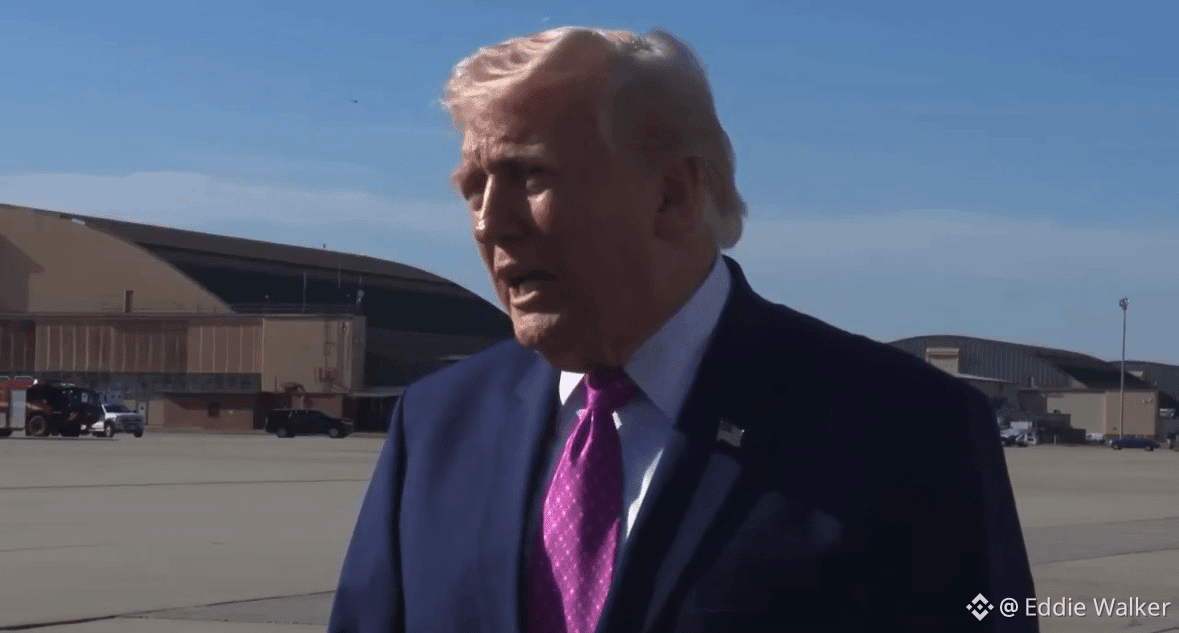
BREAKING: 🇺🇸 President Trump is set to make a “huge” announcement today at 5:00 PM ET.
Sources are speculating it could involve plans to reopen the Strait of Hormuz and a possible new peace deal with Iran.
Markets could see major volatility if confirmed.
Sources are speculating it could involve plans to reopen the Strait of Hormuz and a possible new peace deal with Iran.
Markets could see major volatility if confirmed.
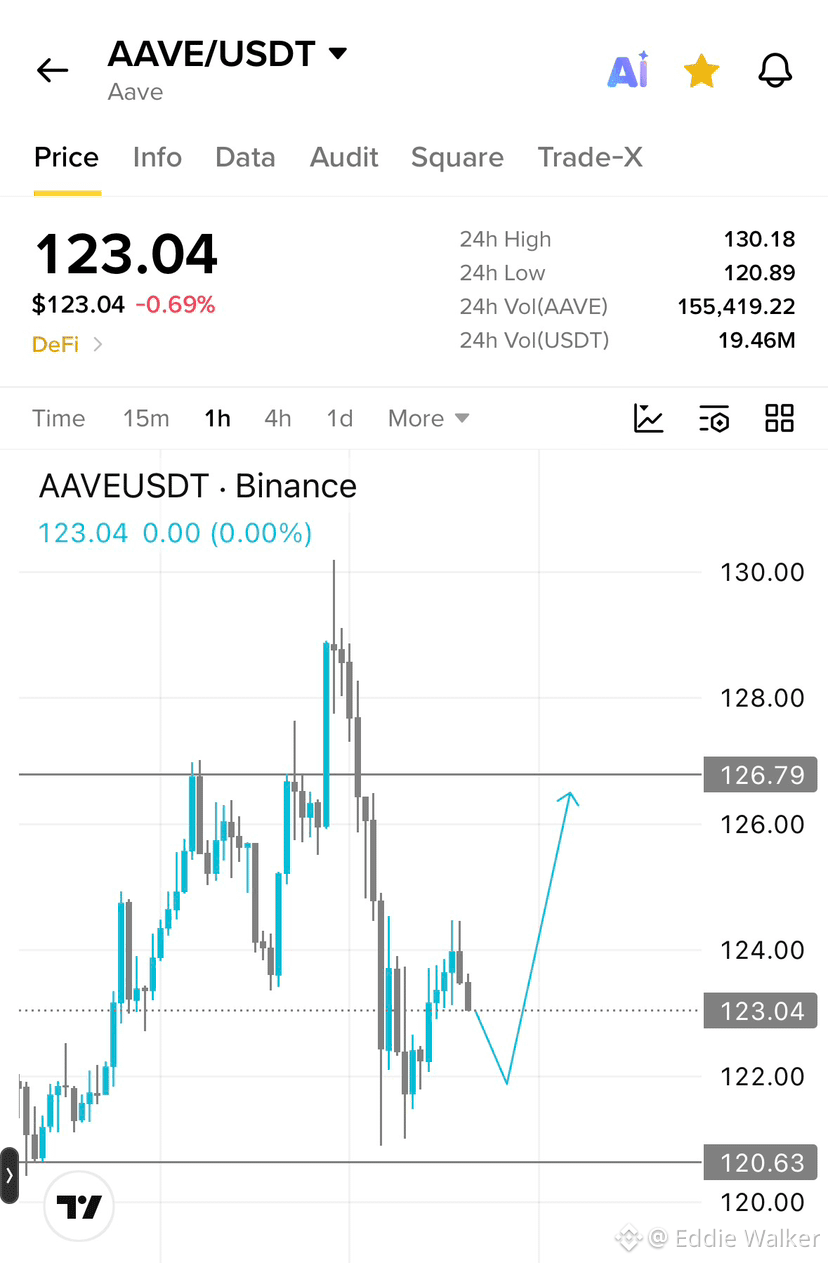
I’m also watching $AAVE long setup here.
Price is sitting around $123 after bouncing from the $121–$122 area. What catches my eye is that buyers are still defending the lower part of the range, while $126.79 remains the main resistance above.
Long setup:
Entry: $122.50–$123.20
Targets:
TP1: $124.00
TP2: $125.00
TP3: $126.79
SL: Below $120.60
For me, $120.6 is the line that keeps this setup alive. If AAVE holds above that area and starts reclaiming $124, I’d watch for a move back toward $126–$127.
#Aave
Price is sitting around $123 after bouncing from the $121–$122 area. What catches my eye is that buyers are still defending the lower part of the range, while $126.79 remains the main resistance above.
Long setup:
Entry: $122.50–$123.20
Targets:
TP1: $124.00
TP2: $125.00
TP3: $126.79
SL: Below $120.60
For me, $120.6 is the line that keeps this setup alive. If AAVE holds above that area and starts reclaiming $124, I’d watch for a move back toward $126–$127.
#Aave
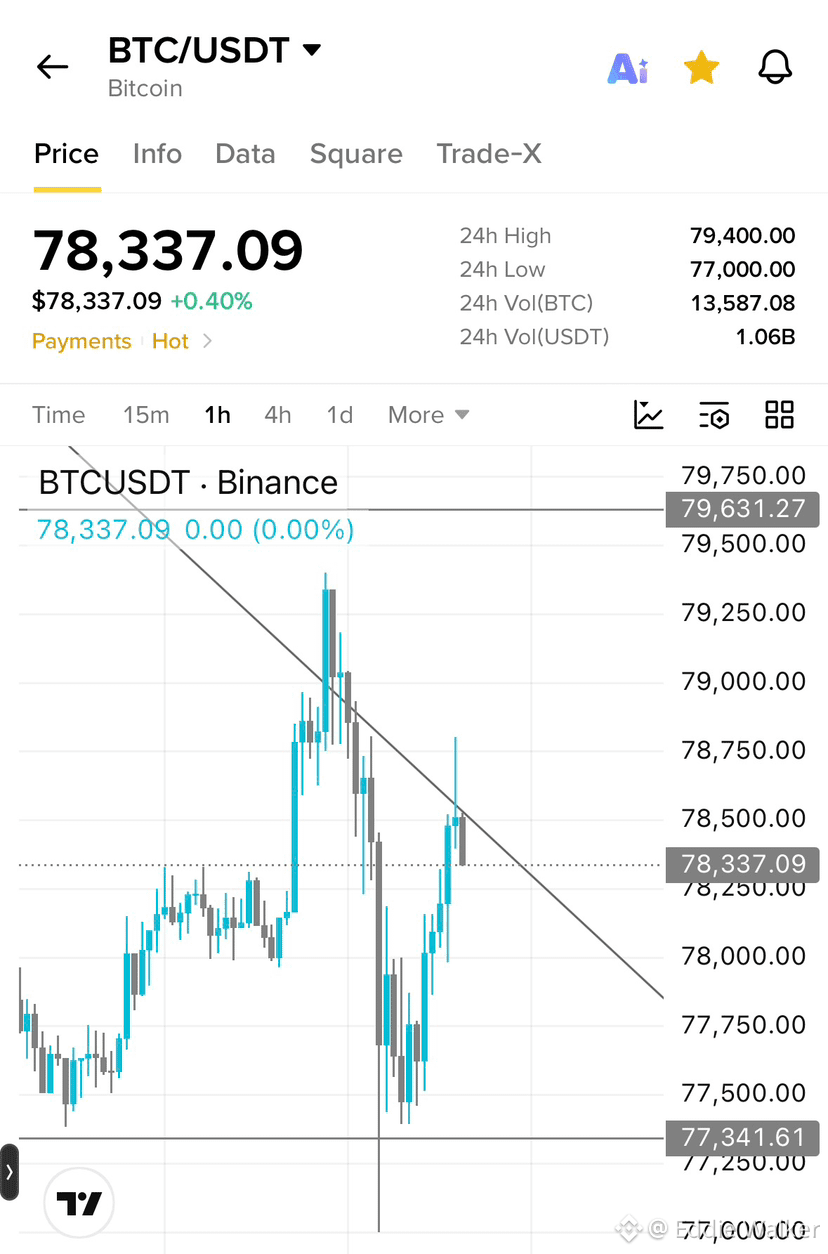
I’m watching $BTC short setup here.
Price bounced from the $77.3K support, but it’s now running straight into that descending trendline around $78.4K–$78.5K. This is the area where I want to see whether sellers step back in.
Selling setup:
Entry: $78,300–$78,500
Targets:
TP1: $78,000
TP2: $77,600
TP3: $77,340
SL: Above $78,800
For me, the trendline is the key. As long as BTC keeps getting rejected below it, another move toward $77.3K stays on the table. A clean breakout above the trendline would make me drop the short idea.
#btc
Price bounced from the $77.3K support, but it’s now running straight into that descending trendline around $78.4K–$78.5K. This is the area where I want to see whether sellers step back in.
Selling setup:
Entry: $78,300–$78,500
Targets:
TP1: $78,000
TP2: $77,600
TP3: $77,340
SL: Above $78,800
For me, the trendline is the key. As long as BTC keeps getting rejected below it, another move toward $77.3K stays on the table. A clean breakout above the trendline would make me drop the short idea.
#btc
Verified
Privacy in crypto has always felt like two extremes
Show everything, Or hide everything.
@Midnight Network is building the middle.
As a standalone Layer 1, it uses selective disclosure to prove something is true without exposing the underlying data.
That’s why the adoption side is interesting:
→ Monument Bank plans to tokenize up to £250M in customer deposits
→ Google Cloud, MoneyGram, eToro, Worldpay and others are in the validator ecosystem
→ $NIGHT generates $DUSK , the regenerating resource used for private transactions
This feels bigger than another privacy narrative.
It’s about making privacy usable for real institutions without giving up compliance.
And in 2026, that could matter a lot.
Informational content only. Not financial advice.
#Midnight
Show everything, Or hide everything.
@Midnight Network is building the middle.
As a standalone Layer 1, it uses selective disclosure to prove something is true without exposing the underlying data.
That’s why the adoption side is interesting:
→ Monument Bank plans to tokenize up to £250M in customer deposits
→ Google Cloud, MoneyGram, eToro, Worldpay and others are in the validator ecosystem
→ $NIGHT generates $DUSK , the regenerating resource used for private transactions
This feels bigger than another privacy narrative.
It’s about making privacy usable for real institutions without giving up compliance.
And in 2026, that could matter a lot.
Informational content only. Not financial advice.
#Midnight
Verified
The most painful perp trades are not always the bad ones.
Sometimes your thesis is right.
You just get wicked out first.
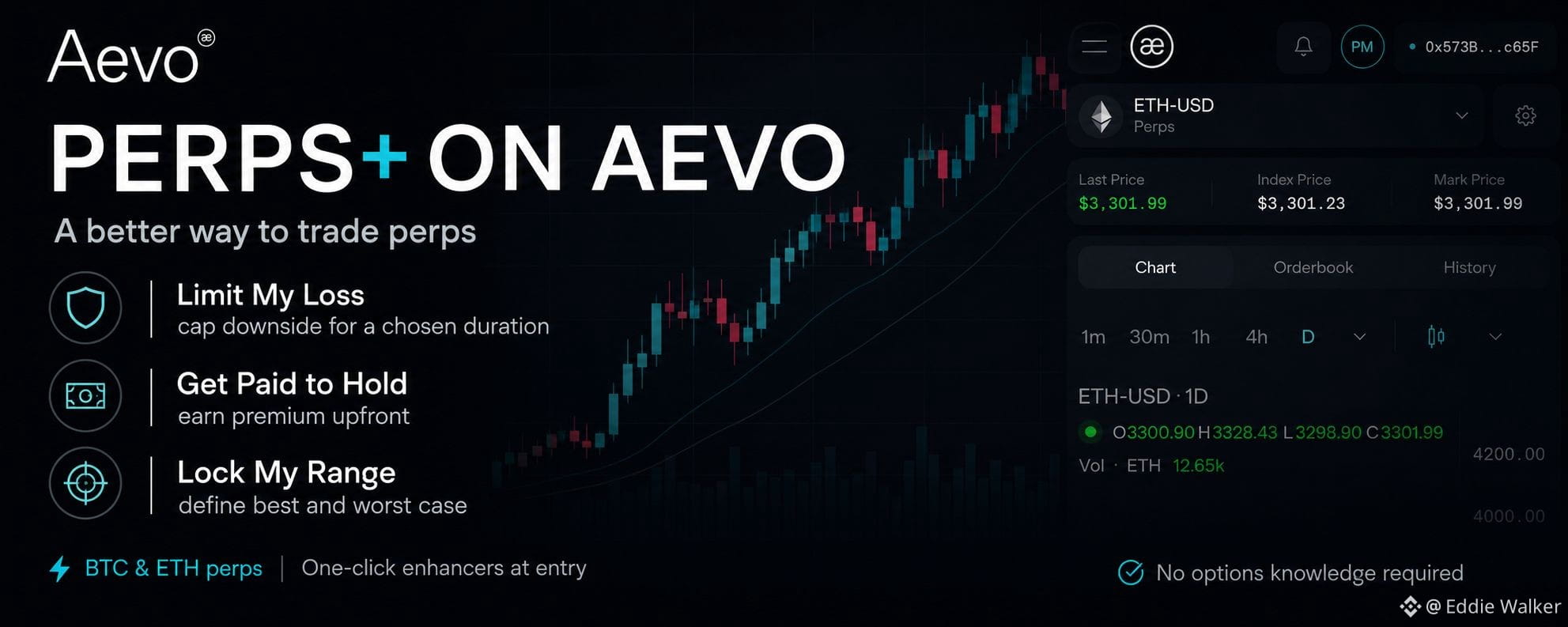
That is exactly the problem @Aevo PERPS+ is built around.
Instead of relying only on a stop, $BTC and $ETH traders can attach structured protection directly when entering the position.
Limit My Loss sets a maximum downside for a chosen duration while keeping the upside open.
So if price violently wicks through your protection level, the trade does not automatically die with the wick.
Then there are two other setups:
Get Paid to Hold gives you premium upfront in exchange for capping the upside.
Lock My Range defines your best and worst case outcome for approximately zero net cost.
The part that caught my attention?
You do not need to know options to use any of it.
Aevo basically took options-style risk management and hid the complexity behind one click.
Same perp trade.
Very different risk profile.
#Aevo
Sometimes your thesis is right.
You just get wicked out first.
That is exactly the problem @Aevo PERPS+ is built around.
Instead of relying only on a stop, $BTC and $ETH traders can attach structured protection directly when entering the position.
Limit My Loss sets a maximum downside for a chosen duration while keeping the upside open.
So if price violently wicks through your protection level, the trade does not automatically die with the wick.
Then there are two other setups:
Get Paid to Hold gives you premium upfront in exchange for capping the upside.
Lock My Range defines your best and worst case outcome for approximately zero net cost.
The part that caught my attention?
You do not need to know options to use any of it.
Aevo basically took options-style risk management and hid the complexity behind one click.
Same perp trade.
Very different risk profile.
#Aevo
I’m watching $SOL for a selling setup here.
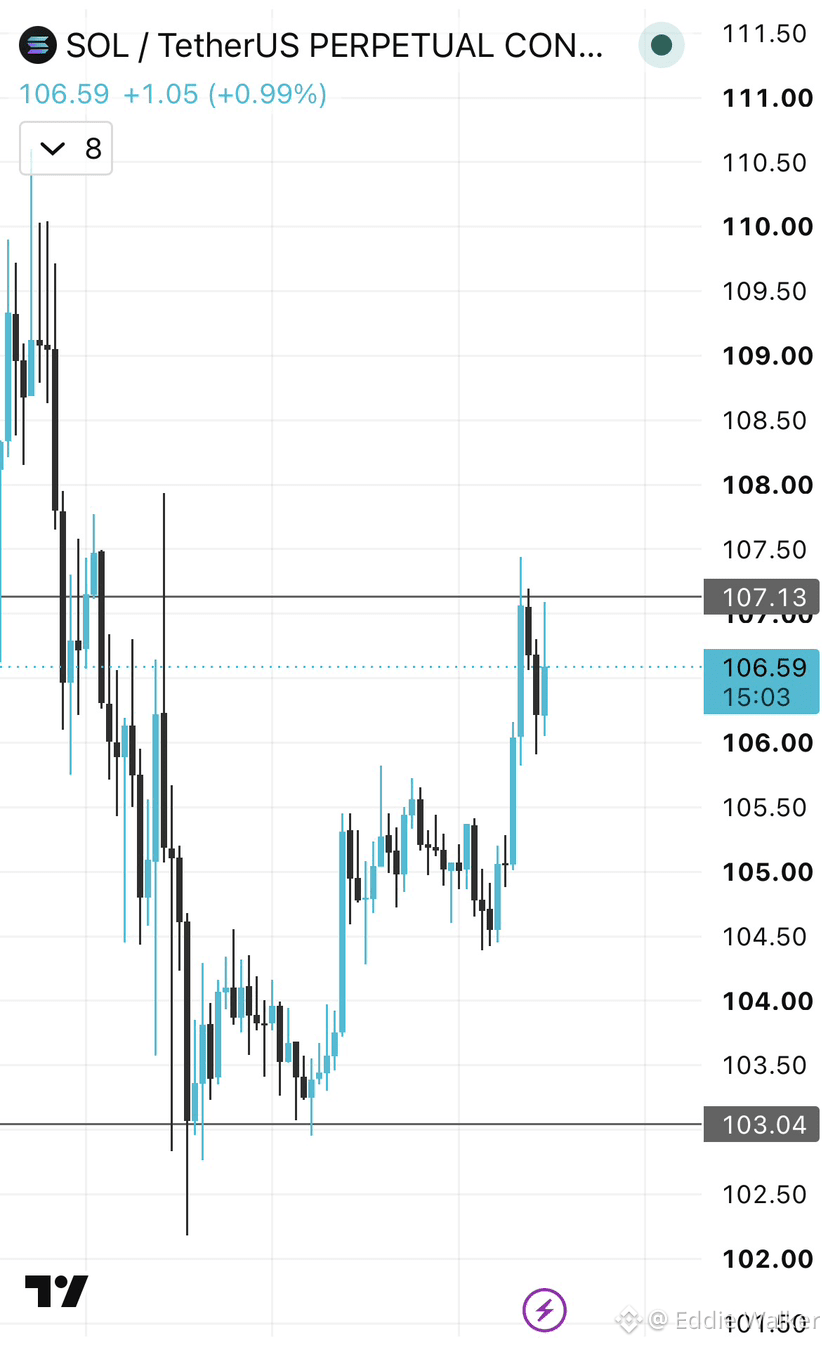
SOL bounced strongly from the $103 area, but price is now running into resistance around $107.13. The first reaction from that level already showed some selling pressure, so I’m watching to see if buyers fail there again.
Entry: $106.50–$107.10
Targets:
TP1: $105.80
TP2: $105.00
TP3: $103.05
SL: Above $107.50
For me, $107.13 is the key level. As long as SOL stays below it, a pullback still makes sense. If buyers reclaim $107.5 cleanly, I’d drop the short idea and wait for a better setup.
SOL bounced strongly from the $103 area, but price is now running into resistance around $107.13. The first reaction from that level already showed some selling pressure, so I’m watching to see if buyers fail there again.
Entry: $106.50–$107.10
Targets:
TP1: $105.80
TP2: $105.00
TP3: $103.05
SL: Above $107.50
For me, $107.13 is the key level. As long as SOL stays below it, a pullback still makes sense. If buyers reclaim $107.5 cleanly, I’d drop the short idea and wait for a better setup.
I’m watching $AAVE for a selling setup here.
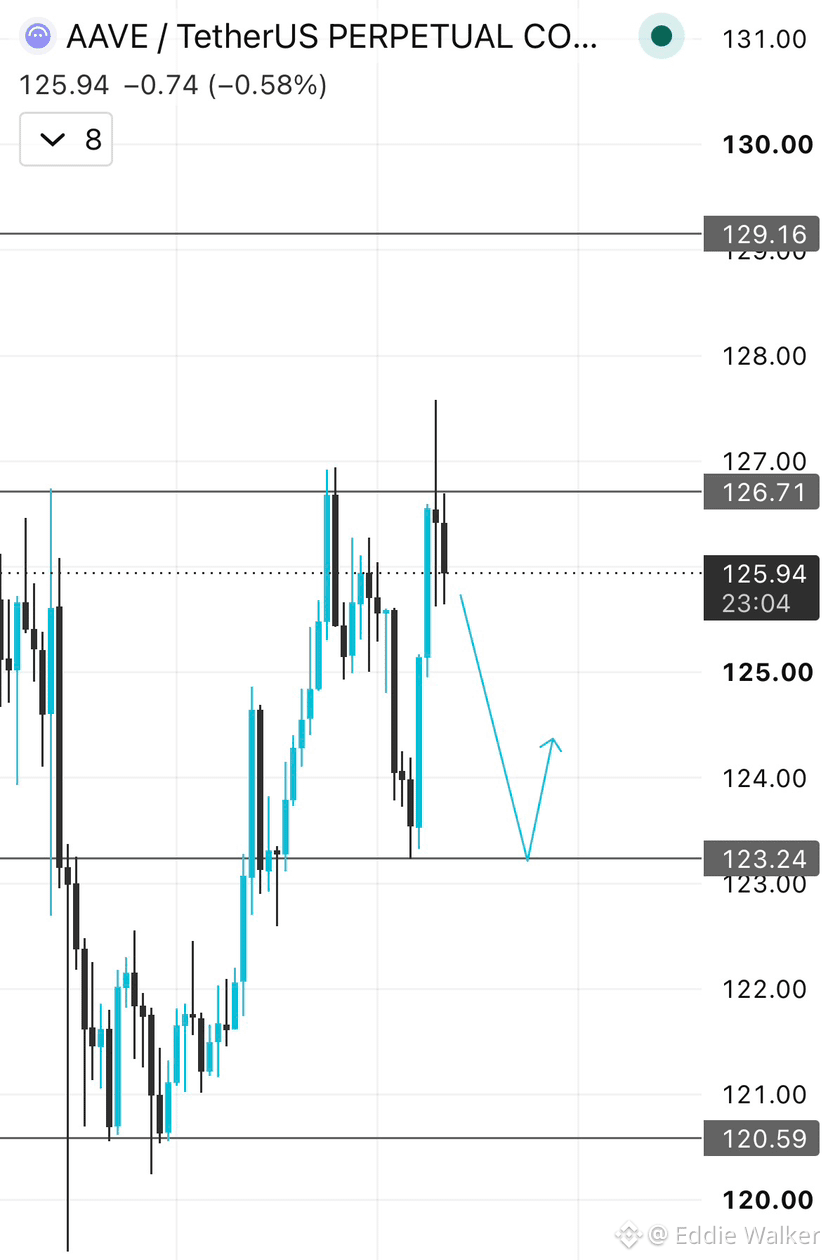
Price pushed back into the $126.7 resistance area but failed to break through cleanly. Now AAVE is sitting around $125.9, and the rejection makes me think sellers could get another chance if buyers keep struggling below that level.
Entry: $125.80–$126.40
Targets:
TP1: $124.80
TP2: $124.00
TP3: $123.24
SL: Above $126.80
For me, $126.7 is the key level. As long as AAVE stays below it, I’m watching for a pullback toward the $123.2 support zone.
I wouldn’t chase a red candle though. A weak bounce back toward resistance followed by another rejection would make the setup look much cleaner.
Price pushed back into the $126.7 resistance area but failed to break through cleanly. Now AAVE is sitting around $125.9, and the rejection makes me think sellers could get another chance if buyers keep struggling below that level.
Entry: $125.80–$126.40
Targets:
TP1: $124.80
TP2: $124.00
TP3: $123.24
SL: Above $126.80
For me, $126.7 is the key level. As long as AAVE stays below it, I’m watching for a pullback toward the $123.2 support zone.
I wouldn’t chase a red candle though. A weak bounce back toward resistance followed by another rejection would make the setup look much cleaner.
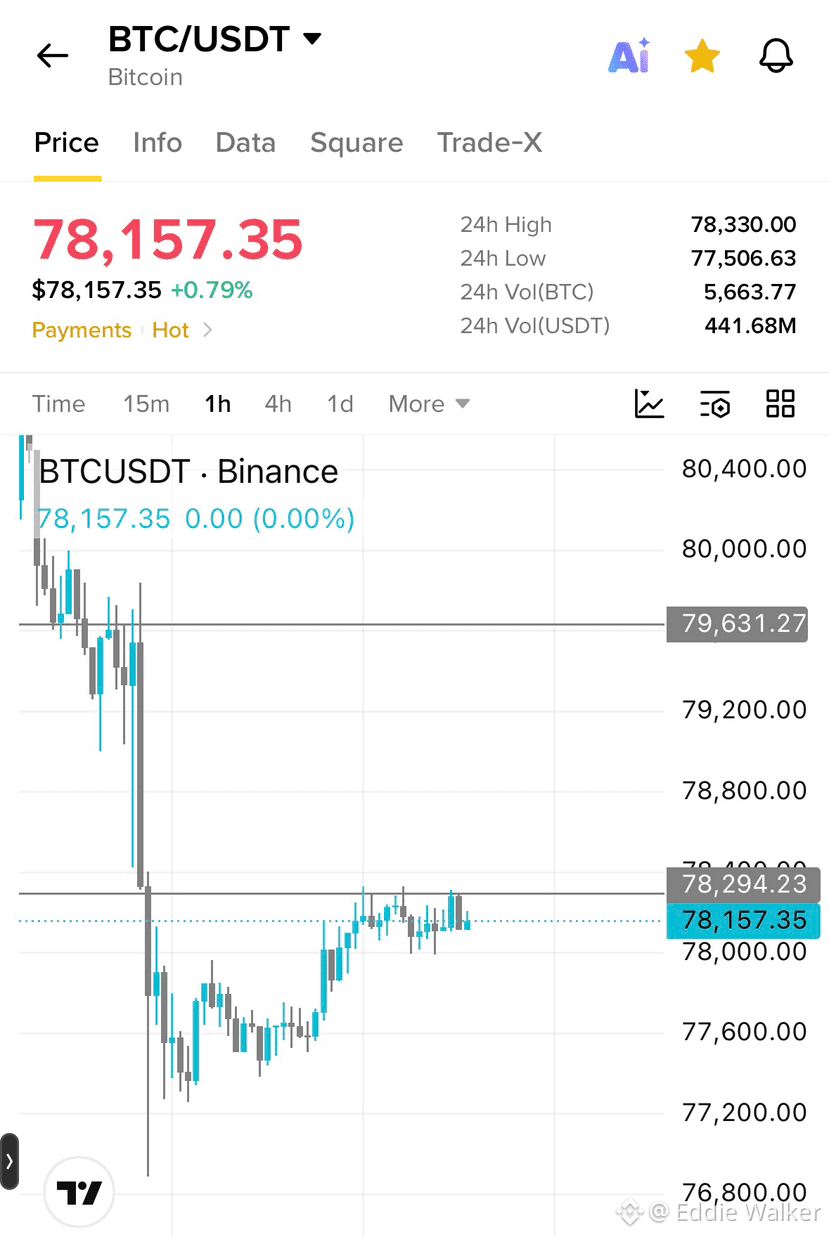
I’m watching $BTC around $78,157 here.
After that sharp drop, price managed to bounce and is now moving in a tight range just under $78,294 resistance. That tells me buyers are trying to stabilize it, but it still hasn’t fully broken out. Right now this looks more like a retest zone than a clean trend move.
Possible long setup:
Entry: $78,050 – $78,180
Targets: $78,300 → $78,800 → $79,630
SL: Below $77,500
What I’m seeing:
If BTC reclaims and holds $78,294, then the next push can extend toward $78.8K and possibly $79.6K.
But if it keeps failing below that level, then this recovery may just be a pause before another move down.
For me, $78,294 is the key level.
Above it, momentum improves.
Below it, I’d stay cautious because price could revisit the $77.5K area again.
After that sharp drop, price managed to bounce and is now moving in a tight range just under $78,294 resistance. That tells me buyers are trying to stabilize it, but it still hasn’t fully broken out. Right now this looks more like a retest zone than a clean trend move.
Possible long setup:
Entry: $78,050 – $78,180
Targets: $78,300 → $78,800 → $79,630
SL: Below $77,500
What I’m seeing:
If BTC reclaims and holds $78,294, then the next push can extend toward $78.8K and possibly $79.6K.
But if it keeps failing below that level, then this recovery may just be a pause before another move down.
For me, $78,294 is the key level.
Above it, momentum improves.
Below it, I’d stay cautious because price could revisit the $77.5K area again.
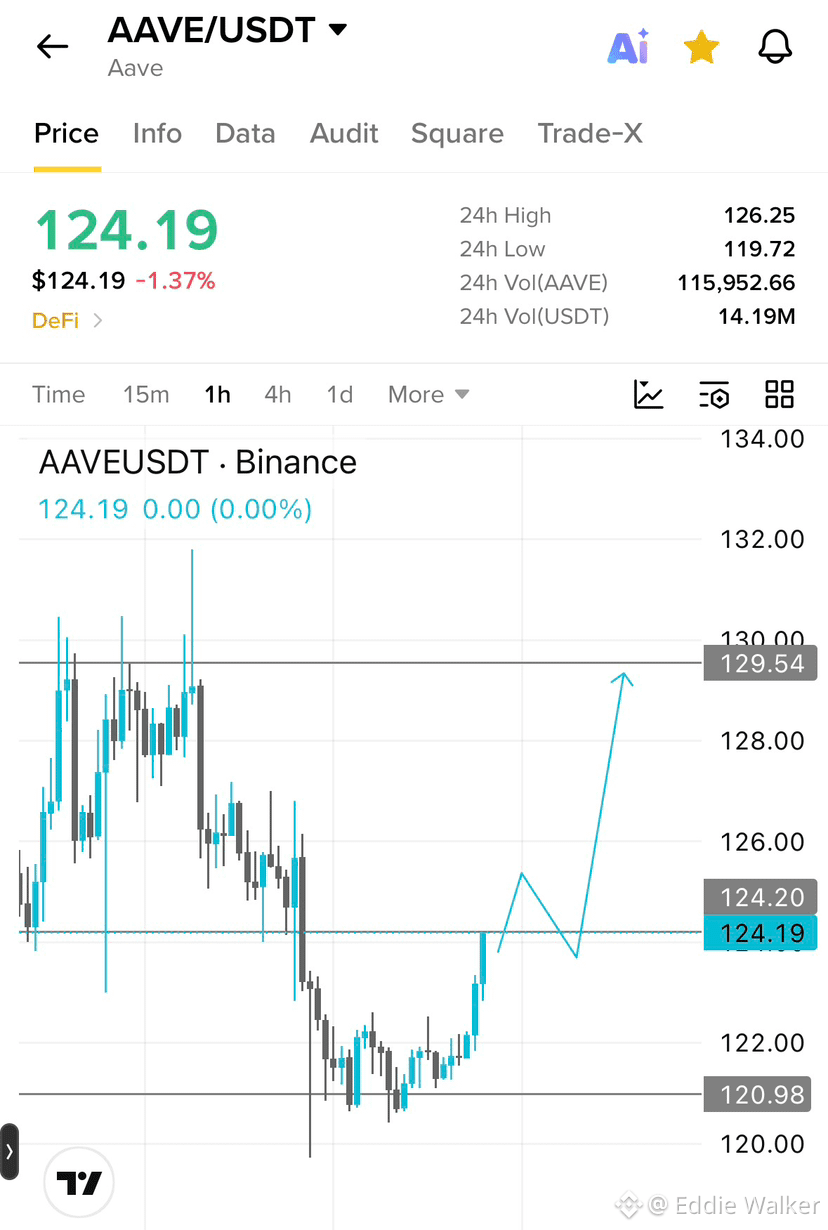
I’m watching $AAVE here
Price bounced cleanly from the $121 support area and is now trying to reclaim $124.20. The recovery looks decent so far, but I’d still want to see buyers hold this level before getting too aggressive.
Entry: $123.50–$124.20
Targets:
TP1: $125.50
TP2: $127.00
TP3: $129.50
SL: Below $120.90
For me, $124.20 is the key level now. If AAVE can flip it back into support, the move toward $127–$129.5 starts looking much cleaner. If it loses $121 again, I’d rather step aside.
Price bounced cleanly from the $121 support area and is now trying to reclaim $124.20. The recovery looks decent so far, but I’d still want to see buyers hold this level before getting too aggressive.
Entry: $123.50–$124.20
Targets:
TP1: $125.50
TP2: $127.00
TP3: $129.50
SL: Below $120.90
For me, $124.20 is the key level now. If AAVE can flip it back into support, the move toward $127–$129.5 starts looking much cleaner. If it loses $121 again, I’d rather step aside.
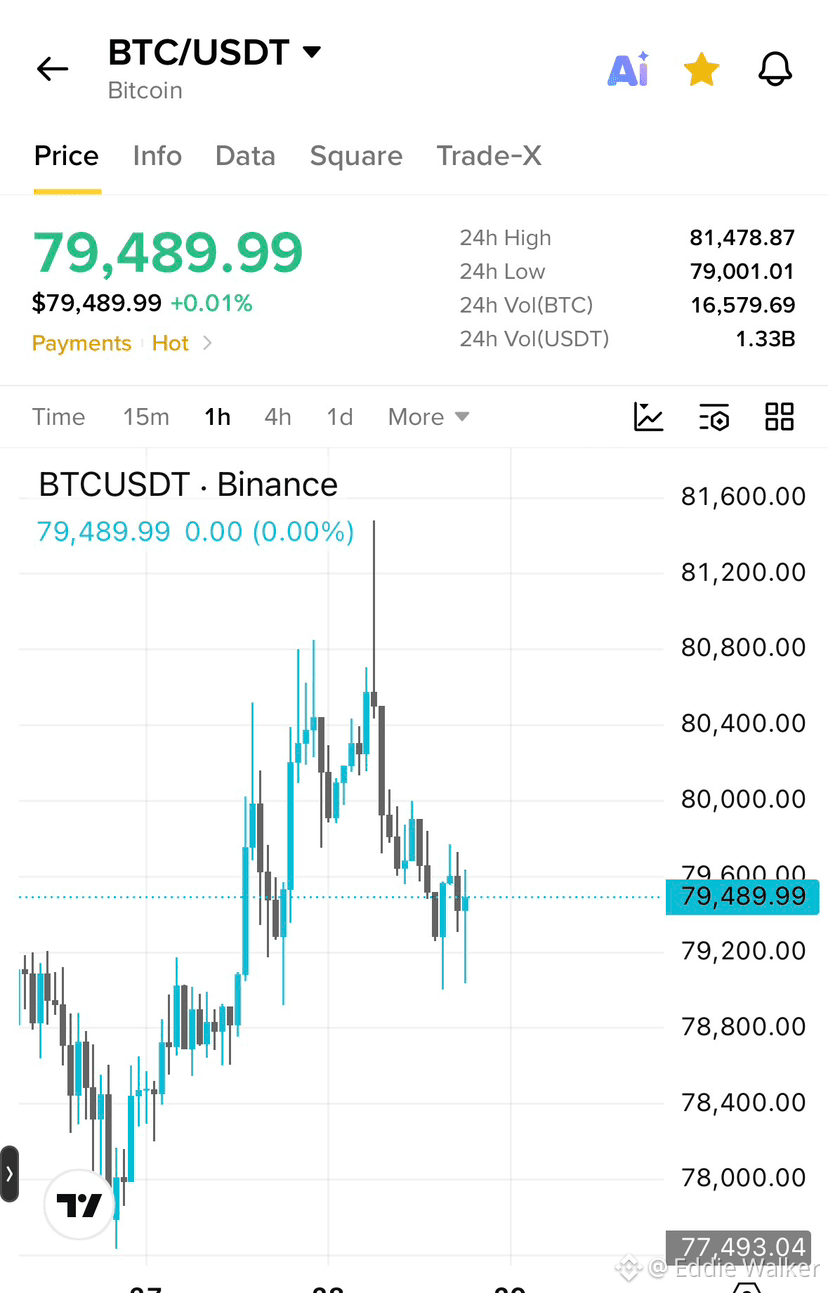
I’m also watching $BTC for a short
BTC got rejected from the $81.4K area and has been slowly bleeding lower since. Price is now sitting around $79.5K, and every bounce is struggling to build real momentum.
Entry: $79,500–$79,900
Targets:
TP1: $79,000
TP2: $78,400
TP3: $77,500
SL: Above $80,400
The $79K area is important here. If BTC loses it cleanly, I’d expect sellers to press the move further. I wouldn’t chase a dump though. I’d rather see a small bounce into resistance first and let the rejection confirm the trade.
BTC got rejected from the $81.4K area and has been slowly bleeding lower since. Price is now sitting around $79.5K, and every bounce is struggling to build real momentum.
Entry: $79,500–$79,900
Targets:
TP1: $79,000
TP2: $78,400
TP3: $77,500
SL: Above $80,400
The $79K area is important here. If BTC loses it cleanly, I’d expect sellers to press the move further. I wouldn’t chase a dump though. I’d rather see a small bounce into resistance first and let the rejection confirm the trade.
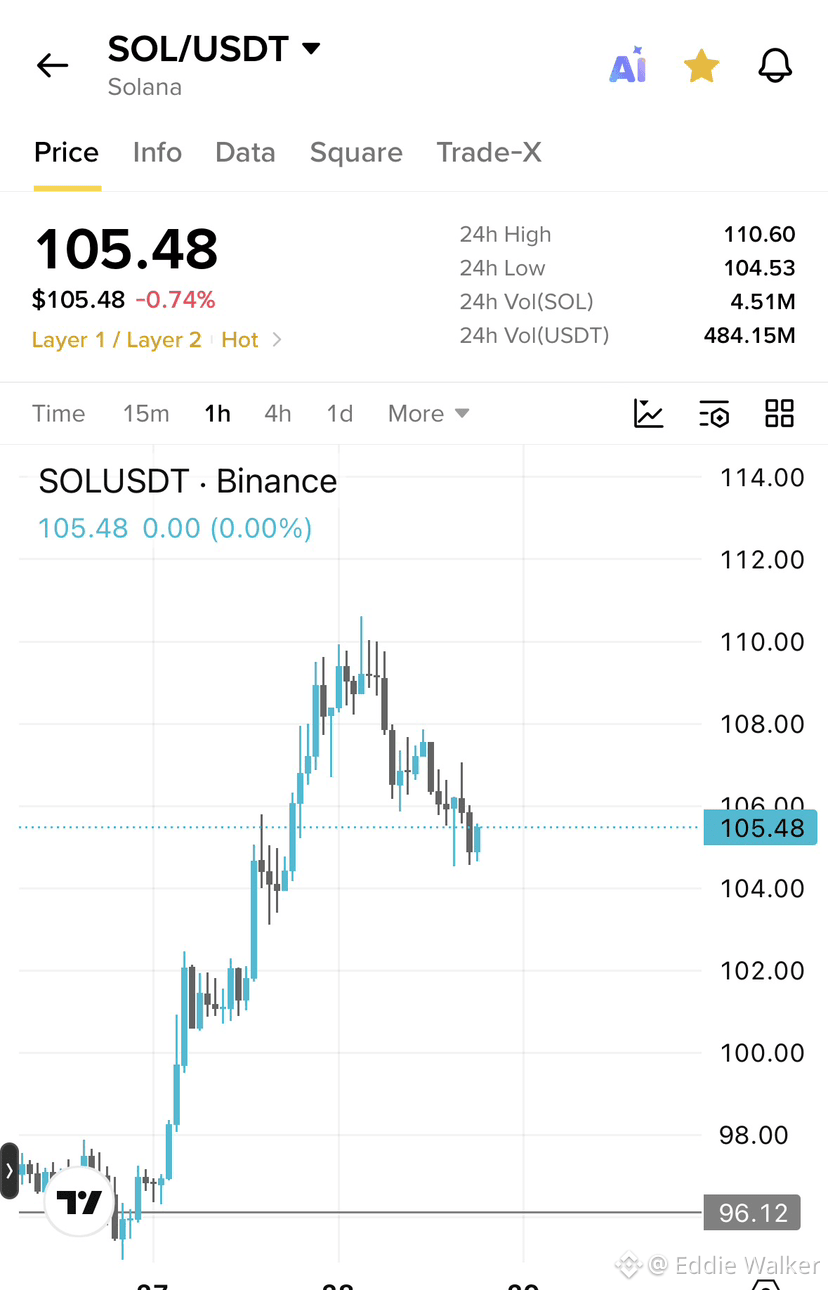
I’m watching $SOL for a short here
The move from $110+ has been getting sold pretty consistently, and the 1H chart is now printing lower highs while price struggles around $105–$106. That tells me buyers still haven’t really taken control back.
Entry: $105.50–$106.20
Targets:
TP1: $104.50
TP2: $103.00
TP3: $102.00
SL: Above $107.30
For me, the setup stays interesting while SOL keeps failing below $106–$107. A weak bounce into that area followed by another rejection would be the confirmation I’d want. If buyers reclaim $107.3 cleanly, I’d drop the short idea.
The move from $110+ has been getting sold pretty consistently, and the 1H chart is now printing lower highs while price struggles around $105–$106. That tells me buyers still haven’t really taken control back.
Entry: $105.50–$106.20
Targets:
TP1: $104.50
TP2: $103.00
TP3: $102.00
SL: Above $107.30
For me, the setup stays interesting while SOL keeps failing below $106–$107. A weak bounce into that area followed by another rejection would be the confirmation I’d want. If buyers reclaim $107.3 cleanly, I’d drop the short idea.
🚨 Big day for crypto.
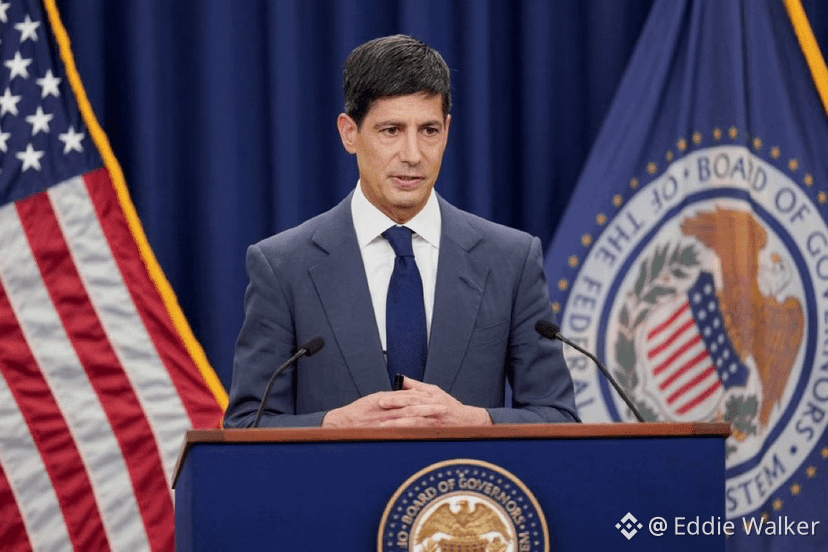
Kevin Warsh speaks at Jackson Hole at 10 AM ET, and this could easily set the tone for markets.
September is still split between a pause and another hike.
If Warsh leans dovish, risk assets could catch a bid.
If he comes in hawkish, crypto could get hit pretty quickly.
Either way, I’d expect some serious volatility today.
#KevinWarshNextFedChair
Kevin Warsh speaks at Jackson Hole at 10 AM ET, and this could easily set the tone for markets.
September is still split between a pause and another hike.
If Warsh leans dovish, risk assets could catch a bid.
If he comes in hawkish, crypto could get hit pretty quickly.
Either way, I’d expect some serious volatility today.
#KevinWarshNextFedChair
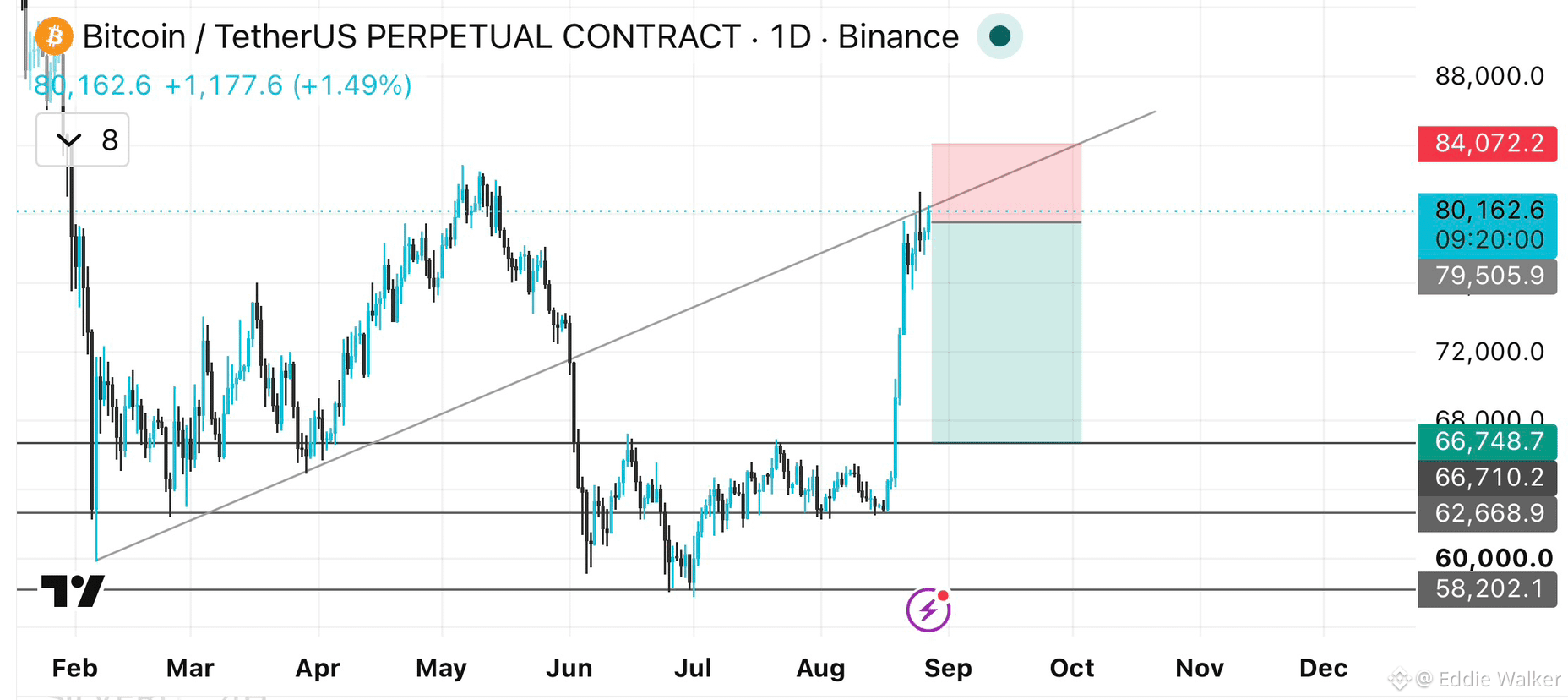
I’m looking for a swing short on $BTC here.
The move from $67K to $80K+ in such a short period looks heavily manipulated to me, and price is now trading into a key resistance zone.
Watching $80K–$81K for a clean rejection.
Targets: $75K → $72K → $67K
Invalidation: $84K+
The move from $67K to $80K+ in such a short period looks heavily manipulated to me, and price is now trading into a key resistance zone.
Watching $80K–$81K for a clean rejection.
Targets: $75K → $72K → $67K
Invalidation: $84K+
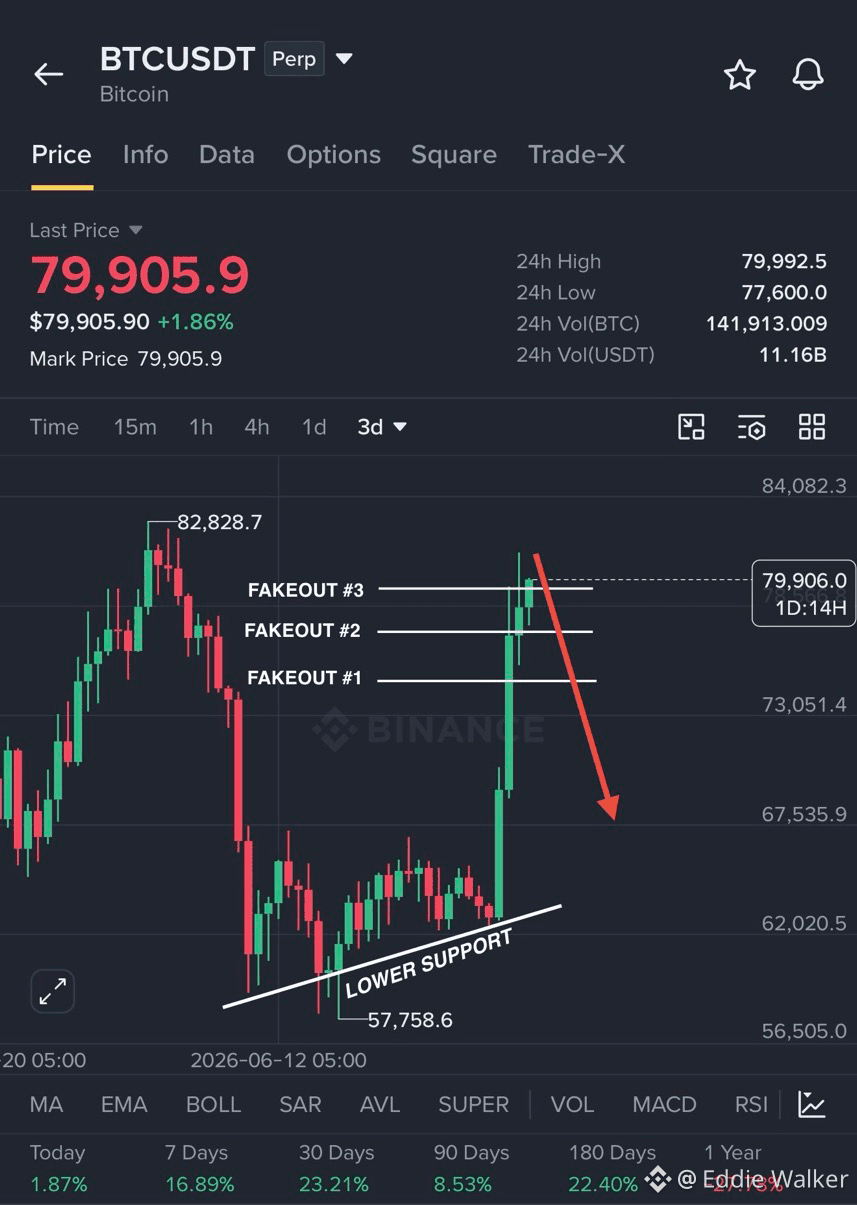
$BTC pushed toward $82K but faced another rejection.
After running from roughly $67K to $80K in just one week, this move still looks like a potential bull trap to me. I don’t think the real bottom is confirmed yet.
My downside levels remain:
$74K first
$67K next
And if we get any major negative geopolitical development, BTC could see an even deeper correction.
NFA. DYOR.
After running from roughly $67K to $80K in just one week, this move still looks like a potential bull trap to me. I don’t think the real bottom is confirmed yet.
My downside levels remain:
$74K first
$67K next
And if we get any major negative geopolitical development, BTC could see an even deeper correction.
NFA. DYOR.
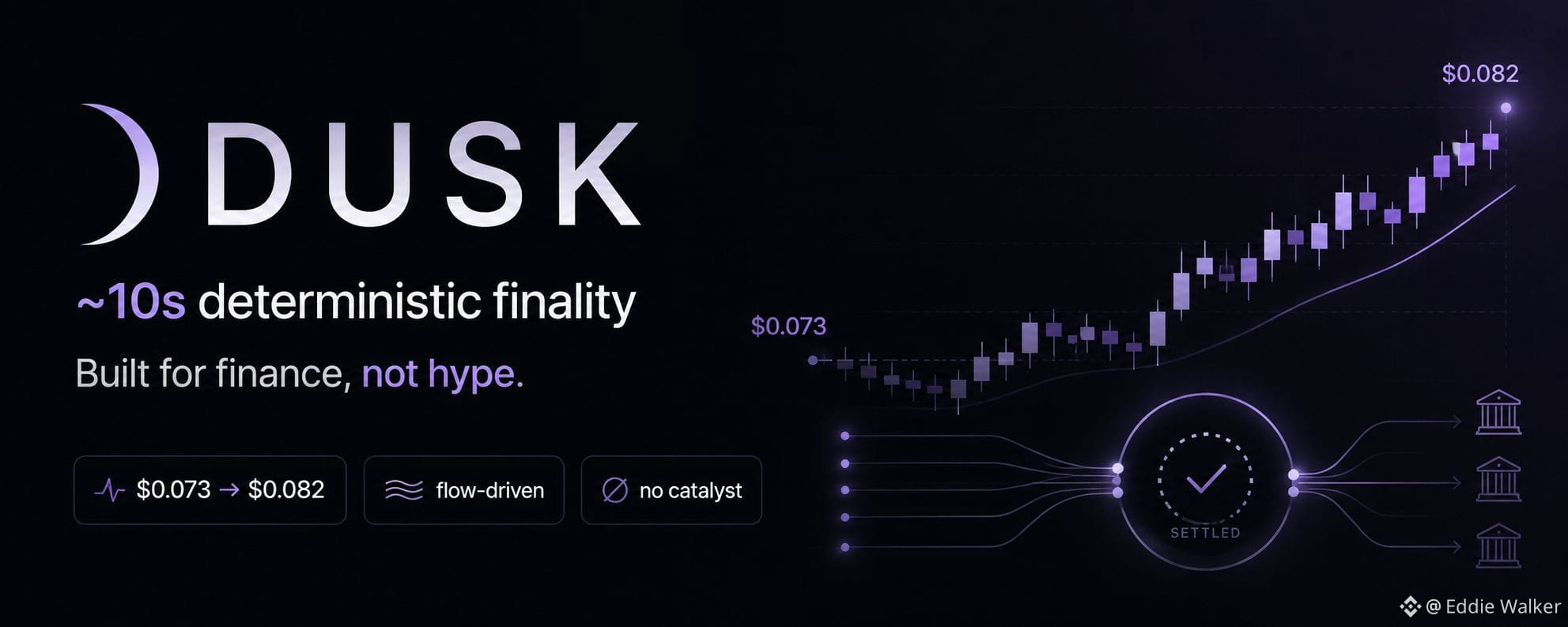
@Dusk positioning its 10-second deterministic finality as infrastructure for finance, not a speed flex. That framing clicked for me this week while I was staring at DUSK's own price action, which is a weird place to find a settlement insight, but bear with me.
Between roughly Aug 20 and now, DUSK swung from about $0.073 to $0.082 a real move and analysts flagged a single social post as the apparent trigger, calling the whole thing "flow-driven" with no actual catalyst behind it. No partnership news, no protocol update, nothing. Just money moving.
Here's what stood out: none of that volume needed a narrative to settle. Every trade cleared with the same ~10-second finality whether it was backed by a real thesis or just noise chasing a tweet. That's the actual point of deterministic settlement it doesn't discriminate between "smart" flow and dumb flow, it just closes the loop, every time, on schedule.
I don't know if that's a boring observation or the whole thesis. Maybe both. Hype metrics measure attention; finality measures whether the system holds up when attention isn't the reason people are transacting.
What happens to that number next week, once the "reason" fades does the volume evaporate with it, or does some of it stick?
$DUSK #dusk
Between roughly Aug 20 and now, DUSK swung from about $0.073 to $0.082 a real move and analysts flagged a single social post as the apparent trigger, calling the whole thing "flow-driven" with no actual catalyst behind it. No partnership news, no protocol update, nothing. Just money moving.
Here's what stood out: none of that volume needed a narrative to settle. Every trade cleared with the same ~10-second finality whether it was backed by a real thesis or just noise chasing a tweet. That's the actual point of deterministic settlement it doesn't discriminate between "smart" flow and dumb flow, it just closes the loop, every time, on schedule.
I don't know if that's a boring observation or the whole thesis. Maybe both. Hype metrics measure attention; finality measures whether the system holds up when attention isn't the reason people are transacting.
What happens to that number next week, once the "reason" fades does the volume evaporate with it, or does some of it stick?
$DUSK #dusk
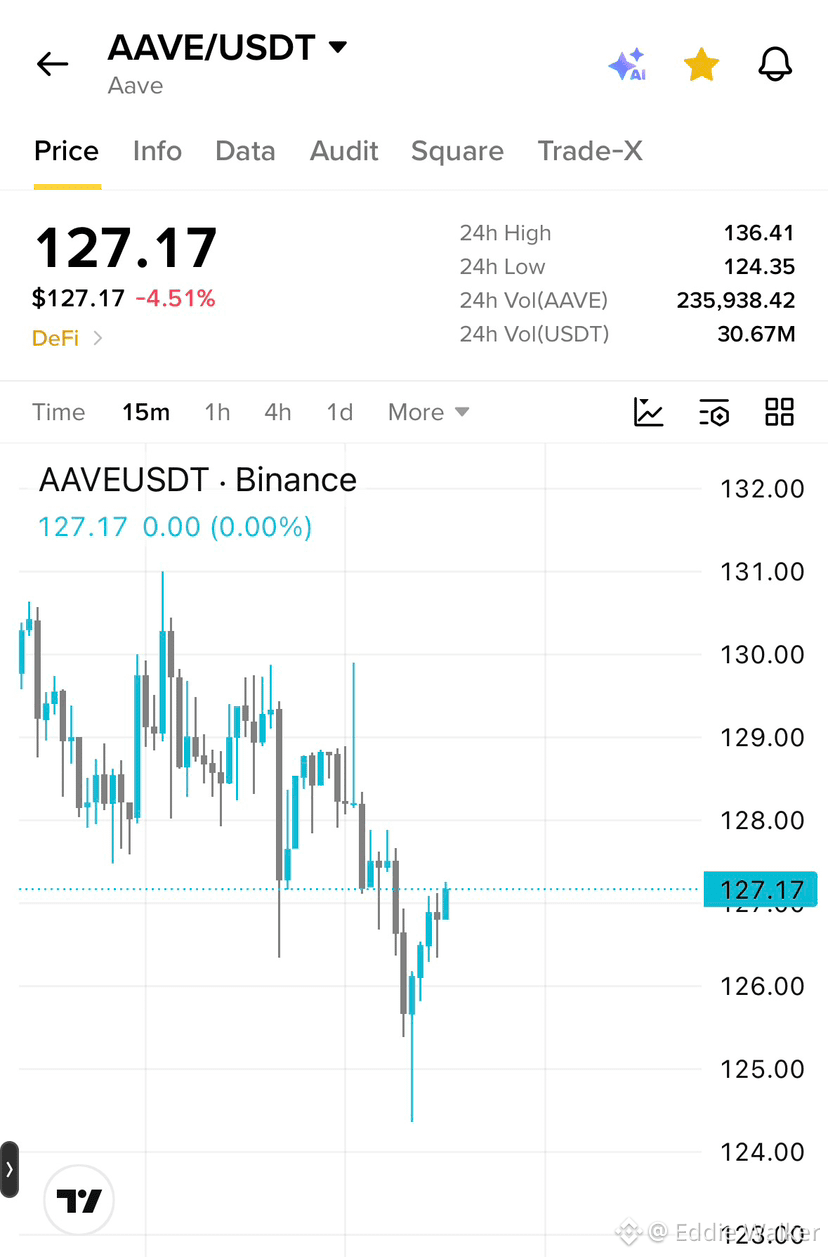
I’m also watching $AAVE for a selling setup.
This chart is still pretty weak. AAVE has been printing lower highs and lower lows all the way down from the $140+ area, and the small bounce around $125 hasn’t changed that structure yet.
Entry: $127–$130
Targets:
TP1: $125
TP2: $124.35
TP3: $122.50
SL: Above $131
I’d rather wait for a weak bounce into $129–$130 than chase it down here. If sellers step back in around that resistance, the trend still favors another move lower.
This chart is still pretty weak. AAVE has been printing lower highs and lower lows all the way down from the $140+ area, and the small bounce around $125 hasn’t changed that structure yet.
Entry: $127–$130
Targets:
TP1: $125
TP2: $124.35
TP3: $122.50
SL: Above $131
I’d rather wait for a weak bounce into $129–$130 than chase it down here. If sellers step back in around that resistance, the trend still favors another move lower.
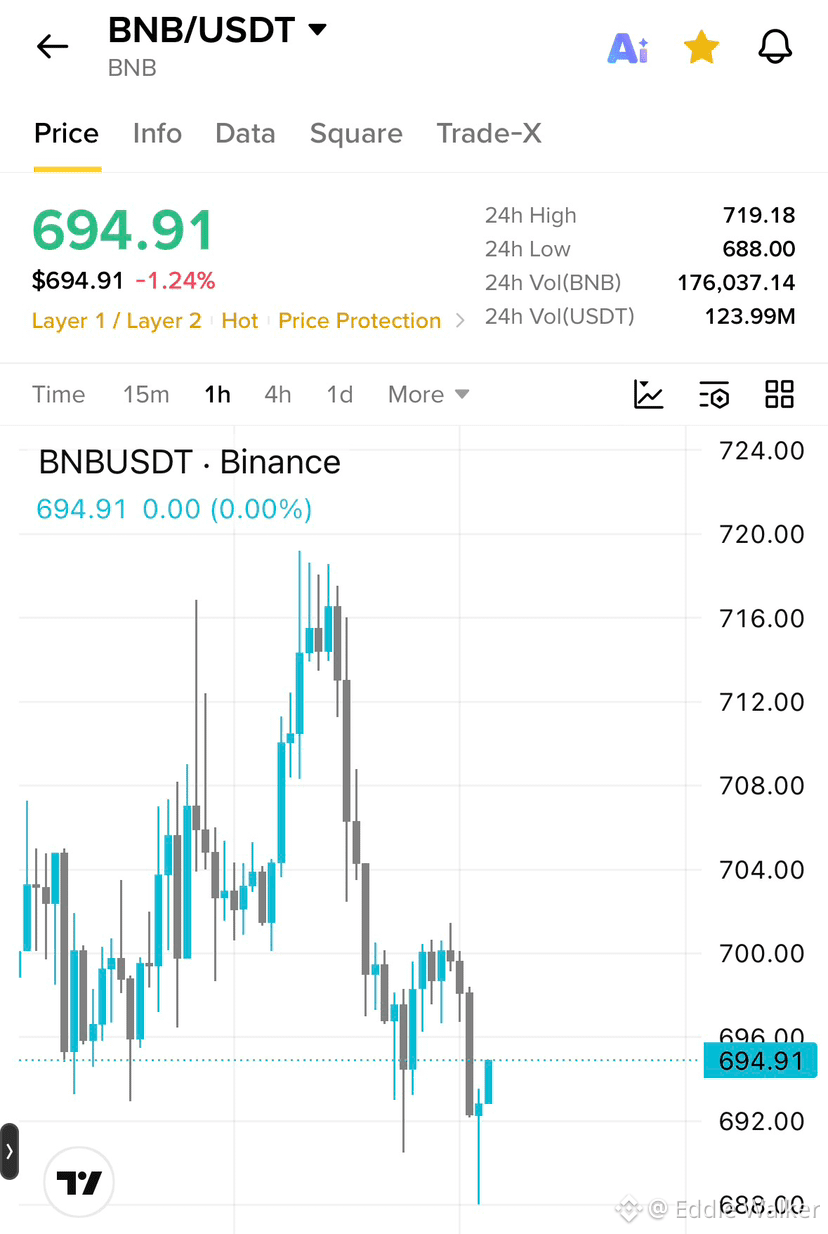
I’m watching $BNB here.
BNB got rejected hard from the $718–$719 area and the 1H structure has been making lower highs since. Price bounced from $688, but so far it still looks more like a relief bounce than a real reversal.
Entry: $695–$700
Targets:
TP1: $692
TP2: $688
TP3: $684
SL: Above $704
For me, $700–$704 is the zone sellers need to defend. As long as BNB stays below it, I’m watching for another leg down. A clean reclaim above $704 would make me drop the short idea.
BNB got rejected hard from the $718–$719 area and the 1H structure has been making lower highs since. Price bounced from $688, but so far it still looks more like a relief bounce than a real reversal.
Entry: $695–$700
Targets:
TP1: $692
TP2: $688
TP3: $684
SL: Above $704
For me, $700–$704 is the zone sellers need to defend. As long as BNB stays below it, I’m watching for another leg down. A clean reclaim above $704 would make me drop the short idea.
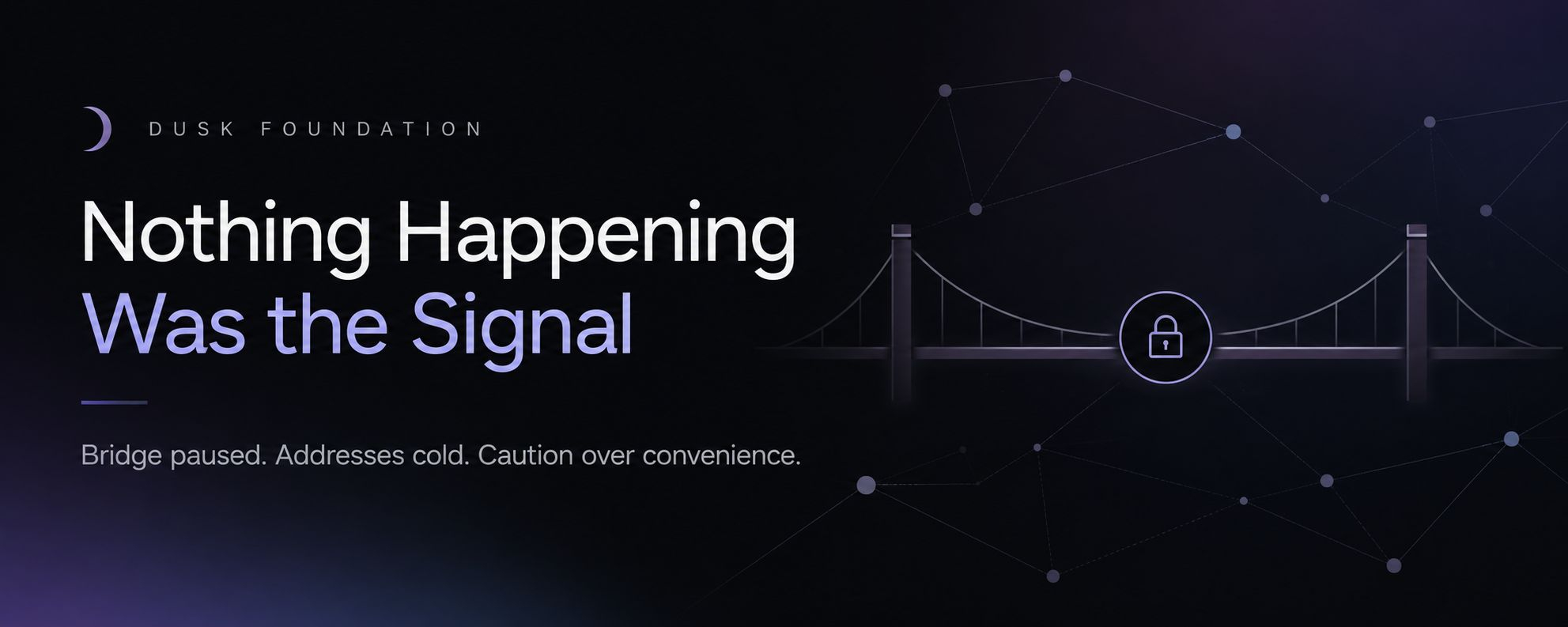
Project @Dusk has been sitting on my screen for a few days now because of something that isn’t flashy at all it’s the quiet part.
Back on August 16 the team caught unusual activity tied to a bridge-operations wallet and moved fast: froze the flow, recycled the affected addresses, pushed a recipient-blocklist update to the web wallet. Normal enough post-incident playbook.
What actually caught my attention is what I found this week going back through those recycled addresses on the explorer nothing. No test transactions, no dust, no probing. Just flatlined activity for over a week straight while the bridge stays paused.
That’s not really a story about an exploit. It’s a story about restraint. A team that could’ve quietly reopened things under pressure from users wanting to move funds instead just… didn’t. The addresses stayed cold because they chose caution over convenience, and nobody’s forcing their hand.
I’ll be honest, I don’t fully know if that’s smart risk management or just slow internal process probably some of both. Either way it’s a rare on-chain read where “nothing happening” is the actual signal.
Anyone else been watching how long bridges stay dark after an incident like this, and what that gap actually tells you about a team?
$DUSK #dusk
Back on August 16 the team caught unusual activity tied to a bridge-operations wallet and moved fast: froze the flow, recycled the affected addresses, pushed a recipient-blocklist update to the web wallet. Normal enough post-incident playbook.
What actually caught my attention is what I found this week going back through those recycled addresses on the explorer nothing. No test transactions, no dust, no probing. Just flatlined activity for over a week straight while the bridge stays paused.
That’s not really a story about an exploit. It’s a story about restraint. A team that could’ve quietly reopened things under pressure from users wanting to move funds instead just… didn’t. The addresses stayed cold because they chose caution over convenience, and nobody’s forcing their hand.
I’ll be honest, I don’t fully know if that’s smart risk management or just slow internal process probably some of both. Either way it’s a rare on-chain read where “nothing happening” is the actual signal.
Anyone else been watching how long bridges stay dark after an incident like this, and what that gap actually tells you about a team?
$DUSK #dusk
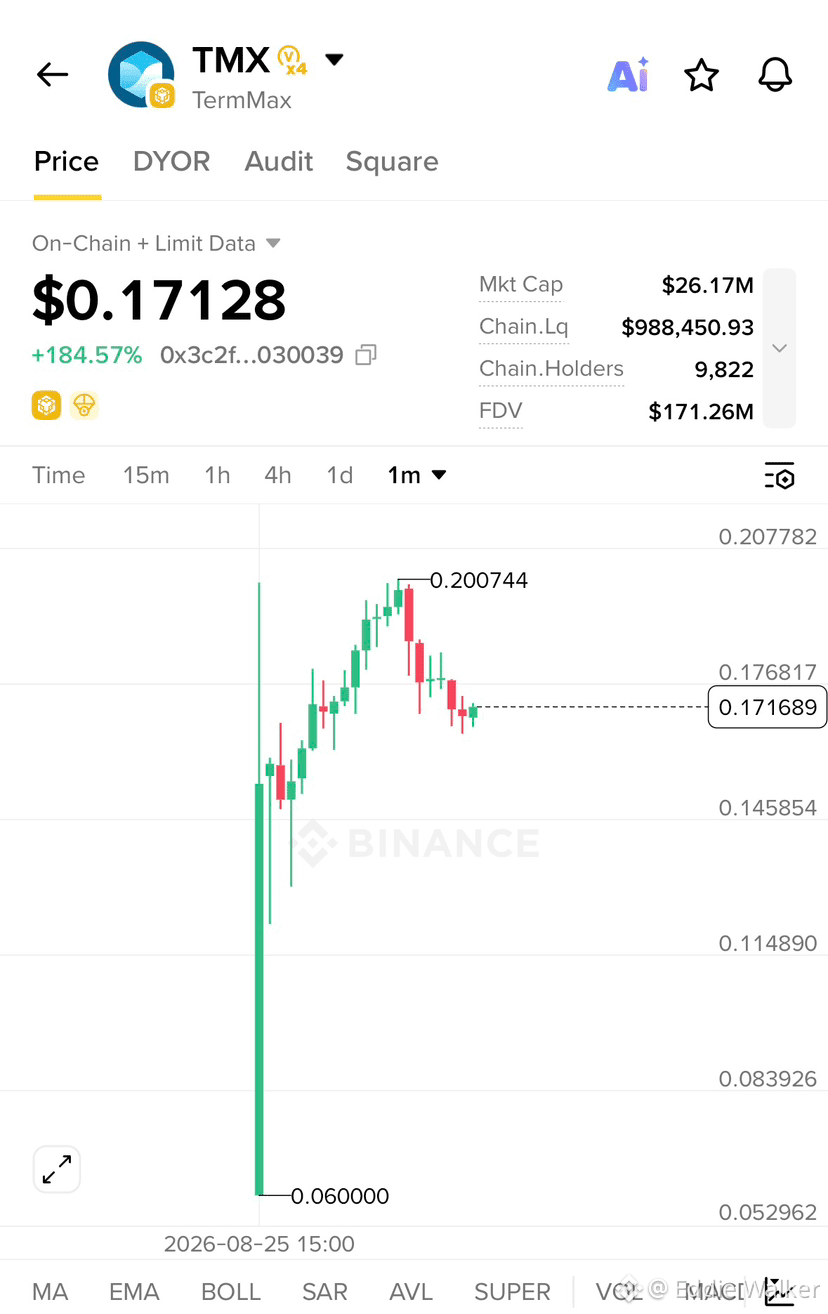
I’m watching $TMX here
That launch move was huge, running from around $0.06 to $0.20, and now price is cooling off near $0.171.
What interests me is whether buyers can build a base here instead of giving back more of the move. $0.176–$0.177 is the first area I’d want to see reclaimed.
Entry: $0.168–$0.172
TP1: $0.177
TP2: $0.185
TP3: $0.200
SL: Below $0.160
For me, this is a pullback setup, not something I’d chase after a +180% move. If $TMX stabilizes here and starts reclaiming resistance, another test of the highs could get interesting.
That launch move was huge, running from around $0.06 to $0.20, and now price is cooling off near $0.171.
What interests me is whether buyers can build a base here instead of giving back more of the move. $0.176–$0.177 is the first area I’d want to see reclaimed.
Entry: $0.168–$0.172
TP1: $0.177
TP2: $0.185
TP3: $0.200
SL: Below $0.160
For me, this is a pullback setup, not something I’d chase after a +180% move. If $TMX stabilizes here and starts reclaiming resistance, another test of the highs could get interesting.
Log in to explore more content