
CryptoFalcon1
143 Posts
CryptoFalcon1
Daily BTC quick update 🚀 | Market Analysis, Altcoins Hunter 📊 | Daily Insights, & Trading Tips 💡
219 Following
30 Followers
43 Liked
Posts
All
Quotes
Binance Square Educational Post
📈 What Is Trading Volume & Why Does It Matter?
Price tells you where the market is moving.
Volume can tell you how strong that move is. 💡
🔹 High Volume + Price Rising
➡️ Buying interest may be strong.
🔹 High Volume + Price Falling
➡️ Selling pressure may be strong.
🔹 Low Volume + Price Rising
➡️ The move may lack strong participation.
🔹 Low Volume + Price Falling
➡️ Selling interest may be relatively weak.
⚠️ Important:
Volume should not be used alone. Combine it with support/resistance, trend, RSI, and price action for better analysis.
💎 Golden Rule:
A breakout with strong volume is generally more convincing than a breakout on very low volume.
Trade smart. 📚
DYOR — Don't rely on a single indicator.
#BinanceSquare #CryptoEducation
📈 What Is Trading Volume & Why Does It Matter?
Price tells you where the market is moving.
Volume can tell you how strong that move is. 💡
🔹 High Volume + Price Rising
➡️ Buying interest may be strong.
🔹 High Volume + Price Falling
➡️ Selling pressure may be strong.
🔹 Low Volume + Price Rising
➡️ The move may lack strong participation.
🔹 Low Volume + Price Falling
➡️ Selling interest may be relatively weak.
⚠️ Important:
Volume should not be used alone. Combine it with support/resistance, trend, RSI, and price action for better analysis.
💎 Golden Rule:
A breakout with strong volume is generally more convincing than a breakout on very low volume.
Trade smart. 📚
DYOR — Don't rely on a single indicator.
#BinanceSquare #CryptoEducation
Today'sEducational Post
📊 What Is a Token Unlock? 🔓
Ever wondered why a crypto coin suddenly drops even when the market looks strong?
One possible reason is a Token Unlock.
🔹 Token Unlock
A token unlock is when previously locked tokens become available to their owners, investors, team, or ecosystem participants.
🔹 Why can it affect price?
When a large number of tokens enter circulation, the available supply increases. If many holders decide to sell, it can create selling pressure.
🔹 What should traders check?
✅ Unlock date
✅ Number of tokens being unlocked
✅ Percentage of circulating supply
✅ Who receives the unlocked tokens
✅ Previous price reaction to unlocks
💡 Key Lesson:
A good project can still face short-term selling pressure because of large token unlocks.
Always check the tokenomics before entering a trade. 🔍
#BinanceSquare
📊 What Is a Token Unlock? 🔓
Ever wondered why a crypto coin suddenly drops even when the market looks strong?
One possible reason is a Token Unlock.
🔹 Token Unlock
A token unlock is when previously locked tokens become available to their owners, investors, team, or ecosystem participants.
🔹 Why can it affect price?
When a large number of tokens enter circulation, the available supply increases. If many holders decide to sell, it can create selling pressure.
🔹 What should traders check?
✅ Unlock date
✅ Number of tokens being unlocked
✅ Percentage of circulating supply
✅ Who receives the unlocked tokens
✅ Previous price reaction to unlocks
💡 Key Lesson:
A good project can still face short-term selling pressure because of large token unlocks.
Always check the tokenomics before entering a trade. 🔍
#BinanceSquare
Today's Educational post for my valued guys❤️💦
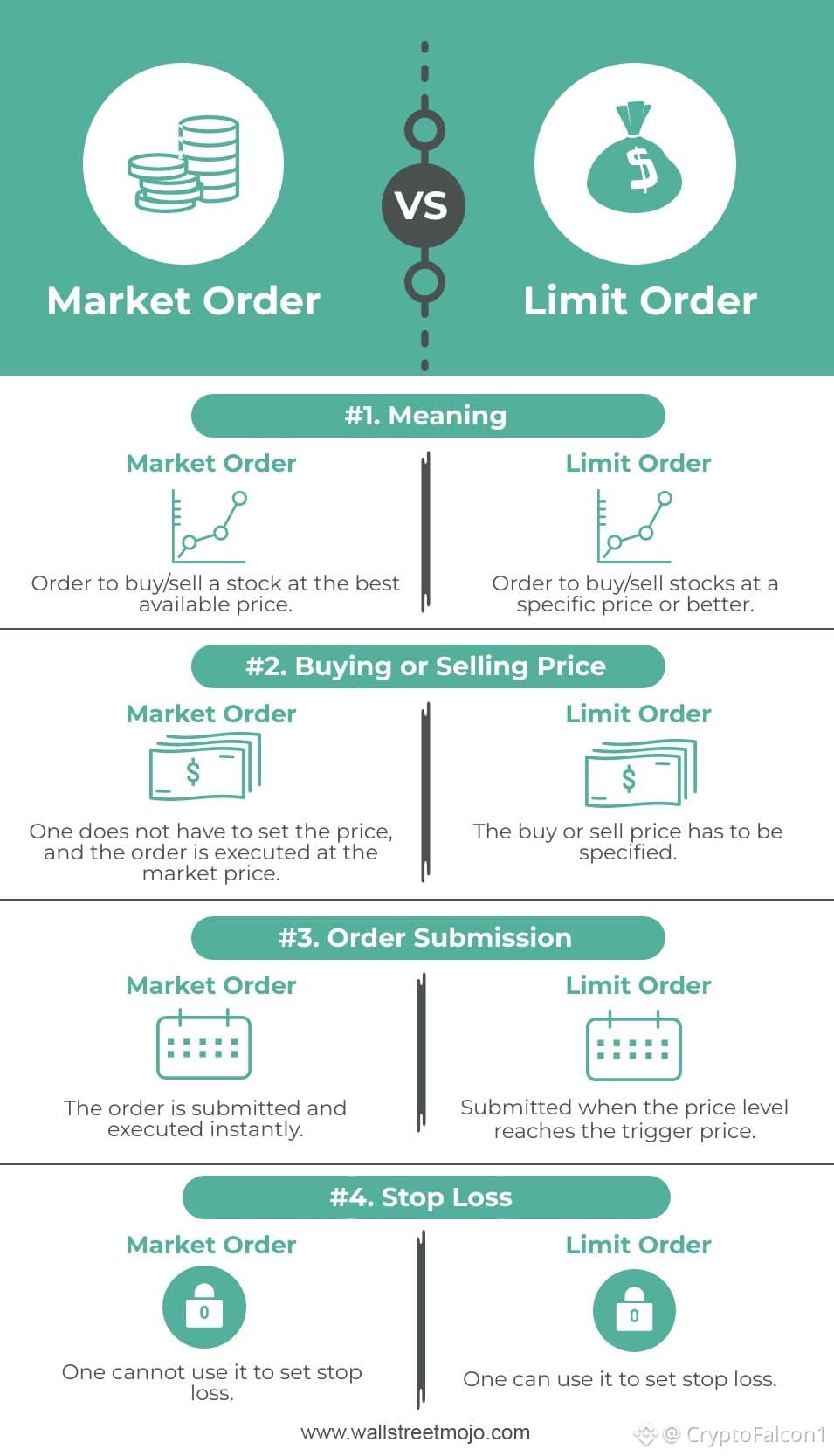
📚 Market Order vs Limit Order
🔹 Market Order = Instant buy/sell at current price
✅ Speed ⚡ | ⚠️ Slippage risk
🔹 Limit Order = Buy/sell at your set price
✅ Price control 🎯 | ⚠️ May not fill
---
Simple Rule:
· Want speed? → Market Order
· Want specific price? → Limit Order
---
Which do you use? 👇
#CryptoTips #BinanceSquare #TradingBasics
📚 Market Order vs Limit Order
🔹 Market Order = Instant buy/sell at current price
✅ Speed ⚡ | ⚠️ Slippage risk
🔹 Limit Order = Buy/sell at your set price
✅ Price control 🎯 | ⚠️ May not fill
---
Simple Rule:
· Want speed? → Market Order
· Want specific price? → Limit Order
---
Which do you use? 👇
#CryptoTips #BinanceSquare #TradingBasics
Ready to learn something new?
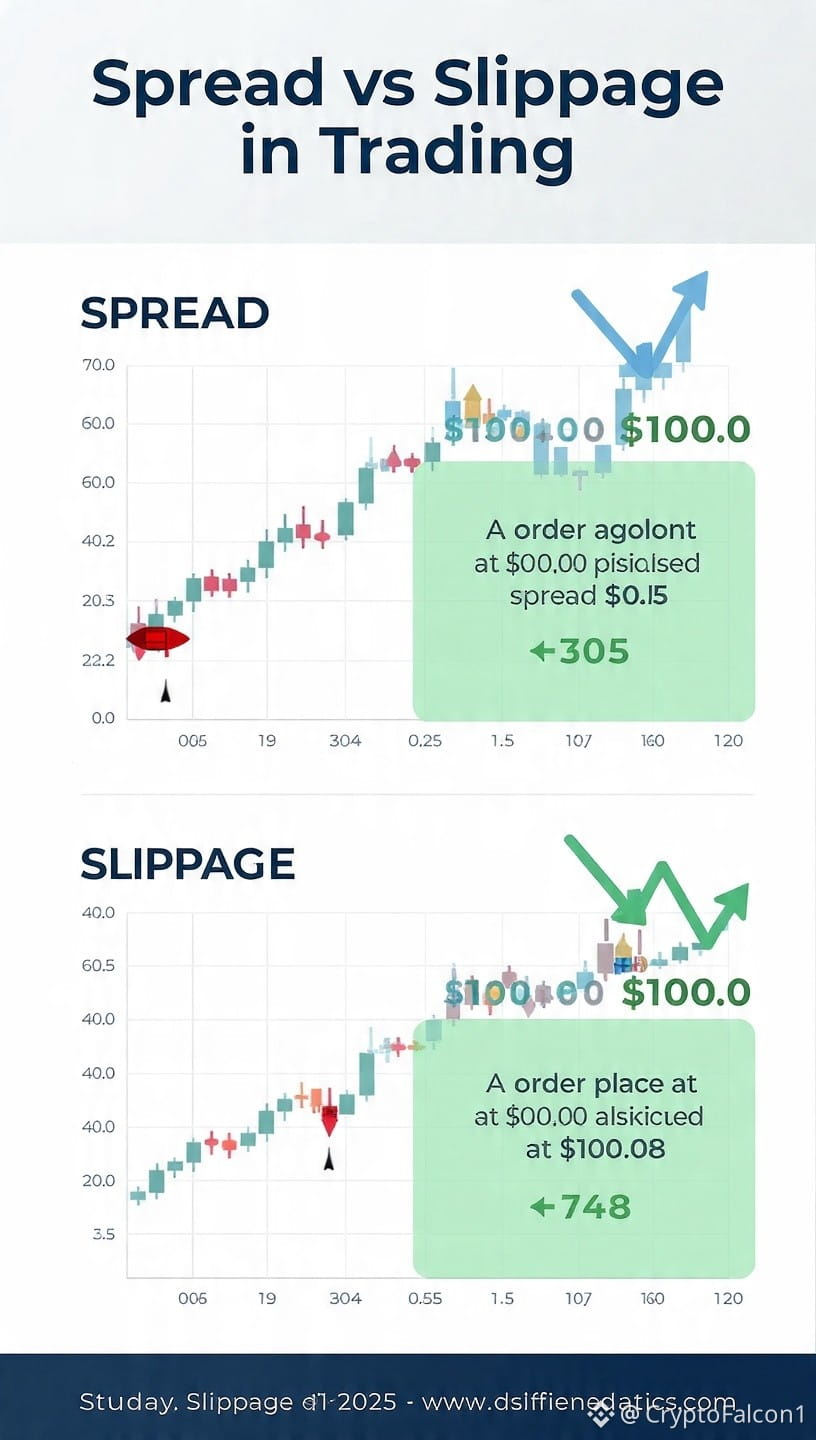
📚 Crypto Education: Slippage vs Spread
Many traders focus only on the entry price—but two hidden factors can affect your actual trade: Spread and Slippage. 👇
🔹 What is Spread?
Spread is the difference between the highest buying price (Bid) and the lowest selling price (Ask).
Example:
🟢 Bid = $100
🔴 Ask = $100.10
➡️ Spread = $0.10
A smaller spread generally means better trading efficiency.
🔸 What is Slippage?
Slippage happens when your order is executed at a different price than you expected.
Example:
You place a market order expecting to buy at $100.
Because the available orders change, your trade executes around $100.20.
➡️ That $0.20 difference is slippage.
🧠 Why Does It Matter?
High spread + high slippage can increase your trading costs, especially during:
⚠️ Low liquidity
⚠️ High volatility
⚠️ Large market orders
⚠️ Sudden news events
💡 Key Takeaway
Spread = difference between Bid & Ask.
Slippage = difference between Expected Price & Execution Price.
Understanding both can help you make more informed trading decisions. 📈
#CryptoEducation
📚 Crypto Education: Slippage vs Spread
Many traders focus only on the entry price—but two hidden factors can affect your actual trade: Spread and Slippage. 👇
🔹 What is Spread?
Spread is the difference between the highest buying price (Bid) and the lowest selling price (Ask).
Example:
🟢 Bid = $100
🔴 Ask = $100.10
➡️ Spread = $0.10
A smaller spread generally means better trading efficiency.
🔸 What is Slippage?
Slippage happens when your order is executed at a different price than you expected.
Example:
You place a market order expecting to buy at $100.
Because the available orders change, your trade executes around $100.20.
➡️ That $0.20 difference is slippage.
🧠 Why Does It Matter?
High spread + high slippage can increase your trading costs, especially during:
⚠️ Low liquidity
⚠️ High volatility
⚠️ Large market orders
⚠️ Sudden news events
💡 Key Takeaway
Spread = difference between Bid & Ask.
Slippage = difference between Expected Price & Execution Price.
Understanding both can help you make more informed trading decisions. 📈
#CryptoEducation
What Is Market Liquidity? 💧📊
Liquidity simply means how easily an asset can be bought or sold without causing a big change in its price.
🔹 High liquidity: Many buyers and sellers → trades can happen smoothly.
🔹 Low liquidity: Fewer buyers and sellers → even a relatively small order can move the price more.
💡 Simple example:
BTC generally has much higher liquidity than a small-cap token. That’s why large orders usually have less impact on BTC’s price.
📚 Key takeaway:
Liquidity is one of the most important concepts to understand before studying crypto markets. It helps explain price movement, spread, and volatility.
#BinanceSquare #CryptoEducation
Liquidity simply means how easily an asset can be bought or sold without causing a big change in its price.
🔹 High liquidity: Many buyers and sellers → trades can happen smoothly.
🔹 Low liquidity: Fewer buyers and sellers → even a relatively small order can move the price more.
💡 Simple example:
BTC generally has much higher liquidity than a small-cap token. That’s why large orders usually have less impact on BTC’s price.
📚 Key takeaway:
Liquidity is one of the most important concepts to understand before studying crypto markets. It helps explain price movement, spread, and volatility.
#BinanceSquare #CryptoEducation
📊 Market Cap vs FDV — What’s the Difference?
When analyzing a crypto project, Market Cap and FDV (Fully Diluted Valuation) are two important metrics you should understand.
🔹 Market Cap
Market Cap = Current Price × Circulating Supply
It tells you the approximate current value of all coins/tokens that are currently circulating.
🔹 FDV (Fully Diluted Valuation)
FDV = Current Price × Maximum/Total Supply
It estimates what the project's valuation would be if all tokens were already in circulation.
📌 Example:
Suppose a token is trading at $1
Circulating Supply = 20M
Maximum Supply = 100M
➡️ Market Cap = $20M
➡️ FDV = $100M
⚠️ Why does this matter?
If Market Cap is much smaller than FDV, a large number of tokens may still be waiting to enter the market.
More token unlocks → More potential selling pressure → Possible impact on price.
💡 Pro Tip:
Don't judge a coin only by its price. Always check Market Cap + FDV + Token Unlocks + Circulating Supply before making an investment decision.
📚 Learn the fundamentals before you trade.
When analyzing a crypto project, Market Cap and FDV (Fully Diluted Valuation) are two important metrics you should understand.
🔹 Market Cap
Market Cap = Current Price × Circulating Supply
It tells you the approximate current value of all coins/tokens that are currently circulating.
🔹 FDV (Fully Diluted Valuation)
FDV = Current Price × Maximum/Total Supply
It estimates what the project's valuation would be if all tokens were already in circulation.
📌 Example:
Suppose a token is trading at $1
Circulating Supply = 20M
Maximum Supply = 100M
➡️ Market Cap = $20M
➡️ FDV = $100M
⚠️ Why does this matter?
If Market Cap is much smaller than FDV, a large number of tokens may still be waiting to enter the market.
More token unlocks → More potential selling pressure → Possible impact on price.
💡 Pro Tip:
Don't judge a coin only by its price. Always check Market Cap + FDV + Token Unlocks + Circulating Supply before making an investment decision.
📚 Learn the fundamentals before you trade.
🇺🇸 BREAKING: Trump Weighs Capital Gains Tax Cut Ahead of Midterms
President Donald Trump is reportedly considering a reduction in U.S. capital gains taxes ahead of the 2026 midterm elections, according to Bloomberg.
The potential move could have significant implications for investors, financial markets, and the broader U.S. economy if implemented.
📊 Markets will be watching closely for further details.
President Donald Trump is reportedly considering a reduction in U.S. capital gains taxes ahead of the 2026 midterm elections, according to Bloomberg.
The potential move could have significant implications for investors, financial markets, and the broader U.S. economy if implemented.
📊 Markets will be watching closely for further details.

🔓 Crypto Education: What Are Token Unlocks?
Many traders look at price, Market Cap, and FDV but forget one important factor: Token Unlocks.
🧠 What is a Token Unlock?
A token unlock happens when previously locked tokens become available for circulation.
These tokens may belong to: • Team & founders
• Early investors / VCs
• Advisors
• Ecosystem or community allocations
📉 Why Do Unlocks Matter?
When a large number of tokens enter circulation, the available supply increases.
If some holders decide to sell their newly unlocked tokens, it can create additional selling pressure.
⚠️ Important Point
A token unlock does NOT automatically mean the price will fall.
The actual impact depends on:
🔹 Size of the unlock
🔹 Market demand
🔹 Who receives the tokens
🔹 Overall market sentiment
🔹 Whether recipients sell or hold
🎯 What Should Traders Check?
Before trading a token, check its:
Circulating Supply → Unlock Schedule → Upcoming Unlocks → Market Demand
Understanding tokenomics can help you avoid unexpected supply-driven volatility.
Don’t just watch the chart.
Understand what is happening behind the chart. 📊
#Binance Square
Many traders look at price, Market Cap, and FDV but forget one important factor: Token Unlocks.
🧠 What is a Token Unlock?
A token unlock happens when previously locked tokens become available for circulation.
These tokens may belong to: • Team & founders
• Early investors / VCs
• Advisors
• Ecosystem or community allocations
📉 Why Do Unlocks Matter?
When a large number of tokens enter circulation, the available supply increases.
If some holders decide to sell their newly unlocked tokens, it can create additional selling pressure.
⚠️ Important Point
A token unlock does NOT automatically mean the price will fall.
The actual impact depends on:
🔹 Size of the unlock
🔹 Market demand
🔹 Who receives the tokens
🔹 Overall market sentiment
🔹 Whether recipients sell or hold
🎯 What Should Traders Check?
Before trading a token, check its:
Circulating Supply → Unlock Schedule → Upcoming Unlocks → Market Demand
Understanding tokenomics can help you avoid unexpected supply-driven volatility.
Don’t just watch the chart.
Understand what is happening behind the chart. 📊
#Binance Square
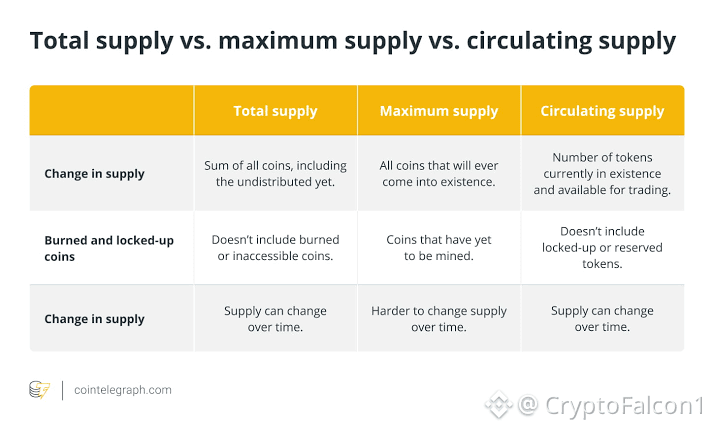
📚 Circulating Supply vs Total Supply vs Max Supply
Confused by these three? Here's the simple difference:
🔹 Circulating Supply – Coins currently in the market (used to calculate Market Cap)
🔹 Total Supply – All coins created so far (includes locked/staked coins)
🔹 Max Supply – Maximum coins that will ever exist (fixed limit)
Example:
· Max Supply: 1B
· Total Supply: 600M
· Circulating: 400M
➡️ 200M coins still locked — will enter market later.
⚠️ Lesson:
Low circulating + High total supply = Future dilution risk.
Always check before buying.
Found this useful? 👍
#CryptoBasics #BinanceSquare #TradingEducation
Confused by these three? Here's the simple difference:
🔹 Circulating Supply – Coins currently in the market (used to calculate Market Cap)
🔹 Total Supply – All coins created so far (includes locked/staked coins)
🔹 Max Supply – Maximum coins that will ever exist (fixed limit)
Example:
· Max Supply: 1B
· Total Supply: 600M
· Circulating: 400M
➡️ 200M coins still locked — will enter market later.
⚠️ Lesson:
Low circulating + High total supply = Future dilution risk.
Always check before buying.
Found this useful? 👍
#CryptoBasics #BinanceSquare #TradingEducation
Today's Educational Post for Valued Binancians ❤️✨️
Do you Know about Supply in the market??
Do you Know about Supply in the market??
📊 POLL: What’s Your Biggest Crypto Struggle Right Now?
· 🔴 Understanding charts & indicators
· 🟠 Managing risk & emotions
· 🟢 Finding good entry/exit points
· 🔵 Spotting scams & bad projects
Vote & drop your story below 👇 Let's help each other grow!
· 🔴 Understanding charts & indicators
· 🟠 Managing risk & emotions
· 🟢 Finding good entry/exit points
· 🔵 Spotting scams & bad projects
Vote & drop your story below 👇 Let's help each other grow!
Market Cap vs FDV – Simple Difference
Most traders only look at price. But you should check two things:
🔹 Market Cap = Price × Circulating Supply
👉 Value of coins currently in the market
🔹 FDV (Fully Diluted Valuation) = Price × Max Supply
👉 Value if all future coins were released
Example:
Price: $1 | Circulating: 100M | Max: 1B
→ Market Cap = $100M ✅
→ FDV = $1B ⚠️
That $900M gap = future tokens yet to unlock. More supply can mean price pressure.
Lesson: A coin with low MC but high FDV is riskier than it looks.
Do you check FDV before buying? 👍 if helpful
#CryptoBasics #BinanceSquare #TradingEducation
Most traders only look at price. But you should check two things:
🔹 Market Cap = Price × Circulating Supply
👉 Value of coins currently in the market
🔹 FDV (Fully Diluted Valuation) = Price × Max Supply
👉 Value if all future coins were released
Example:
Price: $1 | Circulating: 100M | Max: 1B
→ Market Cap = $100M ✅
→ FDV = $1B ⚠️
That $900M gap = future tokens yet to unlock. More supply can mean price pressure.
Lesson: A coin with low MC but high FDV is riskier than it looks.
Do you check FDV before buying? 👍 if helpful
#CryptoBasics #BinanceSquare #TradingEducation
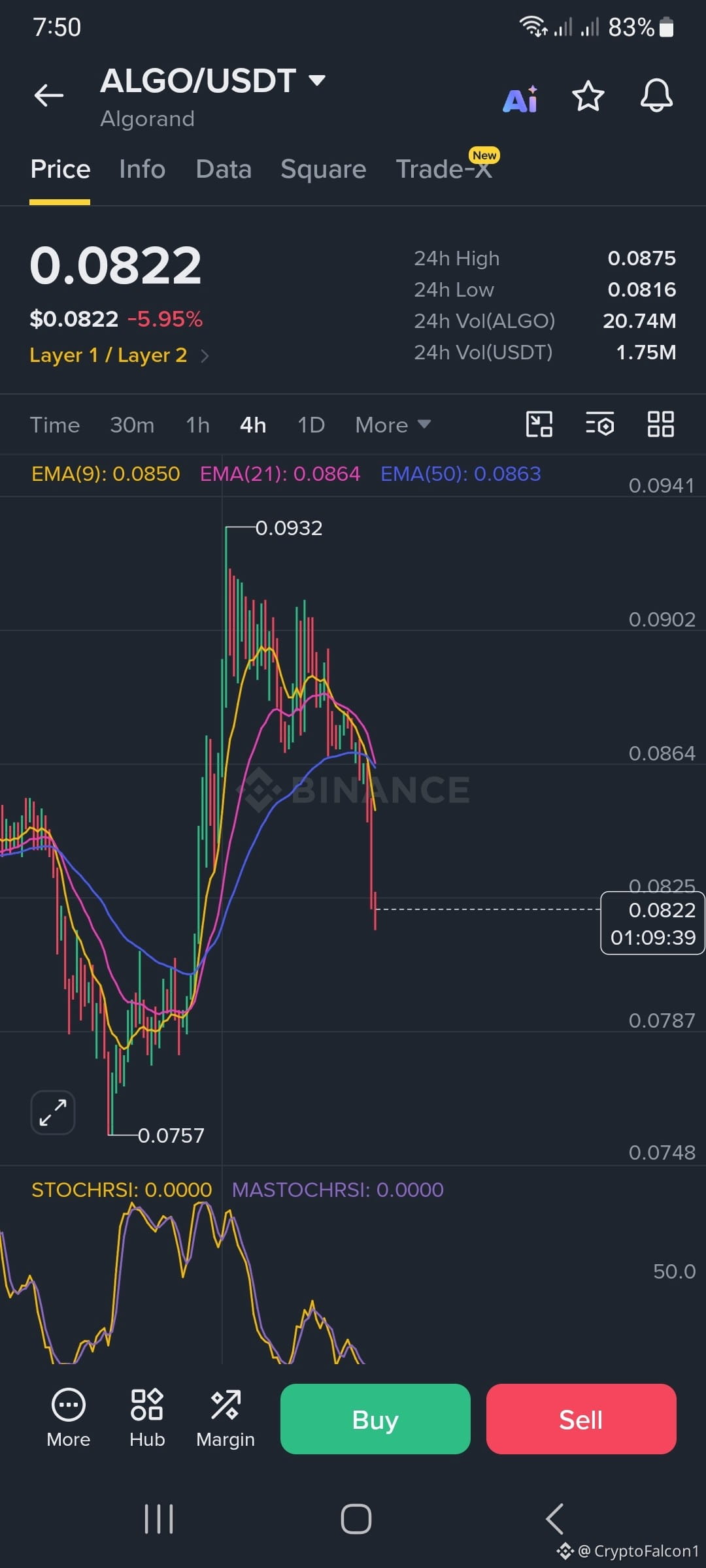
$ALGO
🔥 #ALGO/USDT — LONG SETUP
📌 Trade Direction: BUY / LONG 🟢⚙️ Margin: Cross🚀 Leverage: 20X–50X
🎯 BUYING RANGE➡️ 0.08250 – 0.07950
💰 PROFIT TARGETS① 0.0860② 0.0900③ 0.0930④ 0.0970
⛔ INVALIDATION LEVEL4H candle closing below 0.07450 = Exit the setup.
📊 Plan the trade. Manage the risk. Protect the profit.
🔥 #ALGO/USDT — LONG SETUP
📌 Trade Direction: BUY / LONG 🟢⚙️ Margin: Cross🚀 Leverage: 20X–50X
🎯 BUYING RANGE➡️ 0.08250 – 0.07950
💰 PROFIT TARGETS① 0.0860② 0.0900③ 0.0930④ 0.0970
⛔ INVALIDATION LEVEL4H candle closing below 0.07450 = Exit the setup.
📊 Plan the trade. Manage the risk. Protect the profit.
#newt $NEWT We are thrilled to have @NewtonProtocol(https://www.binance.com/en/square/profile/newtonprotocol) as a major hub to boost productivity and reliability.
let's delve into the world of Newton to be prosperous.
let's delve into the world of Newton to be prosperous.
Log in to explore more content