
V E Y R A
4.6k Posts

V E Y R A
 Square Verified
Report
Block User
VEYRA | CRYPTO • WEB3 • MARKET INSIGHTSTrading • Research • On-Chain
Open Trade
Frequent Trader
1.4 Years
7 Following
33.4K+ Followers
21.2K+ Liked
Posts
Portfolio
PINNED
·
--
Bullish
Hello, Bitrelix family. 🖤
It’s me, the person who was behind this account. First of all, I want to sincerely thank every single one of you for the love, support, follows, comments, and everything you gave me during my time here.
But now, Bitrelix has officially been handed over to my close friend, VEYRA. You’re seeing this post on her account now, and from here on, she’ll be the one running Bitrelix and sharing her own content with you.
I genuinely hope you’ll continue to support her, welcome her, and give her the same love you gave me. She deserves a chance to build her own journey here. 🤍
And if you truly enjoyed having me here and want to stay connected with me, my other account is Luca_Bran. If you love and support my work, please follow me there too and continue this journey with me.
Support VEYRA here, and if you want to stay with me, find me at @Luca_Bran . 🖤
Thank you for everything. You’ll always have a special place in my journey.
$BB $TRUMP $BEAT
{alpha}(560xcf3232b85b43bca90e51d38cc06cc8bb8c8a3e36)
{future}(TRUMPUSDT)
{future}(BBUSDT)
Hello, Bitrelix family. 🖤
It’s me, the person who was behind this account. First of all, I want to sincerely thank every single one of you for the love, support, follows, comments, and everything you gave me during my time here.
But now, Bitrelix has officially been handed over to my close friend, VEYRA. You’re seeing this post on her account now, and from here on, she’ll be the one running Bitrelix and sharing her own content with you.
I genuinely hope you’ll continue to support her, welcome her, and give her the same love you gave me. She deserves a chance to build her own journey here. 🤍
And if you truly enjoyed having me here and want to stay connected with me, my other account is Luca_Bran. If you love and support my work, please follow me there too and continue this journey with me.
Support VEYRA here, and if you want to stay with me, find me at @Luca_Bran . 🖤
Thank you for everything. You’ll always have a special place in my journey.
$BB $TRUMP $BEAT
It’s me, the person who was behind this account. First of all, I want to sincerely thank every single one of you for the love, support, follows, comments, and everything you gave me during my time here.
But now, Bitrelix has officially been handed over to my close friend, VEYRA. You’re seeing this post on her account now, and from here on, she’ll be the one running Bitrelix and sharing her own content with you.
I genuinely hope you’ll continue to support her, welcome her, and give her the same love you gave me. She deserves a chance to build her own journey here. 🤍
And if you truly enjoyed having me here and want to stay connected with me, my other account is Luca_Bran. If you love and support my work, please follow me there too and continue this journey with me.
Support VEYRA here, and if you want to stay with me, find me at @Luca_Bran . 🖤
Thank you for everything. You’ll always have a special place in my journey.
$BB $TRUMP $BEAT

5
420
·
--
Bullish
$STAR
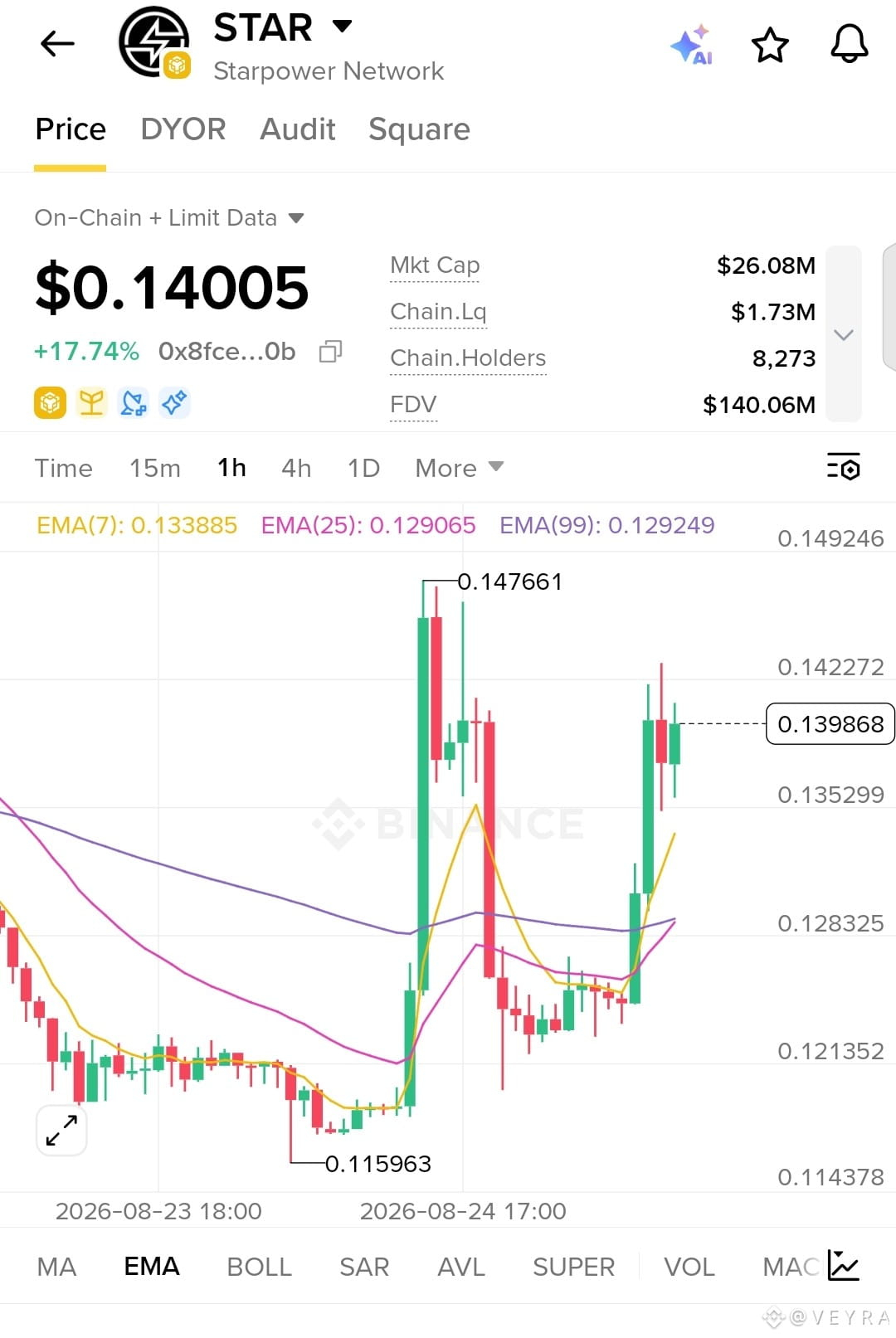
STAR surged sharply from the 0.1280 support area and buyers quickly stepped in, leaving a strong reaction wick near the breakout zone. I’m seeing strong rejection from the lows and the level is holding for now.
EP: 0.1370–0.1400
TP1: 0.1423
TP2: 0.1450
TP3: 0.1477
TP4: 0.1500
TP5: 0.1540
SL: 0.1340
The 1H chart is showing a clear shift in short-term momentum after the strong recovery from the 0.1159 low. STAR has reclaimed the EMA area, with the 7 EMA at 0.133885 sitting above the 25 EMA at 0.129065 and the 99 EMA at 0.129249. This keeps the immediate structure constructive while price remains above the breakout region.
The first major resistance is around 0.1423, followed by the recent swing high near 0.1477. A clean hourly breakout above that zone could give buyers room to push toward the higher targets. The current consolidation around 0.1390–0.1400 is important because holding this area can keep the bullish structure intact.
The 0.1340 level is the key invalidation point for this setup. If price loses it decisively, the bullish continuation idea becomes weaker. Until then, buyers appear to have control of the short-term structure, with momentum favoring a retest of the recent highs.
Manage risk carefully and consider taking partial profits as each target is reached.
Let’s go and Trade now $STAR
{alpha}(560x8fce7206e3043dd360f115afa956ee31b90b787c)
$STAR
STAR surged sharply from the 0.1280 support area and buyers quickly stepped in, leaving a strong reaction wick near the breakout zone. I’m seeing strong rejection from the lows and the level is holding for now.
EP: 0.1370–0.1400
TP1: 0.1423
TP2: 0.1450
TP3: 0.1477
TP4: 0.1500
TP5: 0.1540
SL: 0.1340
The 1H chart is showing a clear shift in short-term momentum after the strong recovery from the 0.1159 low. STAR has reclaimed the EMA area, with the 7 EMA at 0.133885 sitting above the 25 EMA at 0.129065 and the 99 EMA at 0.129249. This keeps the immediate structure constructive while price remains above the breakout region.
The first major resistance is around 0.1423, followed by the recent swing high near 0.1477. A clean hourly breakout above that zone could give buyers room to push toward the higher targets. The current consolidation around 0.1390–0.1400 is important because holding this area can keep the bullish structure intact.
The 0.1340 level is the key invalidation point for this setup. If price loses it decisively, the bullish continuation idea becomes weaker. Until then, buyers appear to have control of the short-term structure, with momentum favoring a retest of the recent highs.
Manage risk carefully and consider taking partial profits as each target is reached.
Let’s go and Trade now $STAR
STAR surged sharply from the 0.1280 support area and buyers quickly stepped in, leaving a strong reaction wick near the breakout zone. I’m seeing strong rejection from the lows and the level is holding for now.
EP: 0.1370–0.1400
TP1: 0.1423
TP2: 0.1450
TP3: 0.1477
TP4: 0.1500
TP5: 0.1540
SL: 0.1340
The 1H chart is showing a clear shift in short-term momentum after the strong recovery from the 0.1159 low. STAR has reclaimed the EMA area, with the 7 EMA at 0.133885 sitting above the 25 EMA at 0.129065 and the 99 EMA at 0.129249. This keeps the immediate structure constructive while price remains above the breakout region.
The first major resistance is around 0.1423, followed by the recent swing high near 0.1477. A clean hourly breakout above that zone could give buyers room to push toward the higher targets. The current consolidation around 0.1390–0.1400 is important because holding this area can keep the bullish structure intact.
The 0.1340 level is the key invalidation point for this setup. If price loses it decisively, the bullish continuation idea becomes weaker. Until then, buyers appear to have control of the short-term structure, with momentum favoring a retest of the recent highs.
Manage risk carefully and consider taking partial profits as each target is reached.
Let’s go and Trade now $STAR
101
·
--

Article
CZ AMA on Binance Square: The Bigger Picture Behind CZ’s Latest Crypto ViewsI went through the Binance Square material around CZ’s recent AMAs, and what caught my attention was that the conversation was not really about one coin or one market cycle. It was about where crypto is heading next, how people should navigate the noise, and what needs to happen for the industry to mature.
Changpeng Zhao, widely known as CZ, continues to attract enormous attention whenever he speaks about crypto. Even after stepping away from Binance’s executive role, his comments still influence discussions across the market. His Binance Square appearances have covered Bitcoin, altcoins, meme coins, regulation, AI, real-world assets, prediction markets, developers, education and even the future direction of Binance Square itself.
One of the biggest talking points surrounding CZ has been Bitcoin. His long-term view remains bullish, with Binance Square coverage highlighting his belief that Bitcoin reaching $200,000 is ultimately possible or inevitable, while the difficult question is when that level could be reached. That distinction matters because a long-term price thesis is very different from a short-term trading call.
Crypto markets constantly encourage people to think in days or hours. CZ’s comments point in the opposite direction. Bitcoin can experience major corrections, periods of low liquidity and extended consolidation without necessarily changing the larger adoption story. Anyone looking at his comments should therefore separate a long-term thesis from an immediate market prediction.
The same thinking applies to altcoins. CZ has indicated that another strong altcoin phase could eventually emerge, but he has also emphasized the difficulty of predicting exactly when it will happen and which projects will benefit. That is a more realistic way to look at market cycles. A broad altcoin rally does not automatically mean every token participates equally.
Liquidity, narratives, product development and user adoption can create very different outcomes between projects. During strong market conditions, hundreds of tokens can appear successful because liquidity is abundant. When conditions change, the difference between speculation and genuine usage becomes much clearer.
Meme coins are another area where CZ’s comments deserve more attention than the headlines usually give them.
Meme culture has become an undeniable part of crypto. Tokens can build communities extremely quickly, and social media can turn a joke into a tradable asset within a remarkably short period. But CZ has repeatedly warned users not to assume that a meme coin mentioned around his social activity is automatically endorsed by him. Binance’s AMA coverage also highlighted his view that most meme coins ultimately fail.
That warning is particularly relevant because crypto markets are heavily influenced by personalities.
When a well-known figure posts something, traders can immediately interpret it as a signal. But attention is not the same thing as endorsement, and a viral post is not the same thing as fundamental value. The distinction becomes especially important with low-liquidity assets, where social attention can produce large price movements in either direction.
CZ’s approach appears to be more interested in why a meme coin can maintain a community than simply how quickly its price rises. Cultural relevance, community identity and staying power can matter more than a short burst of speculation.
For beginners, his message is even more straightforward: learn before taking large risks.
Crypto makes leverage look attractive because a small amount of capital can control a much larger position. The problem is that leverage magnifies losses just as quickly as gains. CZ has advised newer users to start small, understand the market and avoid immediately jumping into complex leveraged products.
That is probably one of the most practical parts of the broader discussion.
The industry often focuses on finding the next big opportunity, but protecting capital is equally important. A trader who survives long enough to learn can participate in future opportunities. A trader who takes excessive leverage early can lose the ability to continue.
Another part of CZ’s outlook concerns developers.
There is a major difference between building a token and building a product. A token can attract attention immediately, but a useful application has to give people a reason to return. Developers therefore have to think beyond price charts and focus on usability, security, infrastructure and real demand.
That becomes increasingly important as the crypto industry becomes more competitive. There are now countless chains, protocols and applications competing for the same users and liquidity. A project cannot rely indefinitely on a launch narrative.
This is also where real-world assets, or RWAs, become interesting.
Tokenization is gradually becoming one of the major areas where traditional finance and blockchain technology intersect. The basic idea is to represent ownership or claims relating to real-world financial assets through blockchain infrastructure. But the real challenge is not simply putting an asset on-chain.
The difficult questions involve legal ownership, compliance, custody, settlement, liquidity and how tokenized assets interact with existing financial systems.
If those problems can be solved effectively, blockchain could become useful far beyond speculative token trading. That would represent a much broader form of adoption because the technology would be serving financial infrastructure rather than simply creating another category of digital assets.
AI is another area where CZ sees significant potential.
The relationship between AI and blockchain becomes particularly interesting when autonomous software agents begin interacting with financial systems. An AI agent can analyze information, make decisions and perform tasks, but eventually it may also need to pay for services or transfer value.
That creates a potential role for programmable digital payments.
The combination of AI agents, blockchain settlement and digital assets could produce new applications that are difficult to build using traditional financial infrastructure. But, just like RWA, this area is still developing. The biggest opportunities may not be obvious today.
Regulation is another unavoidable part of the conversation.
Crypto originally grew partly because it operated outside traditional financial structures. As the industry has expanded, however, regulation has become impossible to ignore. Exchanges, stablecoins, tokenized assets, payment systems and institutional products increasingly interact with traditional finance.
CZ’s comments have generally reflected the idea that regulatory clarity is better than complete uncertainty. Regulations can create restrictions, but they can also provide businesses and users with clearer rules about what is permitted.
For crypto companies, that means compliance is becoming part of the infrastructure rather than simply an administrative function.
The industry has also reached a point where centralized and decentralized platforms can coexist.
Centralized exchanges offer convenience, liquidity, customer support and familiar interfaces. Decentralized exchanges provide permissionless on-chain trading and different approaches to custody. Neither model necessarily has to eliminate the other.
The more likely outcome is a market where users choose between different systems depending on what they need.
CZ’s comments about Binance Square itself may be one of the most interesting parts of the entire AMA discussion.
Rather than viewing Square purely as a place where people post token updates, he has discussed the possibility of making it a broader information environment. The idea is that crypto users do not live inside a crypto-only world. Interest rates, AI developments, international events, regulation, taxation and macroeconomic decisions can all affect digital assets.
A platform that helps users connect those events could become more useful than one focused only on price movements.
This matters because information is becoming one of the most valuable assets in crypto.
There is already an enormous amount of content available. The problem is not finding information. The problem is identifying which information is useful, accurate and worth paying attention to.
That creates an opportunity for creators who can explain complicated developments without simply repeating headlines.
Binance Square is also developing an economic layer around content. Binance’s current Write to Earn program allows eligible creators to receive a share of trading fees when readers interact with eligible content and subsequently trade. Binance says creators start with a 20% commission, while top-ranked creators can reach a total commission of up to 50%.
That model changes the relationship between creator and platform.
A creator is no longer simply publishing for views. Useful content can potentially generate economic value when it leads to meaningful reader activity. At the same time, the system makes quality and trust more important because readers need a reason to interact with the content.
The program also shows how Binance Square is trying to connect social media with the trading environment instead of keeping the two completely separate.
But this creates an important responsibility for creators.
If content is produced only to generate clicks, the platform can quickly become saturated with low-quality predictions, recycled headlines and exaggerated claims. If creators focus on research, context and original observations, the same system can become much more useful.
This is where CZ’s broader message fits surprisingly well.
Build something useful.
Do not confuse attention with adoption.
Do not confuse a social post with an investment recommendation.
Do not confuse a short-term rally with a sustainable project.
And do not allow market noise to replace your own research.
There is another interesting development around Binance Square: the platform has been building tools that allow creators to publish content programmatically. Binance’s official Skills Hub describes a Square posting skill that can be connected to AI agents and used to automate publishing, while also emphasizing the importance of keeping a human review step for quality and compliance.
That development could become increasingly important as AI-generated content expands across crypto.
Automation can make publishing faster, but speed alone does not create value. If thousands of automated accounts produce similar posts, the amount of content increases while the amount of useful information may not.
Human judgment therefore becomes more valuable, not less.
The strongest creators will probably be the ones who use AI and automation as tools while still bringing their own research, interpretation and voice to the content.
That brings the CZ AMA discussion back to the larger question: what does the next stage of crypto actually look like?
It probably will not be defined by one narrative.
Bitcoin can continue developing as a major digital asset while stablecoins expand payments. Tokenized assets can connect blockchain with traditional finance. AI can create new demand for programmable payments. DeFi can continue experimenting with financial products. Centralized exchanges can provide liquidity and accessibility while decentralized protocols develop alternative infrastructure.
At the same time, social platforms such as Binance Square can become an increasingly important layer where users discover information about all of these developments.
The market will still have speculation. It will still have meme coins. It will still have dramatic pumps and painful corrections.
That is not going away.
What may change is the balance between speculation and utility.
As the industry becomes larger, projects will increasingly have to demonstrate why users need them. Creators will have to demonstrate why audiences should trust them. Exchanges will have to demonstrate that they can operate responsibly. And users will have to become better at separating information from promotion.
That is ultimately what makes the CZ AMA discussion interesting.
The most valuable takeaway is not a single Bitcoin price target, an altcoin prediction or a meme-coin opinion. It is the broader philosophy behind the conversation.
Crypto is becoming an ecosystem rather than a single market.
Bitcoin remains important, but it is only one part of the story. The next phase also involves AI, tokenization, payments, regulation, decentralized infrastructure, content and education.
For Binance Square creators, that creates a clear opportunity. Instead of chasing every headline, there is room to build a reputation around useful research and original thinking. Instead of simply asking what coin will pump next, creators can explain why a development matters, what could change and what risks users should understand.
And for readers, the lesson is equally important: do not outsource your judgment to personalities, influencers or viral posts.
CZ can share his perspective, but every market participant still has to make their own decisions.
The future of crypto will ultimately be decided by what people actually use, what developers continue building, what financial institutions adopt and what users are willing to trust.
That is the bigger story behind #CZAMAonBinanceSquare.
Not one prediction.
Not one token.
Not one market cycle.
It is a conversation about where crypto goes when the noise becomes less important than the infrastructure being built underneath it.
And that may be the most useful way to read CZ’s message: think beyond the next candle, look beyond the next trend, and pay attention to what could still matter when today’s narrative has disappeared.
#CZAMAonBinanceSquare
CZ AMA on Binance Square: The Bigger Picture Behind CZ’s Latest Crypto Views
I went through the Binance Square material around CZ’s recent AMAs, and what caught my attention was that the conversation was not really about one coin or one market cycle. It was about where crypto is heading next, how people should navigate the noise, and what needs to happen for the industry to mature.
Changpeng Zhao, widely known as CZ, continues to attract enormous attention whenever he speaks about crypto. Even after stepping away from Binance’s executive role, his comments still influence discussions across the market. His Binance Square appearances have covered Bitcoin, altcoins, meme coins, regulation, AI, real-world assets, prediction markets, developers, education and even the future direction of Binance Square itself.
One of the biggest talking points surrounding CZ has been Bitcoin. His long-term view remains bullish, with Binance Square coverage highlighting his belief that Bitcoin reaching $200,000 is ultimately possible or inevitable, while the difficult question is when that level could be reached. That distinction matters because a long-term price thesis is very different from a short-term trading call.
Crypto markets constantly encourage people to think in days or hours. CZ’s comments point in the opposite direction. Bitcoin can experience major corrections, periods of low liquidity and extended consolidation without necessarily changing the larger adoption story. Anyone looking at his comments should therefore separate a long-term thesis from an immediate market prediction.
The same thinking applies to altcoins. CZ has indicated that another strong altcoin phase could eventually emerge, but he has also emphasized the difficulty of predicting exactly when it will happen and which projects will benefit. That is a more realistic way to look at market cycles. A broad altcoin rally does not automatically mean every token participates equally.
Liquidity, narratives, product development and user adoption can create very different outcomes between projects. During strong market conditions, hundreds of tokens can appear successful because liquidity is abundant. When conditions change, the difference between speculation and genuine usage becomes much clearer.
Meme coins are another area where CZ’s comments deserve more attention than the headlines usually give them.
Meme culture has become an undeniable part of crypto. Tokens can build communities extremely quickly, and social media can turn a joke into a tradable asset within a remarkably short period. But CZ has repeatedly warned users not to assume that a meme coin mentioned around his social activity is automatically endorsed by him. Binance’s AMA coverage also highlighted his view that most meme coins ultimately fail.
That warning is particularly relevant because crypto markets are heavily influenced by personalities.
When a well-known figure posts something, traders can immediately interpret it as a signal. But attention is not the same thing as endorsement, and a viral post is not the same thing as fundamental value. The distinction becomes especially important with low-liquidity assets, where social attention can produce large price movements in either direction.
CZ’s approach appears to be more interested in why a meme coin can maintain a community than simply how quickly its price rises. Cultural relevance, community identity and staying power can matter more than a short burst of speculation.
For beginners, his message is even more straightforward: learn before taking large risks.
Crypto makes leverage look attractive because a small amount of capital can control a much larger position. The problem is that leverage magnifies losses just as quickly as gains. CZ has advised newer users to start small, understand the market and avoid immediately jumping into complex leveraged products.
That is probably one of the most practical parts of the broader discussion.
The industry often focuses on finding the next big opportunity, but protecting capital is equally important. A trader who survives long enough to learn can participate in future opportunities. A trader who takes excessive leverage early can lose the ability to continue.
Another part of CZ’s outlook concerns developers.
There is a major difference between building a token and building a product. A token can attract attention immediately, but a useful application has to give people a reason to return. Developers therefore have to think beyond price charts and focus on usability, security, infrastructure and real demand.
That becomes increasingly important as the crypto industry becomes more competitive. There are now countless chains, protocols and applications competing for the same users and liquidity. A project cannot rely indefinitely on a launch narrative.
This is also where real-world assets, or RWAs, become interesting.
Tokenization is gradually becoming one of the major areas where traditional finance and blockchain technology intersect. The basic idea is to represent ownership or claims relating to real-world financial assets through blockchain infrastructure. But the real challenge is not simply putting an asset on-chain.
The difficult questions involve legal ownership, compliance, custody, settlement, liquidity and how tokenized assets interact with existing financial systems.
If those problems can be solved effectively, blockchain could become useful far beyond speculative token trading. That would represent a much broader form of adoption because the technology would be serving financial infrastructure rather than simply creating another category of digital assets.
AI is another area where CZ sees significant potential.
The relationship between AI and blockchain becomes particularly interesting when autonomous software agents begin interacting with financial systems. An AI agent can analyze information, make decisions and perform tasks, but eventually it may also need to pay for services or transfer value.
That creates a potential role for programmable digital payments.
The combination of AI agents, blockchain settlement and digital assets could produce new applications that are difficult to build using traditional financial infrastructure. But, just like RWA, this area is still developing. The biggest opportunities may not be obvious today.
Regulation is another unavoidable part of the conversation.
Crypto originally grew partly because it operated outside traditional financial structures. As the industry has expanded, however, regulation has become impossible to ignore. Exchanges, stablecoins, tokenized assets, payment systems and institutional products increasingly interact with traditional finance.
CZ’s comments have generally reflected the idea that regulatory clarity is better than complete uncertainty. Regulations can create restrictions, but they can also provide businesses and users with clearer rules about what is permitted.
For crypto companies, that means compliance is becoming part of the infrastructure rather than simply an administrative function.
The industry has also reached a point where centralized and decentralized platforms can coexist.
Centralized exchanges offer convenience, liquidity, customer support and familiar interfaces. Decentralized exchanges provide permissionless on-chain trading and different approaches to custody. Neither model necessarily has to eliminate the other.
The more likely outcome is a market where users choose between different systems depending on what they need.
CZ’s comments about Binance Square itself may be one of the most interesting parts of the entire AMA discussion.
Rather than viewing Square purely as a place where people post token updates, he has discussed the possibility of making it a broader information environment. The idea is that crypto users do not live inside a crypto-only world. Interest rates, AI developments, international events, regulation, taxation and macroeconomic decisions can all affect digital assets.
A platform that helps users connect those events could become more useful than one focused only on price movements.
This matters because information is becoming one of the most valuable assets in crypto.
There is already an enormous amount of content available. The problem is not finding information. The problem is identifying which information is useful, accurate and worth paying attention to.
That creates an opportunity for creators who can explain complicated developments without simply repeating headlines.
Binance Square is also developing an economic layer around content. Binance’s current Write to Earn program allows eligible creators to receive a share of trading fees when readers interact with eligible content and subsequently trade. Binance says creators start with a 20% commission, while top-ranked creators can reach a total commission of up to 50%.
That model changes the relationship between creator and platform.
A creator is no longer simply publishing for views. Useful content can potentially generate economic value when it leads to meaningful reader activity. At the same time, the system makes quality and trust more important because readers need a reason to interact with the content.
The program also shows how Binance Square is trying to connect social media with the trading environment instead of keeping the two completely separate.
But this creates an important responsibility for creators.
If content is produced only to generate clicks, the platform can quickly become saturated with low-quality predictions, recycled headlines and exaggerated claims. If creators focus on research, context and original observations, the same system can become much more useful.
This is where CZ’s broader message fits surprisingly well.
Build something useful.
Do not confuse attention with adoption.
Do not confuse a social post with an investment recommendation.
Do not confuse a short-term rally with a sustainable project.
And do not allow market noise to replace your own research.
There is another interesting development around Binance Square: the platform has been building tools that allow creators to publish content programmatically. Binance’s official Skills Hub describes a Square posting skill that can be connected to AI agents and used to automate publishing, while also emphasizing the importance of keeping a human review step for quality and compliance.
That development could become increasingly important as AI-generated content expands across crypto.
Automation can make publishing faster, but speed alone does not create value. If thousands of automated accounts produce similar posts, the amount of content increases while the amount of useful information may not.
Human judgment therefore becomes more valuable, not less.
The strongest creators will probably be the ones who use AI and automation as tools while still bringing their own research, interpretation and voice to the content.
That brings the CZ AMA discussion back to the larger question: what does the next stage of crypto actually look like?
It probably will not be defined by one narrative.
Bitcoin can continue developing as a major digital asset while stablecoins expand payments. Tokenized assets can connect blockchain with traditional finance. AI can create new demand for programmable payments. DeFi can continue experimenting with financial products. Centralized exchanges can provide liquidity and accessibility while decentralized protocols develop alternative infrastructure.
At the same time, social platforms such as Binance Square can become an increasingly important layer where users discover information about all of these developments.
The market will still have speculation. It will still have meme coins. It will still have dramatic pumps and painful corrections.
That is not going away.
What may change is the balance between speculation and utility.
As the industry becomes larger, projects will increasingly have to demonstrate why users need them. Creators will have to demonstrate why audiences should trust them. Exchanges will have to demonstrate that they can operate responsibly. And users will have to become better at separating information from promotion.
That is ultimately what makes the CZ AMA discussion interesting.
The most valuable takeaway is not a single Bitcoin price target, an altcoin prediction or a meme-coin opinion. It is the broader philosophy behind the conversation.
Crypto is becoming an ecosystem rather than a single market.
Bitcoin remains important, but it is only one part of the story. The next phase also involves AI, tokenization, payments, regulation, decentralized infrastructure, content and education.
For Binance Square creators, that creates a clear opportunity. Instead of chasing every headline, there is room to build a reputation around useful research and original thinking. Instead of simply asking what coin will pump next, creators can explain why a development matters, what could change and what risks users should understand.
And for readers, the lesson is equally important: do not outsource your judgment to personalities, influencers or viral posts.
CZ can share his perspective, but every market participant still has to make their own decisions.
The future of crypto will ultimately be decided by what people actually use, what developers continue building, what financial institutions adopt and what users are willing to trust.
That is the bigger story behind #CZAMAonBinanceSquare.
Not one prediction.
Not one token.
Not one market cycle.
It is a conversation about where crypto goes when the noise becomes less important than the infrastructure being built underneath it.
And that may be the most useful way to read CZ’s message: think beyond the next candle, look beyond the next trend, and pay attention to what could still matter when today’s narrative has disappeared.
#CZAMAonBinanceSquare
Changpeng Zhao, widely known as CZ, continues to attract enormous attention whenever he speaks about crypto. Even after stepping away from Binance’s executive role, his comments still influence discussions across the market. His Binance Square appearances have covered Bitcoin, altcoins, meme coins, regulation, AI, real-world assets, prediction markets, developers, education and even the future direction of Binance Square itself.
One of the biggest talking points surrounding CZ has been Bitcoin. His long-term view remains bullish, with Binance Square coverage highlighting his belief that Bitcoin reaching $200,000 is ultimately possible or inevitable, while the difficult question is when that level could be reached. That distinction matters because a long-term price thesis is very different from a short-term trading call.
Crypto markets constantly encourage people to think in days or hours. CZ’s comments point in the opposite direction. Bitcoin can experience major corrections, periods of low liquidity and extended consolidation without necessarily changing the larger adoption story. Anyone looking at his comments should therefore separate a long-term thesis from an immediate market prediction.
The same thinking applies to altcoins. CZ has indicated that another strong altcoin phase could eventually emerge, but he has also emphasized the difficulty of predicting exactly when it will happen and which projects will benefit. That is a more realistic way to look at market cycles. A broad altcoin rally does not automatically mean every token participates equally.
Liquidity, narratives, product development and user adoption can create very different outcomes between projects. During strong market conditions, hundreds of tokens can appear successful because liquidity is abundant. When conditions change, the difference between speculation and genuine usage becomes much clearer.
Meme coins are another area where CZ’s comments deserve more attention than the headlines usually give them.
Meme culture has become an undeniable part of crypto. Tokens can build communities extremely quickly, and social media can turn a joke into a tradable asset within a remarkably short period. But CZ has repeatedly warned users not to assume that a meme coin mentioned around his social activity is automatically endorsed by him. Binance’s AMA coverage also highlighted his view that most meme coins ultimately fail.
That warning is particularly relevant because crypto markets are heavily influenced by personalities.
When a well-known figure posts something, traders can immediately interpret it as a signal. But attention is not the same thing as endorsement, and a viral post is not the same thing as fundamental value. The distinction becomes especially important with low-liquidity assets, where social attention can produce large price movements in either direction.
CZ’s approach appears to be more interested in why a meme coin can maintain a community than simply how quickly its price rises. Cultural relevance, community identity and staying power can matter more than a short burst of speculation.
For beginners, his message is even more straightforward: learn before taking large risks.
Crypto makes leverage look attractive because a small amount of capital can control a much larger position. The problem is that leverage magnifies losses just as quickly as gains. CZ has advised newer users to start small, understand the market and avoid immediately jumping into complex leveraged products.
That is probably one of the most practical parts of the broader discussion.
The industry often focuses on finding the next big opportunity, but protecting capital is equally important. A trader who survives long enough to learn can participate in future opportunities. A trader who takes excessive leverage early can lose the ability to continue.
Another part of CZ’s outlook concerns developers.
There is a major difference between building a token and building a product. A token can attract attention immediately, but a useful application has to give people a reason to return. Developers therefore have to think beyond price charts and focus on usability, security, infrastructure and real demand.
That becomes increasingly important as the crypto industry becomes more competitive. There are now countless chains, protocols and applications competing for the same users and liquidity. A project cannot rely indefinitely on a launch narrative.
This is also where real-world assets, or RWAs, become interesting.
Tokenization is gradually becoming one of the major areas where traditional finance and blockchain technology intersect. The basic idea is to represent ownership or claims relating to real-world financial assets through blockchain infrastructure. But the real challenge is not simply putting an asset on-chain.
The difficult questions involve legal ownership, compliance, custody, settlement, liquidity and how tokenized assets interact with existing financial systems.
If those problems can be solved effectively, blockchain could become useful far beyond speculative token trading. That would represent a much broader form of adoption because the technology would be serving financial infrastructure rather than simply creating another category of digital assets.
AI is another area where CZ sees significant potential.
The relationship between AI and blockchain becomes particularly interesting when autonomous software agents begin interacting with financial systems. An AI agent can analyze information, make decisions and perform tasks, but eventually it may also need to pay for services or transfer value.
That creates a potential role for programmable digital payments.
The combination of AI agents, blockchain settlement and digital assets could produce new applications that are difficult to build using traditional financial infrastructure. But, just like RWA, this area is still developing. The biggest opportunities may not be obvious today.
Regulation is another unavoidable part of the conversation.
Crypto originally grew partly because it operated outside traditional financial structures. As the industry has expanded, however, regulation has become impossible to ignore. Exchanges, stablecoins, tokenized assets, payment systems and institutional products increasingly interact with traditional finance.
CZ’s comments have generally reflected the idea that regulatory clarity is better than complete uncertainty. Regulations can create restrictions, but they can also provide businesses and users with clearer rules about what is permitted.
For crypto companies, that means compliance is becoming part of the infrastructure rather than simply an administrative function.
The industry has also reached a point where centralized and decentralized platforms can coexist.
Centralized exchanges offer convenience, liquidity, customer support and familiar interfaces. Decentralized exchanges provide permissionless on-chain trading and different approaches to custody. Neither model necessarily has to eliminate the other.
The more likely outcome is a market where users choose between different systems depending on what they need.
CZ’s comments about Binance Square itself may be one of the most interesting parts of the entire AMA discussion.
Rather than viewing Square purely as a place where people post token updates, he has discussed the possibility of making it a broader information environment. The idea is that crypto users do not live inside a crypto-only world. Interest rates, AI developments, international events, regulation, taxation and macroeconomic decisions can all affect digital assets.
A platform that helps users connect those events could become more useful than one focused only on price movements.
This matters because information is becoming one of the most valuable assets in crypto.
There is already an enormous amount of content available. The problem is not finding information. The problem is identifying which information is useful, accurate and worth paying attention to.
That creates an opportunity for creators who can explain complicated developments without simply repeating headlines.
Binance Square is also developing an economic layer around content. Binance’s current Write to Earn program allows eligible creators to receive a share of trading fees when readers interact with eligible content and subsequently trade. Binance says creators start with a 20% commission, while top-ranked creators can reach a total commission of up to 50%.
That model changes the relationship between creator and platform.
A creator is no longer simply publishing for views. Useful content can potentially generate economic value when it leads to meaningful reader activity. At the same time, the system makes quality and trust more important because readers need a reason to interact with the content.
The program also shows how Binance Square is trying to connect social media with the trading environment instead of keeping the two completely separate.
But this creates an important responsibility for creators.
If content is produced only to generate clicks, the platform can quickly become saturated with low-quality predictions, recycled headlines and exaggerated claims. If creators focus on research, context and original observations, the same system can become much more useful.
This is where CZ’s broader message fits surprisingly well.
Build something useful.
Do not confuse attention with adoption.
Do not confuse a social post with an investment recommendation.
Do not confuse a short-term rally with a sustainable project.
And do not allow market noise to replace your own research.
There is another interesting development around Binance Square: the platform has been building tools that allow creators to publish content programmatically. Binance’s official Skills Hub describes a Square posting skill that can be connected to AI agents and used to automate publishing, while also emphasizing the importance of keeping a human review step for quality and compliance.
That development could become increasingly important as AI-generated content expands across crypto.
Automation can make publishing faster, but speed alone does not create value. If thousands of automated accounts produce similar posts, the amount of content increases while the amount of useful information may not.
Human judgment therefore becomes more valuable, not less.
The strongest creators will probably be the ones who use AI and automation as tools while still bringing their own research, interpretation and voice to the content.
That brings the CZ AMA discussion back to the larger question: what does the next stage of crypto actually look like?
It probably will not be defined by one narrative.
Bitcoin can continue developing as a major digital asset while stablecoins expand payments. Tokenized assets can connect blockchain with traditional finance. AI can create new demand for programmable payments. DeFi can continue experimenting with financial products. Centralized exchanges can provide liquidity and accessibility while decentralized protocols develop alternative infrastructure.
At the same time, social platforms such as Binance Square can become an increasingly important layer where users discover information about all of these developments.
The market will still have speculation. It will still have meme coins. It will still have dramatic pumps and painful corrections.
That is not going away.
What may change is the balance between speculation and utility.
As the industry becomes larger, projects will increasingly have to demonstrate why users need them. Creators will have to demonstrate why audiences should trust them. Exchanges will have to demonstrate that they can operate responsibly. And users will have to become better at separating information from promotion.
That is ultimately what makes the CZ AMA discussion interesting.
The most valuable takeaway is not a single Bitcoin price target, an altcoin prediction or a meme-coin opinion. It is the broader philosophy behind the conversation.
Crypto is becoming an ecosystem rather than a single market.
Bitcoin remains important, but it is only one part of the story. The next phase also involves AI, tokenization, payments, regulation, decentralized infrastructure, content and education.
For Binance Square creators, that creates a clear opportunity. Instead of chasing every headline, there is room to build a reputation around useful research and original thinking. Instead of simply asking what coin will pump next, creators can explain why a development matters, what could change and what risks users should understand.
And for readers, the lesson is equally important: do not outsource your judgment to personalities, influencers or viral posts.
CZ can share his perspective, but every market participant still has to make their own decisions.
The future of crypto will ultimately be decided by what people actually use, what developers continue building, what financial institutions adopt and what users are willing to trust.
That is the bigger story behind #CZAMAonBinanceSquare.
Not one prediction.
Not one token.
Not one market cycle.
It is a conversation about where crypto goes when the noise becomes less important than the infrastructure being built underneath it.
And that may be the most useful way to read CZ’s message: think beyond the next candle, look beyond the next trend, and pay attention to what could still matter when today’s narrative has disappeared.
#CZAMAonBinanceSquare
120
·
--
Binance Alpha will be the first platform to feature TermMax ($TMX) on August 25.
Eligible users can claim their airdrop using Binance Alpha Points on the Alpha Events page once trading opens. Further details will be announced soon.
Please stay tuned to Binance’s official channels for the latest updates.
Binance Alpha will be the first platform to feature TermMax ($TMX) on August 25.
Eligible users can claim their airdrop using Binance Alpha Points on the Alpha Events page once trading opens. Further details will be announced soon.
Please stay tuned to Binance’s official channels for the latest updates.
Eligible users can claim their airdrop using Binance Alpha Points on the Alpha Events page once trading opens. Further details will be announced soon.
Please stay tuned to Binance’s official channels for the latest updates.

1
33
·
--
Bullish
$TUT is showing strong bullish momentum. Buyers remain in control as the structure continues to hold.
Ep
0.05070 - 0.05220
TP
0.05420
0.05800
0.06250
Sl
0.04780
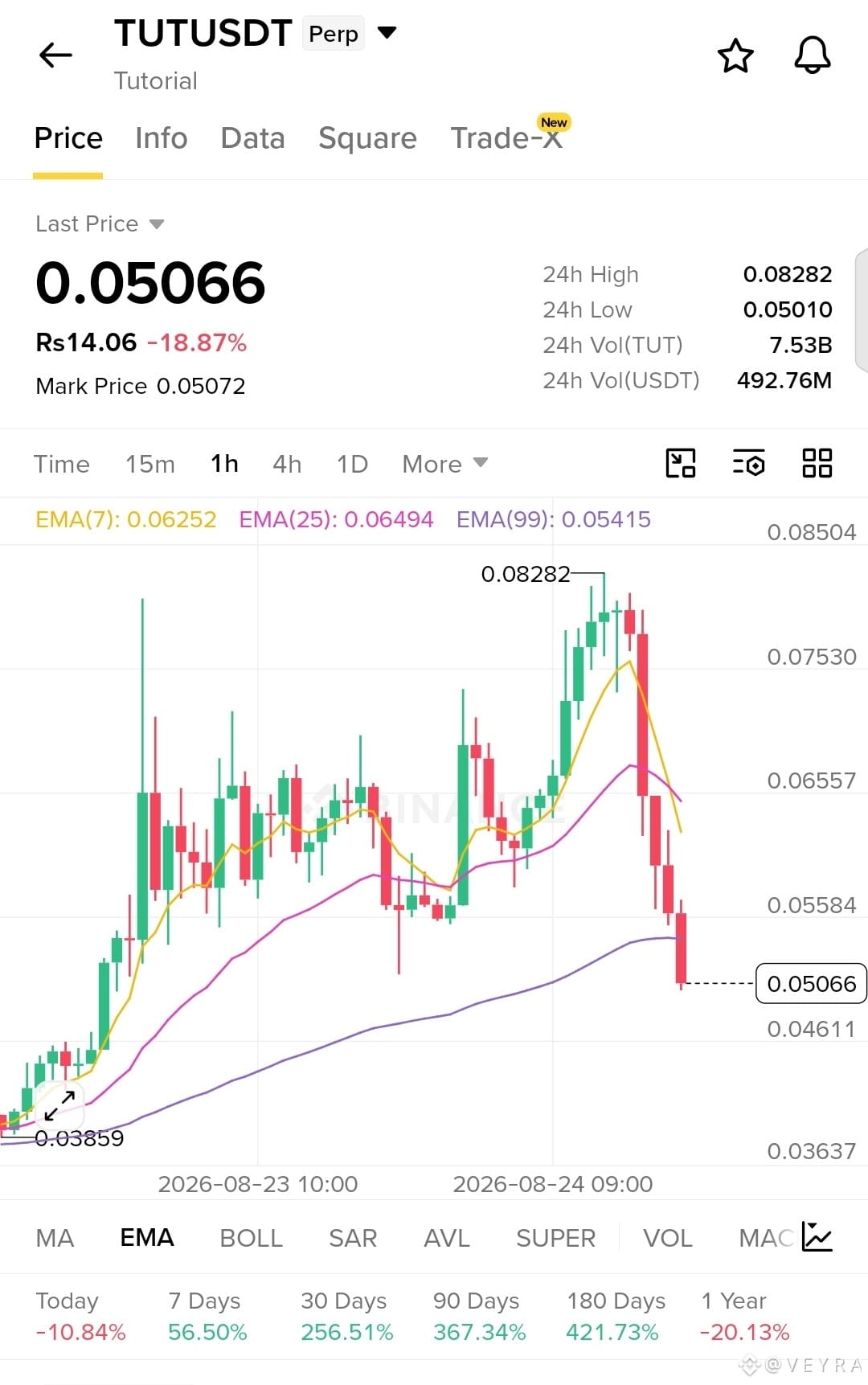
TUT is sitting near a critical reaction zone after a sharp selloff from the 0.08282 high. The current price around 0.05066 is testing the lower side of the recent structure, making this area important for a potential recovery attempt. The setup becomes stronger if price stabilizes above the entry zone and starts printing higher lows on the one hour chart.
Liquidity was swept around 0.05010 and price reacted aggressively. Buyers reclaimed the structure, and consolidation above 0.05070 keeps continuation in play.
The technical picture needs confirmation rather than blind entry. Price is currently below the 7 EMA at 0.06252 and 25 EMA at 0.06494, while the 99 EMA sits near 0.05415. That means the recovery must reclaim these resistance areas step by step before a larger move can develop. The first objective at 0.05420 is especially important because it aligns closely with the 99 EMA region.
If buyers defend the 0.05010 area and reclaim 0.05415 with strength, momentum can improve toward 0.05800 and potentially 0.06250. A clean loss of 0.04780 invalidates this setup and signals that downside pressure remains dominant.
Risk management matters because TUT has already shown large hourly swings. Wait for confirmation around the entry zone, keep position size controlled, and avoid chasing sudden candles. The next hourly candles are important for confirming whether demand can return and hold.
Let's go $TUT
{future}(TUTUSDT)
#BitcoinOpenInterestFallsToTwoMonthLow #BitcoinRises23.6%Weekly #AIHardwareStocksFallPreMarketAAOIDown11.66% #BrentDrops1.87% #SamsungFalls8.97%DraggingKospiDown3.24%
$TUT is showing strong bullish momentum. Buyers remain in control as the structure continues to hold.
Ep
0.05070 - 0.05220
TP
0.05420
0.05800
0.06250
Sl
0.04780
TUT is sitting near a critical reaction zone after a sharp selloff from the 0.08282 high. The current price around 0.05066 is testing the lower side of the recent structure, making this area important for a potential recovery attempt. The setup becomes stronger if price stabilizes above the entry zone and starts printing higher lows on the one hour chart.
Liquidity was swept around 0.05010 and price reacted aggressively. Buyers reclaimed the structure, and consolidation above 0.05070 keeps continuation in play.
The technical picture needs confirmation rather than blind entry. Price is currently below the 7 EMA at 0.06252 and 25 EMA at 0.06494, while the 99 EMA sits near 0.05415. That means the recovery must reclaim these resistance areas step by step before a larger move can develop. The first objective at 0.05420 is especially important because it aligns closely with the 99 EMA region.
If buyers defend the 0.05010 area and reclaim 0.05415 with strength, momentum can improve toward 0.05800 and potentially 0.06250. A clean loss of 0.04780 invalidates this setup and signals that downside pressure remains dominant.
Risk management matters because TUT has already shown large hourly swings. Wait for confirmation around the entry zone, keep position size controlled, and avoid chasing sudden candles. The next hourly candles are important for confirming whether demand can return and hold.
Let's go $TUT
#BitcoinOpenInterestFallsToTwoMonthLow #BitcoinRises23.6%Weekly #AIHardwareStocksFallPreMarketAAOIDown11.66% #BrentDrops1.87% #SamsungFalls8.97%DraggingKospiDown3.24%
Ep
0.05070 - 0.05220
TP
0.05420
0.05800
0.06250
Sl
0.04780
TUT is sitting near a critical reaction zone after a sharp selloff from the 0.08282 high. The current price around 0.05066 is testing the lower side of the recent structure, making this area important for a potential recovery attempt. The setup becomes stronger if price stabilizes above the entry zone and starts printing higher lows on the one hour chart.
Liquidity was swept around 0.05010 and price reacted aggressively. Buyers reclaimed the structure, and consolidation above 0.05070 keeps continuation in play.
The technical picture needs confirmation rather than blind entry. Price is currently below the 7 EMA at 0.06252 and 25 EMA at 0.06494, while the 99 EMA sits near 0.05415. That means the recovery must reclaim these resistance areas step by step before a larger move can develop. The first objective at 0.05420 is especially important because it aligns closely with the 99 EMA region.
If buyers defend the 0.05010 area and reclaim 0.05415 with strength, momentum can improve toward 0.05800 and potentially 0.06250. A clean loss of 0.04780 invalidates this setup and signals that downside pressure remains dominant.
Risk management matters because TUT has already shown large hourly swings. Wait for confirmation around the entry zone, keep position size controlled, and avoid chasing sudden candles. The next hourly candles are important for confirming whether demand can return and hold.
Let's go $TUT
#BitcoinOpenInterestFallsToTwoMonthLow #BitcoinRises23.6%Weekly #AIHardwareStocksFallPreMarketAAOIDown11.66% #BrentDrops1.87% #SamsungFalls8.97%DraggingKospiDown3.24%
41
·
--
Bullish
$CLO is showing strong bullish momentum. Buyers remain in control as the structure continues to hold.
Ep
0.08550
0.08700
TP
0.09150
0.09510
0.09840
Sl
0.08280
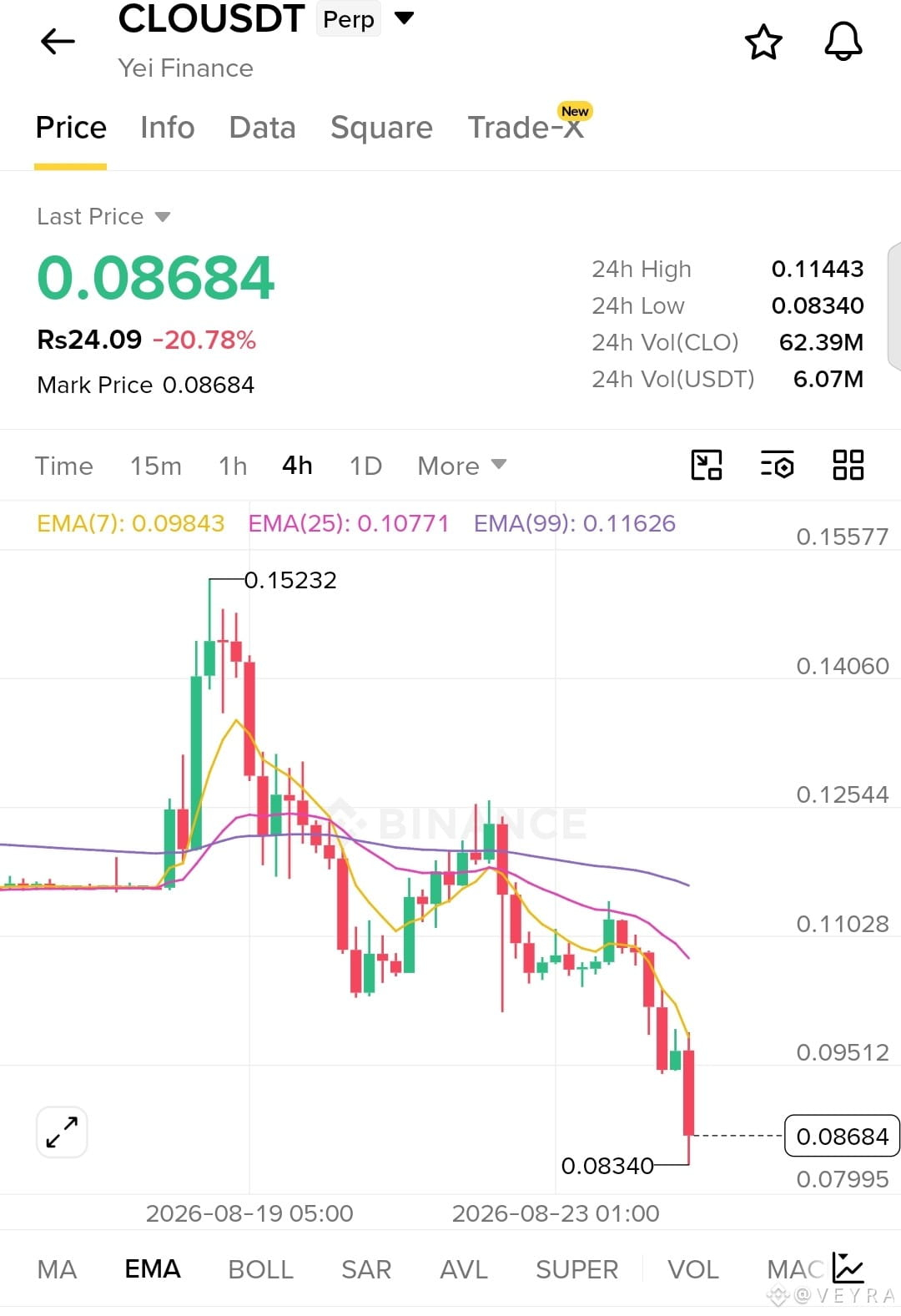
Liquidity was swept around 0.08340 and price reacted aggressively. Buyers reclaimed the structure, and consolidation above 0.08600 keeps continuation in play.
CLO is currently trading around 0.08684 on the 4 hour chart after a sharp decline from the higher resistance area. The recent move into 0.08340 created a clear liquidity sweep, followed by a visible reaction back toward the 0.08600 region.
The entry zone is positioned close to the current market price, giving the setup room to develop while keeping the invalidation level below the recent low. The first target at 0.09150 represents the nearest recovery area, while 0.09510 sits near the visible price structure and 0.09840 aligns closely with the 7 EMA.
For confirmation, price should continue holding above 0.08600 and build stability rather than immediately losing the swept-low region. A sustained move higher would bring the marked targets into focus, while a break below 0.08280 would invalidate this setup.
The chart remains volatile, so position sizing and risk control are important. This setup is based only on the visible 4 hour structure, liquidity sweep, current price action, and EMA levels shown on the chart.
Let's go $CLO
{alpha}(560x81d3a238b02827f62b9f390f947d36d4a5bf89d2)
#BitcoinOpenInterestFallsToTwoMonthLow #BitcoinRises23.6%Weekly
#AIHardwareStocksFallPreMarketAAOIDown11.66% #SP500FuturesFall #SamsungFalls8.97%DraggingKospiDown3.24%
$CLO is showing strong bullish momentum. Buyers remain in control as the structure continues to hold.
Ep
0.08550
0.08700
TP
0.09150
0.09510
0.09840
Sl
0.08280
Liquidity was swept around 0.08340 and price reacted aggressively. Buyers reclaimed the structure, and consolidation above 0.08600 keeps continuation in play.
CLO is currently trading around 0.08684 on the 4 hour chart after a sharp decline from the higher resistance area. The recent move into 0.08340 created a clear liquidity sweep, followed by a visible reaction back toward the 0.08600 region.
The entry zone is positioned close to the current market price, giving the setup room to develop while keeping the invalidation level below the recent low. The first target at 0.09150 represents the nearest recovery area, while 0.09510 sits near the visible price structure and 0.09840 aligns closely with the 7 EMA.
For confirmation, price should continue holding above 0.08600 and build stability rather than immediately losing the swept-low region. A sustained move higher would bring the marked targets into focus, while a break below 0.08280 would invalidate this setup.
The chart remains volatile, so position sizing and risk control are important. This setup is based only on the visible 4 hour structure, liquidity sweep, current price action, and EMA levels shown on the chart.
Let's go $CLO
#BitcoinOpenInterestFallsToTwoMonthLow #BitcoinRises23.6%Weekly
#AIHardwareStocksFallPreMarketAAOIDown11.66% #SP500FuturesFall #SamsungFalls8.97%DraggingKospiDown3.24%
Ep
0.08550
0.08700
TP
0.09150
0.09510
0.09840
Sl
0.08280
Liquidity was swept around 0.08340 and price reacted aggressively. Buyers reclaimed the structure, and consolidation above 0.08600 keeps continuation in play.
CLO is currently trading around 0.08684 on the 4 hour chart after a sharp decline from the higher resistance area. The recent move into 0.08340 created a clear liquidity sweep, followed by a visible reaction back toward the 0.08600 region.
The entry zone is positioned close to the current market price, giving the setup room to develop while keeping the invalidation level below the recent low. The first target at 0.09150 represents the nearest recovery area, while 0.09510 sits near the visible price structure and 0.09840 aligns closely with the 7 EMA.
For confirmation, price should continue holding above 0.08600 and build stability rather than immediately losing the swept-low region. A sustained move higher would bring the marked targets into focus, while a break below 0.08280 would invalidate this setup.
The chart remains volatile, so position sizing and risk control are important. This setup is based only on the visible 4 hour structure, liquidity sweep, current price action, and EMA levels shown on the chart.
Let's go $CLO
#BitcoinOpenInterestFallsToTwoMonthLow #BitcoinRises23.6%Weekly
#AIHardwareStocksFallPreMarketAAOIDown11.66% #SP500FuturesFall #SamsungFalls8.97%DraggingKospiDown3.24%
99
·
--
Bullish
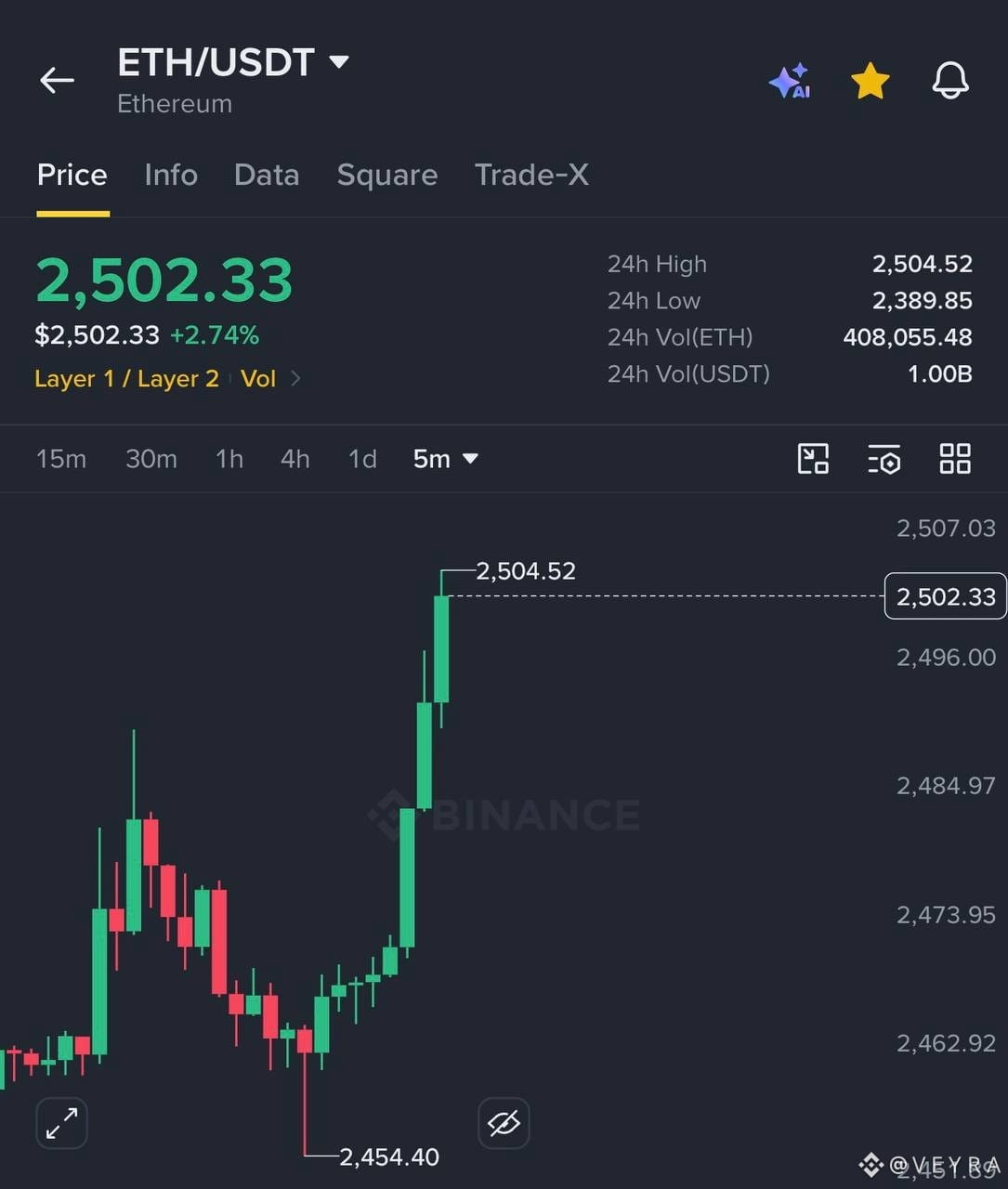
$ETH is back above $2,500, and this move is getting harder to ignore.
Ethereum has regained a major psychological level after a powerful recovery, with the latest market data showing ETH trading around the $2,450–$2,480 area after recently pushing above $2,500. The move comes after one of ETH’s strongest weekly rallies of the year, with reports showing roughly 28–30% gains over the past seven days.
The important part is not simply that ETH touched $2,500. The bigger question is whether buyers can turn this former resistance into reliable support. A sustained hold above $2,500 would strengthen the short-term structure and potentially open the door toward the next major resistance zones around $2,750 and $3,000.
Momentum has been supported by renewed institutional demand. Recent reports point to strong U.S. spot Ethereum ETF inflows, while a large wave of short liquidations added fuel to the move higher.
Technically, traders should watch the $2,400–$2,500 region closely. Holding this area after the breakout would show that buyers are absorbing profit-taking rather than immediately giving back the move. A clean continuation above the recent highs could bring $2,750 into focus, followed by the psychologically important $3,000 level.
At the same time, ETH has already moved sharply in a short period, so volatility and pullbacks should not be ignored. A rejection back below $2,500 would make the breakout less convincing and could send price toward lower support areas.
For now, Ethereum is showing a clear improvement in momentum, and the $2,500 level has become one of the most important areas to watch.
$ETH is back in the conversation.
$ETH
{future}(ETHUSDT)
$ETH is back above $2,500, and this move is getting harder to ignore.
Ethereum has regained a major psychological level after a powerful recovery, with the latest market data showing ETH trading around the $2,450–$2,480 area after recently pushing above $2,500. The move comes after one of ETH’s strongest weekly rallies of the year, with reports showing roughly 28–30% gains over the past seven days.
The important part is not simply that ETH touched $2,500. The bigger question is whether buyers can turn this former resistance into reliable support. A sustained hold above $2,500 would strengthen the short-term structure and potentially open the door toward the next major resistance zones around $2,750 and $3,000.
Momentum has been supported by renewed institutional demand. Recent reports point to strong U.S. spot Ethereum ETF inflows, while a large wave of short liquidations added fuel to the move higher.
Technically, traders should watch the $2,400–$2,500 region closely. Holding this area after the breakout would show that buyers are absorbing profit-taking rather than immediately giving back the move. A clean continuation above the recent highs could bring $2,750 into focus, followed by the psychologically important $3,000 level.
At the same time, ETH has already moved sharply in a short period, so volatility and pullbacks should not be ignored. A rejection back below $2,500 would make the breakout less convincing and could send price toward lower support areas.
For now, Ethereum is showing a clear improvement in momentum, and the $2,500 level has become one of the most important areas to watch.
$ETH is back in the conversation.
$ETH
Ethereum has regained a major psychological level after a powerful recovery, with the latest market data showing ETH trading around the $2,450–$2,480 area after recently pushing above $2,500. The move comes after one of ETH’s strongest weekly rallies of the year, with reports showing roughly 28–30% gains over the past seven days.
The important part is not simply that ETH touched $2,500. The bigger question is whether buyers can turn this former resistance into reliable support. A sustained hold above $2,500 would strengthen the short-term structure and potentially open the door toward the next major resistance zones around $2,750 and $3,000.
Momentum has been supported by renewed institutional demand. Recent reports point to strong U.S. spot Ethereum ETF inflows, while a large wave of short liquidations added fuel to the move higher.
Technically, traders should watch the $2,400–$2,500 region closely. Holding this area after the breakout would show that buyers are absorbing profit-taking rather than immediately giving back the move. A clean continuation above the recent highs could bring $2,750 into focus, followed by the psychologically important $3,000 level.
At the same time, ETH has already moved sharply in a short period, so volatility and pullbacks should not be ignored. A rejection back below $2,500 would make the breakout less convincing and could send price toward lower support areas.
For now, Ethereum is showing a clear improvement in momentum, and the $2,500 level has become one of the most important areas to watch.
$ETH is back in the conversation.
$ETH
133
·
--
Bullish
$POL USDT is showing strong bullish momentum. Buyers remain in control as the structure continues to hold.
Ep
0.11300 - 0.11550
TP
0.11710
0.12165
0.12420
Sl
0.10880
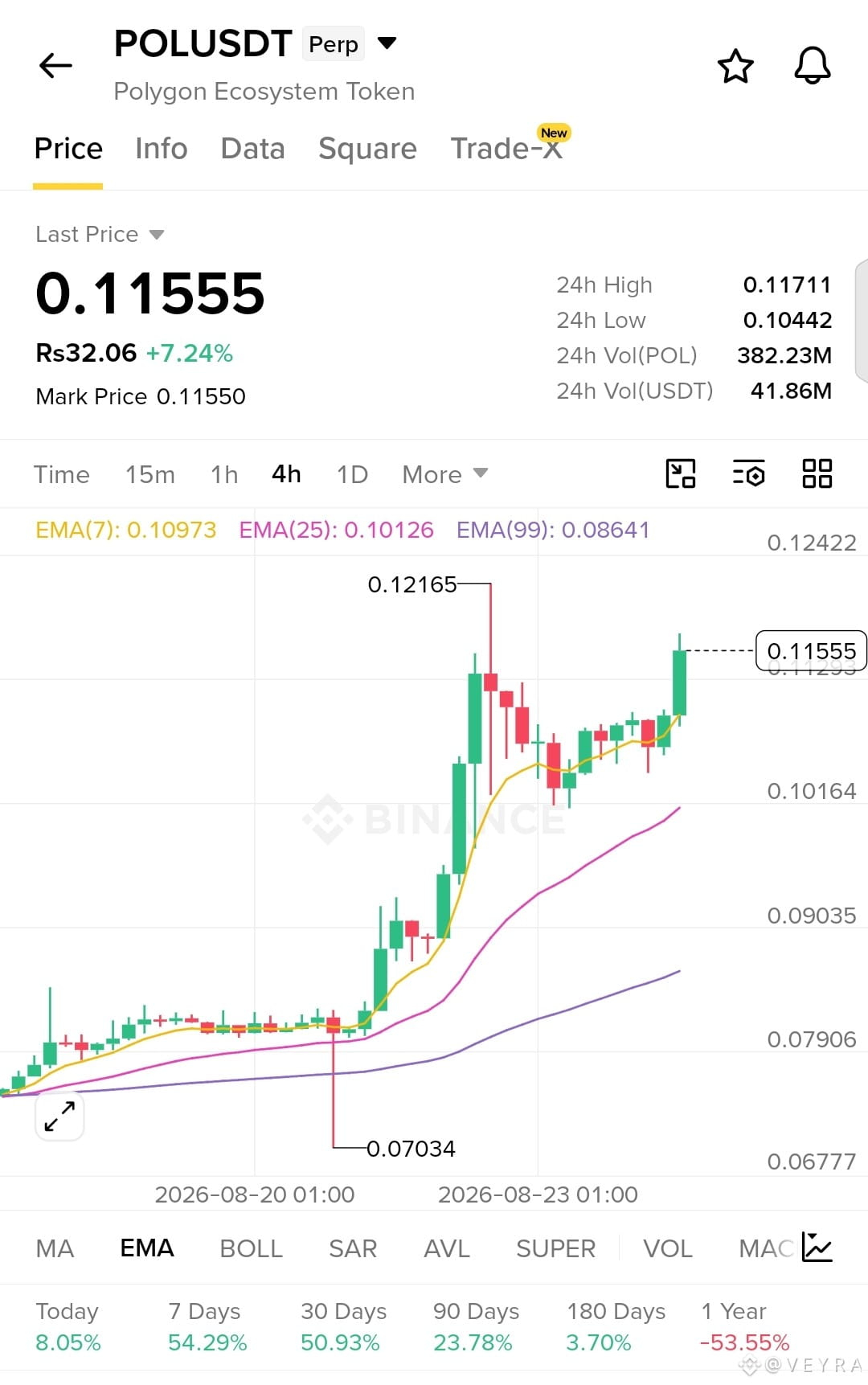
The 4H chart shows a strong upward structure, with POLUSDT trading well above the 7 EMA at 0.10973, the 25 EMA at 0.10126, and the 99 EMA at 0.08641. This alignment keeps the current market structure constructive while price continues to print higher levels.
After the sharp expansion from the 0.07034 region, price reached 0.12165 before entering a controlled consolidation phase. Instead of losing the broader structure, the market formed a higher base around the 0.10164 area and gradually recovered toward the recent resistance.
Liquidity was swept around 0.10164 and price reacted aggressively. Buyers reclaimed the structure, and consolidation above 0.11295 keeps continuation in play.
The immediate resistance sits near the 24H high at 0.11711. A clean move through this level could bring the previous swing high at 0.12165 into focus. If momentum remains strong beyond that area, the next visible resistance zone is around 0.12420.
The setup remains technically strong while price holds above the entry region and maintains its position over the short-term EMA structure. However, rejection near the recent high could still produce a temporary pullback, so confirmation and risk management remain important.
The broader chart also shows strong momentum across the recent sessions, with price significantly above the longer-term EMA 99. Traders should watch the 0.11711 resistance closely and monitor how price reacts around each breakout level.
Let's go $POL
{future}(POLUSDT)
$POL USDT is showing strong bullish momentum. Buyers remain in control as the structure continues to hold.
Ep
0.11300 - 0.11550
TP
0.11710
0.12165
0.12420
Sl
0.10880
The 4H chart shows a strong upward structure, with POLUSDT trading well above the 7 EMA at 0.10973, the 25 EMA at 0.10126, and the 99 EMA at 0.08641. This alignment keeps the current market structure constructive while price continues to print higher levels.
After the sharp expansion from the 0.07034 region, price reached 0.12165 before entering a controlled consolidation phase. Instead of losing the broader structure, the market formed a higher base around the 0.10164 area and gradually recovered toward the recent resistance.
Liquidity was swept around 0.10164 and price reacted aggressively. Buyers reclaimed the structure, and consolidation above 0.11295 keeps continuation in play.
The immediate resistance sits near the 24H high at 0.11711. A clean move through this level could bring the previous swing high at 0.12165 into focus. If momentum remains strong beyond that area, the next visible resistance zone is around 0.12420.
The setup remains technically strong while price holds above the entry region and maintains its position over the short-term EMA structure. However, rejection near the recent high could still produce a temporary pullback, so confirmation and risk management remain important.
The broader chart also shows strong momentum across the recent sessions, with price significantly above the longer-term EMA 99. Traders should watch the 0.11711 resistance closely and monitor how price reacts around each breakout level.
Let's go $POL
Ep
0.11300 - 0.11550
TP
0.11710
0.12165
0.12420
Sl
0.10880
The 4H chart shows a strong upward structure, with POLUSDT trading well above the 7 EMA at 0.10973, the 25 EMA at 0.10126, and the 99 EMA at 0.08641. This alignment keeps the current market structure constructive while price continues to print higher levels.
After the sharp expansion from the 0.07034 region, price reached 0.12165 before entering a controlled consolidation phase. Instead of losing the broader structure, the market formed a higher base around the 0.10164 area and gradually recovered toward the recent resistance.
Liquidity was swept around 0.10164 and price reacted aggressively. Buyers reclaimed the structure, and consolidation above 0.11295 keeps continuation in play.
The immediate resistance sits near the 24H high at 0.11711. A clean move through this level could bring the previous swing high at 0.12165 into focus. If momentum remains strong beyond that area, the next visible resistance zone is around 0.12420.
The setup remains technically strong while price holds above the entry region and maintains its position over the short-term EMA structure. However, rejection near the recent high could still produce a temporary pullback, so confirmation and risk management remain important.
The broader chart also shows strong momentum across the recent sessions, with price significantly above the longer-term EMA 99. Traders should watch the 0.11711 resistance closely and monitor how price reacts around each breakout level.
Let's go $POL
95
·
--
Bullish
$2Z USDT is showing strong bullish momentum. Buyers remain in control as the structure continues to hold.
Ep
0.05650 - 0.05720
TP
0.05828
0.05943
0.06215
Sl
0.05480
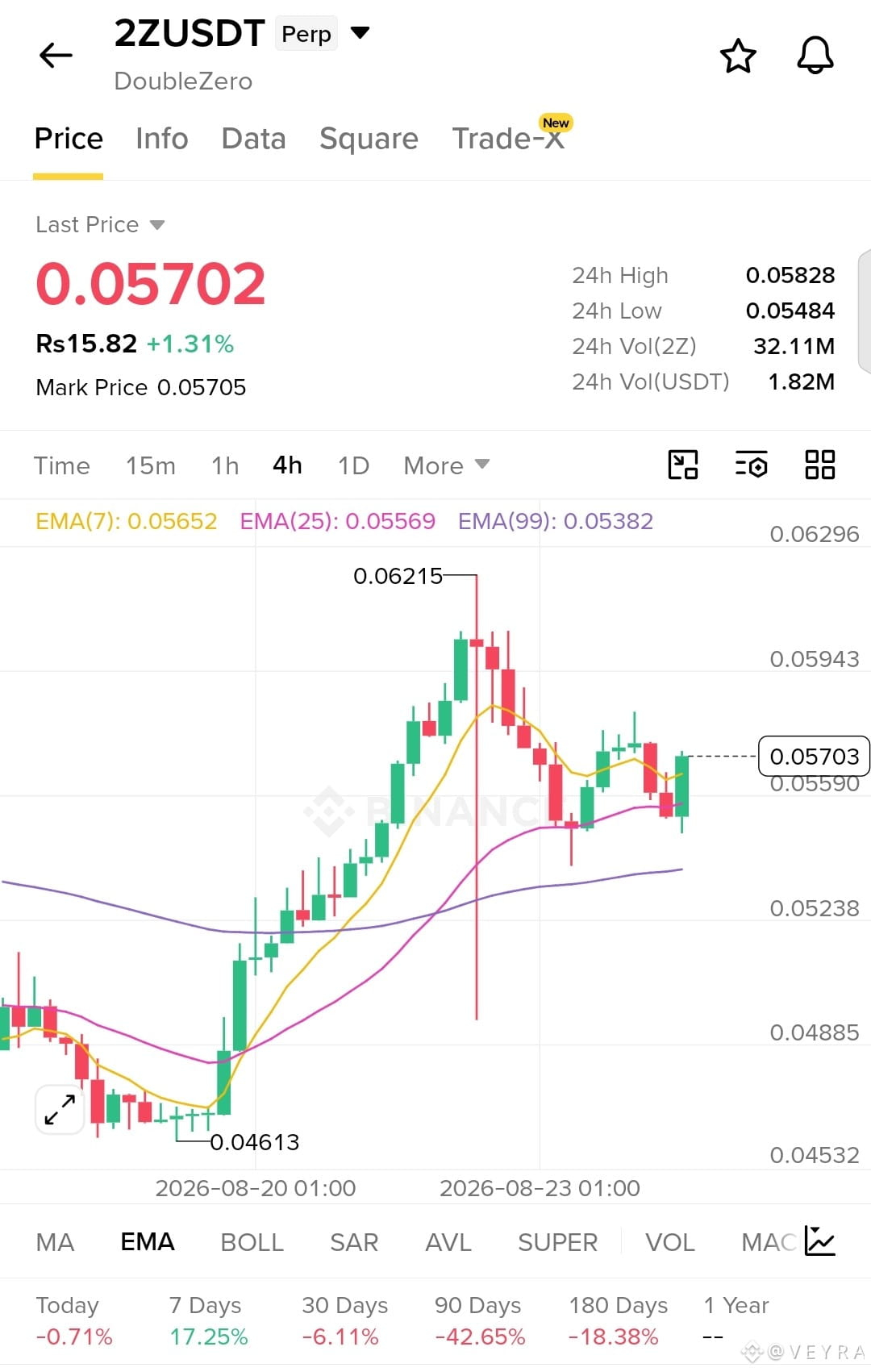
The 4H structure shows that 2ZUSDT has recovered strongly from the 0.04613 low and is now holding above the key EMA levels. Price is currently trading around 0.05702, while the 7 EMA at 0.05652 and 25 EMA at 0.05569 provide nearby structural support.
The recent price action shows a strong recovery followed by consolidation rather than a complete breakdown. This keeps the setup interesting as long as price continues respecting the current support region.
Liquidity was swept around 0.04613 and price reacted aggressively. Buyers reclaimed the structure, and consolidation above 0.05590 keeps continuation in play.
The first important upside level is the recent 24H high near 0.05828. A sustained move through that area could open the way toward 0.05943, while the previous major swing high around 0.06215 remains the broader technical target visible on the chart.
Risk management remains important because rejection around the recent resistance could bring another pullback toward the moving averages. The 0.05480 area is the key invalidation zone for this setup, while holding above the 0.05590 region keeps the current structure constructive.
Overall, 2ZUSDT is showing improving 4H price structure, supported by its position above the longer EMA 99 near 0.05382. Traders should watch the resistance breakout and volume reaction closely before expecting further continuation.
Let's go $2Z
{future}(2ZUSDT)
$2Z USDT is showing strong bullish momentum. Buyers remain in control as the structure continues to hold.
Ep
0.05650 - 0.05720
TP
0.05828
0.05943
0.06215
Sl
0.05480
The 4H structure shows that 2ZUSDT has recovered strongly from the 0.04613 low and is now holding above the key EMA levels. Price is currently trading around 0.05702, while the 7 EMA at 0.05652 and 25 EMA at 0.05569 provide nearby structural support.
The recent price action shows a strong recovery followed by consolidation rather than a complete breakdown. This keeps the setup interesting as long as price continues respecting the current support region.
Liquidity was swept around 0.04613 and price reacted aggressively. Buyers reclaimed the structure, and consolidation above 0.05590 keeps continuation in play.
The first important upside level is the recent 24H high near 0.05828. A sustained move through that area could open the way toward 0.05943, while the previous major swing high around 0.06215 remains the broader technical target visible on the chart.
Risk management remains important because rejection around the recent resistance could bring another pullback toward the moving averages. The 0.05480 area is the key invalidation zone for this setup, while holding above the 0.05590 region keeps the current structure constructive.
Overall, 2ZUSDT is showing improving 4H price structure, supported by its position above the longer EMA 99 near 0.05382. Traders should watch the resistance breakout and volume reaction closely before expecting further continuation.
Let's go $2Z
Ep
0.05650 - 0.05720
TP
0.05828
0.05943
0.06215
Sl
0.05480
The 4H structure shows that 2ZUSDT has recovered strongly from the 0.04613 low and is now holding above the key EMA levels. Price is currently trading around 0.05702, while the 7 EMA at 0.05652 and 25 EMA at 0.05569 provide nearby structural support.
The recent price action shows a strong recovery followed by consolidation rather than a complete breakdown. This keeps the setup interesting as long as price continues respecting the current support region.
Liquidity was swept around 0.04613 and price reacted aggressively. Buyers reclaimed the structure, and consolidation above 0.05590 keeps continuation in play.
The first important upside level is the recent 24H high near 0.05828. A sustained move through that area could open the way toward 0.05943, while the previous major swing high around 0.06215 remains the broader technical target visible on the chart.
Risk management remains important because rejection around the recent resistance could bring another pullback toward the moving averages. The 0.05480 area is the key invalidation zone for this setup, while holding above the 0.05590 region keeps the current structure constructive.
Overall, 2ZUSDT is showing improving 4H price structure, supported by its position above the longer EMA 99 near 0.05382. Traders should watch the resistance breakout and volume reaction closely before expecting further continuation.
Let's go $2Z
1
63
·
--

Article
CZAMAonBinanceSquare Was More Than an AMA — It Gave the Market a Moment to ThinkI kept thinking about one thing after going through the discussion around #CZAMAonBinanceSquare : the most interesting part was not a prediction, a price target, or a headline-grabbing statement. It was how the conversation changed the way the market was looking at its own noise.
Crypto was already dealing with a difficult mix of volatility, uncertainty and competing narratives. Then CZ appeared on Binance Square for an extended community AMA and addressed many of the questions that had been circulating around Binance, the October market crash, FUD, Bitcoin, gold, reserves and the role of Binance Alpha.
What made the conversation different was the absence of a simple answer to everything.
CZ opened with an important clarification: the AMA represented his personal views and he was speaking from the perspective of a shareholder and user rather than as the person managing Binance's operations. That distinction matters because many discussions around Binance automatically treat every statement from CZ as an official operational position.
From there, the conversation moved directly into one of the biggest sources of tension in the community: the October 10–11 market crash.
A narrative had developed that Binance itself had caused or deliberately amplified the sell-off. CZ rejected that interpretation, pointing instead to the macroeconomic backdrop and the tariff announcement that preceded the market decline. He also said Binance does not trade cryptocurrencies for profit in the way a proprietary trading firm would, rejecting the idea that Binance intentionally dumped assets to push prices lower.
That part of the AMA is important because crypto markets often search for a single explanation after a violent move.
When billions disappear from market capitalization in a short period, people naturally want to know who was responsible. But markets rarely behave that neatly. Macro announcements can trigger rapid repricing, leverage can accelerate the move, liquidations can compound selling pressure, and social media can turn uncertainty into panic within minutes.
That is where the discussion about FUD became much more interesting.
CZ described some negative narratives as coordinated or paid activity and warned users about accounts that repeatedly push damaging stories without providing reliable evidence. He also made a point that is easy to overlook: not every criticism is FUD.
There is a difference between asking uncomfortable questions and deliberately spreading misinformation.
That distinction matters for any financial platform.
Healthy criticism can expose genuine weaknesses. Blind defense can hide problems. But misinformation can create a completely different dynamic because people begin trading against a story rather than against verified information.
Once fear becomes the dominant narrative, the original event can almost become secondary.
Someone sees a price drop.
They read a frightening post.
Another account repeats it.
A third account adds a dramatic explanation.
Soon thousands of users are reacting to an interpretation that may never have been properly established.
The market then starts feeding on its own psychology.
CZ's advice was comparatively simple: do not allow noise to dictate every decision. He argued that people spreading deliberate misinformation can often be ignored or blocked, while genuine feedback should still be heard. That is a more nuanced position than simply saying all criticism is bad.
The other important theme was personal responsibility.
Crypto gives users enormous freedom, but freedom also means accepting the consequences of financial decisions. CZ emphasized that exchanges provide access to markets; they cannot guarantee that a user's trade will work.
That point becomes especially relevant during periods of extreme volatility.
When a trader makes money, it is easy to believe the decision was based on skill.
When the same trade loses money, the temptation is to search for an external explanation.
Sometimes that explanation is legitimate. Exchanges can have technical failures. Projects can mislead investors. Market participants can manipulate thin markets. Bad information can absolutely cause damage.
But not every losing trade has a villain behind it.
Sometimes the market simply moved in the opposite direction.
That is an uncomfortable reality, but understanding it is part of becoming a more disciplined participant.
The Bitcoin discussion followed the same philosophy.
Rather than giving the market a clean short-term forecast, CZ's comments reflected more uncertainty around the idea of a predictable Bitcoin supercycle. Earlier optimism around the possibility of a powerful extended cycle had become harder to maintain as geopolitical tensions and macroeconomic uncertainty increased.
That does not mean abandoning long-term confidence in Bitcoin.
It means separating long-term conviction from short-term timing.
Those are two completely different things.
Someone can believe Bitcoin will continue becoming more important over the next decade while having absolutely no reliable way to know where Bitcoin will trade three months from now.
That distinction gets lost constantly on social media.
A long-term thesis becomes a short-term prediction.
A prediction becomes a promise.
A promise becomes an expectation.
And when the market does something different, disappointment turns into blame.
The AMA pushed in the opposite direction: accept that uncertainty exists.
That same idea appeared in the Bitcoin-versus-gold discussion.
Gold has something Bitcoin cannot manufacture overnight: centuries of collective trust.
People do not trust gold because somebody created a viral campaign explaining why it should be valuable. Its reputation has accumulated over generations. Governments, institutions, families and investors have all contributed to that history.
Bitcoin is different.
Its technology is younger, its adoption is still developing, and its place within the global financial system continues to evolve.
CZ's position was not simply that Bitcoin replaces gold tomorrow. The more interesting argument was that Bitcoin can have strong technological advantages while still needing time for global trust and adoption to deepen.
That is a much more realistic way to frame the comparison.
Technology can move quickly.
Trust moves slowly.
Adoption moves somewhere in between.
Bitcoin does not need to become identical to gold to compete with it. It needs to continue proving that a digitally native asset can preserve value, transfer value and operate at global scale.
That process is measured in years, not in individual candles.
The reserves discussion brought the conversation back to something more tangible.
CZ highlighted Binance's proof-of-reserves approach and pointed to the withdrawal pressure experienced during December 2022. According to the AMA recap, Binance processed more than $15 billion in withdrawals over one week, including approximately $7 billion in a single day, without halting operations.
The significance of that example is not that past performance guarantees future safety.
It does not.
The significance is that stress tests reveal information that ordinary market conditions often hide.
An exchange can look perfectly healthy when users are calmly trading.
The real test arrives when thousands or millions of users simultaneously want liquidity.
That is when reserves, infrastructure, custody systems and operational processes are put under pressure.
For an industry that has experienced repeated exchange failures, those questions are not theoretical.
They are central to trust.
The AMA also addressed Binance Alpha and the broader relationship between centralized platforms and decentralized finance.
CZ's explanation emphasized that Alpha should not automatically be interpreted as a conventional listing or an endorsement of every project made accessible through the platform. Access does not equal approval, and users still need to conduct their own research.
That distinction becomes increasingly important as crypto platforms become more integrated with the wider Web3 ecosystem.
Making something easier to discover does not make it safer.
Putting an asset in front of millions of users does not eliminate its underlying risks.
And a platform providing access cannot replace independent research.
This is especially relevant as the industry moves beyond a relatively small number of established cryptocurrencies and toward thousands of tokens, DeFi protocols, AI projects, tokenized assets and experimental applications.
The information problem is becoming almost as important as the technology problem.
There is simply too much information.
That brings the story back to Binance Square itself.
The AMA demonstrated something about the platform that goes beyond the conversation with CZ.
A social platform connected to a major crypto ecosystem can become an important meeting point between users, creators, traders and industry figures. But that creates a responsibility as well.
More content does not automatically mean better information.
More opinions do not automatically mean more clarity.
In fact, the opposite can happen.
A platform can become so full of commentary that finding reliable information becomes harder.
Interestingly, CZ later described a broader vision for Binance Square: a place where users could find higher-quality information not only about crypto but also about global developments, AI and other subjects that influence financial markets. He also acknowledged that the product still had room to improve.
That idea makes sense because crypto no longer exists in isolation.
A tariff announcement can move Bitcoin.
Interest-rate expectations can change liquidity.
Geopolitical events can affect risk appetite.
AI developments can influence technology valuations and investor attention.
Regulation can reshape entire sectors.
The boundary between "crypto news" and "global financial news" has therefore become increasingly difficult to draw.
That is why the best part of the AMA may not have been any individual answer.
It was the broader lesson about information.
Markets do not only move because of data.
They move because people interpret data.
And people do not always interpret information rationally, especially when money is involved.
That makes social platforms incredibly powerful during volatility.
A single misleading post can reach thousands of people before a correction appears.
A genuine piece of analysis can take hours to verify.
An emotional headline needs seconds.
A careful explanation needs attention.
That imbalance is one of the defining challenges of modern crypto markets.
The answer cannot simply be to remove every controversial opinion.
It has to be better information literacy.
Users need to ask where a claim came from.
They need to distinguish confirmed facts from speculation.
They need to look for independent confirmation.
They need to understand incentives.
And they need to remember that confidence in a post does not make the information inside it correct.
That is ultimately why #CZAMAonBinanceSquare felt different from an ordinary AMA.
It was not simply about CZ answering questions.
It became a conversation about how people behave when markets become uncomfortable.
The October crash discussion was about separating market events from accusations.
The FUD discussion was about separating criticism from deliberate misinformation.
The Bitcoin discussion was about separating conviction from prediction.
The gold discussion was about separating technological capability from accumulated trust.
The reserves discussion was about separating promises from evidence gathered during periods of stress.
And the Binance Alpha discussion was about separating access from endorsement.
All of those subjects point toward the same conclusion.
Crypto is becoming more mature, but maturity does not mean the market becomes predictable.
It means participants become better at dealing with uncertainty.
That is a much harder achievement.
Anyone can sound confident when prices are rising.
The real test comes when the chart turns against the crowd.
That is when risk management matters.
That is when information quality matters.
That is when emotional discipline matters.
And that is when the difference between an investor with a thesis and a trader following noise becomes much clearer.
The market did not stop moving because of CZ's AMA.
Bitcoin did not suddenly become predictable.
FUD did not disappear.
The questions surrounding exchanges, regulation, liquidity and market structure did not disappear either.
But the conversation created something that crypto rarely gives people enough of: a reason to slow down.
Instead of immediately asking where the next candle would go, it encouraged a different set of questions.
What actually happened?
What can be verified?
What is still uncertain?
Who benefits from this narrative?
Am I reacting to information, or reacting to other people's reactions?
Those questions will not guarantee profits.
Nothing can.
But they can produce better decisions.
And perhaps that is the real reason #CZAMAonBinanceSquare stayed relevant beyond the livestream itself.
It was not memorable because every answer was definitive.
It was memorable because many of the answers refused to pretend that the market was simple.
In crypto, that kind of honesty can be more valuable than another prediction.
The charts will continue to move.
Narratives will continue to change.
New rumors will replace old ones.
Another crash will eventually create another explanation, another rally will create another wave of certainty, and social media will continue amplifying both.
The useful skill is not learning how to eliminate that noise.
It is learning how to hear it without automatically believing it.
That is the part of the CZAMA conversation worth carrying forward.
Not a price target.
Not a promise.
Not a prediction.
Just a reminder that when the market gets loud, sometimes the smartest response is to pause, check the facts and think for yourself.
#CZAMAonBinanceSquare
CZAMAonBinanceSquare Was More Than an AMA — It Gave the Market a Moment to Think
I kept thinking about one thing after going through the discussion around #CZAMAonBinanceSquare : the most interesting part was not a prediction, a price target, or a headline-grabbing statement. It was how the conversation changed the way the market was looking at its own noise.
Crypto was already dealing with a difficult mix of volatility, uncertainty and competing narratives. Then CZ appeared on Binance Square for an extended community AMA and addressed many of the questions that had been circulating around Binance, the October market crash, FUD, Bitcoin, gold, reserves and the role of Binance Alpha.
What made the conversation different was the absence of a simple answer to everything.
CZ opened with an important clarification: the AMA represented his personal views and he was speaking from the perspective of a shareholder and user rather than as the person managing Binance's operations. That distinction matters because many discussions around Binance automatically treat every statement from CZ as an official operational position.
From there, the conversation moved directly into one of the biggest sources of tension in the community: the October 10–11 market crash.
A narrative had developed that Binance itself had caused or deliberately amplified the sell-off. CZ rejected that interpretation, pointing instead to the macroeconomic backdrop and the tariff announcement that preceded the market decline. He also said Binance does not trade cryptocurrencies for profit in the way a proprietary trading firm would, rejecting the idea that Binance intentionally dumped assets to push prices lower.
That part of the AMA is important because crypto markets often search for a single explanation after a violent move.
When billions disappear from market capitalization in a short period, people naturally want to know who was responsible. But markets rarely behave that neatly. Macro announcements can trigger rapid repricing, leverage can accelerate the move, liquidations can compound selling pressure, and social media can turn uncertainty into panic within minutes.
That is where the discussion about FUD became much more interesting.
CZ described some negative narratives as coordinated or paid activity and warned users about accounts that repeatedly push damaging stories without providing reliable evidence. He also made a point that is easy to overlook: not every criticism is FUD.
There is a difference between asking uncomfortable questions and deliberately spreading misinformation.
That distinction matters for any financial platform.
Healthy criticism can expose genuine weaknesses. Blind defense can hide problems. But misinformation can create a completely different dynamic because people begin trading against a story rather than against verified information.
Once fear becomes the dominant narrative, the original event can almost become secondary.
Someone sees a price drop.
They read a frightening post.
Another account repeats it.
A third account adds a dramatic explanation.
Soon thousands of users are reacting to an interpretation that may never have been properly established.
The market then starts feeding on its own psychology.
CZ's advice was comparatively simple: do not allow noise to dictate every decision. He argued that people spreading deliberate misinformation can often be ignored or blocked, while genuine feedback should still be heard. That is a more nuanced position than simply saying all criticism is bad.
The other important theme was personal responsibility.
Crypto gives users enormous freedom, but freedom also means accepting the consequences of financial decisions. CZ emphasized that exchanges provide access to markets; they cannot guarantee that a user's trade will work.
That point becomes especially relevant during periods of extreme volatility.
When a trader makes money, it is easy to believe the decision was based on skill.
When the same trade loses money, the temptation is to search for an external explanation.
Sometimes that explanation is legitimate. Exchanges can have technical failures. Projects can mislead investors. Market participants can manipulate thin markets. Bad information can absolutely cause damage.
But not every losing trade has a villain behind it.
Sometimes the market simply moved in the opposite direction.
That is an uncomfortable reality, but understanding it is part of becoming a more disciplined participant.
The Bitcoin discussion followed the same philosophy.
Rather than giving the market a clean short-term forecast, CZ's comments reflected more uncertainty around the idea of a predictable Bitcoin supercycle. Earlier optimism around the possibility of a powerful extended cycle had become harder to maintain as geopolitical tensions and macroeconomic uncertainty increased.
That does not mean abandoning long-term confidence in Bitcoin.
It means separating long-term conviction from short-term timing.
Those are two completely different things.
Someone can believe Bitcoin will continue becoming more important over the next decade while having absolutely no reliable way to know where Bitcoin will trade three months from now.
That distinction gets lost constantly on social media.
A long-term thesis becomes a short-term prediction.
A prediction becomes a promise.
A promise becomes an expectation.
And when the market does something different, disappointment turns into blame.
The AMA pushed in the opposite direction: accept that uncertainty exists.
That same idea appeared in the Bitcoin-versus-gold discussion.
Gold has something Bitcoin cannot manufacture overnight: centuries of collective trust.
People do not trust gold because somebody created a viral campaign explaining why it should be valuable. Its reputation has accumulated over generations. Governments, institutions, families and investors have all contributed to that history.
Bitcoin is different.
Its technology is younger, its adoption is still developing, and its place within the global financial system continues to evolve.
CZ's position was not simply that Bitcoin replaces gold tomorrow. The more interesting argument was that Bitcoin can have strong technological advantages while still needing time for global trust and adoption to deepen.
That is a much more realistic way to frame the comparison.
Technology can move quickly.
Trust moves slowly.
Adoption moves somewhere in between.
Bitcoin does not need to become identical to gold to compete with it. It needs to continue proving that a digitally native asset can preserve value, transfer value and operate at global scale.
That process is measured in years, not in individual candles.
The reserves discussion brought the conversation back to something more tangible.
CZ highlighted Binance's proof-of-reserves approach and pointed to the withdrawal pressure experienced during December 2022. According to the AMA recap, Binance processed more than $15 billion in withdrawals over one week, including approximately $7 billion in a single day, without halting operations.
The significance of that example is not that past performance guarantees future safety.
It does not.
The significance is that stress tests reveal information that ordinary market conditions often hide.
An exchange can look perfectly healthy when users are calmly trading.
The real test arrives when thousands or millions of users simultaneously want liquidity.
That is when reserves, infrastructure, custody systems and operational processes are put under pressure.
For an industry that has experienced repeated exchange failures, those questions are not theoretical.
They are central to trust.
The AMA also addressed Binance Alpha and the broader relationship between centralized platforms and decentralized finance.
CZ's explanation emphasized that Alpha should not automatically be interpreted as a conventional listing or an endorsement of every project made accessible through the platform. Access does not equal approval, and users still need to conduct their own research.
That distinction becomes increasingly important as crypto platforms become more integrated with the wider Web3 ecosystem.
Making something easier to discover does not make it safer.
Putting an asset in front of millions of users does not eliminate its underlying risks.
And a platform providing access cannot replace independent research.
This is especially relevant as the industry moves beyond a relatively small number of established cryptocurrencies and toward thousands of tokens, DeFi protocols, AI projects, tokenized assets and experimental applications.
The information problem is becoming almost as important as the technology problem.
There is simply too much information.
That brings the story back to Binance Square itself.
The AMA demonstrated something about the platform that goes beyond the conversation with CZ.
A social platform connected to a major crypto ecosystem can become an important meeting point between users, creators, traders and industry figures. But that creates a responsibility as well.
More content does not automatically mean better information.
More opinions do not automatically mean more clarity.
In fact, the opposite can happen.
A platform can become so full of commentary that finding reliable information becomes harder.
Interestingly, CZ later described a broader vision for Binance Square: a place where users could find higher-quality information not only about crypto but also about global developments, AI and other subjects that influence financial markets. He also acknowledged that the product still had room to improve.
That idea makes sense because crypto no longer exists in isolation.
A tariff announcement can move Bitcoin.
Interest-rate expectations can change liquidity.
Geopolitical events can affect risk appetite.
AI developments can influence technology valuations and investor attention.
Regulation can reshape entire sectors.
The boundary between "crypto news" and "global financial news" has therefore become increasingly difficult to draw.
That is why the best part of the AMA may not have been any individual answer.
It was the broader lesson about information.
Markets do not only move because of data.
They move because people interpret data.
And people do not always interpret information rationally, especially when money is involved.
That makes social platforms incredibly powerful during volatility.
A single misleading post can reach thousands of people before a correction appears.
A genuine piece of analysis can take hours to verify.
An emotional headline needs seconds.
A careful explanation needs attention.
That imbalance is one of the defining challenges of modern crypto markets.
The answer cannot simply be to remove every controversial opinion.
It has to be better information literacy.
Users need to ask where a claim came from.
They need to distinguish confirmed facts from speculation.
They need to look for independent confirmation.
They need to understand incentives.
And they need to remember that confidence in a post does not make the information inside it correct.
That is ultimately why #CZAMAonBinanceSquare felt different from an ordinary AMA.
It was not simply about CZ answering questions.
It became a conversation about how people behave when markets become uncomfortable.
The October crash discussion was about separating market events from accusations.
The FUD discussion was about separating criticism from deliberate misinformation.
The Bitcoin discussion was about separating conviction from prediction.
The gold discussion was about separating technological capability from accumulated trust.
The reserves discussion was about separating promises from evidence gathered during periods of stress.
And the Binance Alpha discussion was about separating access from endorsement.
All of those subjects point toward the same conclusion.
Crypto is becoming more mature, but maturity does not mean the market becomes predictable.
It means participants become better at dealing with uncertainty.
That is a much harder achievement.
Anyone can sound confident when prices are rising.
The real test comes when the chart turns against the crowd.
That is when risk management matters.
That is when information quality matters.
That is when emotional discipline matters.
And that is when the difference between an investor with a thesis and a trader following noise becomes much clearer.
The market did not stop moving because of CZ's AMA.
Bitcoin did not suddenly become predictable.
FUD did not disappear.
The questions surrounding exchanges, regulation, liquidity and market structure did not disappear either.
But the conversation created something that crypto rarely gives people enough of: a reason to slow down.
Instead of immediately asking where the next candle would go, it encouraged a different set of questions.
What actually happened?
What can be verified?
What is still uncertain?
Who benefits from this narrative?
Am I reacting to information, or reacting to other people's reactions?
Those questions will not guarantee profits.
Nothing can.
But they can produce better decisions.
And perhaps that is the real reason #CZAMAonBinanceSquare stayed relevant beyond the livestream itself.
It was not memorable because every answer was definitive.
It was memorable because many of the answers refused to pretend that the market was simple.
In crypto, that kind of honesty can be more valuable than another prediction.
The charts will continue to move.
Narratives will continue to change.
New rumors will replace old ones.
Another crash will eventually create another explanation, another rally will create another wave of certainty, and social media will continue amplifying both.
The useful skill is not learning how to eliminate that noise.
It is learning how to hear it without automatically believing it.
That is the part of the CZAMA conversation worth carrying forward.
Not a price target.
Not a promise.
Not a prediction.
Just a reminder that when the market gets loud, sometimes the smartest response is to pause, check the facts and think for yourself.
#CZAMAonBinanceSquare
Crypto was already dealing with a difficult mix of volatility, uncertainty and competing narratives. Then CZ appeared on Binance Square for an extended community AMA and addressed many of the questions that had been circulating around Binance, the October market crash, FUD, Bitcoin, gold, reserves and the role of Binance Alpha.
What made the conversation different was the absence of a simple answer to everything.
CZ opened with an important clarification: the AMA represented his personal views and he was speaking from the perspective of a shareholder and user rather than as the person managing Binance's operations. That distinction matters because many discussions around Binance automatically treat every statement from CZ as an official operational position.
From there, the conversation moved directly into one of the biggest sources of tension in the community: the October 10–11 market crash.
A narrative had developed that Binance itself had caused or deliberately amplified the sell-off. CZ rejected that interpretation, pointing instead to the macroeconomic backdrop and the tariff announcement that preceded the market decline. He also said Binance does not trade cryptocurrencies for profit in the way a proprietary trading firm would, rejecting the idea that Binance intentionally dumped assets to push prices lower.
That part of the AMA is important because crypto markets often search for a single explanation after a violent move.
When billions disappear from market capitalization in a short period, people naturally want to know who was responsible. But markets rarely behave that neatly. Macro announcements can trigger rapid repricing, leverage can accelerate the move, liquidations can compound selling pressure, and social media can turn uncertainty into panic within minutes.
That is where the discussion about FUD became much more interesting.
CZ described some negative narratives as coordinated or paid activity and warned users about accounts that repeatedly push damaging stories without providing reliable evidence. He also made a point that is easy to overlook: not every criticism is FUD.
There is a difference between asking uncomfortable questions and deliberately spreading misinformation.
That distinction matters for any financial platform.
Healthy criticism can expose genuine weaknesses. Blind defense can hide problems. But misinformation can create a completely different dynamic because people begin trading against a story rather than against verified information.
Once fear becomes the dominant narrative, the original event can almost become secondary.
Someone sees a price drop.
They read a frightening post.
Another account repeats it.
A third account adds a dramatic explanation.
Soon thousands of users are reacting to an interpretation that may never have been properly established.
The market then starts feeding on its own psychology.
CZ's advice was comparatively simple: do not allow noise to dictate every decision. He argued that people spreading deliberate misinformation can often be ignored or blocked, while genuine feedback should still be heard. That is a more nuanced position than simply saying all criticism is bad.
The other important theme was personal responsibility.
Crypto gives users enormous freedom, but freedom also means accepting the consequences of financial decisions. CZ emphasized that exchanges provide access to markets; they cannot guarantee that a user's trade will work.
That point becomes especially relevant during periods of extreme volatility.
When a trader makes money, it is easy to believe the decision was based on skill.
When the same trade loses money, the temptation is to search for an external explanation.
Sometimes that explanation is legitimate. Exchanges can have technical failures. Projects can mislead investors. Market participants can manipulate thin markets. Bad information can absolutely cause damage.
But not every losing trade has a villain behind it.
Sometimes the market simply moved in the opposite direction.
That is an uncomfortable reality, but understanding it is part of becoming a more disciplined participant.
The Bitcoin discussion followed the same philosophy.
Rather than giving the market a clean short-term forecast, CZ's comments reflected more uncertainty around the idea of a predictable Bitcoin supercycle. Earlier optimism around the possibility of a powerful extended cycle had become harder to maintain as geopolitical tensions and macroeconomic uncertainty increased.
That does not mean abandoning long-term confidence in Bitcoin.
It means separating long-term conviction from short-term timing.
Those are two completely different things.
Someone can believe Bitcoin will continue becoming more important over the next decade while having absolutely no reliable way to know where Bitcoin will trade three months from now.
That distinction gets lost constantly on social media.
A long-term thesis becomes a short-term prediction.
A prediction becomes a promise.
A promise becomes an expectation.
And when the market does something different, disappointment turns into blame.
The AMA pushed in the opposite direction: accept that uncertainty exists.
That same idea appeared in the Bitcoin-versus-gold discussion.
Gold has something Bitcoin cannot manufacture overnight: centuries of collective trust.
People do not trust gold because somebody created a viral campaign explaining why it should be valuable. Its reputation has accumulated over generations. Governments, institutions, families and investors have all contributed to that history.
Bitcoin is different.
Its technology is younger, its adoption is still developing, and its place within the global financial system continues to evolve.
CZ's position was not simply that Bitcoin replaces gold tomorrow. The more interesting argument was that Bitcoin can have strong technological advantages while still needing time for global trust and adoption to deepen.
That is a much more realistic way to frame the comparison.
Technology can move quickly.
Trust moves slowly.
Adoption moves somewhere in between.
Bitcoin does not need to become identical to gold to compete with it. It needs to continue proving that a digitally native asset can preserve value, transfer value and operate at global scale.
That process is measured in years, not in individual candles.
The reserves discussion brought the conversation back to something more tangible.
CZ highlighted Binance's proof-of-reserves approach and pointed to the withdrawal pressure experienced during December 2022. According to the AMA recap, Binance processed more than $15 billion in withdrawals over one week, including approximately $7 billion in a single day, without halting operations.
The significance of that example is not that past performance guarantees future safety.
It does not.
The significance is that stress tests reveal information that ordinary market conditions often hide.
An exchange can look perfectly healthy when users are calmly trading.
The real test arrives when thousands or millions of users simultaneously want liquidity.
That is when reserves, infrastructure, custody systems and operational processes are put under pressure.
For an industry that has experienced repeated exchange failures, those questions are not theoretical.
They are central to trust.
The AMA also addressed Binance Alpha and the broader relationship between centralized platforms and decentralized finance.
CZ's explanation emphasized that Alpha should not automatically be interpreted as a conventional listing or an endorsement of every project made accessible through the platform. Access does not equal approval, and users still need to conduct their own research.
That distinction becomes increasingly important as crypto platforms become more integrated with the wider Web3 ecosystem.
Making something easier to discover does not make it safer.
Putting an asset in front of millions of users does not eliminate its underlying risks.
And a platform providing access cannot replace independent research.
This is especially relevant as the industry moves beyond a relatively small number of established cryptocurrencies and toward thousands of tokens, DeFi protocols, AI projects, tokenized assets and experimental applications.
The information problem is becoming almost as important as the technology problem.
There is simply too much information.
That brings the story back to Binance Square itself.
The AMA demonstrated something about the platform that goes beyond the conversation with CZ.
A social platform connected to a major crypto ecosystem can become an important meeting point between users, creators, traders and industry figures. But that creates a responsibility as well.
More content does not automatically mean better information.
More opinions do not automatically mean more clarity.
In fact, the opposite can happen.
A platform can become so full of commentary that finding reliable information becomes harder.
Interestingly, CZ later described a broader vision for Binance Square: a place where users could find higher-quality information not only about crypto but also about global developments, AI and other subjects that influence financial markets. He also acknowledged that the product still had room to improve.
That idea makes sense because crypto no longer exists in isolation.
A tariff announcement can move Bitcoin.
Interest-rate expectations can change liquidity.
Geopolitical events can affect risk appetite.
AI developments can influence technology valuations and investor attention.
Regulation can reshape entire sectors.
The boundary between "crypto news" and "global financial news" has therefore become increasingly difficult to draw.
That is why the best part of the AMA may not have been any individual answer.
It was the broader lesson about information.
Markets do not only move because of data.
They move because people interpret data.
And people do not always interpret information rationally, especially when money is involved.
That makes social platforms incredibly powerful during volatility.
A single misleading post can reach thousands of people before a correction appears.
A genuine piece of analysis can take hours to verify.
An emotional headline needs seconds.
A careful explanation needs attention.
That imbalance is one of the defining challenges of modern crypto markets.
The answer cannot simply be to remove every controversial opinion.
It has to be better information literacy.
Users need to ask where a claim came from.
They need to distinguish confirmed facts from speculation.
They need to look for independent confirmation.
They need to understand incentives.
And they need to remember that confidence in a post does not make the information inside it correct.
That is ultimately why #CZAMAonBinanceSquare felt different from an ordinary AMA.
It was not simply about CZ answering questions.
It became a conversation about how people behave when markets become uncomfortable.
The October crash discussion was about separating market events from accusations.
The FUD discussion was about separating criticism from deliberate misinformation.
The Bitcoin discussion was about separating conviction from prediction.
The gold discussion was about separating technological capability from accumulated trust.
The reserves discussion was about separating promises from evidence gathered during periods of stress.
And the Binance Alpha discussion was about separating access from endorsement.
All of those subjects point toward the same conclusion.
Crypto is becoming more mature, but maturity does not mean the market becomes predictable.
It means participants become better at dealing with uncertainty.
That is a much harder achievement.
Anyone can sound confident when prices are rising.
The real test comes when the chart turns against the crowd.
That is when risk management matters.
That is when information quality matters.
That is when emotional discipline matters.
And that is when the difference between an investor with a thesis and a trader following noise becomes much clearer.
The market did not stop moving because of CZ's AMA.
Bitcoin did not suddenly become predictable.
FUD did not disappear.
The questions surrounding exchanges, regulation, liquidity and market structure did not disappear either.
But the conversation created something that crypto rarely gives people enough of: a reason to slow down.
Instead of immediately asking where the next candle would go, it encouraged a different set of questions.
What actually happened?
What can be verified?
What is still uncertain?
Who benefits from this narrative?
Am I reacting to information, or reacting to other people's reactions?
Those questions will not guarantee profits.
Nothing can.
But they can produce better decisions.
And perhaps that is the real reason #CZAMAonBinanceSquare stayed relevant beyond the livestream itself.
It was not memorable because every answer was definitive.
It was memorable because many of the answers refused to pretend that the market was simple.
In crypto, that kind of honesty can be more valuable than another prediction.
The charts will continue to move.
Narratives will continue to change.
New rumors will replace old ones.
Another crash will eventually create another explanation, another rally will create another wave of certainty, and social media will continue amplifying both.
The useful skill is not learning how to eliminate that noise.
It is learning how to hear it without automatically believing it.
That is the part of the CZAMA conversation worth carrying forward.
Not a price target.
Not a promise.
Not a prediction.
Just a reminder that when the market gets loud, sometimes the smartest response is to pause, check the facts and think for yourself.
#CZAMAonBinanceSquare
2
112
·
--
Bullish
$BTC is currently choosing a direction between $75.7k and $82.8k.
Whether the upward momentum remains and whether the rise can continue depends on one condition.
I've outlined the key conditions for breaking through the resistance level, along with buy and sell points.$BTC #BTC
{future}(BTCUSDT)
$BTC is currently choosing a direction between $75.7k and $82.8k.
Whether the upward momentum remains and whether the rise can continue depends on one condition.
I've outlined the key conditions for breaking through the resistance level, along with buy and sell points.$BTC #BTC
Whether the upward momentum remains and whether the rise can continue depends on one condition.
I've outlined the key conditions for breaking through the resistance level, along with buy and sell points.$BTC #BTC
100
·
--
Bullish
$MORPHO is showing a strong and active market structure with price holding above the key moving averages and momentum remaining clearly elevated.
Ep
2.650 to 2.760
TP
2.850
2.930
3.050
3.180
Sl
2.540
The 4 hour chart shows MORPHO trading at 2.724 after a sharp expansion from the lower consolidation area. Price recently tested 2.931 and is now moving through a short term cooling phase, making the current zone important for the next setup.
EMA 7 is positioned around 2.627, while EMA 25 sits near 2.403 and EMA 99 around 2.156. The separation between these averages shows that the broader structure has strengthened considerably compared with the earlier part of the chart.
The 2.765 area is an important nearby level to watch, while 2.930 remains the recent local high. A sustained reaction around these zones could provide useful confirmation for the next price move.
Volume is also notable, with approximately 4.94 million MORPHO traded over the last 24 hours and around 13.19 million USDT in volume. That increased activity supports the importance of the current price region.
The setup remains focused on price reaction, EMA support, volume participation and the recent high rather than chasing individual candles. Manage risk carefully and wait for confirmation around the marked levels.
Let's go and Trade now $MORPHO
{future}(MORPHOUSDT)
$MORPHO is showing a strong and active market structure with price holding above the key moving averages and momentum remaining clearly elevated.
Ep
2.650 to 2.760
TP
2.850
2.930
3.050
3.180
Sl
2.540
The 4 hour chart shows MORPHO trading at 2.724 after a sharp expansion from the lower consolidation area. Price recently tested 2.931 and is now moving through a short term cooling phase, making the current zone important for the next setup.
EMA 7 is positioned around 2.627, while EMA 25 sits near 2.403 and EMA 99 around 2.156. The separation between these averages shows that the broader structure has strengthened considerably compared with the earlier part of the chart.
The 2.765 area is an important nearby level to watch, while 2.930 remains the recent local high. A sustained reaction around these zones could provide useful confirmation for the next price move.
Volume is also notable, with approximately 4.94 million MORPHO traded over the last 24 hours and around 13.19 million USDT in volume. That increased activity supports the importance of the current price region.
The setup remains focused on price reaction, EMA support, volume participation and the recent high rather than chasing individual candles. Manage risk carefully and wait for confirmation around the marked levels.
Let's go and Trade now $MORPHO
Ep
2.650 to 2.760
TP
2.850
2.930
3.050
3.180
Sl
2.540
The 4 hour chart shows MORPHO trading at 2.724 after a sharp expansion from the lower consolidation area. Price recently tested 2.931 and is now moving through a short term cooling phase, making the current zone important for the next setup.
EMA 7 is positioned around 2.627, while EMA 25 sits near 2.403 and EMA 99 around 2.156. The separation between these averages shows that the broader structure has strengthened considerably compared with the earlier part of the chart.
The 2.765 area is an important nearby level to watch, while 2.930 remains the recent local high. A sustained reaction around these zones could provide useful confirmation for the next price move.
Volume is also notable, with approximately 4.94 million MORPHO traded over the last 24 hours and around 13.19 million USDT in volume. That increased activity supports the importance of the current price region.
The setup remains focused on price reaction, EMA support, volume participation and the recent high rather than chasing individual candles. Manage risk carefully and wait for confirmation around the marked levels.
Let's go and Trade now $MORPHO
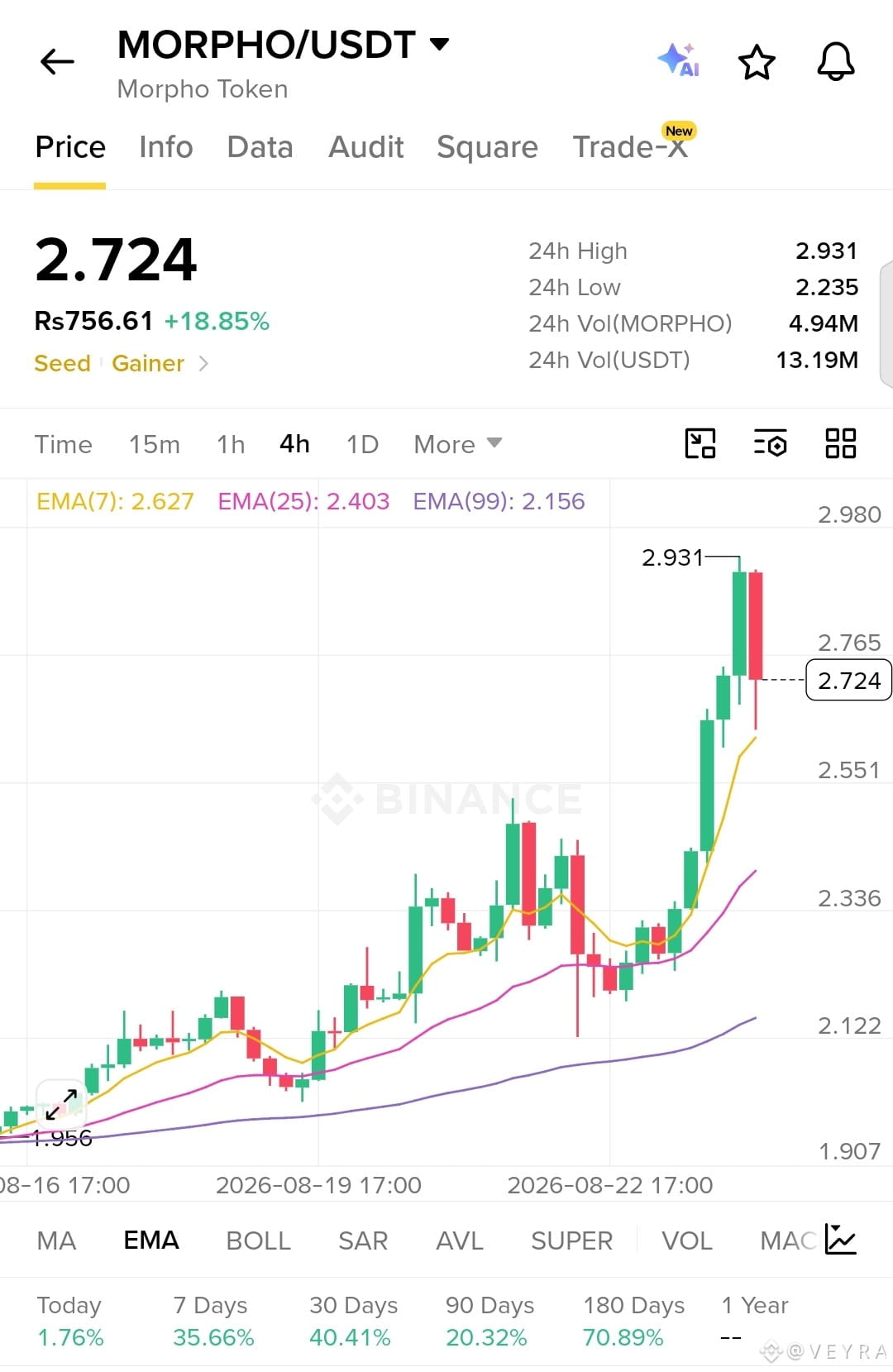
125
·
--
Bullish
$memes is showing strong bullish momentum. Buyers remain in control as the structure continues to hold.
Ep
0.00084000 – 0.00086000
TP
0.00089100
0.00096900
0.00099100
Sl
0.00079000
Liquidity was swept around 0.00051259 and price reacted aggressively. Buyers reclaimed the structure, and consolidation above 0.00079000 keeps continuation in play.
Let's go $memes
{alpha}(560xf74548802f4c700315f019fde17178b392ee4444)
$memes is showing strong bullish momentum. Buyers remain in control as the structure continues to hold.
Ep
0.00084000 – 0.00086000
TP
0.00089100
0.00096900
0.00099100
Sl
0.00079000
Liquidity was swept around 0.00051259 and price reacted aggressively. Buyers reclaimed the structure, and consolidation above 0.00079000 keeps continuation in play.
Let's go $memes
Ep
0.00084000 – 0.00086000
TP
0.00089100
0.00096900
0.00099100
Sl
0.00079000
Liquidity was swept around 0.00051259 and price reacted aggressively. Buyers reclaimed the structure, and consolidation above 0.00079000 keeps continuation in play.
Let's go $memes
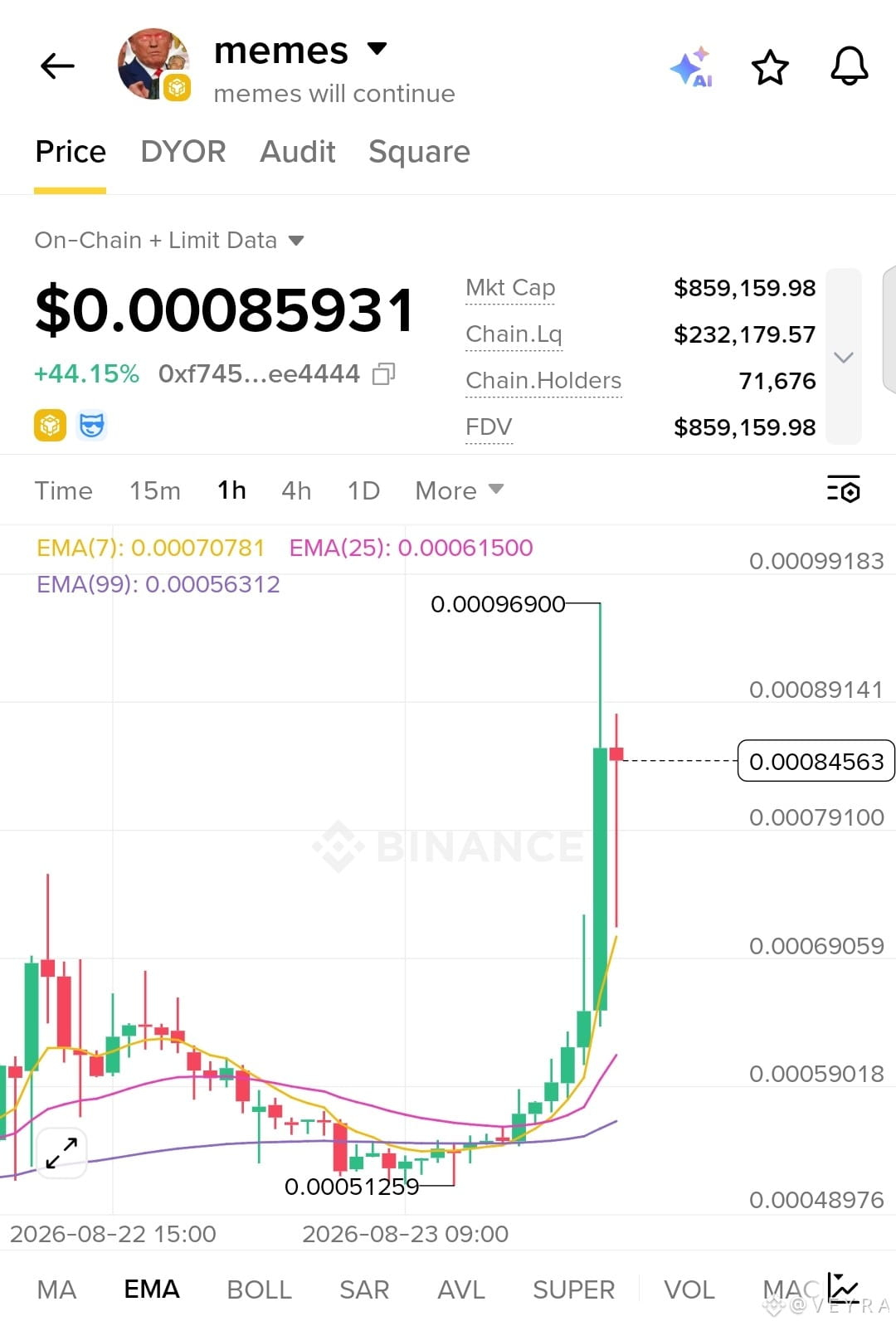
1
1
655
·
--

Article
Markets Are Sending Mixed Signals as Crypto Rallies, Trade Tensions Rise and AI Costs ClimbI’m noticing a market that is moving in several directions at once. Crypto speculation is heating up, Wall Street has lost some of its recent momentum, trade relations between the United States and Canada have deteriorated, and the cost of building AI infrastructure is moving higher.
The sharp move in the Official Trump token has been one of the most visible developments. TRUMP climbed above $3.40, reaching its highest level since March 21. The move came after a period in which the token had traded considerably lower, making the rally particularly noticeable across the crypto market.
The size and speed of the move also show how quickly sentiment can change in politically connected crypto assets. TRUMP attracted renewed buying as traders pushed the price through short-term resistance levels. However, the rally should be viewed carefully because a rapid price increase does not necessarily establish a lasting trend.
Part of the renewed interest has been connected to speculation surrounding Trump-related developments in the crypto sector. Some reports and social-media discussions have pointed toward possible future blockchain initiatives, although unconfirmed speculation should not be treated as established information. For traders, the important point is that the token remains highly sensitive to headlines, sentiment and changes in speculative positioning.
The wider crypto market has also benefited from improving sentiment. Bitcoin moved above $70,000 during the week after renewed political support for cryptocurrency legislation in Washington. That helped lift several other digital assets and crypto-related stocks as investors looked for clearer regulatory conditions.
Still, the crypto rally is taking place alongside a very different environment in traditional markets.
The S&P 500 ended its recent winning run, finishing the latest week lower after three consecutive weekly gains. The index remained firmly higher for the year, but the weekly decline showed that investors are becoming more cautious after a strong stretch for U.S. equities.
Higher Treasury yields have become an important part of the story. When longer-term yields rise, stocks can face pressure because investors have a more attractive alternative in fixed-income markets. Higher borrowing costs can also make future corporate investments more expensive, particularly for companies that depend heavily on financing.
Inflation expectations are another concern. Energy prices and international tensions have added uncertainty to the economic outlook, while investors continue to watch the Federal Reserve for clues about the direction of interest rates.
The weakness in equities is therefore not necessarily a sign that the broader bull market has ended. Instead, it reflects a market that has become more sensitive to valuation, interest rates and economic risks after a strong advance.
Trade relations are adding another source of uncertainty.
Negotiations between the United States and Canada have broken down, with Canada indicating that it will respond to new U.S. tariffs with retaliatory measures. The dispute is significant because the two countries have deeply integrated supply chains, particularly across manufacturing, energy, agriculture and industrial sectors.
Canadian Prime Minister Mark Carney said Canada could not accept terms that Ottawa viewed as damaging to Canadian businesses and economic interests. The breakdown means companies on both sides of the border now face greater uncertainty over future trading costs.
Tariffs can have effects that extend beyond the countries directly involved. Businesses facing higher import costs may attempt to absorb those expenses, reduce margins or pass them on to customers. If companies increase prices, the resulting pressure can complicate the inflation outlook.
That matters for financial markets because inflation and interest rates are closely connected. If tariffs contribute to persistent price increases, central banks may have less room to reduce borrowing costs quickly.
The technology sector is facing a different type of pressure.
Nvidia has reportedly informed some customers that prices for AI servers containing its chips could rise by more than 15% for systems scheduled for delivery in early 2027. The reported increases are linked largely to higher memory costs and the enormous demand for components used in AI computing.
The development highlights an important issue behind the artificial-intelligence investment boom. Demand for AI computing remains extremely strong, but building the infrastructure required to support that demand is becoming increasingly expensive.
Modern AI servers require powerful processors, advanced networking equipment and large quantities of high-bandwidth memory. As technology companies and cloud providers continue expanding data-center capacity, competition for these components has intensified.
For Nvidia, higher server prices could support revenue because customers are still willing to spend heavily on AI infrastructure. But higher costs could eventually force customers to reconsider how quickly they expand capacity.
The market will therefore be watching Nvidia’s upcoming earnings closely. Investors will want to see whether demand continues to justify the enormous capital expenditure being committed to AI infrastructure.
At the same time, the cancellation of Bitcoin Standard Treasury’s planned Cantor SPAC transaction provides a reminder that access to capital can change quickly.
Bitcoin treasury companies became increasingly popular as businesses attempted to raise capital and use the proceeds to accumulate Bitcoin. The proposed BSTR transaction was particularly ambitious, with plans involving tens of thousands of BTC and significant private financing.
The planned merger with Cantor Equity Partners I has now been terminated. That does not mean the Bitcoin treasury strategy has disappeared, but it does show that large capital-market transactions can become difficult when market conditions change.
For investors, this is an important distinction. Strong Bitcoin prices can support the value of treasury strategies, but the companies behind those strategies still need financing, liquidity and investor confidence to expand their holdings.
These developments create a market environment where individual assets can behave very differently from the broader economy.
TRUMP can rally sharply because speculative demand returns to crypto. Bitcoin can benefit from regulatory optimism. Meanwhile, the S&P 500 can weaken because bond yields rise. Canadian trade tensions can increase concerns about inflation, while higher AI hardware costs raise questions about technology-sector spending.
There is no single narrative controlling everything.
Instead, markets are being driven by several competing forces at the same time: political decisions, trade policy, interest rates, technology investment, crypto regulation and investor risk appetite.
That makes the next few weeks particularly important. Nvidia’s results should provide more evidence about the strength of AI demand. Developments in U.S.-Canada negotiations will determine whether the tariff dispute escalates further. Crypto traders will be watching whether Bitcoin can maintain its recent gains and whether speculative tokens such as TRUMP can hold their breakouts.
The bigger picture is that investors are still willing to take significant risks when momentum appears, but the economic foundation underneath those trades matters more than it did during easier market conditions.
The latest moves do not point to a simple bullish or bearish market. They point to a market becoming more selective, more headline-sensitive and increasingly focused on the real cost of capital.
That is likely to remain the defining feature of the market as investors move into the next round of economic, corporate and political developments.
#NvidiaAIServerPricesRiseOver15% #BSTREndsCantorSPACGoPublicPlan #USCanadaTradeTalksCollapseCanadaVowsRetaliation #SP500EndsWeeklyWinStreak #TRUMPBreaksAbove$3.4HighestSinceMarch21
Markets Are Sending Mixed Signals as Crypto Rallies, Trade Tensions Rise and AI Costs Climb
I’m noticing a market that is moving in several directions at once. Crypto speculation is heating up, Wall Street has lost some of its recent momentum, trade relations between the United States and Canada have deteriorated, and the cost of building AI infrastructure is moving higher.
The sharp move in the Official Trump token has been one of the most visible developments. TRUMP climbed above $3.40, reaching its highest level since March 21. The move came after a period in which the token had traded considerably lower, making the rally particularly noticeable across the crypto market.
The size and speed of the move also show how quickly sentiment can change in politically connected crypto assets. TRUMP attracted renewed buying as traders pushed the price through short-term resistance levels. However, the rally should be viewed carefully because a rapid price increase does not necessarily establish a lasting trend.
Part of the renewed interest has been connected to speculation surrounding Trump-related developments in the crypto sector. Some reports and social-media discussions have pointed toward possible future blockchain initiatives, although unconfirmed speculation should not be treated as established information. For traders, the important point is that the token remains highly sensitive to headlines, sentiment and changes in speculative positioning.
The wider crypto market has also benefited from improving sentiment. Bitcoin moved above $70,000 during the week after renewed political support for cryptocurrency legislation in Washington. That helped lift several other digital assets and crypto-related stocks as investors looked for clearer regulatory conditions.
Still, the crypto rally is taking place alongside a very different environment in traditional markets.
The S&P 500 ended its recent winning run, finishing the latest week lower after three consecutive weekly gains. The index remained firmly higher for the year, but the weekly decline showed that investors are becoming more cautious after a strong stretch for U.S. equities.
Higher Treasury yields have become an important part of the story. When longer-term yields rise, stocks can face pressure because investors have a more attractive alternative in fixed-income markets. Higher borrowing costs can also make future corporate investments more expensive, particularly for companies that depend heavily on financing.
Inflation expectations are another concern. Energy prices and international tensions have added uncertainty to the economic outlook, while investors continue to watch the Federal Reserve for clues about the direction of interest rates.
The weakness in equities is therefore not necessarily a sign that the broader bull market has ended. Instead, it reflects a market that has become more sensitive to valuation, interest rates and economic risks after a strong advance.
Trade relations are adding another source of uncertainty.
Negotiations between the United States and Canada have broken down, with Canada indicating that it will respond to new U.S. tariffs with retaliatory measures. The dispute is significant because the two countries have deeply integrated supply chains, particularly across manufacturing, energy, agriculture and industrial sectors.
Canadian Prime Minister Mark Carney said Canada could not accept terms that Ottawa viewed as damaging to Canadian businesses and economic interests. The breakdown means companies on both sides of the border now face greater uncertainty over future trading costs.
Tariffs can have effects that extend beyond the countries directly involved. Businesses facing higher import costs may attempt to absorb those expenses, reduce margins or pass them on to customers. If companies increase prices, the resulting pressure can complicate the inflation outlook.
That matters for financial markets because inflation and interest rates are closely connected. If tariffs contribute to persistent price increases, central banks may have less room to reduce borrowing costs quickly.
The technology sector is facing a different type of pressure.
Nvidia has reportedly informed some customers that prices for AI servers containing its chips could rise by more than 15% for systems scheduled for delivery in early 2027. The reported increases are linked largely to higher memory costs and the enormous demand for components used in AI computing.
The development highlights an important issue behind the artificial-intelligence investment boom. Demand for AI computing remains extremely strong, but building the infrastructure required to support that demand is becoming increasingly expensive.
Modern AI servers require powerful processors, advanced networking equipment and large quantities of high-bandwidth memory. As technology companies and cloud providers continue expanding data-center capacity, competition for these components has intensified.
For Nvidia, higher server prices could support revenue because customers are still willing to spend heavily on AI infrastructure. But higher costs could eventually force customers to reconsider how quickly they expand capacity.
The market will therefore be watching Nvidia’s upcoming earnings closely. Investors will want to see whether demand continues to justify the enormous capital expenditure being committed to AI infrastructure.
At the same time, the cancellation of Bitcoin Standard Treasury’s planned Cantor SPAC transaction provides a reminder that access to capital can change quickly.
Bitcoin treasury companies became increasingly popular as businesses attempted to raise capital and use the proceeds to accumulate Bitcoin. The proposed BSTR transaction was particularly ambitious, with plans involving tens of thousands of BTC and significant private financing.
The planned merger with Cantor Equity Partners I has now been terminated. That does not mean the Bitcoin treasury strategy has disappeared, but it does show that large capital-market transactions can become difficult when market conditions change.
For investors, this is an important distinction. Strong Bitcoin prices can support the value of treasury strategies, but the companies behind those strategies still need financing, liquidity and investor confidence to expand their holdings.
These developments create a market environment where individual assets can behave very differently from the broader economy.
TRUMP can rally sharply because speculative demand returns to crypto. Bitcoin can benefit from regulatory optimism. Meanwhile, the S&P 500 can weaken because bond yields rise. Canadian trade tensions can increase concerns about inflation, while higher AI hardware costs raise questions about technology-sector spending.
There is no single narrative controlling everything.
Instead, markets are being driven by several competing forces at the same time: political decisions, trade policy, interest rates, technology investment, crypto regulation and investor risk appetite.
That makes the next few weeks particularly important. Nvidia’s results should provide more evidence about the strength of AI demand. Developments in U.S.-Canada negotiations will determine whether the tariff dispute escalates further. Crypto traders will be watching whether Bitcoin can maintain its recent gains and whether speculative tokens such as TRUMP can hold their breakouts.
The bigger picture is that investors are still willing to take significant risks when momentum appears, but the economic foundation underneath those trades matters more than it did during easier market conditions.
The latest moves do not point to a simple bullish or bearish market. They point to a market becoming more selective, more headline-sensitive and increasingly focused on the real cost of capital.
That is likely to remain the defining feature of the market as investors move into the next round of economic, corporate and political developments.
#NvidiaAIServerPricesRiseOver15% #BSTREndsCantorSPACGoPublicPlan #USCanadaTradeTalksCollapseCanadaVowsRetaliation #SP500EndsWeeklyWinStreak #TRUMPBreaksAbove$3.4HighestSinceMarch21
The sharp move in the Official Trump token has been one of the most visible developments. TRUMP climbed above $3.40, reaching its highest level since March 21. The move came after a period in which the token had traded considerably lower, making the rally particularly noticeable across the crypto market.
The size and speed of the move also show how quickly sentiment can change in politically connected crypto assets. TRUMP attracted renewed buying as traders pushed the price through short-term resistance levels. However, the rally should be viewed carefully because a rapid price increase does not necessarily establish a lasting trend.
Part of the renewed interest has been connected to speculation surrounding Trump-related developments in the crypto sector. Some reports and social-media discussions have pointed toward possible future blockchain initiatives, although unconfirmed speculation should not be treated as established information. For traders, the important point is that the token remains highly sensitive to headlines, sentiment and changes in speculative positioning.
The wider crypto market has also benefited from improving sentiment. Bitcoin moved above $70,000 during the week after renewed political support for cryptocurrency legislation in Washington. That helped lift several other digital assets and crypto-related stocks as investors looked for clearer regulatory conditions.
Still, the crypto rally is taking place alongside a very different environment in traditional markets.
The S&P 500 ended its recent winning run, finishing the latest week lower after three consecutive weekly gains. The index remained firmly higher for the year, but the weekly decline showed that investors are becoming more cautious after a strong stretch for U.S. equities.
Higher Treasury yields have become an important part of the story. When longer-term yields rise, stocks can face pressure because investors have a more attractive alternative in fixed-income markets. Higher borrowing costs can also make future corporate investments more expensive, particularly for companies that depend heavily on financing.
Inflation expectations are another concern. Energy prices and international tensions have added uncertainty to the economic outlook, while investors continue to watch the Federal Reserve for clues about the direction of interest rates.
The weakness in equities is therefore not necessarily a sign that the broader bull market has ended. Instead, it reflects a market that has become more sensitive to valuation, interest rates and economic risks after a strong advance.
Trade relations are adding another source of uncertainty.
Negotiations between the United States and Canada have broken down, with Canada indicating that it will respond to new U.S. tariffs with retaliatory measures. The dispute is significant because the two countries have deeply integrated supply chains, particularly across manufacturing, energy, agriculture and industrial sectors.
Canadian Prime Minister Mark Carney said Canada could not accept terms that Ottawa viewed as damaging to Canadian businesses and economic interests. The breakdown means companies on both sides of the border now face greater uncertainty over future trading costs.
Tariffs can have effects that extend beyond the countries directly involved. Businesses facing higher import costs may attempt to absorb those expenses, reduce margins or pass them on to customers. If companies increase prices, the resulting pressure can complicate the inflation outlook.
That matters for financial markets because inflation and interest rates are closely connected. If tariffs contribute to persistent price increases, central banks may have less room to reduce borrowing costs quickly.
The technology sector is facing a different type of pressure.
Nvidia has reportedly informed some customers that prices for AI servers containing its chips could rise by more than 15% for systems scheduled for delivery in early 2027. The reported increases are linked largely to higher memory costs and the enormous demand for components used in AI computing.
The development highlights an important issue behind the artificial-intelligence investment boom. Demand for AI computing remains extremely strong, but building the infrastructure required to support that demand is becoming increasingly expensive.
Modern AI servers require powerful processors, advanced networking equipment and large quantities of high-bandwidth memory. As technology companies and cloud providers continue expanding data-center capacity, competition for these components has intensified.
For Nvidia, higher server prices could support revenue because customers are still willing to spend heavily on AI infrastructure. But higher costs could eventually force customers to reconsider how quickly they expand capacity.
The market will therefore be watching Nvidia’s upcoming earnings closely. Investors will want to see whether demand continues to justify the enormous capital expenditure being committed to AI infrastructure.
At the same time, the cancellation of Bitcoin Standard Treasury’s planned Cantor SPAC transaction provides a reminder that access to capital can change quickly.
Bitcoin treasury companies became increasingly popular as businesses attempted to raise capital and use the proceeds to accumulate Bitcoin. The proposed BSTR transaction was particularly ambitious, with plans involving tens of thousands of BTC and significant private financing.
The planned merger with Cantor Equity Partners I has now been terminated. That does not mean the Bitcoin treasury strategy has disappeared, but it does show that large capital-market transactions can become difficult when market conditions change.
For investors, this is an important distinction. Strong Bitcoin prices can support the value of treasury strategies, but the companies behind those strategies still need financing, liquidity and investor confidence to expand their holdings.
These developments create a market environment where individual assets can behave very differently from the broader economy.
TRUMP can rally sharply because speculative demand returns to crypto. Bitcoin can benefit from regulatory optimism. Meanwhile, the S&P 500 can weaken because bond yields rise. Canadian trade tensions can increase concerns about inflation, while higher AI hardware costs raise questions about technology-sector spending.
There is no single narrative controlling everything.
Instead, markets are being driven by several competing forces at the same time: political decisions, trade policy, interest rates, technology investment, crypto regulation and investor risk appetite.
That makes the next few weeks particularly important. Nvidia’s results should provide more evidence about the strength of AI demand. Developments in U.S.-Canada negotiations will determine whether the tariff dispute escalates further. Crypto traders will be watching whether Bitcoin can maintain its recent gains and whether speculative tokens such as TRUMP can hold their breakouts.
The bigger picture is that investors are still willing to take significant risks when momentum appears, but the economic foundation underneath those trades matters more than it did during easier market conditions.
The latest moves do not point to a simple bullish or bearish market. They point to a market becoming more selective, more headline-sensitive and increasingly focused on the real cost of capital.
That is likely to remain the defining feature of the market as investors move into the next round of economic, corporate and political developments.
#NvidiaAIServerPricesRiseOver15% #BSTREndsCantorSPACGoPublicPlan #USCanadaTradeTalksCollapseCanadaVowsRetaliation #SP500EndsWeeklyWinStreak #TRUMPBreaksAbove$3.4HighestSinceMarch21
6
9
5.8k
·
--
Bullish
If you bought $ETH last month, you'd have outperformed someone holding Silver for 45 years.#ETH
{future}(ETHUSDT)
If you bought $ETH last month, you'd have outperformed someone holding Silver for 45 years.#ETH
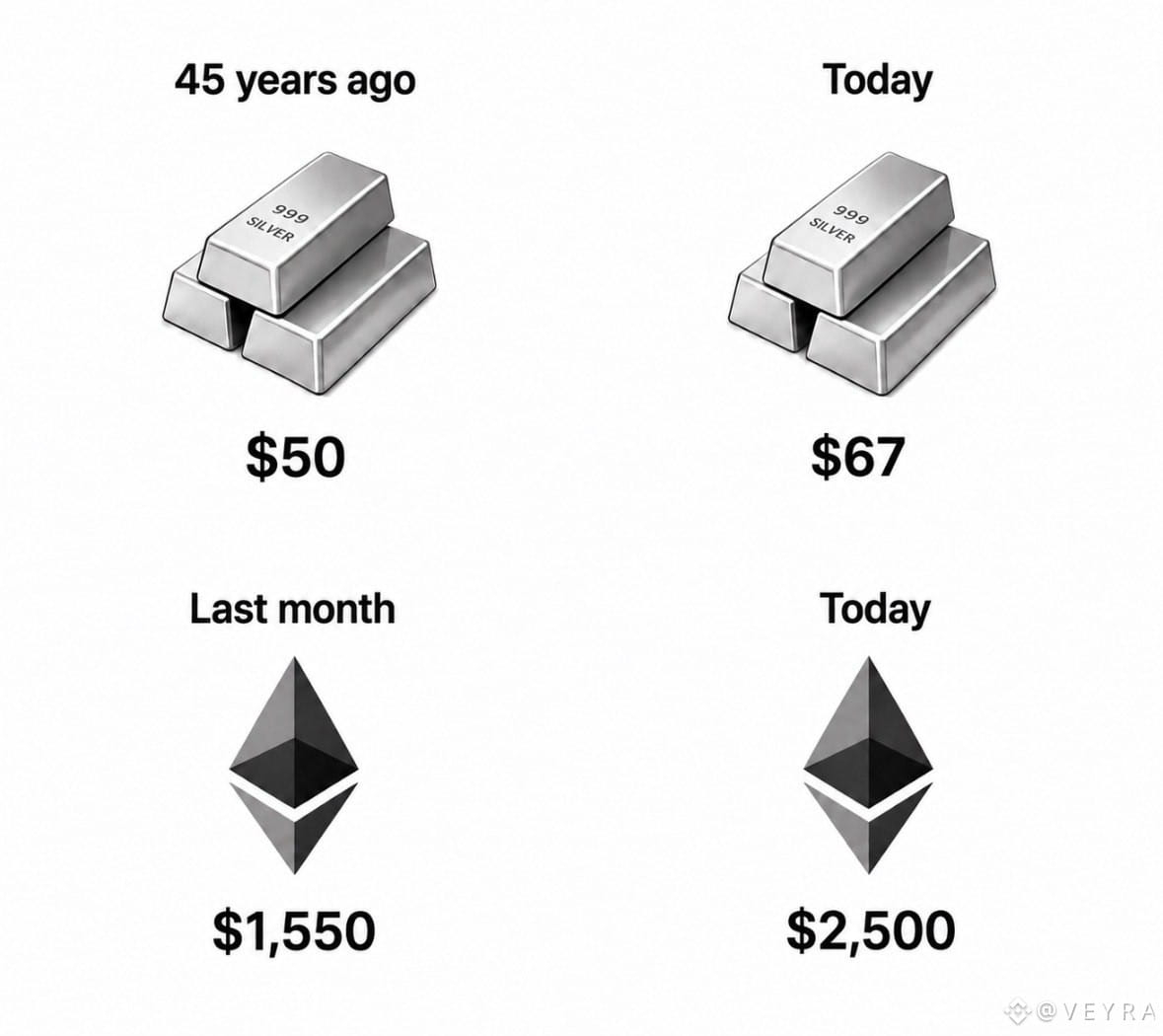
1
151
·
--
Bullish
🚨 BREAKING 🚨
Donald Trump’s new crypto project could reportedly launch within a month.
The big question now: which token will attract early attention before the official launch?
I was early on $TRUMP . I’ll be watching closely for the next major Trump-linked crypto opportunity. 🔔
Do your own research before buying.
🚨 BREAKING 🚨
Donald Trump’s new crypto project could reportedly launch within a month.
The big question now: which token will attract early attention before the official launch?
I was early on $TRUMP . I’ll be watching closely for the next major Trump-linked crypto opportunity. 🔔
Do your own research before buying.
Donald Trump’s new crypto project could reportedly launch within a month.
The big question now: which token will attract early attention before the official launch?
I was early on $TRUMP . I’ll be watching closely for the next major Trump-linked crypto opportunity. 🔔
Do your own research before buying.
198

·
--
Bullish
🚨 $550 MILLION IN LONG POSITIONS WIPED OUT
Around $550,000,000 in crypto long positions were liquidated in just 60 minutes, triggering a sharp wave of forced selling across the market.
This kind of liquidation cascade can rapidly increase volatility as leveraged traders are forced out of their positions.
Stay alert. Leverage cuts both ways. ⚠️📉
#USCanadaTradeTalksCollapseCanadaVowsRetaliation #SP500EndsWeeklyWinStreak #SandboxSANDSuspectedInfiniteMintFlawOnBase #USTariffsOnCanadianGoodsTakeEffect #USThreeMajorIndexesPostWeeklyLosses
🚨 $550 MILLION IN LONG POSITIONS WIPED OUT
Around $550,000,000 in crypto long positions were liquidated in just 60 minutes, triggering a sharp wave of forced selling across the market.
This kind of liquidation cascade can rapidly increase volatility as leveraged traders are forced out of their positions.
Stay alert. Leverage cuts both ways. ⚠️📉
#USCanadaTradeTalksCollapseCanadaVowsRetaliation #SP500EndsWeeklyWinStreak #SandboxSANDSuspectedInfiniteMintFlawOnBase #USTariffsOnCanadianGoodsTakeEffect #USThreeMajorIndexesPostWeeklyLosses
Around $550,000,000 in crypto long positions were liquidated in just 60 minutes, triggering a sharp wave of forced selling across the market.
This kind of liquidation cascade can rapidly increase volatility as leveraged traders are forced out of their positions.
Stay alert. Leverage cuts both ways. ⚠️📉
#USCanadaTradeTalksCollapseCanadaVowsRetaliation #SP500EndsWeeklyWinStreak #SandboxSANDSuspectedInfiniteMintFlawOnBase #USTariffsOnCanadianGoodsTakeEffect #USThreeMajorIndexesPostWeeklyLosses

169
·
--
Bullish
Trump says tariffs made the U.S. “rich as hell,” with tariff collections rising into the hundreds of billions.
But claims about massive daily collections and trillions were overstated. Court-ordered refunds erased net gains in some months.
The key reason: tariffs are generally paid upfront by U.S. importers, not directly by foreign governments. Those costs can then be passed through to businesses and consumers.
Tariffs remain only a small share of total federal revenue, so the headline numbers need context.
$TRUMP #TRUMP
{future}(TRUMPUSDT)
Trump says tariffs made the U.S. “rich as hell,” with tariff collections rising into the hundreds of billions.
But claims about massive daily collections and trillions were overstated. Court-ordered refunds erased net gains in some months.
The key reason: tariffs are generally paid upfront by U.S. importers, not directly by foreign governments. Those costs can then be passed through to businesses and consumers.
Tariffs remain only a small share of total federal revenue, so the headline numbers need context.
$TRUMP #TRUMP
But claims about massive daily collections and trillions were overstated. Court-ordered refunds erased net gains in some months.
The key reason: tariffs are generally paid upfront by U.S. importers, not directly by foreign governments. Those costs can then be passed through to businesses and consumers.
Tariffs remain only a small share of total federal revenue, so the headline numbers need context.
$TRUMP #TRUMP

164
Log in to explore more content
Join global crypto users on Binance Square
⚡️ Get latest and useful information about crypto.
💬 Trusted by the world’s largest crypto exchange.
👍 Discover real insights from verified creators.
Email / Phone number
Trending Topics
BTCReaches$80000
19,023 views
340 Discussing
Bitcoin Stalking the $80,000 Milestone: Genuine Expansion vs. Liquidity Exhaustion
Bitcoin is aggressively knocking on the door of the $80,000 mark after surging from $64,000 to tap local highs near $79,800. While retail timelines are already pricing in a parabolic continuation, examining the structural conditions near psychological thresholds provides a clearer picture of market health.
Key Structural Drivers Behind the Push:
Cascading Squeeze vs. Spot ETF Backing:
The explosive run toward $80k was heavily propelled by forced short liquidations as $BTC cleared key resistance between $72k–$75k. Crucially, this was accompanied by nearly $2B in weekly spot ETF inflows, signaling institutional capital absorption rather than an isolated leverage spike.
The $80k Psychological Wall:
The $79,500–$80,000 band represents a massive cluster of resting limit sell orders and un-triggered call option open interest. As price probes this ceiling, buyers must absorb heavy distribution from earlier dip-buyers taking profit.
Macro Tailwinds:
The broader hard-asset expansion—catalyzed by softer Treasury yields and dollar weakness, continues to provide macro liquidity support for digital assets.
The Structural Reality:
Reaching a major psychological round number like $80,000 often triggers a high-volatility liquidity sweep before genuine price discovery begins. If aggressive breakout buyers get absorbed at the threshold, a healthy consolidation toward the $75,500–$76,500 support shelf would allow the market to build structure.
A clean reclaim of $80k with sustained spot volume opens the door to further expansion, but chasing momentum directly into multi-month supply walls carries high asymmetric risk.
#BTCReaches$80000
Shontz
·7 Likes
·1.3k views
OilHoldsLosses
6,160 views
264 Discussing
ZECBreaksKeyResistanceUp75.5%
19,026 views
450 Discussing