
Bit Gurly
10.2k Posts

Bit Gurly
 Square Verified+
Belive it, manifest it!
Open Trade

WOO Holder
Frequent Trader
4.7 Years
107 Following
69.7K+ Followers
65.2K+ Liked
Posts
Portfolio
All
Quotes
Videos
Live
PINNED
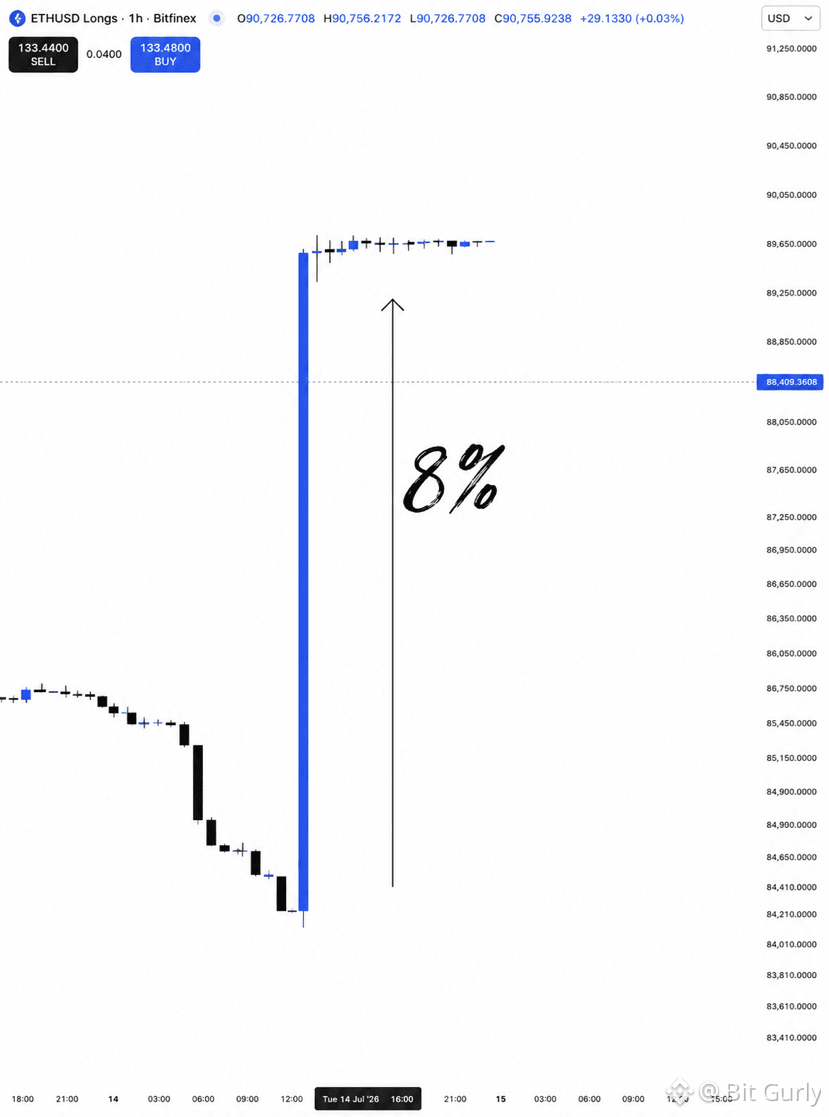
Ethereum longs jumped 8% in a single move today.
At the same time, Tom Lee says the bottom may already be in.
Could be coincidence but someone already knows something.
$ETH
#FootballSeason2026 #JuneCPIFedHike20% #TrumpMeetsOnWiderIranOffensive
At the same time, Tom Lee says the bottom may already be in.
Could be coincidence but someone already knows something.
$ETH
#FootballSeason2026 #JuneCPIFedHike20% #TrumpMeetsOnWiderIranOffensive
PINNED
Partly True
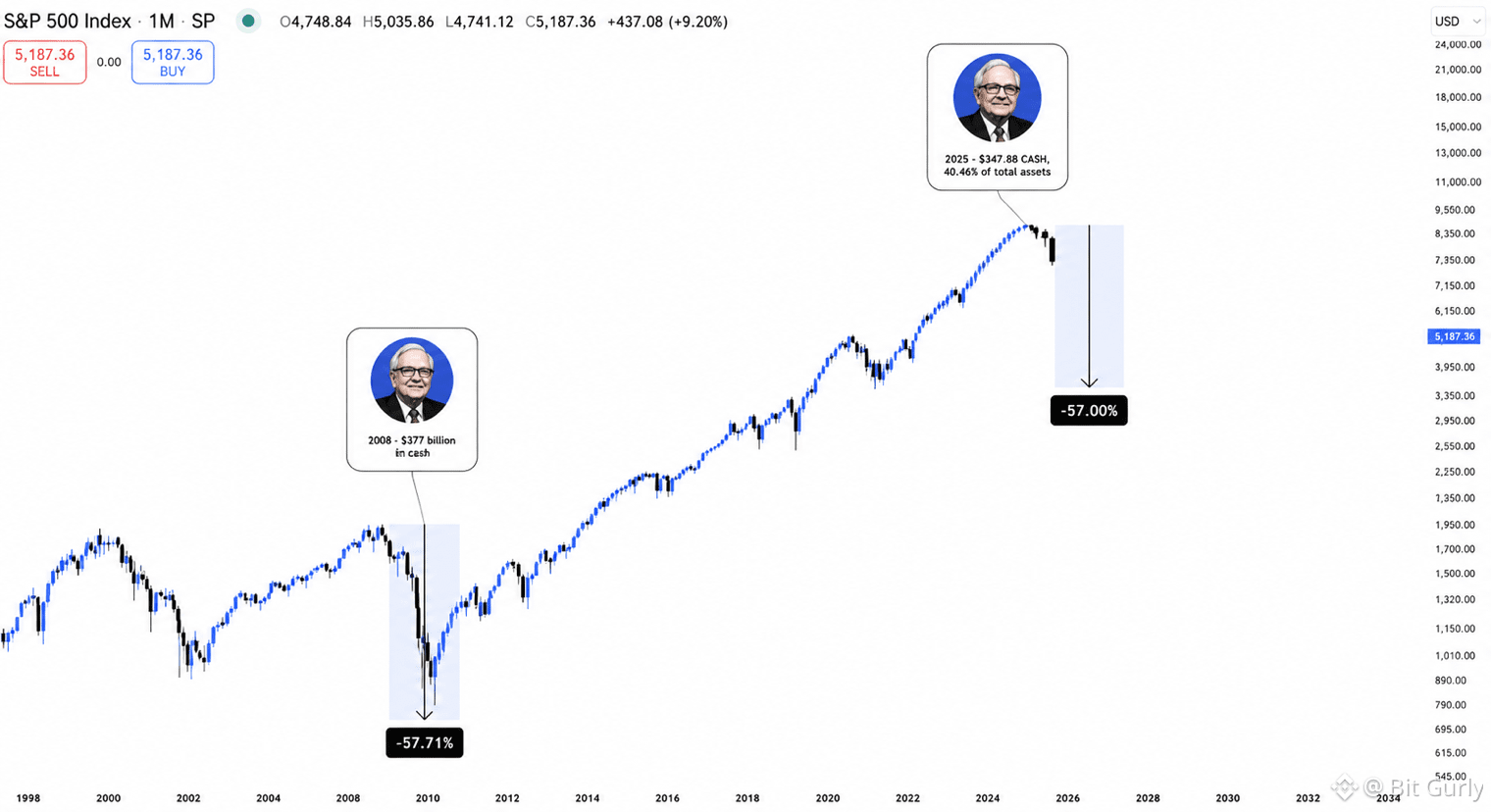
Warren Buffett is sitting on nearly $400B in cash, and that’s hard to ignore.
The last time Berkshire built a cash pile this large was around the 2007–2008 period. It doesn’t guarantee a crash, but it does suggest Buffett sees more value in waiting than chasing current prices.
GM.
#S&P500 #BitcoinPlansECashHardFork #SpaceXAnthropicOpenAIIPOsMayTopVCExitsSince2000
The last time Berkshire built a cash pile this large was around the 2007–2008 period. It doesn’t guarantee a crash, but it does suggest Buffett sees more value in waiting than chasing current prices.
GM.
#S&P500 #BitcoinPlansECashHardFork #SpaceXAnthropicOpenAIIPOsMayTopVCExitsSince2000
I went into the DuskEVM bridge guide looking for withdrawal timing.
The fee line was what made me stop.
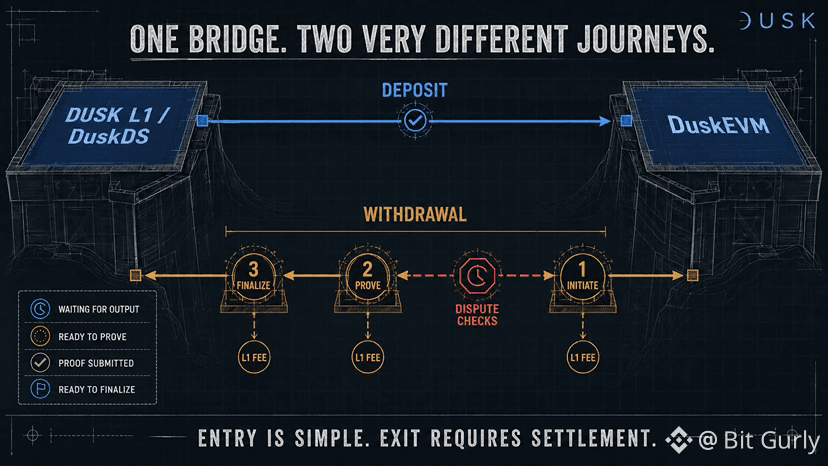
Moving DUSK into the current DuskEVM testnet flow is fairly simple: submit the deposit on Dusk L1, then wait for the balance to appear on DuskEVM.
Coming back is different.
A withdrawal requires three separate actions:
Initiate it on DuskEVM.
Prove it on Dusk L1.
Finalize it on Dusk L1.
The wallet can move through “Waiting for output proposal,” “Ready to prove,” “Proof submitted” and “Waiting to finalize” before the DUSK is released.
That part makes sense. The return journey is where DuskDS verifies the state coming from the EVM layer.
But then I noticed the user also needs enough unshielded DUSK on the L1 to pay for both the proof and finalization transactions.
So someone can hold DUSK inside DuskEVM, start moving it back, and still need a separate usable L1 balance to complete the exit.
The funds are not necessarily stuck. The user may simply be missing the asset required to finish proving that they are allowed to retrieve them.
That feels like a small technical requirement until DuskEVM is used by someone who has never touched Dusk L1 directly.
A Solidity developer may understand contracts and MetaMask perfectly, while the end user only sees a withdrawal sitting at “Waiting to finalize.”
Dusk’s docs are careful here. They tell users to follow the wallet status rather than estimate readiness from elapsed time alone.
Now I am watching how much of this survives into the final production experience.
Will users still manually manage three transactions and two L1 fees, or will the wallet abstract the process without hiding which settlement stage their money has actually reached?
The bridge is not only moving DUSK between layers. It is where DuskEVM’s familiar front end meets Dusk-native settlement and where that difference becomes impossible to ignore.
@Dusk $DUSK #dusk
The fee line was what made me stop.
Moving DUSK into the current DuskEVM testnet flow is fairly simple: submit the deposit on Dusk L1, then wait for the balance to appear on DuskEVM.
Coming back is different.
A withdrawal requires three separate actions:
Initiate it on DuskEVM.
Prove it on Dusk L1.
Finalize it on Dusk L1.
The wallet can move through “Waiting for output proposal,” “Ready to prove,” “Proof submitted” and “Waiting to finalize” before the DUSK is released.
That part makes sense. The return journey is where DuskDS verifies the state coming from the EVM layer.
But then I noticed the user also needs enough unshielded DUSK on the L1 to pay for both the proof and finalization transactions.
So someone can hold DUSK inside DuskEVM, start moving it back, and still need a separate usable L1 balance to complete the exit.
The funds are not necessarily stuck. The user may simply be missing the asset required to finish proving that they are allowed to retrieve them.
That feels like a small technical requirement until DuskEVM is used by someone who has never touched Dusk L1 directly.
A Solidity developer may understand contracts and MetaMask perfectly, while the end user only sees a withdrawal sitting at “Waiting to finalize.”
Dusk’s docs are careful here. They tell users to follow the wallet status rather than estimate readiness from elapsed time alone.
Now I am watching how much of this survives into the final production experience.
Will users still manually manage three transactions and two L1 fees, or will the wallet abstract the process without hiding which settlement stage their money has actually reached?
The bridge is not only moving DUSK between layers. It is where DuskEVM’s familiar front end meets Dusk-native settlement and where that difference becomes impossible to ignore.
@Dusk $DUSK #dusk
I had been looking at DuskEVM and Dusk Trade as two separate parts of the roadmap.
One brings Ethereum developers. The other brings tokenized financial products to investors.
Then I realized they may be trying to solve opposite sides of the same problem.
Developers rarely stay on a new network just because deployment is easy. They need users, liquidity and assets worth building around.
Investors have the reverse problem. A platform can offer tokenized assets, but those assets become far more useful when there are wallets, exchanges, lending markets and other applications ready to support them.
DuskEVM could supply the applications.
Dusk Trade could supply the assets and users.
$DUSK sits between them as the gas token for activity on DuskEVM, while staking helps secure the wider network.
On paper, the loop makes sense. A tokenized asset reaches Dusk Trade, investors gain access to it, and developers build services around its trading, borrowing or settlement. More use then creates more transactions paid in @Dusk .
But the timing is where I paused.
If applications arrive before real assets and users, developers may find an empty market. If financial products arrive before useful applications and liquidity, investors may have little reason to do anything beyond the original purchase.
Neither side can wait forever for the other one to appear.
So I would not judge this strategy only by the number of DuskEVM deployments or the amount listed on Dusk Trade.
I would look for overlap: assets that are actually being used inside applications, investors returning for more than one transaction, and liquidity moving between the product and developer sides of the ecosystem.
#dusk is not only trying to attract builders or investors.
It needs both groups to arrive close enough together for the $DUSK utility loop to start moving.
$DUSK
One brings Ethereum developers. The other brings tokenized financial products to investors.
Then I realized they may be trying to solve opposite sides of the same problem.
Developers rarely stay on a new network just because deployment is easy. They need users, liquidity and assets worth building around.
Investors have the reverse problem. A platform can offer tokenized assets, but those assets become far more useful when there are wallets, exchanges, lending markets and other applications ready to support them.
DuskEVM could supply the applications.
Dusk Trade could supply the assets and users.
$DUSK sits between them as the gas token for activity on DuskEVM, while staking helps secure the wider network.
On paper, the loop makes sense. A tokenized asset reaches Dusk Trade, investors gain access to it, and developers build services around its trading, borrowing or settlement. More use then creates more transactions paid in @Dusk .
But the timing is where I paused.
If applications arrive before real assets and users, developers may find an empty market. If financial products arrive before useful applications and liquidity, investors may have little reason to do anything beyond the original purchase.
Neither side can wait forever for the other one to appear.
So I would not judge this strategy only by the number of DuskEVM deployments or the amount listed on Dusk Trade.
I would look for overlap: assets that are actually being used inside applications, investors returning for more than one transaction, and liquidity moving between the product and developer sides of the ecosystem.
#dusk is not only trying to attract builders or investors.
It needs both groups to arrive close enough together for the $DUSK utility loop to start moving.
$DUSK
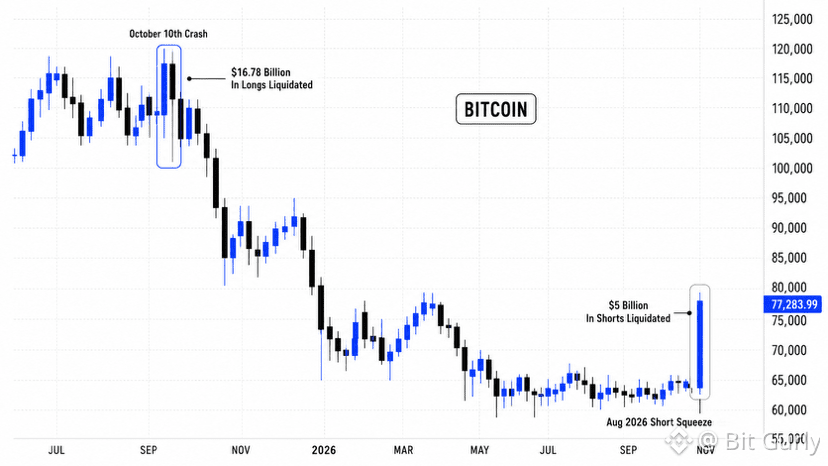
One massive long liquidation pushed Bitcoin into months of weakness.
Now a huge short liquidation has sent $BTC sharply higher.
One green candle doesn’t confirm a new bull run, but it shows how quickly market pressure can flip.
If buyers hold this move, could this short squeeze become the start of something bigger?
Now a huge short liquidation has sent $BTC sharply higher.
One green candle doesn’t confirm a new bull run, but it shows how quickly market pressure can flip.
If buyers hold this move, could this short squeeze become the start of something bigger?
@Dusk latest update keeps connecting the ECSP plan with more assets entering the ecosystem.
At first the logic looked straightforward.
A business raises capital.
Investors receive tokenized shares, bonds or loan exposure.
#dusk gains assets and activity.
Then I separated issuance from trading.
An ECSP can help fund the original offering. That does not mean investors will have somewhere liquid to sell the asset afterward.
Dusk’s NPEX relationship matters here because NPEX also brings regulated secondary-market infrastructure through its MTF licence.
So there is a possible route:
ECSP for raising the capital.
Dusk infrastructure for issuing and settling the asset.
NPEX or Dusk Trade for later market access.
Looks complete on paper.
But tokenizing an SME security does not suddenly create buyers on both sides. A small company’s bond can settle perfectly onchain and still trade once every few weeks with a wide spread.
That is the part the “more assets and TVL” language skips over.
Bringing an asset onto Dusk creates supply.
Keeping it useful requires pricing, buyers, market makers, corporate actions and an exit route.
I would not measure this strategy only through the value of assets issued.
I would watch what happens after issuance.
Do investors hold everything until maturity?
Can they exit without taking a large discount?
Does the same asset generate real secondary turnover?
The first offering proves Dusk can originate an asset.
The first functioning secondary market proves it can support one.
$DUSK
At first the logic looked straightforward.
A business raises capital.
Investors receive tokenized shares, bonds or loan exposure.
#dusk gains assets and activity.
Then I separated issuance from trading.
An ECSP can help fund the original offering. That does not mean investors will have somewhere liquid to sell the asset afterward.
Dusk’s NPEX relationship matters here because NPEX also brings regulated secondary-market infrastructure through its MTF licence.
So there is a possible route:
ECSP for raising the capital.
Dusk infrastructure for issuing and settling the asset.
NPEX or Dusk Trade for later market access.
Looks complete on paper.
But tokenizing an SME security does not suddenly create buyers on both sides. A small company’s bond can settle perfectly onchain and still trade once every few weeks with a wide spread.
That is the part the “more assets and TVL” language skips over.
Bringing an asset onto Dusk creates supply.
Keeping it useful requires pricing, buyers, market makers, corporate actions and an exit route.
I would not measure this strategy only through the value of assets issued.
I would watch what happens after issuance.
Do investors hold everything until maturity?
Can they exit without taking a large discount?
Does the same asset generate real secondary turnover?
The first offering proves Dusk can originate an asset.
The first functioning secondary market proves it can support one.
$DUSK
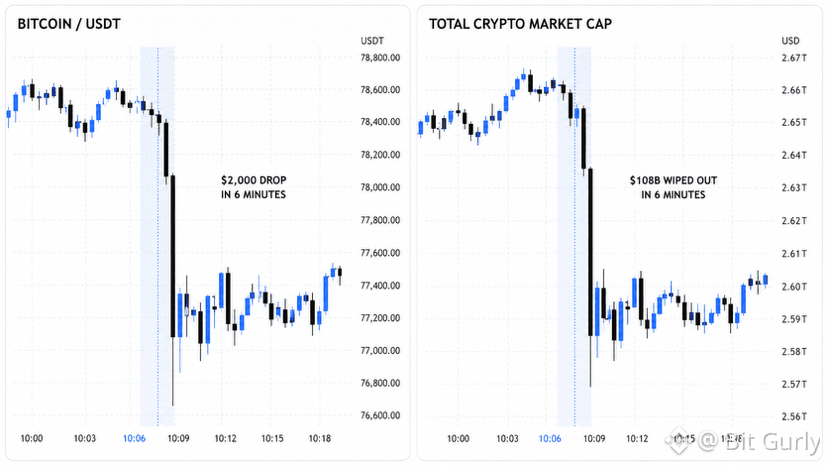
🚨 Crypto dropped sharply in just 6 minutes.
$BTC fell around $2,000, nearly $500M in long positions were liquidated, and $108B was wiped from the total crypto market cap.
The market is trying to recover, but volatility remains high.
$BTC fell around $2,000, nearly $500M in long positions were liquidated, and $108B was wiped from the total crypto market cap.
The market is trying to recover, but volatility remains high.
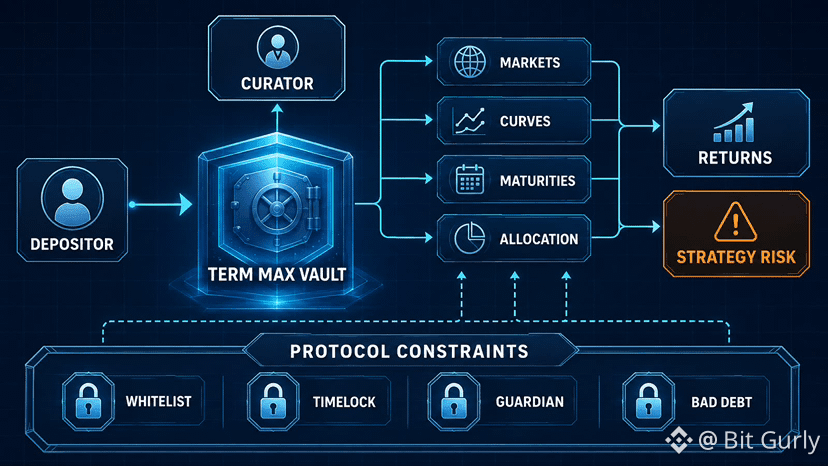
TermMax calls the vault participant a Depositor, which initially made the role sound almost passive.
The V2 curator controls made me read that description differently.
A Curator can choose markets, allocate capital, create orders, configure borrowing and lending curves, manage queues and charge a performance fee. The vault contract also exposes controls around minimum APY, market whitelisting, timelocks, guardians and bad-debt handling.
That is not simple yield routing.
It is delegated fixed-income portfolio management performed through smart contracts.
The depositor avoids placing every order personally, but the underlying decisions do not disappear. Someone still decides which maturity deserves capital, which collateral is acceptable, where a curve should begin and how much liquidity should be committed.
TermMax constrains that authority in useful ways. Whitelists limit available markets, timelocks delay sensitive changes and a guardian can cancel pending actions.
But those protections govern what a Curator is allowed to change. They cannot guarantee that the chosen markets, curves or allocations will perform well.
That makes headline vault APY a weak starting point for judging a @TermMax vault.
I would rather inspect the Curator’s market selection, curve history, performance fee, timelock and response to bad debt.
The depositor is not removing strategy risk. They are choosing who is allowed to manage it.
#TermMax
The V2 curator controls made me read that description differently.
A Curator can choose markets, allocate capital, create orders, configure borrowing and lending curves, manage queues and charge a performance fee. The vault contract also exposes controls around minimum APY, market whitelisting, timelocks, guardians and bad-debt handling.
That is not simple yield routing.
It is delegated fixed-income portfolio management performed through smart contracts.
The depositor avoids placing every order personally, but the underlying decisions do not disappear. Someone still decides which maturity deserves capital, which collateral is acceptable, where a curve should begin and how much liquidity should be committed.
TermMax constrains that authority in useful ways. Whitelists limit available markets, timelocks delay sensitive changes and a guardian can cancel pending actions.
But those protections govern what a Curator is allowed to change. They cannot guarantee that the chosen markets, curves or allocations will perform well.
That makes headline vault APY a weak starting point for judging a @TermMax vault.
I would rather inspect the Curator’s market selection, curve history, performance fee, timelock and response to bad debt.
The depositor is not removing strategy risk. They are choosing who is allowed to manage it.
#TermMax
Verified
$DUSK
I assumed the new Dusk Wallet was mainly a redesign of the existing web wallet.
Then I read the April developer-preview announcement and checked the repositories.
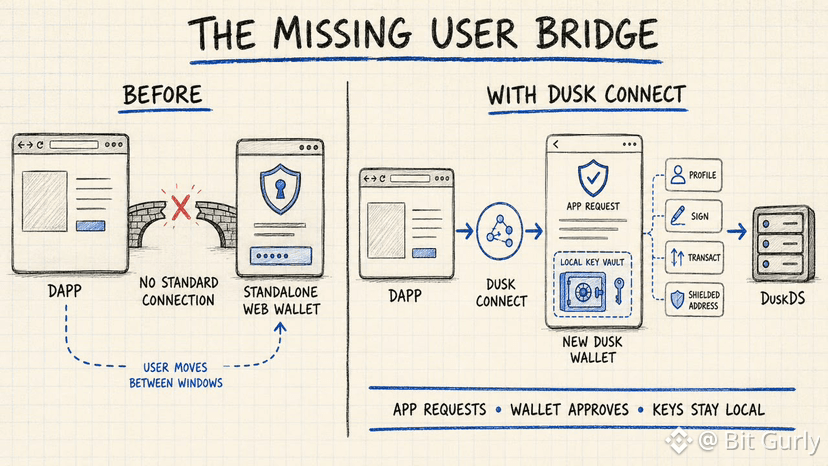
The old web wallet could interact with Dusk directly, but it was a standalone application. A dApp could not discover it, request a profile or ask it to sign a transaction through a standard connection flow.
That left a gap between Dusk contracts and actual users.
Dusk Connect fills the application side of that gap. It lets a dApp discover compatible wallets, request profile access and send user-approved actions through a shared provider interface.
The new Dusk Wallet sits on the other side.
It keeps the keys locally, shows the request and lets the user approve or reject it. Its first release includes public and Phoenix balances, shielding, private transfers, staking and DRC-20/DRC-721 asset flows.
One implementation detail stood out to me.
A dApp does not automatically receive everything after “Connect Wallet.” Public profile access, shielded receive addresses, message signing and transactions have separate request and approval flows. Permissions are also stored per origin.
That matters on Dusk because connecting to a financial application may involve more than exposing one public address.
But this is still a developer-preview story.
A connection standard becomes valuable only when real dApps adopt it and compatible wallets implement it correctly. One first-party wallet proves the interface can work; it does not yet prove a broad application ecosystem.
Dusk already had contracts, privacy and settlement.
Dusk Connect and the new wallet provide the missing interaction layer between them and the person clicking the button.
The milestone I would watch next is simple: a production DuskDS dApp where a user can connect, approve and complete a shielded or tokenized-asset action without leaving the application.
#dusk @Dusk
I assumed the new Dusk Wallet was mainly a redesign of the existing web wallet.
Then I read the April developer-preview announcement and checked the repositories.
The old web wallet could interact with Dusk directly, but it was a standalone application. A dApp could not discover it, request a profile or ask it to sign a transaction through a standard connection flow.
That left a gap between Dusk contracts and actual users.
Dusk Connect fills the application side of that gap. It lets a dApp discover compatible wallets, request profile access and send user-approved actions through a shared provider interface.
The new Dusk Wallet sits on the other side.
It keeps the keys locally, shows the request and lets the user approve or reject it. Its first release includes public and Phoenix balances, shielding, private transfers, staking and DRC-20/DRC-721 asset flows.
One implementation detail stood out to me.
A dApp does not automatically receive everything after “Connect Wallet.” Public profile access, shielded receive addresses, message signing and transactions have separate request and approval flows. Permissions are also stored per origin.
That matters on Dusk because connecting to a financial application may involve more than exposing one public address.
But this is still a developer-preview story.
A connection standard becomes valuable only when real dApps adopt it and compatible wallets implement it correctly. One first-party wallet proves the interface can work; it does not yet prove a broad application ecosystem.
Dusk already had contracts, privacy and settlement.
Dusk Connect and the new wallet provide the missing interaction layer between them and the person clicking the button.
The milestone I would watch next is simple: a production DuskDS dApp where a user can connect, approve and complete a shielded or tokenized-asset action without leaving the application.
#dusk @Dusk
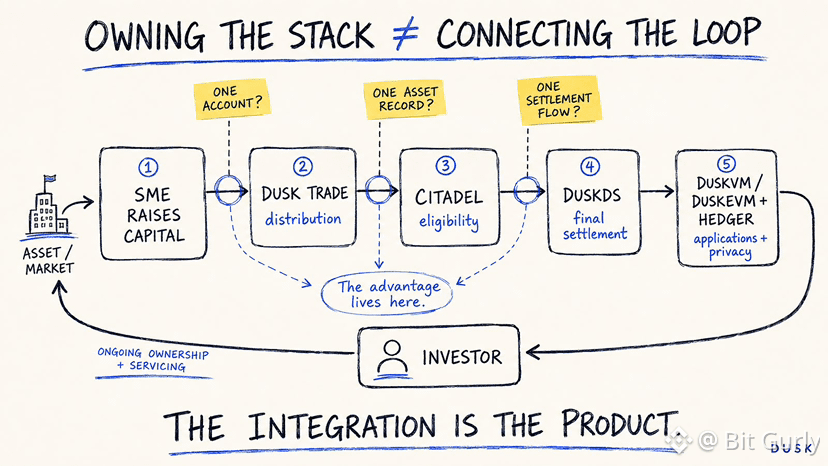
Confidentiality alone does not make a blockchain suitable for financial markets.
A private ownership transfer is still unreliable if participants cannot determine exactly when it becomes final.
This is why Dusk’s architecture matters beyond zero-knowledge proofs.
Applications can run through DuskEVM or DuskVM, while DuskDS handles consensus, data availability and settlement. Once a block is ratified through Succinct Attestation, the network reaches deterministic finality rather than leaving institutions exposed to normal user-facing reorg uncertainty.
I see the design as two connected requirements:
Protect the transaction while it is processed.
Make its final state unambiguous once settled.
For regulated assets, privacy protects the parties. Finality protects the market.
#dusk @Dusk $DUSK
A private ownership transfer is still unreliable if participants cannot determine exactly when it becomes final.
This is why Dusk’s architecture matters beyond zero-knowledge proofs.
Applications can run through DuskEVM or DuskVM, while DuskDS handles consensus, data availability and settlement. Once a block is ratified through Succinct Attestation, the network reaches deterministic finality rather than leaving institutions exposed to normal user-facing reorg uncertainty.
I see the design as two connected requirements:
Protect the transaction while it is processed.
Make its final state unambiguous once settled.
For regulated assets, privacy protects the parties. Finality protects the market.
#dusk @Dusk $DUSK
One sentence in TermMax’s documentation needs careful reading.
A borrower can purchase FTs from the market and use them to repay the debt. If those FTs trade below face value, this can cost less than repaying directly with debt tokens.
Mechanically, that is correct.
But the discount is not guaranteed to remain available.
An FT can be redeemed for one debt token at maturity. My expectation is that its price should move closer to that face value as maturity approaches, unless liquidity or collateral risk changes the market.
A borrower who sold FTs at $0.80 may therefore not be able to buy them back later at the same price.
If the FT trades at $0.98 and the swap includes fees and slippage, most of the apparent repayment saving has already disappeared. Thin liquidity could make the buyback even less attractive.
TermMax’s V2 contracts confirm that the repayment flexibility is real: the GT contract includes `repay`, while the router includes `swapAndRepay`.
The overlooked variable is timing.
Buying back FT may work well while a meaningful discount and sufficient liquidity remain. Closer to maturity, direct repayment could be simpler.
TermMax gives borrowers another repayment route.
The market decides whether that route is actually cheaper.
What decides whether FT repayment is cheaper?
#TermMax | @TermMax
A borrower can purchase FTs from the market and use them to repay the debt. If those FTs trade below face value, this can cost less than repaying directly with debt tokens.
Mechanically, that is correct.
But the discount is not guaranteed to remain available.
An FT can be redeemed for one debt token at maturity. My expectation is that its price should move closer to that face value as maturity approaches, unless liquidity or collateral risk changes the market.
A borrower who sold FTs at $0.80 may therefore not be able to buy them back later at the same price.
If the FT trades at $0.98 and the swap includes fees and slippage, most of the apparent repayment saving has already disappeared. Thin liquidity could make the buyback even less attractive.
TermMax’s V2 contracts confirm that the repayment flexibility is real: the GT contract includes `repay`, while the router includes `swapAndRepay`.
The overlooked variable is timing.
Buying back FT may work well while a meaningful discount and sufficient liquidity remain. Closer to maturity, direct repayment could be simpler.
TermMax gives borrowers another repayment route.
The market decides whether that route is actually cheaper.
What decides whether FT repayment is cheaper?
#TermMax | @TermMax
FT price
0%
Pool liquidity
0%
Time remaining
100%
Swap costs
0%
1 votes • Voting closed
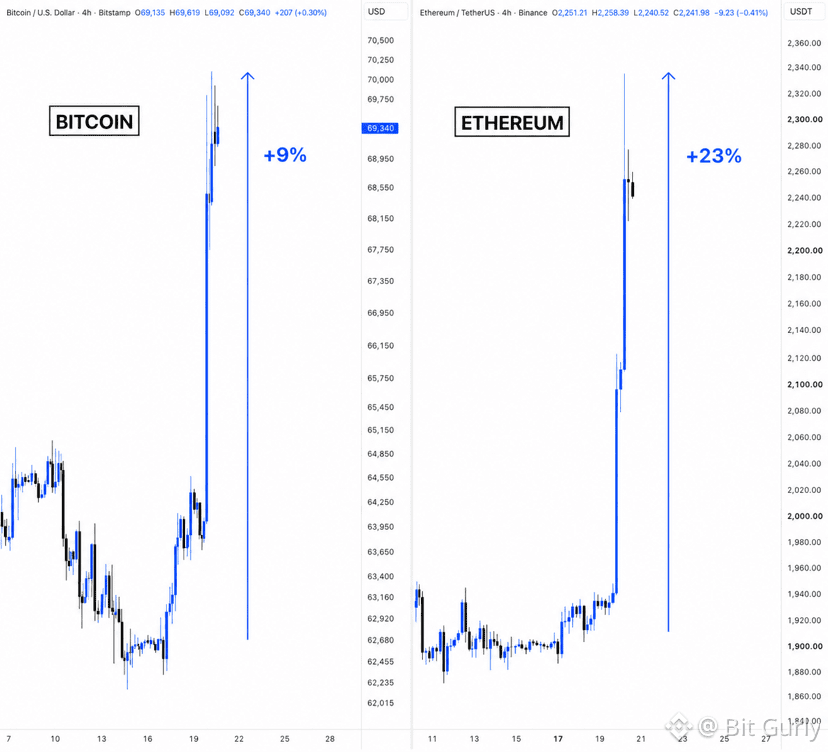
The market just punished crowded shorts.
$BTC surged to $70,000 while $ETH pushed above $2,300, gaining 9% and 23% in only 24 hours.
One of the most aggressive short squeezes crypto has ever seen.
#CryptoRally #FOMCWatch
$BTC surged to $70,000 while $ETH pushed above $2,300, gaining 9% and 23% in only 24 hours.
One of the most aggressive short squeezes crypto has ever seen.
#CryptoRally #FOMCWatch
Verified
One detail in TermMax’s liquidation design deserves more attention than the phrase “RWA support.”
The Gearing Token contract includes `previewDelivery`, `delivery` and `liquidate`. TermMax’s documentation explains why: if normal repayment or liquidation liquidity is insufficient, FT holders can receive a proportional share of the available underlying assets and collateral.
That is not the protocol promising every lender an effortless cash exit.
It is the protocol defining what the lender can claim when selling the collateral immediately would be difficult or destructive.
For liquid crypto collateral, an AMM can often sell assets and repay lenders. That assumption becomes weaker with private credit, tokenized property or other assets that do not trade continuously.
Physical delivery avoids pretending those markets have instant liquidity.
But it also transfers a real decision to the lender.
Receiving collateral may protect the legal or economic claim, yet the lender could still inherit valuation uncertainty, custody requirements and an asset that takes time to sell.
TermMax itself describes physical delivery as a risk mitigant, not a way to eliminate risk. That distinction matters.
This mechanism could widen the collateral that fixed-rate lending can support, particularly beyond highly liquid tokens.
Whether it works well will depend on what is delivered, how it is valued and whether lenders have a practical route to hold or exit it.
Before choosing the rate, I would ask a simpler question:
What matters most if repayment comes through physical delivery?
#TermMax | @TermMax
The Gearing Token contract includes `previewDelivery`, `delivery` and `liquidate`. TermMax’s documentation explains why: if normal repayment or liquidation liquidity is insufficient, FT holders can receive a proportional share of the available underlying assets and collateral.
That is not the protocol promising every lender an effortless cash exit.
It is the protocol defining what the lender can claim when selling the collateral immediately would be difficult or destructive.
For liquid crypto collateral, an AMM can often sell assets and repay lenders. That assumption becomes weaker with private credit, tokenized property or other assets that do not trade continuously.
Physical delivery avoids pretending those markets have instant liquidity.
But it also transfers a real decision to the lender.
Receiving collateral may protect the legal or economic claim, yet the lender could still inherit valuation uncertainty, custody requirements and an asset that takes time to sell.
TermMax itself describes physical delivery as a risk mitigant, not a way to eliminate risk. That distinction matters.
This mechanism could widen the collateral that fixed-rate lending can support, particularly beyond highly liquid tokens.
Whether it works well will depend on what is delivered, how it is valued and whether lenders have a practical route to hold or exit it.
Before choosing the rate, I would ask a simpler question:
What matters most if repayment comes through physical delivery?
#TermMax | @TermMax
Asset liquidity
43%
Fair valuation
0%
Easy custody
43%
Clear exit path
14%
7 votes • Voting closed
$DUSK
I kept seeing the same Dusk numbers shared together and honestly I was reading them the wrong way at first.
€300M+ confirmed issuance.
50K+ investor reach.
210M+ $DUSK staked.
My first instinct was to treat all of that like one big adoption number.
But it isn’t.
The €300M+ figure is about assets institutions are bringing into the Dusk market infrastructure. The 50K+ number is reach across crypto and partners. And the 210M+ DUSK staked is doing a completely different job, it is securing the network.
None of those numbers is TVL.
That sounds obvious once you say it, but I think it matters because @Dusk is not really building around the usual DeFi dashboard logic.
If I only looked for deposits sitting inside protocols, I would miss what the project is actually trying to grow.
One signal is asset supply.
One is distribution and investor access.
One is **network security**.
And they can move independently.
That actually made the Dusk adoption story feel more useful to me because now I know what I’m looking at.
€300M of confirmed issuance does not mean €300M is already locked onchain today, and 210M DUSK staked does not mean users deposited that amount into some RWA product.
Different numbers, different parts of the machine.
I’d rather read them separately than combine everything into one impressive-looking TVL story.
$DUSK #dusk @Dusk
I kept seeing the same Dusk numbers shared together and honestly I was reading them the wrong way at first.
€300M+ confirmed issuance.
50K+ investor reach.
210M+ $DUSK staked.
My first instinct was to treat all of that like one big adoption number.
But it isn’t.
The €300M+ figure is about assets institutions are bringing into the Dusk market infrastructure. The 50K+ number is reach across crypto and partners. And the 210M+ DUSK staked is doing a completely different job, it is securing the network.
None of those numbers is TVL.
That sounds obvious once you say it, but I think it matters because @Dusk is not really building around the usual DeFi dashboard logic.
If I only looked for deposits sitting inside protocols, I would miss what the project is actually trying to grow.
One signal is asset supply.
One is distribution and investor access.
One is **network security**.
And they can move independently.
That actually made the Dusk adoption story feel more useful to me because now I know what I’m looking at.
€300M of confirmed issuance does not mean €300M is already locked onchain today, and 210M DUSK staked does not mean users deposited that amount into some RWA product.
Different numbers, different parts of the machine.
I’d rather read them separately than combine everything into one impressive-looking TVL story.
$DUSK #dusk @Dusk

Partly True
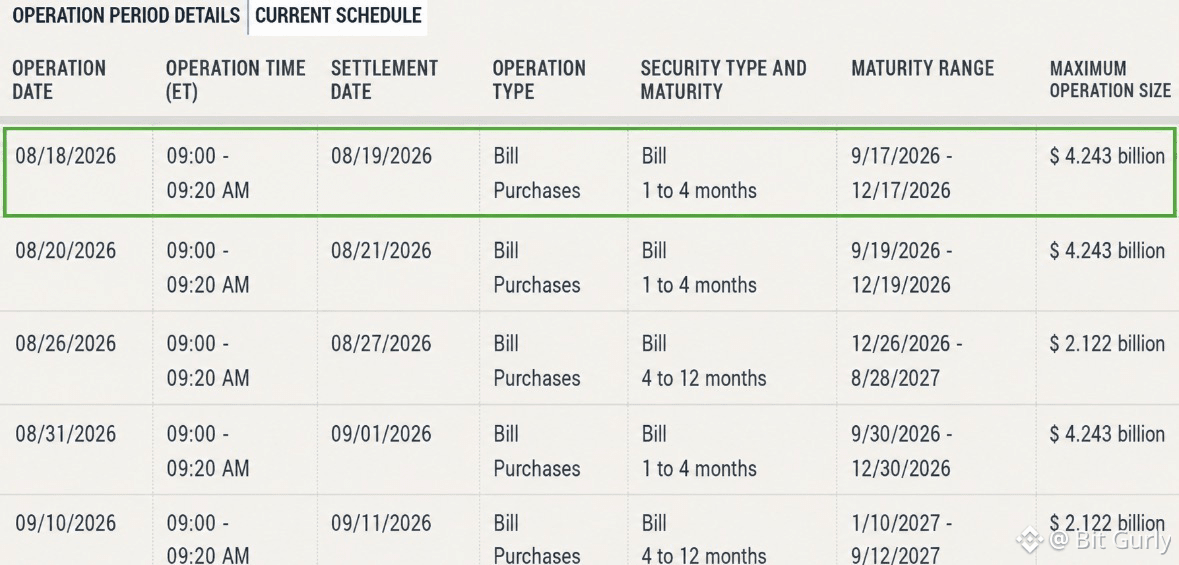
The Fed has a $4.243B Treasury bill purchase scheduled today.
Worth watching, but I wouldn’t call it an instant “bullish” signal by itself.
More liquidity can support risk assets, but what matters is whether that liquidity actually reaches markets.
For crypto, I’m watching $BTC reaction first.
Worth watching, but I wouldn’t call it an instant “bullish” signal by itself.
More liquidity can support risk assets, but what matters is whether that liquidity actually reaches markets.
For crypto, I’m watching $BTC reaction first.
#termmax @TermMax
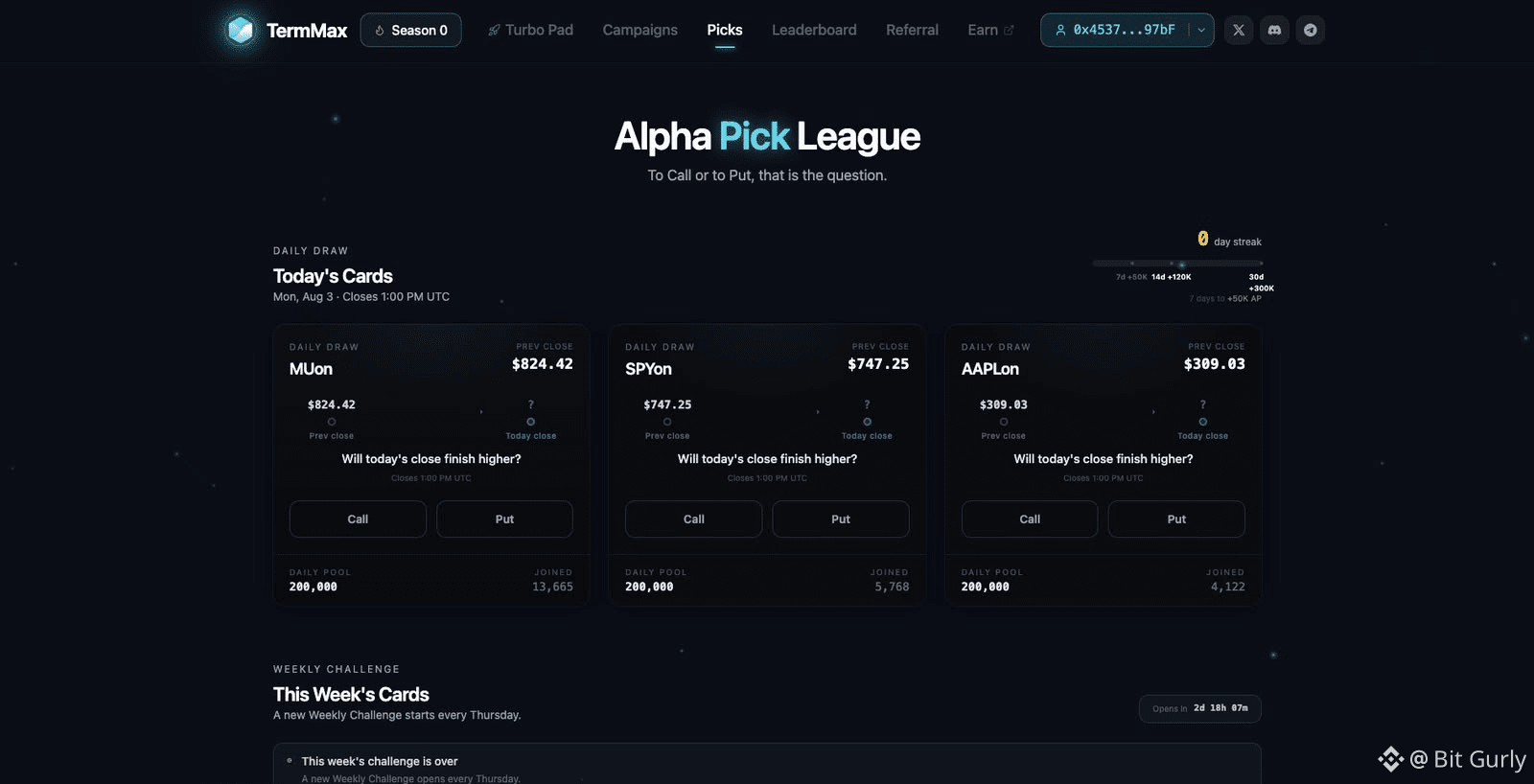
The treasury section changed my read.
TermMax says a project can put treasury tokens into a Dual Investment Vault, choose a higher strike, and collect premiums while traders take the other side. Its live Alpha interface currently describes those yields as being funded by long/short buyers.
But there is a detail worth looking at more carefully.
On actual TermMax Alpha vault pages, the risk notice explicitly says deposited tokens may be converted into USDT if the strike price is reached. That warning is visible today on multiple vaults, including the IR and NVDAon vaults.
So I don’t think the interesting question is simply:
“Can a project earn yield on idle treasury tokens?”
My interpretation is that the vault can also encode a conditional treasury sale.
Below the strike → treasury keeps collecting premium.
Strike reached → some tokens can be converted at a price selected in advance.
That is materially different from a team suddenly deciding to market-sell treasury inventory.
What I cannot verify from the public material is whether this actually reduces market impact at meaningful treasury size. That would depend on vault liquidity, demand from traders and how aggressively the project sets its strike.
Still, this changes how I look at TermMax Alpha.
For projects, the vault may be less about finding another source of APY and more about deciding in advance what price makes treasury distribution acceptable.
That is a much more interesting form of token utility.
The treasury section changed my read.
TermMax says a project can put treasury tokens into a Dual Investment Vault, choose a higher strike, and collect premiums while traders take the other side. Its live Alpha interface currently describes those yields as being funded by long/short buyers.
But there is a detail worth looking at more carefully.
On actual TermMax Alpha vault pages, the risk notice explicitly says deposited tokens may be converted into USDT if the strike price is reached. That warning is visible today on multiple vaults, including the IR and NVDAon vaults.
So I don’t think the interesting question is simply:
“Can a project earn yield on idle treasury tokens?”
My interpretation is that the vault can also encode a conditional treasury sale.
Below the strike → treasury keeps collecting premium.
Strike reached → some tokens can be converted at a price selected in advance.
That is materially different from a team suddenly deciding to market-sell treasury inventory.
What I cannot verify from the public material is whether this actually reduces market impact at meaningful treasury size. That would depend on vault liquidity, demand from traders and how aggressively the project sets its strike.
Still, this changes how I look at TermMax Alpha.
For projects, the vault may be less about finding another source of APY and more about deciding in advance what price makes treasury distribution acceptable.
That is a much more interesting form of token utility.
$DUSK
I was comparing the transaction models in Dusk’s Core Components documentation when one detail corrected my earlier assumption.
Phoenix is not described as a privacy application sitting above Dusk.
It sits inside DuskDS.
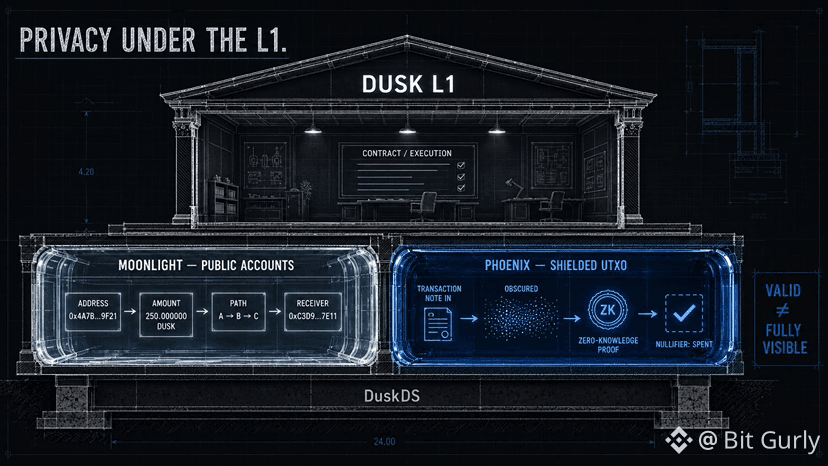
The documentation confirms that DuskDS supports two models: Moonlight for transparent public accounts and Phoenix for shielded transfers.
Phoenix is UTXO-based, while both models can transfer DUSK, pay gas and enter contract execution.
That placement matters more than the usual “private transactions” description.
On a standard public account model, someone does not always need your name to learn something useful. Repeated transfers, changing balances and interactions with the same contracts can build a recognizable settlement pattern.
Phoenix changes the information available underneath that activity. A zero-knowledge proof can demonstrate that a valid output is being spent, while a nullifier prevents it from being spent again.
The network can verify the transaction without reproducing the same public account trail.
I initially wanted to describe that as private settlement for every asset on Dusk. The documents do not support that broad claim.
Phoenix specifically handles shielded DUSK flows. Privacy for regulated securities still depends on the application design, DuskVM contracts, identity rules and selective disclosure.
So the narrower conclusion is probably the stronger one: Phoenix protects the base movement entering settlement and execution. It does not make the whole financial workflow disappear.
#dusk @Dusk
I was comparing the transaction models in Dusk’s Core Components documentation when one detail corrected my earlier assumption.
Phoenix is not described as a privacy application sitting above Dusk.
It sits inside DuskDS.
The documentation confirms that DuskDS supports two models: Moonlight for transparent public accounts and Phoenix for shielded transfers.
Phoenix is UTXO-based, while both models can transfer DUSK, pay gas and enter contract execution.
That placement matters more than the usual “private transactions” description.
On a standard public account model, someone does not always need your name to learn something useful. Repeated transfers, changing balances and interactions with the same contracts can build a recognizable settlement pattern.
Phoenix changes the information available underneath that activity. A zero-knowledge proof can demonstrate that a valid output is being spent, while a nullifier prevents it from being spent again.
The network can verify the transaction without reproducing the same public account trail.
I initially wanted to describe that as private settlement for every asset on Dusk. The documents do not support that broad claim.
Phoenix specifically handles shielded DUSK flows. Privacy for regulated securities still depends on the application design, DuskVM contracts, identity rules and selective disclosure.
So the narrower conclusion is probably the stronger one: Phoenix protects the base movement entering settlement and execution. It does not make the whole financial workflow disappear.
#dusk @Dusk
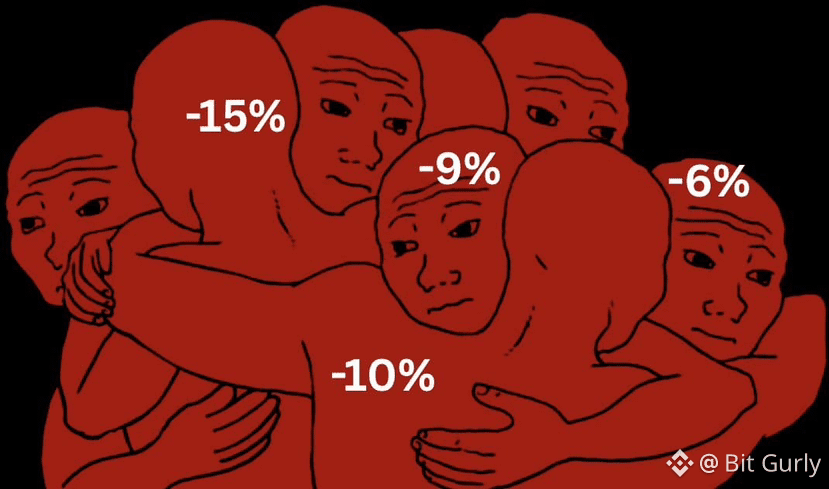
It has been a bad week for Crypto
- $85 Billion wiped from total Crypto mcap
- BTC fell to a 31-day low of $62,500
- BTC ETFs saw $389M in outflows, biggest in 6 weeks
- Saylor's Strategy sold another $108M worth of BTC
- Altcoin mcap hit its lowest weekly close in nearly 3 years
- SEC cancelled its crypto regulation meeting
#DOJProbesA16zOverRivalAIBoardSeats #DollarHits3MonthLow #VIXFallsTo2026Low
- $85 Billion wiped from total Crypto mcap
- BTC fell to a 31-day low of $62,500
- BTC ETFs saw $389M in outflows, biggest in 6 weeks
- Saylor's Strategy sold another $108M worth of BTC
- Altcoin mcap hit its lowest weekly close in nearly 3 years
- SEC cancelled its crypto regulation meeting
#DOJProbesA16zOverRivalAIBoardSeats #DollarHits3MonthLow #VIXFallsTo2026Low
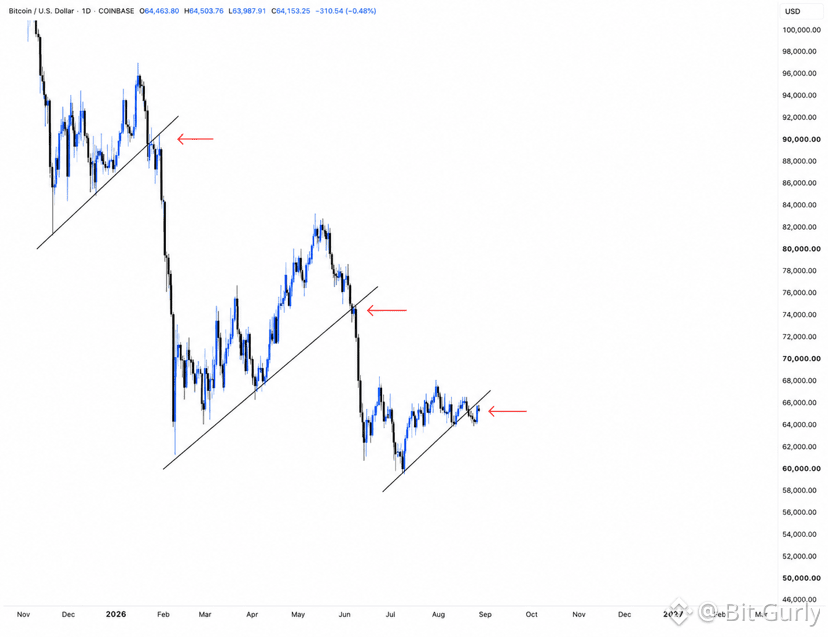
$BTC is testing a key trendline again.
The last two similar setups ended with sharp drops.
If Bitcoin reclaims this level and holds above it, the structure starts looking stronger.
If it gets rejected again, another move lower becomes more likely.
The last two similar setups ended with sharp drops.
If Bitcoin reclaims this level and holds above it, the structure starts looking stronger.
If it gets rejected again, another move lower becomes more likely.
Log in to explore more content