
BitcoinKE
3k Posts

BitcoinKE
 Square Verified+
Report
Block User
BitKE is a leading crypto and Web3 focussed media outlet in Africa publishing daily informative and investment news and content.
1 Following
28.3K+ Followers
5.0K+ Liked
Posts
All
Quotes
·
--
REPORT | ‘Positive [Crypto] Returns Attract New Participants, Which Raises the Price Further’, Sa...A Federal Reserve Bank of Cleveland experiment provides evidence that Bitcoin price gains can encourage new investors to enter the crypto market.
Researchers randomly exposed participants in a 2025 survey to information about
Bitcoin,
the S&P 500,
GameStop or
the Fed’s inflation outlook.
REPORT | ‘Do You Even Crypto, Bro? Cryptocurrencies in Household Finance’ Report by the Federal Reserve Bank of Cleveland
Those shown that Bitcoin had gained 14.3% over the previous 12 months were about 2.4 percentage points more likely to report owning crypto in a follow-up survey – a roughly 23% increase from the 11% ownership rate before the experiment.
The effect was similar for participants shown a Bitcoin price chart.
The study also found that exposure to Bitcoin’s gains increased respondents’ desired crypto allocation by about 2 percentage points, from an average of 4.3% in the control group. Much of that allocation came at the expense of cash and bank deposits.
Expectations also shifted. Those shown Bitcoin’s positive performance raised their expected crypto returns over the following year by 3.2 percentage points while the price-chart treatment increased expectations by 1.2 points.
The effect was strongest among respondents who said they avoided crypto because they lacked sufficient knowledge about it.
REALITY CHECK | Bitcoin Still Trading 50% Below All-Time High Over Half a Year Later
The researchers said the findings point to a potential feedback loop in speculative markets: rising prices attract new participants, which can generate further demand and push prices higher.
“Positive returns attract new participants, which raises the price further,” the authors wrote, adding that investors appeared more likely to extrapolate past gains than expect prices to revert toward their historical mean.
The study covered 5,352 respondents across Q2 through Q4 of 2025 and measured self-reported crypto ownership rather than actual transaction data.
The finding offers a data-backed explanation for why strong Bitcoin rallies can become self-reinforcing while also highlighting the risk that rising expectations, rather than fundamentals, can help fuel speculative bubbles.
MARKET ANALYSIS | ‘There is No Retail Interest in Crypto Right Now,’ Say Analysts
Stay tuned to BitKE on crypto developments globally.
Join our WhatsApp channel here.
Follow us on X for the latest posts and updates
Join and interact with our Telegram community
____________
REPORT | ‘Positive [Crypto] Returns Attract New Participants, Which Raises the Price Further’, Sa...
A Federal Reserve Bank of Cleveland experiment provides evidence that Bitcoin price gains can encourage new investors to enter the crypto market.
Researchers randomly exposed participants in a 2025 survey to information about
Bitcoin,
the S&P 500,
GameStop or
the Fed’s inflation outlook.
REPORT | ‘Do You Even Crypto, Bro? Cryptocurrencies in Household Finance’ Report by the Federal Reserve Bank of Cleveland
Those shown that Bitcoin had gained 14.3% over the previous 12 months were about 2.4 percentage points more likely to report owning crypto in a follow-up survey – a roughly 23% increase from the 11% ownership rate before the experiment.
The effect was similar for participants shown a Bitcoin price chart.
The study also found that exposure to Bitcoin’s gains increased respondents’ desired crypto allocation by about 2 percentage points, from an average of 4.3% in the control group. Much of that allocation came at the expense of cash and bank deposits.
Expectations also shifted. Those shown Bitcoin’s positive performance raised their expected crypto returns over the following year by 3.2 percentage points while the price-chart treatment increased expectations by 1.2 points.
The effect was strongest among respondents who said they avoided crypto because they lacked sufficient knowledge about it.
REALITY CHECK | Bitcoin Still Trading 50% Below All-Time High Over Half a Year Later
The researchers said the findings point to a potential feedback loop in speculative markets: rising prices attract new participants, which can generate further demand and push prices higher.
“Positive returns attract new participants, which raises the price further,” the authors wrote, adding that investors appeared more likely to extrapolate past gains than expect prices to revert toward their historical mean.
The study covered 5,352 respondents across Q2 through Q4 of 2025 and measured self-reported crypto ownership rather than actual transaction data.
The finding offers a data-backed explanation for why strong Bitcoin rallies can become self-reinforcing while also highlighting the risk that rising expectations, rather than fundamentals, can help fuel speculative bubbles.
MARKET ANALYSIS | ‘There is No Retail Interest in Crypto Right Now,’ Say Analysts
Stay tuned to BitKE on crypto developments globally.
Join our WhatsApp channel here.
Follow us on X for the latest posts and updates
Join and interact with our Telegram community
____________
Researchers randomly exposed participants in a 2025 survey to information about
Bitcoin,
the S&P 500,
GameStop or
the Fed’s inflation outlook.
REPORT | ‘Do You Even Crypto, Bro? Cryptocurrencies in Household Finance’ Report by the Federal Reserve Bank of Cleveland
Those shown that Bitcoin had gained 14.3% over the previous 12 months were about 2.4 percentage points more likely to report owning crypto in a follow-up survey – a roughly 23% increase from the 11% ownership rate before the experiment.
The effect was similar for participants shown a Bitcoin price chart.
The study also found that exposure to Bitcoin’s gains increased respondents’ desired crypto allocation by about 2 percentage points, from an average of 4.3% in the control group. Much of that allocation came at the expense of cash and bank deposits.
Expectations also shifted. Those shown Bitcoin’s positive performance raised their expected crypto returns over the following year by 3.2 percentage points while the price-chart treatment increased expectations by 1.2 points.
The effect was strongest among respondents who said they avoided crypto because they lacked sufficient knowledge about it.
REALITY CHECK | Bitcoin Still Trading 50% Below All-Time High Over Half a Year Later
The researchers said the findings point to a potential feedback loop in speculative markets: rising prices attract new participants, which can generate further demand and push prices higher.
“Positive returns attract new participants, which raises the price further,” the authors wrote, adding that investors appeared more likely to extrapolate past gains than expect prices to revert toward their historical mean.
The study covered 5,352 respondents across Q2 through Q4 of 2025 and measured self-reported crypto ownership rather than actual transaction data.
The finding offers a data-backed explanation for why strong Bitcoin rallies can become self-reinforcing while also highlighting the risk that rising expectations, rather than fundamentals, can help fuel speculative bubbles.
MARKET ANALYSIS | ‘There is No Retail Interest in Crypto Right Now,’ Say Analysts
Stay tuned to BitKE on crypto developments globally.
Join our WhatsApp channel here.
Follow us on X for the latest posts and updates
Join and interact with our Telegram community
____________
132
·
--
STABLECOINS | Global Payroll Firm, Deel, Expands DLUSD Stablecoin Wallet Across Africa, Emerging ...Global payroll company, Deel, has expanded its DLUSD stablecoin wallet to more than 80 countries, extending a dollar-denominated payment and savings product across Latin America, Africa, the Middle East, and Asia-Pacific just weeks after its initial launch in Argentina.
The expansion, announced on August 17 2026, comes about 11 weeks after Deel first introduced the wallet in Argentina. The United States, United Kingdom, European Union countries and Australia remain excluded.
Deel, which processes about $22 billion in annual payroll, is using the wallet to allow contractors in markets where access to dollar bank accounts can be difficult to receive, hold, and potentially earn on dollar-denominated balances within its platform.
“Get paid, then hold, earn, and spend, in DLUSD, a dollar-backed currency,” Deel said, crediting
Bridge,
embedded-wallet provider, Privy,
Tempo,
Morpho and
Sentora
for the product.
STABLECOINS | VISA and Standard Chartered Launch Validator Nodes on Stripe-Owned Blockchain, Tempo
Three of those companies are part of Stripe. Bridge issues DLUSD through its Open Issuance platform, Privy provides the embedded wallets and Tempo handles settlement.
Deel serves more than 35,000 customers and 1.5 million workers across more than 150 countries, according to the company’s Series E announcement, which valued Deel at $17.3 billion following a $300 million funding round led by
Ribbit Capital
with participation from
Andreessen Horowitz and
Coatue.
Stripe separately said in June 2026 that Deel supported more than 40,000 businesses and 1.5 million workers.
PRESS RELEASE | Deel Partners with MoonPay to Enable Stablecoin Salary Payouts for Global Workers
Dollar Alternative for Contractors
Bridge confirmed that DLUSD is issued through its Open Issuance platform.
“After getting paid through Deel, contractors can hold funds as DLUSD, Deel’s custom stablecoin issued through Bridge’s Open Issuance platform,” Bridge said.
Deel describes DLUSD somewhat differently, saying:
“DLUSD is not a cryptocurrency” and calling it “a digital dollar voucher that lives inside Deel – always worth $1, always convertible back to USD, and only usable within the platform.”
STABLECOINS | YouTube Quietly Adds PayPal Stablecoin Payouts to Its $100 Billion Creator Economy
DLUSD is designed to track the U.S. dollar at a 1:1 value and is redeemable for dollar value within Deel. Transfers are allowlisted at the blockchain level to verified contractors. Neither Deel nor Bridge has reportedly published reserve attestations for DLUSD.
Deel said contractors can move their wallet balance back to their Deel balance instantly with no costs, minimum holding period, or lock-up. The company said the funds remain accessible and can subsequently follow its existing withdrawal process.
The product is aimed particularly at workers in countries where local-currency volatility can materially erode earnings. Deel said salaries paid in local currencies in markets such as Argentina and Turkey can lose 20% to 40% of their value against the dollar in a single year.
In 2025, 85% of Deel contractors in Argentina wanted to be paid in U.S. dollars rather than Argentine Pesos.
REPORT | Almost 10% of Payroll Withdrawals from African Contracts are in Crypto, Says Latest Deel Report
Earn Feature Brings DeFi into Payroll
The wallet also allows contractors to opt into an earn feature with promotional returns of up to 4% annually.
Deel’s initial promotional target was “up to 4% APY,” which the company described as “variable, not guaranteed, and driven by market conditions.” The rewards are generated through Morpho vaults deployed on Tempo rather than directly by DLUSD’s issuer.
The structure is significant because the U.S. GENIUS Act prohibits permitted payment stablecoin issuers from paying holders interest or yield. Regulators have reportedly not yet determined whether an arrangement in which a related third party provides the rewards complies with that prohibition.
The Office of the Comptroller of the Currency (OCC) proposed a rule in March 2026 that would create a rebuttable presumption that an issuer is paying interest when a “related third party” pays yield to stablecoin holders. The statutory prohibition is scheduled to take effect on January 18 2027 while the OCC proposal has not yet become a final rule.
Deel itself describes the rewards as promotional incentives rather than yield, interest, or investment returns and says reward rates are variable and not guaranteed.
Data cited by the Tokenized podcast showed that 74% of payout recipients deposited funds into the earn product, 85% of those deposits remained after 30 days and about 60% of eligible users were actively earning.
EDITORIAL | The GENIUS Act Could Redefine Stablecoins – And Trigger a New Wave of Players
Stripe, Tempo Infrastructure
The wallet is built around several components of Stripe’s cryptocurrency infrastructure.
When an employer pays Deel, Stripe handles direct-debit collection and fraud screening. Bridge then converts U.S. dollar funds into DLUSD which is issued through Bridge’s Open Issuance platform and deposited into an embedded Privy wallet inside the Deel application.
Transactions settle on Tempo, a stablecoin-focused blockchain designed for payments, with the expansion giving the blockchain a major enterprise use case only months after its mainnet launch.
“The mechanics of Tempo, Bridge and Privy are invisible to the contractor,” Stripe said when announcing the partnership.
Contractors instead see their earnings arrive in their Deel account and accumulate in a dollar-denominated balance.
“Contractors want dollar-backed pay they can hold, earn on and spend without leaving the platform. Stripe’s stablecoin stack gives us the infrastructure to make that happen, simply and compliantly, at scale,” said Alex Bouaziz, co-founder and CEO of Deel.
STATISTICS | Kenya Leads in Gig Economy in Africa with 216% Growth in Online Freelancers in 5 Years
Henri Stern, CEO of Privy, said: “Deel is at the forefront of stablecoin innovation, using the stack to grow their global capabilities with ease and give contractors new superpowers.”
The product is also intended to eventually allow contractors to spend their DLUSD directly through the Deel Card. Deel said the card is coming later in 2026.
The broader rollout comes as stablecoins increasingly move beyond crypto trading into payroll, payments and cross-border financial services. The International Monetary Fund estimated that stablecoin transactions in 2024 totaled about $2.019 trillion across roughly 138 million transactions, with Africa and the Middle East accounting for stablecoin flows equivalent to 6.7% of regional GDP.
For Deel, the expansion puts stablecoins directly inside a payroll platform used by workers in more than 80 markets potentially reducing the need for contractors to move money through exchanges or separate dollar accounts to protect earnings from local-currency volatility.
The bigger significance is that DLUSD is less a conventional crypto product than an attempt to turn a stablecoin into a payroll balance operating largely behind the scenes.
REPORT | ‘There is Growing Stablecoin Usage for Non-Crypto Activities in Emerging Markets,’ Says VISA
Stay tuned to BitKE for updates into stablecoin developments.
Join our WhatsApp channel here.
Follow us on X for the latest posts and updates
Join and interact with our Telegram community
______________
STABLECOINS | Global Payroll Firm, Deel, Expands DLUSD Stablecoin Wallet Across Africa, Emerging ...
Global payroll company, Deel, has expanded its DLUSD stablecoin wallet to more than 80 countries, extending a dollar-denominated payment and savings product across Latin America, Africa, the Middle East, and Asia-Pacific just weeks after its initial launch in Argentina.
The expansion, announced on August 17 2026, comes about 11 weeks after Deel first introduced the wallet in Argentina. The United States, United Kingdom, European Union countries and Australia remain excluded.
Deel, which processes about $22 billion in annual payroll, is using the wallet to allow contractors in markets where access to dollar bank accounts can be difficult to receive, hold, and potentially earn on dollar-denominated balances within its platform.
“Get paid, then hold, earn, and spend, in DLUSD, a dollar-backed currency,” Deel said, crediting
Bridge,
embedded-wallet provider, Privy,
Tempo,
Morpho and
Sentora
for the product.
STABLECOINS | VISA and Standard Chartered Launch Validator Nodes on Stripe-Owned Blockchain, Tempo
Three of those companies are part of Stripe. Bridge issues DLUSD through its Open Issuance platform, Privy provides the embedded wallets and Tempo handles settlement.
Deel serves more than 35,000 customers and 1.5 million workers across more than 150 countries, according to the company’s Series E announcement, which valued Deel at $17.3 billion following a $300 million funding round led by
Ribbit Capital
with participation from
Andreessen Horowitz and
Coatue.
Stripe separately said in June 2026 that Deel supported more than 40,000 businesses and 1.5 million workers.
PRESS RELEASE | Deel Partners with MoonPay to Enable Stablecoin Salary Payouts for Global Workers
Dollar Alternative for Contractors
Bridge confirmed that DLUSD is issued through its Open Issuance platform.
“After getting paid through Deel, contractors can hold funds as DLUSD, Deel’s custom stablecoin issued through Bridge’s Open Issuance platform,” Bridge said.
Deel describes DLUSD somewhat differently, saying:
“DLUSD is not a cryptocurrency” and calling it “a digital dollar voucher that lives inside Deel – always worth $1, always convertible back to USD, and only usable within the platform.”
STABLECOINS | YouTube Quietly Adds PayPal Stablecoin Payouts to Its $100 Billion Creator Economy
DLUSD is designed to track the U.S. dollar at a 1:1 value and is redeemable for dollar value within Deel. Transfers are allowlisted at the blockchain level to verified contractors. Neither Deel nor Bridge has reportedly published reserve attestations for DLUSD.
Deel said contractors can move their wallet balance back to their Deel balance instantly with no costs, minimum holding period, or lock-up. The company said the funds remain accessible and can subsequently follow its existing withdrawal process.
The product is aimed particularly at workers in countries where local-currency volatility can materially erode earnings. Deel said salaries paid in local currencies in markets such as Argentina and Turkey can lose 20% to 40% of their value against the dollar in a single year.
In 2025, 85% of Deel contractors in Argentina wanted to be paid in U.S. dollars rather than Argentine Pesos.
REPORT | Almost 10% of Payroll Withdrawals from African Contracts are in Crypto, Says Latest Deel Report
Earn Feature Brings DeFi into Payroll
The wallet also allows contractors to opt into an earn feature with promotional returns of up to 4% annually.
Deel’s initial promotional target was “up to 4% APY,” which the company described as “variable, not guaranteed, and driven by market conditions.” The rewards are generated through Morpho vaults deployed on Tempo rather than directly by DLUSD’s issuer.
The structure is significant because the U.S. GENIUS Act prohibits permitted payment stablecoin issuers from paying holders interest or yield. Regulators have reportedly not yet determined whether an arrangement in which a related third party provides the rewards complies with that prohibition.
The Office of the Comptroller of the Currency (OCC) proposed a rule in March 2026 that would create a rebuttable presumption that an issuer is paying interest when a “related third party” pays yield to stablecoin holders. The statutory prohibition is scheduled to take effect on January 18 2027 while the OCC proposal has not yet become a final rule.
Deel itself describes the rewards as promotional incentives rather than yield, interest, or investment returns and says reward rates are variable and not guaranteed.
Data cited by the Tokenized podcast showed that 74% of payout recipients deposited funds into the earn product, 85% of those deposits remained after 30 days and about 60% of eligible users were actively earning.
EDITORIAL | The GENIUS Act Could Redefine Stablecoins – And Trigger a New Wave of Players
Stripe, Tempo Infrastructure
The wallet is built around several components of Stripe’s cryptocurrency infrastructure.
When an employer pays Deel, Stripe handles direct-debit collection and fraud screening. Bridge then converts U.S. dollar funds into DLUSD which is issued through Bridge’s Open Issuance platform and deposited into an embedded Privy wallet inside the Deel application.
Transactions settle on Tempo, a stablecoin-focused blockchain designed for payments, with the expansion giving the blockchain a major enterprise use case only months after its mainnet launch.
“The mechanics of Tempo, Bridge and Privy are invisible to the contractor,” Stripe said when announcing the partnership.
Contractors instead see their earnings arrive in their Deel account and accumulate in a dollar-denominated balance.
“Contractors want dollar-backed pay they can hold, earn on and spend without leaving the platform. Stripe’s stablecoin stack gives us the infrastructure to make that happen, simply and compliantly, at scale,” said Alex Bouaziz, co-founder and CEO of Deel.
STATISTICS | Kenya Leads in Gig Economy in Africa with 216% Growth in Online Freelancers in 5 Years
Henri Stern, CEO of Privy, said: “Deel is at the forefront of stablecoin innovation, using the stack to grow their global capabilities with ease and give contractors new superpowers.”
The product is also intended to eventually allow contractors to spend their DLUSD directly through the Deel Card. Deel said the card is coming later in 2026.
The broader rollout comes as stablecoins increasingly move beyond crypto trading into payroll, payments and cross-border financial services. The International Monetary Fund estimated that stablecoin transactions in 2024 totaled about $2.019 trillion across roughly 138 million transactions, with Africa and the Middle East accounting for stablecoin flows equivalent to 6.7% of regional GDP.
For Deel, the expansion puts stablecoins directly inside a payroll platform used by workers in more than 80 markets potentially reducing the need for contractors to move money through exchanges or separate dollar accounts to protect earnings from local-currency volatility.
The bigger significance is that DLUSD is less a conventional crypto product than an attempt to turn a stablecoin into a payroll balance operating largely behind the scenes.
REPORT | ‘There is Growing Stablecoin Usage for Non-Crypto Activities in Emerging Markets,’ Says VISA
Stay tuned to BitKE for updates into stablecoin developments.
Join our WhatsApp channel here.
Follow us on X for the latest posts and updates
Join and interact with our Telegram community
______________
The expansion, announced on August 17 2026, comes about 11 weeks after Deel first introduced the wallet in Argentina. The United States, United Kingdom, European Union countries and Australia remain excluded.
Deel, which processes about $22 billion in annual payroll, is using the wallet to allow contractors in markets where access to dollar bank accounts can be difficult to receive, hold, and potentially earn on dollar-denominated balances within its platform.
“Get paid, then hold, earn, and spend, in DLUSD, a dollar-backed currency,” Deel said, crediting
Bridge,
embedded-wallet provider, Privy,
Tempo,
Morpho and
Sentora
for the product.
STABLECOINS | VISA and Standard Chartered Launch Validator Nodes on Stripe-Owned Blockchain, Tempo
Three of those companies are part of Stripe. Bridge issues DLUSD through its Open Issuance platform, Privy provides the embedded wallets and Tempo handles settlement.
Deel serves more than 35,000 customers and 1.5 million workers across more than 150 countries, according to the company’s Series E announcement, which valued Deel at $17.3 billion following a $300 million funding round led by
Ribbit Capital
with participation from
Andreessen Horowitz and
Coatue.
Stripe separately said in June 2026 that Deel supported more than 40,000 businesses and 1.5 million workers.
PRESS RELEASE | Deel Partners with MoonPay to Enable Stablecoin Salary Payouts for Global Workers
Dollar Alternative for Contractors
Bridge confirmed that DLUSD is issued through its Open Issuance platform.
“After getting paid through Deel, contractors can hold funds as DLUSD, Deel’s custom stablecoin issued through Bridge’s Open Issuance platform,” Bridge said.
Deel describes DLUSD somewhat differently, saying:
“DLUSD is not a cryptocurrency” and calling it “a digital dollar voucher that lives inside Deel – always worth $1, always convertible back to USD, and only usable within the platform.”
STABLECOINS | YouTube Quietly Adds PayPal Stablecoin Payouts to Its $100 Billion Creator Economy
DLUSD is designed to track the U.S. dollar at a 1:1 value and is redeemable for dollar value within Deel. Transfers are allowlisted at the blockchain level to verified contractors. Neither Deel nor Bridge has reportedly published reserve attestations for DLUSD.
Deel said contractors can move their wallet balance back to their Deel balance instantly with no costs, minimum holding period, or lock-up. The company said the funds remain accessible and can subsequently follow its existing withdrawal process.
The product is aimed particularly at workers in countries where local-currency volatility can materially erode earnings. Deel said salaries paid in local currencies in markets such as Argentina and Turkey can lose 20% to 40% of their value against the dollar in a single year.
In 2025, 85% of Deel contractors in Argentina wanted to be paid in U.S. dollars rather than Argentine Pesos.
REPORT | Almost 10% of Payroll Withdrawals from African Contracts are in Crypto, Says Latest Deel Report
Earn Feature Brings DeFi into Payroll
The wallet also allows contractors to opt into an earn feature with promotional returns of up to 4% annually.
Deel’s initial promotional target was “up to 4% APY,” which the company described as “variable, not guaranteed, and driven by market conditions.” The rewards are generated through Morpho vaults deployed on Tempo rather than directly by DLUSD’s issuer.
The structure is significant because the U.S. GENIUS Act prohibits permitted payment stablecoin issuers from paying holders interest or yield. Regulators have reportedly not yet determined whether an arrangement in which a related third party provides the rewards complies with that prohibition.
The Office of the Comptroller of the Currency (OCC) proposed a rule in March 2026 that would create a rebuttable presumption that an issuer is paying interest when a “related third party” pays yield to stablecoin holders. The statutory prohibition is scheduled to take effect on January 18 2027 while the OCC proposal has not yet become a final rule.
Deel itself describes the rewards as promotional incentives rather than yield, interest, or investment returns and says reward rates are variable and not guaranteed.
Data cited by the Tokenized podcast showed that 74% of payout recipients deposited funds into the earn product, 85% of those deposits remained after 30 days and about 60% of eligible users were actively earning.
EDITORIAL | The GENIUS Act Could Redefine Stablecoins – And Trigger a New Wave of Players
Stripe, Tempo Infrastructure
The wallet is built around several components of Stripe’s cryptocurrency infrastructure.
When an employer pays Deel, Stripe handles direct-debit collection and fraud screening. Bridge then converts U.S. dollar funds into DLUSD which is issued through Bridge’s Open Issuance platform and deposited into an embedded Privy wallet inside the Deel application.
Transactions settle on Tempo, a stablecoin-focused blockchain designed for payments, with the expansion giving the blockchain a major enterprise use case only months after its mainnet launch.
“The mechanics of Tempo, Bridge and Privy are invisible to the contractor,” Stripe said when announcing the partnership.
Contractors instead see their earnings arrive in their Deel account and accumulate in a dollar-denominated balance.
“Contractors want dollar-backed pay they can hold, earn on and spend without leaving the platform. Stripe’s stablecoin stack gives us the infrastructure to make that happen, simply and compliantly, at scale,” said Alex Bouaziz, co-founder and CEO of Deel.
STATISTICS | Kenya Leads in Gig Economy in Africa with 216% Growth in Online Freelancers in 5 Years
Henri Stern, CEO of Privy, said: “Deel is at the forefront of stablecoin innovation, using the stack to grow their global capabilities with ease and give contractors new superpowers.”
The product is also intended to eventually allow contractors to spend their DLUSD directly through the Deel Card. Deel said the card is coming later in 2026.
The broader rollout comes as stablecoins increasingly move beyond crypto trading into payroll, payments and cross-border financial services. The International Monetary Fund estimated that stablecoin transactions in 2024 totaled about $2.019 trillion across roughly 138 million transactions, with Africa and the Middle East accounting for stablecoin flows equivalent to 6.7% of regional GDP.
For Deel, the expansion puts stablecoins directly inside a payroll platform used by workers in more than 80 markets potentially reducing the need for contractors to move money through exchanges or separate dollar accounts to protect earnings from local-currency volatility.
The bigger significance is that DLUSD is less a conventional crypto product than an attempt to turn a stablecoin into a payroll balance operating largely behind the scenes.
REPORT | ‘There is Growing Stablecoin Usage for Non-Crypto Activities in Emerging Markets,’ Says VISA
Stay tuned to BitKE for updates into stablecoin developments.
Join our WhatsApp channel here.
Follow us on X for the latest posts and updates
Join and interact with our Telegram community
______________
1
105
·
--
CASE STUDY | This Ethereum Lending Platform Loses Over $8 Million After a Governance Voting Power...Ethereum-based lending platform, Term Finance, lost an estimated $8.5 million after an attacker apparently acquired enough governance voting power to take control of its Meta Vaults.
The attacker withdrew about 2,843 ETH worth roughly $6.9 million at the time, and 1.68 million USDC, draining about 68% of the vaults’ assets.
The attack exploited a weakness in governance rather than a conventional smart-contract vulnerability.
The attacker reportedly bought a majority of the protocol’s sparsely held governance token and used that voting power to approve proposals granting control over the vaults.
CASE STUDY | This Major Blockchain Ecosystem is Facing Unintended Consequences of Decentralized Governance
Term said its broader lending and borrowing markets were not affected. It has
permanently shut the vault product,
blocked new deposits, and
removed the governance permissions that enabled changes to the vaults.
The company is also working with external security teams on asset recovery and potential compensation for losses.
The vaults used Yearn V3 infrastructure although Yearn said the exploit involved Term’s custom governance layer and did not affect standard Yearn vaults.
The incident highlights a growing DeFi risk:
When the cost of buying governance control is lower than the value of the assets controlled by that governance, voting mechanisms themselves can become an attack vector.
CASE STUDY | This Leading DAO Exploit Shows the Biggest Risk to On-Chain Governance is Governance Itself
Stay tuned to BitKE on DeFi updates.
Join our WhatsApp channel here.
Follow us on X for the latest posts and updates
Join and interact with our Telegram community
______________
CASE STUDY | This Ethereum Lending Platform Loses Over $8 Million After a Governance Voting Power...
Ethereum-based lending platform, Term Finance, lost an estimated $8.5 million after an attacker apparently acquired enough governance voting power to take control of its Meta Vaults.
The attacker withdrew about 2,843 ETH worth roughly $6.9 million at the time, and 1.68 million USDC, draining about 68% of the vaults’ assets.
The attack exploited a weakness in governance rather than a conventional smart-contract vulnerability.
The attacker reportedly bought a majority of the protocol’s sparsely held governance token and used that voting power to approve proposals granting control over the vaults.
CASE STUDY | This Major Blockchain Ecosystem is Facing Unintended Consequences of Decentralized Governance
Term said its broader lending and borrowing markets were not affected. It has
permanently shut the vault product,
blocked new deposits, and
removed the governance permissions that enabled changes to the vaults.
The company is also working with external security teams on asset recovery and potential compensation for losses.
The vaults used Yearn V3 infrastructure although Yearn said the exploit involved Term’s custom governance layer and did not affect standard Yearn vaults.
The incident highlights a growing DeFi risk:
When the cost of buying governance control is lower than the value of the assets controlled by that governance, voting mechanisms themselves can become an attack vector.
CASE STUDY | This Leading DAO Exploit Shows the Biggest Risk to On-Chain Governance is Governance Itself
Stay tuned to BitKE on DeFi updates.
Join our WhatsApp channel here.
Follow us on X for the latest posts and updates
Join and interact with our Telegram community
______________
The attacker withdrew about 2,843 ETH worth roughly $6.9 million at the time, and 1.68 million USDC, draining about 68% of the vaults’ assets.
The attack exploited a weakness in governance rather than a conventional smart-contract vulnerability.
The attacker reportedly bought a majority of the protocol’s sparsely held governance token and used that voting power to approve proposals granting control over the vaults.
CASE STUDY | This Major Blockchain Ecosystem is Facing Unintended Consequences of Decentralized Governance
Term said its broader lending and borrowing markets were not affected. It has
permanently shut the vault product,
blocked new deposits, and
removed the governance permissions that enabled changes to the vaults.
The company is also working with external security teams on asset recovery and potential compensation for losses.
The vaults used Yearn V3 infrastructure although Yearn said the exploit involved Term’s custom governance layer and did not affect standard Yearn vaults.
The incident highlights a growing DeFi risk:
When the cost of buying governance control is lower than the value of the assets controlled by that governance, voting mechanisms themselves can become an attack vector.
CASE STUDY | This Leading DAO Exploit Shows the Biggest Risk to On-Chain Governance is Governance Itself
Stay tuned to BitKE on DeFi updates.
Join our WhatsApp channel here.
Follow us on X for the latest posts and updates
Join and interact with our Telegram community
______________
87
·
--
STABLECOINS | Stablecoin Neobank, Fasset, Hits $1 Billion Valuation After 6x-Fold GrowthStablecoin-focused neobank, Fasset, has reached a $1 billion valuation after raising $68 million in a Series C funding round led by Japan’s SBI Group, as the company accelerates its push into cross-border payments and settlement.
The latest round brings Fasset’s total fundraising in 2026 to $119 million.
The company said its revenue has grown six-fold as demand for stablecoin-based payments and settlement has expanded.
MILESTONE | Stablecoin Transaction Volume in June 2026 Hits a New Record – USDC Accounts for 2/3
Fasset, which operates across more than 125 countries and has more than 2 million wallets, is positioning stablecoins as the infrastructure for faster international money movement. Its network connects more than 50 banking and payment corridors across 16 blockchain networks.
SBI has already invested strategically in Fasset and, through SBI Remit, agreed to work with the company on stablecoin-powered international remittance infrastructure. The partnership is targeting
remittances,
SME payments,
treasury operations, and
stablecoin-linked payment products.
The deal highlights growing institutional interest in stablecoins beyond crypto trading with financial firms increasingly looking to on-chain dollars and other digital assets to reduce settlement costs and speed up cross-border payments.
For Fasset, the challenge will be turning its growing transaction network and institutional backing into a durable payments business across emerging markets.
STABLECOINS | USDC Dominates ~70% of Adjusted Transaction Volume in H1 2026
Stay tuned to BitKE for updates into stablecoins markets developments.
Join our WhatsApp channel here.
Follow us on X for the latest posts and updates
Join and interact with our Telegram community
______________
STABLECOINS | Stablecoin Neobank, Fasset, Hits $1 Billion Valuation After 6x-Fold Growth
Stablecoin-focused neobank, Fasset, has reached a $1 billion valuation after raising $68 million in a Series C funding round led by Japan’s SBI Group, as the company accelerates its push into cross-border payments and settlement.
The latest round brings Fasset’s total fundraising in 2026 to $119 million.
The company said its revenue has grown six-fold as demand for stablecoin-based payments and settlement has expanded.
MILESTONE | Stablecoin Transaction Volume in June 2026 Hits a New Record – USDC Accounts for 2/3
Fasset, which operates across more than 125 countries and has more than 2 million wallets, is positioning stablecoins as the infrastructure for faster international money movement. Its network connects more than 50 banking and payment corridors across 16 blockchain networks.
SBI has already invested strategically in Fasset and, through SBI Remit, agreed to work with the company on stablecoin-powered international remittance infrastructure. The partnership is targeting
remittances,
SME payments,
treasury operations, and
stablecoin-linked payment products.
The deal highlights growing institutional interest in stablecoins beyond crypto trading with financial firms increasingly looking to on-chain dollars and other digital assets to reduce settlement costs and speed up cross-border payments.
For Fasset, the challenge will be turning its growing transaction network and institutional backing into a durable payments business across emerging markets.
STABLECOINS | USDC Dominates ~70% of Adjusted Transaction Volume in H1 2026
Stay tuned to BitKE for updates into stablecoins markets developments.
Join our WhatsApp channel here.
Follow us on X for the latest posts and updates
Join and interact with our Telegram community
______________
The latest round brings Fasset’s total fundraising in 2026 to $119 million.
The company said its revenue has grown six-fold as demand for stablecoin-based payments and settlement has expanded.
MILESTONE | Stablecoin Transaction Volume in June 2026 Hits a New Record – USDC Accounts for 2/3
Fasset, which operates across more than 125 countries and has more than 2 million wallets, is positioning stablecoins as the infrastructure for faster international money movement. Its network connects more than 50 banking and payment corridors across 16 blockchain networks.
SBI has already invested strategically in Fasset and, through SBI Remit, agreed to work with the company on stablecoin-powered international remittance infrastructure. The partnership is targeting
remittances,
SME payments,
treasury operations, and
stablecoin-linked payment products.
The deal highlights growing institutional interest in stablecoins beyond crypto trading with financial firms increasingly looking to on-chain dollars and other digital assets to reduce settlement costs and speed up cross-border payments.
For Fasset, the challenge will be turning its growing transaction network and institutional backing into a durable payments business across emerging markets.
STABLECOINS | USDC Dominates ~70% of Adjusted Transaction Volume in H1 2026
Stay tuned to BitKE for updates into stablecoins markets developments.
Join our WhatsApp channel here.
Follow us on X for the latest posts and updates
Join and interact with our Telegram community
______________
122
·
--
REGULATION | MiCA’s Crackdown on USDT Is Reshaping the Stablecoin Market in EuropeMiCA’s crackdown on Tether’s USDT is reshaping Europe’s stablecoin market but global demand for the world’s largest stablecoin remains largely intact.
European platforms have accelerated USDT restrictions after the EU’s MiCA transition period ended on July 1 2026 with Revolut among the latest to announce a delisting for EEA users.
REGULATION | Leading European Fintech, Revolut, to Delist USDT from August 2026 Over Regulatory and Risk Concerns
Yet Artemis Analytics said the data shows no noticeable shift in USDT supply or demand directly linked to MiCA, nor a major migration across trading venues or blockchains.
Instead, stablecoin adoption continues to expand in emerging markets where USDT is increasingly being used for payments, cross-border transfers, and access to dollar-denominated financial services.
Daily users on BNB Smart Chain rose to about 1.56 million by July 2026 from roughly 318,000 in June 2024, while TRON daily users climbed 44% to around 908,000, according to Artemis data.
MILESTONE | TRON Stablecoin Supply Hits Record High as USDT Dominates the Chain in Q2 2026
The trend suggests MiCA is changing how Europe accesses USDT rather than weakening global demand for dollar stablecoins.
Europe may be closing one gateway but USDT’s role as global crypto financial infrastructure continues to grow.
REGULATIONS | OKX Prompting Users to Convert USDT to USDC Amid MiCA Requirements
Sign up to BitKE for all the stablecoin updates globally.
Join our WhatsApp channel here.
Follow us on X for the latest posts and updates
Join and interact with our Telegram community
______________
REGULATION | MiCA’s Crackdown on USDT Is Reshaping the Stablecoin Market in Europe
MiCA’s crackdown on Tether’s USDT is reshaping Europe’s stablecoin market but global demand for the world’s largest stablecoin remains largely intact.
European platforms have accelerated USDT restrictions after the EU’s MiCA transition period ended on July 1 2026 with Revolut among the latest to announce a delisting for EEA users.
REGULATION | Leading European Fintech, Revolut, to Delist USDT from August 2026 Over Regulatory and Risk Concerns
Yet Artemis Analytics said the data shows no noticeable shift in USDT supply or demand directly linked to MiCA, nor a major migration across trading venues or blockchains.
Instead, stablecoin adoption continues to expand in emerging markets where USDT is increasingly being used for payments, cross-border transfers, and access to dollar-denominated financial services.
Daily users on BNB Smart Chain rose to about 1.56 million by July 2026 from roughly 318,000 in June 2024, while TRON daily users climbed 44% to around 908,000, according to Artemis data.
MILESTONE | TRON Stablecoin Supply Hits Record High as USDT Dominates the Chain in Q2 2026
The trend suggests MiCA is changing how Europe accesses USDT rather than weakening global demand for dollar stablecoins.
Europe may be closing one gateway but USDT’s role as global crypto financial infrastructure continues to grow.
REGULATIONS | OKX Prompting Users to Convert USDT to USDC Amid MiCA Requirements
Sign up to BitKE for all the stablecoin updates globally.
Join our WhatsApp channel here.
Follow us on X for the latest posts and updates
Join and interact with our Telegram community
______________
European platforms have accelerated USDT restrictions after the EU’s MiCA transition period ended on July 1 2026 with Revolut among the latest to announce a delisting for EEA users.
REGULATION | Leading European Fintech, Revolut, to Delist USDT from August 2026 Over Regulatory and Risk Concerns
Yet Artemis Analytics said the data shows no noticeable shift in USDT supply or demand directly linked to MiCA, nor a major migration across trading venues or blockchains.
Instead, stablecoin adoption continues to expand in emerging markets where USDT is increasingly being used for payments, cross-border transfers, and access to dollar-denominated financial services.
Daily users on BNB Smart Chain rose to about 1.56 million by July 2026 from roughly 318,000 in June 2024, while TRON daily users climbed 44% to around 908,000, according to Artemis data.
MILESTONE | TRON Stablecoin Supply Hits Record High as USDT Dominates the Chain in Q2 2026
The trend suggests MiCA is changing how Europe accesses USDT rather than weakening global demand for dollar stablecoins.
Europe may be closing one gateway but USDT’s role as global crypto financial infrastructure continues to grow.
REGULATIONS | OKX Prompting Users to Convert USDT to USDC Amid MiCA Requirements
Sign up to BitKE for all the stablecoin updates globally.
Join our WhatsApp channel here.
Follow us on X for the latest posts and updates
Join and interact with our Telegram community
______________
238
·
--
Capital.com Moves Into UAE Spot Crypto After Kenya, South AfricaCapital.com is preparing to launch spot cryptocurrency trading in the United Arab Emirates after its affiliate, Capital Vault, secured a virtual-asset licence from the UAE Capital Market Authority.
The licence allows Capital Vault to act as an agent or matched principal in virtual-asset transactions and provide custody services.
Once launched, UAE customers will be able to buy and hold actual cryptocurrencies through the Capital.com app, moving beyond the platform’s existing contracts-for-difference (CFD) offering, which provides price exposure without ownership of the underlying assets.
Capital Vault will handle execution, custody and settlement as a separately regulated entity.
The move comes as the UAE continues to expand its regulatory framework for digital assets and attract regulated crypto and financial-services firms.
PRESS RELEASE | After Kenya, Capital.com Enters South Africa Under Dual FSCA Regulatory License to Offer Crypto CFDs
Stay tuned to BitKE on crypto regulatory updates from across the Middle East
Join our WhatsApp channel here.
Follow us on X for the latest posts and updates
Join and interact with our Telegram community
________________
Capital.com Moves Into UAE Spot Crypto After Kenya, South Africa
Capital.com is preparing to launch spot cryptocurrency trading in the United Arab Emirates after its affiliate, Capital Vault, secured a virtual-asset licence from the UAE Capital Market Authority.
The licence allows Capital Vault to act as an agent or matched principal in virtual-asset transactions and provide custody services.
Once launched, UAE customers will be able to buy and hold actual cryptocurrencies through the Capital.com app, moving beyond the platform’s existing contracts-for-difference (CFD) offering, which provides price exposure without ownership of the underlying assets.
Capital Vault will handle execution, custody and settlement as a separately regulated entity.
The move comes as the UAE continues to expand its regulatory framework for digital assets and attract regulated crypto and financial-services firms.
PRESS RELEASE | After Kenya, Capital.com Enters South Africa Under Dual FSCA Regulatory License to Offer Crypto CFDs
Stay tuned to BitKE on crypto regulatory updates from across the Middle East
Join our WhatsApp channel here.
Follow us on X for the latest posts and updates
Join and interact with our Telegram community
________________
The licence allows Capital Vault to act as an agent or matched principal in virtual-asset transactions and provide custody services.
Once launched, UAE customers will be able to buy and hold actual cryptocurrencies through the Capital.com app, moving beyond the platform’s existing contracts-for-difference (CFD) offering, which provides price exposure without ownership of the underlying assets.
Capital Vault will handle execution, custody and settlement as a separately regulated entity.
The move comes as the UAE continues to expand its regulatory framework for digital assets and attract regulated crypto and financial-services firms.
PRESS RELEASE | After Kenya, Capital.com Enters South Africa Under Dual FSCA Regulatory License to Offer Crypto CFDs
Stay tuned to BitKE on crypto regulatory updates from across the Middle East
Join our WhatsApp channel here.
Follow us on X for the latest posts and updates
Join and interact with our Telegram community
________________
127
·
--
Verified
Article
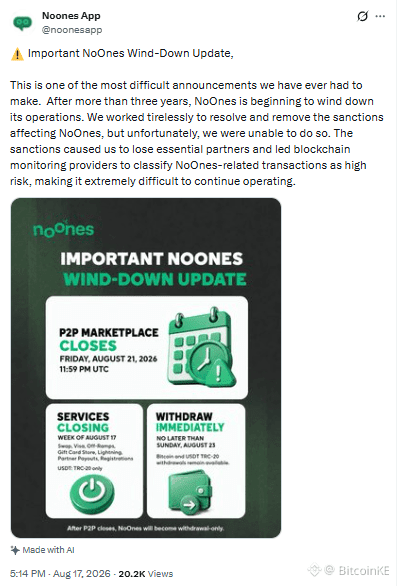
CRYPTO CRIME | Major P2P Crypto Platform, NoOnes, Shuts Down After Sanctions Disrupt OperationsNoOnes, the peer-to-peer crypto platform that surpassed 2.5 million users globally earlier in 2026, is winding down operations after government sanctions and resulting regulatory restrictions from financial and crypto-service providers made continued operations unsustainable.
The company said its P2P marketplace would close on August 22 2026 with users advised to withdraw their funds by August 23 2026. It warned that transfers from NoOnes could be delayed, rejected, or restricted by other exchanges and services because of the sanctions.
The sanctions have also placed NoOnes under scrutiny in Europe and the UK highlighting the growing impact of sanctions compliance on crypto platforms operating across borders.
As reported by BitKE in April 2026, the Financial Conduct Authority (FCA) of the UK carried out its first coordinated crackdown on illegal peer-to-peer (P2P) crypto trading by raiding eight sites across London in a joint operation with law enforcement and tax authorities.
CRYPTO CRIME | The United Kingdom Regulatory Watchdog Carries Out First Crackdown on Illegal P2P Crypto Trading
Authorities said the crackdown aimed to prevent unregulated trading channels from being used to move and conceal illicit funds, warning that such activity poses a financial crime risk.
The development is particularly significant for Africa where NoOnes had built a substantial user base among P2P crypto traders.
BitKE previously reported on the NoOnes platform surpassing 2.5 million users underscoring its rapid growth in emerging markets.
MILESTONE | P2P Crypto Marketplace, NoOnes, Surpasses 2.5 Million Users Globally
The platform was also mentioned in BitKE’s July 2026 reporting on a Kenyan court order freezing USDT linked to NoOnes for money laundering.
According to court documents filed by the Assets Recovery Agency (ARA), investigators traced what they describe as a sophisticated money laundering network involving more than KES 300 million (about $2 million) that moved funds through cryptocurrency exchanges and Kenya’s banking system before attempting to disguise their origin.
CRYPTO CRIME | Kenyan Court Freezes Over $2 Million in USDT in a Binance Wallet for Money Laundering
That connection is important.
Kenya has become a major P2P crypto market while authorities have increasingly focused on the risks surrounding money laundering, fraud, and terrorism financing. Kenyan investigators have previously linked account restrictions on Binance to law-enforcement investigations, reflecting the broader regulatory pressure on P2P crypto activity.
REGULATION | Binance Reportedly Freezing P2P User Accounts in Kenya at the Request of Law Enforcement
Under the hashtag, #BinanceUnmasked, a number of users have complained that their @binance accounts have been frozen at the request of law enforcement. The law enforcement… pic.twitter.com/ekZgbUrqMh
— BitKE (@BitcoinKE) April 20, 2026
Following money laundering accusations, Binance has also gone ahead and blocked transactions coming from multiple exchanges including NoOnes in order to remain compliant.
REGULATION | Binance to Block Transactions With 14 Crypto Platforms Following Regulatory Review
NoOnes’ shutdown shows how sanctions can affect a crypto business even without a conventional exchange closure. Once counterparties and service providers treat a platform as high risk, access to liquidity, withdrawals, and settlement can quickly become constrained.
For users, NoOnes has advised them not to wait until the deadline to withdraw funds, warning that external providers may restrict transfers from the platform.
The collapse of a platform with more than 2.5 million users is another sign that sanctions compliance is becoming a critical operational risk for global P2P crypto businesses — particularly those serving emerging markets where P2P trading remains a key route into dollar-linked assets.
REGULATION | Binance Was Reportedly Cut Off from The European Union Due to a ‘History of Financial-Crime Violations’
Stay tuned to BitKE on crypto regulatory developments globally.
Join our WhatsApp channel here.
Follow us on X for the latest posts and updates
Join and interact with our Telegram community
______________
CRYPTO CRIME | Major P2P Crypto Platform, NoOnes, Shuts Down After Sanctions Disrupt Operations
NoOnes, the peer-to-peer crypto platform that surpassed 2.5 million users globally earlier in 2026, is winding down operations after government sanctions and resulting regulatory restrictions from financial and crypto-service providers made continued operations unsustainable.
The company said its P2P marketplace would close on August 22 2026 with users advised to withdraw their funds by August 23 2026. It warned that transfers from NoOnes could be delayed, rejected, or restricted by other exchanges and services because of the sanctions.
The sanctions have also placed NoOnes under scrutiny in Europe and the UK highlighting the growing impact of sanctions compliance on crypto platforms operating across borders.
As reported by BitKE in April 2026, the Financial Conduct Authority (FCA) of the UK carried out its first coordinated crackdown on illegal peer-to-peer (P2P) crypto trading by raiding eight sites across London in a joint operation with law enforcement and tax authorities.
CRYPTO CRIME | The United Kingdom Regulatory Watchdog Carries Out First Crackdown on Illegal P2P Crypto Trading
Authorities said the crackdown aimed to prevent unregulated trading channels from being used to move and conceal illicit funds, warning that such activity poses a financial crime risk.
The development is particularly significant for Africa where NoOnes had built a substantial user base among P2P crypto traders.
BitKE previously reported on the NoOnes platform surpassing 2.5 million users underscoring its rapid growth in emerging markets.
MILESTONE | P2P Crypto Marketplace, NoOnes, Surpasses 2.5 Million Users Globally
The platform was also mentioned in BitKE’s July 2026 reporting on a Kenyan court order freezing USDT linked to NoOnes for money laundering.
According to court documents filed by the Assets Recovery Agency (ARA), investigators traced what they describe as a sophisticated money laundering network involving more than KES 300 million (about $2 million) that moved funds through cryptocurrency exchanges and Kenya’s banking system before attempting to disguise their origin.
CRYPTO CRIME | Kenyan Court Freezes Over $2 Million in USDT in a Binance Wallet for Money Laundering
That connection is important.
Kenya has become a major P2P crypto market while authorities have increasingly focused on the risks surrounding money laundering, fraud, and terrorism financing. Kenyan investigators have previously linked account restrictions on Binance to law-enforcement investigations, reflecting the broader regulatory pressure on P2P crypto activity.
REGULATION | Binance Reportedly Freezing P2P User Accounts in Kenya at the Request of Law Enforcement
Under the hashtag, #BinanceUnmasked, a number of users have complained that their @binance accounts have been frozen at the request of law enforcement. The law enforcement… pic.twitter.com/ekZgbUrqMh
— BitKE (@BitcoinKE) April 20, 2026
Following money laundering accusations, Binance has also gone ahead and blocked transactions coming from multiple exchanges including NoOnes in order to remain compliant.
REGULATION | Binance to Block Transactions With 14 Crypto Platforms Following Regulatory Review
NoOnes’ shutdown shows how sanctions can affect a crypto business even without a conventional exchange closure. Once counterparties and service providers treat a platform as high risk, access to liquidity, withdrawals, and settlement can quickly become constrained.
For users, NoOnes has advised them not to wait until the deadline to withdraw funds, warning that external providers may restrict transfers from the platform.
The collapse of a platform with more than 2.5 million users is another sign that sanctions compliance is becoming a critical operational risk for global P2P crypto businesses — particularly those serving emerging markets where P2P trading remains a key route into dollar-linked assets.
REGULATION | Binance Was Reportedly Cut Off from The European Union Due to a ‘History of Financial-Crime Violations’
Stay tuned to BitKE on crypto regulatory developments globally.
Join our WhatsApp channel here.
Follow us on X for the latest posts and updates
Join and interact with our Telegram community
______________
The company said its P2P marketplace would close on August 22 2026 with users advised to withdraw their funds by August 23 2026. It warned that transfers from NoOnes could be delayed, rejected, or restricted by other exchanges and services because of the sanctions.
The sanctions have also placed NoOnes under scrutiny in Europe and the UK highlighting the growing impact of sanctions compliance on crypto platforms operating across borders.
As reported by BitKE in April 2026, the Financial Conduct Authority (FCA) of the UK carried out its first coordinated crackdown on illegal peer-to-peer (P2P) crypto trading by raiding eight sites across London in a joint operation with law enforcement and tax authorities.
CRYPTO CRIME | The United Kingdom Regulatory Watchdog Carries Out First Crackdown on Illegal P2P Crypto Trading
Authorities said the crackdown aimed to prevent unregulated trading channels from being used to move and conceal illicit funds, warning that such activity poses a financial crime risk.
The development is particularly significant for Africa where NoOnes had built a substantial user base among P2P crypto traders.
BitKE previously reported on the NoOnes platform surpassing 2.5 million users underscoring its rapid growth in emerging markets.
MILESTONE | P2P Crypto Marketplace, NoOnes, Surpasses 2.5 Million Users Globally
The platform was also mentioned in BitKE’s July 2026 reporting on a Kenyan court order freezing USDT linked to NoOnes for money laundering.
According to court documents filed by the Assets Recovery Agency (ARA), investigators traced what they describe as a sophisticated money laundering network involving more than KES 300 million (about $2 million) that moved funds through cryptocurrency exchanges and Kenya’s banking system before attempting to disguise their origin.
CRYPTO CRIME | Kenyan Court Freezes Over $2 Million in USDT in a Binance Wallet for Money Laundering
That connection is important.
Kenya has become a major P2P crypto market while authorities have increasingly focused on the risks surrounding money laundering, fraud, and terrorism financing. Kenyan investigators have previously linked account restrictions on Binance to law-enforcement investigations, reflecting the broader regulatory pressure on P2P crypto activity.
REGULATION | Binance Reportedly Freezing P2P User Accounts in Kenya at the Request of Law Enforcement
Under the hashtag, #BinanceUnmasked, a number of users have complained that their @binance accounts have been frozen at the request of law enforcement. The law enforcement… pic.twitter.com/ekZgbUrqMh
— BitKE (@BitcoinKE) April 20, 2026
Following money laundering accusations, Binance has also gone ahead and blocked transactions coming from multiple exchanges including NoOnes in order to remain compliant.
REGULATION | Binance to Block Transactions With 14 Crypto Platforms Following Regulatory Review
NoOnes’ shutdown shows how sanctions can affect a crypto business even without a conventional exchange closure. Once counterparties and service providers treat a platform as high risk, access to liquidity, withdrawals, and settlement can quickly become constrained.
For users, NoOnes has advised them not to wait until the deadline to withdraw funds, warning that external providers may restrict transfers from the platform.
The collapse of a platform with more than 2.5 million users is another sign that sanctions compliance is becoming a critical operational risk for global P2P crypto businesses — particularly those serving emerging markets where P2P trading remains a key route into dollar-linked assets.
REGULATION | Binance Was Reportedly Cut Off from The European Union Due to a ‘History of Financial-Crime Violations’
Stay tuned to BitKE on crypto regulatory developments globally.
Join our WhatsApp channel here.
Follow us on X for the latest posts and updates
Join and interact with our Telegram community
______________
136
·
--
STABLECOINS | Social Media Platform, X, Reportedly Exploring the USDC Stablecoin for Creator Paym...Social media platform, X, is reportedly exploring the use of the USDC stablecoin to pay royalties to influencers and content creators, according to a person familiar with the discussions.
The talks are ongoing and no final decision has been made. X did not immediately respond to a request for comment.
REGULATION | X (Twitter) Acquires 7 Currency Transmitter Licences in the United States
The move comes as X revamps its creator compensation model replacing its Revenue Sharing programme with an Original Content Rewards Programme.
Stablecoin payments could offer X a faster and potentially cheaper way to make cross-border payouts to creators, particularly those outside traditional banking markets.
Musk’s SpaceX already uses stablecoins for some cross-border payments linked to its Starlink service.
African Neobank, Payday, Becomes Official Payment Processor for SpaceX Starlink in Rwanda
If adopted, stablecoin payouts could further extend crypto’s role from trading into everyday payments and creator economies.
STABLECOINS | YouTube Quietly Adds PayPal Stablecoin Payouts to Its $100 Billion Creator Economy
Stay tuned to BitKE on stablecoin developments globally.
Join our WhatsApp channel here.
Follow us on X for the latest posts and updates
Join and interact with our Telegram community
_______________
STABLECOINS | Social Media Platform, X, Reportedly Exploring the USDC Stablecoin for Creator Paym...
Social media platform, X, is reportedly exploring the use of the USDC stablecoin to pay royalties to influencers and content creators, according to a person familiar with the discussions.
The talks are ongoing and no final decision has been made. X did not immediately respond to a request for comment.
REGULATION | X (Twitter) Acquires 7 Currency Transmitter Licences in the United States
The move comes as X revamps its creator compensation model replacing its Revenue Sharing programme with an Original Content Rewards Programme.
Stablecoin payments could offer X a faster and potentially cheaper way to make cross-border payouts to creators, particularly those outside traditional banking markets.
Musk’s SpaceX already uses stablecoins for some cross-border payments linked to its Starlink service.
African Neobank, Payday, Becomes Official Payment Processor for SpaceX Starlink in Rwanda
If adopted, stablecoin payouts could further extend crypto’s role from trading into everyday payments and creator economies.
STABLECOINS | YouTube Quietly Adds PayPal Stablecoin Payouts to Its $100 Billion Creator Economy
Stay tuned to BitKE on stablecoin developments globally.
Join our WhatsApp channel here.
Follow us on X for the latest posts and updates
Join and interact with our Telegram community
_______________
The talks are ongoing and no final decision has been made. X did not immediately respond to a request for comment.
REGULATION | X (Twitter) Acquires 7 Currency Transmitter Licences in the United States
The move comes as X revamps its creator compensation model replacing its Revenue Sharing programme with an Original Content Rewards Programme.
Stablecoin payments could offer X a faster and potentially cheaper way to make cross-border payouts to creators, particularly those outside traditional banking markets.
Musk’s SpaceX already uses stablecoins for some cross-border payments linked to its Starlink service.
African Neobank, Payday, Becomes Official Payment Processor for SpaceX Starlink in Rwanda
If adopted, stablecoin payouts could further extend crypto’s role from trading into everyday payments and creator economies.
STABLECOINS | YouTube Quietly Adds PayPal Stablecoin Payouts to Its $100 Billion Creator Economy
Stay tuned to BitKE on stablecoin developments globally.
Join our WhatsApp channel here.
Follow us on X for the latest posts and updates
Join and interact with our Telegram community
_______________
361
·
--
CRYPTO CRIME | Binance Employees Reportedly Detained in UAE Over Possible Financial CrimesTwo Binance employees were detained in the United Arab Emirates (UAE) in recent weeks as authorities investigated possible financial crimes linked to the cryptocurrency exchange, the New York Times reported, citing four people familiar with the matter.
Binance said the employees were questioned over routine inquiries into third-party fund flows through a client money account. The company said neither employee was a target of the investigation and that both had been cleared and released.
The detentions add to regulatory scrutiny facing Binance as it expands its operations in the UAE. The exchange said it remains committed to cooperating with Dubai Police and other authorities as rules governing cryptocurrency and institutional client accounts continue to evolve.
In July 2026, the Wall Street Journal reported that the European Securities and Markets Authority (ESMA) privately advised national regulators against approving Binance’s application because of concerns over the exchange’s history of financial-crime compliance, including its 2023 U.S. anti-money laundering settlement.
REGULATION | Binance Was Reportedly Cut Off from The European Union Due to a ‘History of Financial-Crime Violations’
Stay tuned to BitKE on crypto regulatory developments globally.
Join our WhatsApp channel here.
Follow us on X for the latest posts and updates
Join and interact with our Telegram community
_______________
CRYPTO CRIME | Binance Employees Reportedly Detained in UAE Over Possible Financial Crimes
Two Binance employees were detained in the United Arab Emirates (UAE) in recent weeks as authorities investigated possible financial crimes linked to the cryptocurrency exchange, the New York Times reported, citing four people familiar with the matter.
Binance said the employees were questioned over routine inquiries into third-party fund flows through a client money account. The company said neither employee was a target of the investigation and that both had been cleared and released.
The detentions add to regulatory scrutiny facing Binance as it expands its operations in the UAE. The exchange said it remains committed to cooperating with Dubai Police and other authorities as rules governing cryptocurrency and institutional client accounts continue to evolve.
In July 2026, the Wall Street Journal reported that the European Securities and Markets Authority (ESMA) privately advised national regulators against approving Binance’s application because of concerns over the exchange’s history of financial-crime compliance, including its 2023 U.S. anti-money laundering settlement.
REGULATION | Binance Was Reportedly Cut Off from The European Union Due to a ‘History of Financial-Crime Violations’
Stay tuned to BitKE on crypto regulatory developments globally.
Join our WhatsApp channel here.
Follow us on X for the latest posts and updates
Join and interact with our Telegram community
_______________
Binance said the employees were questioned over routine inquiries into third-party fund flows through a client money account. The company said neither employee was a target of the investigation and that both had been cleared and released.
The detentions add to regulatory scrutiny facing Binance as it expands its operations in the UAE. The exchange said it remains committed to cooperating with Dubai Police and other authorities as rules governing cryptocurrency and institutional client accounts continue to evolve.
In July 2026, the Wall Street Journal reported that the European Securities and Markets Authority (ESMA) privately advised national regulators against approving Binance’s application because of concerns over the exchange’s history of financial-crime compliance, including its 2023 U.S. anti-money laundering settlement.
REGULATION | Binance Was Reportedly Cut Off from The European Union Due to a ‘History of Financial-Crime Violations’
Stay tuned to BitKE on crypto regulatory developments globally.
Join our WhatsApp channel here.
Follow us on X for the latest posts and updates
Join and interact with our Telegram community
_______________
1
71
·
--
MILESTONE | Africa-Founded Stablecoin Startup, BlockRadar, Crosses $1 Billion in Transaction VolumeBlockradar, the wallet-as-a-service provider, says it has officially crossed the $1 billion milestone in total transaction volume. This achievement highlights the platform’s rapid rise as a critical infrastructure layer for stablecoin payments in emerging markets.
While the company has not disclosed additional information around the milestone, previous coverage of its growth on BitKE point to a rapid growth in its uptake.
In December 2025, BitKE reported that Blockradar had crossed $300 million in total transaction volume, having processed nearly 500, 000 transactions.
By then, the company had successfully created and managed ~100, 000 non-custodial wallets for its over 100 fintechs across Africa, Latin America, the Middle East, and Southwest Asia.
2025 RECAP | Africa-Founded Stablecoin Startup, Blockradar, Crosses $300 Million in Transaction Volume With ~100,000 Wallets Created in 2025
Going by the above figures, the recent milestone would likely point to over one million ransactions and over 200, 000 wallets under management.
Blockradar’s infrastructure allows fintechs to offer stablecoin products – such as cross-border B2B payments, on/off ramps, and non-custodial savings – without needing internal blockchain engineering teams. By hitting the $1 billion mark, Blockradar has demonstrated that stablecoin-based financial services are no longer experimental but are becoming a primary rail for global commerce in 2025.
We have officially processed our first $1B in transaction volume!
What started with a single idea, to build scalable stablecoin infrastructure, has grown into infrastructure supporting hundreds of fintechs across 20+ countries.
Here’s what that volume looks like in practice: a… pic.twitter.com/oXzjXvhvjx
— Blockradar (@BlockradarHQ) August 20, 2026
Stay tuned to BitKE on stablecoin developments in Africa.
Join our WhatsApp channel here.
Follow us on X for the latest posts and updates
Join and interact with our Telegram community
__________________
MILESTONE | Africa-Founded Stablecoin Startup, BlockRadar, Crosses $1 Billion in Transaction Volume
Blockradar, the wallet-as-a-service provider, says it has officially crossed the $1 billion milestone in total transaction volume. This achievement highlights the platform’s rapid rise as a critical infrastructure layer for stablecoin payments in emerging markets.
While the company has not disclosed additional information around the milestone, previous coverage of its growth on BitKE point to a rapid growth in its uptake.
In December 2025, BitKE reported that Blockradar had crossed $300 million in total transaction volume, having processed nearly 500, 000 transactions.
By then, the company had successfully created and managed ~100, 000 non-custodial wallets for its over 100 fintechs across Africa, Latin America, the Middle East, and Southwest Asia.
2025 RECAP | Africa-Founded Stablecoin Startup, Blockradar, Crosses $300 Million in Transaction Volume With ~100,000 Wallets Created in 2025
Going by the above figures, the recent milestone would likely point to over one million ransactions and over 200, 000 wallets under management.
Blockradar’s infrastructure allows fintechs to offer stablecoin products – such as cross-border B2B payments, on/off ramps, and non-custodial savings – without needing internal blockchain engineering teams. By hitting the $1 billion mark, Blockradar has demonstrated that stablecoin-based financial services are no longer experimental but are becoming a primary rail for global commerce in 2025.
We have officially processed our first $1B in transaction volume!
What started with a single idea, to build scalable stablecoin infrastructure, has grown into infrastructure supporting hundreds of fintechs across 20+ countries.
Here’s what that volume looks like in practice: a… pic.twitter.com/oXzjXvhvjx
— Blockradar (@BlockradarHQ) August 20, 2026
Stay tuned to BitKE on stablecoin developments in Africa.
Join our WhatsApp channel here.
Follow us on X for the latest posts and updates
Join and interact with our Telegram community
__________________
While the company has not disclosed additional information around the milestone, previous coverage of its growth on BitKE point to a rapid growth in its uptake.
In December 2025, BitKE reported that Blockradar had crossed $300 million in total transaction volume, having processed nearly 500, 000 transactions.
By then, the company had successfully created and managed ~100, 000 non-custodial wallets for its over 100 fintechs across Africa, Latin America, the Middle East, and Southwest Asia.
2025 RECAP | Africa-Founded Stablecoin Startup, Blockradar, Crosses $300 Million in Transaction Volume With ~100,000 Wallets Created in 2025
Going by the above figures, the recent milestone would likely point to over one million ransactions and over 200, 000 wallets under management.
Blockradar’s infrastructure allows fintechs to offer stablecoin products – such as cross-border B2B payments, on/off ramps, and non-custodial savings – without needing internal blockchain engineering teams. By hitting the $1 billion mark, Blockradar has demonstrated that stablecoin-based financial services are no longer experimental but are becoming a primary rail for global commerce in 2025.
We have officially processed our first $1B in transaction volume!
What started with a single idea, to build scalable stablecoin infrastructure, has grown into infrastructure supporting hundreds of fintechs across 20+ countries.
Here’s what that volume looks like in practice: a… pic.twitter.com/oXzjXvhvjx
— Blockradar (@BlockradarHQ) August 20, 2026
Stay tuned to BitKE on stablecoin developments in Africa.
Join our WhatsApp channel here.
Follow us on X for the latest posts and updates
Join and interact with our Telegram community
__________________
113
·
--
CRYPTO MARKETS | Bitcoin Reclaims 200-day Moving Average As Rally Gathers PaceBitcoin just climbed above its 200-day moving average for the first time since November 2025, a technical signal that could point to a weakening of its months-long downtrend.
$BTC crosses $75K
The $BTC price has reclaimed its 200-day moving average for the first time in nine months as its rally gained momentum after the U.S Treasury expanded its bond buybacks.https://t.co/00e9zSvmcZ#Bitcoin #BTC pic.twitter.com/PWgJPQ2urK
— BitKE (@BitcoinKE) August 21, 2026
BTC rose above $75,000 extending gains of more than 13% after the U.S. Treasury announced it would at least double the size of its liquidity-support buybacks for longer-dated Treasuries to at least $4 billion per operation.
CRYPTO MARKETS | Here is Why Crypto Markets Saw Bitcoin Rise 8%, Ether Gain 18%
The move initially pushed long-term Treasury yields lower and helped improve risk appetite across financial markets.
Standard Chartered’s Geoff Kendrick said the shift could help fuel a broader Bitcoin rally toward $100,000 by year-end.
Bitcoin’s break above the widely watched 200-day moving average is now being closely monitored for confirmation of a broader trend reversal.
BITCOIN | ‘Bitcoin Could Hit $1 Million If it Captures 17% of the Gold Market Over the Next 10 Years,’ Says Bitwise CIO
Stay tuned to BitKE for updates on crypto developments globally.
Join our WhatsApp channel here.
Follow us on X for the latest posts and updates
Join and interact with our Telegram community
______________
CRYPTO MARKETS | Bitcoin Reclaims 200-day Moving Average As Rally Gathers Pace
Bitcoin just climbed above its 200-day moving average for the first time since November 2025, a technical signal that could point to a weakening of its months-long downtrend.
$BTC crosses $75K
The $BTC price has reclaimed its 200-day moving average for the first time in nine months as its rally gained momentum after the U.S Treasury expanded its bond buybacks.https://t.co/00e9zSvmcZ#Bitcoin #BTC pic.twitter.com/PWgJPQ2urK
— BitKE (@BitcoinKE) August 21, 2026
BTC rose above $75,000 extending gains of more than 13% after the U.S. Treasury announced it would at least double the size of its liquidity-support buybacks for longer-dated Treasuries to at least $4 billion per operation.
CRYPTO MARKETS | Here is Why Crypto Markets Saw Bitcoin Rise 8%, Ether Gain 18%
The move initially pushed long-term Treasury yields lower and helped improve risk appetite across financial markets.
Standard Chartered’s Geoff Kendrick said the shift could help fuel a broader Bitcoin rally toward $100,000 by year-end.
Bitcoin’s break above the widely watched 200-day moving average is now being closely monitored for confirmation of a broader trend reversal.
BITCOIN | ‘Bitcoin Could Hit $1 Million If it Captures 17% of the Gold Market Over the Next 10 Years,’ Says Bitwise CIO
Stay tuned to BitKE for updates on crypto developments globally.
Join our WhatsApp channel here.
Follow us on X for the latest posts and updates
Join and interact with our Telegram community
______________
$BTC crosses $75K
The $BTC price has reclaimed its 200-day moving average for the first time in nine months as its rally gained momentum after the U.S Treasury expanded its bond buybacks.https://t.co/00e9zSvmcZ#Bitcoin #BTC pic.twitter.com/PWgJPQ2urK
— BitKE (@BitcoinKE) August 21, 2026
BTC rose above $75,000 extending gains of more than 13% after the U.S. Treasury announced it would at least double the size of its liquidity-support buybacks for longer-dated Treasuries to at least $4 billion per operation.
CRYPTO MARKETS | Here is Why Crypto Markets Saw Bitcoin Rise 8%, Ether Gain 18%
The move initially pushed long-term Treasury yields lower and helped improve risk appetite across financial markets.
Standard Chartered’s Geoff Kendrick said the shift could help fuel a broader Bitcoin rally toward $100,000 by year-end.
Bitcoin’s break above the widely watched 200-day moving average is now being closely monitored for confirmation of a broader trend reversal.
BITCOIN | ‘Bitcoin Could Hit $1 Million If it Captures 17% of the Gold Market Over the Next 10 Years,’ Says Bitwise CIO
Stay tuned to BitKE for updates on crypto developments globally.
Join our WhatsApp channel here.
Follow us on X for the latest posts and updates
Join and interact with our Telegram community
______________
155
·
--
REGULATION | Ghana Expands Crypto Regulatory Sandbox to 20 FirmsGhana’s Securities and Exchange Commission (SEC Ghana) has expanded its virtual asset regulatory sandbox to 20 firms, up from 11 when the programme launched in March 2026.
The SEC added nine companies in an updated list published on August 19 2026, broadening the sandbox to cover crypto trading, brokerage, tokenisation, trade finance and commodities markets.
REGULATION | SEC Ghana Announces 11 Participants in Virtual Asset Regulatory Sandbox
The 20 participants are:
Africoin
The Blue Penguin Company Limited (Blu Penguin)
Ghana Gold Board (Goldbod)
HanyPay
Hyro Exchange
HSB Global
KoinKoin
WhiteBit
Vaulta
XChain
Bsystem
GFX Brokers
One Africa Securities
WeWire Ghana
Sage Advance Global Services
Mojo Pay Ghana
Yellow Card Ghana
Ghana Commodities Exchange
Mamoru Digital Ghana
BSystems
The new entrants include:
Yellow Card Ghana, one of Africa’s largest crypto platforms, as well as
GFX Brokers, which is testing tokenised Treasury bills;
One Africa Securities, focused on tokenised bonds; and
WeWire Ghana, which is testing trade-finance tokenisation.
The expansion comes as Ghana prepares to move from its sandbox-based approach toward permanent, activity-based licensing under the Virtual Asset Service Providers Act, 2025 (Act 1154).
REGULATION | Ghana Launches Crypto Regulatory Sandbox and Admits 6 Entities to ‘Validate Proposed Regulatory Frameworks’
The 12-month sandbox is designed to give regulators real-world data on crypto exchanges, brokerage, custody and tokenisation before finalising the licensing framework. Firms that demonstrate market readiness and meet regulatory requirements can transition to full licences after six months.
Ghana is therefore moving beyond simply regulating crypto exchanges. The latest cohort shows a broader regulatory focus on tokenised securities, Treasury bills, gold, trade finance and commodities, pointing to an attempt to build a regulated digital-asset market around both crypto and traditional financial assets.
STABLECOINS | ‘Ghana, Rwanda, Namibia, Senegal, Côte d’Ivoire Among Strongest Candidates for Local-Currency Stablecoins,’ Says StanChart
Stay tuned to BitKE on crypto regulation in Africa.
Join our WhatsApp channel here.
Follow us on X for the latest posts and updates
Join and interact with our Telegram community
___________________
REGULATION | Ghana Expands Crypto Regulatory Sandbox to 20 Firms
Ghana’s Securities and Exchange Commission (SEC Ghana) has expanded its virtual asset regulatory sandbox to 20 firms, up from 11 when the programme launched in March 2026.
The SEC added nine companies in an updated list published on August 19 2026, broadening the sandbox to cover crypto trading, brokerage, tokenisation, trade finance and commodities markets.
REGULATION | SEC Ghana Announces 11 Participants in Virtual Asset Regulatory Sandbox
The 20 participants are:
Africoin
The Blue Penguin Company Limited (Blu Penguin)
Ghana Gold Board (Goldbod)
HanyPay
Hyro Exchange
HSB Global
KoinKoin
WhiteBit
Vaulta
XChain
Bsystem
GFX Brokers
One Africa Securities
WeWire Ghana
Sage Advance Global Services
Mojo Pay Ghana
Yellow Card Ghana
Ghana Commodities Exchange
Mamoru Digital Ghana
BSystems
The new entrants include:
Yellow Card Ghana, one of Africa’s largest crypto platforms, as well as
GFX Brokers, which is testing tokenised Treasury bills;
One Africa Securities, focused on tokenised bonds; and
WeWire Ghana, which is testing trade-finance tokenisation.
The expansion comes as Ghana prepares to move from its sandbox-based approach toward permanent, activity-based licensing under the Virtual Asset Service Providers Act, 2025 (Act 1154).
REGULATION | Ghana Launches Crypto Regulatory Sandbox and Admits 6 Entities to ‘Validate Proposed Regulatory Frameworks’
The 12-month sandbox is designed to give regulators real-world data on crypto exchanges, brokerage, custody and tokenisation before finalising the licensing framework. Firms that demonstrate market readiness and meet regulatory requirements can transition to full licences after six months.
Ghana is therefore moving beyond simply regulating crypto exchanges. The latest cohort shows a broader regulatory focus on tokenised securities, Treasury bills, gold, trade finance and commodities, pointing to an attempt to build a regulated digital-asset market around both crypto and traditional financial assets.
STABLECOINS | ‘Ghana, Rwanda, Namibia, Senegal, Côte d’Ivoire Among Strongest Candidates for Local-Currency Stablecoins,’ Says StanChart
Stay tuned to BitKE on crypto regulation in Africa.
Join our WhatsApp channel here.
Follow us on X for the latest posts and updates
Join and interact with our Telegram community
___________________
The SEC added nine companies in an updated list published on August 19 2026, broadening the sandbox to cover crypto trading, brokerage, tokenisation, trade finance and commodities markets.
REGULATION | SEC Ghana Announces 11 Participants in Virtual Asset Regulatory Sandbox
The 20 participants are:
Africoin
The Blue Penguin Company Limited (Blu Penguin)
Ghana Gold Board (Goldbod)
HanyPay
Hyro Exchange
HSB Global
KoinKoin
WhiteBit
Vaulta
XChain
Bsystem
GFX Brokers
One Africa Securities
WeWire Ghana
Sage Advance Global Services
Mojo Pay Ghana
Yellow Card Ghana
Ghana Commodities Exchange
Mamoru Digital Ghana
BSystems
The new entrants include:
Yellow Card Ghana, one of Africa’s largest crypto platforms, as well as
GFX Brokers, which is testing tokenised Treasury bills;
One Africa Securities, focused on tokenised bonds; and
WeWire Ghana, which is testing trade-finance tokenisation.
The expansion comes as Ghana prepares to move from its sandbox-based approach toward permanent, activity-based licensing under the Virtual Asset Service Providers Act, 2025 (Act 1154).
REGULATION | Ghana Launches Crypto Regulatory Sandbox and Admits 6 Entities to ‘Validate Proposed Regulatory Frameworks’
The 12-month sandbox is designed to give regulators real-world data on crypto exchanges, brokerage, custody and tokenisation before finalising the licensing framework. Firms that demonstrate market readiness and meet regulatory requirements can transition to full licences after six months.
Ghana is therefore moving beyond simply regulating crypto exchanges. The latest cohort shows a broader regulatory focus on tokenised securities, Treasury bills, gold, trade finance and commodities, pointing to an attempt to build a regulated digital-asset market around both crypto and traditional financial assets.
STABLECOINS | ‘Ghana, Rwanda, Namibia, Senegal, Côte d’Ivoire Among Strongest Candidates for Local-Currency Stablecoins,’ Says StanChart
Stay tuned to BitKE on crypto regulation in Africa.
Join our WhatsApp channel here.
Follow us on X for the latest posts and updates
Join and interact with our Telegram community
___________________
120
·
--
MILESTONE | U.S National Debt Surpasses $40 Trillion for First TimeThe U.S. national debt has surpassed $40 trillion for the first time underscoring growing pressure on the federal government’s finances as spending continues to outpace revenue.
The debt has doubled since January 2017 when President Donald Trump first took office, rising from $19.95 trillion, according to Treasury Department data.
About one-third of the increase came during the two years following the COVID-19 pandemic when the Trump and Biden administrations borrowed heavily to fund economic relief and recovery measures. U.S. debt has risen by $3.8 trillion since Trump returned to office in January 2025, while it increased by $8.4 trillion during Joe Biden’s presidency.
The federal government reported a $432 billion budget deficit in July 2026, its 4th-largest monthly shortfall on record. The deficit for the first 10 months of the 2026 fiscal year has already exceeded the total gap recorded in fiscal 2025.
2025 RECAP | U.S National Debt Grew By $2.2 Trillion to Hit $38.5 Trillion in 2025
Interest payments are also becoming an increasing burden.
The United States is spending about $1.1 trillion annually on interest, with debt-service costs surpassing Pentagon spending in fiscal 2025. Interest payments have since overtaken Medicare spending to become the second-largest federal budget item after Social Security.
The $40 trillion debt load is equivalent to about $117,000 per person in the United States and $297,000 per household, according to figures cited by the Peter G. Peterson Foundation.
The Congressional Budget Office estimates Trump’s flagship second-term tax and spending package, known as the One Big Beautiful Bill Act, will add another $4.7 trillion to the national debt.
The rising debt has renewed debate over Washington’s fiscal sustainability with mandatory programmes such as Social Security, Medicare, and Medicaid accounting for about 60% of annual federal spending.
EXPERT OPINION | No, Stablecoins Will Not Erase $35 Trillion of U.S. Debt
Stay tuned to BitKE on global economic developments.
Join our WhatsApp channel here.
Follow us on X for the latest posts and updates
Join and interact with our Telegram community
______________
MILESTONE | U.S National Debt Surpasses $40 Trillion for First Time
The U.S. national debt has surpassed $40 trillion for the first time underscoring growing pressure on the federal government’s finances as spending continues to outpace revenue.
The debt has doubled since January 2017 when President Donald Trump first took office, rising from $19.95 trillion, according to Treasury Department data.
About one-third of the increase came during the two years following the COVID-19 pandemic when the Trump and Biden administrations borrowed heavily to fund economic relief and recovery measures. U.S. debt has risen by $3.8 trillion since Trump returned to office in January 2025, while it increased by $8.4 trillion during Joe Biden’s presidency.
The federal government reported a $432 billion budget deficit in July 2026, its 4th-largest monthly shortfall on record. The deficit for the first 10 months of the 2026 fiscal year has already exceeded the total gap recorded in fiscal 2025.
2025 RECAP | U.S National Debt Grew By $2.2 Trillion to Hit $38.5 Trillion in 2025
Interest payments are also becoming an increasing burden.
The United States is spending about $1.1 trillion annually on interest, with debt-service costs surpassing Pentagon spending in fiscal 2025. Interest payments have since overtaken Medicare spending to become the second-largest federal budget item after Social Security.
The $40 trillion debt load is equivalent to about $117,000 per person in the United States and $297,000 per household, according to figures cited by the Peter G. Peterson Foundation.
The Congressional Budget Office estimates Trump’s flagship second-term tax and spending package, known as the One Big Beautiful Bill Act, will add another $4.7 trillion to the national debt.
The rising debt has renewed debate over Washington’s fiscal sustainability with mandatory programmes such as Social Security, Medicare, and Medicaid accounting for about 60% of annual federal spending.
EXPERT OPINION | No, Stablecoins Will Not Erase $35 Trillion of U.S. Debt
Stay tuned to BitKE on global economic developments.
Join our WhatsApp channel here.
Follow us on X for the latest posts and updates
Join and interact with our Telegram community
______________
The debt has doubled since January 2017 when President Donald Trump first took office, rising from $19.95 trillion, according to Treasury Department data.
About one-third of the increase came during the two years following the COVID-19 pandemic when the Trump and Biden administrations borrowed heavily to fund economic relief and recovery measures. U.S. debt has risen by $3.8 trillion since Trump returned to office in January 2025, while it increased by $8.4 trillion during Joe Biden’s presidency.
The federal government reported a $432 billion budget deficit in July 2026, its 4th-largest monthly shortfall on record. The deficit for the first 10 months of the 2026 fiscal year has already exceeded the total gap recorded in fiscal 2025.
2025 RECAP | U.S National Debt Grew By $2.2 Trillion to Hit $38.5 Trillion in 2025
Interest payments are also becoming an increasing burden.
The United States is spending about $1.1 trillion annually on interest, with debt-service costs surpassing Pentagon spending in fiscal 2025. Interest payments have since overtaken Medicare spending to become the second-largest federal budget item after Social Security.
The $40 trillion debt load is equivalent to about $117,000 per person in the United States and $297,000 per household, according to figures cited by the Peter G. Peterson Foundation.
The Congressional Budget Office estimates Trump’s flagship second-term tax and spending package, known as the One Big Beautiful Bill Act, will add another $4.7 trillion to the national debt.
The rising debt has renewed debate over Washington’s fiscal sustainability with mandatory programmes such as Social Security, Medicare, and Medicaid accounting for about 60% of annual federal spending.
EXPERT OPINION | No, Stablecoins Will Not Erase $35 Trillion of U.S. Debt
Stay tuned to BitKE on global economic developments.
Join our WhatsApp channel here.
Follow us on X for the latest posts and updates
Join and interact with our Telegram community
______________
77
·
--
REGULATION | 2 Global Payment Firms Halt Kenya Cash Transfers Amid AML ScrutinyTwo more global cross-border payment firms have stopped cash transfer services to and from Kenya, adding to growing pressure on the country’s financial sector amid heightened scrutiny over money laundering and illicit financial flows.
U.S.-based Sendwave and
UK-based money transfer company, Wise,
have suspended cash transfer services for most Kenyan users since August. Sendwave has attributed the disruption to technical difficulties.
They join crypto firm, Kolan (formerly HuruPay), which has frozen its Kenya operations following AML scrutiny, while U.S. payments giant, PayPal, suspended services for some Kenyan users.
CASE STUDY | Lessons from HuruPay’s Exit from Kenya Amid Crypto AML Scrutiny
Kenya has faced increased scrutiny over illicit financial flows and was added to the Financial Action Task Force’s (FATF) “grey list” of jurisdictions subject to increased monitoring for weaknesses in measures to combat money laundering and terrorist financing.
REALITY CHECK | Fintech Restrictions Begin to Bite as Kenya Remains on the FATF Grey-List
The heightened checks require international payment firms to invest heavily in transaction monitoring and other compliance measures, increasing the cost and risk of operating in affected markets.
For some providers, the growing compliance burden can make suspending or exiting services preferable to risking regulatory breaches and potentially heavy penalties.
CRYPTO CRIME | Kenyan Court Freezes Over $2 Million in USDT in a Binance Wallet for Money Laundering
Stay tuned to BitKE on regulatory developments.
Join our WhatsApp channel here.
Follow us on X for the latest posts and updates
Join and interact with our Telegram community
______________
REGULATION | 2 Global Payment Firms Halt Kenya Cash Transfers Amid AML Scrutiny
Two more global cross-border payment firms have stopped cash transfer services to and from Kenya, adding to growing pressure on the country’s financial sector amid heightened scrutiny over money laundering and illicit financial flows.
U.S.-based Sendwave and
UK-based money transfer company, Wise,
have suspended cash transfer services for most Kenyan users since August. Sendwave has attributed the disruption to technical difficulties.
They join crypto firm, Kolan (formerly HuruPay), which has frozen its Kenya operations following AML scrutiny, while U.S. payments giant, PayPal, suspended services for some Kenyan users.
CASE STUDY | Lessons from HuruPay’s Exit from Kenya Amid Crypto AML Scrutiny
Kenya has faced increased scrutiny over illicit financial flows and was added to the Financial Action Task Force’s (FATF) “grey list” of jurisdictions subject to increased monitoring for weaknesses in measures to combat money laundering and terrorist financing.
REALITY CHECK | Fintech Restrictions Begin to Bite as Kenya Remains on the FATF Grey-List
The heightened checks require international payment firms to invest heavily in transaction monitoring and other compliance measures, increasing the cost and risk of operating in affected markets.
For some providers, the growing compliance burden can make suspending or exiting services preferable to risking regulatory breaches and potentially heavy penalties.
CRYPTO CRIME | Kenyan Court Freezes Over $2 Million in USDT in a Binance Wallet for Money Laundering
Stay tuned to BitKE on regulatory developments.
Join our WhatsApp channel here.
Follow us on X for the latest posts and updates
Join and interact with our Telegram community
______________
U.S.-based Sendwave and
UK-based money transfer company, Wise,
have suspended cash transfer services for most Kenyan users since August. Sendwave has attributed the disruption to technical difficulties.
They join crypto firm, Kolan (formerly HuruPay), which has frozen its Kenya operations following AML scrutiny, while U.S. payments giant, PayPal, suspended services for some Kenyan users.
CASE STUDY | Lessons from HuruPay’s Exit from Kenya Amid Crypto AML Scrutiny
Kenya has faced increased scrutiny over illicit financial flows and was added to the Financial Action Task Force’s (FATF) “grey list” of jurisdictions subject to increased monitoring for weaknesses in measures to combat money laundering and terrorist financing.
REALITY CHECK | Fintech Restrictions Begin to Bite as Kenya Remains on the FATF Grey-List
The heightened checks require international payment firms to invest heavily in transaction monitoring and other compliance measures, increasing the cost and risk of operating in affected markets.
For some providers, the growing compliance burden can make suspending or exiting services preferable to risking regulatory breaches and potentially heavy penalties.
CRYPTO CRIME | Kenyan Court Freezes Over $2 Million in USDT in a Binance Wallet for Money Laundering
Stay tuned to BitKE on regulatory developments.
Join our WhatsApp channel here.
Follow us on X for the latest posts and updates
Join and interact with our Telegram community
______________
806
·
--
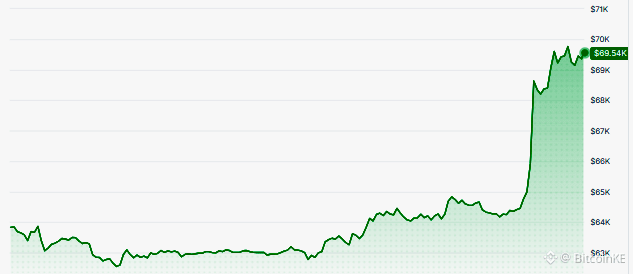
Article
CRYPTO MARKETS | Here Is Why Crypto Markets Saw Bitcoin Rise 8%, Ether Gain 18%Cryptocurrency markets surged in the last 24 hours with Bitcoin climbing above $69,000 and Ether gaining 18% to more than $2,250 as a broad-based rally gathered momentum.
Bitcoin rose nearly 8% over 24 hours to trade above $69,100, after briefly approaching $69,900 overnight. The move represented a rebound of more than $5,700 from Wednesday’s low of about $64,100.
Ether outperformed, rising about 18% in 24 hours and extending its weekly gain to roughly 20%, making it the strongest performer among major cryptocurrencies.
The rally extended beyond Bitcoin and Ether, with most major cryptocurrencies posting strong weekly gains. Crypto-related stocks also advanced as investors increased exposure to digital assets.
A sharp unwinding of bearish bets added to the rally.
Nearly $1.4 billion of short positions were liquidated as prices moved higher forcing traders who had bet on further declines to buy back assets to cover losses.
The surge also followed the U.S. Treasury’s decision to double its long-term bond buybacks to $4 billion, a move that has helped improve liquidity expectations and investor appetite for riskier assets.
The broad advance marks a sharp reversal from the weakness seen earlier in the week when Bitcoin traded near $64,000 and major tokens remained under pressure.
The rally suggests improving risk appetite across crypto markets although the scale of short liquidations means part of the move may have been amplified by forced buying rather than fresh demand alone.
MILESTONE | Bitcoin Futures Trading Now 8x Spot Volume on the World’s Largest Crypto Exchange
Stay tuned to BitKE on crypto developments globally.
Join our WhatsApp channel here.
Follow us on X for the latest posts and updates
Join and interact with our Telegram community
_____________
CRYPTO MARKETS | Here Is Why Crypto Markets Saw Bitcoin Rise 8%, Ether Gain 18%
Cryptocurrency markets surged in the last 24 hours with Bitcoin climbing above $69,000 and Ether gaining 18% to more than $2,250 as a broad-based rally gathered momentum.
Bitcoin rose nearly 8% over 24 hours to trade above $69,100, after briefly approaching $69,900 overnight. The move represented a rebound of more than $5,700 from Wednesday’s low of about $64,100.
Ether outperformed, rising about 18% in 24 hours and extending its weekly gain to roughly 20%, making it the strongest performer among major cryptocurrencies.
The rally extended beyond Bitcoin and Ether, with most major cryptocurrencies posting strong weekly gains. Crypto-related stocks also advanced as investors increased exposure to digital assets.
A sharp unwinding of bearish bets added to the rally.
Nearly $1.4 billion of short positions were liquidated as prices moved higher forcing traders who had bet on further declines to buy back assets to cover losses.
The surge also followed the U.S. Treasury’s decision to double its long-term bond buybacks to $4 billion, a move that has helped improve liquidity expectations and investor appetite for riskier assets.
The broad advance marks a sharp reversal from the weakness seen earlier in the week when Bitcoin traded near $64,000 and major tokens remained under pressure.
The rally suggests improving risk appetite across crypto markets although the scale of short liquidations means part of the move may have been amplified by forced buying rather than fresh demand alone.
MILESTONE | Bitcoin Futures Trading Now 8x Spot Volume on the World’s Largest Crypto Exchange
Stay tuned to BitKE on crypto developments globally.
Join our WhatsApp channel here.
Follow us on X for the latest posts and updates
Join and interact with our Telegram community
_____________
Bitcoin rose nearly 8% over 24 hours to trade above $69,100, after briefly approaching $69,900 overnight. The move represented a rebound of more than $5,700 from Wednesday’s low of about $64,100.
Ether outperformed, rising about 18% in 24 hours and extending its weekly gain to roughly 20%, making it the strongest performer among major cryptocurrencies.
The rally extended beyond Bitcoin and Ether, with most major cryptocurrencies posting strong weekly gains. Crypto-related stocks also advanced as investors increased exposure to digital assets.
A sharp unwinding of bearish bets added to the rally.
Nearly $1.4 billion of short positions were liquidated as prices moved higher forcing traders who had bet on further declines to buy back assets to cover losses.
The surge also followed the U.S. Treasury’s decision to double its long-term bond buybacks to $4 billion, a move that has helped improve liquidity expectations and investor appetite for riskier assets.
The broad advance marks a sharp reversal from the weakness seen earlier in the week when Bitcoin traded near $64,000 and major tokens remained under pressure.
The rally suggests improving risk appetite across crypto markets although the scale of short liquidations means part of the move may have been amplified by forced buying rather than fresh demand alone.
MILESTONE | Bitcoin Futures Trading Now 8x Spot Volume on the World’s Largest Crypto Exchange
Stay tuned to BitKE on crypto developments globally.
Join our WhatsApp channel here.
Follow us on X for the latest posts and updates
Join and interact with our Telegram community
_____________
137
·
--
Ethiopia Spends Over $2 Billion Defending Birr As Currency Hits Record LowEthiopia has spent about $2.2 billion in 2026 supporting the Birr but the currency has continued to weaken highlighting persistent pressure on the country’s foreign exchange market.
The birr has fallen 3.2% against the U.S. dollar in 2026 to nearly 162 per dollar making it the weakest-performing currency over the past year among 23 African currencies tracked by Bloomberg.
The pressure has intensified as higher oil prices have raised Ethiopia’s import costs and increased demand for scarce foreign currency. A recent central bank intervention attracted bids for roughly four times the amount of dollars offered, underscoring the strength of demand for hard currency.
REGULATION | Binance Birr (ETB) Trading Suspension Triggers Backlash, Exposes Ethiopia’s Hidden Crypto Economy
The birr has been under pressure since Ethiopia allowed a major devaluation in 2024 as part of IMF-backed economic reforms. Higher fuel and fertiliser costs linked to the Iran conflict, along with weaker remittances from Ethiopians working in Gulf countries, have added to the strain.
The gap between official and parallel-market rates has also widened. The dollar was trading at around 180 birr in Addis Ababa, about 15% above the official rate.
Continued intervention risks putting further pressure on foreign-exchange reserves. The central bank has not disclosed its reserves in dollar terms, but the IMF estimated them at about $5.9 billion in July 2026.
The government is also expecting a wider budget deficit in the fiscal year that began in July 2026 partly because of additional spending on fuel subsidies.
REGULATION | Ethiopian Central Bank Expands Crypto Ban to Include Exchange, Transfer, Custody, and Issuance
Stay tuned to BitKE for updates on economic developments across Africa.
Join our WhatsApp channel here.
Follow us on X for the latest posts and updates
Join and interact with our Telegram community
__________________
Ethiopia Spends Over $2 Billion Defending Birr As Currency Hits Record Low
Ethiopia has spent about $2.2 billion in 2026 supporting the Birr but the currency has continued to weaken highlighting persistent pressure on the country’s foreign exchange market.
The birr has fallen 3.2% against the U.S. dollar in 2026 to nearly 162 per dollar making it the weakest-performing currency over the past year among 23 African currencies tracked by Bloomberg.
The pressure has intensified as higher oil prices have raised Ethiopia’s import costs and increased demand for scarce foreign currency. A recent central bank intervention attracted bids for roughly four times the amount of dollars offered, underscoring the strength of demand for hard currency.
REGULATION | Binance Birr (ETB) Trading Suspension Triggers Backlash, Exposes Ethiopia’s Hidden Crypto Economy
The birr has been under pressure since Ethiopia allowed a major devaluation in 2024 as part of IMF-backed economic reforms. Higher fuel and fertiliser costs linked to the Iran conflict, along with weaker remittances from Ethiopians working in Gulf countries, have added to the strain.
The gap between official and parallel-market rates has also widened. The dollar was trading at around 180 birr in Addis Ababa, about 15% above the official rate.
Continued intervention risks putting further pressure on foreign-exchange reserves. The central bank has not disclosed its reserves in dollar terms, but the IMF estimated them at about $5.9 billion in July 2026.
The government is also expecting a wider budget deficit in the fiscal year that began in July 2026 partly because of additional spending on fuel subsidies.
REGULATION | Ethiopian Central Bank Expands Crypto Ban to Include Exchange, Transfer, Custody, and Issuance
Stay tuned to BitKE for updates on economic developments across Africa.
Join our WhatsApp channel here.
Follow us on X for the latest posts and updates
Join and interact with our Telegram community
__________________
The birr has fallen 3.2% against the U.S. dollar in 2026 to nearly 162 per dollar making it the weakest-performing currency over the past year among 23 African currencies tracked by Bloomberg.
The pressure has intensified as higher oil prices have raised Ethiopia’s import costs and increased demand for scarce foreign currency. A recent central bank intervention attracted bids for roughly four times the amount of dollars offered, underscoring the strength of demand for hard currency.
REGULATION | Binance Birr (ETB) Trading Suspension Triggers Backlash, Exposes Ethiopia’s Hidden Crypto Economy
The birr has been under pressure since Ethiopia allowed a major devaluation in 2024 as part of IMF-backed economic reforms. Higher fuel and fertiliser costs linked to the Iran conflict, along with weaker remittances from Ethiopians working in Gulf countries, have added to the strain.
The gap between official and parallel-market rates has also widened. The dollar was trading at around 180 birr in Addis Ababa, about 15% above the official rate.
Continued intervention risks putting further pressure on foreign-exchange reserves. The central bank has not disclosed its reserves in dollar terms, but the IMF estimated them at about $5.9 billion in July 2026.
The government is also expecting a wider budget deficit in the fiscal year that began in July 2026 partly because of additional spending on fuel subsidies.
REGULATION | Ethiopian Central Bank Expands Crypto Ban to Include Exchange, Transfer, Custody, and Issuance
Stay tuned to BitKE for updates on economic developments across Africa.
Join our WhatsApp channel here.
Follow us on X for the latest posts and updates
Join and interact with our Telegram community
__________________
163
·
--
CASE STUDY | This State Rejects the Argument Federal Commodities Law Pre-Empts State Gambling LawA Washington state judge has ordered prediction market operator, Kalshi, to stop offering most of its event contracts in the state, ruling that the products likely constitute illegal gambling under state law.
The preliminary injunction is the latest setback for Kalshi as U.S. states challenge the company’s argument that its federally regulated event contracts fall under federal commodities law rather than state gambling rules.
The ruling requires Kalshi to restrict Washington users from trading the affected contracts escalating a broader regulatory fight over whether prediction markets should be treated as financial products or gambling services.
“We’re holding Kalshi accountable for running an illegal gambling operation,” Washington Attorney General Nick Brown said, citing a recent court ruling.
REGULATION | ‘Gambling by Another Name is Still Gambling,’ Says New York as It Sues Coinbase, Gemini Over Prediction Markets Offerings
The ruling bars Kalshi from offering contracts tied to
sports,
elections,
politics,
entertainment,
culture,
tech and science, and
“mentions.”
Contacts exempt from the ruling including:
commodities,
climate,
economics, and
finance.
Kalshi has faced similar challenges in other states, including Nevada, where the company is disputing regulatory action over its failure to fully geofence its platform.
MARKET ANALYSIS | This Prediction Markets Valuation Hits $40 Billion Leveraging Compliance Over Competitors
The disputes come as prediction markets have expanded rapidly beyond politics into sports, economic indicators and other real-world events, drawing growing scrutiny from state regulators and lawmakers.
The Washington case could have wider implications for Kalshi and rivals such as Polymarket as U.S. authorities continue to debate the boundary between federally regulated event contracts and state-regulated gambling.
REGULATION | CFTC Invokes Emergency Powers Ordering Kalshi to Continue Operating amid New York Lawsuit
Want to keep up with the latest news on crypto developments globally?
Join our WhatsApp channel here.
Follow us on X for the latest posts and updates
Join and interact with our Telegram community
_______________
CASE STUDY | This State Rejects the Argument Federal Commodities Law Pre-Empts State Gambling Law
A Washington state judge has ordered prediction market operator, Kalshi, to stop offering most of its event contracts in the state, ruling that the products likely constitute illegal gambling under state law.
The preliminary injunction is the latest setback for Kalshi as U.S. states challenge the company’s argument that its federally regulated event contracts fall under federal commodities law rather than state gambling rules.
The ruling requires Kalshi to restrict Washington users from trading the affected contracts escalating a broader regulatory fight over whether prediction markets should be treated as financial products or gambling services.
“We’re holding Kalshi accountable for running an illegal gambling operation,” Washington Attorney General Nick Brown said, citing a recent court ruling.
REGULATION | ‘Gambling by Another Name is Still Gambling,’ Says New York as It Sues Coinbase, Gemini Over Prediction Markets Offerings
The ruling bars Kalshi from offering contracts tied to
sports,
elections,
politics,
entertainment,
culture,
tech and science, and
“mentions.”
Contacts exempt from the ruling including:
commodities,
climate,
economics, and
finance.
Kalshi has faced similar challenges in other states, including Nevada, where the company is disputing regulatory action over its failure to fully geofence its platform.
MARKET ANALYSIS | This Prediction Markets Valuation Hits $40 Billion Leveraging Compliance Over Competitors
The disputes come as prediction markets have expanded rapidly beyond politics into sports, economic indicators and other real-world events, drawing growing scrutiny from state regulators and lawmakers.
The Washington case could have wider implications for Kalshi and rivals such as Polymarket as U.S. authorities continue to debate the boundary between federally regulated event contracts and state-regulated gambling.
REGULATION | CFTC Invokes Emergency Powers Ordering Kalshi to Continue Operating amid New York Lawsuit
Want to keep up with the latest news on crypto developments globally?
Join our WhatsApp channel here.
Follow us on X for the latest posts and updates
Join and interact with our Telegram community
_______________
The preliminary injunction is the latest setback for Kalshi as U.S. states challenge the company’s argument that its federally regulated event contracts fall under federal commodities law rather than state gambling rules.
The ruling requires Kalshi to restrict Washington users from trading the affected contracts escalating a broader regulatory fight over whether prediction markets should be treated as financial products or gambling services.
“We’re holding Kalshi accountable for running an illegal gambling operation,” Washington Attorney General Nick Brown said, citing a recent court ruling.
REGULATION | ‘Gambling by Another Name is Still Gambling,’ Says New York as It Sues Coinbase, Gemini Over Prediction Markets Offerings
The ruling bars Kalshi from offering contracts tied to
sports,
elections,
politics,
entertainment,
culture,
tech and science, and
“mentions.”
Contacts exempt from the ruling including:
commodities,
climate,
economics, and
finance.
Kalshi has faced similar challenges in other states, including Nevada, where the company is disputing regulatory action over its failure to fully geofence its platform.
MARKET ANALYSIS | This Prediction Markets Valuation Hits $40 Billion Leveraging Compliance Over Competitors
The disputes come as prediction markets have expanded rapidly beyond politics into sports, economic indicators and other real-world events, drawing growing scrutiny from state regulators and lawmakers.
The Washington case could have wider implications for Kalshi and rivals such as Polymarket as U.S. authorities continue to debate the boundary between federally regulated event contracts and state-regulated gambling.
REGULATION | CFTC Invokes Emergency Powers Ordering Kalshi to Continue Operating amid New York Lawsuit
Want to keep up with the latest news on crypto developments globally?
Join our WhatsApp channel here.
Follow us on X for the latest posts and updates
Join and interact with our Telegram community
_______________
130
·
--
The Largest Crypto Broker in Israel Gets Hacked Exposing ~200,000 Personal Customer DataIsrael’s largest crypto broker, Bits of Gold, said hackers stole personal data belonging to roughly 200,000 customers after gaining unauthorized access to a third-party data analytics network.
The exposed information includes
names,
national ID numbers,
email addresses,
phone numbers,
IP addresses,
bank account details, and
public wallet addresses.
The company said no funds, private keys, passwords, CVV codes, or scanned ID documents were exposed.
“Upon detection of the incident, we blocked access and disconnected the system from the information sources, so this access ended,” Bits of Gold said.
“Our security team has begun a comprehensive investigation of the incident, with the assistance of a company specializing in cyber incident investigation and response,” it added.
“It is important to emphasize: your digital assets and funds are safe and were not involved in the incident.”
Bits of Gold was founded in 2013 and became the first crypto company in Israel to receive a permanent Financial Services Provider (FSP) license and holds SOC 2 Type 2 certification. The company has more than 250,000 customers.
Bits of Gold said the breach appeared to be part of a wider global attack affecting multiple companies.
DeFi | Crypto Wallet, SafePal, Data Breach Exposes Order Information of Nearly 40,000 Customers
Stay tuned to BitKE on DeFi developments globally.
Join our WhatsApp channel here.
Follow us on X for the latest posts and updates
Join and interact with our Telegram community
____________
The Largest Crypto Broker in Israel Gets Hacked Exposing ~200,000 Personal Customer Data
Israel’s largest crypto broker, Bits of Gold, said hackers stole personal data belonging to roughly 200,000 customers after gaining unauthorized access to a third-party data analytics network.
The exposed information includes
names,
national ID numbers,
email addresses,
phone numbers,
IP addresses,
bank account details, and
public wallet addresses.
The company said no funds, private keys, passwords, CVV codes, or scanned ID documents were exposed.
“Upon detection of the incident, we blocked access and disconnected the system from the information sources, so this access ended,” Bits of Gold said.
“Our security team has begun a comprehensive investigation of the incident, with the assistance of a company specializing in cyber incident investigation and response,” it added.
“It is important to emphasize: your digital assets and funds are safe and were not involved in the incident.”
Bits of Gold was founded in 2013 and became the first crypto company in Israel to receive a permanent Financial Services Provider (FSP) license and holds SOC 2 Type 2 certification. The company has more than 250,000 customers.
Bits of Gold said the breach appeared to be part of a wider global attack affecting multiple companies.
DeFi | Crypto Wallet, SafePal, Data Breach Exposes Order Information of Nearly 40,000 Customers
Stay tuned to BitKE on DeFi developments globally.
Join our WhatsApp channel here.
Follow us on X for the latest posts and updates
Join and interact with our Telegram community
____________
The exposed information includes
names,
national ID numbers,
email addresses,
phone numbers,
IP addresses,
bank account details, and
public wallet addresses.
The company said no funds, private keys, passwords, CVV codes, or scanned ID documents were exposed.
“Upon detection of the incident, we blocked access and disconnected the system from the information sources, so this access ended,” Bits of Gold said.
“Our security team has begun a comprehensive investigation of the incident, with the assistance of a company specializing in cyber incident investigation and response,” it added.
“It is important to emphasize: your digital assets and funds are safe and were not involved in the incident.”
Bits of Gold was founded in 2013 and became the first crypto company in Israel to receive a permanent Financial Services Provider (FSP) license and holds SOC 2 Type 2 certification. The company has more than 250,000 customers.
Bits of Gold said the breach appeared to be part of a wider global attack affecting multiple companies.
DeFi | Crypto Wallet, SafePal, Data Breach Exposes Order Information of Nearly 40,000 Customers
Stay tuned to BitKE on DeFi developments globally.
Join our WhatsApp channel here.
Follow us on X for the latest posts and updates
Join and interact with our Telegram community
____________
143
·
--
CASE STUDY | Binance Demonstrates Its Global Compliance Rules Apply Regardless of JurisdictionBinance’s disclosure of customer information to Russian authorities underscores the exchange’s position that it applies a global compliance framework when responding to lawful law-enforcement requests, regardless of jurisdiction.
Reuters reported that Binance provided Russian investigators with personal and transaction data belonging to Yuri Belenkiy, a Russian IT specialist accused of sending more than $700 in cryptocurrency to the Ukrainian military and Azov Brigade, also referred to as the Azov Regiment, which Moscow designates as a terrorist organisation.
Binance said it cooperates with law-enforcement agencies globally, subject to applicable legal, privacy and regulatory requirements. Its current privacy policy similarly allows disclosure of customer information in response to legally valid law-enforcement and regulatory requests, while requiring such disclosures to comply with applicable data-protection laws and internal legal review.
The case is notable because Binance announced a complete exit from Russia in 2023, saying operating there was incompatible with its compliance strategy.
CRYPTO CRIME | Russia Shuts Down 9 Crypto Exchanges Over Alleged Fraud Links
That does not necessarily mean the exchange abandoned its compliance obligations toward Russian authorities.
Rather, the case highlights Binance’s broader approach:
Compliance requirements are applied across jurisdictions, with customer information potentially shared when the exchange determines that a request meets applicable legal and regulatory standards.
Binance’s compliance regime has undergone a major overhaul since its 2023 U.S. settlement, which included
a $4.3 billion penalty,
enhanced anti-money-laundering controls, and
a five-year independent monitorship.
REGULATION | Binance Admits to Wrongdoings, to Pay $4 Billion Penalty as Founding CEO Steps Down
U.S. authorities said the reforms included
stronger sanctions controls,
dedicated law-enforcement teams, and
expanded compliance resources.
A crypto regulatory lawyer told Reuters that Binance may have faced restrictions under European data protection rules if Belenkiy was registered as an EU resident. Russia is not considered to provide an adequate level of personal-data protection under EU law.
Binance disputes this view.
“Binance does not make or enforce the laws of any jurisdiction, determine charges, or decide how any government uses information in legal proceedings,” a Binance spokesperson said in an emailed statement. “Like other global financial institutions, we cooperate with lawful information requests from law enforcement globally, subject to applicable legal, privacy and regulatory requirements. Those decisions rest solely with the relevant Authorities.”
REGULATION | Binance Was Reportedly Cut Off from The European Union Due to a ‘History of Financial-Crime Violations’
The central question in the Russian case is therefore not whether Binance follows different compliance standards in different countries, but whether the specific disclosure satisfied the competing legal requirements governing law-enforcement cooperation and data protection.
Binance has declined to comment on the individual case, saying it does not discuss confidential law-enforcement requests.
REGULATION | Russia Introduces Crypto Bill With Severe Criminal Penalties and Prison Time for Unregistered Operations
Sign up for BitKE for all the latest developments on crypto regulation globally.
Join our WhatsApp channel here.
Follow us on X for the latest posts and updates
Join and interact with our Telegram community
______________
CASE STUDY | Binance Demonstrates Its Global Compliance Rules Apply Regardless of Jurisdiction
Binance’s disclosure of customer information to Russian authorities underscores the exchange’s position that it applies a global compliance framework when responding to lawful law-enforcement requests, regardless of jurisdiction.
Reuters reported that Binance provided Russian investigators with personal and transaction data belonging to Yuri Belenkiy, a Russian IT specialist accused of sending more than $700 in cryptocurrency to the Ukrainian military and Azov Brigade, also referred to as the Azov Regiment, which Moscow designates as a terrorist organisation.
Binance said it cooperates with law-enforcement agencies globally, subject to applicable legal, privacy and regulatory requirements. Its current privacy policy similarly allows disclosure of customer information in response to legally valid law-enforcement and regulatory requests, while requiring such disclosures to comply with applicable data-protection laws and internal legal review.
The case is notable because Binance announced a complete exit from Russia in 2023, saying operating there was incompatible with its compliance strategy.
CRYPTO CRIME | Russia Shuts Down 9 Crypto Exchanges Over Alleged Fraud Links
That does not necessarily mean the exchange abandoned its compliance obligations toward Russian authorities.
Rather, the case highlights Binance’s broader approach:
Compliance requirements are applied across jurisdictions, with customer information potentially shared when the exchange determines that a request meets applicable legal and regulatory standards.
Binance’s compliance regime has undergone a major overhaul since its 2023 U.S. settlement, which included
a $4.3 billion penalty,
enhanced anti-money-laundering controls, and
a five-year independent monitorship.
REGULATION | Binance Admits to Wrongdoings, to Pay $4 Billion Penalty as Founding CEO Steps Down
U.S. authorities said the reforms included
stronger sanctions controls,
dedicated law-enforcement teams, and
expanded compliance resources.
A crypto regulatory lawyer told Reuters that Binance may have faced restrictions under European data protection rules if Belenkiy was registered as an EU resident. Russia is not considered to provide an adequate level of personal-data protection under EU law.
Binance disputes this view.
“Binance does not make or enforce the laws of any jurisdiction, determine charges, or decide how any government uses information in legal proceedings,” a Binance spokesperson said in an emailed statement. “Like other global financial institutions, we cooperate with lawful information requests from law enforcement globally, subject to applicable legal, privacy and regulatory requirements. Those decisions rest solely with the relevant Authorities.”
REGULATION | Binance Was Reportedly Cut Off from The European Union Due to a ‘History of Financial-Crime Violations’
The central question in the Russian case is therefore not whether Binance follows different compliance standards in different countries, but whether the specific disclosure satisfied the competing legal requirements governing law-enforcement cooperation and data protection.
Binance has declined to comment on the individual case, saying it does not discuss confidential law-enforcement requests.
REGULATION | Russia Introduces Crypto Bill With Severe Criminal Penalties and Prison Time for Unregistered Operations
Sign up for BitKE for all the latest developments on crypto regulation globally.
Join our WhatsApp channel here.
Follow us on X for the latest posts and updates
Join and interact with our Telegram community
______________
Reuters reported that Binance provided Russian investigators with personal and transaction data belonging to Yuri Belenkiy, a Russian IT specialist accused of sending more than $700 in cryptocurrency to the Ukrainian military and Azov Brigade, also referred to as the Azov Regiment, which Moscow designates as a terrorist organisation.
Binance said it cooperates with law-enforcement agencies globally, subject to applicable legal, privacy and regulatory requirements. Its current privacy policy similarly allows disclosure of customer information in response to legally valid law-enforcement and regulatory requests, while requiring such disclosures to comply with applicable data-protection laws and internal legal review.
The case is notable because Binance announced a complete exit from Russia in 2023, saying operating there was incompatible with its compliance strategy.
CRYPTO CRIME | Russia Shuts Down 9 Crypto Exchanges Over Alleged Fraud Links
That does not necessarily mean the exchange abandoned its compliance obligations toward Russian authorities.
Rather, the case highlights Binance’s broader approach:
Compliance requirements are applied across jurisdictions, with customer information potentially shared when the exchange determines that a request meets applicable legal and regulatory standards.
Binance’s compliance regime has undergone a major overhaul since its 2023 U.S. settlement, which included
a $4.3 billion penalty,
enhanced anti-money-laundering controls, and
a five-year independent monitorship.
REGULATION | Binance Admits to Wrongdoings, to Pay $4 Billion Penalty as Founding CEO Steps Down
U.S. authorities said the reforms included
stronger sanctions controls,
dedicated law-enforcement teams, and
expanded compliance resources.
A crypto regulatory lawyer told Reuters that Binance may have faced restrictions under European data protection rules if Belenkiy was registered as an EU resident. Russia is not considered to provide an adequate level of personal-data protection under EU law.
Binance disputes this view.
“Binance does not make or enforce the laws of any jurisdiction, determine charges, or decide how any government uses information in legal proceedings,” a Binance spokesperson said in an emailed statement. “Like other global financial institutions, we cooperate with lawful information requests from law enforcement globally, subject to applicable legal, privacy and regulatory requirements. Those decisions rest solely with the relevant Authorities.”
REGULATION | Binance Was Reportedly Cut Off from The European Union Due to a ‘History of Financial-Crime Violations’
The central question in the Russian case is therefore not whether Binance follows different compliance standards in different countries, but whether the specific disclosure satisfied the competing legal requirements governing law-enforcement cooperation and data protection.
Binance has declined to comment on the individual case, saying it does not discuss confidential law-enforcement requests.
REGULATION | Russia Introduces Crypto Bill With Severe Criminal Penalties and Prison Time for Unregistered Operations
Sign up for BitKE for all the latest developments on crypto regulation globally.
Join our WhatsApp channel here.
Follow us on X for the latest posts and updates
Join and interact with our Telegram community
______________
73
·
--
REGULATION | BitPanda Fined €70,000 in Austria’s First Published MiCA PenaltyAustria’s financial regulator has fined crypto platform, Bitpanda, €70,000 ($82,000) for breaching the European Union’s Markets in Crypto-Assets Regulation (MiCA) marking the country’s first published final penalty under the new framework.
REGULATION | Europe Now Has Over 300 MiCA-Approved Crypto Firms – Custody Services Dominate at ~70%
The Financial Market Authority (FMA) said Bitpanda failed to submit a required crypto-asset white paper at least 20 working days before its publication. The company also distributed marketing material before the white paper was published.
Another marketing communication lacked mandatory disclosures stating that it had not been reviewed or approved by a regulator and that Bitpanda was responsible for its contents. It also omitted required contact details.
The proceedings were concluded under an expedited procedure and the penalty is final.
The fine highlights the increasing enforcement of MiCA as EU regulators move from establishing the framework to policing compliance. Bitpanda has been authorised by Austria’s FMA as a MiCA-regulated crypto-asset service provider since April 2025.
The penalty comes about a month after Gate Europe CEO, Giovanni Cunti, said that crypto firms that have secured licenses under the European Union’s Markets in Crypto-Assets (MiCA) framework may still struggle to survive as the cost of staying compliant continues to rise.
“I think there are going to be quite a few more of the ones that acquire MiCA license that will not be capable to sustain the cost and the resources that are needed to carry on this business in the long term,” said Cunti.
REALITY CHECK | ‘Long-Term Survival Not Guaranteed for MiCA-Licensed Firms Due to Compliance Costs,’ Says CEO, Gate Europe
Stay tuned to BitKE for insights into crypto law enforcement globally.
Join our WhatsApp channel here.
Follow us on X for the latest posts and updates
Join and interact with our Telegram community
_____________
REGULATION | BitPanda Fined €70,000 in Austria’s First Published MiCA Penalty
Austria’s financial regulator has fined crypto platform, Bitpanda, €70,000 ($82,000) for breaching the European Union’s Markets in Crypto-Assets Regulation (MiCA) marking the country’s first published final penalty under the new framework.
REGULATION | Europe Now Has Over 300 MiCA-Approved Crypto Firms – Custody Services Dominate at ~70%
The Financial Market Authority (FMA) said Bitpanda failed to submit a required crypto-asset white paper at least 20 working days before its publication. The company also distributed marketing material before the white paper was published.
Another marketing communication lacked mandatory disclosures stating that it had not been reviewed or approved by a regulator and that Bitpanda was responsible for its contents. It also omitted required contact details.
The proceedings were concluded under an expedited procedure and the penalty is final.
The fine highlights the increasing enforcement of MiCA as EU regulators move from establishing the framework to policing compliance. Bitpanda has been authorised by Austria’s FMA as a MiCA-regulated crypto-asset service provider since April 2025.
The penalty comes about a month after Gate Europe CEO, Giovanni Cunti, said that crypto firms that have secured licenses under the European Union’s Markets in Crypto-Assets (MiCA) framework may still struggle to survive as the cost of staying compliant continues to rise.
“I think there are going to be quite a few more of the ones that acquire MiCA license that will not be capable to sustain the cost and the resources that are needed to carry on this business in the long term,” said Cunti.
REALITY CHECK | ‘Long-Term Survival Not Guaranteed for MiCA-Licensed Firms Due to Compliance Costs,’ Says CEO, Gate Europe
Stay tuned to BitKE for insights into crypto law enforcement globally.
Join our WhatsApp channel here.
Follow us on X for the latest posts and updates
Join and interact with our Telegram community
_____________
REGULATION | Europe Now Has Over 300 MiCA-Approved Crypto Firms – Custody Services Dominate at ~70%
The Financial Market Authority (FMA) said Bitpanda failed to submit a required crypto-asset white paper at least 20 working days before its publication. The company also distributed marketing material before the white paper was published.
Another marketing communication lacked mandatory disclosures stating that it had not been reviewed or approved by a regulator and that Bitpanda was responsible for its contents. It also omitted required contact details.
The proceedings were concluded under an expedited procedure and the penalty is final.
The fine highlights the increasing enforcement of MiCA as EU regulators move from establishing the framework to policing compliance. Bitpanda has been authorised by Austria’s FMA as a MiCA-regulated crypto-asset service provider since April 2025.
The penalty comes about a month after Gate Europe CEO, Giovanni Cunti, said that crypto firms that have secured licenses under the European Union’s Markets in Crypto-Assets (MiCA) framework may still struggle to survive as the cost of staying compliant continues to rise.
“I think there are going to be quite a few more of the ones that acquire MiCA license that will not be capable to sustain the cost and the resources that are needed to carry on this business in the long term,” said Cunti.
REALITY CHECK | ‘Long-Term Survival Not Guaranteed for MiCA-Licensed Firms Due to Compliance Costs,’ Says CEO, Gate Europe
Stay tuned to BitKE for insights into crypto law enforcement globally.
Join our WhatsApp channel here.
Follow us on X for the latest posts and updates
Join and interact with our Telegram community
_____________
35
Log in to explore more content
Join global crypto users on Binance Square
⚡️ Get latest and useful information about crypto.
💬 Trusted by the world’s largest crypto exchange.
👍 Discover real insights from verified creators.
Email / Phone number
Trending Topics
BTCReaches$80000
10,658 views
231 Discussing
Bitcoin Stalking the $80,000 Milestone: Genuine Expansion vs. Liquidity Exhaustion
Bitcoin is aggressively knocking on the door of the $80,000 mark after surging from $64,000 to tap local highs near $79,800. While retail timelines are already pricing in a parabolic continuation, examining the structural conditions near psychological thresholds provides a clearer picture of market health.
Key Structural Drivers Behind the Push:
Cascading Squeeze vs. Spot ETF Backing:
The explosive run toward $80k was heavily propelled by forced short liquidations as $BTC cleared key resistance between $72k–$75k. Crucially, this was accompanied by nearly $2B in weekly spot ETF inflows, signaling institutional capital absorption rather than an isolated leverage spike.
The $80k Psychological Wall:
The $79,500–$80,000 band represents a massive cluster of resting limit sell orders and un-triggered call option open interest. As price probes this ceiling, buyers must absorb heavy distribution from earlier dip-buyers taking profit.
Macro Tailwinds:
The broader hard-asset expansion—catalyzed by softer Treasury yields and dollar weakness, continues to provide macro liquidity support for digital assets.
The Structural Reality:
Reaching a major psychological round number like $80,000 often triggers a high-volatility liquidity sweep before genuine price discovery begins. If aggressive breakout buyers get absorbed at the threshold, a healthy consolidation toward the $75,500–$76,500 support shelf would allow the market to build structure.
A clean reclaim of $80k with sustained spot volume opens the door to further expansion, but chasing momentum directly into multi-month supply walls carries high asymmetric risk.
#BTCReaches$80000
Shontz
·5 Likes
·938 views
ZECBreaksKeyResistanceUp75.5%
786 views
60 Discussing
SKHynixFalls5.63%AfterUnionRejectsWageDeal
22 views
11 Discussing