
BigBreakingWire
523 Posts

BigBreakingWire
Follow @BigBreakingWire-Your fast lane to finance, stocks, crypto & bonds! Get sharp insights, stay ahead, invest smarter.
0 Following
46 Followers
165 Liked
Posts
All
Quotes
Videos
🚨 Trump’s 1,051 Trades Include Meta, Motorola, Visa, Mastercard, Berkshire
President Donald Trump’s June disclosure showed 1,051 securities transactions involving stocks, bonds and ETFs, with total transaction values ranging from $78.1 million to $263.1 million.
His purchases exceeded $49 million, while sales totalled at least $28.5 million.
Key moves included selling $5 million–$25 million of Vanguard Dividend Appreciation ETF and buying Fidelity National Information Services and Home Depot on June 22.
On June 18, Trump sold Meta and Motorola while buying Berkshire Hathaway, Cintas, Visa and Mastercard, with each transaction in the $1 million–$5 million range.
President Donald Trump’s June disclosure showed 1,051 securities transactions involving stocks, bonds and ETFs, with total transaction values ranging from $78.1 million to $263.1 million.
His purchases exceeded $49 million, while sales totalled at least $28.5 million.
Key moves included selling $5 million–$25 million of Vanguard Dividend Appreciation ETF and buying Fidelity National Information Services and Home Depot on June 22.
On June 18, Trump sold Meta and Motorola while buying Berkshire Hathaway, Cintas, Visa and Mastercard, with each transaction in the $1 million–$5 million range.
🚨 BREAKING: Nomura Warns “Bessent Put” On Yen Could Backfire
Nomura warned the market’s assumption that U.S. intervention will backstop the yen could fail, triggering destabilising capital outflows.
Citi called the recent coordinated intervention an informal “currency alliance” linking FX policy with the broader U.S.-Japan economic and security relationship, including Japan’s $550 billion U.S. investment programme.
Senator Elizabeth Warren questioned Treasury Secretary Bessent over taxpayer exposure, while Bank of America expects the yen to strengthen roughly 6% by year-end.
#BOJIntervention
Nomura warned the market’s assumption that U.S. intervention will backstop the yen could fail, triggering destabilising capital outflows.
Citi called the recent coordinated intervention an informal “currency alliance” linking FX policy with the broader U.S.-Japan economic and security relationship, including Japan’s $550 billion U.S. investment programme.
Senator Elizabeth Warren questioned Treasury Secretary Bessent over taxpayer exposure, while Bank of America expects the yen to strengthen roughly 6% by year-end.
#BOJIntervention
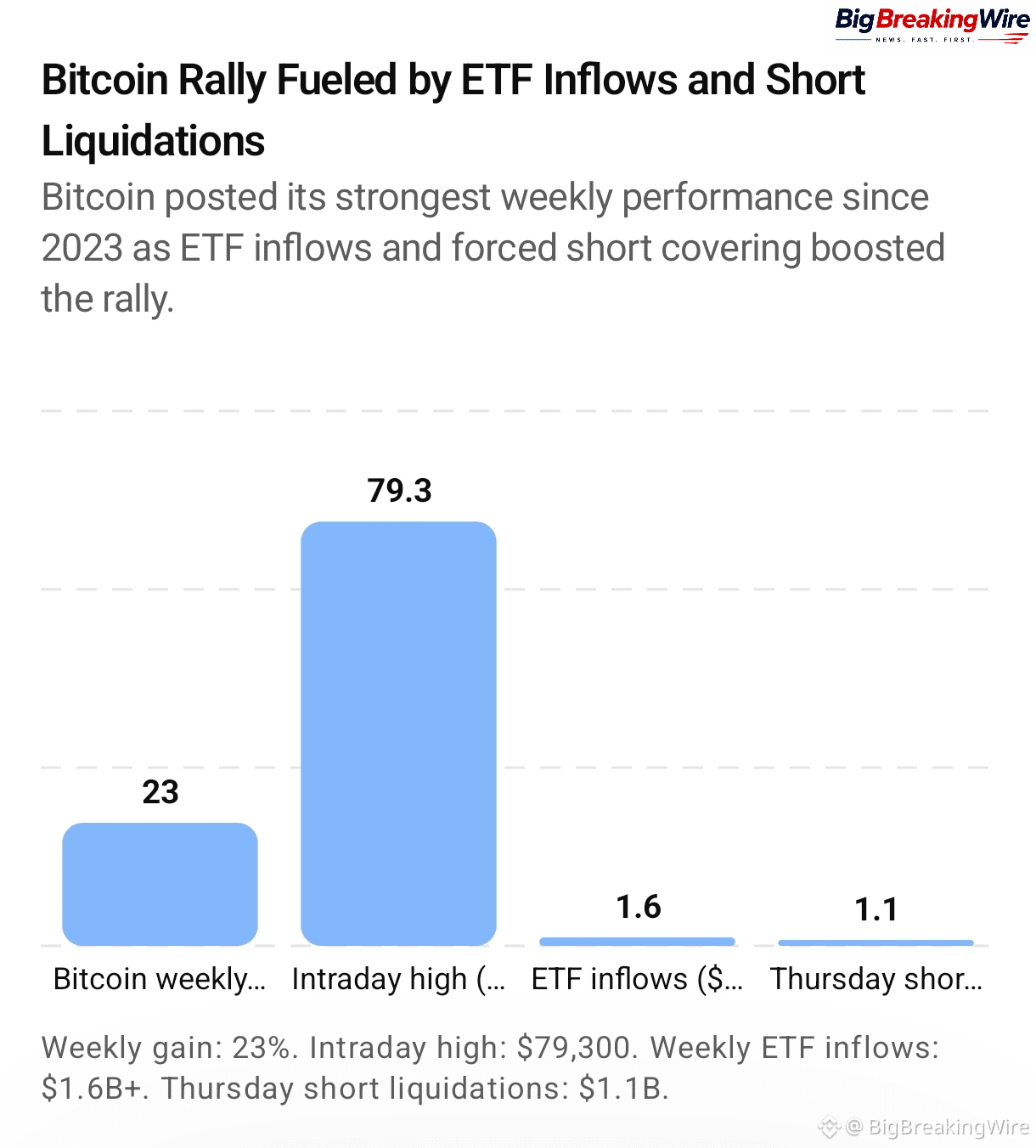
🚨 Bitcoin jumps 23% in a week as $1.1 billion in shorts are liquidated
Bitcoin surged past $77,500, hitting $79,300 intraday, and gained 23% in seven days, its strongest weekly performance since 2023.
Spot Bitcoin ETFs attracted $1.6 billion+ this week, including $606.3 million on Thursday, one of their biggest inflow days of 2026.
More than $1 billion in Bitcoin shorts were liquidated, including $1.1 billion on Thursday alone, according to Standard Chartered.
The rally followed the US Treasury’s decision to at least double long term bond buybacks, pushing yields lower. Gold and Bitcoin rose while the dollar fell to a three month low.
Bitcoin surged past $77,500, hitting $79,300 intraday, and gained 23% in seven days, its strongest weekly performance since 2023.
Spot Bitcoin ETFs attracted $1.6 billion+ this week, including $606.3 million on Thursday, one of their biggest inflow days of 2026.
More than $1 billion in Bitcoin shorts were liquidated, including $1.1 billion on Thursday alone, according to Standard Chartered.
The rally followed the US Treasury’s decision to at least double long term bond buybacks, pushing yields lower. Gold and Bitcoin rose while the dollar fell to a three month low.
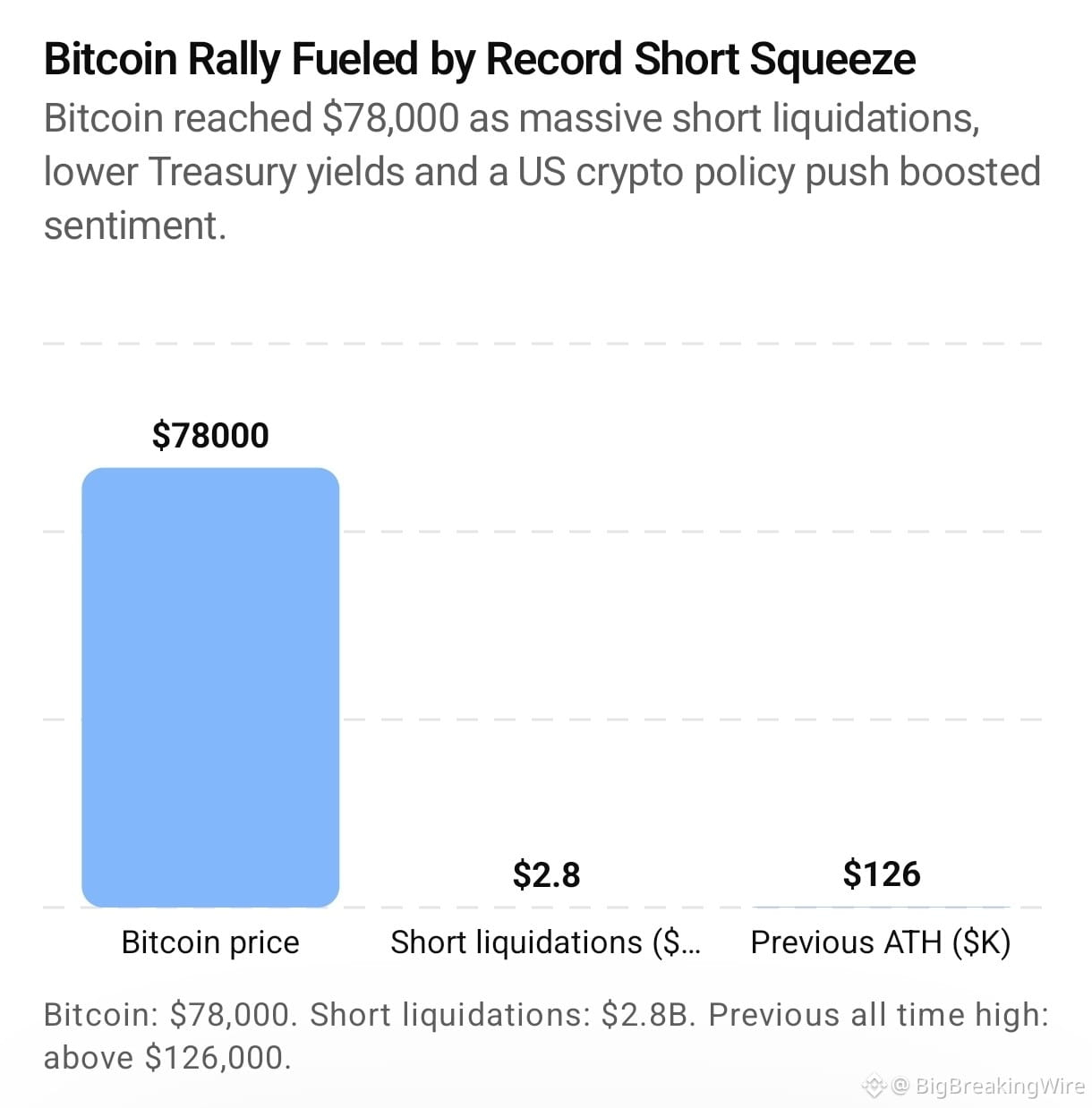
🚨 Bitcoin jumps to $78,000 as the biggest short squeeze on record fuels the rally.
Bitcoin hit $78,000 for the first time since May after $2.8 billion in short positions were liquidated, the largest liquidation wave since records began in 2021.
The rally was also supported by the US Treasury’s decision to double long dated bond buybacks, easing bond yields.
President Trump also urged Congress to pass the CLARITY Act at a White House crypto summit, adding to the positive policy backdrop.
Crypto stocks including Coinbase and Strategy rallied, but Bitcoin remains well below its October 2025 record high above $126,000.
$BTC
Bitcoin hit $78,000 for the first time since May after $2.8 billion in short positions were liquidated, the largest liquidation wave since records began in 2021.
The rally was also supported by the US Treasury’s decision to double long dated bond buybacks, easing bond yields.
President Trump also urged Congress to pass the CLARITY Act at a White House crypto summit, adding to the positive policy backdrop.
Crypto stocks including Coinbase and Strategy rallied, but Bitcoin remains well below its October 2025 record high above $126,000.
$BTC
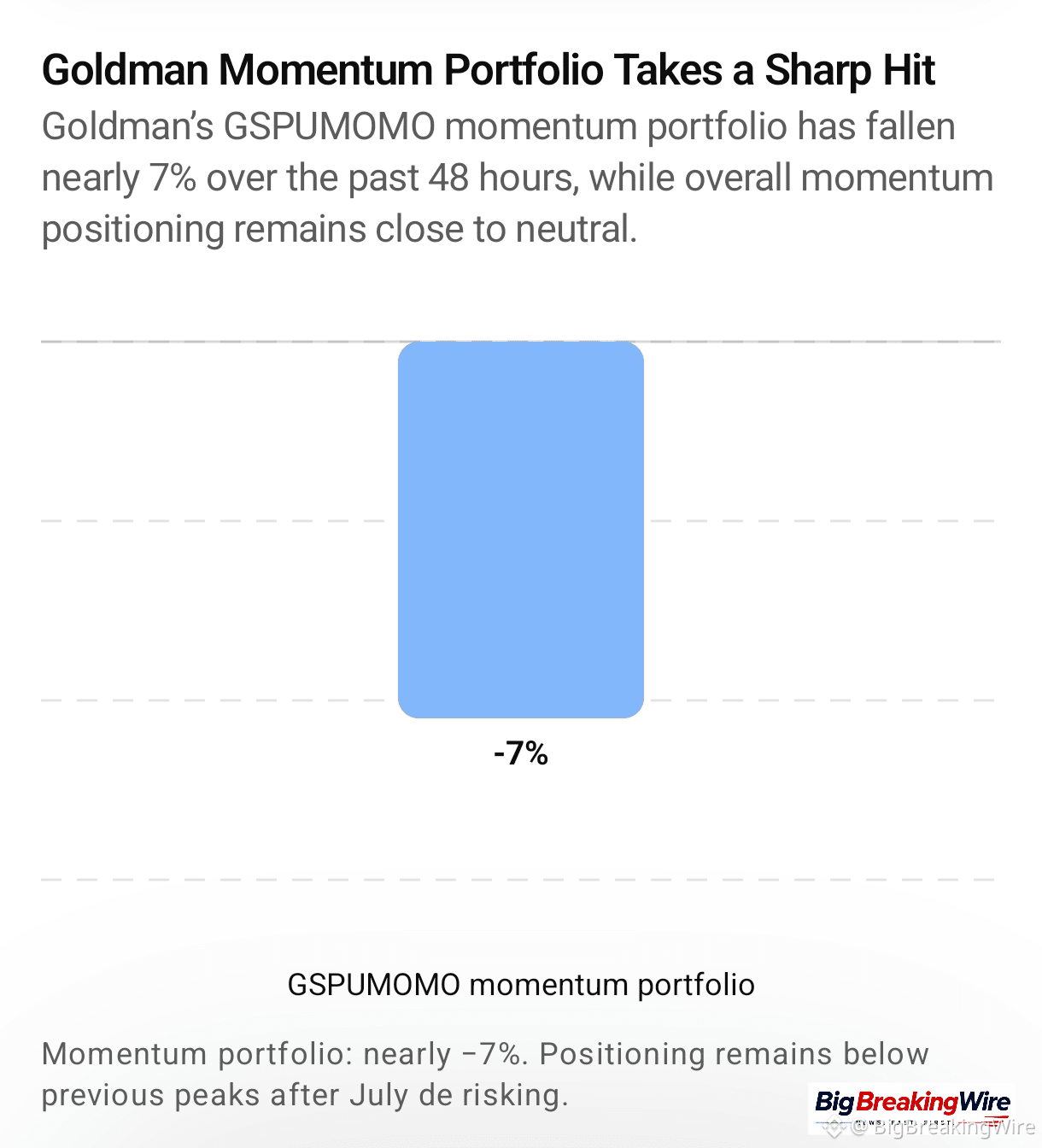
🚨 Goldman Sachs says AI and momentum trades have swung sharply in the past 48 hours.
Goldman’s GSPUMOMO momentum portfolio has fallen nearly 7%, but Prime data show investor positioning has moved much less, with momentum exposure now close to neutral.
Investors still hold meaningful AI and semiconductor exposure, but positions remain well below their previous peaks following a major July de risking.
Semiconductor leverage has already fallen, but residual system leverage could trigger forced selling if prices drop sharply.
Lower August liquidity could amplify AI related moves, meaning recent intraday volatility may look more fundamental than the underlying positioning suggests.
Goldman’s GSPUMOMO momentum portfolio has fallen nearly 7%, but Prime data show investor positioning has moved much less, with momentum exposure now close to neutral.
Investors still hold meaningful AI and semiconductor exposure, but positions remain well below their previous peaks following a major July de risking.
Semiconductor leverage has already fallen, but residual system leverage could trigger forced selling if prices drop sharply.
Lower August liquidity could amplify AI related moves, meaning recent intraday volatility may look more fundamental than the underlying positioning suggests.
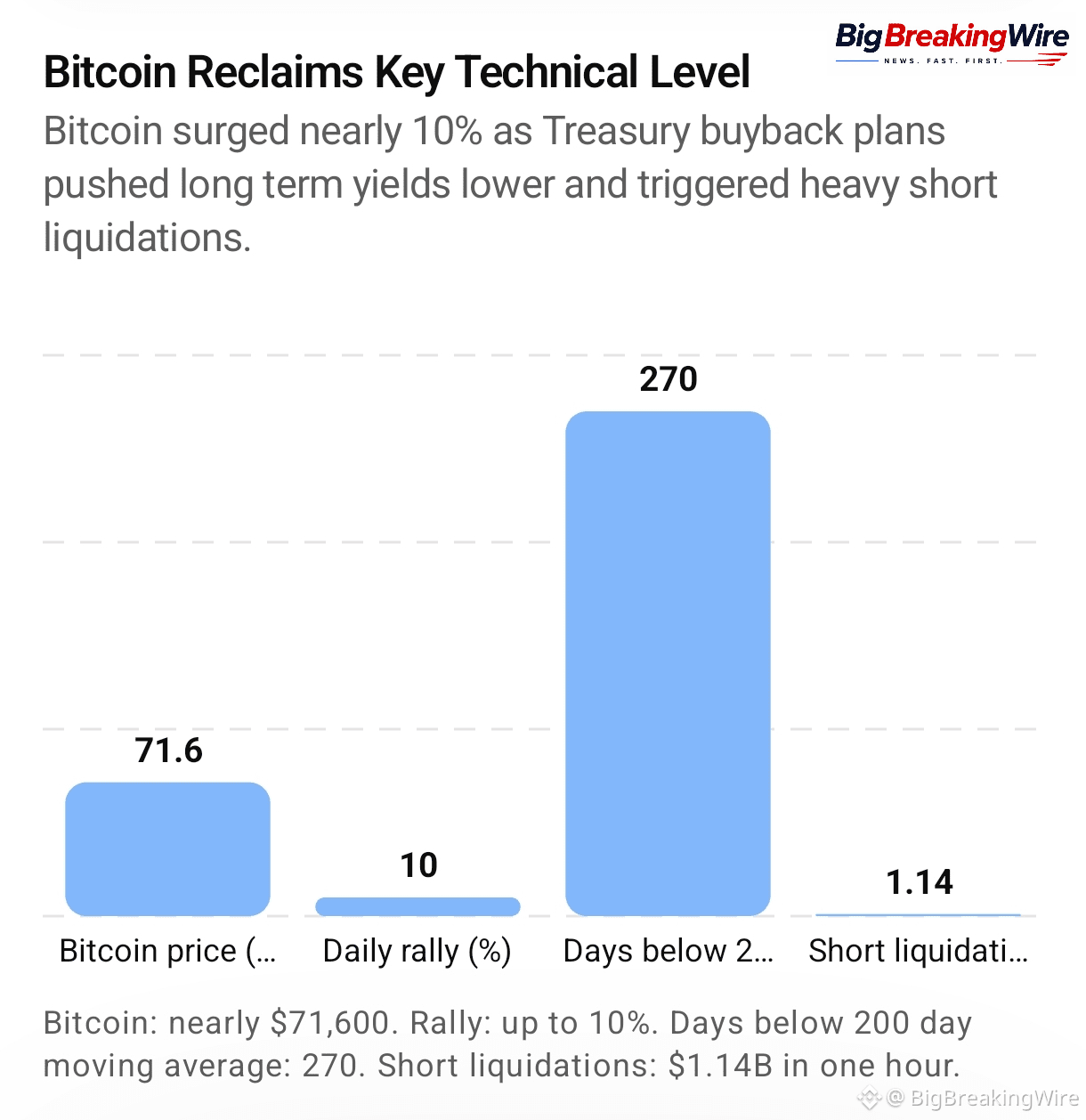
🚨 Bitcoin jumps 10% to nearly $71,600, reclaiming its 200 day moving average after 270 consecutive days below it.
The rally came after the US Treasury said it will at least double long bond buybacks from September 9, pushing 30 year Treasury yields lower and weakening the dollar.
Short liquidations topped $1.14 billion in just one hour, adding fuel to the rally.
The move marked Bitcoin’s sharpest single day gain in five months, although Glassnode warned that key on chain signals remain unconfirmed.
$BTC $ETH
The rally came after the US Treasury said it will at least double long bond buybacks from September 9, pushing 30 year Treasury yields lower and weakening the dollar.
Short liquidations topped $1.14 billion in just one hour, adding fuel to the rally.
The move marked Bitcoin’s sharpest single day gain in five months, although Glassnode warned that key on chain signals remain unconfirmed.
$BTC $ETH
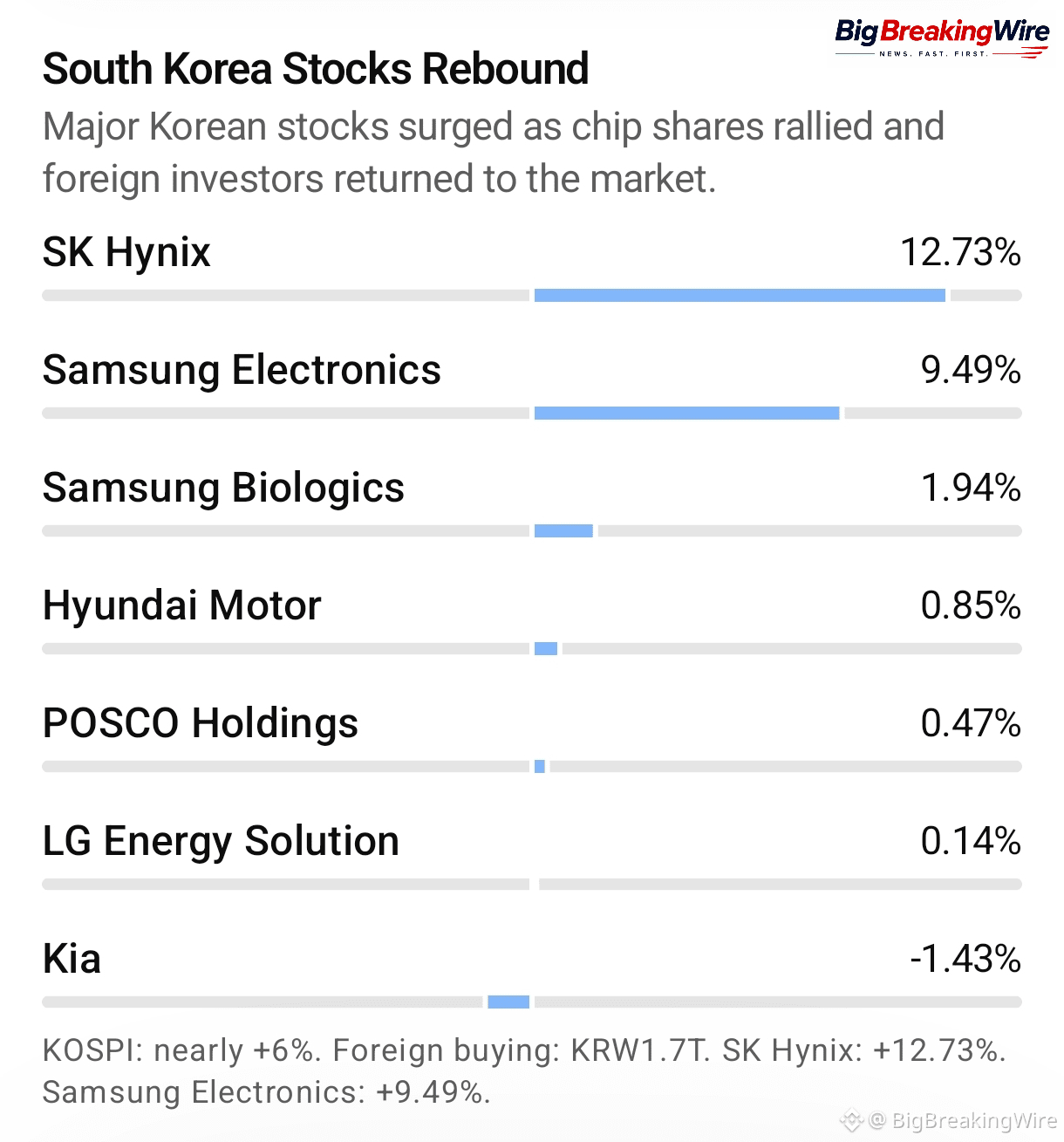
🚨 South Korean stocks rebound nearly 6% as chip stocks surge.
The KOSPI jumped nearly 6%, reversing the previous sharp selloff as falling US Treasury yields and shareholder return measures lifted sentiment.
SK Hynix surged 12.73% after announcing a share buyback and treasury stock cancellation, while Samsung Electronics jumped 9.49% on reports of a new shareholder return policy.
Foreign investors turned buyers, purchasing KRW1.7 trillion or about $1.22 billion of Korean equities.
Other major stocks: LG Energy Solution +0.14%, Hyundai Motor +0.85%, Kia −1.43%, POSCO Holdings +0.47% and Samsung Biologics +1.94%.
Market breadth was positive with 521 stocks advancing versus 338 declining.
$KORU $SKHY
The KOSPI jumped nearly 6%, reversing the previous sharp selloff as falling US Treasury yields and shareholder return measures lifted sentiment.
SK Hynix surged 12.73% after announcing a share buyback and treasury stock cancellation, while Samsung Electronics jumped 9.49% on reports of a new shareholder return policy.
Foreign investors turned buyers, purchasing KRW1.7 trillion or about $1.22 billion of Korean equities.
Other major stocks: LG Energy Solution +0.14%, Hyundai Motor +0.85%, Kia −1.43%, POSCO Holdings +0.47% and Samsung Biologics +1.94%.
Market breadth was positive with 521 stocks advancing versus 338 declining.
$KORU $SKHY
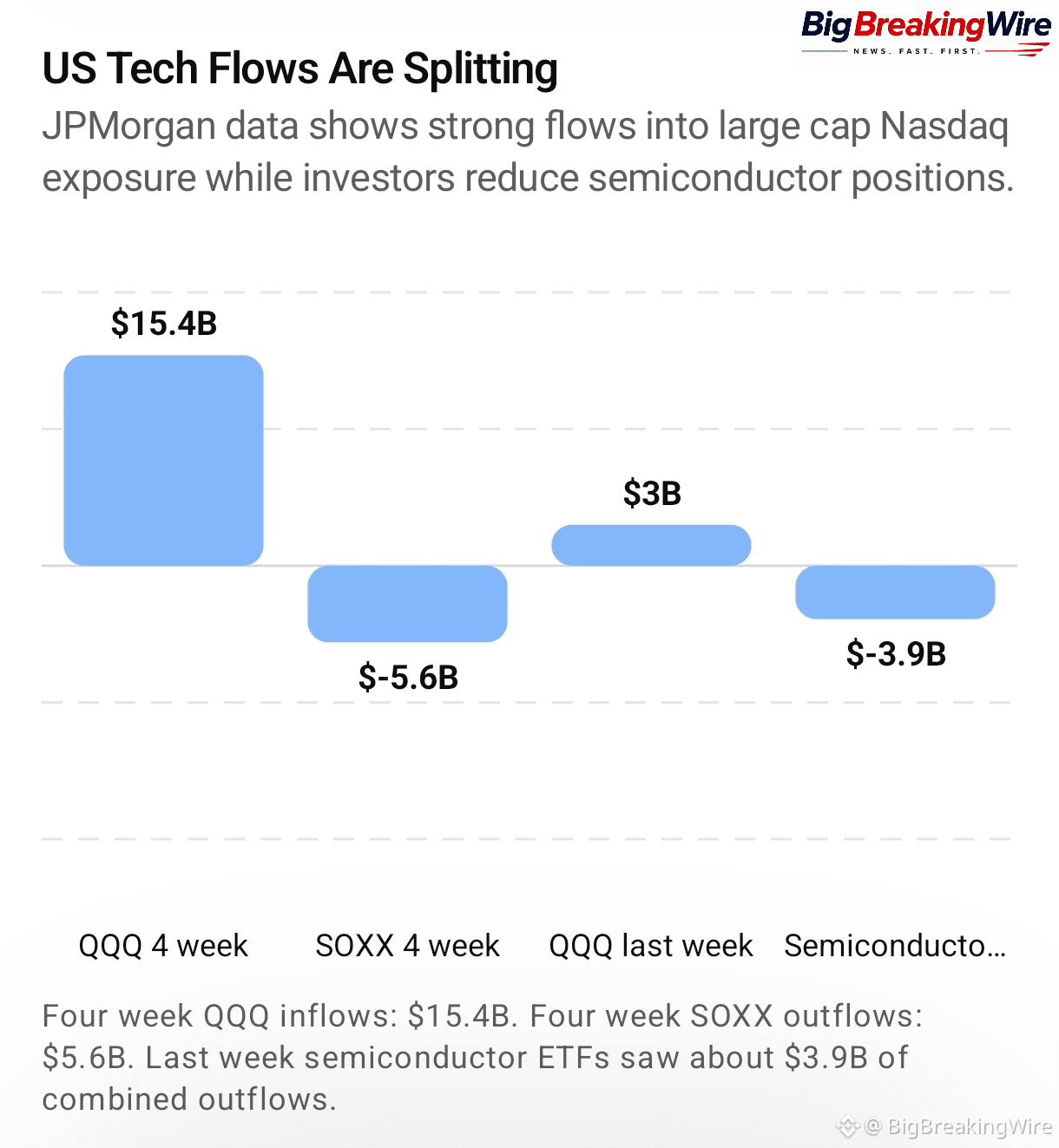
🚨 Investors are rotating within US tech, with semiconductors losing favour.
JPMorgan data shows QQQ attracted about $3.0 billion last week, while Nasdaq 100 futures saw roughly $7.5 billion of net buying.
At the same time, broad tech ETFs saw $3.4 billion of outflows, while semiconductor ETFs SOXL, SMH and SOXX together lost about $3.9 billion.
The four week split is even bigger. QQQ has attracted $15.4 billion, while SOXX has seen $5.6 billion of outflows.
Investors are keeping exposure to large cap Nasdaq names while cutting semiconductor positions, as crowded AI trades and strong previous gains encourage de risking.
JPMorgan data shows QQQ attracted about $3.0 billion last week, while Nasdaq 100 futures saw roughly $7.5 billion of net buying.
At the same time, broad tech ETFs saw $3.4 billion of outflows, while semiconductor ETFs SOXL, SMH and SOXX together lost about $3.9 billion.
The four week split is even bigger. QQQ has attracted $15.4 billion, while SOXX has seen $5.6 billion of outflows.
Investors are keeping exposure to large cap Nasdaq names while cutting semiconductor positions, as crowded AI trades and strong previous gains encourage de risking.
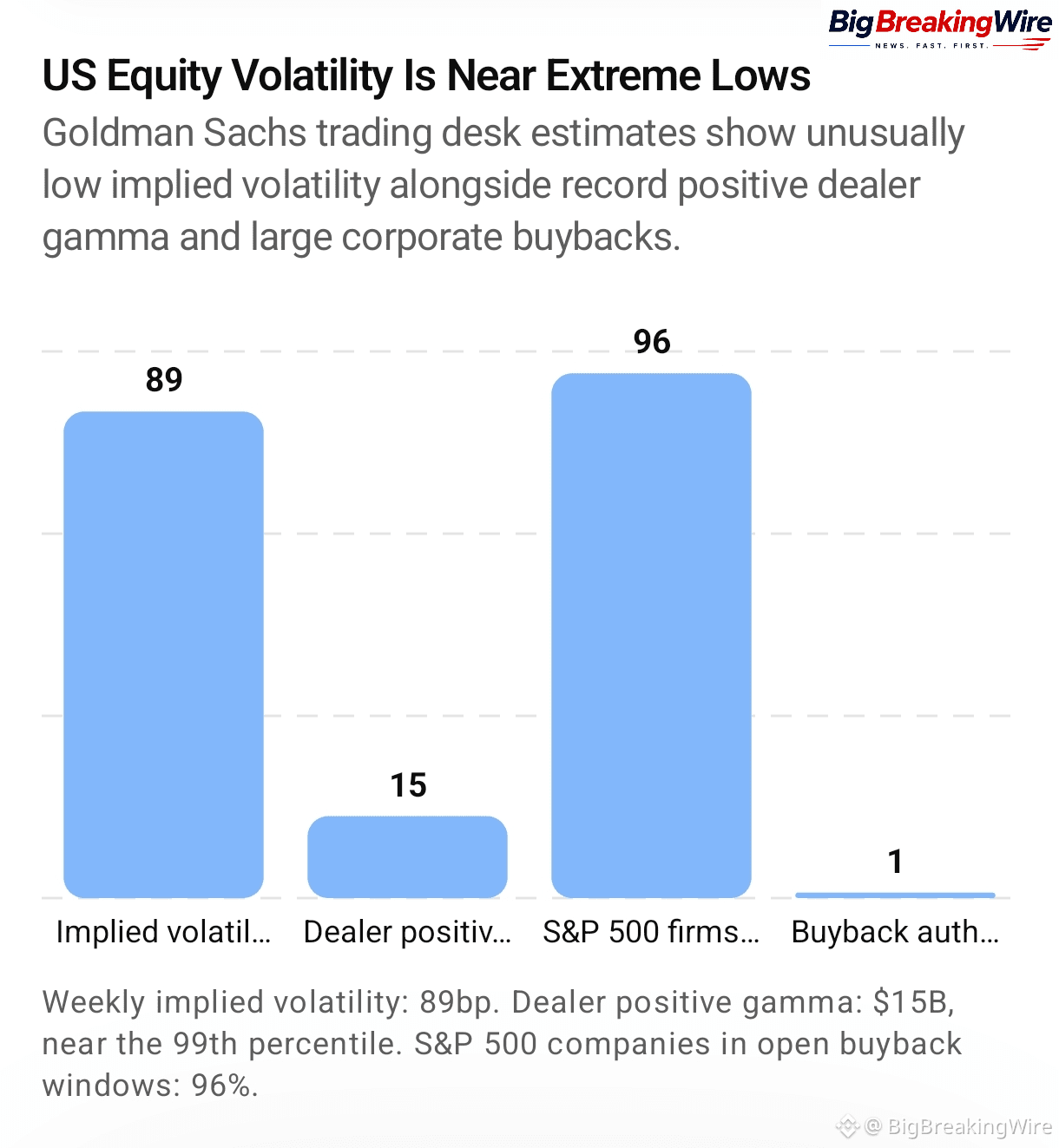
🚨 US stocks are sitting in an unusually calm volatility setup.
Goldman Sachs’ TMT trading desk estimates weekly implied equity volatility at just 89bp, near a five year low, with its panic reading at 0.36 out of 10.
Option market makers are holding around $15 billion in positive gamma hedges, near the 99th percentile. This encourages dealers to sell into rallies and buy into dips, limiting short term moves.
Meanwhile, 96% of S&P 500 companies are in open buyback windows, with announced authorizations above $1 trillion.
Rising long term yields and higher oil remain risks. If dealer gamma and buybacks weaken, the ultra low volatility environment could quickly become more sensitive to larger price moves.
Goldman Sachs’ TMT trading desk estimates weekly implied equity volatility at just 89bp, near a five year low, with its panic reading at 0.36 out of 10.
Option market makers are holding around $15 billion in positive gamma hedges, near the 99th percentile. This encourages dealers to sell into rallies and buy into dips, limiting short term moves.
Meanwhile, 96% of S&P 500 companies are in open buyback windows, with announced authorizations above $1 trillion.
Rising long term yields and higher oil remain risks. If dealer gamma and buybacks weaken, the ultra low volatility environment could quickly become more sensitive to larger price moves.
🚨 Global bond yields are surging as investors brace for higher rates.
The US 30 year Treasury yield hit 5.321%, its highest since mid 2007. French borrowing costs reached levels last seen in 2008, German yields neared 2011 highs, UK yields approached 6%, while Japanese long term yields moved close to record highs.
The rise reflects fears over persistent inflation, rising government debt, higher spending, geopolitical fragmentation and weaker demand for sovereign bonds.
The debt fuelled AI boom is adding another layer of concern as governments and markets face higher funding needs.
AXA IM CIO Chris Iggo said a major deterioration in economic data or an external shock may be needed to materially improve the outlook for long duration bonds.
The US 30 year Treasury yield hit 5.321%, its highest since mid 2007. French borrowing costs reached levels last seen in 2008, German yields neared 2011 highs, UK yields approached 6%, while Japanese long term yields moved close to record highs.
The rise reflects fears over persistent inflation, rising government debt, higher spending, geopolitical fragmentation and weaker demand for sovereign bonds.
The debt fuelled AI boom is adding another layer of concern as governments and markets face higher funding needs.
AXA IM CIO Chris Iggo said a major deterioration in economic data or an external shock may be needed to materially improve the outlook for long duration bonds.
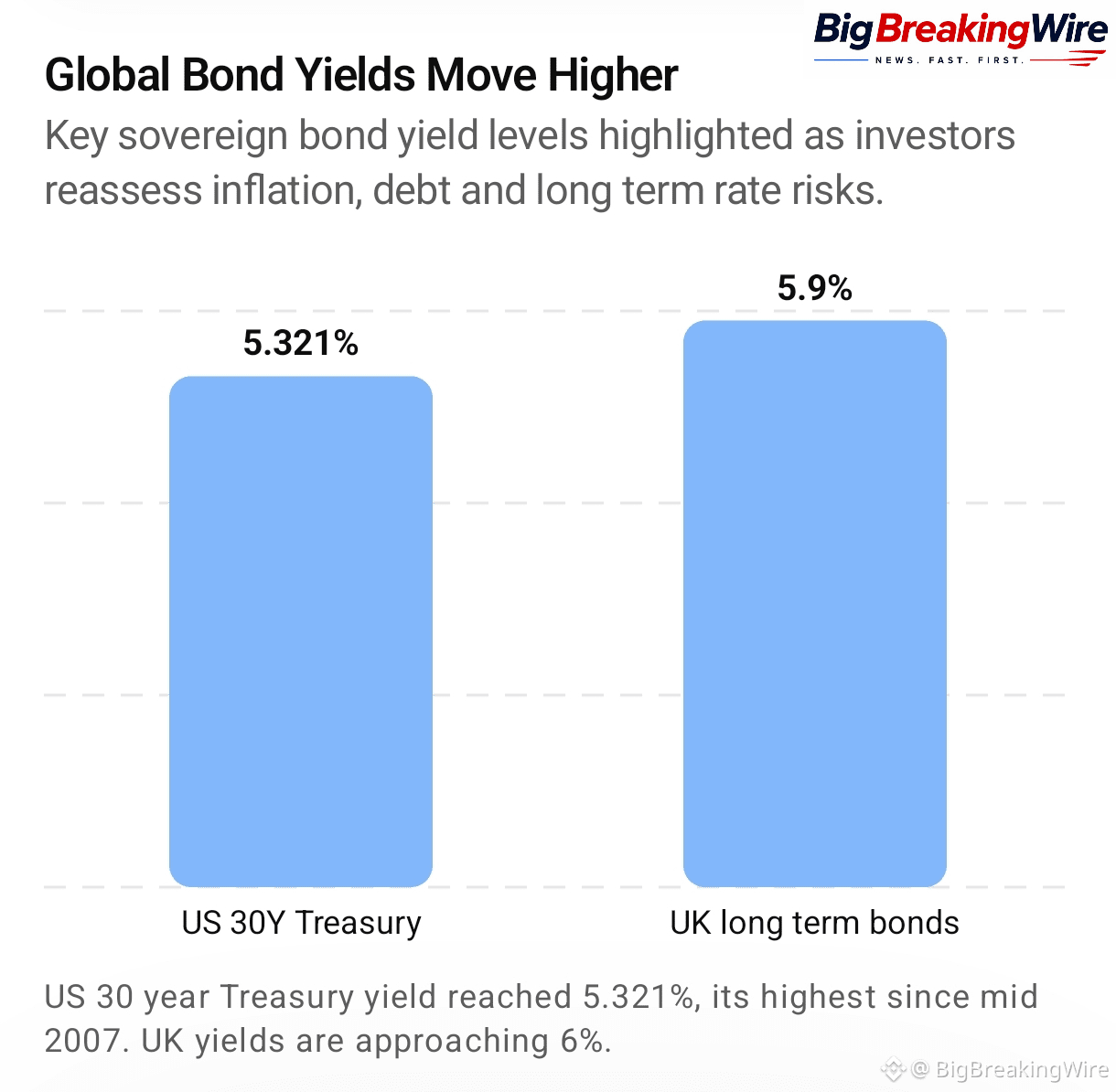
🚨 JPMorgan is now allowing institutional clients to use Bitcoin and Ethereum as collateral for US dollar loans.
Through its Kinexys platform, clients can pledge crypto alongside Treasuries and equities. JPMorgan applies 30% to 50% haircuts, with assets held by custodians including Fidelity Digital Assets and Coinbase and priced in real time through Chainlink.
The move marks a major shift from CEO Jamie Dimon’s years of crypto scepticism.
Meanwhile, Goldman Sachs, Citigroup and Bank of America are building a rival tokenised deposit network, expected to launch in early 2027.
Through its Kinexys platform, clients can pledge crypto alongside Treasuries and equities. JPMorgan applies 30% to 50% haircuts, with assets held by custodians including Fidelity Digital Assets and Coinbase and priced in real time through Chainlink.
The move marks a major shift from CEO Jamie Dimon’s years of crypto scepticism.
Meanwhile, Goldman Sachs, Citigroup and Bank of America are building a rival tokenised deposit network, expected to launch in early 2027.
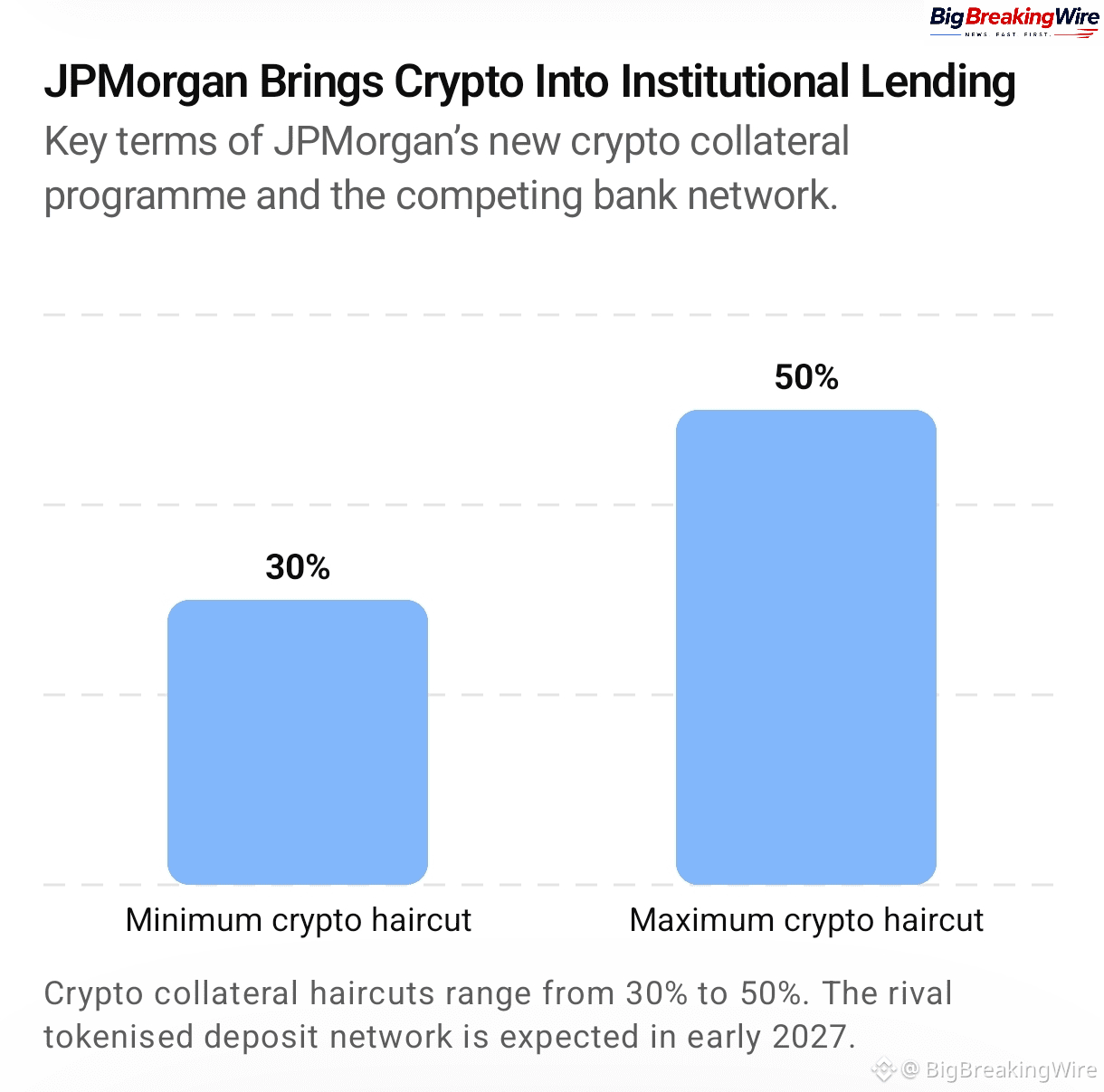
🚨 Gold is winning the trade Bitcoin was designed for.
Bitcoin has fallen 46% over the past year to around $63,000, while gold has gained 32% to about $4,376.
The pressure on Bitcoin is coming as global bond yields hit their highest levels since July 2008, before Bitcoin even existed.
The US 30 year Treasury auction on August 13 drew a 5.216% yield, the highest since 2001, with below average investor demand.
As real yields rise, investors are moving toward government debt and gold, putting pressure on Bitcoin’s “fiscal doubt” trade.
$MSTR $BTC
Bitcoin has fallen 46% over the past year to around $63,000, while gold has gained 32% to about $4,376.
The pressure on Bitcoin is coming as global bond yields hit their highest levels since July 2008, before Bitcoin even existed.
The US 30 year Treasury auction on August 13 drew a 5.216% yield, the highest since 2001, with below average investor demand.
As real yields rise, investors are moving toward government debt and gold, putting pressure on Bitcoin’s “fiscal doubt” trade.
$MSTR $BTC
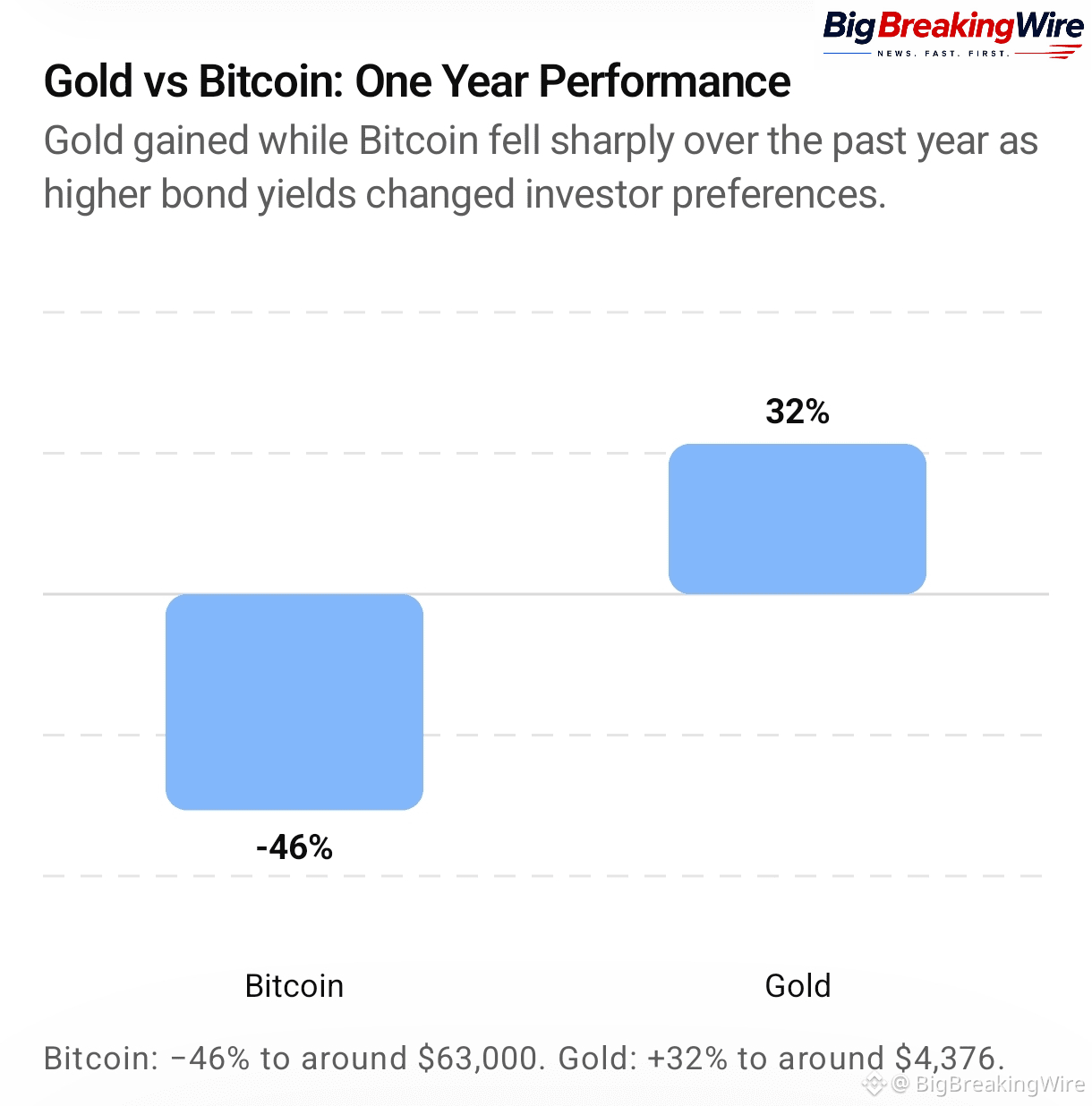
🚨 BREAKING: Alphabet’s SpaceX Stake Soars To $94.2 Billion
Alphabet held 551.2 million SpaceX shares worth about $94.2 billion as of June 30, stemming from a $900 million investment in 2015.
SpaceX’s $86 billion IPO in June made the stake visible in 13F filings. Alphabet is now the largest institutional holder, with Gigafund Management, Baillie Gifford and BlackRock also among major holders.
Harvard Management Company disclosed a $2.2 billion SpaceX stake, making it the largest single-stock holding in its $4.3 billion U.S. equity portfolio. The University of California disclosed about $1 billion, while UNC and Washington University also hold stakes.
SpaceX shares have pulled back from their June 30 peak but remain above the $135 IPO price. Retail investors became net sellers for the first time last Friday.
$SPCX
Alphabet held 551.2 million SpaceX shares worth about $94.2 billion as of June 30, stemming from a $900 million investment in 2015.
SpaceX’s $86 billion IPO in June made the stake visible in 13F filings. Alphabet is now the largest institutional holder, with Gigafund Management, Baillie Gifford and BlackRock also among major holders.
Harvard Management Company disclosed a $2.2 billion SpaceX stake, making it the largest single-stock holding in its $4.3 billion U.S. equity portfolio. The University of California disclosed about $1 billion, while UNC and Washington University also hold stakes.
SpaceX shares have pulled back from their June 30 peak but remain above the $135 IPO price. Retail investors became net sellers for the first time last Friday.
$SPCX
🚨 Nvidia’s SpaceX investment is now worth about $21 billion.
Nvidia disclosed 122.8 million SpaceX Class A shares worth roughly $21 billion at the end of Q2, alongside a nearly $30 billion stake in Intel.
The SpaceX holding came from Nvidia’s $10 billion investment in xAI in January, before SpaceX acquired xAI in a $1.25 trillion deal in February.
Elon Musk said SpaceX will exclusively use Nvidia chips in its AI data centres and expects a “significant allocation” of next generation Vera Rubin GPUs.
$NVDA $SPCX
Nvidia disclosed 122.8 million SpaceX Class A shares worth roughly $21 billion at the end of Q2, alongside a nearly $30 billion stake in Intel.
The SpaceX holding came from Nvidia’s $10 billion investment in xAI in January, before SpaceX acquired xAI in a $1.25 trillion deal in February.
Elon Musk said SpaceX will exclusively use Nvidia chips in its AI data centres and expects a “significant allocation” of next generation Vera Rubin GPUs.
$NVDA $SPCX
🚨 AI chip demand is turning the memory market into a supply race.
SK Group Chairman Chey Tae won said customer demand for chips has doubled this year and called the race to secure AI memory “like a war.”
He said no memory maker can scale fast enough for 2027 demand, which he expects to be the worst shortage year ahead.
SK Hynix is pursuing a $720 billion capacity expansion through 2034 and is evaluating US sites beyond its $3.9 billion Indiana plant.
Memory prices have already risen 40% to 50%, forcing Apple to raise flagship prices. Chey called this “chip inflation” and said there is no short term fix.
SK Group Chairman Chey Tae won said customer demand for chips has doubled this year and called the race to secure AI memory “like a war.”
He said no memory maker can scale fast enough for 2027 demand, which he expects to be the worst shortage year ahead.
SK Hynix is pursuing a $720 billion capacity expansion through 2034 and is evaluating US sites beyond its $3.9 billion Indiana plant.
Memory prices have already risen 40% to 50%, forcing Apple to raise flagship prices. Chey called this “chip inflation” and said there is no short term fix.
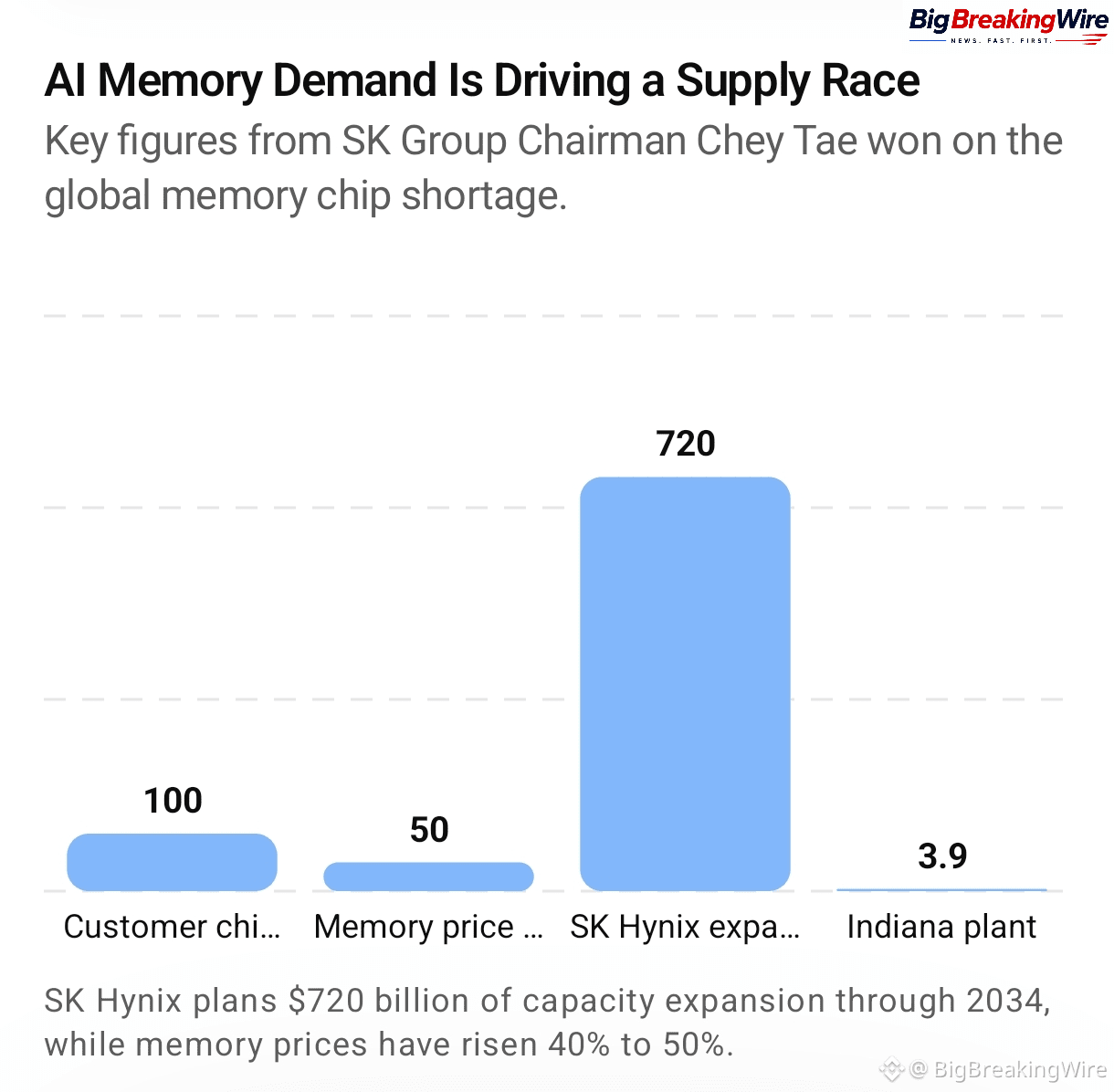
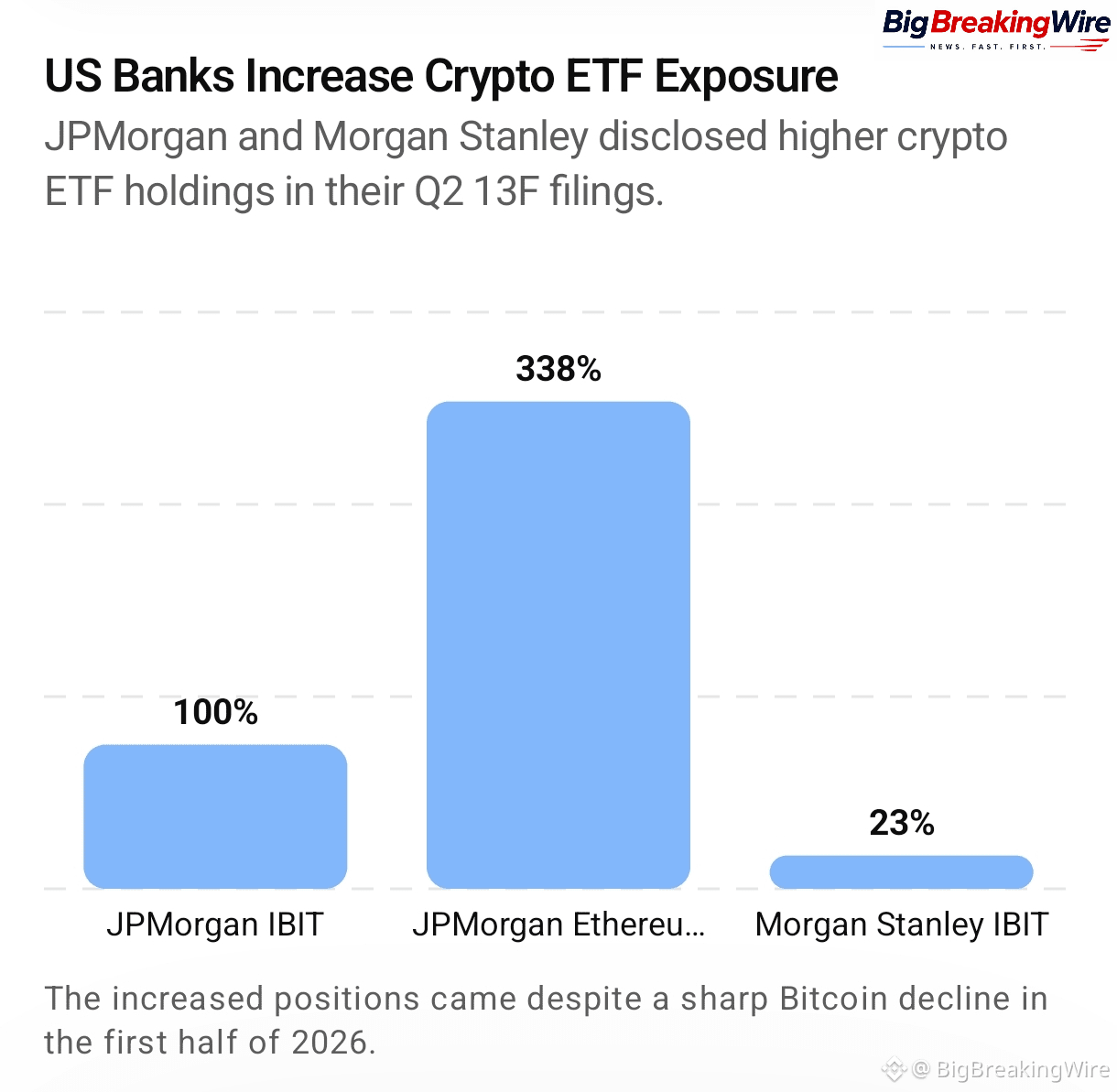
JPMorgan and Morgan Stanley are increasing their crypto exposure even as Bitcoin falls.
JPMorgan more than doubled its IBIT stake to $355.7 million and increased its Ethereum ETF holdings by 338%.
Morgan Stanley raised its IBIT position 23% to 16.5 million shares and also added new exposure to a Solana fund.
The buying came despite Bitcoin falling sharply in the first half of 2026, while spot Bitcoin ETFs recorded net outflows this week.
JPMorgan more than doubled its IBIT stake to $355.7 million and increased its Ethereum ETF holdings by 338%.
Morgan Stanley raised its IBIT position 23% to 16.5 million shares and also added new exposure to a Solana fund.
The buying came despite Bitcoin falling sharply in the first half of 2026, while spot Bitcoin ETFs recorded net outflows this week.
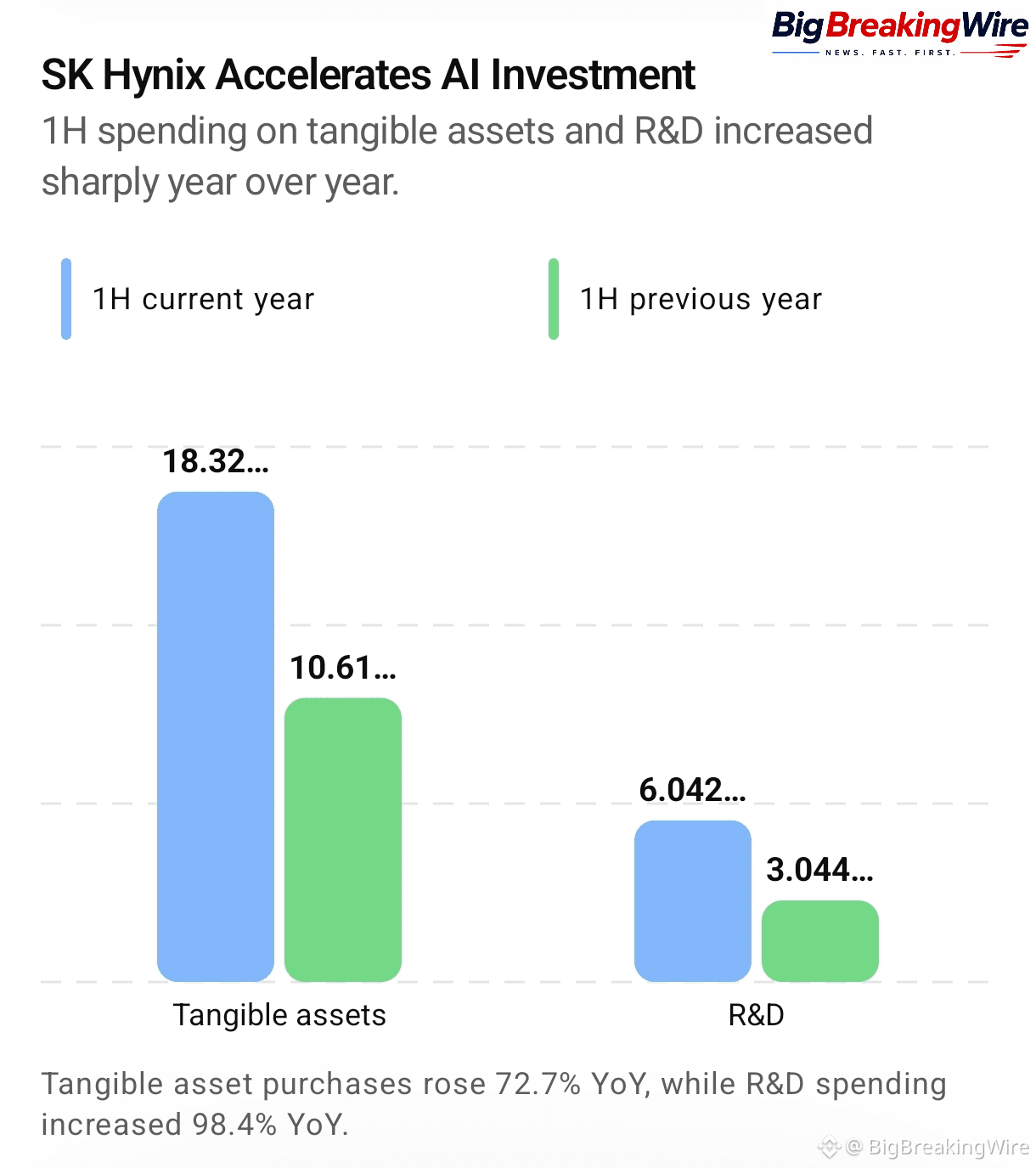
SK Hynix is sharply increasing spending to keep up with the AI boom.
The company spent 18.3288 trillion won on tangible assets in 1H, up 72.7% YoY from 10.6157 trillion won, as it expands capacity for AI focused HBM, server DRAM and enterprise SSDs.
R&D spending also jumped 98.4% YoY to 6.0428 trillion won, with 5.8163 trillion won allocated to ongoing development costs.
AI demand is driving a major increase in both capacity and technology investment.
$SKHY
The company spent 18.3288 trillion won on tangible assets in 1H, up 72.7% YoY from 10.6157 trillion won, as it expands capacity for AI focused HBM, server DRAM and enterprise SSDs.
R&D spending also jumped 98.4% YoY to 6.0428 trillion won, with 5.8163 trillion won allocated to ongoing development costs.
AI demand is driving a major increase in both capacity and technology investment.
$SKHY
🚨 MSCI is considering a new rule that could put Strategy, Metaplanet and Yellow Cake at risk of deletion from its Global Investable Market Indexes.
The proposal would exclude “non operating companies” using a two stage screen based on operating assets and five financial ratios, moving beyond MSCI’s earlier crypto specific approach.
A May 2026 simulation flagged Strategy, Metaplanet and Yellow Cake for deletion.
The consultation closes September 30, results are expected by October 16, and changes could take effect in the November 2026 Index Review.
If adopted, passive funds could be forced to sell affected stocks, creating significant market flow pressure. MSCI has not finalized the changes.
The proposal would exclude “non operating companies” using a two stage screen based on operating assets and five financial ratios, moving beyond MSCI’s earlier crypto specific approach.
A May 2026 simulation flagged Strategy, Metaplanet and Yellow Cake for deletion.
The consultation closes September 30, results are expected by October 16, and changes could take effect in the November 2026 Index Review.
If adopted, passive funds could be forced to sell affected stocks, creating significant market flow pressure. MSCI has not finalized the changes.
🚨 COLDCard FIRMWARE FLAW DRAINS $130M IN BITCOIN
• Vulnerability affected Coldcard Mk3 wallets, draining $130M+ from 7,000+ addresses since July 30
• About 233,000 BTC, worth roughly $15B, moved from long-term holders to multisig setups and regulated custodians
• Casa CEO Nick Neuman called distributed self-custody “Bitcoin's immune system”
• New wallet creation hit a 2026 high as holders shifted funds to safer storage
• Vulnerability affected Coldcard Mk3 wallets, draining $130M+ from 7,000+ addresses since July 30
• About 233,000 BTC, worth roughly $15B, moved from long-term holders to multisig setups and regulated custodians
• Casa CEO Nick Neuman called distributed self-custody “Bitcoin's immune system”
• New wallet creation hit a 2026 high as holders shifted funds to safer storage
Log in to explore more content