Binance Square

Eric Carson

Crypto KOL | Content Creator | Trader | HODLer | Degen | Web3 & Market Insights | X: @xEric_OG
Отваряне на търговията
Високочестотен трейдър
3.6 години
180 Следвани
31.4K+ Последователи
25.1K+ Харесано
3.5K+ Споделено
Публикации
Портфолио
PINNED
·
--
Good Night 🌃 PUSHING TOWARD 50K 💪🔥 Tap to Claim Your $BTC Reward 💰
Good Night 🌃
PUSHING TOWARD 50K 💪🔥
Tap to Claim Your $BTC Reward 💰
PINNED
Good Night 🌙✨ Way to 50K Journey 🚀 Don’t miss your reward 🎁💎
Good Night 🌙✨
Way to 50K Journey 🚀
Don’t miss your reward 🎁💎
Plasma: Simplifying How Stablecoins Settle Across NetworksMost blockchains optimize for general computation, not for the narrow but critical task of moving money. Stablecoin transfers, which should resemble simple payment instructions, are instead wrapped in operational friction. Users must hold a separate gas token, estimate fees under variable network conditions, and accept the risk of failed execution during congestion. These constraints make stablecoins behave less like digital cash and more like fragile on-chain instruments. For payments and remittances, this design is fundamentally misaligned. This is the gap Plasma attempts to address. Rather than competing on raw throughput or smart-contract expressiveness, Plasma reframes the problem as one of settlement reliability. Existing systems fail not because they are slow, but because they mix user-facing payments with speculative demand, volatile fees, and fragmented liquidity. The result is unpredictability—an unacceptable trait for real-world financial flows. Plasma’s architecture separates stablecoin settlement from broader execution noise. It is designed as a chain-agnostic layer that routes stablecoin transfers across multiple networks while abstracting away gas management and fee estimation from the end user. By integrating intent-based execution and interoperating across a wide set of chains and assets, Plasma concentrates liquidity at the point of settlement instead of dispersing it across isolated bridges and pools. This directly improves execution certainty and reduces fragmentation. At the core, Plasma treats stablecoins as infrastructure primitives rather than trading pairs. The system prioritizes deterministic execution, predictable costs, and deep liquidity access. The $XPL token is not positioned as a speculative asset, but as an operational component used for network coordination, security incentives, and governance participation. Governance itself centers on maintaining settlement integrity, managing integrations, and aligning the network around reliability rather than rapid feature expansion. Real-world use cases emerge naturally from this design. Merchant payments, cross-border payroll, treasury movements, and platform-to-platform settlements all benefit from a system where transferring digital dollars does not require understanding blockchain mechanics. The primary risks lie in cross-chain dependency and the operational complexity of maintaining interoperability at scale. However, these risks are structural and visible, not hidden in volatile fee markets. Plasma’s long-term relevance is tied to a simple premise: if stablecoins are to function as global money, the infrastructure moving them must resemble financial plumbing—quiet, predictable, and boring by design. That restraint, rather than technical novelty, may be its most important contribution. @Plasma #Plasma #plasma $XPL {spot}(XPLUSDT)

Plasma: Simplifying How Stablecoins Settle Across Networks

Most blockchains optimize for general computation, not for the narrow but critical task of moving money. Stablecoin transfers, which should resemble simple payment instructions, are instead wrapped in operational friction. Users must hold a separate gas token, estimate fees under variable network conditions, and accept the risk of failed execution during congestion. These constraints make stablecoins behave less like digital cash and more like fragile on-chain instruments. For payments and remittances, this design is fundamentally misaligned.
This is the gap Plasma attempts to address. Rather than competing on raw throughput or smart-contract expressiveness, Plasma reframes the problem as one of settlement reliability. Existing systems fail not because they are slow, but because they mix user-facing payments with speculative demand, volatile fees, and fragmented liquidity. The result is unpredictability—an unacceptable trait for real-world financial flows.
Plasma’s architecture separates stablecoin settlement from broader execution noise. It is designed as a chain-agnostic layer that routes stablecoin transfers across multiple networks while abstracting away gas management and fee estimation from the end user. By integrating intent-based execution and interoperating across a wide set of chains and assets, Plasma concentrates liquidity at the point of settlement instead of dispersing it across isolated bridges and pools. This directly improves execution certainty and reduces fragmentation.
At the core, Plasma treats stablecoins as infrastructure primitives rather than trading pairs. The system prioritizes deterministic execution, predictable costs, and deep liquidity access. The $XPL token is not positioned as a speculative asset, but as an operational component used for network coordination, security incentives, and governance participation. Governance itself centers on maintaining settlement integrity, managing integrations, and aligning the network around reliability rather than rapid feature expansion.
Real-world use cases emerge naturally from this design. Merchant payments, cross-border payroll, treasury movements, and platform-to-platform settlements all benefit from a system where transferring digital dollars does not require understanding blockchain mechanics. The primary risks lie in cross-chain dependency and the operational complexity of maintaining interoperability at scale. However, these risks are structural and visible, not hidden in volatile fee markets.
Plasma’s long-term relevance is tied to a simple premise: if stablecoins are to function as global money, the infrastructure moving them must resemble financial plumbing—quiet, predictable, and boring by design. That restraint, rather than technical novelty, may be its most important contribution.
@Plasma #Plasma #plasma $XPL
Vanar and the Shift Toward Memory-Centric Financial InfrastructureVanar Chain is built around a problem most blockchains still avoid: how to support continuous, low-value interactions at scale without turning infrastructure costs into a bottleneck. As digital systems move toward AI-driven agents, memory-heavy applications, and machine-to-machine payments, traditional blockchain design starts to break down. Most existing networks were optimized for episodic transactions and speculative activity. Fees fluctuate with demand, execution costs are unpredictable, and data handling is treated as an external concern. This makes them poorly suited for environments where agents interact persistently, exchange micro-payments, and rely on long-lived state. In such systems, instability is not a nuisance—it is a structural failure. Vanar approaches this differently by treating the chain as living infrastructure rather than a settlement venue alone. The architecture is designed to support frequent, small transactions alongside continuous data flows, enabling AI agents to operate economically on-chain. Instead of pushing complexity onto users or developers, Vanar abstracts it at the protocol level, aiming for predictable execution and stable operational costs. At the core is a stack optimized for memory, interaction, and composability. Data persistence, application logic, and transaction execution are aligned so that agents can store context, act on it, and settle value without friction. This is particularly relevant for AI systems that depend on ongoing feedback loops rather than one-off calls. In this model, blockchain becomes part of the runtime environment, not just the audit layer. $VANRY functions as embedded utility within this stack. It is used to pay for computation, storage, and transaction execution in a way that supports micro-economic behavior. The emphasis is not on scarcity narratives, but on ensuring that network resources can be accessed reliably as usage grows. Governance follows the same principle: decisions are oriented toward maintaining system stability and long-term operability rather than short-term incentives. Real-world use cases emerge naturally from this design. AI agents coordinating services, digital identity systems with persistent memory, gaming and virtual environments with continuous state, and payment flows where individual transactions are too small for conventional rails. These are workloads that require infrastructure to be quiet, predictable, and resilient. There are risks. Supporting data-heavy, high-interaction systems demands careful scaling and disciplined governance. The challenge is sustaining performance without reintroducing cost volatility as adoption increases. Success depends on whether the protocol can preserve its design constraints under real pressure. Vanar’s relevance lies in its framing. As software shifts from static applications to autonomous systems, infrastructure must evolve accordingly. Treating blockchain as living, memory-aware financial infrastructure positions Vanar for a future where value exchange is continuous, automated, and deeply integrated into intelligent systems—less about markets, more about machines that need reliable rails to function. @Vanar #Vanar #vanar $VANRY {spot}(VANRYUSDT)

Vanar and the Shift Toward Memory-Centric Financial Infrastructure

Vanar Chain is built around a problem most blockchains still avoid: how to support continuous, low-value interactions at scale without turning infrastructure costs into a bottleneck. As digital systems move toward AI-driven agents, memory-heavy applications, and machine-to-machine payments, traditional blockchain design starts to break down.
Most existing networks were optimized for episodic transactions and speculative activity. Fees fluctuate with demand, execution costs are unpredictable, and data handling is treated as an external concern. This makes them poorly suited for environments where agents interact persistently, exchange micro-payments, and rely on long-lived state. In such systems, instability is not a nuisance—it is a structural failure.
Vanar approaches this differently by treating the chain as living infrastructure rather than a settlement venue alone. The architecture is designed to support frequent, small transactions alongside continuous data flows, enabling AI agents to operate economically on-chain. Instead of pushing complexity onto users or developers, Vanar abstracts it at the protocol level, aiming for predictable execution and stable operational costs.
At the core is a stack optimized for memory, interaction, and composability. Data persistence, application logic, and transaction execution are aligned so that agents can store context, act on it, and settle value without friction. This is particularly relevant for AI systems that depend on ongoing feedback loops rather than one-off calls. In this model, blockchain becomes part of the runtime environment, not just the audit layer.
$VANRY functions as embedded utility within this stack. It is used to pay for computation, storage, and transaction execution in a way that supports micro-economic behavior. The emphasis is not on scarcity narratives, but on ensuring that network resources can be accessed reliably as usage grows. Governance follows the same principle: decisions are oriented toward maintaining system stability and long-term operability rather than short-term incentives.
Real-world use cases emerge naturally from this design. AI agents coordinating services, digital identity systems with persistent memory, gaming and virtual environments with continuous state, and payment flows where individual transactions are too small for conventional rails. These are workloads that require infrastructure to be quiet, predictable, and resilient.
There are risks. Supporting data-heavy, high-interaction systems demands careful scaling and disciplined governance. The challenge is sustaining performance without reintroducing cost volatility as adoption increases. Success depends on whether the protocol can preserve its design constraints under real pressure.
Vanar’s relevance lies in its framing. As software shifts from static applications to autonomous systems, infrastructure must evolve accordingly. Treating blockchain as living, memory-aware financial infrastructure positions Vanar for a future where value exchange is continuous, automated, and deeply integrated into intelligent systems—less about markets, more about machines that need reliable rails to function.
@Vanarchain #Vanar #vanar $VANRY
🎙️ WLFI USD1 🤩( HOW TO EARN FREE MONEY 💰🤑 ) JOIN & LEARN !
background
avatar
Край
05 ч 59 м 59 с
17k
13
5
Plasma is evolving beyond a single-chain payment rail into a settlement layer designed for cross-chain stablecoin flow. Current blockchain systems fragment liquidity, forcing payments through narrow pools and inefficient bridges. By integrating intent-based routing and interoperating across dozens of networks and assets, Plasma concentrates stablecoin depth where settlement actually occurs. $XPL functions as an operational token securing execution, governance aligns around reliability, and the architecture targets real payment corridors. The primary risk lies in coordination and dependency across chains, but the long-term relevance is clear: infrastructure that treats stablecoins as neutral financial plumbing rather than speculative instruments. @Plasma #Plasma #plasma $XPL {spot}(XPLUSDT)
Plasma is evolving beyond a single-chain payment rail into a settlement layer designed for cross-chain stablecoin flow. Current blockchain systems fragment liquidity, forcing payments through narrow pools and inefficient bridges. By integrating intent-based routing and interoperating across dozens of networks and assets, Plasma concentrates stablecoin depth where settlement actually occurs. $XPL functions as an operational token securing execution, governance aligns around reliability, and the architecture targets real payment corridors. The primary risk lies in coordination and dependency across chains, but the long-term relevance is clear: infrastructure that treats stablecoins as neutral financial plumbing rather than speculative instruments.

@Plasma #Plasma #plasma $XPL
Most blockchains struggle with cost unpredictability, making them unsuitable for real economic workloads. Variable fees, congestion spikes, and speculative demand distort execution reliability. Vanar approaches this as a systems problem: transaction costs are abstracted toward predictable, fiat-anchored targets, allowing builders to plan infrastructure with confidence. This design supports governance, payments, and application logic where stability matters more than throughput, positioning Vanar as infrastructure for sustained, real-world use rather than short-term experimentation. @Vanar #Vanar #vanar $VANRY {spot}(VANRYUSDT)
Most blockchains struggle with cost unpredictability, making them unsuitable for real economic workloads.
Variable fees, congestion spikes, and speculative demand distort execution reliability. Vanar approaches this as a systems problem: transaction costs are abstracted toward predictable, fiat-anchored targets, allowing builders to plan infrastructure with confidence. This design supports governance, payments, and application logic where stability matters more than throughput, positioning Vanar as infrastructure for sustained, real-world use rather than short-term experimentation.

@Vanarchain #Vanar #vanar $VANRY
$BEAMX Momentum is shifting after a sharp bounce from the local bottom. Price is consolidating above short-term MAs, showing buyers stepping in, but overhead supply still exists. A clean break above near resistance opens continuation; rejection keeps it range-bound. • Entry Zone: 0.00245 – 0.00252 • TP1: 0.00265 • TP2: 0.00280 • TP3: 0.00300 • Stop-Loss: 0.00230 Key support holds around 0.00230. Above 0.00265 = breakout confirmation. Below support = momentum fades. {spot}(BEAMXUSDT) #BEAMX #USIranStandoff #ADPDataDisappoints #WarshFedPolicyOutlook #WriteToEarnUpgrade
$BEAMX

Momentum is shifting after a sharp bounce from the local bottom. Price is consolidating above short-term MAs, showing buyers stepping in, but overhead supply still exists. A clean break above near resistance opens continuation; rejection keeps it range-bound.

• Entry Zone: 0.00245 – 0.00252
• TP1: 0.00265
• TP2: 0.00280
• TP3: 0.00300
• Stop-Loss: 0.00230

Key support holds around 0.00230. Above 0.00265 = breakout confirmation. Below support = momentum fades.
#BEAMX #USIranStandoff #ADPDataDisappoints #WarshFedPolicyOutlook #WriteToEarnUpgrade
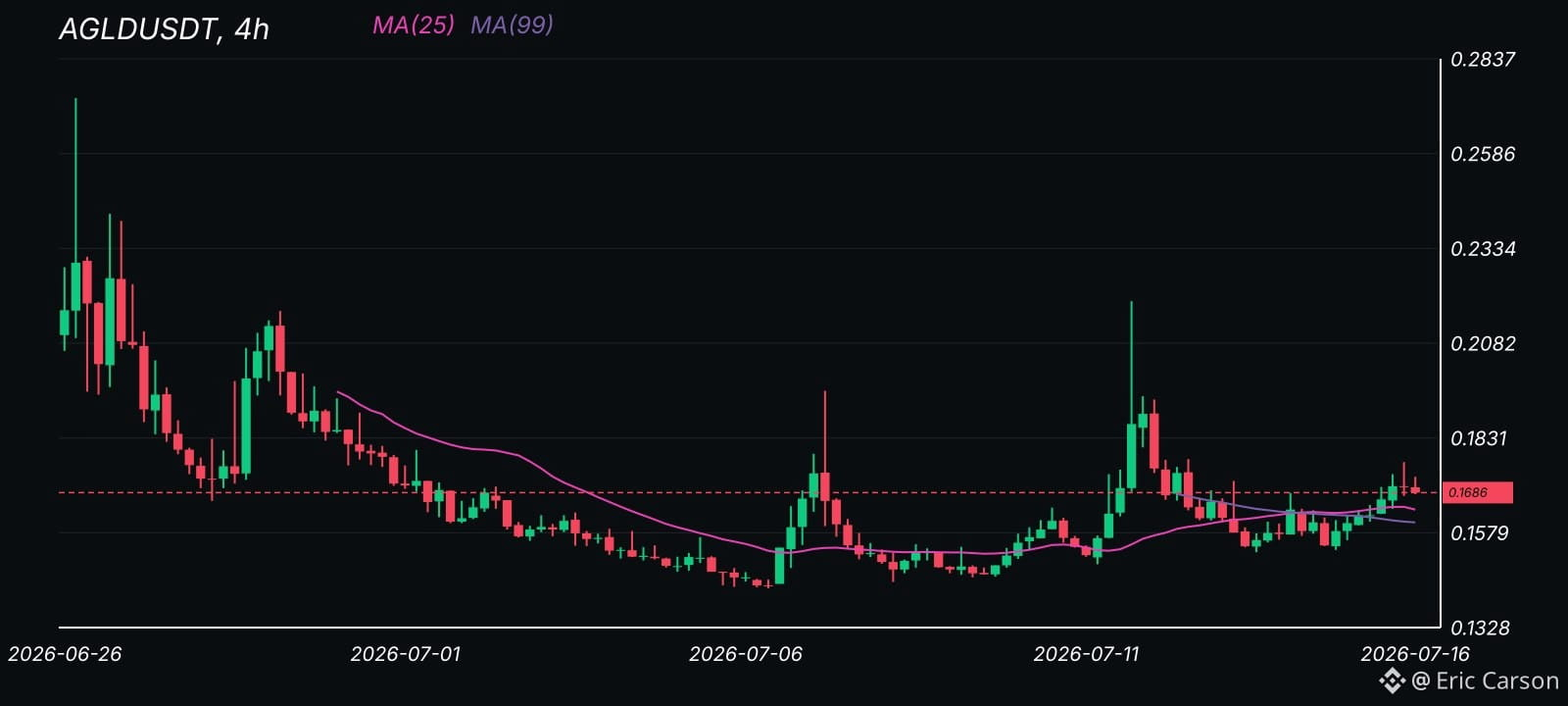
$BREV Strong impulse move after base-building. Momentum cooled into short-term consolidation under prior rejection, keeping breakout risk active as long as structure holds. Bulls defending higher lows; sellers still present near overhead resistance. • Entry Zone: 0.155 – 0.165 • TP1: 0.175 • TP2: 0.185 • TP3: 0.198 • Stop-Loss: 0.145 Key Support: 0.150 – 0.155 Key Resistance: 0.185 – 0.195 {spot}(BREVUSDT) #BREV #USIranStandoff #ADPDataDisappoints #ADPWatch #WriteToEarnUpgrade
$BREV

Strong impulse move after base-building. Momentum cooled into short-term consolidation under prior rejection, keeping breakout risk active as long as structure holds. Bulls defending higher lows; sellers still present near overhead resistance.

• Entry Zone: 0.155 – 0.165
• TP1: 0.175
• TP2: 0.185
• TP3: 0.198
• Stop-Loss: 0.145

Key Support: 0.150 – 0.155
Key Resistance: 0.185 – 0.195
#BREV #USIranStandoff #ADPDataDisappoints #ADPWatch #WriteToEarnUpgrade
$DUSK Price is stabilizing after a deep corrective phase from the previous impulse. Momentum is slowly rebuilding as DUSK consolidates above key higher-timeframe support. A clean hold here increases breakout probability, while failure flips structure back to range-bound. • Entry Zone: 0.090 – 0.098 • TP1: 0.115 • TP2: 0.150 • TP3: 0.220 • Stop-Loss: 0.084 Above support = controlled accumulation. Below support = momentum fades. {spot}(DUSKUSDT) #DUSK #Dusk/usdt✅ #DUSKARMY #ADPDataDisappoints #WriteToEarnUpgrade
$DUSK

Price is stabilizing after a deep corrective phase from the previous impulse. Momentum is slowly rebuilding as DUSK consolidates above key higher-timeframe support. A clean hold here increases breakout probability, while failure flips structure back to range-bound.

• Entry Zone: 0.090 – 0.098
• TP1: 0.115
• TP2: 0.150
• TP3: 0.220
• Stop-Loss: 0.084

Above support = controlled accumulation. Below support = momentum fades.
#DUSK #Dusk/usdt✅ #DUSKARMY #ADPDataDisappoints #WriteToEarnUpgrade
$ARDR Price is rebounding from a deep pullback after extended consolidation. Momentum has flipped short-term bullish, but price is still below key moving averages, so continuation needs follow-through. Breakout risk increases above local resistance, while failure would signal range continuation. • Entry Zone: 0.0485 – 0.0510 • TP1: 0.0555 • TP2: 0.0620 • TP3: 0.0700 • Stop-Loss: 0.0450 Key support sits around 0.046–0.048. Resistance layered at 0.055 and 0.062. Clean reclaim = momentum play. {spot}(ARDRUSDT) #ARDR #USIranStandoff #RiskAssetsMarketShock #ADPDataDisappoints #WriteToEarnUpgrade
$ARDR

Price is rebounding from a deep pullback after extended consolidation. Momentum has flipped short-term bullish, but price is still below key moving averages, so continuation needs follow-through. Breakout risk increases above local resistance, while failure would signal range continuation.

• Entry Zone: 0.0485 – 0.0510
• TP1: 0.0555
• TP2: 0.0620
• TP3: 0.0700
• Stop-Loss: 0.0450

Key support sits around 0.046–0.048. Resistance layered at 0.055 and 0.062. Clean reclaim = momentum play.
#ARDR #USIranStandoff #RiskAssetsMarketShock #ADPDataDisappoints #WriteToEarnUpgrade
Why Plasma Treats Regulation as Infrastructure, Not a ConstraintFor years, stablecoins have promised to bridge crypto and traditional finance, yet most infrastructure still treats regulation as an external constraint rather than a design requirement. This gap has limited real-world adoption. Enterprises, payment firms, and institutions do not fail because blockchains lack speed; they fail because settlement, custody, and compliance are fragmented across unaligned actors. Plasma takes a different path. Instead of outsourcing compliance to banks or processors, the project is building a vertically integrated payments stack where regulation is embedded at the infrastructure level. The objective is simple but difficult: to make stablecoins function as regulated money rather than just programmable tokens. Most payment-focused chains depend on third-party custodians, issuers, and off-chain processors. This creates latency, opacity, and jurisdictional risk. When compliance is external, innovation slows, accountability becomes unclear, and stablecoins lose their usefulness the moment they touch the real economy. Plasma’s approach centers on owning the regulated stack itself. By acquiring licensed entities and establishing dedicated compliance operations in Europe, the network aims to control custody, issuance pathways, and settlement rules under a unified framework. This enables regulated debit cards, compliant stablecoin storage, and auditable payment flows without reliance on intermediaries that can arbitrarily halt activity. Rather than treating compliance as a constraint, Plasma treats it as infrastructure. Partnerships with global payout providers allow USDT-denominated settlements across hundreds of jurisdictions, while AML and KYC checks are enforced at the protocol edge. The result is not a privacy-maximal system, but one that balances user confidentiality with the auditability required by enterprises and regulators. Regulation alone is insufficient without scale. Plasma complements its compliance strategy with cross-chain liquidity integration, allowing stablecoins and its native asset to move across multiple networks through shared liquidity pools. This positions the chain as a compliant clearing layer that can access external liquidity while maintaining institutional-grade standards. These components converge in Plasma One, a regulated neobank built on top of the payments stack. It combines stablecoin wallets, yield-bearing balances, debit cards, and instant transfers. In regions with fragile currencies or limited banking access, this mix of liquidity, yield, and regulatory clarity offers a practical alternative to traditional finance. The trade-offs are real. Compliance narrows flexibility, increases operational cost, and exposes the system to shifting regulatory frameworks. Yet as global scrutiny of stablecoins intensifies, infrastructure aligned with regulation from the outset may prove more resilient. If stablecoins are to support real commerce rather than speculative flows, they require settlement rails regulators can trust. Plasma’s thesis is that regulation, when designed into the system, becomes a long-term advantage rather than a limitation. @Plasma #Plasma #plasma $XPL {spot}(XPLUSDT)

Why Plasma Treats Regulation as Infrastructure, Not a Constraint

For years, stablecoins have promised to bridge crypto and traditional finance, yet most infrastructure still treats regulation as an external constraint rather than a design requirement. This gap has limited real-world adoption. Enterprises, payment firms, and institutions do not fail because blockchains lack speed; they fail because settlement, custody, and compliance are fragmented across unaligned actors. Plasma takes a different path. Instead of outsourcing compliance to banks or processors, the project is building a vertically integrated payments stack where regulation is embedded at the infrastructure level. The objective is simple but difficult: to make stablecoins function as regulated money rather than just programmable tokens. Most payment-focused chains depend on third-party custodians, issuers, and off-chain processors. This creates latency, opacity, and jurisdictional risk. When compliance is external, innovation slows, accountability becomes unclear, and stablecoins lose their usefulness the moment they touch the real economy.
Plasma’s approach centers on owning the regulated stack itself. By acquiring licensed entities and establishing dedicated compliance operations in Europe, the network aims to control custody, issuance pathways, and settlement rules under a unified framework. This enables regulated debit cards, compliant stablecoin storage, and auditable payment flows without reliance on intermediaries that can arbitrarily halt activity. Rather than treating compliance as a constraint, Plasma treats it as infrastructure. Partnerships with global payout providers allow USDT-denominated settlements across hundreds of jurisdictions, while AML and KYC checks are enforced at the protocol edge. The result is not a privacy-maximal system, but one that balances user confidentiality with the auditability required by enterprises and regulators. Regulation alone is insufficient without scale. Plasma complements its compliance strategy with cross-chain liquidity integration, allowing stablecoins and its native asset to move across multiple networks through shared liquidity pools. This positions the chain as a compliant clearing layer that can access external liquidity while maintaining institutional-grade standards.
These components converge in Plasma One, a regulated neobank built on top of the payments stack. It combines stablecoin wallets, yield-bearing balances, debit cards, and instant transfers. In regions with fragile currencies or limited banking access, this mix of liquidity, yield, and regulatory clarity offers a practical alternative to traditional finance. The trade-offs are real. Compliance narrows flexibility, increases operational cost, and exposes the system to shifting regulatory frameworks. Yet as global scrutiny of stablecoins intensifies, infrastructure aligned with regulation from the outset may prove more resilient. If stablecoins are to support real commerce rather than speculative flows, they require settlement rails regulators can trust. Plasma’s thesis is that regulation, when designed into the system, becomes a long-term advantage rather than a limitation.
@Plasma #Plasma #plasma $XPL
Vanar’s Infrastructure Thesis: Connecting Payments, Metaverse, and RealityVanar Chain is entering a phase where infrastructure design matters more than narratives. As Web3 expands into finance, gaming, and real-world commerce, most Layer-1 networks struggle with congestion, unpredictable fees, weak governance, and limited integration with off-chain systems. These limitations make them unsuitable for payments, regulated use cases, or large consumer platforms. Vanar’s approach is an attempt to address these structural failures at the protocol level rather than at the application layer. Most existing blockchains were built for general-purpose execution, not for high-frequency economic activity. Fee volatility makes PayFi unreliable, throughput constraints break gaming economies, and governance often remains symbolic with little influence over real protocol behavior. As adoption increases, these weaknesses turn into systemic risks instead of temporary inefficiencies, limiting their usefulness outside speculative environments. Vanar’s evolution reflects a deliberate shift from experimentation to infrastructure maturity. The V23 protocol upgrade completed in 2025 marked a major architectural change. By integrating Stellar’s federated Byzantine agreement model into its own architecture, Vanar adopted a consensus system where nodes can verify one another independently while still reaching agreement even when some nodes fail. This design increases resilience without compromising performance, a key requirement for real-world systems. The impact of this upgrade was measurable. After V23, the number of on-chain nodes increased to roughly 18,000, daily throughput surpassed nine million transactions, and transaction success rates reached around 99.98%, all without network congestion. These characteristics are not cosmetic improvements; they are foundational for finance, gaming, and business applications that require predictable behavior under sustained load. Technically, Vanar combines federated Byzantine agreement with an AI-native execution layer and a fixed-fee model. Predictable transaction costs are essential for automated processes, AI agents, and consumer applications that cannot function reliably when fees fluctuate. Open-port checks and compliance-aware design further allow the network to support regulated activity without fragmenting the base layer. Instead of optimizing for short-term activity spikes, the system is optimized for continuity and operational stability. The VANRY token economy was designed alongside the V23 upgrade. Total supply is capped at 2.4 billion tokens, with half allocated to replace the original TVK token. The remaining supply is scheduled for distribution over roughly two decades, reducing short-term inflation pressure and aligning incentives with long-term network growth. In this structure, the token functions primarily as a coordination and governance asset rather than a speculative instrument. Governance is moving toward direct operational relevance through the upcoming Governance Proposal 2.0. Token holders are expected to vote on AI model parameters, incentive mechanisms, and smart-contract fee structures. This approach gives the community tangible influence over how the protocol behaves in practice. The fixed-fee system reinforces this model by making governance decisions translate into predictable outcomes for developers and users. Gaming has emerged as a major adoption vector within the ecosystem. Following the V23 upgrade, the VGN gaming network expanded rapidly. By early 2026, registrations reached approximately 15 million users, and in-game trade volumes exceeded 1.2 billion dollars. Gaming environments stress test throughput, latency, and fee predictability simultaneously, making them a meaningful indicator of infrastructure robustness rather than just user growth. Beyond gaming, the Virtua metaverse positions Vanar as a bridge between virtual and physical interaction. Virtual brand showrooms, persistent digital identities, and cross-platform asset ownership allow users to engage with brands in immersive environments. Collaborations involving virtual fashion events, where users can participate digitally while accessing physical merchandise benefits, illustrate how on-chain systems can support hybrid commercial models. In payments, Vanar’s relationship with Worldpay enables users to purchase on-chain assets using more than 150 fiat currencies, with reported success rates above 99%. This integration reduces friction for non-crypto users and connects traditional financial infrastructure with blockchain execution. It represents a practical PayFi bridge rather than an isolated crypto payment loop. Vanar’s broad scope also introduces risks. Supporting gaming, payments, AI-assisted compliance, and metaverse infrastructure increases system complexity. Governance mechanisms must scale alongside adoption to avoid fragmentation, and regulatory alignment, while a strength, may constrain flexibility in certain markets. Long-term sustainability depends on whether the ecosystem can maintain coherence as usage grows. Vanar’s recent trajectory reflects a broader shift in Layer-1 priorities. As the Web3 space matures, relevance increasingly depends on resilience, predictable execution, and real-world integration rather than narrative momentum. By focusing on infrastructure and systems design, Vanar is positioning itself not merely as a gaming or metaverse platform, but as a blockchain capable of connecting digital activity with physical commerce, legal processes, and everyday economic interactions. @Vanar #Vanar #vanar $VANRY {spot}(VANRYUSDT)

Vanar’s Infrastructure Thesis: Connecting Payments, Metaverse, and Reality

Vanar Chain is entering a phase where infrastructure design matters more than narratives. As Web3 expands into finance, gaming, and real-world commerce, most Layer-1 networks struggle with congestion, unpredictable fees, weak governance, and limited integration with off-chain systems. These limitations make them unsuitable for payments, regulated use cases, or large consumer platforms. Vanar’s approach is an attempt to address these structural failures at the protocol level rather than at the application layer.
Most existing blockchains were built for general-purpose execution, not for high-frequency economic activity. Fee volatility makes PayFi unreliable, throughput constraints break gaming economies, and governance often remains symbolic with little influence over real protocol behavior. As adoption increases, these weaknesses turn into systemic risks instead of temporary inefficiencies, limiting their usefulness outside speculative environments.
Vanar’s evolution reflects a deliberate shift from experimentation to infrastructure maturity. The V23 protocol upgrade completed in 2025 marked a major architectural change. By integrating Stellar’s federated Byzantine agreement model into its own architecture, Vanar adopted a consensus system where nodes can verify one another independently while still reaching agreement even when some nodes fail. This design increases resilience without compromising performance, a key requirement for real-world systems. The impact of this upgrade was measurable. After V23, the number of on-chain nodes increased to roughly 18,000, daily throughput surpassed nine million transactions, and transaction success rates reached around 99.98%, all without network congestion. These characteristics are not cosmetic improvements; they are foundational for finance, gaming, and business applications that require predictable behavior under sustained load.
Technically, Vanar combines federated Byzantine agreement with an AI-native execution layer and a fixed-fee model. Predictable transaction costs are essential for automated processes, AI agents, and consumer applications that cannot function reliably when fees fluctuate. Open-port checks and compliance-aware design further allow the network to support regulated activity without fragmenting the base layer. Instead of optimizing for short-term activity spikes, the system is optimized for continuity and operational stability.
The VANRY token economy was designed alongside the V23 upgrade. Total supply is capped at 2.4 billion tokens, with half allocated to replace the original TVK token. The remaining supply is scheduled for distribution over roughly two decades, reducing short-term inflation pressure and aligning incentives with long-term network growth. In this structure, the token functions primarily as a coordination and governance asset rather than a speculative instrument.
Governance is moving toward direct operational relevance through the upcoming Governance Proposal 2.0. Token holders are expected to vote on AI model parameters, incentive mechanisms, and smart-contract fee structures. This approach gives the community tangible influence over how the protocol behaves in practice. The fixed-fee system reinforces this model by making governance decisions translate into predictable outcomes for developers and users.
Gaming has emerged as a major adoption vector within the ecosystem. Following the V23 upgrade, the VGN gaming network expanded rapidly. By early 2026, registrations reached approximately 15 million users, and in-game trade volumes exceeded 1.2 billion dollars. Gaming environments stress test throughput, latency, and fee predictability simultaneously, making them a meaningful indicator of infrastructure robustness rather than just user growth. Beyond gaming, the Virtua metaverse positions Vanar as a bridge between virtual and physical interaction. Virtual brand showrooms, persistent digital identities, and cross-platform asset ownership allow users to engage with brands in immersive environments. Collaborations involving virtual fashion events, where users can participate digitally while accessing physical merchandise benefits, illustrate how on-chain systems can support hybrid commercial models.
In payments, Vanar’s relationship with Worldpay enables users to purchase on-chain assets using more than 150 fiat currencies, with reported success rates above 99%. This integration reduces friction for non-crypto users and connects traditional financial infrastructure with blockchain execution. It represents a practical PayFi bridge rather than an isolated crypto payment loop.
Vanar’s broad scope also introduces risks. Supporting gaming, payments, AI-assisted compliance, and metaverse infrastructure increases system complexity. Governance mechanisms must scale alongside adoption to avoid fragmentation, and regulatory alignment, while a strength, may constrain flexibility in certain markets. Long-term sustainability depends on whether the ecosystem can maintain coherence as usage grows. Vanar’s recent trajectory reflects a broader shift in Layer-1 priorities. As the Web3 space matures, relevance increasingly depends on resilience, predictable execution, and real-world integration rather than narrative momentum. By focusing on infrastructure and systems design, Vanar is positioning itself not merely as a gaming or metaverse platform, but as a blockchain capable of connecting digital activity with physical commerce, legal processes, and everyday economic interactions.
@Vanarchain #Vanar #vanar $VANRY
Many blockchains launch with narratives first and liquidity later. Plasma followed the opposite path. By seeding its mainnet with deep stablecoin reserves from day one and integrating directly with over a hundred DeFi protocols, the network prioritised predictable execution, low slippage, and real credit market functionality. This ecosystem-first approach allowed Plasma to move quickly from prototype to a credible settlement layer, where infrastructure supports real financial flows rather than speculative awareness alone. @Plasma #Plasma #plasma $XPL {spot}(XPLUSDT)
Many blockchains launch with narratives first and liquidity later. Plasma followed the opposite path. By seeding its mainnet with deep stablecoin reserves from day one and integrating directly with over a hundred DeFi protocols, the network prioritised predictable execution, low slippage, and real credit market functionality. This ecosystem-first approach allowed Plasma to move quickly from prototype to a credible settlement layer, where infrastructure supports real financial flows rather than speculative awareness alone.

@Plasma #Plasma #plasma $XPL
Vanar Chain is tackling a problem most Layer-1 networks avoid: how to connect blockchain execution with regulated, real-world assets. Traditional chains make tokenization difficult due to fragmented compliance, unpredictable fees, and weak middleware support. Vanar approaches this structurally by combining scalable architecture with built-in compliance tooling and middleware integrations. This lowers friction for institutions and developers seeking to tokenize assets like real estate or commodities. The result is an ecosystem designed for real adoption, not isolated on-chain activity. @Vanar #Vanar #vanar $VANRY {spot}(VANRYUSDT)
Vanar Chain is tackling a problem most Layer-1 networks avoid:

how to connect blockchain execution with regulated, real-world assets. Traditional chains make tokenization difficult due to fragmented compliance, unpredictable fees, and weak middleware support. Vanar approaches this structurally by combining scalable architecture with built-in compliance tooling and middleware integrations. This lowers friction for institutions and developers seeking to tokenize assets like real estate or commodities.
The result is an ecosystem designed for real adoption, not isolated on-chain activity.

@Vanarchain #Vanar #vanar $VANRY
$THE Tight consolidation after a strong impulse. Price is holding above short-term MAs, momentum is compressing, and structure suggests a breakout attempt if buyers defend the range. Failure to hold support risks a quick pullback to the base. • Entry Zone: 0.272 – 0.276 • TP1: 0.283 • TP2: 0.292 • TP3: 0.305 • Stop-Loss: 0.268 Key support around 0.270. Clean break and hold above 0.283 opens continuation. {spot}(THEUSDT) #THE #MarketRally #USIranStandoff #BitcoinGoogleSearchesSurge #WriteToEarnUpgrade
$THE

Tight consolidation after a strong impulse. Price is holding above short-term MAs, momentum is compressing, and structure suggests a breakout attempt if buyers defend the range. Failure to hold support risks a quick pullback to the base.

• Entry Zone: 0.272 – 0.276
• TP1: 0.283
• TP2: 0.292
• TP3: 0.305
• Stop-Loss: 0.268

Key support around 0.270. Clean break and hold above 0.283 opens continuation.
#THE #MarketRally #USIranStandoff #BitcoinGoogleSearchesSurge #WriteToEarnUpgrade
Most payment chains sacrifice neutrality for speed, relying on isolated validator sets. Plasma takes a different route by anchoring settlement state to Bitcoin, inheriting its censorship resistance and credibility while running a specialized execution layer for stablecoin payments. This separation of execution and trust enables predictable fees and institutional-grade settlement. $XPL coordinates validators, fees, and governance. Adoption at the execution layer is the main risk, but the long-term case is strong: payment infrastructure must prioritize neutrality, finality, and reliability. @Plasma #Plasma #plasma $XPL {spot}(XPLUSDT)
Most payment chains sacrifice neutrality for speed, relying on isolated validator sets. Plasma takes a different route by anchoring settlement state to Bitcoin, inheriting its censorship resistance and credibility while running a specialized execution layer for stablecoin payments. This separation of execution and trust enables predictable fees and institutional-grade settlement. $XPL coordinates validators, fees, and governance. Adoption at the execution layer is the main risk, but the long-term case is strong: payment infrastructure must prioritize neutrality, finality, and reliability.
@Plasma #Plasma #plasma $XPL
Влезте, за да разгледате още съдържание
Разгледайте най-новите крипто новини
⚡️ Бъдете част от най-новите дискусии в криптовалутното пространство
💬 Взаимодействайте с любимите си създатели
👍 Насладете се на съдържание, което ви интересува
Имейл/телефонен номер
Карта на сайта
Предпочитания за бисквитки
Правила и условия на платформата