

WEB3TITAN
282 Paylaşımlar

WEB3TITAN
Şikayət et
İstifadəçini blokla
Ambassador | BlockHub | Exploring blockchain | Content Creator | Designer | Crypto Trader | 📩 DM for Collaboration.
26 İzlənilir
36 İzləyicilər
116 Bəyəndi
Postlar
Hamısı
Sitatlar
Videolar
·
--
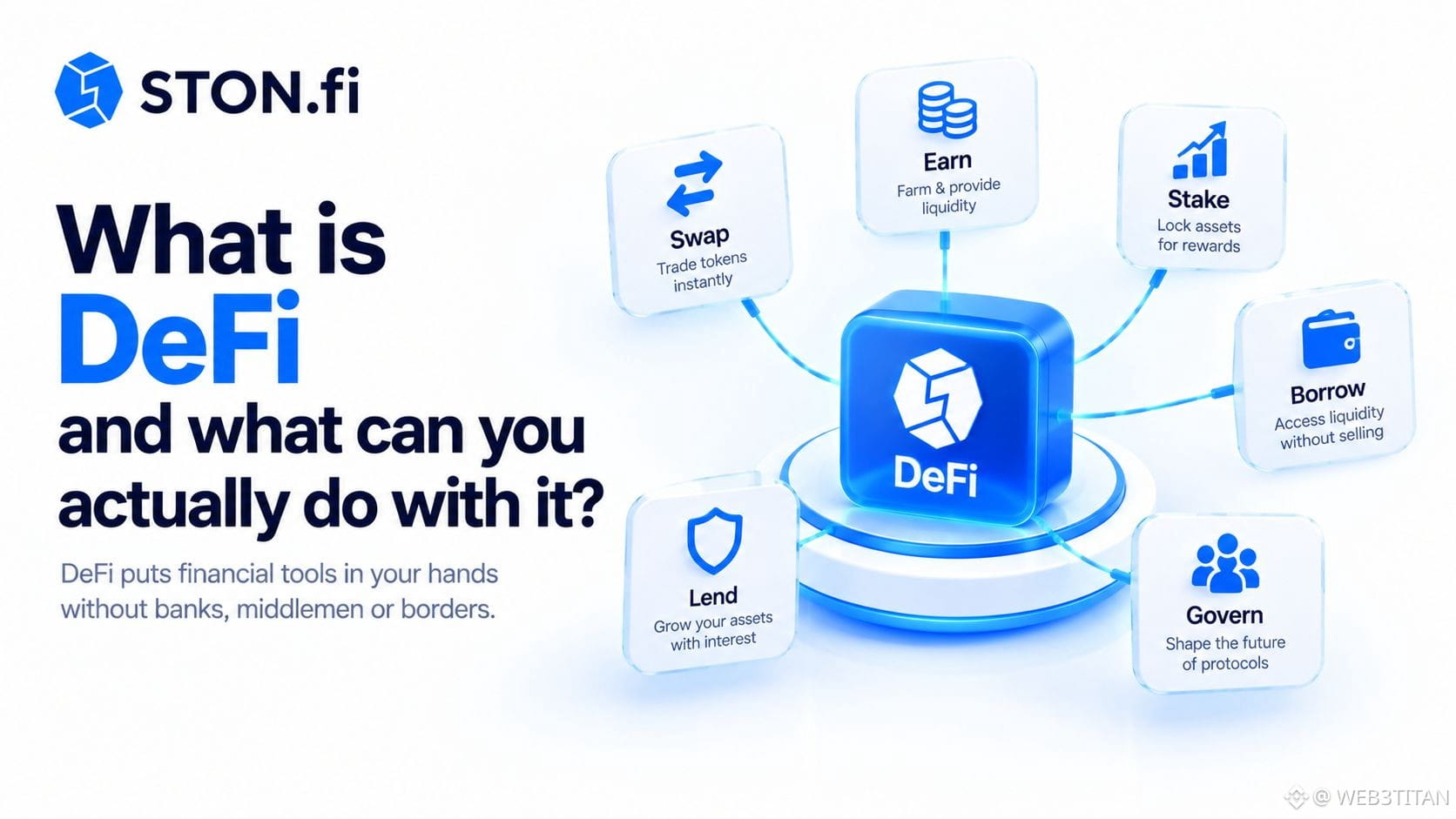
DeFi nədir və onunla əslində nə edə bilərsiniz?
DeFi (decentralized finance) — mərkəzləşdirilməmiş maliyyə — blokçeyn və ağıllı müqavilələrdən istifadə edərək ənənəvi vasitəçilərə tam etibar etmədən maliyyə xidmətləri təqdim edir.
NƏ ETMƏK OLAR?
Mübadilə (Swap): Pul kisənizdən (wallet) tokenləri birbaşa dəyişdirin.
Likvidlik təmin edin: Likvidlik hovuzlarına aktivlər əlavə edin və potensial olaraq komissiya haqları qazanın.
Stake edin: Protokolları dəstəkləmək üçün tokenləri kilidləyin və ya stake edin, potensial olaraq mükafatlar qazanın.
Kreditlə götürün və verin (Borrow & lend): Bəzi DeFi protokolları istifadəçilərə aktivləri borc verməyə və ya girov qarşılığında borc götürməyə imkan verir.
Çox şəbəkə arasında hərəkət: Şəbəkələr arasında aktivləri köçürmək və ya dəyişdirmək üçün körpülər (bridges) və ya cross-chain sistemlərdən istifadə edin.
BƏLİRLİK/ƏVƏZ-QARŞILIQLAR (TRADE-OFF)
DeFi sizə özünüzün nəzarət etdiyiniz (self-custody) yanaşma verir, amma həm də daha çox məsuliyyət gətirir. Ağıllı müqavilə səhvləri (buglar), bazar qeyri-sabitliyi (volatility), slippage və əməliyyat səhvləri risklər yarada bilər.
SADƏ BİR TON SƏFƏRİ
Siz pul kisəsi qoşmaqla başlaya, STONfi-da token mübadiləsi (swap) və ya likvidlik təmin etməklə başlayıb, riskləri anladıqca digər DeFi alətlərini araşdıra bilərsiniz.
Dəstəklənən cross-chain swap-lar üçün Omniston şəbəkələr arasında likvidliyi və icranı (execution) əlaqələndirə bilər.
MƏNİM FİKRİM
DeFi tək bir məhsul deyil. Mexanikanı necə işlədiyini anlamaq, ondan necə istifadə etməyi bilməklə eyni dərəcədə vacib olan maliyyə alətləri ekosistemidir.
$PUMP $BEAT
#QNTFallsOver40%FromMorningHigh
DeFi nədir və onunla əslində nə edə bilərsiniz?
DeFi (decentralized finance) — mərkəzləşdirilməmiş maliyyə — blokçeyn və ağıllı müqavilələrdən istifadə edərək ənənəvi vasitəçilərə tam etibar etmədən maliyyə xidmətləri təqdim edir.
NƏ ETMƏK OLAR?
Mübadilə (Swap): Pul kisənizdən (wallet) tokenləri birbaşa dəyişdirin.
Likvidlik təmin edin: Likvidlik hovuzlarına aktivlər əlavə edin və potensial olaraq komissiya haqları qazanın.
Stake edin: Protokolları dəstəkləmək üçün tokenləri kilidləyin və ya stake edin, potensial olaraq mükafatlar qazanın.
Kreditlə götürün və verin (Borrow & lend): Bəzi DeFi protokolları istifadəçilərə aktivləri borc verməyə və ya girov qarşılığında borc götürməyə imkan verir.
Çox şəbəkə arasında hərəkət: Şəbəkələr arasında aktivləri köçürmək və ya dəyişdirmək üçün körpülər (bridges) və ya cross-chain sistemlərdən istifadə edin.
BƏLİRLİK/ƏVƏZ-QARŞILIQLAR (TRADE-OFF)
DeFi sizə özünüzün nəzarət etdiyiniz (self-custody) yanaşma verir, amma həm də daha çox məsuliyyət gətirir. Ağıllı müqavilə səhvləri (buglar), bazar qeyri-sabitliyi (volatility), slippage və əməliyyat səhvləri risklər yarada bilər.
SADƏ BİR TON SƏFƏRİ
Siz pul kisəsi qoşmaqla başlaya, STONfi-da token mübadiləsi (swap) və ya likvidlik təmin etməklə başlayıb, riskləri anladıqca digər DeFi alətlərini araşdıra bilərsiniz.
Dəstəklənən cross-chain swap-lar üçün Omniston şəbəkələr arasında likvidliyi və icranı (execution) əlaqələndirə bilər.
MƏNİM FİKRİM
DeFi tək bir məhsul deyil. Mexanikanı necə işlədiyini anlamaq, ondan necə istifadə etməyi bilməklə eyni dərəcədə vacib olan maliyyə alətləri ekosistemidir.
$PUMP $BEAT
#QNTFallsOver40%FromMorningHigh
DeFi (decentralized finance) — mərkəzləşdirilməmiş maliyyə — blokçeyn və ağıllı müqavilələrdən istifadə edərək ənənəvi vasitəçilərə tam etibar etmədən maliyyə xidmətləri təqdim edir.
NƏ ETMƏK OLAR?
Mübadilə (Swap): Pul kisənizdən (wallet) tokenləri birbaşa dəyişdirin.
Likvidlik təmin edin: Likvidlik hovuzlarına aktivlər əlavə edin və potensial olaraq komissiya haqları qazanın.
Stake edin: Protokolları dəstəkləmək üçün tokenləri kilidləyin və ya stake edin, potensial olaraq mükafatlar qazanın.
Kreditlə götürün və verin (Borrow & lend): Bəzi DeFi protokolları istifadəçilərə aktivləri borc verməyə və ya girov qarşılığında borc götürməyə imkan verir.
Çox şəbəkə arasında hərəkət: Şəbəkələr arasında aktivləri köçürmək və ya dəyişdirmək üçün körpülər (bridges) və ya cross-chain sistemlərdən istifadə edin.
BƏLİRLİK/ƏVƏZ-QARŞILIQLAR (TRADE-OFF)
DeFi sizə özünüzün nəzarət etdiyiniz (self-custody) yanaşma verir, amma həm də daha çox məsuliyyət gətirir. Ağıllı müqavilə səhvləri (buglar), bazar qeyri-sabitliyi (volatility), slippage və əməliyyat səhvləri risklər yarada bilər.
SADƏ BİR TON SƏFƏRİ
Siz pul kisəsi qoşmaqla başlaya, STONfi-da token mübadiləsi (swap) və ya likvidlik təmin etməklə başlayıb, riskləri anladıqca digər DeFi alətlərini araşdıra bilərsiniz.
Dəstəklənən cross-chain swap-lar üçün Omniston şəbəkələr arasında likvidliyi və icranı (execution) əlaqələndirə bilər.
MƏNİM FİKRİM
DeFi tək bir məhsul deyil. Mexanikanı necə işlədiyini anlamaq, ondan necə istifadə etməyi bilməklə eyni dərəcədə vacib olan maliyyə alətləri ekosistemidir.
$PUMP $BEAT
#QNTFallsOver40%FromMorningHigh
689
·
--
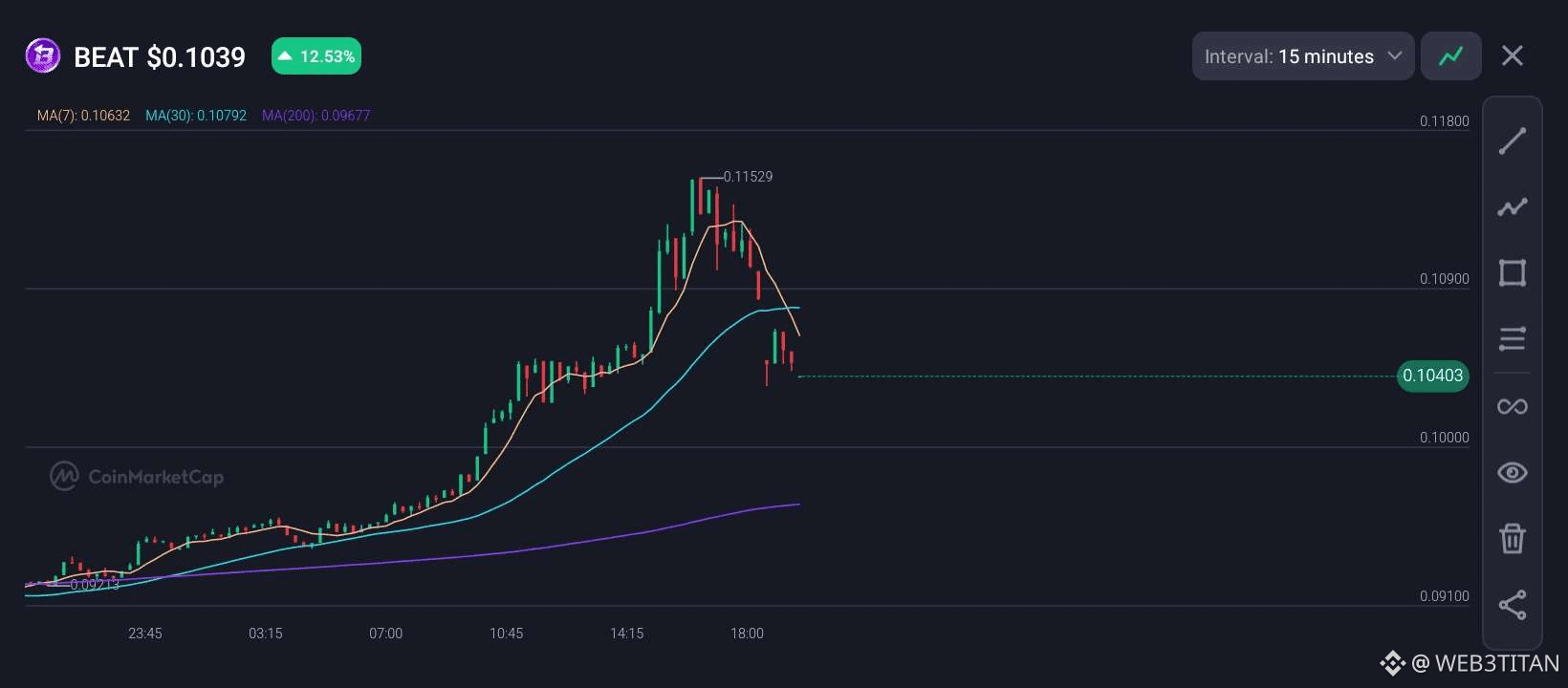
Qiymət güclü yüksəlişdən sonra konsolidasiya olunur.
$BEAT hazırda +12.53% artımdan sonra $0.1039 səviyyəsində ticarət edir.
Son vaxtlar qiymət 0.09213 zonasından yuxarı qalxaraq 0.11529-ə qədər yüksəlib, daha sonra geri çəkilib. İndi düzəlişdən sonra sabitləşir və hələ də əvvəlki baza səviyyəsindən xeyli yuxarıdadır.
Bias: YÜKSƏLİŞ (LONG)
Niyə:
Yüksəliş impulsiv və davamlı olub. 0.11529-dan rədd cavabı alsa da, qiymət yüksək səviyyədə qalır və daha yüksək aralığı qoruyur; dəstək saxlanıldığı müddətdə qısamüddətli struktur konstruktiv qalır.
Giriş: $0.1020 – $0.1050
Stop Loss: $0.0970
Mənfəət hədəfləri
TP1: $0.1100
TP2: $0.1150
TP3: $0.1200 – $0.1250
@stonfi -də diqqətəlayiq başqa bir xüsusiyyət staking-dir. İstifadəçilər uyğun STON-u kilidləyərək protokol mükafatlarında iştirak edə və ekosistemin idarəetmə (governance) və icma mükafatlandırma mexanizmlərinə ekspozisiya əldə edə bilərlər. Bu, STON sahiblərinə tokenlərini sadəcə saxlamaq və ya dəyişməkdən başqa əlavə bir istifadə imkanı verir.
$BEAT #CircleMints500MUSDCOnSolana
Qiymət güclü yüksəlişdən sonra konsolidasiya olunur.
$BEAT hazırda +12.53% artımdan sonra $0.1039 səviyyəsində ticarət edir.
Son vaxtlar qiymət 0.09213 zonasından yuxarı qalxaraq 0.11529-ə qədər yüksəlib, daha sonra geri çəkilib. İndi düzəlişdən sonra sabitləşir və hələ də əvvəlki baza səviyyəsindən xeyli yuxarıdadır.
Bias: YÜKSƏLİŞ (LONG)
Niyə:
Yüksəliş impulsiv və davamlı olub. 0.11529-dan rədd cavabı alsa da, qiymət yüksək səviyyədə qalır və daha yüksək aralığı qoruyur; dəstək saxlanıldığı müddətdə qısamüddətli struktur konstruktiv qalır.
Giriş: $0.1020 – $0.1050
Stop Loss: $0.0970
Mənfəət hədəfləri
TP1: $0.1100
TP2: $0.1150
TP3: $0.1200 – $0.1250
@STONfi DEX -də diqqətəlayiq başqa bir xüsusiyyət staking-dir. İstifadəçilər uyğun STON-u kilidləyərək protokol mükafatlarında iştirak edə və ekosistemin idarəetmə (governance) və icma mükafatlandırma mexanizmlərinə ekspozisiya əldə edə bilərlər. Bu, STON sahiblərinə tokenlərini sadəcə saxlamaq və ya dəyişməkdən başqa əlavə bir istifadə imkanı verir.
$BEAT #CircleMints500MUSDCOnSolana
$BEAT hazırda +12.53% artımdan sonra $0.1039 səviyyəsində ticarət edir.
Son vaxtlar qiymət 0.09213 zonasından yuxarı qalxaraq 0.11529-ə qədər yüksəlib, daha sonra geri çəkilib. İndi düzəlişdən sonra sabitləşir və hələ də əvvəlki baza səviyyəsindən xeyli yuxarıdadır.
Bias: YÜKSƏLİŞ (LONG)
Niyə:
Yüksəliş impulsiv və davamlı olub. 0.11529-dan rədd cavabı alsa da, qiymət yüksək səviyyədə qalır və daha yüksək aralığı qoruyur; dəstək saxlanıldığı müddətdə qısamüddətli struktur konstruktiv qalır.
Giriş: $0.1020 – $0.1050
Stop Loss: $0.0970
Mənfəət hədəfləri
TP1: $0.1100
TP2: $0.1150
TP3: $0.1200 – $0.1250
@STONfi DEX -də diqqətəlayiq başqa bir xüsusiyyət staking-dir. İstifadəçilər uyğun STON-u kilidləyərək protokol mükafatlarında iştirak edə və ekosistemin idarəetmə (governance) və icma mükafatlandırma mexanizmlərinə ekspozisiya əldə edə bilərlər. Bu, STON sahiblərinə tokenlərini sadəcə saxlamaq və ya dəyişməkdən başqa əlavə bir istifadə imkanı verir.
$BEAT #CircleMints500MUSDCOnSolana
2
1
819
·
--
Tərcüməyə bax
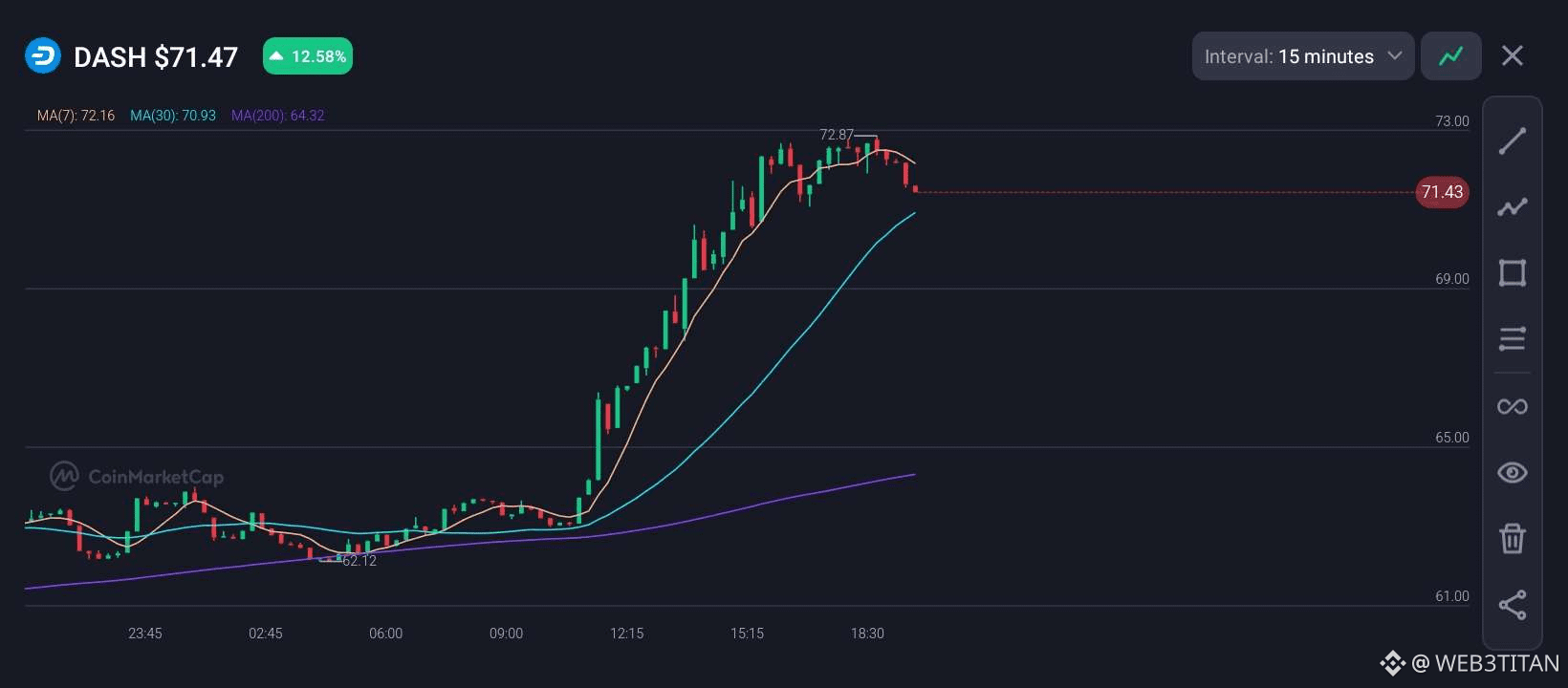
Price is holding near the highs after a strong climb.
$DASH is currently trading at $71.47 after a +12.58% move.
Recently, price climbed aggressively from the 62.12 area up to a high of 72.87 before a mild pullback. It is now consolidating just below the peak.
Bias: UPTREND (LONG)
Why:
The rally was impulsive and sustained. Despite the short-term rejection from 72.87, price remains elevated near the highs with the overall structure firmly bullish.
Entry: $70.50 – $71.80
Stop Loss: $68.00
Take Profits
TP1: $74.00
TP2: $76.50
TP3: $79.00 – $82.00
For traders moving between different opportunities, @stonfi also supports xStocks, bringing selected tokenized traditional market assets into the TON DeFi ecosystem. It gives users another category of assets to explore on-chain, alongside the crypto markets they already trade and manage.
#CoinMarketCapCompletesCoinglassAcquisition
Price is holding near the highs after a strong climb.
$DASH is currently trading at $71.47 after a +12.58% move.
Recently, price climbed aggressively from the 62.12 area up to a high of 72.87 before a mild pullback. It is now consolidating just below the peak.
Bias: UPTREND (LONG)
Why:
The rally was impulsive and sustained. Despite the short-term rejection from 72.87, price remains elevated near the highs with the overall structure firmly bullish.
Entry: $70.50 – $71.80
Stop Loss: $68.00
Take Profits
TP1: $74.00
TP2: $76.50
TP3: $79.00 – $82.00
For traders moving between different opportunities, @STONfi DEX also supports xStocks, bringing selected tokenized traditional market assets into the TON DeFi ecosystem. It gives users another category of assets to explore on-chain, alongside the crypto markets they already trade and manage.
#CoinMarketCapCompletesCoinglassAcquisition
$DASH is currently trading at $71.47 after a +12.58% move.
Recently, price climbed aggressively from the 62.12 area up to a high of 72.87 before a mild pullback. It is now consolidating just below the peak.
Bias: UPTREND (LONG)
Why:
The rally was impulsive and sustained. Despite the short-term rejection from 72.87, price remains elevated near the highs with the overall structure firmly bullish.
Entry: $70.50 – $71.80
Stop Loss: $68.00
Take Profits
TP1: $74.00
TP2: $76.50
TP3: $79.00 – $82.00
For traders moving between different opportunities, @STONfi DEX also supports xStocks, bringing selected tokenized traditional market assets into the TON DeFi ecosystem. It gives users another category of assets to explore on-chain, alongside the crypto markets they already trade and manage.
#CoinMarketCapCompletesCoinglassAcquisition
384
·
--
Tərcüməyə bax
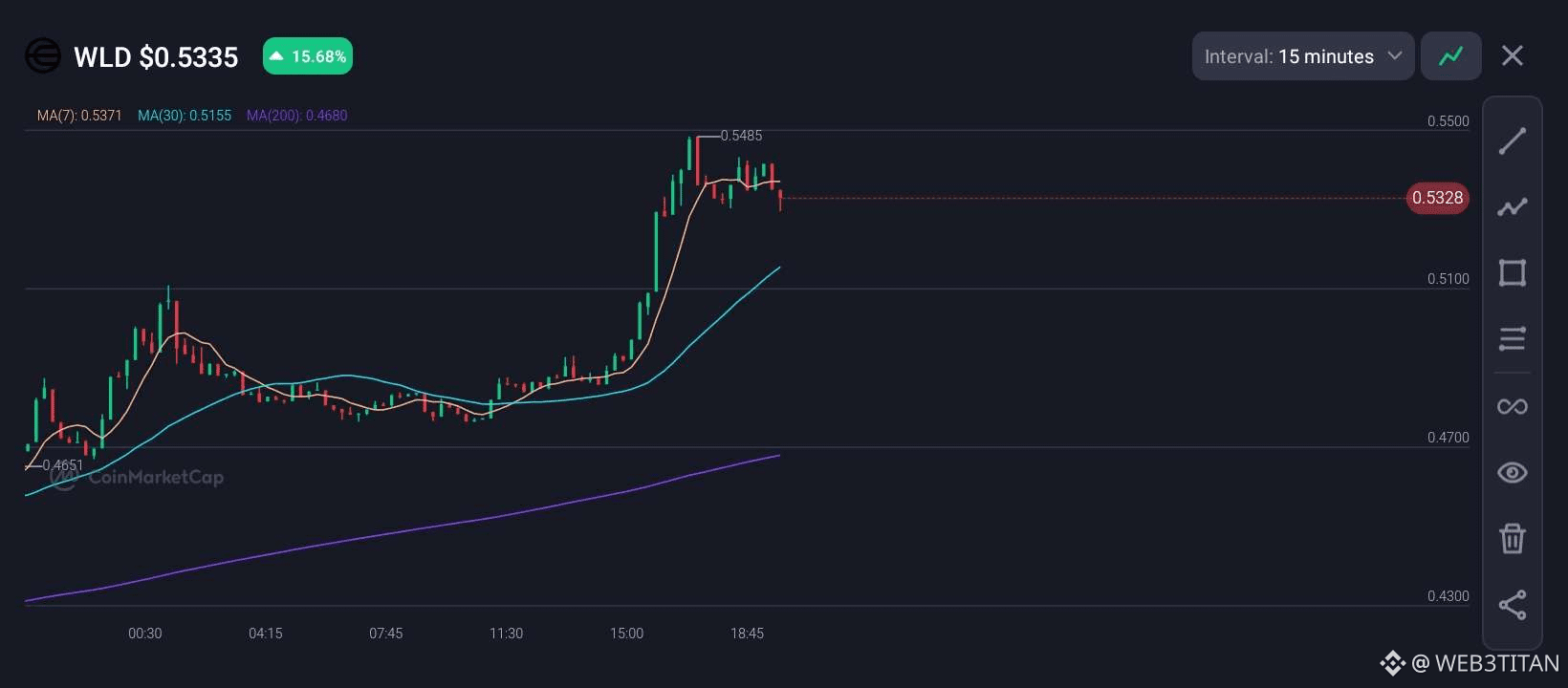
Price is holding the higher range after a strong push.
$WLD is currently trading at $0.5335 after a +15.68% move.
Recently, price climbed from the 0.4651 area up to a high of 0.5485 before a mild pullback. It is now consolidating just below the peak.
Bias: UPTREND (LONG)
Why:
The rally was impulsive and sustained. Despite the short-term rejection from 0.5485, price remains elevated near the highs with the overall structure firmly bullish.
Entry: $0.5250 – $0.5380
Stop Loss: $0.5000
Take Profits
TP1: $0.5600
TP2: $0.5800
TP3: $0.6000 – $0.6300
If you're looking beyond the usual swap and farming features, @stonfi also supports staking STON to participate in protocol rewards and governance-related mechanisms. It gives long-term STON holders another way to stay involved in the ecosystem while putting their tokens to use rather than simply leaving them idle.
#PolymarketBankFailureBetsDrawFDICConcern
Price is holding the higher range after a strong push.
$WLD is currently trading at $0.5335 after a +15.68% move.
Recently, price climbed from the 0.4651 area up to a high of 0.5485 before a mild pullback. It is now consolidating just below the peak.
Bias: UPTREND (LONG)
Why:
The rally was impulsive and sustained. Despite the short-term rejection from 0.5485, price remains elevated near the highs with the overall structure firmly bullish.
Entry: $0.5250 – $0.5380
Stop Loss: $0.5000
Take Profits
TP1: $0.5600
TP2: $0.5800
TP3: $0.6000 – $0.6300
If you're looking beyond the usual swap and farming features, @STONfi DEX also supports staking STON to participate in protocol rewards and governance-related mechanisms. It gives long-term STON holders another way to stay involved in the ecosystem while putting their tokens to use rather than simply leaving them idle.
#PolymarketBankFailureBetsDrawFDICConcern
$WLD is currently trading at $0.5335 after a +15.68% move.
Recently, price climbed from the 0.4651 area up to a high of 0.5485 before a mild pullback. It is now consolidating just below the peak.
Bias: UPTREND (LONG)
Why:
The rally was impulsive and sustained. Despite the short-term rejection from 0.5485, price remains elevated near the highs with the overall structure firmly bullish.
Entry: $0.5250 – $0.5380
Stop Loss: $0.5000
Take Profits
TP1: $0.5600
TP2: $0.5800
TP3: $0.6000 – $0.6300
If you're looking beyond the usual swap and farming features, @STONfi DEX also supports staking STON to participate in protocol rewards and governance-related mechanisms. It gives long-term STON holders another way to stay involved in the ecosystem while putting their tokens to use rather than simply leaving them idle.
#PolymarketBankFailureBetsDrawFDICConcern
211
·
--
Tərcüməyə bax
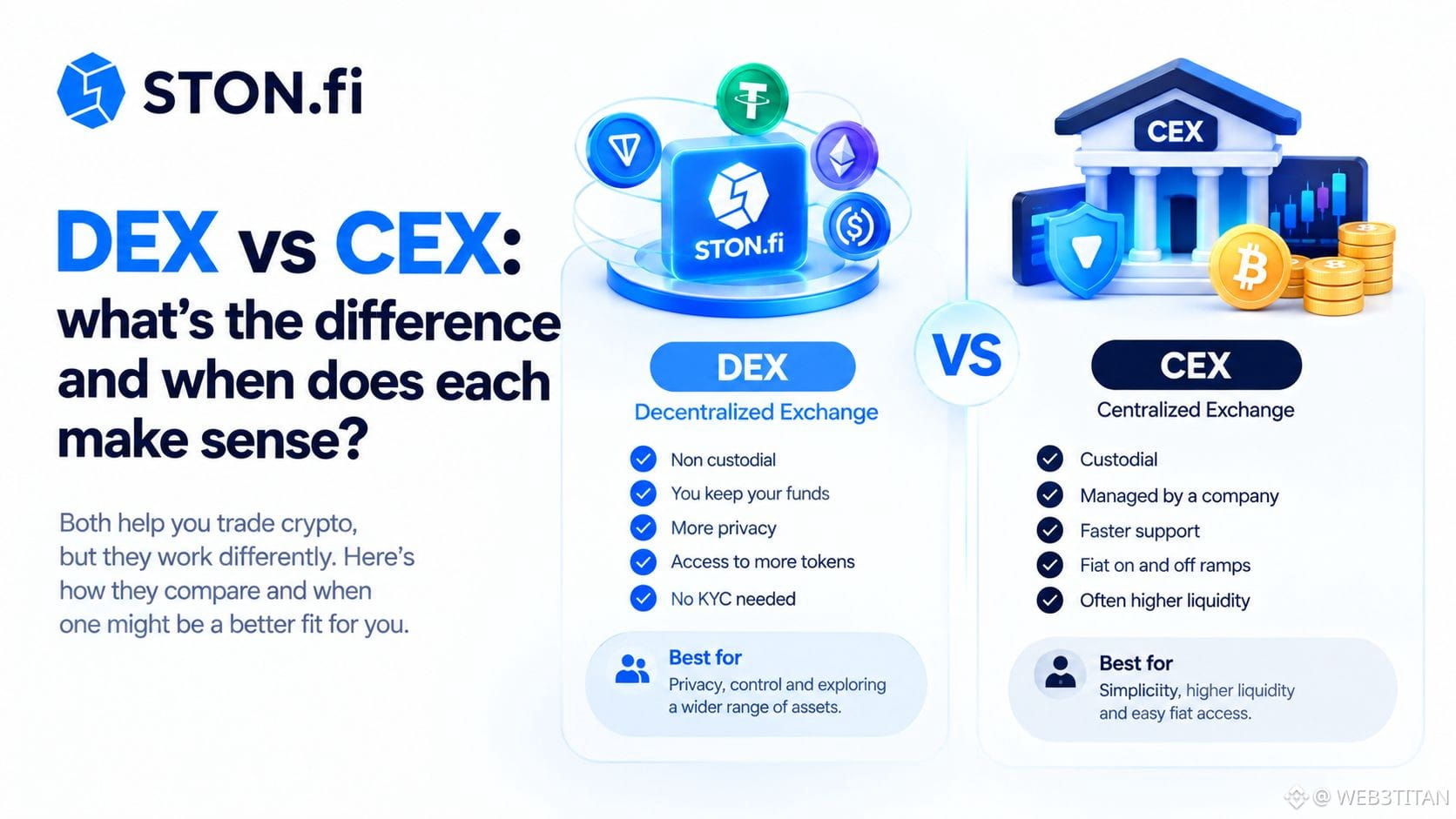
DEX vs CEX: What’s the Difference and When Does Each Make Sense?
When trading crypto, you'll usually use either a DEX or CEX. Both let you buy and sell digital assets, but they work differently.
WHAT IS A CEX?
A centralized exchange (CEX) is operated by a company that manages the platform, accounts, and trading infrastructure.
Users create accounts and may need to complete KYC, depending on the platform and jurisdiction.
The exchange can also custody your assets.
WHAT IS A DEX?
A decentralized exchange (DEX) lets you connect your own wallet and trade through on-chain liquidity.
You generally don't need a traditional exchange account, and the DEX doesn't take custody of your assets.
Transactions are executed through smart contracts.
KEY DIFFERENCES
CEX: Centralized trading, account-based services, and often access to deeper markets.
DEX: Self custody, on-chain execution, and decentralized liquidity.
CEXs involve exchange custody and infrastructure risk. DEXs involve wallet management, smart contract risk, blockchain fees, and transaction execution.
WHEN DOES EACH MAKE SENSE?
A CEX can make sense for a familiar interface, account-based services, or specific centralized markets.
A DEX can make sense when you want to trade directly from your wallet without giving custody to a centralized platform.
HOW A DEX SWAP WORKS
With STONfi:
Connect wallet → choose tokens → review quote → confirm swap → receive tokens.
The transaction is processed on-chain.
MY TAKE
Neither model is automatically better.
The key trade-offs are custody, access, execution, liquidity, fees, and risk.
Understanding them helps you choose what fits your needs.
$PUMP $GRAM
#PolymarketBankFailureBetsDrawFDICConcern
DEX vs CEX: What’s the Difference and When Does Each Make Sense?
When trading crypto, you'll usually use either a DEX or CEX. Both let you buy and sell digital assets, but they work differently.
WHAT IS A CEX?
A centralized exchange (CEX) is operated by a company that manages the platform, accounts, and trading infrastructure.
Users create accounts and may need to complete KYC, depending on the platform and jurisdiction.
The exchange can also custody your assets.
WHAT IS A DEX?
A decentralized exchange (DEX) lets you connect your own wallet and trade through on-chain liquidity.
You generally don't need a traditional exchange account, and the DEX doesn't take custody of your assets.
Transactions are executed through smart contracts.
KEY DIFFERENCES
CEX: Centralized trading, account-based services, and often access to deeper markets.
DEX: Self custody, on-chain execution, and decentralized liquidity.
CEXs involve exchange custody and infrastructure risk. DEXs involve wallet management, smart contract risk, blockchain fees, and transaction execution.
WHEN DOES EACH MAKE SENSE?
A CEX can make sense for a familiar interface, account-based services, or specific centralized markets.
A DEX can make sense when you want to trade directly from your wallet without giving custody to a centralized platform.
HOW A DEX SWAP WORKS
With STONfi:
Connect wallet → choose tokens → review quote → confirm swap → receive tokens.
The transaction is processed on-chain.
MY TAKE
Neither model is automatically better.
The key trade-offs are custody, access, execution, liquidity, fees, and risk.
Understanding them helps you choose what fits your needs.
$PUMP $GRAM
#PolymarketBankFailureBetsDrawFDICConcern
When trading crypto, you'll usually use either a DEX or CEX. Both let you buy and sell digital assets, but they work differently.
WHAT IS A CEX?
A centralized exchange (CEX) is operated by a company that manages the platform, accounts, and trading infrastructure.
Users create accounts and may need to complete KYC, depending on the platform and jurisdiction.
The exchange can also custody your assets.
WHAT IS A DEX?
A decentralized exchange (DEX) lets you connect your own wallet and trade through on-chain liquidity.
You generally don't need a traditional exchange account, and the DEX doesn't take custody of your assets.
Transactions are executed through smart contracts.
KEY DIFFERENCES
CEX: Centralized trading, account-based services, and often access to deeper markets.
DEX: Self custody, on-chain execution, and decentralized liquidity.
CEXs involve exchange custody and infrastructure risk. DEXs involve wallet management, smart contract risk, blockchain fees, and transaction execution.
WHEN DOES EACH MAKE SENSE?
A CEX can make sense for a familiar interface, account-based services, or specific centralized markets.
A DEX can make sense when you want to trade directly from your wallet without giving custody to a centralized platform.
HOW A DEX SWAP WORKS
With STONfi:
Connect wallet → choose tokens → review quote → confirm swap → receive tokens.
The transaction is processed on-chain.
MY TAKE
Neither model is automatically better.
The key trade-offs are custody, access, execution, liquidity, fees, and risk.
Understanding them helps you choose what fits your needs.
$PUMP $GRAM
#PolymarketBankFailureBetsDrawFDICConcern
505
·
--
Tərcüməyə bax
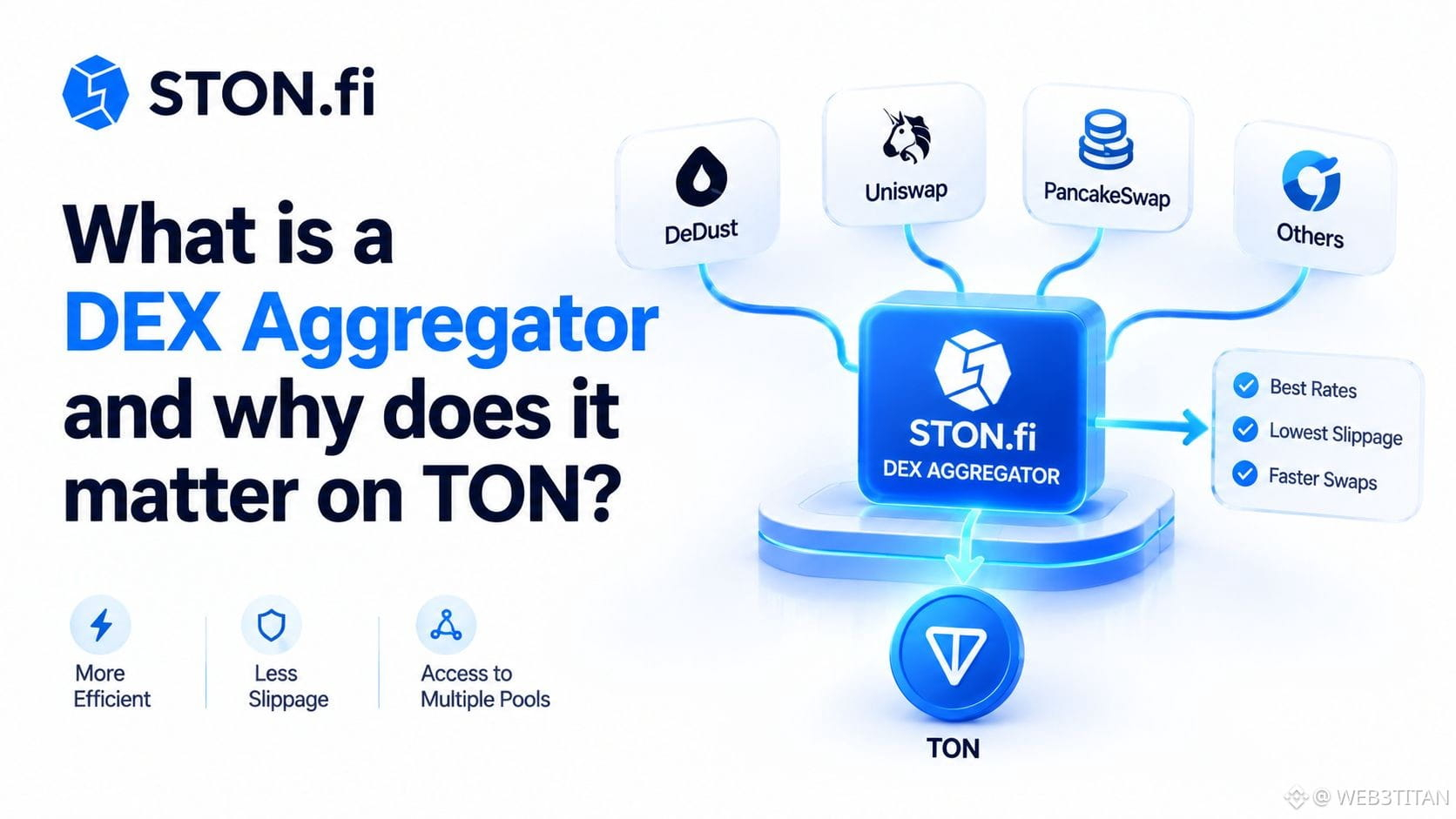
What Is a DEX Aggregator and Why Does It Matter on TON?
Liquidity on TON isn't always in one place. Different DEXs and pools can offer different prices for the same token pair.
That's where a DEX aggregator becomes useful.
WHAT IS A DEX AGGREGATOR?
A DEX aggregator is a routing layer that searches across connected liquidity sources to find efficient ways to execute a swap.
Instead of checking every venue manually, the aggregator compares available routes automatically.
WHY DOES IT MATTER?
Imagine you want to swap TON for another token.
One DEX might have deeper liquidity, while another could offer a better price. A multi-hop route through several pools might also produce better execution than a direct swap.
Liquidity fragmentation means the best available route isn't always in one pool.
It can also affect price impact, especially when a trade uses a shallow pool.
THE MANUAL ALTERNATIVE
Without aggregation, you would need to compare different TON DEXs yourself.
You might check prices, pool depth, and possible routes across several platforms before deciding where to execute.
That becomes difficult when there are many liquidity sources and possible combinations.
WHERE OMNISTON FITS
Omniston is STONfi's liquidity aggregation infrastructure for TON.
It can search connected liquidity sources and coordinate routes for swaps, including documented sources such as STONfi, DeDust, Tonco, and swap.coffee.
This brings route discovery and execution into a unified system rather than requiring users to compare everything manually.
ONE IMPORTANT LIMITATION
An aggregator can only optimize across the liquidity sources it is connected to.
So aggregation doesn't mean every possible market is automatically included.
MY TAKE
The main value of aggregation is simple: more connected liquidity sources create more routes to compare.
On a fragmented network like TON, that can make finding efficient swap execution much easier.
$BANK $XRP
#CircleMints500MUSDCOnSolana
What Is a DEX Aggregator and Why Does It Matter on TON?
Liquidity on TON isn't always in one place. Different DEXs and pools can offer different prices for the same token pair.
That's where a DEX aggregator becomes useful.
WHAT IS A DEX AGGREGATOR?
A DEX aggregator is a routing layer that searches across connected liquidity sources to find efficient ways to execute a swap.
Instead of checking every venue manually, the aggregator compares available routes automatically.
WHY DOES IT MATTER?
Imagine you want to swap TON for another token.
One DEX might have deeper liquidity, while another could offer a better price. A multi-hop route through several pools might also produce better execution than a direct swap.
Liquidity fragmentation means the best available route isn't always in one pool.
It can also affect price impact, especially when a trade uses a shallow pool.
THE MANUAL ALTERNATIVE
Without aggregation, you would need to compare different TON DEXs yourself.
You might check prices, pool depth, and possible routes across several platforms before deciding where to execute.
That becomes difficult when there are many liquidity sources and possible combinations.
WHERE OMNISTON FITS
Omniston is STONfi's liquidity aggregation infrastructure for TON.
It can search connected liquidity sources and coordinate routes for swaps, including documented sources such as STONfi, DeDust, Tonco, and swap.coffee.
This brings route discovery and execution into a unified system rather than requiring users to compare everything manually.
ONE IMPORTANT LIMITATION
An aggregator can only optimize across the liquidity sources it is connected to.
So aggregation doesn't mean every possible market is automatically included.
MY TAKE
The main value of aggregation is simple: more connected liquidity sources create more routes to compare.
On a fragmented network like TON, that can make finding efficient swap execution much easier.
$BANK $XRP
#CircleMints500MUSDCOnSolana
Liquidity on TON isn't always in one place. Different DEXs and pools can offer different prices for the same token pair.
That's where a DEX aggregator becomes useful.
WHAT IS A DEX AGGREGATOR?
A DEX aggregator is a routing layer that searches across connected liquidity sources to find efficient ways to execute a swap.
Instead of checking every venue manually, the aggregator compares available routes automatically.
WHY DOES IT MATTER?
Imagine you want to swap TON for another token.
One DEX might have deeper liquidity, while another could offer a better price. A multi-hop route through several pools might also produce better execution than a direct swap.
Liquidity fragmentation means the best available route isn't always in one pool.
It can also affect price impact, especially when a trade uses a shallow pool.
THE MANUAL ALTERNATIVE
Without aggregation, you would need to compare different TON DEXs yourself.
You might check prices, pool depth, and possible routes across several platforms before deciding where to execute.
That becomes difficult when there are many liquidity sources and possible combinations.
WHERE OMNISTON FITS
Omniston is STONfi's liquidity aggregation infrastructure for TON.
It can search connected liquidity sources and coordinate routes for swaps, including documented sources such as STONfi, DeDust, Tonco, and swap.coffee.
This brings route discovery and execution into a unified system rather than requiring users to compare everything manually.
ONE IMPORTANT LIMITATION
An aggregator can only optimize across the liquidity sources it is connected to.
So aggregation doesn't mean every possible market is automatically included.
MY TAKE
The main value of aggregation is simple: more connected liquidity sources create more routes to compare.
On a fragmented network like TON, that can make finding efficient swap execution much easier.
$BANK $XRP
#CircleMints500MUSDCOnSolana
97
·
--
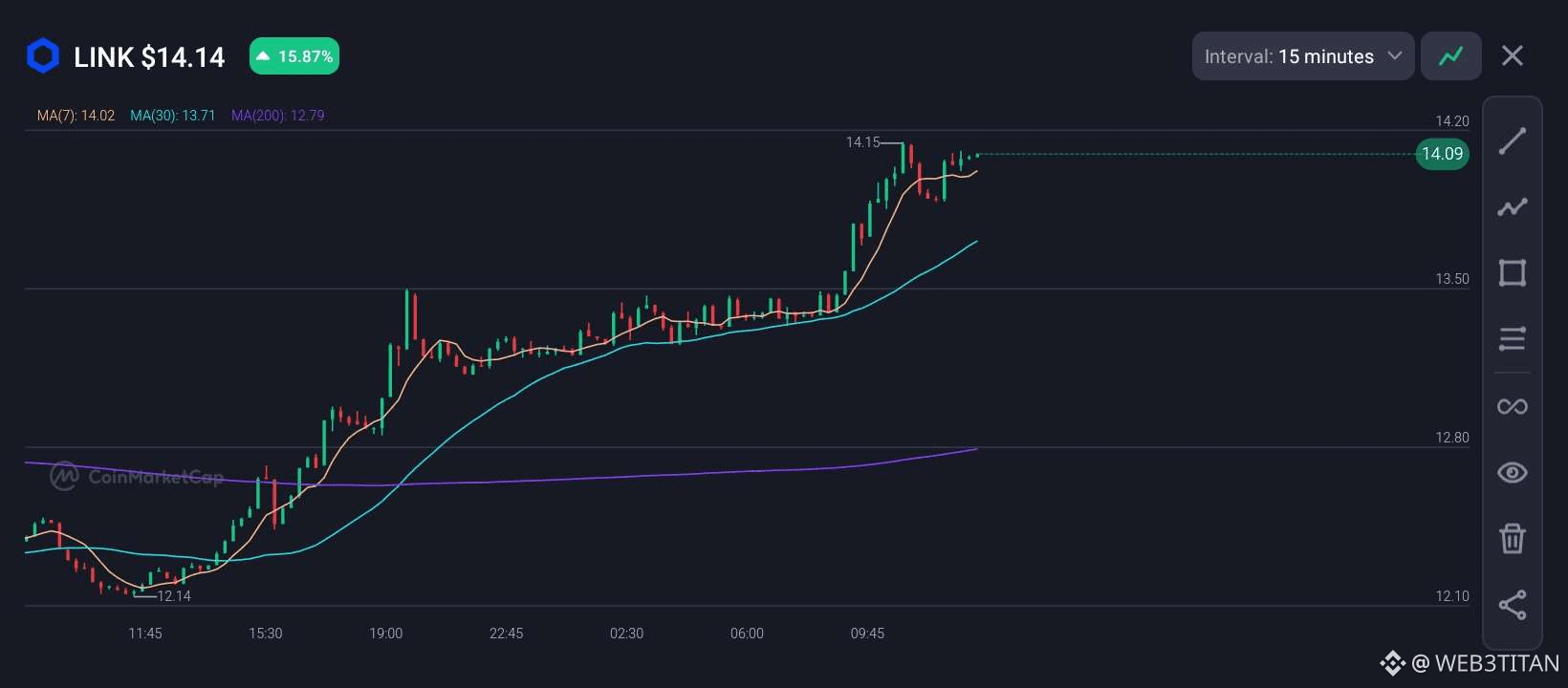
Güclü momentum hələ də yüksək səviyyələrin yaxınlığında saxlanır.
$LINK hazırda +15.87% artımdan sonra $14.14 səviyyəsində ticarət edir.
Son vaxtlar qiymət 12.14 zonası ətrafından qalxaraq 14.15 səviyyəsindəki yüksək həddə çatdı və indi zirvənin tam yanında konsolidasiya edir.
Bias: ARTIM (LONG)
Niyə:
Ralli davamlı və impulsiv idi. Qiymət indiyə qədər məhdud rəddləşmə göstərərək yüksək səviyyələrin yaxınlığında qalır və qısamüddətli strukturu möhkəm şəkildə bullish vəziyyətdə saxlayır.
Giriş: $13.90 – $14.20
Stop Loss: $13.40
Hədəflər (Take Profits)
TP1: $14.60
TP2: $15.00
TP3: $15.50 – $16.00
@stonfi worth araşdırılacaq başqa bir hissəsi onun əkinçilik (farming) ekosistemidir. Likvidlik təminatçıları uyğun LP tokenlərini dəstəklənən farm-lara depozit edə və likvidlik mövqeyinin üzərinə əlavə mükafatlar qazanaraq, istifadəçilərə artıq DeFi bazarlarına verdikləri aktivlərdən potensial gəlir əldə etməyin başqa bir yolunu təqdim edirlər.
$LINK #LINK🔥🔥🔥
Güclü momentum hələ də yüksək səviyyələrin yaxınlığında saxlanır.
$LINK hazırda +15.87% artımdan sonra $14.14 səviyyəsində ticarət edir.
Son vaxtlar qiymət 12.14 zonası ətrafından qalxaraq 14.15 səviyyəsindəki yüksək həddə çatdı və indi zirvənin tam yanında konsolidasiya edir.
Bias: ARTIM (LONG)
Niyə:
Ralli davamlı və impulsiv idi. Qiymət indiyə qədər məhdud rəddləşmə göstərərək yüksək səviyyələrin yaxınlığında qalır və qısamüddətli strukturu möhkəm şəkildə bullish vəziyyətdə saxlayır.
Giriş: $13.90 – $14.20
Stop Loss: $13.40
Hədəflər (Take Profits)
TP1: $14.60
TP2: $15.00
TP3: $15.50 – $16.00
@STONfi DEX worth araşdırılacaq başqa bir hissəsi onun əkinçilik (farming) ekosistemidir. Likvidlik təminatçıları uyğun LP tokenlərini dəstəklənən farm-lara depozit edə və likvidlik mövqeyinin üzərinə əlavə mükafatlar qazanaraq, istifadəçilərə artıq DeFi bazarlarına verdikləri aktivlərdən potensial gəlir əldə etməyin başqa bir yolunu təqdim edirlər.
$LINK #LINK🔥🔥🔥
$LINK hazırda +15.87% artımdan sonra $14.14 səviyyəsində ticarət edir.
Son vaxtlar qiymət 12.14 zonası ətrafından qalxaraq 14.15 səviyyəsindəki yüksək həddə çatdı və indi zirvənin tam yanında konsolidasiya edir.
Bias: ARTIM (LONG)
Niyə:
Ralli davamlı və impulsiv idi. Qiymət indiyə qədər məhdud rəddləşmə göstərərək yüksək səviyyələrin yaxınlığında qalır və qısamüddətli strukturu möhkəm şəkildə bullish vəziyyətdə saxlayır.
Giriş: $13.90 – $14.20
Stop Loss: $13.40
Hədəflər (Take Profits)
TP1: $14.60
TP2: $15.00
TP3: $15.50 – $16.00
@STONfi DEX worth araşdırılacaq başqa bir hissəsi onun əkinçilik (farming) ekosistemidir. Likvidlik təminatçıları uyğun LP tokenlərini dəstəklənən farm-lara depozit edə və likvidlik mövqeyinin üzərinə əlavə mükafatlar qazanaraq, istifadəçilərə artıq DeFi bazarlarına verdikləri aktivlərdən potensial gəlir əldə etməyin başqa bir yolunu təqdim edirlər.
$LINK #LINK🔥🔥🔥
83
·
--
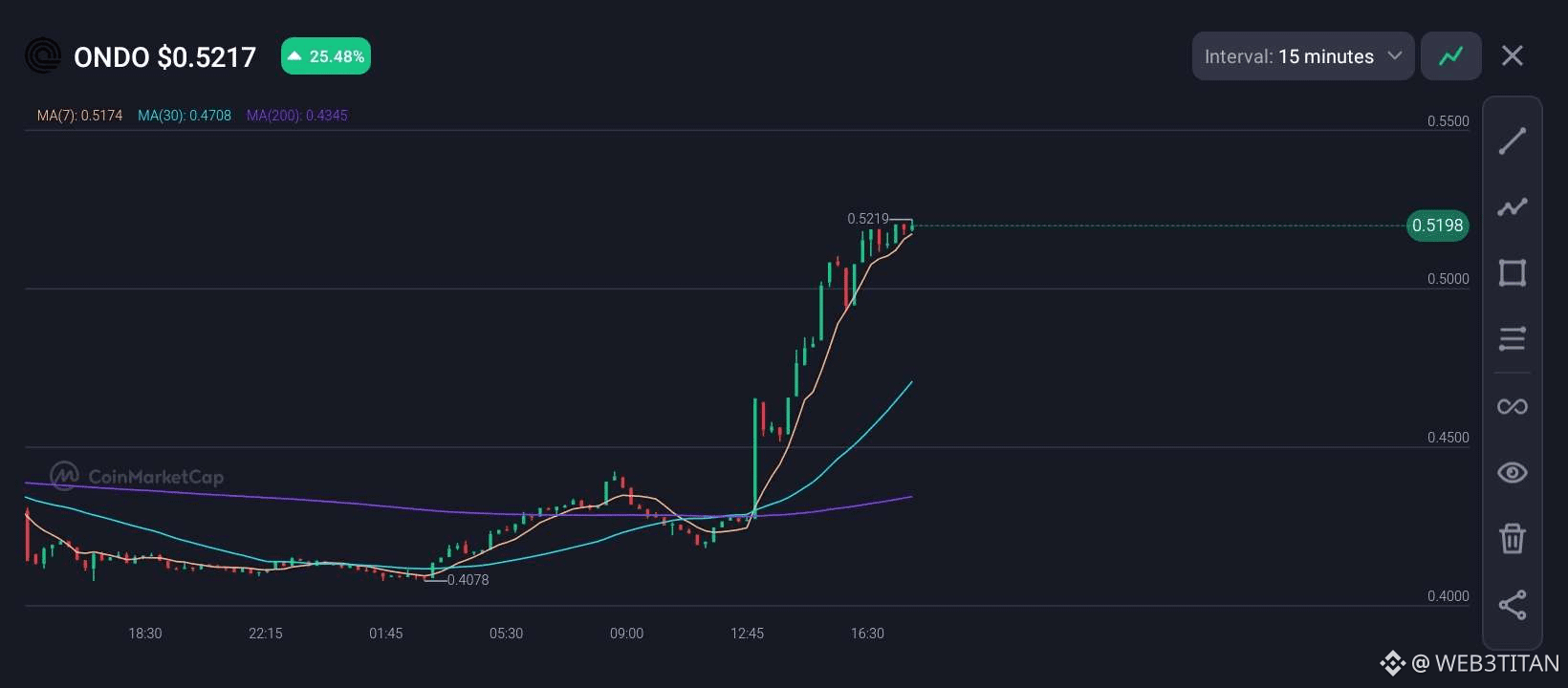
Yüksəkliklər yaxınlığında güclü ekspansiya hələ də davam edir.
$ONDO hazırda +25.48% artımdan sonra $0.5217 səviyyəsində ticarət edir.
Son vaxtlar qiymət 0.4078 zonası üzərindən aqressiv şəkildə qalxaraq 0.5219-a qədər yüksəlib və indi zirvədə, demək olar ki, həmin səviyyədə saxlanılır.
Bias: ARTIM (LONG)
Niyə:
Yüksəliş çox impulsiv və davamlı olub. Qiymət hələ də yüksəkliklərdə yüksək səviyyədədir; indiyə qədər rədd (pullback) məhdud qalıb və qısamüddətli strukturu möhkəm şəkildə boğa yönümlü saxlayır.
Giriş: $0.5100 – $0.5250
Stop Loss: $0.4800
Gözlənilən gəlirlər (Take Profits)
TP1: $0.5500
TP2: $0.5800
TP3: $0.6200 – $0.6500
Bu cür token güclü hərəkət edəndə, müxtəlif şəbəkələr üzrə ekspozisiyanı idarə etmək vacib ola bilər. @stonfi dəstəklənən aktivləri bir DeFi təcrübəsi daxilində dəstəklənən şəbəkələr arasında köçürməyə imkan verən cross-chain swap-lar təklif edir; bu da hər zənciri tamamilə ayrıca bazar kimi qəbul etmədən likvidliyə çıxışı asanlaşdırır.
$ONDO #ONDO #FedOctoberRateHikeOddsRiseTo69.7%
Yüksəkliklər yaxınlığında güclü ekspansiya hələ də davam edir.
$ONDO hazırda +25.48% artımdan sonra $0.5217 səviyyəsində ticarət edir.
Son vaxtlar qiymət 0.4078 zonası üzərindən aqressiv şəkildə qalxaraq 0.5219-a qədər yüksəlib və indi zirvədə, demək olar ki, həmin səviyyədə saxlanılır.
Bias: ARTIM (LONG)
Niyə:
Yüksəliş çox impulsiv və davamlı olub. Qiymət hələ də yüksəkliklərdə yüksək səviyyədədir; indiyə qədər rədd (pullback) məhdud qalıb və qısamüddətli strukturu möhkəm şəkildə boğa yönümlü saxlayır.
Giriş: $0.5100 – $0.5250
Stop Loss: $0.4800
Gözlənilən gəlirlər (Take Profits)
TP1: $0.5500
TP2: $0.5800
TP3: $0.6200 – $0.6500
Bu cür token güclü hərəkət edəndə, müxtəlif şəbəkələr üzrə ekspozisiyanı idarə etmək vacib ola bilər. @STONfi DEX dəstəklənən aktivləri bir DeFi təcrübəsi daxilində dəstəklənən şəbəkələr arasında köçürməyə imkan verən cross-chain swap-lar təklif edir; bu da hər zənciri tamamilə ayrıca bazar kimi qəbul etmədən likvidliyə çıxışı asanlaşdırır.
$ONDO #ONDO #FedOctoberRateHikeOddsRiseTo69.7%
$ONDO hazırda +25.48% artımdan sonra $0.5217 səviyyəsində ticarət edir.
Son vaxtlar qiymət 0.4078 zonası üzərindən aqressiv şəkildə qalxaraq 0.5219-a qədər yüksəlib və indi zirvədə, demək olar ki, həmin səviyyədə saxlanılır.
Bias: ARTIM (LONG)
Niyə:
Yüksəliş çox impulsiv və davamlı olub. Qiymət hələ də yüksəkliklərdə yüksək səviyyədədir; indiyə qədər rədd (pullback) məhdud qalıb və qısamüddətli strukturu möhkəm şəkildə boğa yönümlü saxlayır.
Giriş: $0.5100 – $0.5250
Stop Loss: $0.4800
Gözlənilən gəlirlər (Take Profits)
TP1: $0.5500
TP2: $0.5800
TP3: $0.6200 – $0.6500
Bu cür token güclü hərəkət edəndə, müxtəlif şəbəkələr üzrə ekspozisiyanı idarə etmək vacib ola bilər. @STONfi DEX dəstəklənən aktivləri bir DeFi təcrübəsi daxilində dəstəklənən şəbəkələr arasında köçürməyə imkan verən cross-chain swap-lar təklif edir; bu da hər zənciri tamamilə ayrıca bazar kimi qəbul etmədən likvidliyə çıxışı asanlaşdırır.
$ONDO #ONDO #FedOctoberRateHikeOddsRiseTo69.7%
145
·
--
Tərcüməyə bax
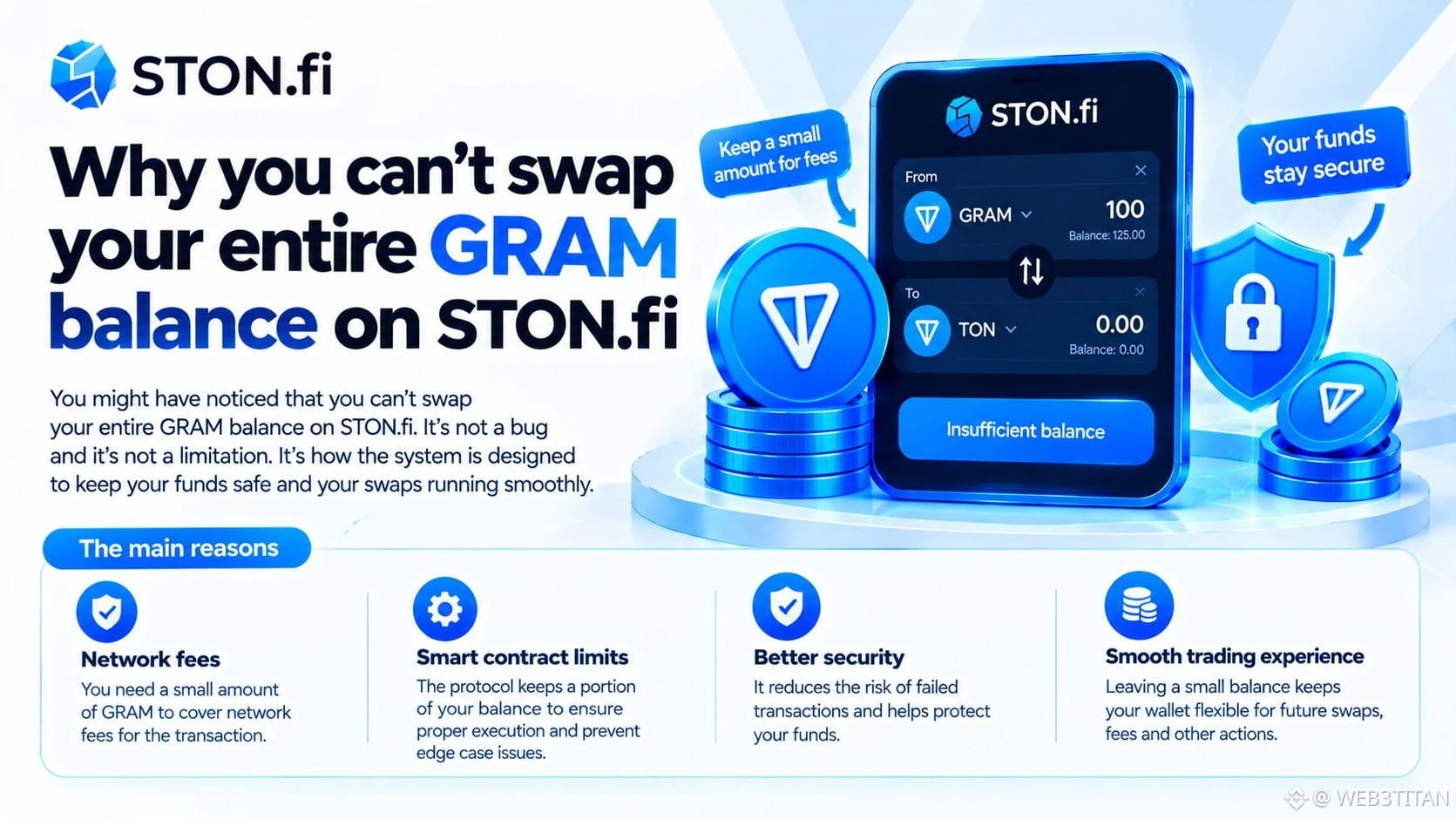
Why You Can’t Swap Your Entire GRAM Balance on STONfi
If you try to swap your entire GRAM balance, you may notice that STONfi doesn't let you use every last token.
This is related to how transactions work on TON.
YOU NEED GAS
Your GRAM is a Jetton, but the transaction still needs TON to pay for gas.
STONfi's swap documentation shows that Jetton swaps require TON for the transaction and forwarding costs.
So having enough GRAM doesn't automatically mean you can spend 100% of it in one transaction.
WHY THE RESERVE MATTERS
A small amount of balance may need to remain available for the wallet to handle the transaction and related blockchain operations.
If you attempt to leave the wallet with nothing available for required costs, execution can fail.
THE SIMPLE FIX
Instead of entering your entire GRAM balance, reduce the input amount slightly and leave enough room for the required TON gas.
For example, if your wallet holds 100 GRAM, don't assume the full 100 GRAM can always be used in the transaction.
The exact amount to leave depends on the transaction and wallet setup.
WHAT TO CHECK
Before confirming, check:
Your TON balance
The GRAM amount you're entering
The estimated transaction cost
The amount remaining after the swap
STONfi's transaction documentation explains that the TON amount sent with a transaction is used to pay for gas.
MY TAKE
This isn't necessarily a swap limitation.
It's a reminder that on TON, Jetton transactions still depend on the blockchain's native TON for execution costs.
Leave enough TON for gas, reduce the GRAM input when necessary, and the transaction can be prepared with those costs in mind.
$XRP $ETH
Why You Can’t Swap Your Entire GRAM Balance on STONfi
If you try to swap your entire GRAM balance, you may notice that STONfi doesn't let you use every last token.
This is related to how transactions work on TON.
YOU NEED GAS
Your GRAM is a Jetton, but the transaction still needs TON to pay for gas.
STONfi's swap documentation shows that Jetton swaps require TON for the transaction and forwarding costs.
So having enough GRAM doesn't automatically mean you can spend 100% of it in one transaction.
WHY THE RESERVE MATTERS
A small amount of balance may need to remain available for the wallet to handle the transaction and related blockchain operations.
If you attempt to leave the wallet with nothing available for required costs, execution can fail.
THE SIMPLE FIX
Instead of entering your entire GRAM balance, reduce the input amount slightly and leave enough room for the required TON gas.
For example, if your wallet holds 100 GRAM, don't assume the full 100 GRAM can always be used in the transaction.
The exact amount to leave depends on the transaction and wallet setup.
WHAT TO CHECK
Before confirming, check:
Your TON balance
The GRAM amount you're entering
The estimated transaction cost
The amount remaining after the swap
STONfi's transaction documentation explains that the TON amount sent with a transaction is used to pay for gas.
MY TAKE
This isn't necessarily a swap limitation.
It's a reminder that on TON, Jetton transactions still depend on the blockchain's native TON for execution costs.
Leave enough TON for gas, reduce the GRAM input when necessary, and the transaction can be prepared with those costs in mind.
$XRP $ETH
If you try to swap your entire GRAM balance, you may notice that STONfi doesn't let you use every last token.
This is related to how transactions work on TON.
YOU NEED GAS
Your GRAM is a Jetton, but the transaction still needs TON to pay for gas.
STONfi's swap documentation shows that Jetton swaps require TON for the transaction and forwarding costs.
So having enough GRAM doesn't automatically mean you can spend 100% of it in one transaction.
WHY THE RESERVE MATTERS
A small amount of balance may need to remain available for the wallet to handle the transaction and related blockchain operations.
If you attempt to leave the wallet with nothing available for required costs, execution can fail.
THE SIMPLE FIX
Instead of entering your entire GRAM balance, reduce the input amount slightly and leave enough room for the required TON gas.
For example, if your wallet holds 100 GRAM, don't assume the full 100 GRAM can always be used in the transaction.
The exact amount to leave depends on the transaction and wallet setup.
WHAT TO CHECK
Before confirming, check:
Your TON balance
The GRAM amount you're entering
The estimated transaction cost
The amount remaining after the swap
STONfi's transaction documentation explains that the TON amount sent with a transaction is used to pay for gas.
MY TAKE
This isn't necessarily a swap limitation.
It's a reminder that on TON, Jetton transactions still depend on the blockchain's native TON for execution costs.
Leave enough TON for gas, reduce the GRAM input when necessary, and the transaction can be prepared with those costs in mind.
$XRP $ETH
1
165
·
--
Tərcüməyə bax
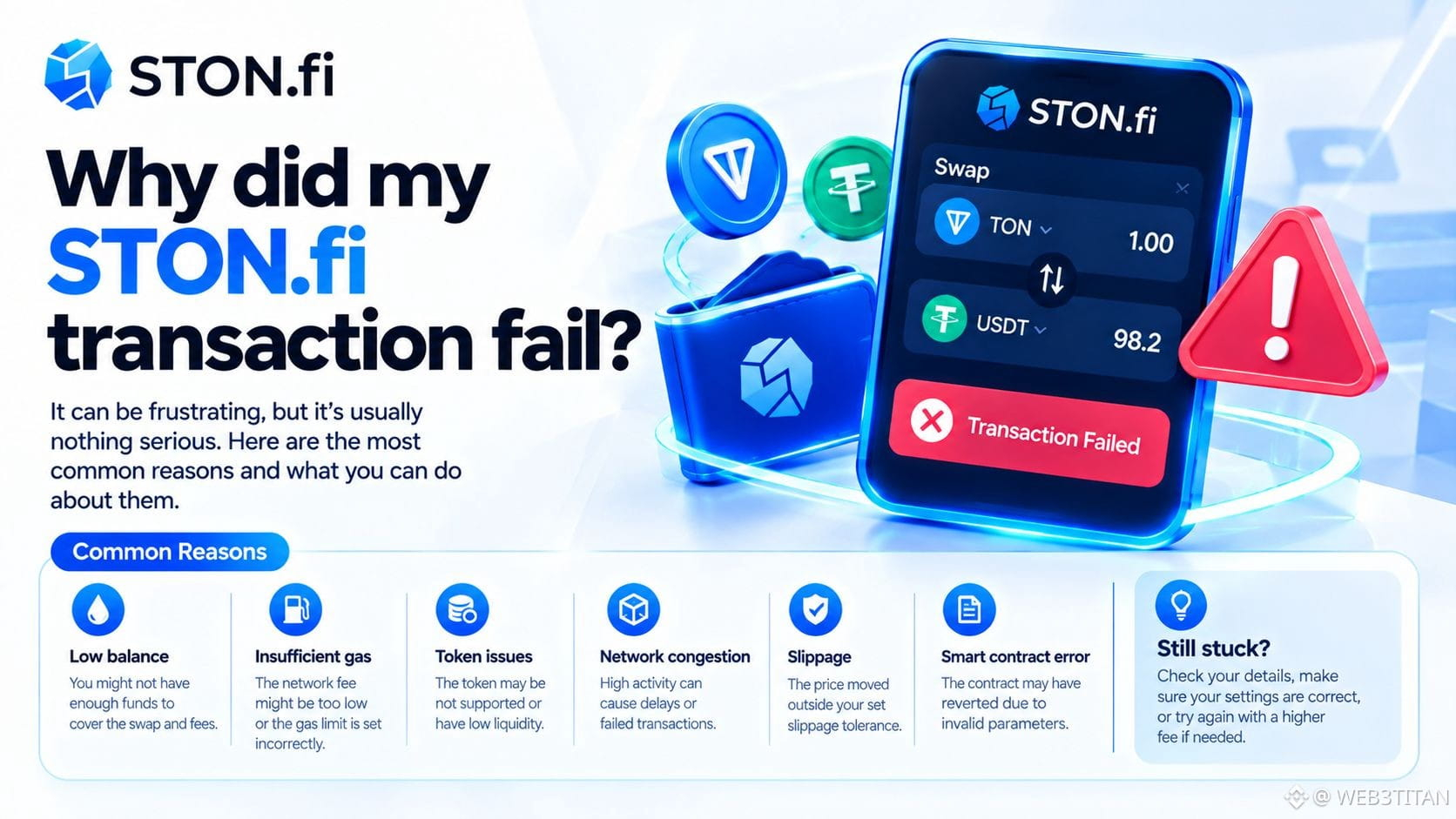
Why Did My STONfi Transaction Fail?
A failed transaction can be frustrating, especially when you're not sure what went wrong. Before trying again, it's worth checking a few things.
CHECK THE OPERATION
First, identify what you were doing.
Was it a swap, liquidity deposit, withdrawal, staking action, or another transaction?
The possible cause can depend on the operation.
CHECK YOUR GAS BALANCE
Your wallet needs enough TON to cover the blockchain fees required to process the transaction.
If your TON balance is too low, the transaction may not be completed.
REVIEW THE SWAP DETAILS
For swaps, check the slippage settings, price changes, and token warnings shown before confirmation.
A significant price movement can cause the transaction conditions to no longer be valid.
CHECK THE TRANSACTION STATUS
If you've already submitted the transaction, check its status on a TON blockchain explorer.
This can help determine whether it failed, is still processing, or was successfully completed.
BEFORE RETRYING
Don't immediately submit the same transaction again.
First identify the likely cause, then check your balance and transaction details. If the issue continues, keep the transaction hash and relevant wallet details available when contacting support.
MY TAKE
A failed transaction doesn't always mean something is wrong with STONfi.
Understanding the operation, gas requirements, swap conditions, and on-chain status can help you identify the problem before making another attempt.
$GRAM $SOL #BTCBreaks80K
Why Did My STONfi Transaction Fail?
A failed transaction can be frustrating, especially when you're not sure what went wrong. Before trying again, it's worth checking a few things.
CHECK THE OPERATION
First, identify what you were doing.
Was it a swap, liquidity deposit, withdrawal, staking action, or another transaction?
The possible cause can depend on the operation.
CHECK YOUR GAS BALANCE
Your wallet needs enough TON to cover the blockchain fees required to process the transaction.
If your TON balance is too low, the transaction may not be completed.
REVIEW THE SWAP DETAILS
For swaps, check the slippage settings, price changes, and token warnings shown before confirmation.
A significant price movement can cause the transaction conditions to no longer be valid.
CHECK THE TRANSACTION STATUS
If you've already submitted the transaction, check its status on a TON blockchain explorer.
This can help determine whether it failed, is still processing, or was successfully completed.
BEFORE RETRYING
Don't immediately submit the same transaction again.
First identify the likely cause, then check your balance and transaction details. If the issue continues, keep the transaction hash and relevant wallet details available when contacting support.
MY TAKE
A failed transaction doesn't always mean something is wrong with STONfi.
Understanding the operation, gas requirements, swap conditions, and on-chain status can help you identify the problem before making another attempt.
$GRAM $SOL #BTCBreaks80K
A failed transaction can be frustrating, especially when you're not sure what went wrong. Before trying again, it's worth checking a few things.
CHECK THE OPERATION
First, identify what you were doing.
Was it a swap, liquidity deposit, withdrawal, staking action, or another transaction?
The possible cause can depend on the operation.
CHECK YOUR GAS BALANCE
Your wallet needs enough TON to cover the blockchain fees required to process the transaction.
If your TON balance is too low, the transaction may not be completed.
REVIEW THE SWAP DETAILS
For swaps, check the slippage settings, price changes, and token warnings shown before confirmation.
A significant price movement can cause the transaction conditions to no longer be valid.
CHECK THE TRANSACTION STATUS
If you've already submitted the transaction, check its status on a TON blockchain explorer.
This can help determine whether it failed, is still processing, or was successfully completed.
BEFORE RETRYING
Don't immediately submit the same transaction again.
First identify the likely cause, then check your balance and transaction details. If the issue continues, keep the transaction hash and relevant wallet details available when contacting support.
MY TAKE
A failed transaction doesn't always mean something is wrong with STONfi.
Understanding the operation, gas requirements, swap conditions, and on-chain status can help you identify the problem before making another attempt.
$GRAM $SOL #BTCBreaks80K
1
128
·
--
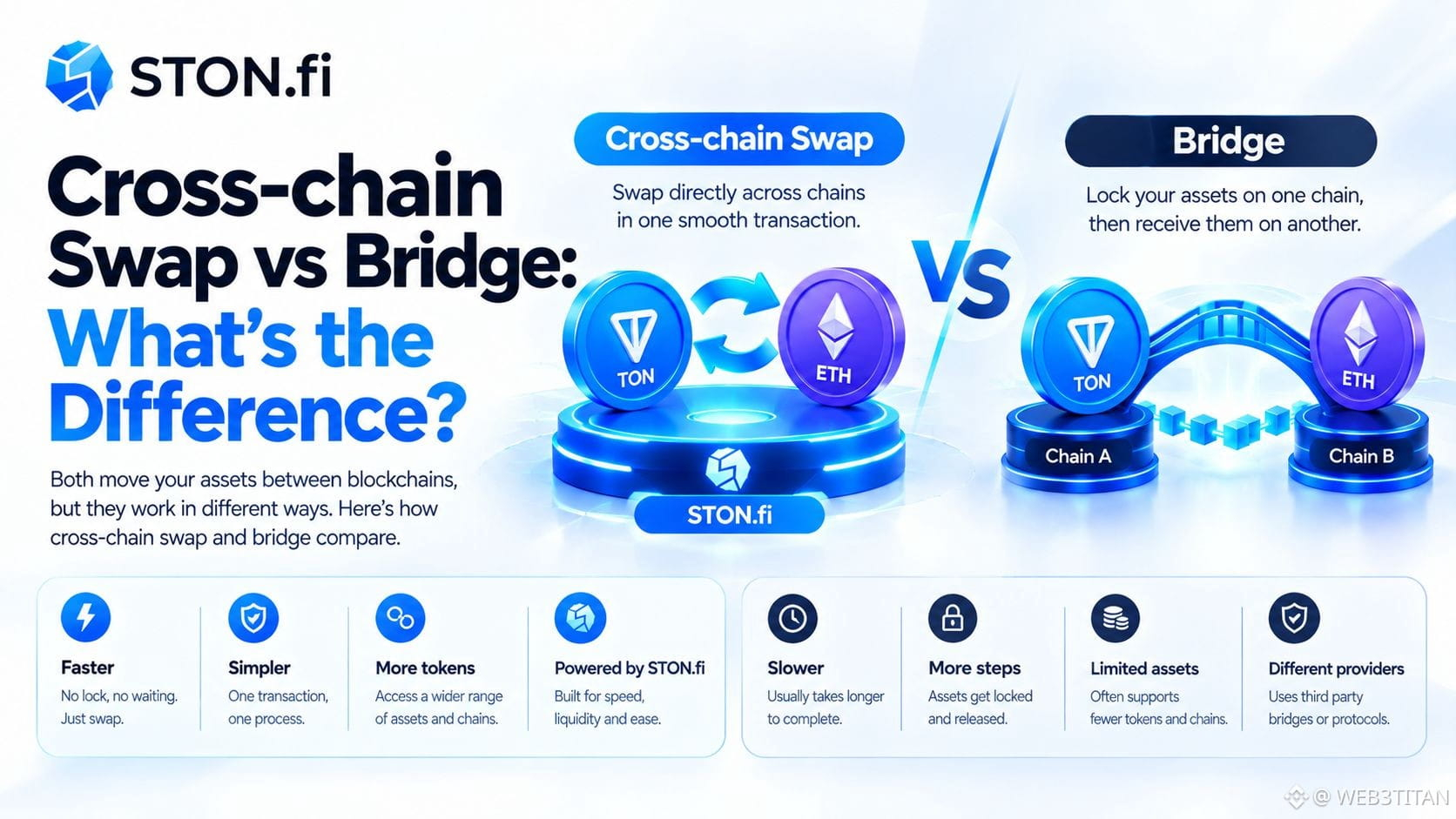
Zəncirarası Swap vs Bridge: Fərq nədir?
Aktivləri bir blokçeyindən digərinə köçürmək müxtəlif yollarla mümkündür. İki məşhur yanaşma briclər (bridge) və zəncirarası swap-lardır (cross chain swap), amma onlar fərqli problemləri həll edir.
BRİD E NƏDİR?
Bridge bir aktivin bir blokçeyindən digərinə köçürülməsi üçün nəzərdə tutulub.
Onun arxitekturasından asılı olaraq, orijinal aktiv kilidlənə və ya saxlanıla bilər; bunun müqabilində təyinat şəbəkəsində uyğun “wrapper” və ya bridged versiya yaradılır.
ZƏNCİRARASI SWAP NƏDİR?
Zəncirarası swap sizə bir şəbəkədəki aktivin əvəzində başqa bir şəbəkədəki fərqli aktivin alınmasına imkan verir.
Sadəcə eyni aktivin köçürülməsi əvəzinə, təyinat zəncirində fərqli yerli (native) və ya dəstəklənən aktiv ala bilərsiniz.
ƏSAS FƏRQLƏR
Bridge: Bir aktivin şəbəkələr arasında köçürülməsi; çox vaxt kilidləmə və onu təyinatda təqdim etmə (represent) ilə bağlı olur.
Cross chain swap: Fərqli şəbəkələr arasında bir aktivin digərinə dəyişdirilməsi.
Həmçinin onlar qəyyumluq (custody) fərziyyələri, marşrutlama mürəkkəbliyi, komissiyalar və uğursuz əməliyyatların və ya geri ödənişlərin necə idarə olunması baxımından da fərqlənə bilər.
OMNISTON HARADA YERLƏŞİR
Omniston zəncirarası icra (execution) və likvidlik aqreqasiyası (liquidity aggregation) üzərində fokuslanır. Mövcud likvidliyi koordinasiya edir və istifadəçilərə dəstəklənən şəbəkələr arasında aktivləri mübadilə etməyə kömək etmək üçün marşrutlar təyin edir.
Bu, bridge-lərin ümumən “yanlış” olması demək deyil.
Bridge-lər aktivləri konkret olaraq şəbəkələr arasında köçürmək istədiyiniz hallarda faydalı ola bilər; cross chain swap-lar isə bir aktivin əvəzində başqa bir aktiv əldə etmək istədiyiniz hallarda daha uyğundur.
MƏNİM FİKRİM
Düzgün model məqsəddən asılıdır.
Əgər sizə başqa şəbəkədə eyni aktiv lazımdırsa, bridge daha uyğun ola bilər. Əgər başqa şəbəkədə fərqli aktiv istəyirsinizsə, cross chain swap fərqli yanaşma təklif edir.
Arxitekturanı əvvəlcədən anlamaq, doğru aləti seçməyi daha asan edir.
$GRAM $XRP
#MemeLaunchpads82%OfArcDayOneVolume
Zəncirarası Swap vs Bridge: Fərq nədir?
Aktivləri bir blokçeyindən digərinə köçürmək müxtəlif yollarla mümkündür. İki məşhur yanaşma briclər (bridge) və zəncirarası swap-lardır (cross chain swap), amma onlar fərqli problemləri həll edir.
BRİD E NƏDİR?
Bridge bir aktivin bir blokçeyindən digərinə köçürülməsi üçün nəzərdə tutulub.
Onun arxitekturasından asılı olaraq, orijinal aktiv kilidlənə və ya saxlanıla bilər; bunun müqabilində təyinat şəbəkəsində uyğun “wrapper” və ya bridged versiya yaradılır.
ZƏNCİRARASI SWAP NƏDİR?
Zəncirarası swap sizə bir şəbəkədəki aktivin əvəzində başqa bir şəbəkədəki fərqli aktivin alınmasına imkan verir.
Sadəcə eyni aktivin köçürülməsi əvəzinə, təyinat zəncirində fərqli yerli (native) və ya dəstəklənən aktiv ala bilərsiniz.
ƏSAS FƏRQLƏR
Bridge: Bir aktivin şəbəkələr arasında köçürülməsi; çox vaxt kilidləmə və onu təyinatda təqdim etmə (represent) ilə bağlı olur.
Cross chain swap: Fərqli şəbəkələr arasında bir aktivin digərinə dəyişdirilməsi.
Həmçinin onlar qəyyumluq (custody) fərziyyələri, marşrutlama mürəkkəbliyi, komissiyalar və uğursuz əməliyyatların və ya geri ödənişlərin necə idarə olunması baxımından da fərqlənə bilər.
OMNISTON HARADA YERLƏŞİR
Omniston zəncirarası icra (execution) və likvidlik aqreqasiyası (liquidity aggregation) üzərində fokuslanır. Mövcud likvidliyi koordinasiya edir və istifadəçilərə dəstəklənən şəbəkələr arasında aktivləri mübadilə etməyə kömək etmək üçün marşrutlar təyin edir.
Bu, bridge-lərin ümumən “yanlış” olması demək deyil.
Bridge-lər aktivləri konkret olaraq şəbəkələr arasında köçürmək istədiyiniz hallarda faydalı ola bilər; cross chain swap-lar isə bir aktivin əvəzində başqa bir aktiv əldə etmək istədiyiniz hallarda daha uyğundur.
MƏNİM FİKRİM
Düzgün model məqsəddən asılıdır.
Əgər sizə başqa şəbəkədə eyni aktiv lazımdırsa, bridge daha uyğun ola bilər. Əgər başqa şəbəkədə fərqli aktiv istəyirsinizsə, cross chain swap fərqli yanaşma təklif edir.
Arxitekturanı əvvəlcədən anlamaq, doğru aləti seçməyi daha asan edir.
$GRAM $XRP
#MemeLaunchpads82%OfArcDayOneVolume
Aktivləri bir blokçeyindən digərinə köçürmək müxtəlif yollarla mümkündür. İki məşhur yanaşma briclər (bridge) və zəncirarası swap-lardır (cross chain swap), amma onlar fərqli problemləri həll edir.
BRİD E NƏDİR?
Bridge bir aktivin bir blokçeyindən digərinə köçürülməsi üçün nəzərdə tutulub.
Onun arxitekturasından asılı olaraq, orijinal aktiv kilidlənə və ya saxlanıla bilər; bunun müqabilində təyinat şəbəkəsində uyğun “wrapper” və ya bridged versiya yaradılır.
ZƏNCİRARASI SWAP NƏDİR?
Zəncirarası swap sizə bir şəbəkədəki aktivin əvəzində başqa bir şəbəkədəki fərqli aktivin alınmasına imkan verir.
Sadəcə eyni aktivin köçürülməsi əvəzinə, təyinat zəncirində fərqli yerli (native) və ya dəstəklənən aktiv ala bilərsiniz.
ƏSAS FƏRQLƏR
Bridge: Bir aktivin şəbəkələr arasında köçürülməsi; çox vaxt kilidləmə və onu təyinatda təqdim etmə (represent) ilə bağlı olur.
Cross chain swap: Fərqli şəbəkələr arasında bir aktivin digərinə dəyişdirilməsi.
Həmçinin onlar qəyyumluq (custody) fərziyyələri, marşrutlama mürəkkəbliyi, komissiyalar və uğursuz əməliyyatların və ya geri ödənişlərin necə idarə olunması baxımından da fərqlənə bilər.
OMNISTON HARADA YERLƏŞİR
Omniston zəncirarası icra (execution) və likvidlik aqreqasiyası (liquidity aggregation) üzərində fokuslanır. Mövcud likvidliyi koordinasiya edir və istifadəçilərə dəstəklənən şəbəkələr arasında aktivləri mübadilə etməyə kömək etmək üçün marşrutlar təyin edir.
Bu, bridge-lərin ümumən “yanlış” olması demək deyil.
Bridge-lər aktivləri konkret olaraq şəbəkələr arasında köçürmək istədiyiniz hallarda faydalı ola bilər; cross chain swap-lar isə bir aktivin əvəzində başqa bir aktiv əldə etmək istədiyiniz hallarda daha uyğundur.
MƏNİM FİKRİM
Düzgün model məqsəddən asılıdır.
Əgər sizə başqa şəbəkədə eyni aktiv lazımdırsa, bridge daha uyğun ola bilər. Əgər başqa şəbəkədə fərqli aktiv istəyirsinizsə, cross chain swap fərqli yanaşma təklif edir.
Arxitekturanı əvvəlcədən anlamaq, doğru aləti seçməyi daha asan edir.
$GRAM $XRP
#MemeLaunchpads82%OfArcDayOneVolume
2
448
·
--
Tərcüməyə bax
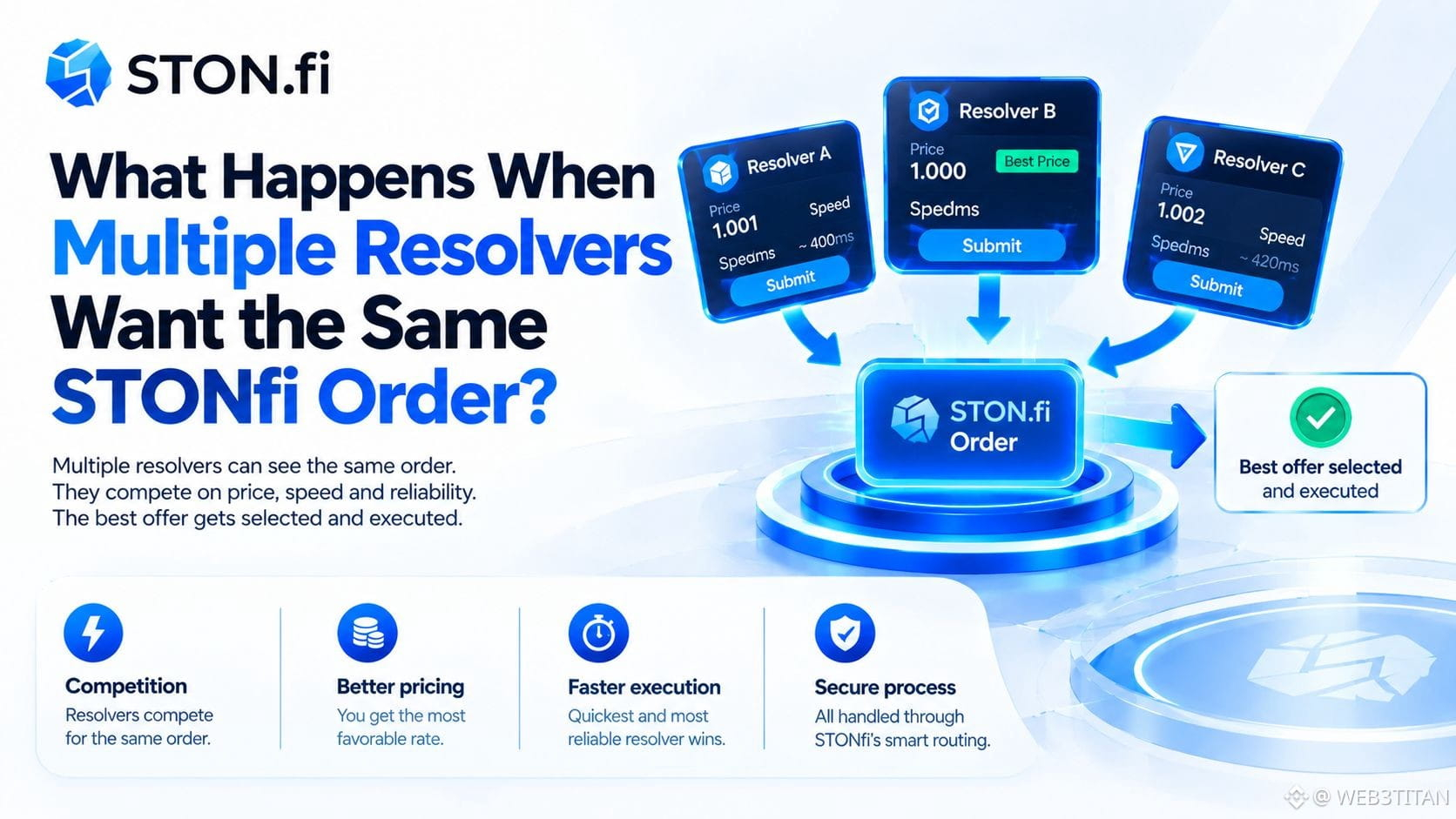
What Happens When Multiple Resolvers Want the Same STONfi Order?
One interesting part of Omniston is what happens when multiple resolvers can fulfill the same order.
Instead of relying on just one source, the system can create competition between available liquidity providers.
MULTIPLE QUOTES
When an order is submitted, eligible resolvers can respond with quotes.
Each resolver can offer different pricing and execution terms based on the liquidity and routes available to them.
That means the same order can receive multiple competing quotes.
HOW THE BEST OPTION IS SELECTED
The quotes can then be compared to determine which option offers the most suitable execution.
Price matters, but execution isn't simply about choosing the biggest number. The route, available liquidity, and ability to complete the transaction also matter.
WHY COMPETITION MATTERS
Multiple resolvers create a more competitive environment.
If one resolver offers a weaker quote while another can provide better execution, the order has alternatives instead of being dependent on a single liquidity source.
This can help improve pricing and execution efficiency.
WHAT HAPPENS NEXT?
Once the preferred quote is selected, the resolver handles the execution according to the order's conditions.
The goal is to move from quote discovery → selection → execution without forcing the user to manually compare every liquidity source.
MY TAKE
This is one of the interesting ideas behind Omniston.
Resolvers aren't just additional infrastructure. Their competition can become part of the mechanism for finding better execution.
More resolvers can mean more quotes, more competition, and potentially better outcomes for the same STONfi order.
$GRAM $XRP
#CPIWatch
What Happens When Multiple Resolvers Want the Same STONfi Order?
One interesting part of Omniston is what happens when multiple resolvers can fulfill the same order.
Instead of relying on just one source, the system can create competition between available liquidity providers.
MULTIPLE QUOTES
When an order is submitted, eligible resolvers can respond with quotes.
Each resolver can offer different pricing and execution terms based on the liquidity and routes available to them.
That means the same order can receive multiple competing quotes.
HOW THE BEST OPTION IS SELECTED
The quotes can then be compared to determine which option offers the most suitable execution.
Price matters, but execution isn't simply about choosing the biggest number. The route, available liquidity, and ability to complete the transaction also matter.
WHY COMPETITION MATTERS
Multiple resolvers create a more competitive environment.
If one resolver offers a weaker quote while another can provide better execution, the order has alternatives instead of being dependent on a single liquidity source.
This can help improve pricing and execution efficiency.
WHAT HAPPENS NEXT?
Once the preferred quote is selected, the resolver handles the execution according to the order's conditions.
The goal is to move from quote discovery → selection → execution without forcing the user to manually compare every liquidity source.
MY TAKE
This is one of the interesting ideas behind Omniston.
Resolvers aren't just additional infrastructure. Their competition can become part of the mechanism for finding better execution.
More resolvers can mean more quotes, more competition, and potentially better outcomes for the same STONfi order.
$GRAM $XRP
#CPIWatch
One interesting part of Omniston is what happens when multiple resolvers can fulfill the same order.
Instead of relying on just one source, the system can create competition between available liquidity providers.
MULTIPLE QUOTES
When an order is submitted, eligible resolvers can respond with quotes.
Each resolver can offer different pricing and execution terms based on the liquidity and routes available to them.
That means the same order can receive multiple competing quotes.
HOW THE BEST OPTION IS SELECTED
The quotes can then be compared to determine which option offers the most suitable execution.
Price matters, but execution isn't simply about choosing the biggest number. The route, available liquidity, and ability to complete the transaction also matter.
WHY COMPETITION MATTERS
Multiple resolvers create a more competitive environment.
If one resolver offers a weaker quote while another can provide better execution, the order has alternatives instead of being dependent on a single liquidity source.
This can help improve pricing and execution efficiency.
WHAT HAPPENS NEXT?
Once the preferred quote is selected, the resolver handles the execution according to the order's conditions.
The goal is to move from quote discovery → selection → execution without forcing the user to manually compare every liquidity source.
MY TAKE
This is one of the interesting ideas behind Omniston.
Resolvers aren't just additional infrastructure. Their competition can become part of the mechanism for finding better execution.
More resolvers can mean more quotes, more competition, and potentially better outcomes for the same STONfi order.
$GRAM $XRP
#CPIWatch
2
282
·
--
Son artan yüksəlişdən sonra qiymət sıx şəkildə konsolidasiya edir.
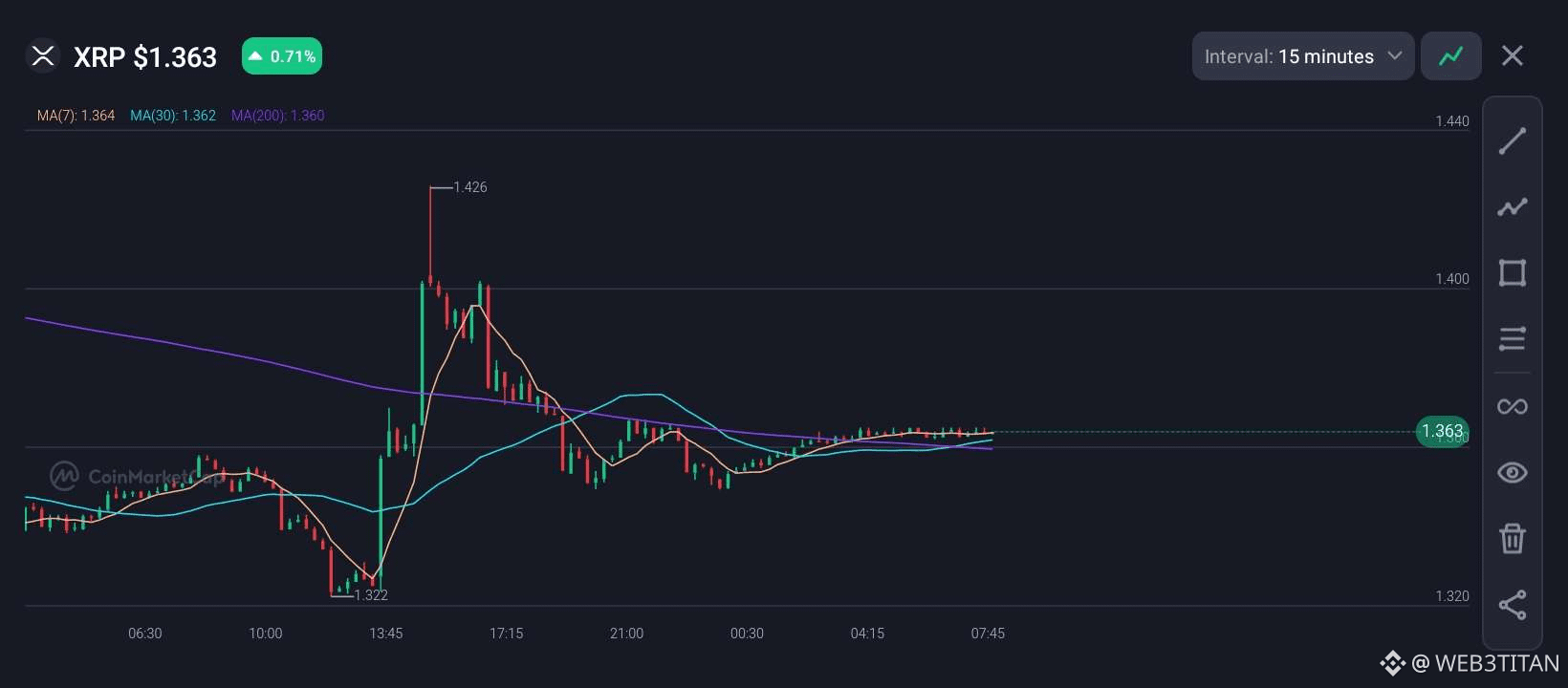
$XRP hazırda +0.71% dəyişimlə $1.363 səviyyəsində ticarət edir.
Son vaxtlar qiymət 1.322 aşağı zonaından geri çəkilmədən əvvəl 1.426-a qədər yüksəldi. Volatillikdən sonra indi dar bir diapazonda sabitləşir.
Bias: YÜKSƏLİŞ (LONG)
Niyə:
1.426-dan rədd edilməsinə baxmayaraq, qiymət sonuncu aşağı səviyyənin üstündə qalır və diapazonun sıxılmasına dair əlamətlər göstərir. Daxili struktur, cari zonada dəstək qorunduğu müddətcə konstruktiv qalır.
Giriş: $1.355 – $1.370
Stop Loss: $1.330
Mənfəət hədəfləri
TP1: $1.400
TP2: $1.430
TP3: $1.460 – $1.500
Diapazonun sıxılması treyderlərə növbəti hərəkəti gözlədikdə yaxşı imkanlar yarada bilər. @stonfi , həmin hərəkət gəldikdə dəstəklənən aktivlər arasında keçidi asanlaşdırır; onun likvidlik hovuzları isə istifadəçilərə ticarət cütlərinə likvidlik təqdim etməyə və swap fəaliyyəti nəticəsində yaranan komissiyalardan potensial olaraq gəlir əldə etməyə imkan verir.
$XRP #CPIWatch
Son artan yüksəlişdən sonra qiymət sıx şəkildə konsolidasiya edir.
$XRP hazırda +0.71% dəyişimlə $1.363 səviyyəsində ticarət edir.
Son vaxtlar qiymət 1.322 aşağı zonaından geri çəkilmədən əvvəl 1.426-a qədər yüksəldi. Volatillikdən sonra indi dar bir diapazonda sabitləşir.
Bias: YÜKSƏLİŞ (LONG)
Niyə:
1.426-dan rədd edilməsinə baxmayaraq, qiymət sonuncu aşağı səviyyənin üstündə qalır və diapazonun sıxılmasına dair əlamətlər göstərir. Daxili struktur, cari zonada dəstək qorunduğu müddətcə konstruktiv qalır.
Giriş: $1.355 – $1.370
Stop Loss: $1.330
Mənfəət hədəfləri
TP1: $1.400
TP2: $1.430
TP3: $1.460 – $1.500
Diapazonun sıxılması treyderlərə növbəti hərəkəti gözlədikdə yaxşı imkanlar yarada bilər. @STONfi DEX , həmin hərəkət gəldikdə dəstəklənən aktivlər arasında keçidi asanlaşdırır; onun likvidlik hovuzları isə istifadəçilərə ticarət cütlərinə likvidlik təqdim etməyə və swap fəaliyyəti nəticəsində yaranan komissiyalardan potensial olaraq gəlir əldə etməyə imkan verir.
$XRP #CPIWatch
$XRP hazırda +0.71% dəyişimlə $1.363 səviyyəsində ticarət edir.
Son vaxtlar qiymət 1.322 aşağı zonaından geri çəkilmədən əvvəl 1.426-a qədər yüksəldi. Volatillikdən sonra indi dar bir diapazonda sabitləşir.
Bias: YÜKSƏLİŞ (LONG)
Niyə:
1.426-dan rədd edilməsinə baxmayaraq, qiymət sonuncu aşağı səviyyənin üstündə qalır və diapazonun sıxılmasına dair əlamətlər göstərir. Daxili struktur, cari zonada dəstək qorunduğu müddətcə konstruktiv qalır.
Giriş: $1.355 – $1.370
Stop Loss: $1.330
Mənfəət hədəfləri
TP1: $1.400
TP2: $1.430
TP3: $1.460 – $1.500
Diapazonun sıxılması treyderlərə növbəti hərəkəti gözlədikdə yaxşı imkanlar yarada bilər. @STONfi DEX , həmin hərəkət gəldikdə dəstəklənən aktivlər arasında keçidi asanlaşdırır; onun likvidlik hovuzları isə istifadəçilərə ticarət cütlərinə likvidlik təqdim etməyə və swap fəaliyyəti nəticəsində yaranan komissiyalardan potensial olaraq gəlir əldə etməyə imkan verir.
$XRP #CPIWatch
1
146
·
--
Son qeyri-sabitlikdən sonra qiymət konsolidasiya edir.
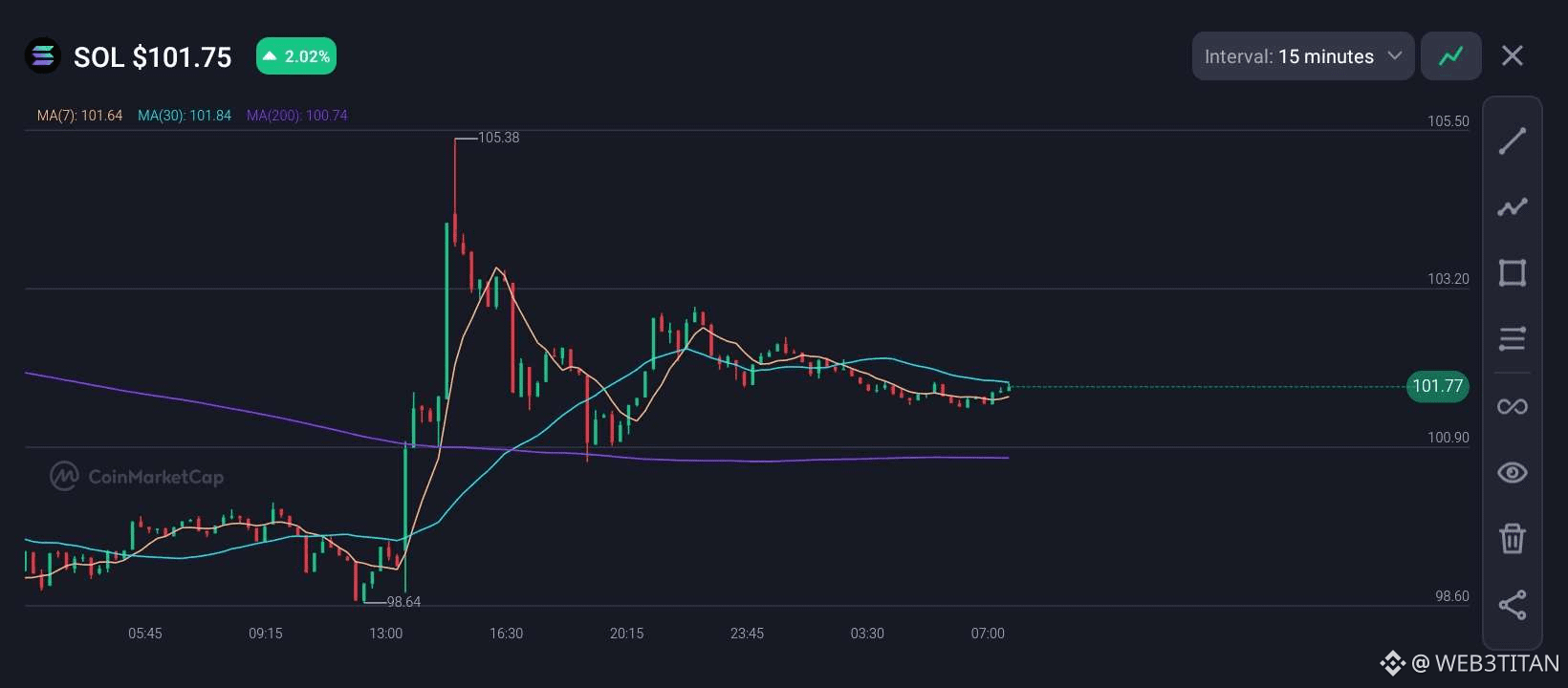
$SOL hazırda +2.02% artımdan sonra $101.75 səviyyəsində ticarət olunur.
Son vaxtlar qiymət 105.38-ə qədər yüksəlib və 98.64 aşağı qiymət zonasından geri çəkildikdən sonra geri calıb. İndi hərəkətdən sonra orta diapazonda sabitləşir.
Bias: YÜKSƏLİŞ (LONG)
Niyə:
105.38-dən rədd cavabına baxmayaraq, qiymət son aşağı səviyyənin üstündə qalır və sabitləşmə əlamətləri göstərir. Dəstək hazırkı zonada saxlanılarsa, struktur konstruktiv olaraq qalır.
Giriş: $101.20 – $102.00
Stop Loss: $99.50
Gözlənilən gəlirlər (Take Profits)
TP1: $103.50
TP2: $105.00
TP3: $107.00 – $109.00
Aktivlər arasında rotasiya edən treyderlər üçün, @stonfi on-chain swap-ları DeFi mühitini tərk etmədən asanlaşdırır. Swap-dan əlavə, onun likvidlik hovuzları həmin ticarət fəaliyyəti ilə birbaşa bağlıdır; istifadəçilərə likvidlik təmin etməklə iştirak etmək və swap-lardan potensial olaraq komissiya/qazanc əldə etmək imkanı verir.
$SOL
#CPIWatch
Son qeyri-sabitlikdən sonra qiymət konsolidasiya edir.
$SOL hazırda +2.02% artımdan sonra $101.75 səviyyəsində ticarət olunur.
Son vaxtlar qiymət 105.38-ə qədər yüksəlib və 98.64 aşağı qiymət zonasından geri çəkildikdən sonra geri calıb. İndi hərəkətdən sonra orta diapazonda sabitləşir.
Bias: YÜKSƏLİŞ (LONG)
Niyə:
105.38-dən rədd cavabına baxmayaraq, qiymət son aşağı səviyyənin üstündə qalır və sabitləşmə əlamətləri göstərir. Dəstək hazırkı zonada saxlanılarsa, struktur konstruktiv olaraq qalır.
Giriş: $101.20 – $102.00
Stop Loss: $99.50
Gözlənilən gəlirlər (Take Profits)
TP1: $103.50
TP2: $105.00
TP3: $107.00 – $109.00
Aktivlər arasında rotasiya edən treyderlər üçün, @STONfi DEX on-chain swap-ları DeFi mühitini tərk etmədən asanlaşdırır. Swap-dan əlavə, onun likvidlik hovuzları həmin ticarət fəaliyyəti ilə birbaşa bağlıdır; istifadəçilərə likvidlik təmin etməklə iştirak etmək və swap-lardan potensial olaraq komissiya/qazanc əldə etmək imkanı verir.
$SOL
#CPIWatch
$SOL hazırda +2.02% artımdan sonra $101.75 səviyyəsində ticarət olunur.
Son vaxtlar qiymət 105.38-ə qədər yüksəlib və 98.64 aşağı qiymət zonasından geri çəkildikdən sonra geri calıb. İndi hərəkətdən sonra orta diapazonda sabitləşir.
Bias: YÜKSƏLİŞ (LONG)
Niyə:
105.38-dən rədd cavabına baxmayaraq, qiymət son aşağı səviyyənin üstündə qalır və sabitləşmə əlamətləri göstərir. Dəstək hazırkı zonada saxlanılarsa, struktur konstruktiv olaraq qalır.
Giriş: $101.20 – $102.00
Stop Loss: $99.50
Gözlənilən gəlirlər (Take Profits)
TP1: $103.50
TP2: $105.00
TP3: $107.00 – $109.00
Aktivlər arasında rotasiya edən treyderlər üçün, @STONfi DEX on-chain swap-ları DeFi mühitini tərk etmədən asanlaşdırır. Swap-dan əlavə, onun likvidlik hovuzları həmin ticarət fəaliyyəti ilə birbaşa bağlıdır; istifadəçilərə likvidlik təmin etməklə iştirak etmək və swap-lardan potensial olaraq komissiya/qazanc əldə etmək imkanı verir.
$SOL
#CPIWatch
1
63
·
--
Tərcüməyə bax
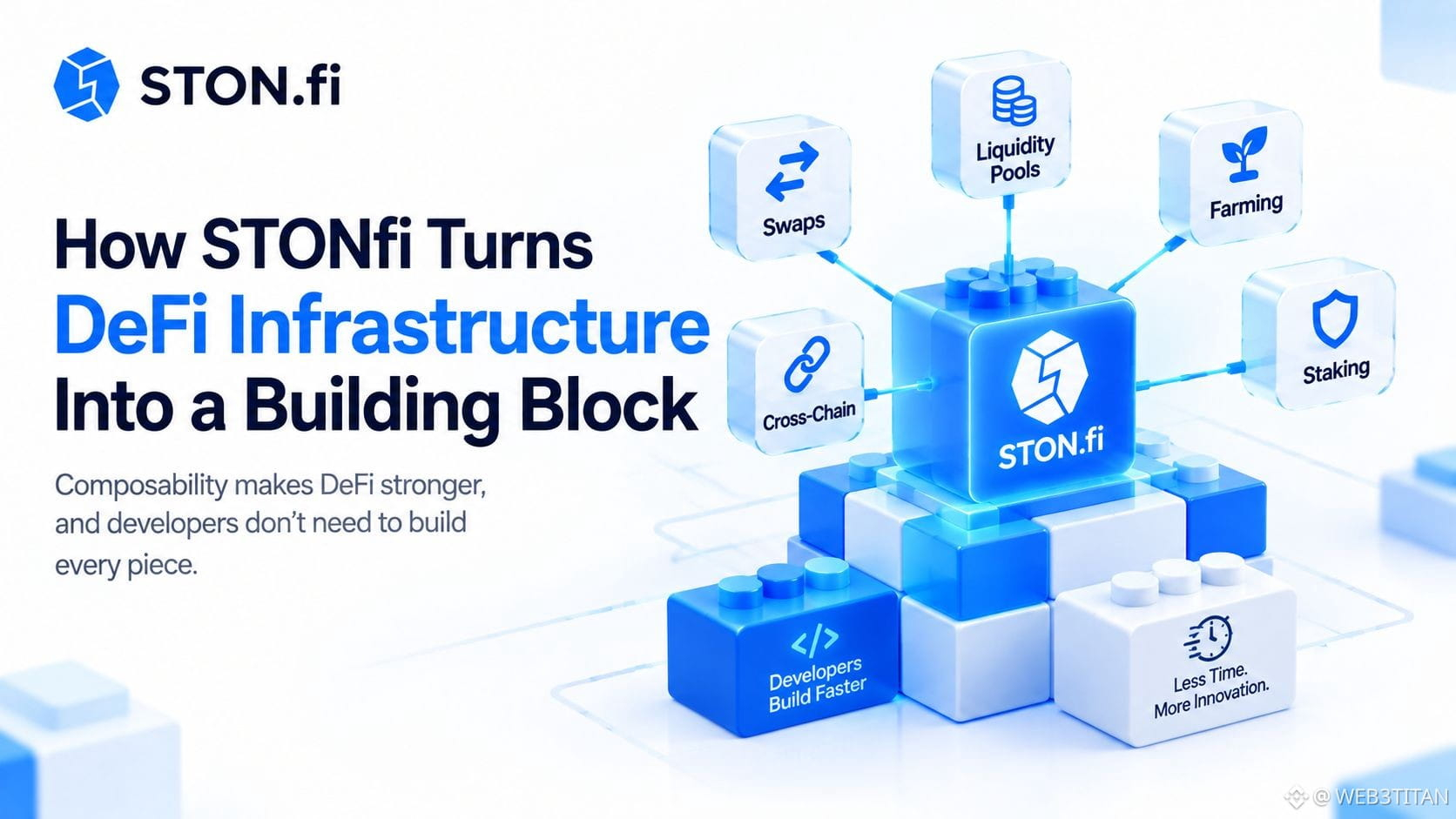
How STONfi Turns DeFi Infrastructure Into a Building Block
One thing that stands out about DeFi is that developers don't always need to build every component from scratch.
Existing infrastructure can become a building block for new applications.
WHAT COMPOSABILITY MEANS
Composability means different DeFi components can work together.
A developer building a trading app doesn't necessarily need to create their own liquidity pools, routing system, or swap interface.
They can build on existing infrastructure and focus on what makes their application different.
STONfi AS INFRASTRUCTURE
STONfi provides trading infrastructure developers can build around.
Through its API, SDK, Widget, and liquidity infrastructure, developers can connect swapping functionality to their applications without recreating the entire trading stack.
WHY THIS MATTERS
Building every trading component independently takes time and resources.
With composable infrastructure, developers can focus more on their product while relying on existing systems for core DeFi functionality.
A wallet, Telegram application, portfolio tool, or trading interface can integrate swap functionality without becoming a DEX itself.
THE BIGGER PICTURE
This is how DeFi infrastructure becomes more powerful.
Its value isn't only in the original application. It's also in what other developers can build on top of it.
More reusable infrastructure can lead to more applications, use cases, and a more connected ecosystem.
MY TAKE
Developers shouldn't have to rebuild the same trading infrastructure every time they create a new product.
When infrastructure becomes a building block, DeFi applications can focus less on rebuilding the foundation and more on creating something new.
$GRAM $SOL
#CPIWatch
How STONfi Turns DeFi Infrastructure Into a Building Block
One thing that stands out about DeFi is that developers don't always need to build every component from scratch.
Existing infrastructure can become a building block for new applications.
WHAT COMPOSABILITY MEANS
Composability means different DeFi components can work together.
A developer building a trading app doesn't necessarily need to create their own liquidity pools, routing system, or swap interface.
They can build on existing infrastructure and focus on what makes their application different.
STONfi AS INFRASTRUCTURE
STONfi provides trading infrastructure developers can build around.
Through its API, SDK, Widget, and liquidity infrastructure, developers can connect swapping functionality to their applications without recreating the entire trading stack.
WHY THIS MATTERS
Building every trading component independently takes time and resources.
With composable infrastructure, developers can focus more on their product while relying on existing systems for core DeFi functionality.
A wallet, Telegram application, portfolio tool, or trading interface can integrate swap functionality without becoming a DEX itself.
THE BIGGER PICTURE
This is how DeFi infrastructure becomes more powerful.
Its value isn't only in the original application. It's also in what other developers can build on top of it.
More reusable infrastructure can lead to more applications, use cases, and a more connected ecosystem.
MY TAKE
Developers shouldn't have to rebuild the same trading infrastructure every time they create a new product.
When infrastructure becomes a building block, DeFi applications can focus less on rebuilding the foundation and more on creating something new.
$GRAM $SOL
#CPIWatch
One thing that stands out about DeFi is that developers don't always need to build every component from scratch.
Existing infrastructure can become a building block for new applications.
WHAT COMPOSABILITY MEANS
Composability means different DeFi components can work together.
A developer building a trading app doesn't necessarily need to create their own liquidity pools, routing system, or swap interface.
They can build on existing infrastructure and focus on what makes their application different.
STONfi AS INFRASTRUCTURE
STONfi provides trading infrastructure developers can build around.
Through its API, SDK, Widget, and liquidity infrastructure, developers can connect swapping functionality to their applications without recreating the entire trading stack.
WHY THIS MATTERS
Building every trading component independently takes time and resources.
With composable infrastructure, developers can focus more on their product while relying on existing systems for core DeFi functionality.
A wallet, Telegram application, portfolio tool, or trading interface can integrate swap functionality without becoming a DEX itself.
THE BIGGER PICTURE
This is how DeFi infrastructure becomes more powerful.
Its value isn't only in the original application. It's also in what other developers can build on top of it.
More reusable infrastructure can lead to more applications, use cases, and a more connected ecosystem.
MY TAKE
Developers shouldn't have to rebuild the same trading infrastructure every time they create a new product.
When infrastructure becomes a building block, DeFi applications can focus less on rebuilding the foundation and more on creating something new.
$GRAM $SOL
#CPIWatch
1
193
·
--
Tərcüməyə bax
Price is consolidating after the recent volatility.
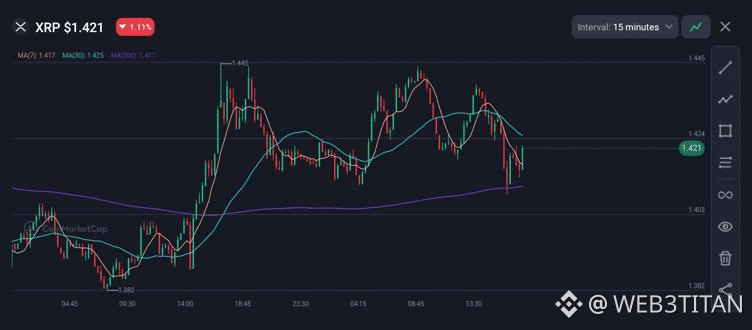
$XRP is currently trading at $1.421 after a -1.11% move.
Recently, price pushed up to a high of 1.445 before facing selling pressure and pulling back. It is now stabilizing in the mid-range after the move, still holding above the 1.382 low.
Bias: UPTREND (LONG)
Why:
Despite the rejection from 1.445, the broader structure remains higher from the lows. Price is holding the current zone with limited breakdown, keeping the short-term bias constructive as long as support holds.
Entry: $1.410 – $1.425
Stop Loss: $1.385
Take Profits
TP1: $1.450
TP2: $1.480
TP3: $1.510 – $1.550
When the market is moving between different zones, @stonfi is useful for quickly swapping between supported assets without leaving the TON DeFi ecosystem. I also like that there are liquidity pools where users can provide assets and potentially earn a share of swap fees, with additional opportunities available through eligible farms.
$XRP
#BitcoinSurpasses$79K
Price is consolidating after the recent volatility.
$XRP is currently trading at $1.421 after a -1.11% move.
Recently, price pushed up to a high of 1.445 before facing selling pressure and pulling back. It is now stabilizing in the mid-range after the move, still holding above the 1.382 low.
Bias: UPTREND (LONG)
Why:
Despite the rejection from 1.445, the broader structure remains higher from the lows. Price is holding the current zone with limited breakdown, keeping the short-term bias constructive as long as support holds.
Entry: $1.410 – $1.425
Stop Loss: $1.385
Take Profits
TP1: $1.450
TP2: $1.480
TP3: $1.510 – $1.550
When the market is moving between different zones, @STONfi DEX is useful for quickly swapping between supported assets without leaving the TON DeFi ecosystem. I also like that there are liquidity pools where users can provide assets and potentially earn a share of swap fees, with additional opportunities available through eligible farms.
$XRP
#BitcoinSurpasses$79K
$XRP is currently trading at $1.421 after a -1.11% move.
Recently, price pushed up to a high of 1.445 before facing selling pressure and pulling back. It is now stabilizing in the mid-range after the move, still holding above the 1.382 low.
Bias: UPTREND (LONG)
Why:
Despite the rejection from 1.445, the broader structure remains higher from the lows. Price is holding the current zone with limited breakdown, keeping the short-term bias constructive as long as support holds.
Entry: $1.410 – $1.425
Stop Loss: $1.385
Take Profits
TP1: $1.450
TP2: $1.480
TP3: $1.510 – $1.550
When the market is moving between different zones, @STONfi DEX is useful for quickly swapping between supported assets without leaving the TON DeFi ecosystem. I also like that there are liquidity pools where users can provide assets and potentially earn a share of swap fees, with additional opportunities available through eligible farms.
$XRP
#BitcoinSurpasses$79K
1
35
·
--
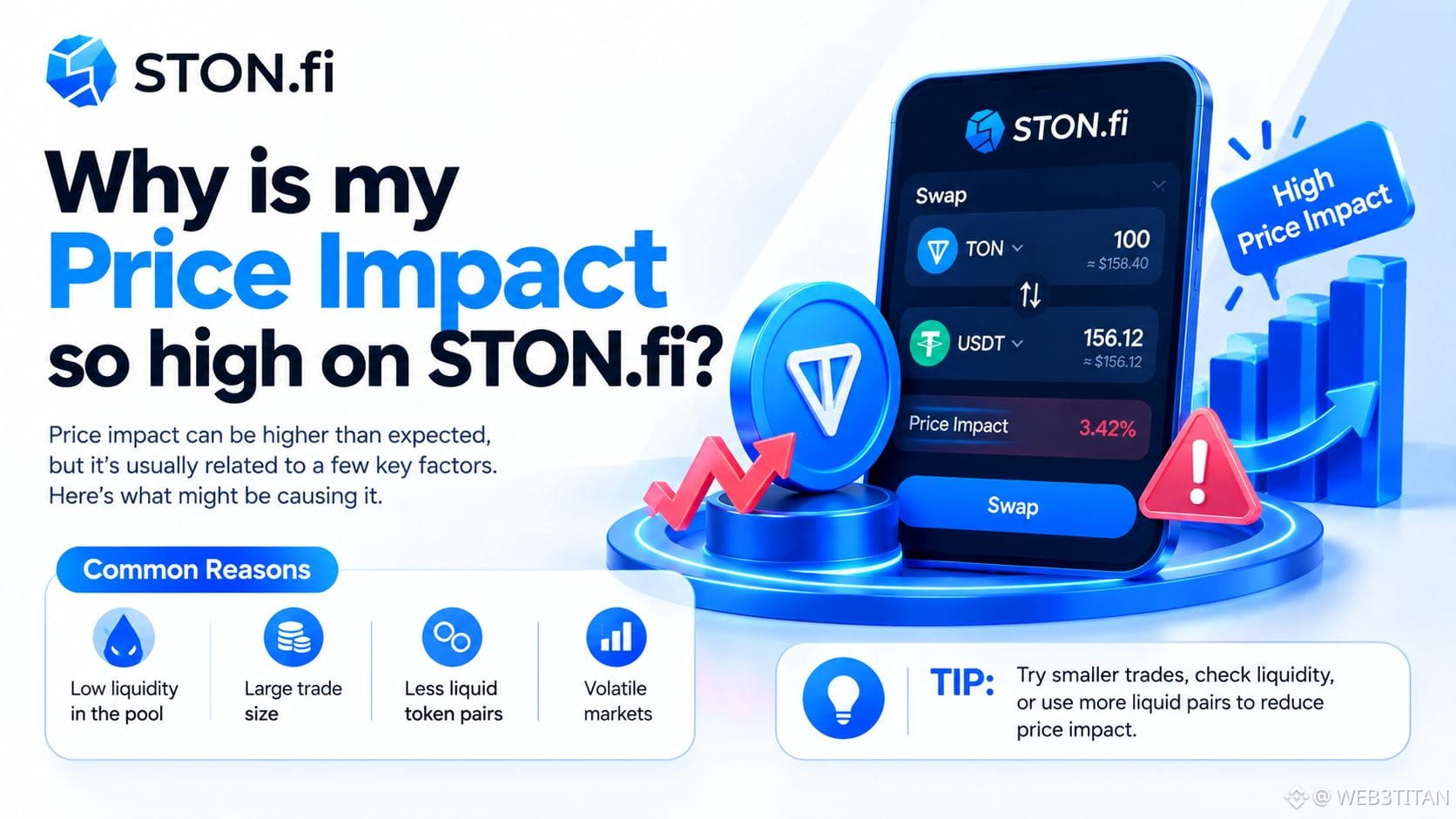
STONfi-də mənim qiymət təsirim niyə bu qədər yüksəkdir?
Mübadilə (swap) zamanı yüksək qiymət təsiri çaşdırıcı ola bilər. Adətən bu, ticarət həcminizlə həmin marşrut üçün mövcud olan likvidlik arasındakı əlaqədən qaynaqlanır.
TİCARƏT HƏCİMİNİZİ YOXLAYIN
Əvvəl baxmalı olduğunuz şey swap-in ölçüsüdür.
Daha böyük ticarət mövcud likvidliyin daha çox hissəsini sərf edə bilər və icra zamanı hovuzun (pool) qiymətinin daha da dəyişməsinə səbəb olur.
HOVUZUN LİQVIDLİYİNİ YOXLAYIN
Pool TVL-i və token balansları da önəmlidir.
Likvidliyi məhdud olan hovuz daha böyük ticarətləri səmərəli idarə etmək üçün daha az imkan göstərə bilər. Həmçinin, balanssız hovuz cütlüyün (pair) bir tərəfi üçün daha az əlverişli icra ilə nəticələnə bilər.
NİYƏ İLLİQUID (LIKVID OLMAYAN) HOVUZLAR VACİBDİR
İki hovuz eyni token cütünü dəstəkləyə bilər, amma fərqli qiymət təsirləri yarada bilər.
Daha dərin və daha balanslı hovuz adətən ticarətlər üçün daha çox likvidlik təqdim edir; dayaz hovuz isə eyni əməliyyat ölçüsündən daha böyük qiymət dəyişmələri yaşaya bilər.
ÖNİZLƏMƏNİ MÜQAYİSƏ EDİN
Təsdiq etməzdən əvvəl, ticarət həcmi daha kiçik olduqda və ya başqa mövcud marşrut göstərildikdə nə baş verdiyini müqayisə edə bilərsiniz.
Məqsəd avtomatik olaraq bir variantı seçmək deyil, ticarət həcmi ilə mövcud likvidliyin verilən nəticəyə (quote) necə təsir etdiyini anlamaqdır.
NƏYİ YOXLAMALISIN
Təsdiq etməzdən əvvəl nəzərdən keçirin:
Qiymət təsiri
Gözlənilən çıxış (expected output)
Mövcud likvidlik
Marşrut
Minimum alınan (minimum received)
MƏNİM FİKRİM
Yüksək qiymət təsiri mütləq STONfi ilə bağlı problem demək deyil. Bu, ticarətin mövcud likvidliklə müqayisədə böyük olduğunu göstərə bilər.
Bu əlaqəni anlamaq swap önizləməsini daha faydalı edir və təsdiq etməzdən əvvəl potensial icra problemlərini görməyə kömək edir.
$XRP $PIXEL
#BitcoinSurpasses$79K
STONfi-də mənim qiymət təsirim niyə bu qədər yüksəkdir?
Mübadilə (swap) zamanı yüksək qiymət təsiri çaşdırıcı ola bilər. Adətən bu, ticarət həcminizlə həmin marşrut üçün mövcud olan likvidlik arasındakı əlaqədən qaynaqlanır.
TİCARƏT HƏCİMİNİZİ YOXLAYIN
Əvvəl baxmalı olduğunuz şey swap-in ölçüsüdür.
Daha böyük ticarət mövcud likvidliyin daha çox hissəsini sərf edə bilər və icra zamanı hovuzun (pool) qiymətinin daha da dəyişməsinə səbəb olur.
HOVUZUN LİQVIDLİYİNİ YOXLAYIN
Pool TVL-i və token balansları da önəmlidir.
Likvidliyi məhdud olan hovuz daha böyük ticarətləri səmərəli idarə etmək üçün daha az imkan göstərə bilər. Həmçinin, balanssız hovuz cütlüyün (pair) bir tərəfi üçün daha az əlverişli icra ilə nəticələnə bilər.
NİYƏ İLLİQUID (LIKVID OLMAYAN) HOVUZLAR VACİBDİR
İki hovuz eyni token cütünü dəstəkləyə bilər, amma fərqli qiymət təsirləri yarada bilər.
Daha dərin və daha balanslı hovuz adətən ticarətlər üçün daha çox likvidlik təqdim edir; dayaz hovuz isə eyni əməliyyat ölçüsündən daha böyük qiymət dəyişmələri yaşaya bilər.
ÖNİZLƏMƏNİ MÜQAYİSƏ EDİN
Təsdiq etməzdən əvvəl, ticarət həcmi daha kiçik olduqda və ya başqa mövcud marşrut göstərildikdə nə baş verdiyini müqayisə edə bilərsiniz.
Məqsəd avtomatik olaraq bir variantı seçmək deyil, ticarət həcmi ilə mövcud likvidliyin verilən nəticəyə (quote) necə təsir etdiyini anlamaqdır.
NƏYİ YOXLAMALISIN
Təsdiq etməzdən əvvəl nəzərdən keçirin:
Qiymət təsiri
Gözlənilən çıxış (expected output)
Mövcud likvidlik
Marşrut
Minimum alınan (minimum received)
MƏNİM FİKRİM
Yüksək qiymət təsiri mütləq STONfi ilə bağlı problem demək deyil. Bu, ticarətin mövcud likvidliklə müqayisədə böyük olduğunu göstərə bilər.
Bu əlaqəni anlamaq swap önizləməsini daha faydalı edir və təsdiq etməzdən əvvəl potensial icra problemlərini görməyə kömək edir.
$XRP $PIXEL
#BitcoinSurpasses$79K
Mübadilə (swap) zamanı yüksək qiymət təsiri çaşdırıcı ola bilər. Adətən bu, ticarət həcminizlə həmin marşrut üçün mövcud olan likvidlik arasındakı əlaqədən qaynaqlanır.
TİCARƏT HƏCİMİNİZİ YOXLAYIN
Əvvəl baxmalı olduğunuz şey swap-in ölçüsüdür.
Daha böyük ticarət mövcud likvidliyin daha çox hissəsini sərf edə bilər və icra zamanı hovuzun (pool) qiymətinin daha da dəyişməsinə səbəb olur.
HOVUZUN LİQVIDLİYİNİ YOXLAYIN
Pool TVL-i və token balansları da önəmlidir.
Likvidliyi məhdud olan hovuz daha böyük ticarətləri səmərəli idarə etmək üçün daha az imkan göstərə bilər. Həmçinin, balanssız hovuz cütlüyün (pair) bir tərəfi üçün daha az əlverişli icra ilə nəticələnə bilər.
NİYƏ İLLİQUID (LIKVID OLMAYAN) HOVUZLAR VACİBDİR
İki hovuz eyni token cütünü dəstəkləyə bilər, amma fərqli qiymət təsirləri yarada bilər.
Daha dərin və daha balanslı hovuz adətən ticarətlər üçün daha çox likvidlik təqdim edir; dayaz hovuz isə eyni əməliyyat ölçüsündən daha böyük qiymət dəyişmələri yaşaya bilər.
ÖNİZLƏMƏNİ MÜQAYİSƏ EDİN
Təsdiq etməzdən əvvəl, ticarət həcmi daha kiçik olduqda və ya başqa mövcud marşrut göstərildikdə nə baş verdiyini müqayisə edə bilərsiniz.
Məqsəd avtomatik olaraq bir variantı seçmək deyil, ticarət həcmi ilə mövcud likvidliyin verilən nəticəyə (quote) necə təsir etdiyini anlamaqdır.
NƏYİ YOXLAMALISIN
Təsdiq etməzdən əvvəl nəzərdən keçirin:
Qiymət təsiri
Gözlənilən çıxış (expected output)
Mövcud likvidlik
Marşrut
Minimum alınan (minimum received)
MƏNİM FİKRİM
Yüksək qiymət təsiri mütləq STONfi ilə bağlı problem demək deyil. Bu, ticarətin mövcud likvidliklə müqayisədə böyük olduğunu göstərə bilər.
Bu əlaqəni anlamaq swap önizləməsini daha faydalı edir və təsdiq etməzdən əvvəl potensial icra problemlərini görməyə kömək edir.
$XRP $PIXEL
#BitcoinSurpasses$79K
1
205
·
--
Tərcüməyə bax
What Is Price Impact on STONfi?
When making a swap on STONfi, you may notice price impact shown in the swap preview. But what does it actually mean?
WHAT IS PRICE IMPACT?
Price impact is the effect your own trade has on the pool's price.
The larger your trade is compared with the available liquidity, the more the pool price can move while your transaction is being executed.
WHY POOL DEPTH MATTERS
Imagine a pool with limited liquidity.
A small trade may barely affect the pool price. A much larger trade takes a bigger portion of the available liquidity, causing a greater price impact.
That's why two swaps involving the same token pair can have very different price impact percentages.
PRICE IMPACT VS SLIPPAGE
These terms are related but not identical.
Price impact comes from your trade moving the pool price.
Slippage is the difference between the expected price and the actual execution price.
Understanding both helps you evaluate the real cost of a swap.
CHECK BEFORE SWAPPING
The swap preview can show price impact before you confirm the transaction.
If the percentage looks unusually high, it may be worth considering a smaller trade or checking whether another route offers better execution.
MY TAKE
Price impact is one of those details that's easy to overlook.
A small trade relative to pool depth might have minimal impact, while a larger trade can move the price significantly.
Checking it before confirming a swap gives you a clearer picture of what your trade could actually cost.
$GRAM $NEAR
#BitcoinSurpasses$79K
What Is Price Impact on STONfi?
When making a swap on STONfi, you may notice price impact shown in the swap preview. But what does it actually mean?
WHAT IS PRICE IMPACT?
Price impact is the effect your own trade has on the pool's price.
The larger your trade is compared with the available liquidity, the more the pool price can move while your transaction is being executed.
WHY POOL DEPTH MATTERS
Imagine a pool with limited liquidity.
A small trade may barely affect the pool price. A much larger trade takes a bigger portion of the available liquidity, causing a greater price impact.
That's why two swaps involving the same token pair can have very different price impact percentages.
PRICE IMPACT VS SLIPPAGE
These terms are related but not identical.
Price impact comes from your trade moving the pool price.
Slippage is the difference between the expected price and the actual execution price.
Understanding both helps you evaluate the real cost of a swap.
CHECK BEFORE SWAPPING
The swap preview can show price impact before you confirm the transaction.
If the percentage looks unusually high, it may be worth considering a smaller trade or checking whether another route offers better execution.
MY TAKE
Price impact is one of those details that's easy to overlook.
A small trade relative to pool depth might have minimal impact, while a larger trade can move the price significantly.
Checking it before confirming a swap gives you a clearer picture of what your trade could actually cost.
$GRAM $NEAR
#BitcoinSurpasses$79K
When making a swap on STONfi, you may notice price impact shown in the swap preview. But what does it actually mean?
WHAT IS PRICE IMPACT?
Price impact is the effect your own trade has on the pool's price.
The larger your trade is compared with the available liquidity, the more the pool price can move while your transaction is being executed.
WHY POOL DEPTH MATTERS
Imagine a pool with limited liquidity.
A small trade may barely affect the pool price. A much larger trade takes a bigger portion of the available liquidity, causing a greater price impact.
That's why two swaps involving the same token pair can have very different price impact percentages.
PRICE IMPACT VS SLIPPAGE
These terms are related but not identical.
Price impact comes from your trade moving the pool price.
Slippage is the difference between the expected price and the actual execution price.
Understanding both helps you evaluate the real cost of a swap.
CHECK BEFORE SWAPPING
The swap preview can show price impact before you confirm the transaction.
If the percentage looks unusually high, it may be worth considering a smaller trade or checking whether another route offers better execution.
MY TAKE
Price impact is one of those details that's easy to overlook.
A small trade relative to pool depth might have minimal impact, while a larger trade can move the price significantly.
Checking it before confirming a swap gives you a clearer picture of what your trade could actually cost.
$GRAM $NEAR
#BitcoinSurpasses$79K
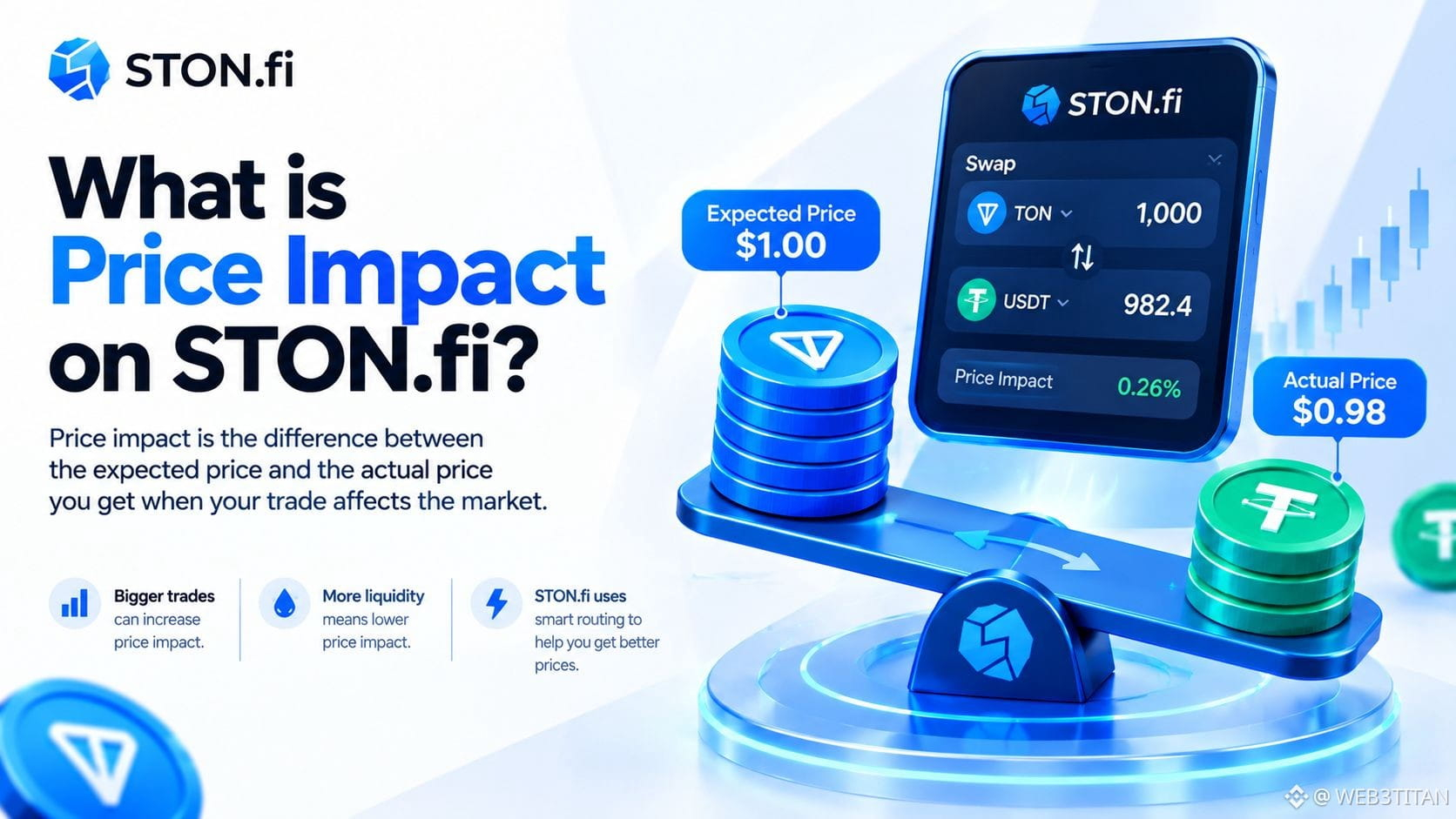
1
150
·
--
Tərcüməyə bax
Cross Chain Swap vs Bridge: What’s the Difference?
Moving assets between blockchains can happen in different ways. Two common approaches are bridges and cross chain swaps, but they don't work exactly the same way.
WHAT IS A BRIDGE?
A bridge is designed to move an asset from one blockchain to another.
Depending on the bridge architecture, the original asset may be locked or held while a corresponding wrapped or bridged version is created on the destination chain.
WHAT IS A CROSS CHAIN SWAP?
A cross chain swap lets you exchange an asset on one network for another asset on a different network.
Instead of simply moving the same asset, the destination side can provide a different native or supported asset.
For example, you could swap an asset on TON for an asset on another network.
THE KEY DIFFERENCES
Bridge: Move an asset between networks, often involving locking and representing it on the destination.
Cross chain swap: Exchange one asset for another across different networks.
The two models can also differ in custody assumptions, route complexity, fees, and how failed transactions or refunds are handled.
WHERE OMNISTON FITS
Omniston focuses on cross chain execution and liquidity aggregation. It can coordinate routes and liquidity sources to help users exchange assets across supported networks.
That doesn't make bridges useless.
Bridges remain useful when the goal is specifically to transfer an asset between networks, while cross chain swaps can be more convenient when you want a different asset on the destination chain.
MY TAKE
The better option depends on what you're trying to accomplish.
If you need to move the same asset, a bridge may make sense. If you want to exchange one asset for another across networks, a cross chain swap can offer a different approach.
Understanding the architecture first makes it easier to choose the right tool.
$GRAM $SOPH
#SaudiHaltsSouthernEnergySitesAfterAttacks
Cross Chain Swap vs Bridge: What’s the Difference?
Moving assets between blockchains can happen in different ways. Two common approaches are bridges and cross chain swaps, but they don't work exactly the same way.
WHAT IS A BRIDGE?
A bridge is designed to move an asset from one blockchain to another.
Depending on the bridge architecture, the original asset may be locked or held while a corresponding wrapped or bridged version is created on the destination chain.
WHAT IS A CROSS CHAIN SWAP?
A cross chain swap lets you exchange an asset on one network for another asset on a different network.
Instead of simply moving the same asset, the destination side can provide a different native or supported asset.
For example, you could swap an asset on TON for an asset on another network.
THE KEY DIFFERENCES
Bridge: Move an asset between networks, often involving locking and representing it on the destination.
Cross chain swap: Exchange one asset for another across different networks.
The two models can also differ in custody assumptions, route complexity, fees, and how failed transactions or refunds are handled.
WHERE OMNISTON FITS
Omniston focuses on cross chain execution and liquidity aggregation. It can coordinate routes and liquidity sources to help users exchange assets across supported networks.
That doesn't make bridges useless.
Bridges remain useful when the goal is specifically to transfer an asset between networks, while cross chain swaps can be more convenient when you want a different asset on the destination chain.
MY TAKE
The better option depends on what you're trying to accomplish.
If you need to move the same asset, a bridge may make sense. If you want to exchange one asset for another across networks, a cross chain swap can offer a different approach.
Understanding the architecture first makes it easier to choose the right tool.
$GRAM $SOPH
#SaudiHaltsSouthernEnergySitesAfterAttacks
Moving assets between blockchains can happen in different ways. Two common approaches are bridges and cross chain swaps, but they don't work exactly the same way.
WHAT IS A BRIDGE?
A bridge is designed to move an asset from one blockchain to another.
Depending on the bridge architecture, the original asset may be locked or held while a corresponding wrapped or bridged version is created on the destination chain.
WHAT IS A CROSS CHAIN SWAP?
A cross chain swap lets you exchange an asset on one network for another asset on a different network.
Instead of simply moving the same asset, the destination side can provide a different native or supported asset.
For example, you could swap an asset on TON for an asset on another network.
THE KEY DIFFERENCES
Bridge: Move an asset between networks, often involving locking and representing it on the destination.
Cross chain swap: Exchange one asset for another across different networks.
The two models can also differ in custody assumptions, route complexity, fees, and how failed transactions or refunds are handled.
WHERE OMNISTON FITS
Omniston focuses on cross chain execution and liquidity aggregation. It can coordinate routes and liquidity sources to help users exchange assets across supported networks.
That doesn't make bridges useless.
Bridges remain useful when the goal is specifically to transfer an asset between networks, while cross chain swaps can be more convenient when you want a different asset on the destination chain.
MY TAKE
The better option depends on what you're trying to accomplish.
If you need to move the same asset, a bridge may make sense. If you want to exchange one asset for another across networks, a cross chain swap can offer a different approach.
Understanding the architecture first makes it easier to choose the right tool.
$GRAM $SOPH
#SaudiHaltsSouthernEnergySitesAfterAttacks
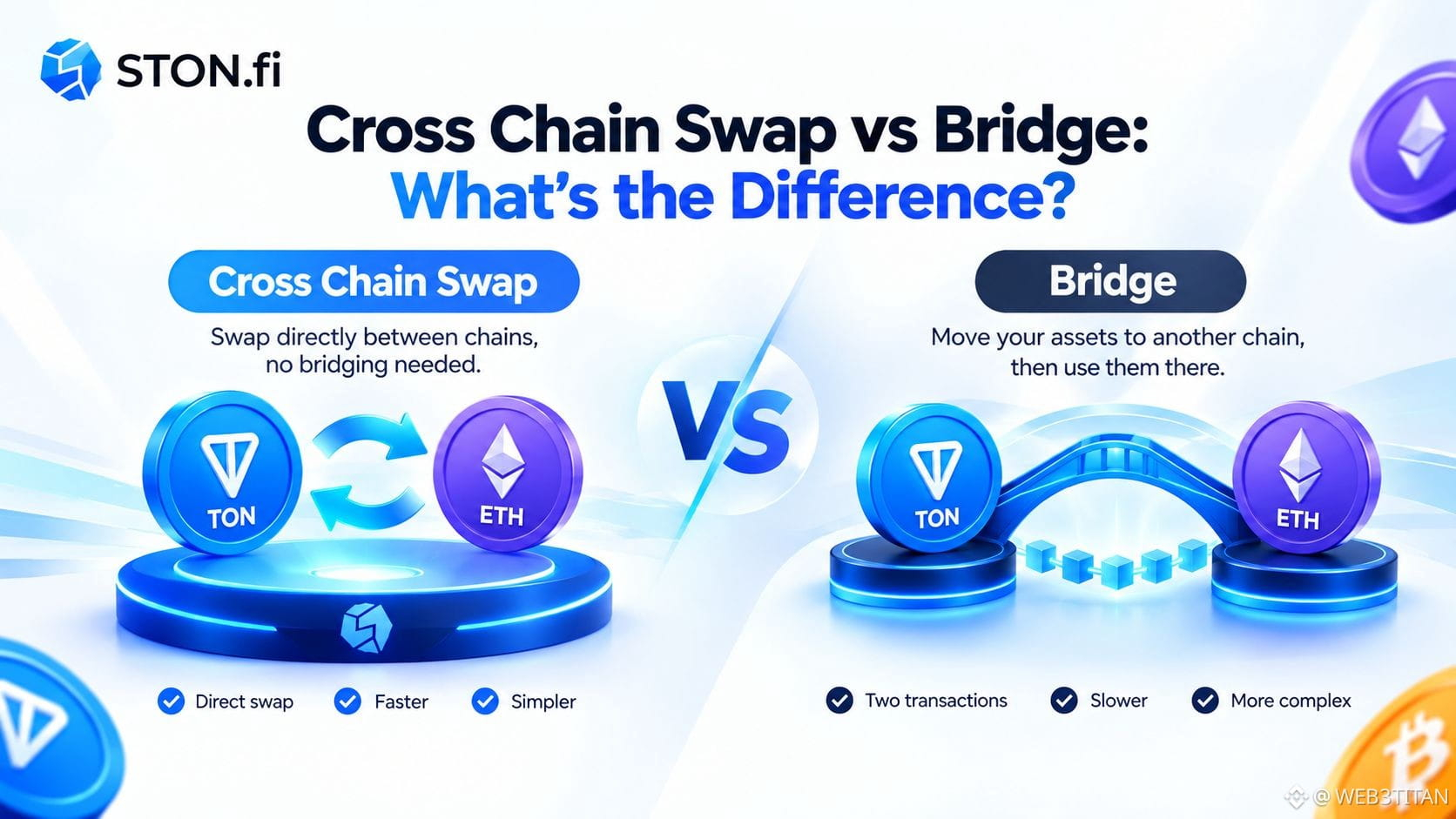
1
47
·
--
Tərcüməyə bax
What Changes When a STONfi Wallet Becomes a Multi Asset Portfolio?
A wallet can start with just a few tokens, but once you hold different assets, you're building a portfolio.
With STONfi, combining crypto assets and xStocks creates more options for managing that portfolio.
FROM HOLDING TO PORTFOLIO BUILDING
Holding only one or two tokens means your portfolio depends heavily on their price movements.
Adding different assets can spread that exposure.
You could hold crypto alongside xStocks, giving your portfolio exposure to different markets instead of relying entirely on crypto.
WHY DIVERSIFICATION MATTERS
Diversification helps reduce dependence on a single asset or market.
Crypto can offer growth potential but comes with high volatility, while xStocks provide exposure to traditional companies and markets.
REBALANCING
Building a portfolio doesn't stop after buying.
As prices change, your allocations change too. Rebalancing means adjusting your holdings to return to your preferred allocation.
MY TAKE
A multi asset wallet changes how you think about DeFi.
You're no longer just asking what to swap into. You're also thinking about how much to hold, how diversified you are, and when to rebalance.
For me, that's when a wallet starts becoming a portfolio management tool rather than just a place to store assets.
$GRAM $XRP
#SaudiHaltsSouthernEnergySitesAfterAttacks
What Changes When a STONfi Wallet Becomes a Multi Asset Portfolio?
A wallet can start with just a few tokens, but once you hold different assets, you're building a portfolio.
With STONfi, combining crypto assets and xStocks creates more options for managing that portfolio.
FROM HOLDING TO PORTFOLIO BUILDING
Holding only one or two tokens means your portfolio depends heavily on their price movements.
Adding different assets can spread that exposure.
You could hold crypto alongside xStocks, giving your portfolio exposure to different markets instead of relying entirely on crypto.
WHY DIVERSIFICATION MATTERS
Diversification helps reduce dependence on a single asset or market.
Crypto can offer growth potential but comes with high volatility, while xStocks provide exposure to traditional companies and markets.
REBALANCING
Building a portfolio doesn't stop after buying.
As prices change, your allocations change too. Rebalancing means adjusting your holdings to return to your preferred allocation.
MY TAKE
A multi asset wallet changes how you think about DeFi.
You're no longer just asking what to swap into. You're also thinking about how much to hold, how diversified you are, and when to rebalance.
For me, that's when a wallet starts becoming a portfolio management tool rather than just a place to store assets.
$GRAM $XRP
#SaudiHaltsSouthernEnergySitesAfterAttacks
A wallet can start with just a few tokens, but once you hold different assets, you're building a portfolio.
With STONfi, combining crypto assets and xStocks creates more options for managing that portfolio.
FROM HOLDING TO PORTFOLIO BUILDING
Holding only one or two tokens means your portfolio depends heavily on their price movements.
Adding different assets can spread that exposure.
You could hold crypto alongside xStocks, giving your portfolio exposure to different markets instead of relying entirely on crypto.
WHY DIVERSIFICATION MATTERS
Diversification helps reduce dependence on a single asset or market.
Crypto can offer growth potential but comes with high volatility, while xStocks provide exposure to traditional companies and markets.
REBALANCING
Building a portfolio doesn't stop after buying.
As prices change, your allocations change too. Rebalancing means adjusting your holdings to return to your preferred allocation.
MY TAKE
A multi asset wallet changes how you think about DeFi.
You're no longer just asking what to swap into. You're also thinking about how much to hold, how diversified you are, and when to rebalance.
For me, that's when a wallet starts becoming a portfolio management tool rather than just a place to store assets.
$GRAM $XRP
#SaudiHaltsSouthernEnergySitesAfterAttacks
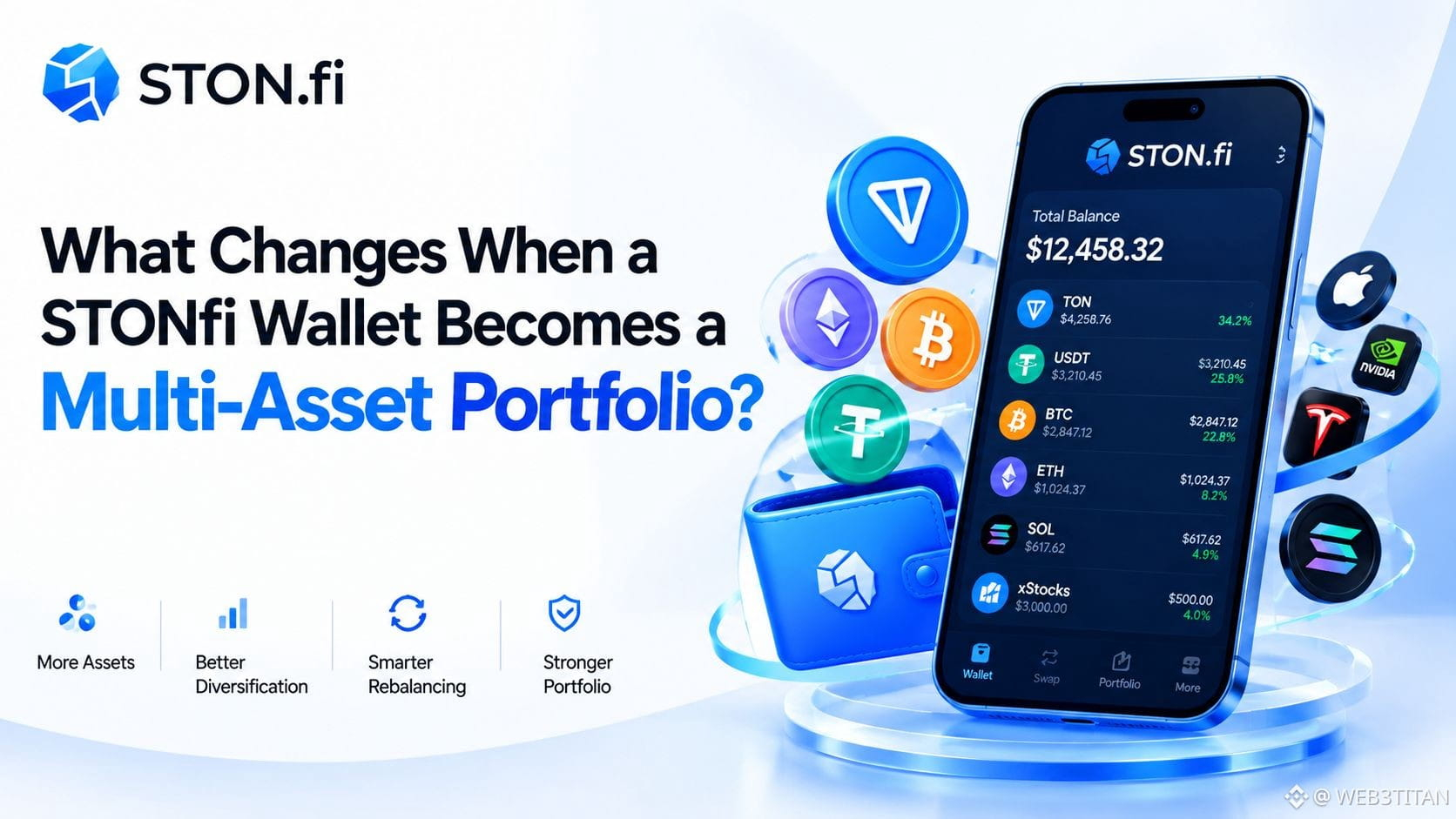
1
228
Daha çox kontent araşdırmaq üçün daxil olun
Binance Square-də qlobal kriptovalyuta istifadəçilərinə qoşulun
⚡️ Kriptovalyuta haqqında ən son və faydalı məlumatları əldə edin.
💬 Dünyanın ən böyük kriptovalyuta birjası tərəfindən etibar edilir.
👍 Doğrulanmış yaradıcılardan gələn real məlumatları kəşf edin.
E-poçt/Telefon nömrəsi
Trenddə olan mövzular
EarningsSeason
51,066 baxış
Müzakirə edir: 477
Earnings Season: Micron Q4 Nəticələri — Artım yönümlüdür, yoxsa düşüş?
Binance Square Official
·90 bəyənmə
·132.9k baxış
JapanFSABacksFourthStablecoinTradeSettlementPilot
716 baxış
Müzakirə edir: 69
BitgetHackerFailsToMoveStolenFunds
5,238 baxış
Müzakirə edir: 202